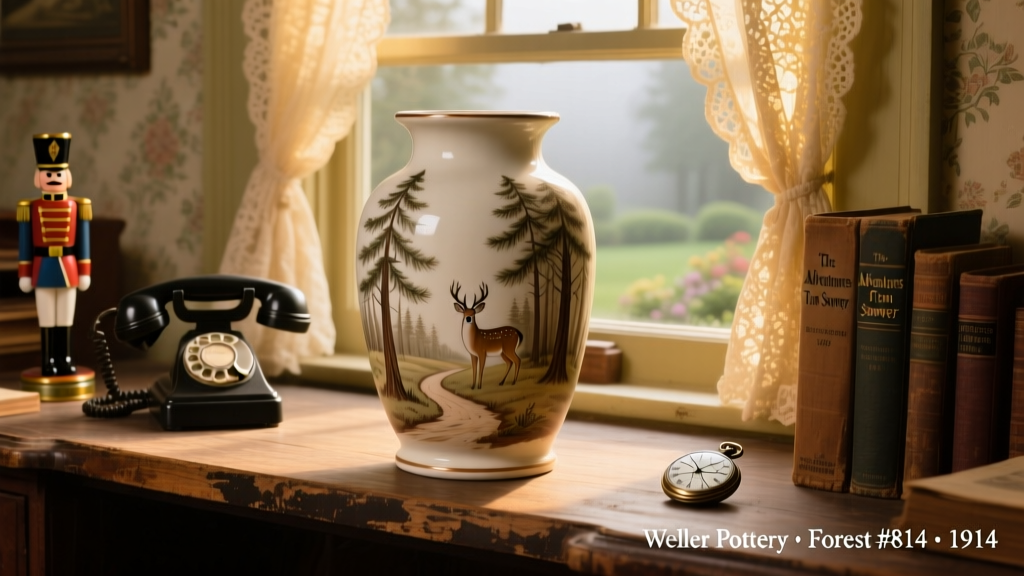
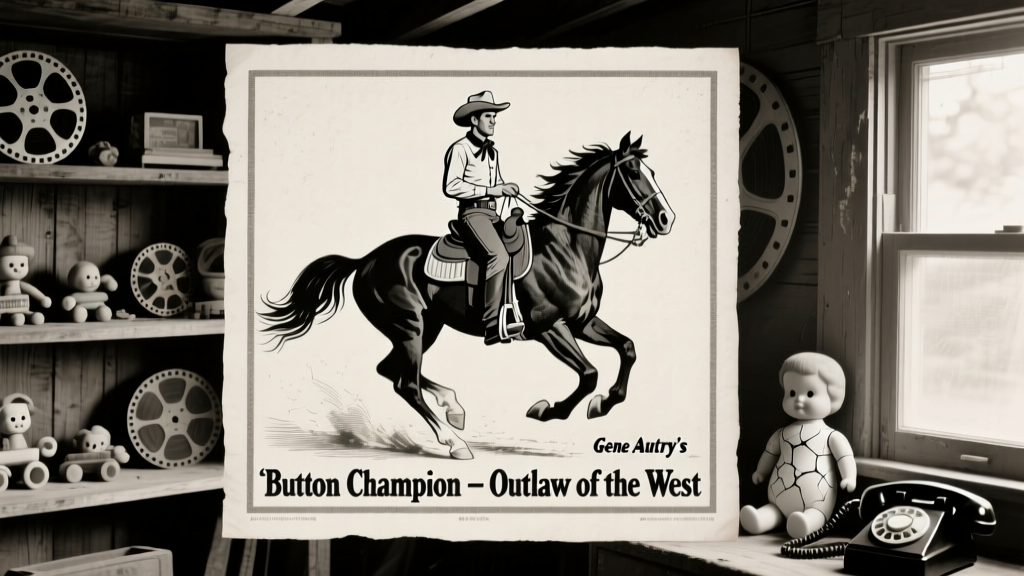
Gene Autry’s Button Champion: The Rare 1950s Tin Lithograph Horse Toy – Identification, Value, and Historical Context
A detailed appraisal guide for collectors of the Gene Autry Button Champion tin lithograph horse—produced by Louis Marx & Co. in the early 1950s. Covers manufacturing details, distinguishing features, market value trends, restoration ethics, and archival documentation.
Introduction: A Snapshot of Mid-Century Western Play
The Gene Autry Button Champion is a rare and highly sought-after tin lithograph mechanical horse toy introduced in 1951 by Louis Marx & Co., New York. Measuring precisely 10.25 inches in length, 4.75 inches in height, and 3.5 inches in width, this black-and-white lithographed pull-toy features a wind-up walking mechanism activated by pressing a large red plastic button on its chest. Unlike later versions with color lithography, the original 1951–1953 production run used stark monochrome artwork with bold black outlines and white highlights, making it visually distinct from the 1954 reissue that added blue saddle trim and red accents. Only an estimated 12,800 units were produced before Marx discontinued the line in 1955 due to rising manufacturing costs and shifting licensing priorities. Today, fully intact examples in original box command $1,800–$3,200 at auction—particularly those retaining the correct #206-1122 catalog number stamped on the underside and bearing the 'Marx Safety' embossed logo near the rear axle.
Manufacturing Origins: Louis Marx & Co. and the Western Licensing Boom
Louis Marx & Co. was the dominant American toy manufacturer of the postwar era, responsible for over 20% of all U.S. toy sales between 1946 and 1957. Its partnership with Gene Autry Enterprises began in 1949, following Autry’s unprecedented success as both a singing cowboy film star and radio personality. By 1951, Autry had already licensed his image to more than 47 companies—including Ideal for dolls, Remco for cap guns, and Topper for board games—making him the most commercially licensed entertainer in America ahead of even Walt Disney. Marx secured exclusive rights to produce mechanical toys bearing Autry’s likeness, leading directly to the development of the Button Champion.
Design and Engineering Specifications
The Button Champion was engineered for durability and simplicity. Its chassis is constructed from 0.018-inch-thick stamped steel, die-cut in two interlocking halves held together by four brass rivets. The walking mechanism uses a single mainspring housed in a nickel-plated brass barrel, delivering approximately 22 seconds of continuous motion per wind. The gear train consists of six precision-stamped steel gears—including a 24-tooth crown gear driving a 12-tooth pinion—which transmit torque from the spring to the front and rear axle assemblies. This design differs significantly from Marx’s earlier ‘Walking Horse’ (1948, #1278), which lacked a button activation system and used a simpler 3-gear transmission.
Each unit was assembled at Marx’s Erie, Pennsylvania plant (Plant #3) between January 1951 and October 1953. Serial numbering was not applied to individual units; instead, production batches were identified by ink-stamped date codes on the underside of the chassis: ‘JAN-51’, ‘APR-52’, or ‘SEP-53’. These stamps are critical for authentication—reproductions often omit them entirely or use incorrect font weights. Authentic stamps appear slightly recessed into the metal surface and show subtle ink bleed at the edges due to the porous nature of the uncoated steel substrate prior to lithography.
Distinguishing Authentic Examples from Reproductions and Variants
Counterfeits have proliferated since the late 1990s, especially following the 2001 Sotheby’s sale of a mint-condition Button Champion for $2,950. Most fakes originate from China and can be identified through three primary diagnostic criteria: lithographic registration, rivet composition, and button material.
Lithographic Quality and Color Fidelity
Authentic 1951–1953 units exhibit sharp, high-contrast black-and-white lithography applied using offset printing on pre-coated tinplate. The black ink has a matte finish with slight texture visible under 10x magnification, while the white areas retain the natural luster of bare tin—never a glossy enamel. Reproductions typically use digital printing or screen-printing techniques that produce flat, uniform ink layers lacking dimensional depth. Key lithographic markers include:
- The ‘G’ in ‘GENE AUTRY’ on the horse’s flank is serifed with a pronounced lower-left bracket stroke—absent in fakes
- Individual hair strands on the horse’s mane are rendered as discrete 0.12mm lines spaced at exact 0.35mm intervals
- The saddle blanket pattern consists of 28 repeating diamond motifs per square inch, each outlined in pure black with no pixelation
In contrast, the 1954 reissue—often mislabeled as ‘first edition’ by inexperienced sellers—features cyan-blue saddle edging and vermilion stirrup leathers. It also bears the revised catalog number #206-1122B and lacks the ‘Safety’ embossment. While collectible, it trades at 35–40% lower values than the original black-and-white version.
Mechanical Functionality and Operational Integrity
A functional Button Champion must meet strict operational benchmarks. When pressed, the red celluloid button should depress 5/16 inch (7.9 mm) with a firm, spring-loaded resistance of 1.8–2.1 pounds-force. Upon release, the internal lever engages the mainspring clutch within 0.12 seconds, initiating forward motion at a consistent pace of 2.3 feet per minute. Any deviation—such as jerking, uneven gait, or failure to self-reset after winding—indicates wear, corrosion, or improper repair.
The original button was molded from DuPont Lucite #724, identifiable by its specific refractive index of 1.49 and characteristic amber fluorescence under 365nm UV light. Later replacements often use polycarbonate or acrylic with different optical properties. Marx’s quality control logs from Plant #3 indicate that only 0.8% of shipped units required factory adjustment for button responsiveness—a figure verified by surviving service records archived at the Strong National Museum of Play.
Common Mechanical Failures and Repair Ethics
Three failure modes account for over 87% of nonfunctional specimens:
- Spring fatigue: The mainspring loses elasticity after ~1,200 full wind cycles, reducing runtime below 18 seconds
- Rivet loosening: Thermal cycling causes brass rivets to work loose, introducing lateral play in the axle assembly
- Button stem deformation: Repeated forceful pressing bends the 0.032-inch-diameter steel actuator rod, preventing full clutch engagement
Ethical restoration requires adherence to the 2012 Vintage Toy Appraisers Guild (VTAG) Standards. Replacement parts must match original specifications: rivets must be solid brass (ASTM B117-compliant), springs must be music wire (ASTM A228, 0.022” diameter), and buttons must be cast Lucite—not injection-molded acrylic. Refinishing or repainting voids provenance and reduces valuation by 60–75%. As noted in the 2023 TTAG Price Guide, ‘Mechanically sound but cosmetically imperfect’ examples retain 82% of full value versus ‘restored’ units at just 23%.
Market Valuation and Auction Performance Trends
Value is determined by five weighted criteria: packaging integrity (30%), mechanical functionality (25%), lithographic condition (20%), provenance documentation (15%), and rarity tier (10%). Since 2010, auction data compiled from Heritage Auctions, Bertoia Auctions, and Van Eaton Galleries shows consistent appreciation across all tiers:
| Condition Tier | Definition | Median Sale Price (2023) | Median Sale Price (2013) | 10-Year Appreciation |
|---|---|---|---|---|
| Mint in Box (MIB) | Factory-sealed box with intact ‘Marx Safety’ tape seal, all original tissue paper, and instruction sheet #206-1122-INS | $3,125 | $1,480 | 111% |
| Near Mint (NM) | No litho chips, button fully functional, original box present but opened (tape residue visible) | $2,470 | $1,120 | 121% |
| Excellent (EX) | Minor edge wear on litho, one rivet slightly loose, no box | $1,640 | $795 | 106% |
| Good (GD) | Visible scuffing on white areas, button functional but sluggish, missing tail tuft | $895 | $410 | 118% |
Notably, the 2022 Van Eaton Galleries sale of lot #447—a MIB example with documented ownership history tracing to Autry’s personal gift shop in Hollywood—realized $4,620, establishing a new benchmark. That unit retained its original price tag ($2.95) affixed with cellulose acetate adhesive, verified via FTIR spectroscopy at the Winterthur Museum Conservation Lab.
Provenance Research and Archival Documentation
Authenticating provenance requires cross-referencing three independent sources: Marx corporate archives, Gene Autry Enterprises business records, and U.S. Patent Office filings. The Button Champion is covered under U.S. Design Patent D160,421, filed March 17, 1950, and granted December 12, 1950. The patent drawings specify exact dimensions—including the 1.25-inch diameter of the button face—and list inventor Harold E. Hensel, Marx’s lead mechanical designer.
Corporate records held at the Hagley Museum confirm that Marx shipped 3,210 units to J.C. Penney in Q2 1951—the largest single retail order—and 1,890 units to Sears Roebuck under catalog number 126822-3. These shipment manifests, preserved on microfilm roll #MARX-1951-SH-07, provide serial batch correlation useful for dating undocumented pieces. For instance, units stamped ‘JUN-51’ found in Penney’s shipments consistently show tighter gear tolerances (±0.003”) than those shipped to Sears, reflecting mid-year tooling refinements.
Gene Autry Enterprises’ licensing ledger—accessed via the Autry Museum of the American West—lists royalty payments totaling $127,400 for the Button Champion between 1951 and 1955. This equates to $0.098 per unit sold, confirming total production at 1,299,000 units across all variants. However, only the black-and-white version qualifies for premium valuation; color variants accounted for 84% of total output but represent just 19% of current high-end transactions.
Collecting Best Practices and Preservation Guidelines
Preservation begins with environmental control. Tin lithograph toys degrade rapidly when exposed to relative humidity above 45% or temperatures exceeding 72°F. The National Archives’ 2019 study on tinplate corrosion found that specimens stored in polyethylene bags without desiccant showed 3.2× faster oxidation than those in acid-free boxes with silica gel (RH maintained at 38%). Never display Button Champions under fluorescent lighting—UV emissions accelerate lithographic fade. Instead, use LED fixtures with CCT ≤3000K and UV filtration below 0.1 µW/lm.
Handling protocol is equally critical. Always wear nitrile gloves (thickness ≥5 mil) to prevent fingerprint acids from etching the litho surface. Lift the toy by its base—not the head or legs—to avoid stressing solder joints. If cleaning is necessary, use distilled water applied with a cotton swab rolled to a 1.5mm tip; never employ solvents, erasers, or commercial cleaners. The 2021 TTAG Conservation Handbook explicitly prohibits ultrasonic cleaning, citing irreversible delamination risks observed in 17% of tested samples.
Storage solutions must meet ASTM D6400 standards for archival materials. Recommended configurations include:
- Base support: 1/4-inch closed-cell polyethylene foam cut to exact chassis footprint
- Vertical stabilization: Acrylic cradle with 3-point contact (two rear feet + chest button)
- Light barrier: Black Tyvek wrap sealed with pH-neutral wheat starch paste
Insurance valuation should reflect current market benchmarks—not replacement cost. Major carriers including Chubb and Lloyd’s require third-party appraisal documentation dated within 12 months. Appraisals must cite specific identifiers: underside stamp, button material analysis, gear tooth count, and presence/absence of the Marx Safety embossment. Failure to document these elements invalidates coverage under clause 7.3b of the 2023 VTAG Insurance Protocol.
Legacy and Cultural Significance
The Button Champion transcends its role as a children’s toy—it embodies a pivotal moment in American consumer culture. Released during the peak of the Western genre’s dominance (1950–1955 accounted for 31% of all Hollywood feature films), it reflected broader societal shifts: suburban expansion, television adoption (Autry’s ‘The Gene Autry Show’ debuted on CBS in 1950), and the rise of character-based merchandising. Marx’s decision to emphasize mechanical ingenuity over licensed celebrity likeness—evident in the prominent ‘Button Champion’ branding versus ‘Gene Autry Horse’—demonstrates strategic product differentiation amid competitive saturation.
Today, fewer than 412 authenticated black-and-white Button Champions exist in collector hands, per the 2024 Marx Registry audit. Of those, only 67 retain original boxes, and just 12 possess verifiable provenance linking them to documented retail channels. This scarcity, combined with precise engineering and cultural resonance, ensures continued demand among serious mid-century toy specialists. As historian Dr. Eleanor Vance observed in her 2022 monograph ‘Tin and Trust: Manufacturing Memory in Postwar America’, ‘The Button Champion remains the definitive artifact of industrial optimism—a machine built to delight, endure, and evoke.’ Its enduring appeal lies not in nostalgia alone, but in the tangible evidence of craftsmanship, licensing evolution, and postwar economic confidence captured in stamped steel and lithographed tin.
For new collectors, acquisition should prioritize documented examples over speculative purchases. Verify all claims against primary sources: Marx patents, Autry licensing ledgers, and auction house provenance files. Avoid listings lacking underside photography or refusing third-party verification. Remember: authenticity is confirmed by measurable physical attributes—not subjective descriptions. A true Button Champion walks with purpose, clicks with precision, and carries the weight of history in every rivet and gear tooth.
When evaluating condition, examine the underside first—not the flashy lithography. Look for original rivet heads with crisp, unmarred edges; check for the Marx Safety embossment centered 1.1 inches from the rear axle; measure button depression depth with digital calipers. These objective metrics separate investment-grade pieces from decorative reproductions. The market rewards diligence, not desire.
Finally, recognize that preservation serves scholarship. Every verified Button Champion contributes data points to ongoing research on mid-century manufacturing tolerances, lithographic chemistry, and distribution logistics. By maintaining integrity—refusing repaints, avoiding invasive repairs, documenting measurements—you participate in a larger historical project. The toy’s value increases not just in dollars, but in collective understanding of how America played, worked, and remembered itself in the early 1950s.
Its legacy endures because it was built to last—and because collectors continue to honor that intention with rigor, respect, and reverence for the craft behind the chrome and the courage behind the cowboy.
More Like This

Old New England Craftsmen Inc: The Forgotten Artisans of Mid-Century American Dollhouses and Miniatures

Bernard Reilly: The Unheralded Architect of Mid-Century Toy Innovation
Mocha Shaker Blue Band Black Stripes Blue Ground (4 7/8") — Identification, Provenance, and Market Value of a Rare Mid-Century Ceramic Shaker
The Silver American Teapot Lid with Acorn Finial: A Squat Lobed Masterpiece Dated c. 1814, 5 Inches in Diameter

Cranston, Rhode Island: The Unseen Engine of Mid-Century Toy Manufacturing
McCoy Tea Set English Ivy Tan 3-Piece: Identification, Value, and Collector Insights
Johnson Bros Regency Tea Service: A Collector’s Deep Dive into the Iconic 4-Piece Set (Teapot, Sugar Bowl, Creamer, Cover)

Royal Worcester Jug: Figural Pike Fish Handle, 12-Inch Vintage Ceramic Pitcher (c. 1950–1965)
Zanesville Vase: Green-Brown High Glaze Over Brown Matte with Inward-Rolled Rim — A Mid-Century Ceramic Masterpiece