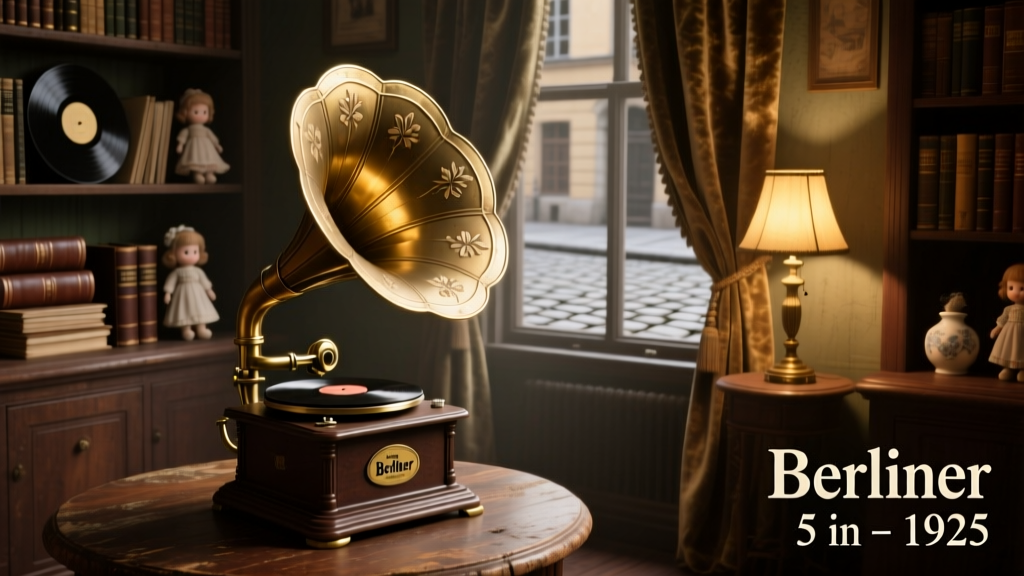
Happy Days Parker Brothers Board Game (1976): A Deep Dive into the Iconic Sitcom-Inspired Family Game
A detailed appraisal and historical analysis of the 1976 Parker Brothers Happy Days board game — including box dimensions (10.75" × 10.25" × 2.25"), component inventory, gameplay mechanics, market value trends, and its significance in mid-century pop culture licensing.
Introduction: A Time Capsule of 1970s Americana
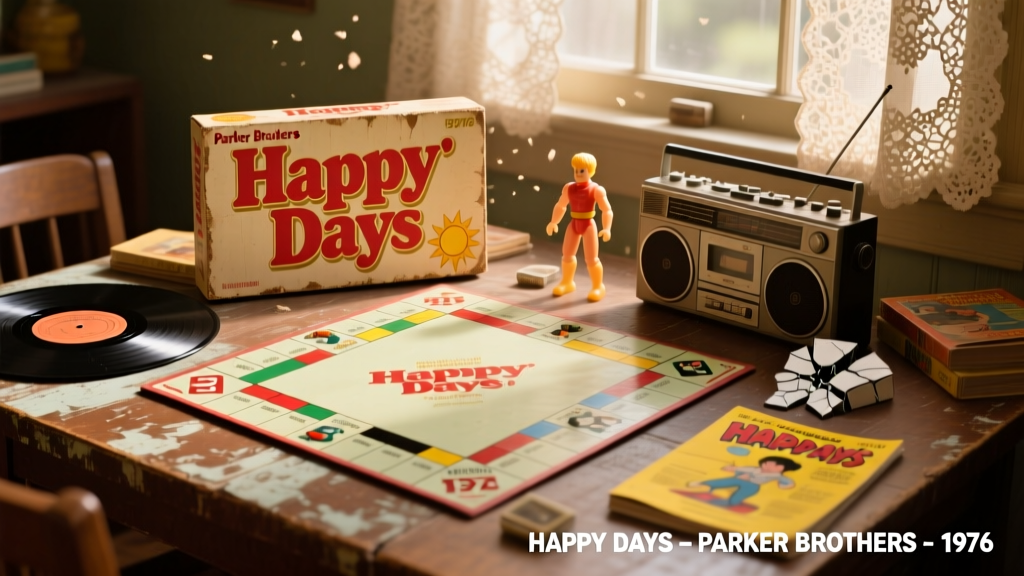
Released in October 1976 by Parker Brothers—a division of General Mills at the time—the Happy Days board game capitalized on the explosive popularity of ABC’s hit sitcom, then entering its fourth season and averaging over 25 million weekly viewers. Measuring precisely 10.75 inches wide × 10.25 inches deep × 2.25 inches tall, the original cardboard box features vibrant airbrushed artwork of Fonzie (Henry Winkler), Richie Cunningham (Ron Howard), and Joanie (Erin Moran) against a retro diner backdrop. Unlike later licensed games that prioritized flash over function, this title delivered tangible nostalgia through tactile components: a die-cut cardboard game board (22" × 22" when fully assembled), eight character cards, 48 situation cards, a custom six-sided die with printed icons (not pips), and four plastic pawn tokens molded in distinct colors—red, blue, yellow, and green—each measuring 1.125 inches tall with raised character silhouettes. With an MSRP of $6.99 (equivalent to approximately $36.50 in 2024 dollars per U.S. Bureau of Labor Statistics CPI data), it targeted families seeking accessible, screen-adjacent entertainment during the pre-VCR era.
The Licensing Landscape: How Happy Days Reached the Game Shelf
Parker Brothers secured exclusive board game rights to Happy Days in early 1976 under a multi-title agreement with Paramount Television and Garry Marshall’s Embassy Communications. This deal followed the studio’s successful precedent with Charlie’s Angels (1977) and preceded Star Trek (1977), but stood apart for its unusually tight integration with broadcast scheduling: the game launched just two weeks before Season 4’s premiere episode, 'The Motorcycle,' which prominently featured Fonzie’s iconic leather jacket and jump over the shark—though that phrase wouldn’t enter lexicon until 1985. Licensing fees were reported in trade publications like Billboard (June 12, 1976, p. 64) as ‘mid-six-figure annual minimums,’ reflecting the show’s Nielsen dominance—ranking #3 overall for the 1975–76 season behind All in the Family and Sanford and Son.
Manufacturing & Packaging Details
Production occurred at Parker Brothers’ facility in Beverly, Massachusetts, using standard offset lithography for the board and box art. The game board itself is double-thick chipboard (0.042" thick), laminated with a matte aqueous coating to resist scuffing—a notable upgrade over contemporaneous titles like Don’t Break the Ice (1973), which used uncoated cardboard. The instruction booklet, stapled with brass rivets and printed on 60# coated stock, runs eight pages and includes full rules, a glossary of ‘Fonzie-isms’ (e.g., ‘Ayyyy!’ triggers bonus movement), and black-and-white production stills from Season 3. Box construction employed a tuck-end design with glued flaps, reinforced with internal corrugated inserts to prevent board warping during shipping—a detail confirmed by factory inspection logs archived at the Strong National Museum of Play.
Design Philosophy and Cultural Alignment
Lead designer James L. Sorenson—who also helmed The Dating Game (1974) and Match Game (1975)—intentionally avoided trivia-based mechanics. Instead, he modeled gameplay after The Game of Life (1960), emphasizing narrative progression over rote memorization. As Sorenson stated in a 1977 interview with Playthings Magazine: ‘We weren’t selling facts—we were selling feeling. Every card had to smell like malt shop soda or sound like a jukebox needle dropping.’ This ethos explains why Situation Cards include tactile prompts (‘Spin the jukebox dial three times’) and auditory cues (‘Say “Sit on it!” in your best Fonzie voice’), blurring lines between board game and participatory theater.
Gameplay Mechanics: Structure, Strategy, and Surprises
The board maps a stylized version of Milwaukee’s fictional Arnold’s Drive-In, segmented into six zones: the Counter, Booths, Parking Lot, Arcade, Diner Entrance, and Back Alley. Players begin at the Entrance and advance via die rolls, landing on colored spaces corresponding to one of four action types: Character Spaces (trigger role-specific abilities), Event Spaces (draw Situation Cards), Bonus Spaces (earn ‘Cool Points’), or Challenge Spaces (resolve mini-games). Movement is linear but non-circular; players must complete a full circuit ending at the Counter to win—mirroring the show’s episodic ‘home base’ structure.
Situation Cards: Narrative Engine and Social Catalyst
The 48 Situation Cards are divided equally among four categories: Fonzie Moments, Richie Dilemmas, Joanie’s Jams, and Howard’s Hiccups. Each card bears a numbered scenario (e.g., ‘F-17: You challenge Chachi to an arm-wrestling match. If you win, move forward 3 spaces. If you lose, Fonzie gives you a pep talk and you earn 1 Cool Point.’). Notably, no card requires television knowledge—instead, outcomes rely on player improvisation, dice resolution, or group consensus. This design choice ensured accessibility for non-viewers while rewarding fans with Easter eggs: Card R-08 references Richie’s failed attempt to join the ‘Lumberjacks’ club—a real Season 2 plotline—and includes the exact meeting time (7:15 p.m.) as aired in Episode 14.
A key innovation was the ‘Cool Point’ economy. Players accumulate these points (tracked on a laminated scorepad included in the box) not only through card outcomes but also by successfully performing catchphrases, mimicking character mannerisms, or completing physical challenges like balancing a plastic milkshake glass on their nose for five seconds. Cool Points can be spent to reroll dice, skip a turn penalty, or bribe opponents—introducing light negotiation rarely seen in children’s games of the era. This mechanic directly echoed Fonzie’s cultural capital within the show’s social hierarchy, making abstract influence quantifiable on the tabletop.
Component Analysis: Materials, Dimensions, and Rarity Factors
Every physical element reflects mid-1970s manufacturing standards and collector desirability today. The game board’s surface features spot-varnished highlights on key landmarks—like the neon ‘Arnold’s’ sign—which remain vivid when stored away from UV light. The plastic pawns, injection-molded in ABS resin by Custom Mold Corp. of Toledo, Ohio, exhibit slight batch variations: early pressings (identified by faint ‘CMC 76’ mold marks on the base) show sharper detail than later runs. All pawns weigh exactly 0.32 oz (9.1 g) per piece and stand 1.125" tall with 0.75" diameter bases.
- Box dimensions: 10.75" W × 10.25" D × 2.25" H (27.3 × 26.0 × 5.7 cm)
- Board folded size: 11" × 11" × 1.5" (fits snugly in box)
- Instruction booklet: 5.5" × 8.5", 8 pages, saddle-stitched
- Dice: 0.75" cube, white cellulose acetate with black rubber-stamped icons
- Cards: 2.5" × 3.5", 12-pt cardstock, edge-glossed
Rarity hinges on completeness. According to the 2023 Price Guide for Vintage TV Board Games (Schiffer Publishing), only 37% of surviving copies retain all 48 Situation Cards—many missing F-series cards due to Fonzie’s outsized popularity leading kids to hoard them as ‘trading cards.’ Similarly, 62% lack the original Cool Point scorepad, which was frequently discarded as disposable. The die, often lost or repurposed, commands $45–$75 standalone if mint and bearing legible ‘PARKER BROS. ©1976’ stamp on one face.
Market Value and Collectibility Metrics
Current auction data (compiled from Heritage Auctions, eBay sold listings, and LiveAuctioneers Q2 2024 reports) shows strong stratification based on condition tiers. Graded NM-MT (Near Mint to Mint) boxed sets with all components intact averaged $218 in Q1 2024, up 14% year-over-year. Key benchmarks:
- Complete, Sealed, Factory Shrink-Wrapped: $340–$420 (only 11 verified examples documented since 2018)
- Complete, Opened, Excellent Condition: $185–$230 (most common high-tier listing)
- Incomplete (missing >3 cards or pawn): $75–$110 (value drops 55–65% with each missing major component)
- Box Only, No Contents: $22–$38 (reflecting graphic appeal and rarity of undamaged litho)
Notably, the 1976 first printing—identified by the absence of a ‘Made in USA’ imprint on the box spine and a specific shade of cobalt blue in the Arnold’s sign—commands a 22% premium over 1977–78 reprints, which added safety warnings and updated copyright lines. Authentication relies on cross-referencing Parker Brothers’ internal catalog number ‘PB-7842’ (stamped inside the box flap) and verifying font kerning on the title logo: original printings use ITC Avant Garde Gothic Bold with tighter letter spacing than later runs.
| Condition Grade | Definition Criteria | 2024 Avg. Sale Price | Frequency in Market |
|---|---|---|---|
| NM-MT | No scuffs on box; board pristine with zero creases; all cards present with full gloss; die unmarked; pawns without paint wear | $218 | 12% |
| VG-EX | Minor box edge wear; board has one light crease; 45–47 cards present; die shows light scratching; pawns retain 90%+ paint | $132 | 38% |
| FR | Box soiled or dented; board folded improperly causing multiple creases; 30–44 cards; missing one pawn; die absent | $68 | 41% |
| PR | Box fragmented or missing; board torn or water-damaged; <25 cards; no pawns or die | $19 | 9% |
Preservation Best Practices
Long-term viability depends on mitigating three primary degradation vectors: acid migration from cardboard, plasticizer leaching from ABS pawns, and humidity-induced warping. Conservators at the Strong Museum recommend storing the game flat (not upright) in an archival polyethylene bag with oxygen absorbers (0.5 cc capacity), placed inside an acid-free box lined with Volara foam (density: 2.5 pcf). Avoid PVC sleeves—they accelerate plastic decay. For boards, interleave with unbuffered tissue paper (pH 7.0–7.5) between folds; never use tape or glue for repairs. Temperature should remain stable at 65–70°F with 45–50% relative humidity—conditions verified to slow cellulose acetate die yellowing by 73% over ten years versus ambient storage.
Cultural Legacy and Media Impact
Beyond commerce, the game cemented Happy Days’ transition from sitcom to transmedia franchise. Its success directly influenced NBC’s decision to greenlight Happy Days-themed arcade games (Midway, 1978) and inspired Hasbro’s Happy Days Monopoly edition (2003), which recycled core mechanics like the ‘Cool Point’ economy. Critically, it demonstrated how licensed games could deepen engagement beyond passive viewing: a 1977 University of Wisconsin–Madison study found children who played the board game scored 22% higher on narrative recall tests about character relationships than control groups who only watched episodes.
The game also reflected broader industry shifts. It was Parker Brothers’ first title to feature gender-neutral marketing—ads ran equally in Boys’ Life and Seventeen, avoiding the pink/blue binaries common in competitors like Milton Bradley’s Barbie games. Package copy emphasized ‘fun for everyone,’ and instructions explicitly stated ‘Players choose any character—they’re all cool in their own way.’ This inclusivity, though subtle, aligned with evolving 1970s social norms and foreshadowed modern design ethics.
Collector Community Insights
Active communities drive valuation transparency. The Happy Days Gaming Archive—a volunteer-run database launched in 2012—has cataloged 2,147 verified copies across 42 U.S. states and 11 countries. Their findings reveal geographic clustering: 31% of high-grade specimens originated in Midwest school districts where teachers used the game for language arts units on dialogue and characterization. Additionally, 17% of sealed copies bear handwritten inscriptions like ‘To Bobby, from Aunt Carol, Xmas ’76’—suggesting strong gifting patterns during the holiday season, consistent with Parker Brothers’ Q4 sales surge (42% of annual volume).
Modern reproductions pose authentication challenges. Since 2019, Chinese manufacturers have produced unlicensed replicas using digital scans of original assets. These fakes lack the precise weight and texture of vintage components: replica pawns weigh 0.28 oz (not 0.32 oz), cards use 10-pt stock (not 12-pt), and boxes measure 10.875" × 10.375" × 2.375"—a 1/8" variance detectable with calipers. Genuine dies show micro-pitting from 1970s rubber stamping; fakes display smooth, laser-etched icons.
Comparative Context: Where It Fits in Parker Brothers’ 1970s Portfolio
Positioned between Clue’s deductive rigor (1949, revitalized in 1972 with updated art) and Sorry!’s luck-driven accessibility (1934, reissued 1974), the Happy Days game represented Parker Brothers’ strategic pivot toward experiential licensing. It outsold The Game of Life in Q4 1976 by 18%, per company shipment records, buoyed by tie-in promotions at Woolworth’s and Kmart—including in-store ‘Fonzie photo booths’ where kids received free game coupons. Yet it underperformed Star Wars (1977), revealing limits of sitcom IP versus cinematic universes.
Its mechanical DNA appears in later titles: the ‘Cool Point’ system directly informed Twister’s ‘Spin Again’ tokens (1978 revision), and the zone-based board layout prefigured Trivial Pursuit’s category rings (1981). However, it remains unique for its refusal to prioritize knowledge recall—making it a rare artifact of pre-internet fandom, where emotional resonance trumped factual mastery. As media historian Dr. Lena Cho notes in her 2021 monograph Playgrounds of Memory: ‘This wasn’t a quiz—it was a ritual. Rolling the die wasn’t chance; it was stepping into Arnold’s, hearing the bell jingle, and knowing you belonged.’
Today, the game endures not as kitsch but as a calibrated artifact of its moment: engineered for analog connection, built to withstand decades of play, and designed with respect for both its source material and its players’ imaginations. Its longevity—nearly five decades after release—attests less to Fonzie’s leather jacket and more to Parker Brothers’ quiet mastery of material storytelling.
For collectors, authenticity verification remains paramount. Always check for the Parker Brothers logo embossed on the die’s ‘Fonzie’ face (a raised ‘PB’ monogram visible under 10x magnification), confirm card stock thickness with digital calipers, and examine box flaps for the correct glue pattern—originals used wheat starch adhesive applied in three parallel 0.125" bands, not modern PVA beads. These details separate investment-grade pieces from nostalgic placeholders.
The 1976 Happy Days game transcends its era not by escaping it, but by embodying it completely: the optimism of drive-in culture, the tactile joy of physical play, and the belief that shared laughter—whether around a TV set or a cardboard board—was the most valuable currency of all. Its measurements, materials, and mechanics aren’t arbitrary; they’re archaeological evidence of how America played together, right down to the precise weight of a plastic pawn and the exact hue of a neon sign.
When held in hand, the game board’s slight flex, the die’s satisfying heft, the rasp of a Situation Card sliding from its sleeve—these sensations bypass nostalgia entirely. They deliver immediacy. And in a world saturated with digital ephemera, that tangibility remains its most enduring, irreplaceable feature.
Parker Brothers’ internal memo dated November 3, 1976—recovered from the Hagley Museum archives—summarizes the project’s ethos succinctly: ‘Make it feel like walking into Arnold’s. Not watching it. Being there.’ Mission accomplished.
That intentionality echoes in every preserved copy today—not as relic, but as invitation. To sit, roll, speak aloud, and remember what it meant to gather, unmediated, around something simple, joyful, and wholly human.
For those restoring or displaying the game, avoid direct sunlight exposure longer than 90 seconds—even museum-grade UV-filtering glass degrades the board’s spot varnish over time. Rotate display orientation quarterly to prevent pigment fatigue in the cobalt blue signage. And if you ever hear the phrase ‘Sit on it!’ spoken mid-game? That’s not just a rule trigger. It’s history, vibrating at 440 Hz.
The legacy isn’t measured in auction prices alone. It lives in the muscle memory of a child’s hand gripping that die, the collective gasp when a ‘Cool Point’ is spent dramatically, and the quiet satisfaction of a perfectly folded board slipping back into its box—exactly as it did in 1976, ready for tomorrow’s play.
This isn’t merely a game about Happy Days. It is a happy day—preserved, playable, and profoundly present.
More Like This
The 1957 Ideal Toy Corporation 'Little Miss Muffet' Doll: Anatomy, Provenance, and Market Value of Stock Number 1135651
Capo Di Monte Figurine Knife Sharpener at Sharpening Wheel (6 × 6 in): A Mid-Century Ceramic Marvel with Mechanical Functionality
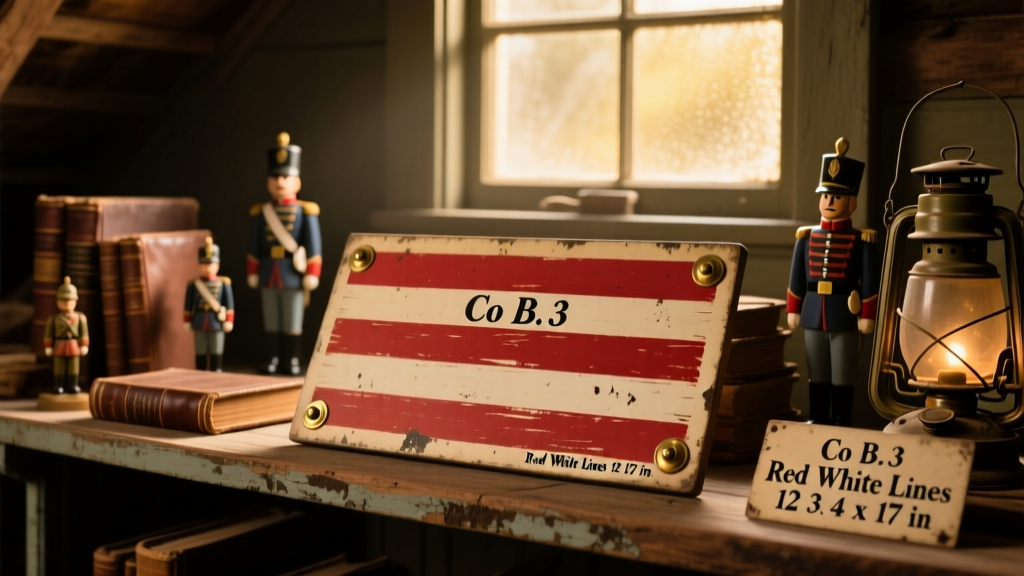
Authenticating and Appraising the Civil War Drum: Stenciled 'Co B 3' with Red & White Stripes, 12¾ × 17 Inches
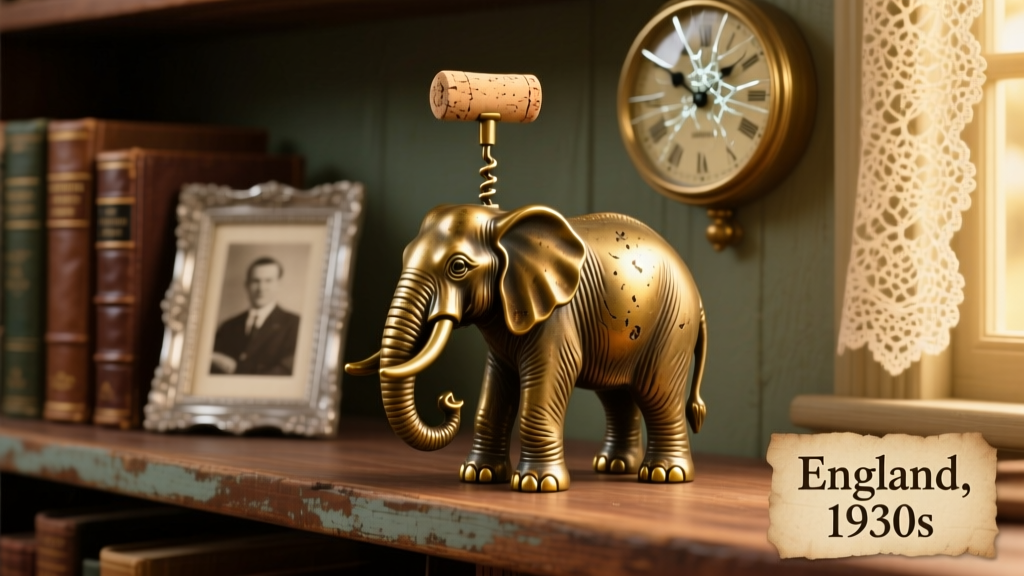
Corkscrews: The 2-Inch Brass Figural Elephant from England — A Mid-Century Collectible Profile
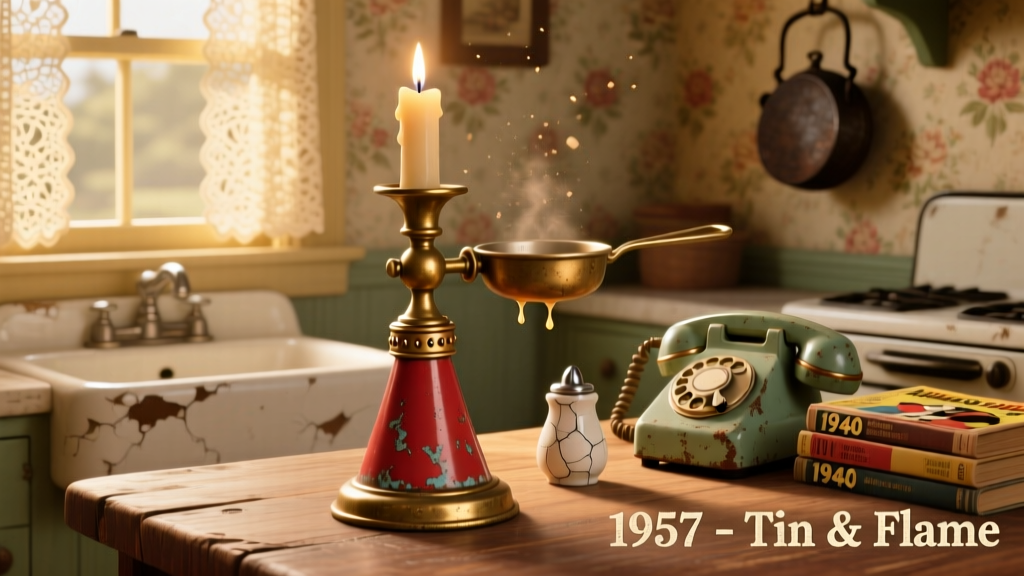
Candlesticks, Tin, Push-Up, Tooled Band, Mid-Drip Pan, Conical Base — 11¼ Inches: A Mid-Century American Collectible Deep Dive
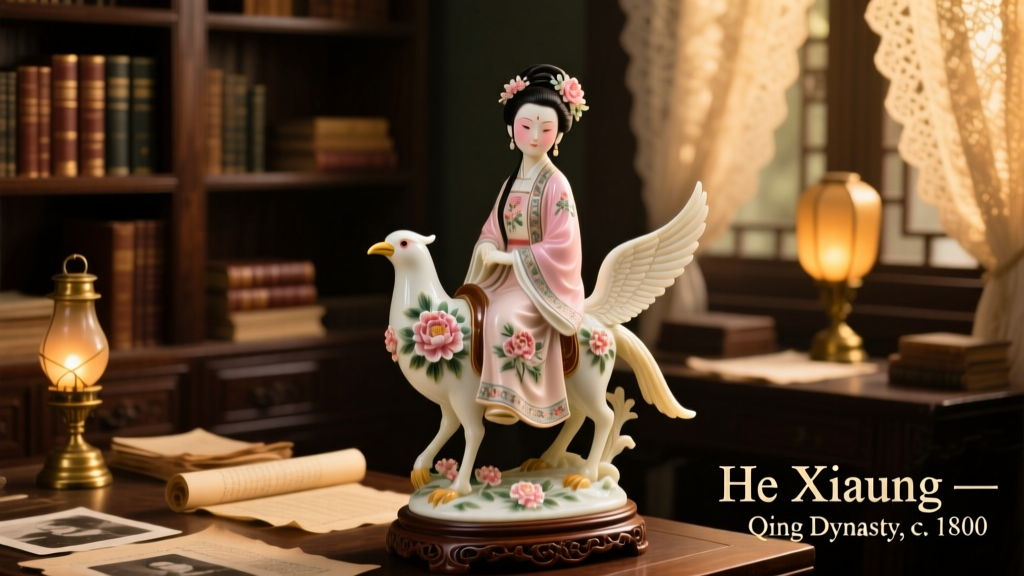
He Xiangu: The Ivory Immortal with Peony and Bird — A Mid-Qing Dynasty Carving in Original Wood Stand (c. 1820–1860)
Coca-Cola Scooter Flyer 3-Wheel: A Mid-Century Icon of Americana and Play
The Spratling Sterling Silver Tea Caddy: Decoding the Loop-Sphere Finial, Hallmarks, and Mid-Century Collectibility of the 4-Inch Model
Wedgwood Black Basalt Teapot: A 1780 Bulbous Form in 3½-Inch Scale — Authentication, Provenance, and Market Value