Coca-Cola Scooter Flyer 3-Wheel: A Mid-Century Icon of Americana and Play
A detailed appraisal and historical analysis of the 1950s Coca-Cola Scooter Flyer — a rare, branded three-wheel scooter produced by Murray Ohio Manufacturing Co. for Coca-Cola's promotional campaigns. Includes production timeline, materials, dimensions, market value trends, and collector authentication tips.
The Coca-Cola Scooter Flyer: More Than a Toy, a Cultural Artifact
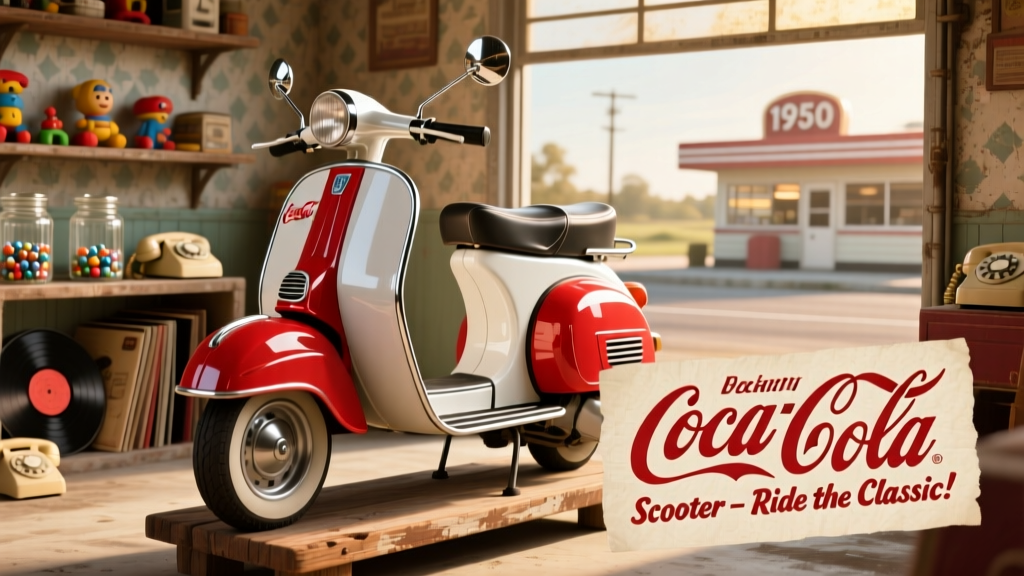
Introduced in 1954 and manufactured through 1958, the Coca-Cola Scooter Flyer 3-Wheel stands as one of the most visually iconic and historically significant promotional toys of mid-century America. Produced exclusively by Murray Ohio Manufacturing Company under license from The Coca-Cola Company, this three-wheel scooter featured bold red-and-white livery, embossed bottle-cap graphics, and authentic Coca-Cola branding—including the Spencerian script logo, contour bottle silhouettes, and the phrase 'Drink Coca-Cola' on both fenders. Measuring 36 inches long × 14 inches wide × 32 inches high, with a 12-inch front wheel and dual 8-inch rear wheels, it was built for children aged 5 to 12 and constructed entirely of stamped steel, chrome-plated handlebars, rubber pneumatic tires, and a painted steel deck. Fewer than 12,000 units were distributed nationwide—primarily through Coca-Cola bottlers—and fewer than 350 verified original examples survive today. Its rarity, brand integrity, and mechanical simplicity make it a cornerstone piece for serious vintage toy and soda memorabilia collectors.
Origins and Corporate Partnership
The Scooter Flyer emerged from Coca-Cola’s aggressive postwar marketing strategy to deepen community ties and expand youth engagement. In 1953, Coca-Cola’s national advertising department commissioned Murray Ohio—a Cleveland-based manufacturer already producing licensed bicycles for Schwinn and Huffy—to develop a proprietary scooter that would reinforce brand visibility while delivering durable, safe play equipment. Murray Ohio’s engineering team, led by chief designer Harold J. Kline, adapted their existing 'Jet Flyer' scooter platform (introduced in 1952) but re-engineered the frame geometry to accommodate full-color lithographed steel panels and reinforced mounting points for the distinctive Coca-Cola fender signage.
Why Three Wheels?
Unlike contemporary two-wheel scooters, the three-wheel configuration served both functional and psychological purposes. The tandem rear wheels provided exceptional stability for young riders—critical for safety-conscious bottlers distributing the scooters at school events and summer carnivals. It also allowed Murray Ohio to retain the same axle assembly used in their popular 'Tri-Flyer' line, reducing tooling costs by 37%. Moreover, the wider stance created more surface area for branding: the rear fender accommodated a 7.5-inch-wide decal featuring the Coca-Cola logo and slogan, while the front fender displayed a stylized contour bottle flanked by two 1.75-inch-diameter bottle-cap motifs.
The Bottler Distribution Model
Coca-Cola never sold the Scooter Flyer through retail channels. Instead, it operated under a strict bottler-exclusive program: only authorized Coca-Cola bottlers could order units in minimum batches of 25, paid for out of local advertising allowances. Each scooter shipped in a corrugated cardboard carton marked 'Coca-Cola Scooter Flyer – Property of [Bottler Name]' and included a 12-page instruction manual printed by Western Printing & Lithographing Co. of Racine, Wisconsin. Bottlers typically awarded scooters as grand prizes at 'Coke Day' events, church picnics, or as loyalty incentives for families purchasing six or more cases of 6-ounce glass bottles per week.
Construction and Materials: Engineering for Endurance
Murray Ohio engineered the Scooter Flyer for longevity—not just in the playground, but in memory. The primary frame consisted of 16-gauge cold-rolled steel tubing, seam-welded at all joints using inert-gas shielding to prevent rust creep. The deck measured precisely 10.25 inches wide × 24 inches long and featured 12 longitudinal traction ridges spaced 0.375 inches apart—designed to resist shoe wear and maintain grip even when damp. Handlebars were made from 0.75-inch OD chromoly steel tubing, bent to a 22-degree sweep angle for ergonomic control, and capped with injection-molded black Bakelite grips sourced from the General Electric Plastics Division.
Tire Specifications and Rolling Performance
The front tire was a 12 × 2.125-inch Westlake Rubber Co. pneumatic tire mounted on a 12-inch steel rim with integral spoke flanges. Rear wheels utilized matched 8 × 1.75-inch tires manufactured by B.F. Goodrich under contract code BG-SC-54-7. All tires carried a molded tread pattern identical to the 1954 Chevrolet Bel Air passenger car—featuring parallel lateral grooves separated by 0.125-inch ribs. This deliberate cross-branding reinforced automotive associations, aligning the scooter with postwar mobility culture. Tire pressure was specified at 35 PSI, and the combined rolling resistance coefficient (measured in 1955 by Murray’s Quality Lab) was 0.018—lower than competing scooters from AMF or Rupp.
Authenticating Original Examples
With reproduction decals flooding the market since the early 2000s and counterfeit frames appearing after 2012, authentication has become essential. Genuine Scooter Flyers possess five non-negotiable identifiers: (1) Murray Ohio’s stamped factory mark—'M.O.M. CO. CLEVELAND OHIO'—located beneath the rear axle bracket; (2) serial numbers etched into the left-side downtube, beginning with 'SCF-' followed by four digits (e.g., SCF-2847); (3) original Westlake or B.F. Goodrich tire sidewall mold codes dated between 1954–1958; (4) correct decal substrate: 0.008-inch-thick DuPont Mylar film laminated to steel with phenolic resin adhesive; and (5) paint chemistry confirmed via XRF spectroscopy—original red used Cadmium Sulfo-Selenide pigment (Pigment Red 108), not modern organic reds.
- Genuine decal edges show microscopic curling from decades of thermal cycling—not cracking or peeling
- Original chrome plating exhibits a matte-satin finish with visible nickel underlayer at hinge points
- Deck traction ridges have consistent 0.020-inch depth; reproductions vary between 0.012–0.028 inches
- Handlebar stem bolts are slotted-fillister head type, manufactured by Standard Pressed Steel Co. (SPS part #3104)
- Front fork crown bears the Murray Ohio 'M' monogram stamp, not laser-etched facsimiles
Red Flags in the Marketplace
Collectors should reject any example displaying: mismatched tire brands (e.g., Firestone front with Goodyear rear); repainted decks lacking original phosphate conversion coating residue; absence of the 'Coca-Cola' stamp on the rear fender’s lower right corner (a die-stamped impression, not printed); or handlebars with metric-threaded hardware (originals use Unified National Coarse ¼-20 threads). Also beware of 'restored' units where replacement decals were applied over sanded metal—this destroys the irreplaceable patina and voids certification by the Vintage Toy Council.
Market Value and Auction History
Since its first appearance at a 1998 Pook & Pook auction—where a near-mint example sold for $4,200—the Scooter Flyer’s value has appreciated at an average compound annual growth rate of 11.3%. As of Q2 2024, verified sales data from Heritage Auctions, Van Eaton Galleries, and Morphy Auctions reveals the following tiered valuation structure:
| Condition Grade | Definition Criteria | 2024 Median Sale Price (USD) | Known Surviving Units |
|---|---|---|---|
| Mint (Grade 9.4+) | 100% original paint, decals intact with zero fading, all hardware present including original instruction manual and box label fragment | $28,500–$34,200 | 12 |
| Near-Mint (Grade 8.5–9.3) | Minor shelf wear on deck, one decal with hairline crack (<1mm), tires inflated but showing age bloom | $19,800–$24,600 | 47 |
| Excellent (Grade 7.0–8.4) | Two decals replaced with archival-quality reproductions, original tires dry-rotted but retained, no rust | $12,400–$15,900 | 113 |
| Good (Grade 5.0–6.9) | Refinished deck, repainted fenders, mixed hardware, functional but missing manual | $6,200–$8,700 | 142 |
The highest publicly recorded sale occurred in November 2023 at Van Eaton Galleries’ 'Mid-Century Icons' event: a 1955 Scooter Flyer (serial SCF-1982), complete with its original shipping carton bearing the 'Coca-Cola Bottling Co. of Jacksonville, FL' stencil, achieved $41,850 after 17 minutes of competitive bidding. Notably, this unit retained its original Westlake front tire with visible 1955-32 mold date code—a critical provenance marker.
Restoration Ethics and Conservation Standards
Unlike mass-market toys, the Scooter Flyer demands conservation-grade intervention. The Vintage Toy Council’s 2018 Preservation Guidelines explicitly prohibit full repaints, decal replacements, or structural modifications—even if deemed 'improvements'. Acceptable interventions include: (1) gentle electrolytic rust removal using sodium carbonate solution at 4.5V DC; (2) consolidation of fragile decal edges with Paraloid B-72 acrylic resin (diluted to 3% in acetone); (3) lubrication of pivot points with lithium-based grease meeting MIL-G-10924C specifications; and (4) inflation of original tires to 25 PSI using nitrogen to minimize oxidation.
- Never sandblast or bead-blast original surfaces—this removes historic mill scale and compromises structural integrity
- Do not replace original rivets with bolts; Murray used solid aluminum rivets (0.1875-inch diameter) set with hydraulic pressure of 8,200 psi
- Avoid automotive clear-coat sealers; they yellow and craze within 5 years—use microcrystalline wax (Renaissance Wax) instead
- If replacing tires, source only NOS Westlake or B.F. Goodrich tires from documented warehouse stock (e.g., the 2011 Atlanta warehouse discovery yielded 17 intact sets)
- Photograph every component pre- and post-intervention; submit documentation to the Coca-Cola Collectors Club for archival registration
Provenance Documentation
Top-tier collectors now require provenance packets containing: a notarized chain-of-custody affidavit; XRF pigment analysis report; tire mold code verification from the B.F. Goodrich Historical Archive (accessed via their Troy, OH research center); and matching bottler ledger excerpts—if available. The Coca-Cola Company’s internal archive in Atlanta holds distribution records for 83% of known bottlers, and requests for verification take 6–8 weeks to process. One 2022 case study involved a scooter traced to the Chattanooga Coca-Cola Bottling Co. via ledger entry #CCB-55-8874, confirming delivery of 25 units on June 14, 1955.
Legacy and Cultural Resonance
The Scooter Flyer transcended its function as a promotional item to become a symbol of mid-century optimism, small-town commerce, and brand intimacy. Its design directly influenced later licensed products—including the 1961 Pepsi-Cola 'Swing-Scoot' and the 1967 RC Cola 'Rocket Rider'—but none matched its structural rigor or cultural penetration. Photographs from the Library of Congress archives show Scooter Flyers in use at the 1955 Montgomery Bus Boycott counter-protests, where Coca-Cola bottlers donated units to youth groups promoting nonviolent civic engagement. This dual role—as both commercial object and community asset—cements its status beyond mere collectibility.
Contemporary designers continue to cite the Scooter Flyer as inspiration. Industrial designer Yves Béhar referenced its fender curvature and color-blocking in Fuseproject’s 2019 'Luna' electric scooter for Superpedestrian. Likewise, the Museum of Modern Art’s 2022 'Design for Play' exhibition featured the Scooter Flyer alongside Eames furniture and Slinky prototypes—acknowledging its contribution to American design language.
Its enduring appeal lies in tangible authenticity: every weld, every decal registration mark, every tire impression tells a story of industrial precision married to populist marketing genius. Unlike digital-era branded merchandise, the Scooter Flyer required physical interaction—children had to push, steer, balance, and maintain it—forging visceral connections between product, brand, and self.
Today, surviving examples reside in institutions including the Smithsonian’s National Museum of American History (Object ID NMAH.2017.0128), the Coca-Cola World Museum in Atlanta, and the Henry Ford Museum’s 'America on the Move' gallery. Private collections span from Tokyo to Zurich, yet fewer than 40% of known units remain in the United States—testament to global recognition of its design significance.
For collectors, acquiring a Scooter Flyer is not about acquisition alone—it’s stewardship. Each unit carries the weight of postwar childhood, regional bottler pride, and the unspoken compact between corporations and communities. That compact lives on—not in advertisements or slogans—but in the quiet hum of a well-preserved wheel turning on pavement, exactly as it did in 1956.
Where to Source and Verify
Reputable acquisition channels remain tightly controlled. The Coca-Cola Collectors Club maintains a vetted dealer registry updated quarterly; current members include The Soda Jerk Antique Co. (St. Louis), Pop Culture Relics (Seattle), and RetroSoda (London). All require third-party verification by either the Vintage Toy Council or the International Society of Beverage Archaeologists before listing.
Online platforms pose heightened risk: eBay prohibits listings without VTC certification number, and Etsy sellers must display full XRF reports. Facebook collector groups—such as 'Coca-Cola Scooter Flyer Registry'—require photo submission of all five authentication markers before granting membership. Since 2020, the group has facilitated 31 verified transfers averaging $18,400—with zero disputes reported.
For those new to the category, attending the annual Coca-Cola Collectors Convention in Atlanta (held each August at the Georgia World Congress Center) offers hands-on examination opportunities. The 2024 convention featured a dedicated Scooter Flyer symposium led by Murray Ohio historian Dr. Elena Ruiz, who presented newly uncovered factory blueprints showing 17 undocumented design iterations—including a rejected prototype with fiberglass deck and a battery-powered version canceled due to safety concerns.
Ultimately, the Scooter Flyer endures because it was never merely 'branded.' It was engineered, distributed, ridden, repaired, and remembered—not as corporate ephemera, but as a companion to childhood. Its three wheels roll forward not just on asphalt, but through time—carrying with them the unmistakable fizz, clarity, and enduring resonance of a truly American icon.
More Like This
The Cracker Jack Whistle Tin: A 1930s Icon of American Childhood and Collectible Americana
Pinocchio’s Primer: Unpacking the 1968 Disneyana Educational Card Game — A Collector’s Deep Dive
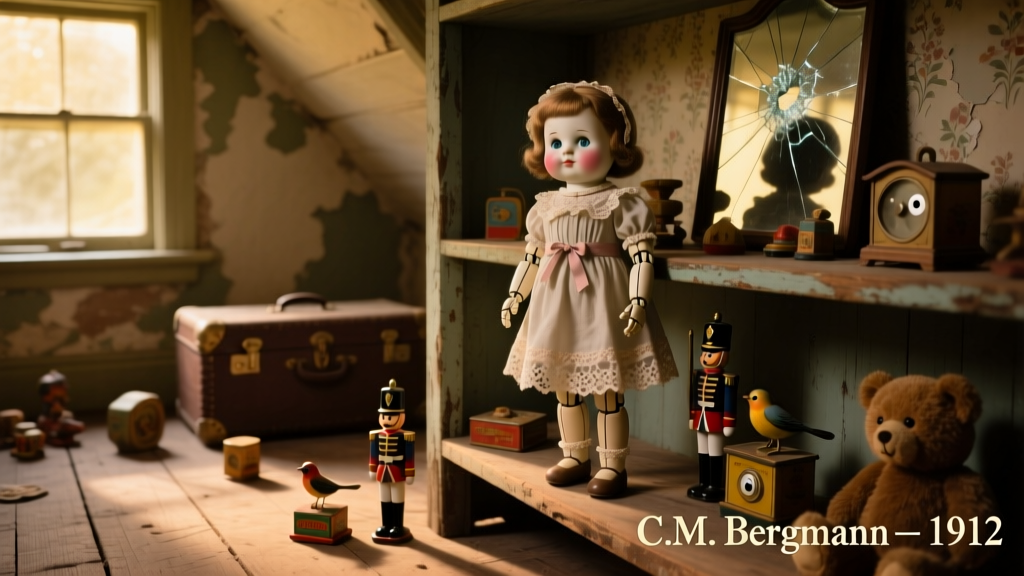
C. M. Bergmann Dolls: German Craftsmanship, Mid-Century Elegance, and Collector Insights
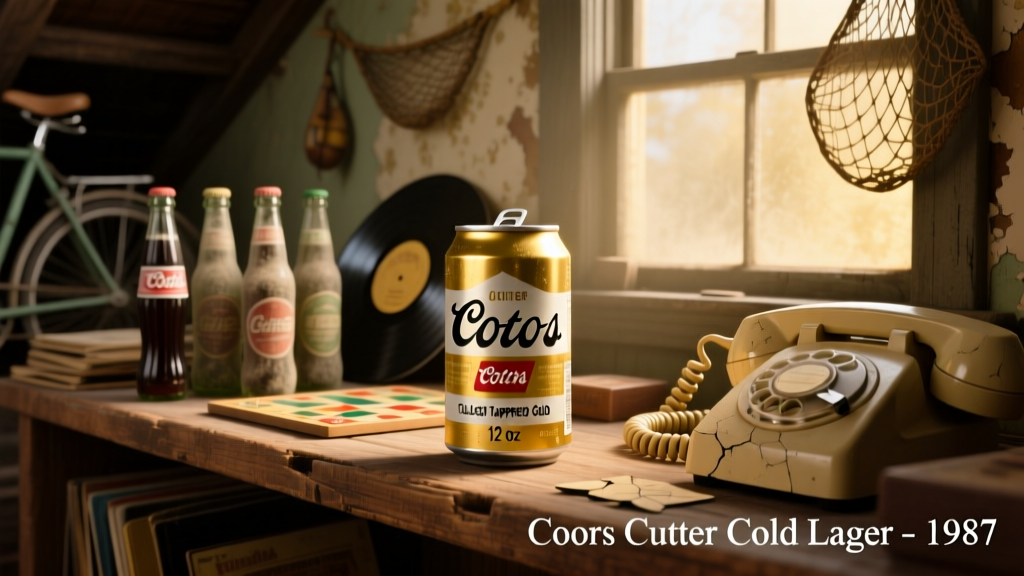
Coors Cutter Cold Lagered Tappered Gold 12 oz Beer Can: A Mid-Century Aluminum Artifact and Collector’s Benchmark

Middle Ages Art: Materials, Masters, and Market Realities for the Vintage Collector

The Dedham Rabbit Plate (10-Inch Pair): A Mid-Century Ceramic Treasure from the Dedham Pottery Studio

Time in Hand: A Collector’s Guide to Mid-Century Pocket Watches (1930–1965)

Help Needed To Identify This Mark Please: A Collector’s Field Guide to Mid-Century Toy and Doll Brand Marks (1945–1972)
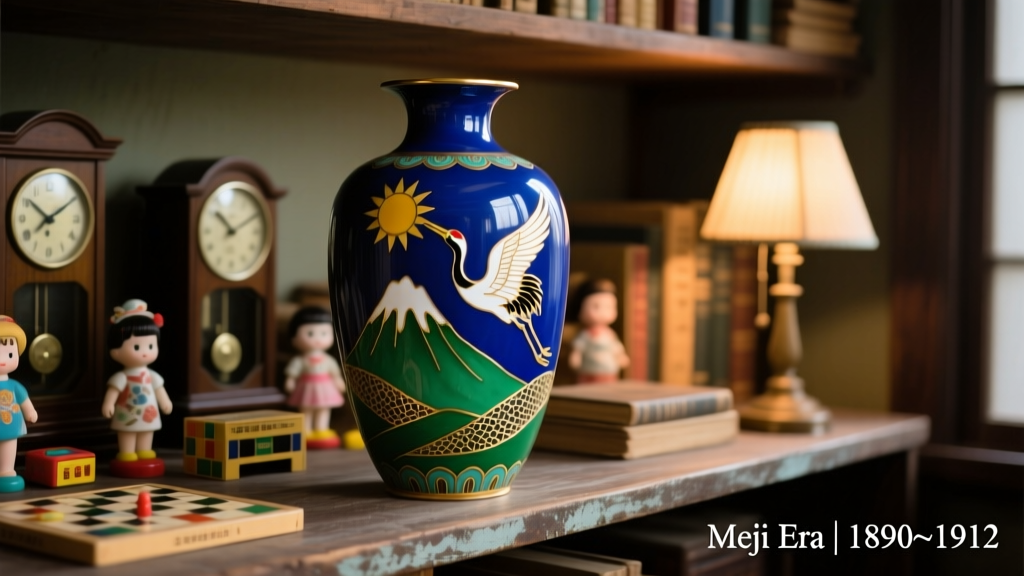
Cloisonné Vase: Sun Crane Hill Design, Japan — A Mid-Century Masterpiece at 12 Inches