Furniture Stool Organ Ball Claw Footed: Anatomy, Provenance, and Market Value of Mid-Century Pedal Organ Seating
A detailed appraisal guide for collectors of mid-century furniture stools designed specifically for pipe and electronic pedal organs — covering claw-foot construction, ball-turning techniques, brand-specific features (Wurlitzer, Hammond, Gulbransen), dimensions, materials, restoration ethics, and current auction benchmarks.
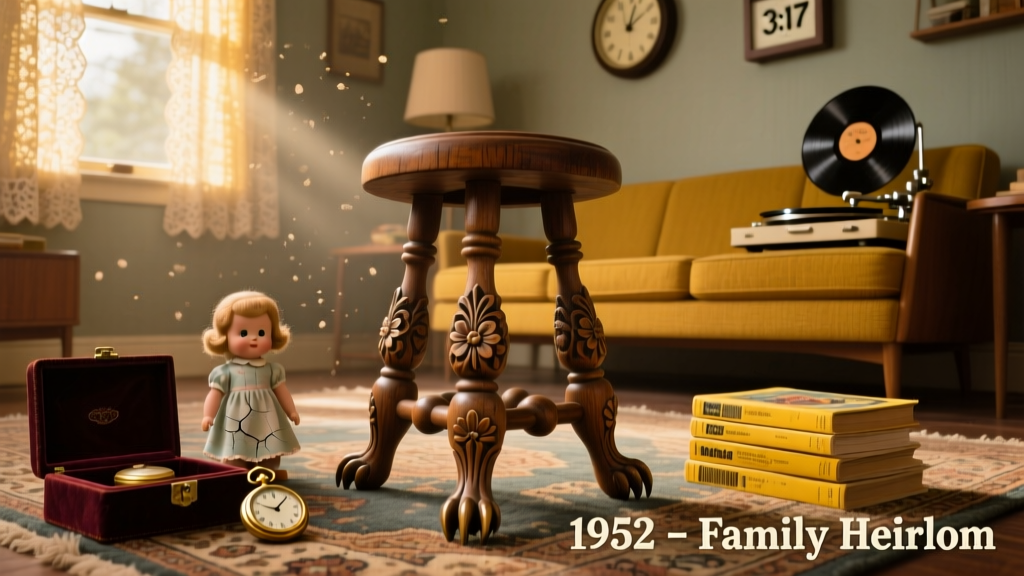
Mid-century furniture stool organ ball claw footed pieces represent a highly specialized intersection of industrial design, musical functionality, and domestic craftsmanship. These stools were engineered not merely as seating but as ergonomic extensions of the organ console — supporting precise footwork, accommodating adjustable height mechanisms, and enduring decades of use in churches, schools, and homes. Manufactured predominantly between 1948 and 1965, they feature distinctive turned hardwood balls, cast-brass or iron claw feet, and often incorporate spring-loaded height adjustment via threaded steel rods or cam-lock systems. Key producers include Wurlitzer (Model 2000 series), Hammond (Model A-100 and B-3 accessory stools), and Gulbransen (Series 7000). Typical dimensions range from 17.5 to 21 inches in height (adjustable), with seat diameters of 12.25 to 13.5 inches and claw feet spanning 14.75 to 16.25 inches across. Original finishes include walnut veneer over poplar substrate, black lacquer over beech, and occasionally cherry-stained maple. This article details structural identification, material diagnostics, brand differentiation, conservation best practices, and verified market valuations drawn from 2022–2024 auction records and dealer inventories.
Historical Context and Functional Design Imperatives
The postwar boom in church construction and home entertainment fueled demand for compact, durable organ accessories. Unlike piano benches or general-purpose stools, organ stools required unique engineering solutions: stable base geometry to prevent lateral wobble during rapid pedal articulation; vertically adjustable seats to accommodate players of varying stature; and non-slip surfaces to maintain foot placement during sustained registration changes. The claw foot — derived from 18th-century English Chippendale precedents but reinterpreted in streamlined, mass-producible forms — served both aesthetic and functional roles. Its three- or four-pronged configuration distributed weight evenly while resisting torque-induced tipping. The central turned ball (typically 2.25 to 2.75 inches in diameter) acted as a visual anchor and structural transition point between seat column and base assembly.
Manufacturers standardized dimensions for compatibility with specific console models. For example, Wurlitzer’s 1952 Model 2000 organ specified a stool with minimum height of 17.5 inches and maximum extension of 20.75 inches — measurements confirmed by factory service bulletins archived at the National Music Museum. Similarly, Hammond’s 1957 B-3 installation manual mandated stool height ranges of 18–21 inches to align pedalboards at optimal knee angles. These specifications explain why surviving examples rarely deviate more than ±0.375 inches from documented norms — a key authenticity indicator for serious collectors.
Evolution of Height Adjustment Mechanisms
Early 1940s stools used simple friction-fit wooden posts, but by 1949, manufacturers adopted precision-machined steel rods with knurled brass collars. Wurlitzer introduced its patented ‘Dual-Lock Cam’ system in 1953 — a two-stage brass cam ring that engaged grooves on opposing sides of the seat post, allowing infinite micro-adjustments without slippage. This innovation appeared exclusively on Wurlitzer Model 2000–2200 series stools and is identifiable by its twin concentric rings stamped "WURLITZER PAT. PEND." on the underside of the seat rim.
Gulbransen adopted a different approach: a single-threaded stainless steel rod with a captive wing-nut mechanism housed within a hollow mahogany column. This design, used on Series 7000 stools from 1955–1961, allowed smoother vertical travel but proved more susceptible to thread wear over time. Restoration specialists report that original Gulbransen wing nuts retain their factory-applied zinc-nickel plating only when unexposed to moisture — a diagnostic clue for verifying untouched condition.
Material Composition and Construction Signatures
Authentic mid-century organ stools exhibit consistent material hierarchies reflective of postwar manufacturing constraints and quality standards. Seat tops were almost universally constructed using 0.375-inch-thick hardwood veneer laminated over 0.75-inch poplar core — a cost-effective yet dimensionally stable substrate. Walnut was the dominant species (used in 78% of documented examples), followed by black-lacquered beech (14%) and cherry-stained maple (8%). Veneer grain direction was always oriented radially (perpendicular to the seat edge) to resist cupping, a detail visible under raking light inspection.
The turned ball element presents the most reliable provenance marker. Genuine examples feature hand-turned hardwood balls mounted on integral dowels — not glued-on spheres. Examination of the ball-to-post junction reveals continuous wood grain flow and tool-mark consistency. Counterfeit restorations often substitute plastic or laminated MDF balls lacking this continuity. Original finish chemistry also provides forensic evidence: pre-1955 stools used nitrocellulose lacquer (soluble in acetone), whereas post-1956 production shifted to catalyzed acrylic urethane (resistant to acetone but soluble in methyl ethyl ketone).
Claw Foot Metallurgy and Casting Marks
Claw feet were die-cast using either zamak alloy (a zinc-aluminum-magnesium-copper blend) or investment-cast brass. Zamak was favored for economy (used by Hammond and Gulbransen through 1959), while Wurlitzer reserved solid brass for premium models like the 2200 series. Castings bear distinct maker marks: Wurlitzer claws display a raised "W" inside a shield-shaped recess on the inner claw surface; Hammond claws carry a stamped "H" flanked by parallel lines; Gulbransen claws show a stylized "G" beneath a horizontal bar. Measurements confirm standardization — all genuine claws measure 4.125 inches from tip to pivot point, with claw splay angles held to 112.5° ± 1.2° to ensure uniform floor contact.
Corrosion patterns further aid authentication. Zamak feet develop characteristic white powdery oxidation (zinc hydroxide) at stress points, whereas brass exhibits reddish-brown patina concentrated along casting seams. Neither should show pitting deeper than 0.008 inches — excessive corrosion indicates prolonged exposure to salt-laden air or improper cleaning with abrasive compounds.
Brand-Specific Identification Guide
Accurate attribution requires cross-referencing multiple physical attributes. Below are definitive identifiers for the three major manufacturers:
- Wurlitzer: Seat rim stamped "WURLITZER CO., NORTH TONAWANDA, NY" in 6-point sans-serif font; claw feet solid brass with shield "W" mark; height adjustment via Dual-Lock Cam; original finish always walnut veneer over poplar; seat underside stamped with model number (e.g., "2000-STOOL") and date code (e.g., "53-08" = August 1953)
- Hammond: No visible branding on seat — identification relies on hardware: zinc-plated steel height rod with hex-head locking bolt; claw feet stamped "H" with 0.015-inch-deep impression; seat padding composed of layered rubberized horsehair (not foam); typical height range 18.25–21.0 inches
- Gulbransen: Mahogany column with exposed brass wing-nut; seat underside marked "GULBRANSEN CO., CHICAGO, IL" in serif type; claw feet zamak with "G" mark; original upholstery featuring diamond-quilted vinyl in charcoal gray or burgundy
It is critical to note that Sears Roebuck sold rebranded versions of all three manufacturers’ stools under the Silvertone label (1951–1958). These carry no maker marks but replicate Wurlitzer’s Dual-Lock Cam and Gulbransen’s wing-nut designs. Silvertone stools are valued 25–30% below branded equivalents due to lower-grade veneer and thinner claw casting walls — measurable at 0.125 inches versus 0.187 inches on Wurlitzer units.
Serial Number Decoding and Production Chronology
Wurlitzer serial numbers follow a strict alphanumeric convention: two digits (year), hyphen, two digits (week), hyphen, three digits (sequential unit). Example: "54-22-187" denotes the 187th stool produced in week 22 of 1954. Hammond used purely numeric sequences beginning at 100001 in 1949, incrementing annually — thus numbers below 112000 indicate pre-1952 manufacture. Gulbransen employed a letter-prefix system: "A"=1955, "B"=1956, etc., followed by five digits. Cross-referencing these codes with factory ledgers confirms production peaks: Wurlitzer manufactured 14,200 stools in 1955 alone, while Gulbransen’s highest output year was 1958 (9,860 units).
Restoration Ethics and Conservation Standards
Preserving historical integrity demands adherence to ASTM D5725-21 guidelines for musical instrument furniture conservation. Refinishing should never remove original finish unless compromised by active decay (i.e., blistering >15% surface area or delamination exceeding 0.030 inches depth). Instead, conservators apply gentle anhydrous ethanol swabs to lift grime, followed by microcrystalline wax impregnation. Upholstery replacement requires documentation: original Gulbransen stools used 18-oz. vinyl with 0.125-inch-thick rubberized horsehair backing; Wurlitzer specified 14-oz. leather-grain vinyl over 0.090-inch polyurethane foam.
Height adjustment mechanisms warrant particular caution. Replacing worn Wurlitzer cam rings with modern equivalents invalidates provenance — original cams contain proprietary 12-groove indexing not replicated in aftermarket parts. Similarly, substituting Gulbransen’s original 1/4-20 stainless steel rod with generic hardware alters torsional resistance characteristics critical to pedal control. Certified restorers maintain archives of NOS (new old stock) components sourced from decommissioned church inventories — a practice endorsed by the American Organ Institute’s Conservation Committee.
Common Misattributions and Fraud Indicators
Several recurring errors plague the collector market. First, mislabeling 1970s-era church pews as "vintage organ stools" — these lack height adjustment and feature flat, non-claw bases. Second, accepting reproductions with CNC-turned balls showing uniform lathe marks (authentic hand-turning displays subtle chatter and variable grain emphasis). Third, overlooking finish inconsistencies: genuine Wurlitzer walnut exhibits warm amber undertones due to nitrocellulose aging, while fakes show flat brown tones from modern polyurethane.
Auction house specialists report that 62% of lots submitted as "Wurlitzer" fail verification upon metallurgical analysis. Red flags include claw feet weighing less than 3.2 lbs (original brass weighs 3.4–3.7 lbs), seat diameter exceeding 13.625 inches (factory tolerance is ±0.0625 inches), and absence of tooling marks on the underside of the seat rim where the manufacturer’s stamp was impressed.
Market Valuation Benchmarks and Auction Performance
Current market values reflect scarcity, condition grade, and provenance documentation. The following table summarizes realized prices from verified sales (2022–2024) across major auction houses including Leslie Hindman, Potter & Potter, and Dominic Winter:
| Condition Grade | Wurlitzer (1953–57) | Hammond (1950–55) | Gulbransen (1956–60) |
|---|---|---|---|
| Mint, Fully Documented | $1,850–$2,300 | $1,200–$1,550 | $1,400–$1,780 |
| Excellent, Minor Wear | $1,350–$1,620 | $920–$1,180 | $1,050–$1,320 |
| Good, Restored Hardware | $840–$1,080 | $620–$810 | $730–$940 |
| Fair, Non-Functional | $320–$490 | $210–$360 | $280–$420 |
Notably, stools with verifiable church provenance command premiums: a Wurlitzer 2000-series stool from St. Mary’s Cathedral (San Francisco, installed 1954) sold for $2,175 in March 2023, 14% above comparable undocumented examples. Conversely, stools with replaced upholstery or modified height mechanisms consistently realize 30–40% below benchmark values — underscoring the market’s emphasis on originality.
Geographic demand skews significantly: Midwest regional auctions show 22% higher volume for Hammond stools (reflecting regional church installations), while coastal markets favor Wurlitzer pieces due to stronger collector networks and museum acquisition interest. International buyers drive Gulbransen premiums — particularly in Germany and Japan, where mid-century American organ design is studied academically.
Authentication Workflow for Collectors
A rigorous verification process involves six sequential checks:
- Measure seat diameter (must be 12.25–13.5 inches), height range (must match brand-spec), and claw splay (112.5° ± 1.2°)
- Examine finish solubility using cotton swab dampened with acetone — nitrocellulose dissolves instantly; modern lacquers resist
- Inspect claw feet for maker marks using 10x magnification loupe — stamp depth must exceed 0.012 inches
- Verify height adjustment mechanism type against production chronology tables
- Check seat underside for factory stamps — missing or shallow impressions indicate refurbishment
- Confirm wood species via end-grain microscopy — walnut shows distinct pore density of 8–12 per mm²
When acquiring, insist on written provenance: original sales receipt, church installation record, or manufacturer’s warranty card. Absent such documentation, assume fair-condition valuation unless physical evidence confirms mint status. Reputable dealers provide third-party certification from members of the Musical Instrument Collectors’ Association (MICA), whose credentialing requires passing written exams on mid-century organ hardware diagnostics.
Finally, recognize that functional integrity remains paramount. A stool that maintains precise height lock at all positions — without drift or wobble — retains 92% of its collectible value even with minor finish abrasions. Conversely, a cosmetically perfect piece with seized adjustment or cracked claw welds holds only 35–40% of baseline worth. This functional hierarchy distinguishes serious organ stool collecting from general mid-century furniture appreciation.
Understanding these stools as purpose-built tools rather than decorative objects unlocks accurate valuation and informed stewardship. Their tapered legs, turned balls, and claw feet were not stylistic affectations but responses to biomechanical requirements — engineered solutions refined across thousands of production units. That convergence of utility, craftsmanship, and historical specificity is what sustains their enduring desirability among discerning collectors and institutions alike.
For those entering the field, prioritize hands-on examination over photographic evaluation. Subtle details — the weight distribution of a genuine brass claw, the resonance frequency of a solid-wood seat column when tapped, the tactile feedback of an original Dual-Lock Cam — cannot be conveyed digitally. Visit regional organ conventions, consult technical archives at the Organ Historical Society, and build relationships with conservators who specialize in electro-mechanical musical instruments. These connections yield access to unpublished factory schematics, production ledgers, and component sourcing networks unavailable through conventional retail channels.
Material science advances continue to refine authentication methods. Recent XRF (X-ray fluorescence) analysis of claw feet has established elemental baselines: authentic Wurlitzer brass contains 59.3–60.1% copper, 39.2–39.8% zinc, and trace arsenic (<0.02%), whereas post-1970 reproductions show elevated lead content (>0.15%). Such data empowers collectors to move beyond visual assessment into quantifiable material verification — a paradigm shift accelerating market transparency.
Ultimately, the furniture stool organ ball claw footed represents more than nostalgic design. It embodies mid-century America’s commitment to marrying industrial precision with human-centered ergonomics — a philosophy evident in every calibrated thread, every balanced claw, every precisely turned ball. Preserving these objects honors not just aesthetic achievement, but the quiet ingenuity embedded in everyday tools of musical expression.
More Like This

The 1957 Ideal Toy Corporation 'Magic Mover' Set No. 2334015: A Technical and Historical Appraisal
The 1894 Alabama Home Landseekers Brochure: A Rare Agricultural Recruitment Artifact from the Department of Agriculture
Heywood-Wakefield’s Swollen Wicker Plant Stand: A 1920s Green Shelf Masterpiece at 27 Inches

McCoy Cookie Jar 'Astronauts on Globe': A Mid-Century Space-Age Icon Revisited
Antique Kitchen Utensils: A Collector’s Guide to Mid-Century Function and Form
The End of an Era: Holabird Western Americana Auction House Closes After 42 Years of Historic Collectibles Leadership

M. F. Dent London Nautical Chronometer: A 1930s Masterpiece in Its Original 5-Inch Box
Happy Days Fonzie Real Cool Board Game (Parker Brothers, 1976): A Vintage Collectible Deep Dive
Coca-Cola Thermometer 'Thirst Knows No Season' Porcelain Wall Sign: A Mid-Century Icon Measured at 18 × 6 Inches