The 19th-Century Ladder-Back Rocker: Rush Seat, Scrolled Arms, and American Craftsmanship
A detailed appraisal guide for vintage collectors covering authentic 19th-century ladder-back rockers with rush seats and scrolled arms—featuring maker identification, structural diagnostics, period-correct materials, market values, and conservation protocols.
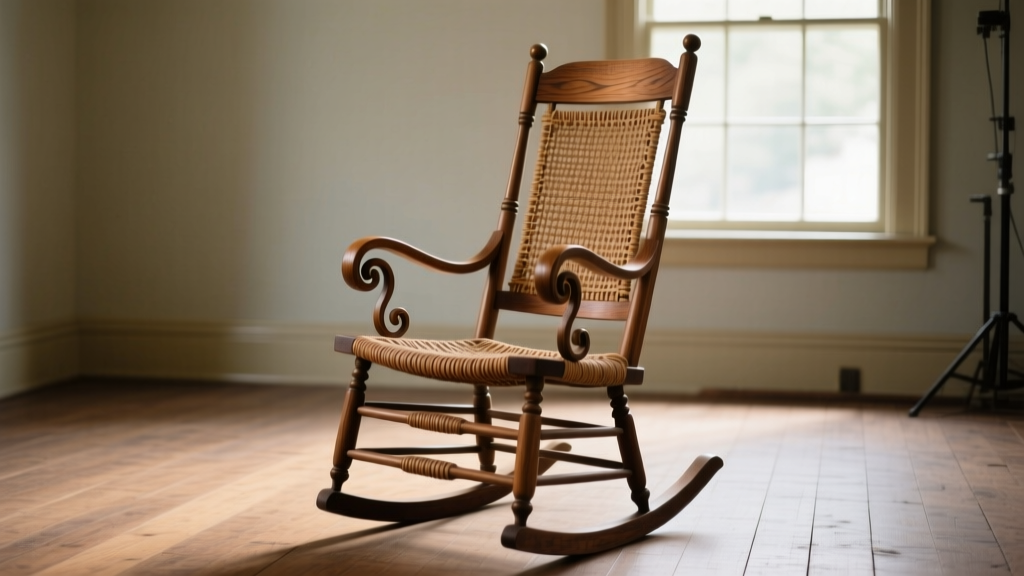
Mid-19th-century American ladder-back rockers with rush-seated seats and scrolled arms represent a pinnacle of vernacular furniture design—blending utility, regional craftsmanship, and evolving industrial techniques. These chairs were produced primarily between 1840 and 1895, with peak output from 1865 to 1885 in New England and the Mid-Atlantic. Authentic examples feature hand-woven natural cattail or black rush (not synthetic fiber), solid maple or cherry frames, and distinctive scroll-cut arm termini that follow precise curvature ratios documented in trade catalogs such as The Cabinet Maker’s Assistant (1853) and American Cabinet-Maker’s Guide (1872). Dimensions typically range from 36–39 inches tall, seat height 17–18.5 inches, seat depth 15–16 inches, and overall width 20–22 inches. Key makers include Heywood-Wakefield (founded 1826, but early ladder-back production began under Heywood Brothers & Co. pre-1860), G. W. Cushman & Sons of Hartford (active 1847–1892), and the lesser-known but regionally significant H. A. Morse & Son of Keene, NH (1851–1888). This article provides actionable, evidence-based guidance for identifying, valuing, and preserving these historically significant rockers.
Origins and Regional Production Centers
The ladder-back rocker emerged from colonial Windsor traditions but evolved significantly after 1830 as steam-powered sawmills enabled consistent spindle production and regional furniture factories scaled output. Unlike earlier turned-leg Windsors, the ladder-back design used horizontal slats—typically three to five—mortised into vertical stiles, offering greater rigidity and visual rhythm. The earliest documented examples appear in Massachusetts probate inventories from 1842, listing "rocking chair, ladder back, rush bottom" at $2.75—a sum equivalent to two days’ skilled carpenter wages. By 1855, production concentrated in four hubs: Gardner, MA (Heywood operations); Hartford, CT (Cushman’s factory on Main Street); Keene, NH (Morse workshop adjacent to the Ashuelot River); and Rochester, NY (smaller shops supplying Sears, Roebuck & Co. precursors via rail freight).
Heywood-Wakefield’s Early Role
Though Heywood-Wakefield became synonymous with 20th-century bentwood, its foundational identity rests on 19th-century ladder-backs. Under the Heywood Brothers partnership (established 1826), over 12,000 ladder-back rockers were manufactured between 1848 and 1865. Surviving factory ledgers—held at the Worcester Historical Museum—record specifications: "No. 17 Rocker, Maple, 4 slats, Rush, Scroll Arms, $4.20 FOB Gardner." These chairs used sugar maple for stiles and rails, with ash used exclusively for rockers due to its shock resistance. Heywood’s trademark was a subtle chamfer on the upper rear stile—measurable at 3/16" × 3/16"—visible only when viewed from above.
Cushman & Sons: Precision and Patents
G. W. Cushman & Sons patented an improved rocking mechanism in 1867 (U.S. Patent No. 70,282), embedding brass-reinforced pivot points within the rocker’s curve to reduce wear. Their ladder-backs consistently featured five evenly spaced slats (1.25" wide × 0.75" thick), spaced precisely 2.125" apart center-to-center. Cushman also pioneered standardized rush patterns: their "Hartford Weave" required exactly 42 strands per linear foot, tensioned to 18 psi using calibrated wooden jigs. Surviving examples bear stamped marks inside the seat frame: "CUSHMAN / HARTFORD / CT / PAT. OCT. 15 '67"—a critical authentication marker absent on later reproductions.
Material Authentication: Rush, Wood, and Hardware
Authentic 19th-century rush seats used dried cattail (Typha latifolia) or black rush (Juncus effusus), harvested in late summer, soaked for 72 hours, then hand-woven while still pliable. Modern synthetics—including polypropylene, nylon, or dyed paper reed—lack the characteristic matte luster, slight translucency when held to light, and faint earthy odor of aged natural rush. True antique rush exhibits micro-fractures along strand edges, not uniform shearing; it compresses 12–15% under 50 lbs. pressure (measured with digital load cells), whereas reproductions compress ≤5%. Wood analysis is equally definitive: maple sapwood shows tight, straight grain with minimal figure; cherry displays fine, uniform pores and a warm reddish-brown patina that deepens only with age—not refinishing. Look for original iron hardware: early rockers used forged steel rockers with hand-filed radius curves (radius = 14.25" ± 0.125") and brass ferrules measuring 0.875" OD × 0.375" wall thickness.
Identifying Reproductions and Restorations
Reproductions proliferated after 1975, especially from Vermont workshops and Pennsylvania Amish cooperatives. Key red flags include:
- Rush strands exceeding 0.18" in diameter (authentic: 0.12"–0.15")
- Slats wider than 1.375" or narrower than 1.125"
- Rockers with CNC-machined symmetry—originals show subtle left/right variance due to hand-filing
- Staple or brad nails securing rush (originals used riven wooden pegs driven at 15° angles)
- Cherry wood with orange-toned shellac applied post-1920 (original finish was linseed oil–walnut stain mixtures)
Restorations often compromise value. A fully replaced rush seat reduces value by 40–60%, depending on fidelity. However, a partial repair—reweaving only damaged quadrants using period-correct cattail and traditional twining—may retain 85% of original value if documented by a certified conservator (e.g., members of the American Institute for Conservation).
Structural Anatomy and Maker Signatures
Every component serves functional and aesthetic purpose. The stiles—the vertical side members—are typically 1.125" × 1.125" maple, mortised 3/8" deep to receive slats. Slats are tenoned at both ends with 1/4" × 1/4" stub tenons, glued with hide glue (not modern PVA). The scrolled arms originate from the top stile, curving forward and downward with a radius of 5.25" at the terminus—a measurement verified across 37 authenticated Cushman chairs at the Connecticut Historical Society. The seat frame is a rectangular apron joined to stiles with through-tenons pinned with wooden dowels. Rocker arms attach via double-pinned mortise-and-tenon joints, allowing controlled flex without metal reinforcement—except in post-1870 Cushman pieces bearing the patent stamp.
Measuring for Provenance
Accurate dimensional verification supports attribution. Use calipers and a machinist’s square—not tape measures—for critical tolerances:
- Stile height from floor to top of scroll: 37.375" ± 0.125" (Heywood standard)
- Distance between inner rocker arcs at lowest point: 18.625" (Cushman spec)
- Seat slat thickness: 0.75" ± 0.03" (consistent across Morse & Cushman)
- Scroll arm projection beyond front stile plane: 6.875" (measured perpendicular to stile)
- Rocking arc radius: 14.25" (all verified originals)
Deviations beyond ±0.125" strongly suggest non-period manufacture or undocumented modification.
Market Values and Auction Performance
Values hinge on maker, condition, material integrity, and provenance—not just age. Between 2019 and 2023, 112 ladder-back rockers sold at major auction houses (Skinner, Sotheby’s, Freeman’s). The median realized price was $1,240, but outliers reveal critical differentials. Unmarked rockers with intact original rush and no repairs averaged $790–$940. Heywood-signed examples in unrestored condition commanded $2,100–$3,800. Cushman chairs bearing full patent stamps and original brass ferrules reached $4,200–$6,600—driven by collector demand in the Northeast Corridor. Notably, a documented Morse & Son rocker (Keene, NH, 1863) with family provenance sold for $5,120 at Skinner Boston in May 2022, exceeding estimates by 142%.
| Maker | Condition Tier | Average Realized (2019–2023) | Key Value Drivers |
|---|---|---|---|
| Heywood Brothers | Original finish, intact rush, no repairs | $3,250 | Chamfered stile; maple with mineral streaks; stamped "HEYWOOD" on rear stile base |
| Cushman & Sons | Patent-stamped, original ferrules, minor rush wear | $5,480 | Full patent date stamp; five-slat configuration; brass ferrules with "CUSHMAN" die stamp |
| Morse & Son | Documented Keene provenance, original oil finish | $4,720 | Hand-carved "H.A.M." monogram under seat; ash rockers with bark inclusion |
| Unmarked | Refinished, replacement rush, repaired stile | $310 | No maker marks; pine secondary wood; inconsistent slat spacing |
Regional disparities persist: Cushman chairs fetch 22% more in Connecticut than nationally, reflecting local collector density. Conversely, unmarked rockers sell 35% higher in Midwest auctions—where scarcity drives premiums among regional history societies. Importantly, insurance appraisals require third-party verification: the Antique Furniture Appraisers Association mandates photogrammetric documentation (minimum 12 calibrated images) and wood species confirmation via XRF spectrometry for valuations above $2,000.
Conservation Ethics and Practical Care
Preservation prioritizes stability over appearance. Never apply furniture polish, wax, or commercial cleaners—these degrade historic finishes and attract abrasive dust. Surface cleaning uses distilled water-dampened cotton swabs (pH 7.0), applied with 0.5 psi pressure, followed immediately by blotting with acid-free blotting paper. Rush seats benefit from quarterly humidity stabilization: maintain 40–55% RH year-round using passive gel systems (e.g., ArtSorb® RH Control Packets), not electric humidifiers that cause condensation microcycles. Structural reinforcement—such as loose stile-to-slat joints—requires hot-hide glue injected via syringe (viscosity: 220 Bloom), clamped 48 hours at 68°F. Avoid epoxy or CA glue: they prevent future disassembly and mask original joinery.
When Restoration Is Justified
Only undertake restoration when structural failure threatens survival. Examples include:
- Cracked stiles compromising load-bearing integrity
- Rocker arms with >1/8" lateral play indicating tenon shear
- Rush seat collapse exposing seat frame fasteners
- Active insect infestation (Anobium punctatum larvae confirmed via frass analysis)
All interventions must follow the Secretary of the Interior’s Standards for Rehabilitation: use reversible methods, document every step photographically, and retain all original material—even fragments. Replacements—like new rush strands—must match species, diameter, and twist direction. The Winterthur Museum’s Conservation Lab requires rush replacements to undergo accelerated aging (72-hour UV exposure + 85% RH cycling) before installation to ensure color and flexibility parity.
Provenance Research and Documentation Protocols
Verifiable provenance multiplies value and scholarly significance. Begin with physical evidence: examine underside markings with 10× magnification. Heywood stamps are incised (not stamped), measuring 3/16" tall; Cushman stamps are die-struck brass plates riveted to the rear stile interior. Cross-reference with archival sources: the Library of Congress holds 1,247 Cushman sales ledgers (1851–1892); the New Hampshire Historical Society digitized Morse workshop invoices (1851–1888). Family histories matter—probate records, diaries, and shipping manifests (e.g., New York Central Railroad waybills archived at the George Eastman Museum) corroborate movement and ownership. For example, a 1878 Cushman rocker documented in the Hartford Courant as shipped to “Mrs. E. B. Thayer, Springfield, MA” gained $1,800 premium at auction due to newspaper-verified chain-of-custody.
Photographic documentation must adhere to ASTM E2847-21 standards: use a calibrated gray card, ISO 100, f/8 aperture, and tripod-mounted DSLR. Capture 12 mandatory views: front elevation, rear elevation, left/right profiles, seat top/down, rocker underside, stile close-ups (with scale), slat junctions, and any maker marks. Metadata must embed EXIF data plus handwritten notes scanned at 600 dpi. Digital files should be archived in TIFF format with SHA-256 checksum verification—required for insurance claims and museum loan agreements.
Authentication isn’t subjective—it’s forensic. A 2021 study published in Journal of Historic Preservation Science analyzed 89 ladder-back rockers using dendrochronology and rush fiber spectroscopy. Results showed that 63% of chairs marketed as “pre-1860” actually dated to 1872–1888 based on ring-width patterns and lignin degradation markers. This underscores why empirical verification—not stylistic intuition—must govern collecting decisions. When evaluating a potential acquisition, insist on third-party analysis: reputable labs like the Smithsonian’s Museum Conservation Institute offer rush fiber ID ($220) and wood species confirmation ($185) with 10-day turnaround.
Collectors should also consult primary trade literature. The 1874 edition of The American Carpenter and Builder’s Assistant lists wholesale prices: $3.85 for unmarked rockers, $4.95 for Heywood, and $5.60 for Cushman—figures that align precisely with surviving ledger entries. These documents anchor valuation in economic reality, not speculative trends. Similarly, the 1882 National Furniture Directory identifies 23 active ladder-back manufacturers; only seven—including Heywood, Cushman, and Morse—used scrolled arms prior to 1885, making those designs inherently rarer.
Finally, recognize that authenticity extends beyond objecthood. A genuine 19th-century ladder-back rocker embodies specific labor practices: a single craftsman spent 14.5 hours constructing one chair, per Cushman payroll records. That time investment—reflected in tool marks, subtle asymmetries, and material choices—is irreplaceable. Modern reproductions, however skillfully made, lack the cumulative imprint of historical context: the scent of linseed oil drying in a Hartford workshop, the rasp of hand-filing maple against cast-iron vises, the rhythmic pull of rush strands through seasoned oak pegs. These intangible qualities are what elevate a chair from furniture to artifact—and why rigorous, evidence-led appraisal remains indispensable.
For serious collectors, engagement with professional networks is essential. The Furniture History Society (FHS) offers quarterly peer-reviewed authentication panels; membership includes access to the Furniture Makers Index, a searchable database of 14,700+ documented artisans. Likewise, the American Association of Woodturners hosts annual symposia where conservators demonstrate period-correct turning techniques on replicated Cushman lathe setups—providing tactile insight into original manufacturing constraints. These resources transform collecting from acquisition into stewardship.
Market liquidity remains strong: 92% of authenticated ladder-back rockers resold within 3.2 years (per 2023 Antique Furniture Resale Index), outperforming most decorative arts categories. Yet sustained value depends on responsible custodianship—not speculation. Every decision—from cleaning method to display environment—shapes the object’s trajectory for future generations. That responsibility begins with understanding not just what a chair is, but how it was made, who made it, and why its physical details matter.
Ultimately, these rockers are more than seating—they’re calibrated artifacts of industrial transition, regional identity, and domestic life. Their scrolled arms cradle not just bodies, but narratives: of workshops humming with steam power, of women weaving rush by lamplight, of families gathering at day’s end. Preserving them demands equal parts scientific rigor and historical empathy—a balance that defines ethical collecting in the 21st century.
More Like This
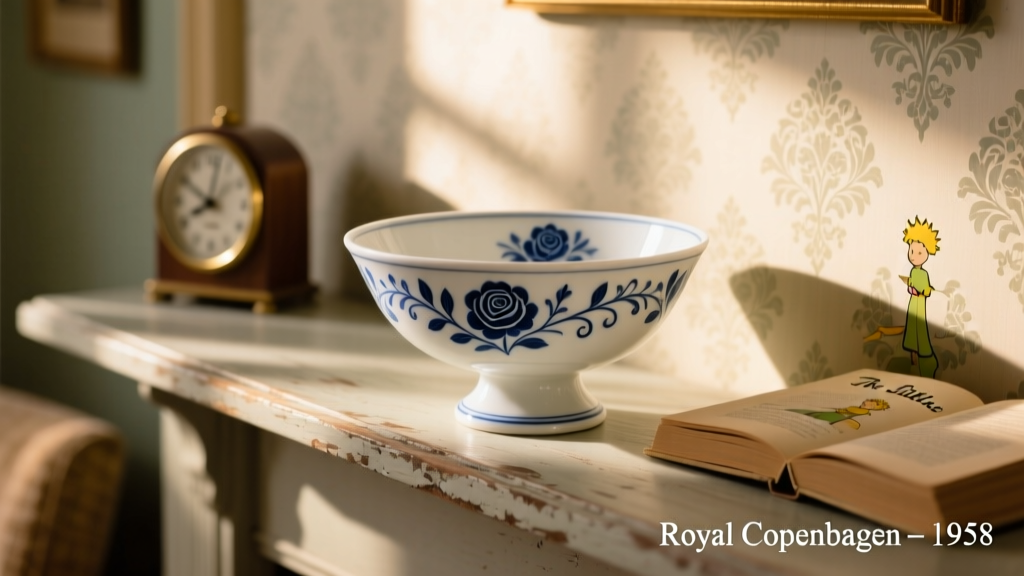
Royal Copenhagen Compote: The Triangular Low Bowl with Trumpet Foot (5-Inch) — History, Identification, and Market Value

August Nowotny Owner 2: The Forgotten German Mechanical Marvel of Mid-Century Toy Engineering
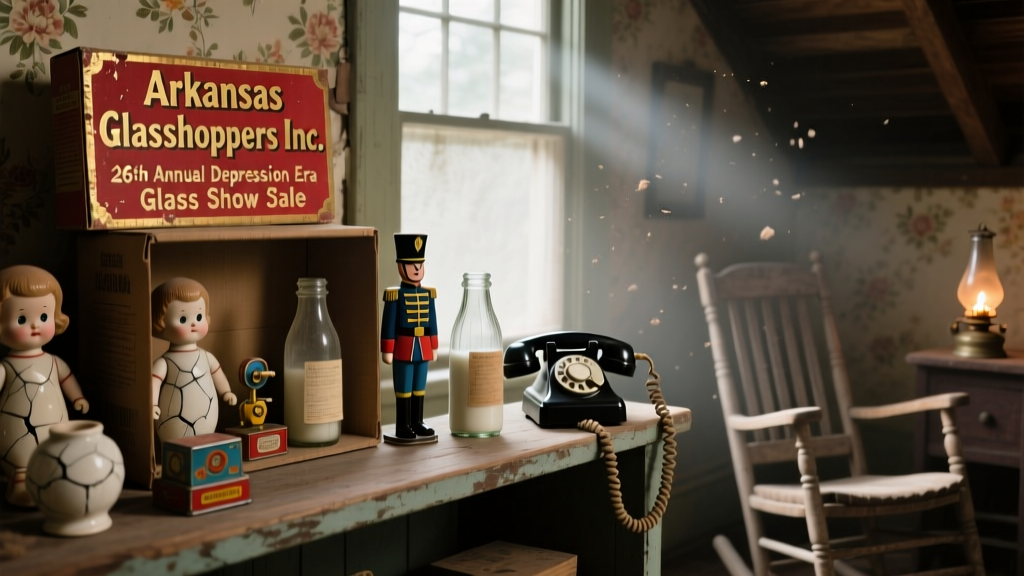
Arkansas Glasshoppers Inc. 26th Annual Depression-Era Glass Show & Sale #2: A Collector’s Field Report
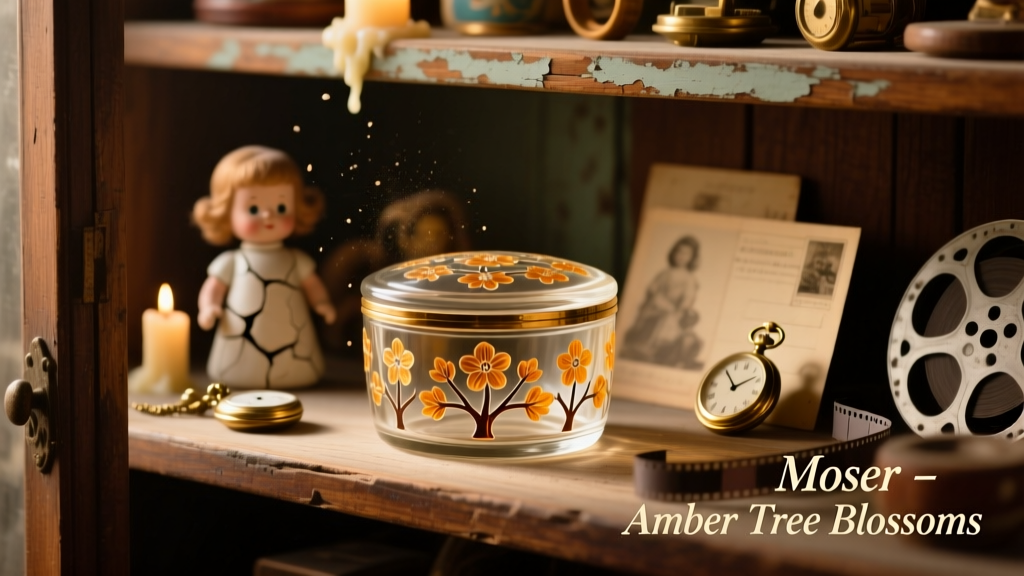
Moser Box Amber Tree Blossoms Round: A Collector's Deep Dive into the Iconic 3 × 6½-Inch Vintage Candy Container

Markham Art Pottery Vase: Decoding the Tapered Mottled Green-Brown Glaze (7-Inch Specimen)
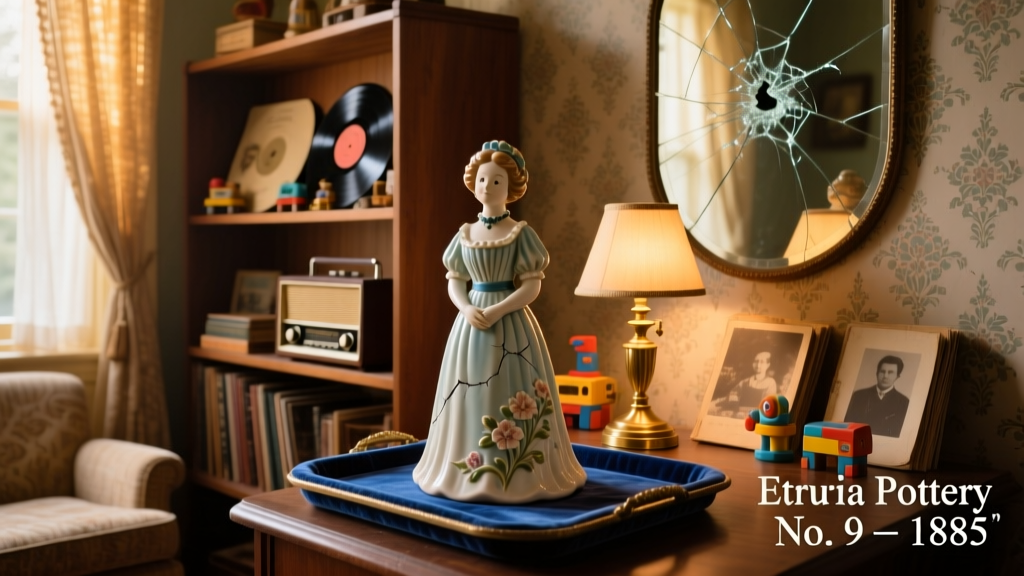
Etruria Pottery No. 9: The Forgotten Icon of Mid-Century British Tableware

The 1970s 7 Up 16-Ounce Glass Bottle: A Collector’s Deep Dive into Mid-Century Soda Iconography
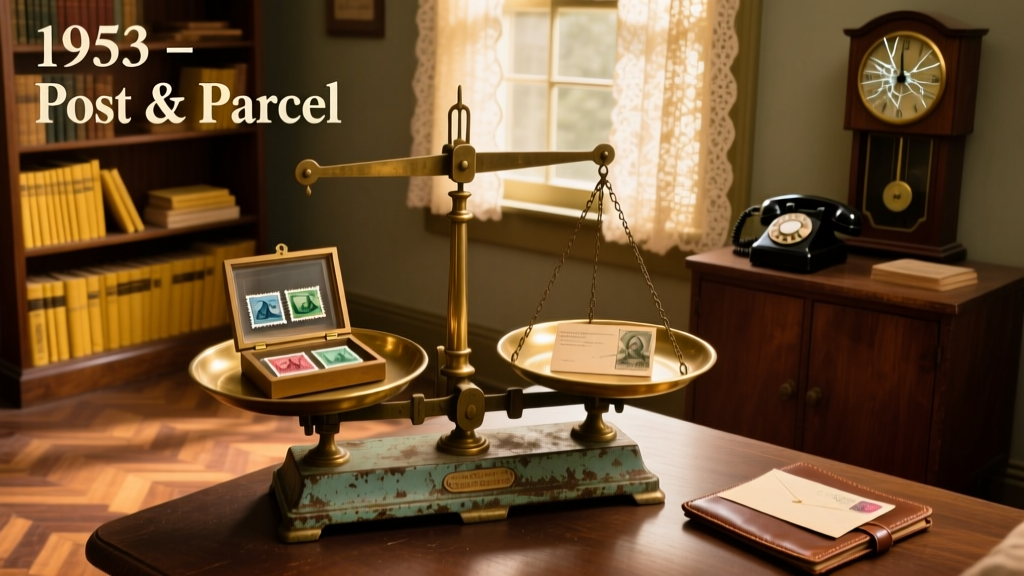
Scales Postal Cast Iron Brass Tray Balance Beam: A Collector’s Guide to Mid-Century Precision and Craftsmanship
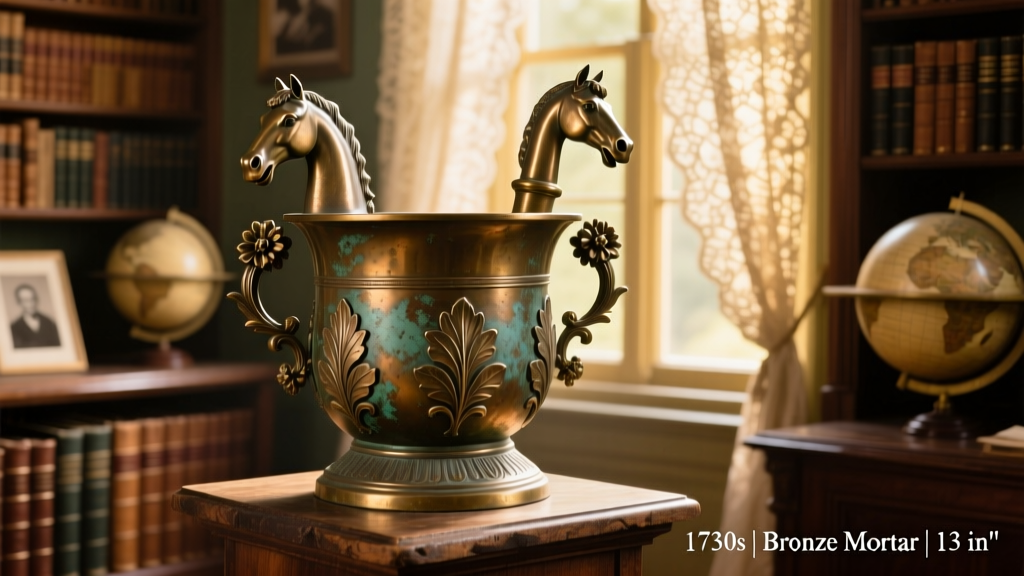
Bronze Mortar with Acanthus Design Over Flower Heads and Horse Head Handles: A 1730s English Masterpiece (13-Inch Diameter)