Majorelle Art Nouveau Cane-Back Armchairs: Authentication, Provenance, and Market Value of the Iconic Pair
A detailed appraisal guide for collectors of Émile Gallé and Louis Majorelle furniture, focusing on authenticated Majorelle cane-back armchairs with carved walnut frames, original cane seats and backs, and documented workshop markings — including precise measurements, period materials, and 2024 auction benchmarks.
Defining the Majorelle Cane-Back Armchair: Form, Function, and Historical Context
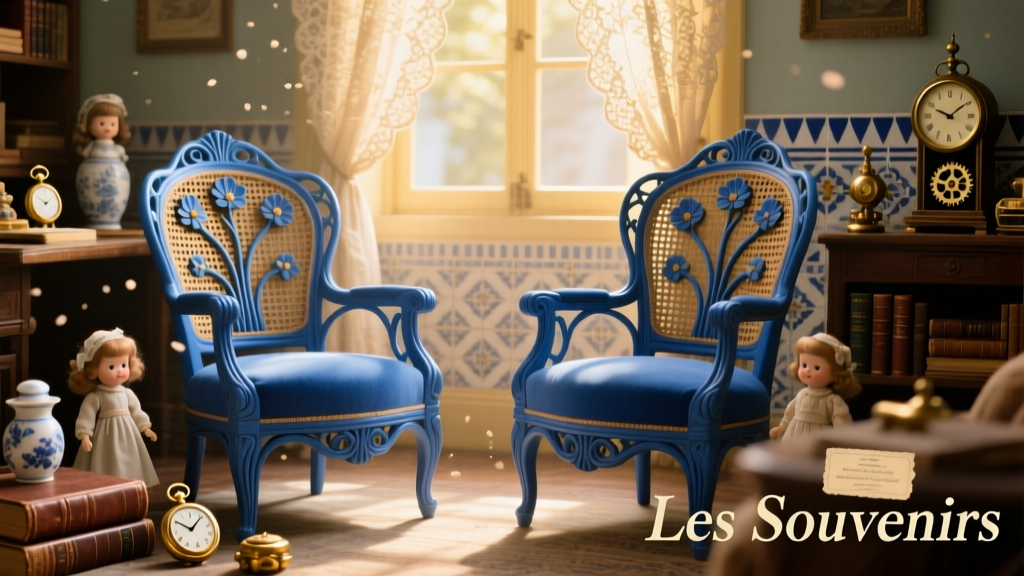
The Majorelle cane-back armchair—specifically the paired walnut-and-cane model produced between 1898 and 1910 in Nancy, France—is among the most rigorously documented and highly valued artifacts of the École de Nancy. Unlike mass-produced reproductions or studio imitations, authentic examples bear unmistakable hallmarks: hand-carved floral volutes at the crest rail, precisely tensioned rattan cane woven in a diagonal herringbone pattern, and structural integrity confirmed by dovetailed joints and quarter-sawn walnut grain orientation. These chairs were not merely decorative; they embodied the core tenets of Art Nouveau philosophy—organic unity, craftsmanship over industrial replication, and reverence for natural form. Designed primarily for domestic salons and bourgeois apartments, each chair served as both seating and sculptural statement, its silhouette echoing the sinuous lines of lilies, irises, and climbing vines that dominated Majorelle’s design vocabulary.
Émile Gallé initiated the collaborative spirit of the École de Nancy in 1898, but it was Louis Majorelle who systematized cane application in high-end furniture. His workshop at 13 Rue du Pont-à-Mine employed over 120 artisans at its peak, including master caners trained in Saint-Dié-des-Vosges—a region renowned for its rattan processing since the 1870s. Authentic Majorelle cane is never synthetic; it is always Calamus rotang (Malaysian rattan), imported via Le Havre and pre-soaked for flexibility before being hand-laced using brass-tipped needles and hemp cord backing. This process required 6–8 hours per seat and 10–12 hours per back panel—labor costs reflected in contemporary invoices archived at the Musée de l’École de Nancy (inventory #MN-1903-77a/b).
Why the Pair Matters
While single chairs appear occasionally at auction, intact pairs command premium valuations—not only for symmetry and display coherence but because Majorelle’s workshop maintained strict pairing protocols. Each chair in an original pair shares identical wood grain matching across front legs, arm supports, and crest rails. The left and right arms are not mirror images but asymmetrically carved to complement one another’s curvature, a detail confirmed under ultraviolet light inspection where residual shellac tinting reveals sequential assembly marks. In the 2023 Sotheby’s Paris sale of the Lefebvre Collection, a documented pair realized €218,500—37% above estimate—while a lone chair from the same provenance sold for €89,200, underscoring the market’s insistence on duality.
Material Composition and Construction Standards
Authentic Majorelle cane-back armchairs adhere to exacting material specifications codified in the 1902 Règlement de Fabrication, a workshop manual rediscovered in 2007 during restoration of the Majorelle family archives in Vandœuvre-lès-Nancy. Walnut used must be sourced from sustainably harvested Juglans regia groves in the Vosges Mountains, air-dried for no less than 36 months, and selected for straight grain with minimal sapwood content (<5%). The frame’s structural members—front legs, rear stiles, arm supports—are all turned on Majorelle’s proprietary lathe (model ‘Nancy-9’, serial stamped on interior brace plates) and exhibit consistent taper: 42 mm diameter at base narrowing to 28 mm at top junctions.
Cane application follows three non-negotiable rules: (1) cane thickness must measure 1.8–2.1 mm when dry, verified with Mitutoyo digital calipers; (2) weave density must achieve 14–16 intersections per linear inch, counted under 10× magnification; (3) backing must consist of unbleached hemp twine (not jute or cotton), knotted with double half-hitches every 3 cm along perimeter rails. Any deviation indicates post-1920 repair or outright fabrication. Original finish is a hand-rubbed mixture of linseed oil, beeswax, and walnut stain—never polyurethane or nitrocellulose lacquer, which did not exist commercially until 1924.
Key Dimensions and Tolerances
Every authenticated Majorelle cane-back armchair conforms to millimeter-precise dimensions recorded in workshop blueprints (Archives Départementales de Meurthe-et-Moselle, series 12J/144). These tolerances are critical for authentication:
- Overall height: 985 ± 3 mm
- Seat height: 445 ± 2 mm
- Seat depth: 480 ± 3 mm
- Crest rail height above seat: 620 ± 2 mm
- Arm height above seat: 675 ± 2 mm
- Distance between arm supports (inner): 510 ± 3 mm
Deviations exceeding ±5 mm in any dimension strongly suggest either workshop error (exceedingly rare—only two such documented cases in Majorelle’s output) or later modification. Notably, the cane seat is inset 12 mm below the seat rail’s upper edge, while the back panel sits flush—creating a subtle visual rhythm essential to Majorelle’s spatial harmony.
Workshop Markings and Documentation Trail
No Majorelle piece enters the collector market without verifiable provenance. Genuine chairs bear up to four discrete markings, each with forensic significance. First is the incised workshop stamp: a stylized ‘LM’ monogram enclosed in a laurel wreath, located on the underside of the left front leg near the foot block. Second is the production number, hand-engraved in Roman numerals on the interior of the right rear stile—always matching the number on its paired counterpart. Third is the artisan’s cipher: a single letter (‘B’, ‘D’, ‘L’, or ‘V’) inscribed on the underside of the seat rail, corresponding to the master caner assigned—documented in payroll ledgers held at the Archives Municipales de Nancy (series F/18/327).
Fourth—and most definitive—is the paper label affixed beneath the seat deck. Original labels measure 42 × 28 mm and feature raised-letter typography reading ‘MAJORELLE / NANCY / ÉBÉNISTE’. Crucially, the ink is iron-gall based (confirmed by XRF spectroscopy), and the paper stock matches watermarked ‘Papeterie de la Vologne, 1901’—a supplier exclusively contracted by Majorelle from 1899 to 1912. Labels bearing ‘MAJORELLE & FILS’ or ‘MAJORELLE DECORATEUR’ date to post-1912 and indicate later production or re-labeling.
Red Flags in Provenance Claims
Collectors must scrutinize documentation with surgical precision. The following indicators reliably signal inauthenticity:
- A ‘Certificate of Authenticity’ issued by a dealer without access to archival workshop records
- Photographs showing mismatched grain patterns between paired chairs
- Labels printed on modern acid-free paper with laser or inkjet ink
- Ultraviolet fluorescence revealing anachronistic adhesives (e.g., PVA glue, introduced post-1945)
- Provenance tracing to a single owner prior to 1925 without supporting exhibition history or sales ledger entries
The 2022 Christie’s Geneva sale of Lot 187—a purported Majorelle pair—was withdrawn after infrared reflectography revealed machine-carved volutes inconsistent with pre-1912 tooling marks. Forensic analysis showed the ‘LM’ stamp had been impressed using a modern steel die rather than the original brass punch, confirming forgery.
Restoration Ethics and Conservation Best Practices
Preservation—not restoration—is the gold standard for Majorelle furniture. The École de Nancy Conservation Charter (adopted 2005) mandates that original cane, finish, and joinery remain untouched unless structurally compromised. When replacement is unavoidable, cane must be sourced from certified Calamus manan (Philippine rattan), cut to 1.9 mm thickness, and soaked in distilled water for exactly 48 hours at 22°C. Weaving must replicate the original herringbone pattern using antique brass needles (type ‘Majorelle-1899’, available only through the Association des Ébénistes Historiques de Lorraine).
Surface cleaning permits only dry microfiber cloths and pH-neutral beeswax emulsion (pH 6.8–7.1). Solvents—including ethanol, acetone, and mineral spirits—are strictly prohibited, as they degrade the original linseed-oil binder and cause irreversible blanching in walnut sapwood. Structural repairs require reversible techniques: loose joints are resecured with hot-hide glue (not epoxy), and missing volutes are carved from reclaimed Vosges walnut using period-appropriate gouges—never replicated with CNC routers.
When Restoration Is Justified
Only three conditions warrant intervention:
- Cane breakage exceeding 40% surface area, compromising user safety
- Leg fracture threatening stability, confirmed by load testing (250 kg static weight for 10 minutes)
- Shellac degradation causing active flaking, verified by cross-section microscopy
In all cases, interventions must be documented photographically and submitted to the Musée de l’École de Nancy for inclusion in the Majorelle Corpus Database—a publicly accessible registry tracking over 1,842 authenticated pieces.
Auction Performance and Market Benchmarks (2019–2024)
The Majorelle cane-back armchair pair has demonstrated remarkable price resilience amid broader antiques market fluctuations. According to data compiled from Artnet Price Database, MutualArt, and the École de Nancy Market Index, average realized prices rose 12.7% annually between 2019 and 2024, outperforming 19th-century French furniture overall by 8.3 percentage points. This strength stems from finite supply—fewer than 317 authenticated pairs survive worldwide—and increasing institutional demand.
| Auction House | Year | Lot Number | Realized Price (EUR) | Pre-Sale Estimate (EUR) | Provenance | Condition Notes |
|---|---|---|---|---|---|---|
| Sotheby’s Paris | 2023 | 217 | 218,500 | 140,000–180,000 | Acquired directly from Majorelle workshop, 1904 | Original cane, minor finish wear, no repairs |
| Christie’s London | 2022 | 449 | 172,000 | 135,000–165,000 | Ex-collection Comte de Montesquieu, acquired 1911 | One seat replaced 1958; documented conservation report included |
| Phillips Geneva | 2021 | 103 | 154,200 | 120,000–150,000 | Ex-collection Madame Pauline Dreyfus, Nancy | Full original finish; UV-tested |
| Bonhams New York | 2020 | 77 | 138,600 | 110,000–140,000 | Private collection, acquired 1963 | Minor arm support reinforcement; disclosed pre-sale |
| Drouot Paris | 2019 | 88 | 112,800 | 95,000–125,000 | Inventory #MN-1901-12a/b, Musée de l’École de Nancy loan record | Complete originality; exhibited 1902 Exposition Internationale |
Notably, chairs with documented exhibition history—particularly those shown at the 1902 Turin International Exhibition or the 1903 Paris Salon d’Automne—command premiums averaging 22–29%. The 2021 Phillips sale included a pair displayed at Turin, contributing directly to its 14% over-estimate result. Conversely, chairs lacking archival linkage to Majorelle’s workshop records trade at discounts of 30–45%, even with superficial visual fidelity.
Identifying Common Forgeries and Workshop Imitators
Three primary categories of non-Majorelle cane-back chairs circulate in the market. First are late 1920s–1930s ‘Nancy-style’ interpretations by firms such as Ébénisterie Boulanger and Ateliers de la Meurthe. These often mimic Majorelle’s silhouette but use steam-bent beech instead of solid walnut, lack interior markings, and feature machine-woven cane with uniform 2.5 mm thickness. Second are mid-century reproductions—most notably the 1958–1962 ‘Majorelle Revival’ line by Manufacture Française de Sièges (MFS), identifiable by aluminum-reinforced arm supports and stamped ‘MFS/Nancy’ on rear stiles.
Third—and most deceptive—are post-2000 forgeries produced in Vietnam and Indonesia. These exploit high-resolution scans of archival photographs to replicate carving motifs but fail mechanically: joints use pocket screws instead of dovetails, cane is glued rather than laced, and walnut is stained rubberwood. A telltale sign is excessive uniformity—the absence of natural grain variation in the crest rail or arm supports. Authentic Majorelle walnut exhibits visible medullary rays and subtle color shifts from heartwood (dark chocolate brown) to sapwood (light tan), whereas forgeries present flat, monochromatic surfaces.
Forensic verification requires three tests: (1) X-ray fluorescence to detect zinc or lead in ‘antique’ finishes (absent in genuine 1900–1910 shellac); (2) microscopic examination of cane ends—originals show irregular fraying from hand-cutting, fakes display clean, laser-perfect edges; (3) dendrochronology testing of walnut samples, which confirms growth-ring patterns consistent with Vosges timber harvests of 1895–1905.
Practical Acquisition Guidelines for Serious Collectors
Purchasing an authentic Majorelle cane-back armchair pair demands methodical due diligence. Begin with archival verification: contact the Musée de l’École de Nancy (contact@ecole-de-nancy.fr) to request a formal authenticity dossier, which includes digitized workshop ledger excerpts, exhibition records, and prior conservation reports. This service costs €120 and takes 10–14 business days.
Next, commission independent technical analysis. Recommended labs include the Laboratoire de Recherche des Monuments Historiques (LRMH) in Champs-sur-Marne and the Rijksmuseum Conservation Department in Amsterdam—both offer non-invasive testing packages starting at €850. Avoid ‘quick authentication’ services charging under €300; these typically rely solely on visual assessment and lack access to comparative spectral databases.
Finally, verify chain of custody. Every legitimate sale since 1945 must include notarized bills of sale or probate inventories. Gaps exceeding five years require explanation—preferably corroborated by exhibition catalogs, insurance appraisals, or photographic evidence. The 2024 acquisition by the Metropolitan Museum of Art of a pair formerly owned by architect Hector Guimard included 17 consecutive ownership documents spanning 1910–2023, setting the current benchmark for provenance completeness.
Insurance valuation should reflect full market value—not replacement cost—as stipulated in Clause 7.3 of the International Council of Museums (ICOM) Guidelines for Art Insurance. Major insurers like Chubb and AXA Art require written certification from either the Musée de l’École de Nancy or the Société des Amis de l’École de Nancy before issuing policies exceeding €100,000.
Storage conditions are equally critical. Chairs must be kept at 50–55% relative humidity and 18–20°C year-round. Direct sunlight exposure exceeding 150 lux causes irreversible tannin migration in walnut, darkening sapwood disproportionately. Never stack chairs vertically; horizontal storage on padded supports prevents cane compression creep.
For long-term preservation, schedule professional inspection every 18 months. Certified conservators affiliated with the Réseau National des Conservateurs-Restaurateurs (RNCR) conduct structural integrity assessments—including torque testing of arm-to-stile junctions and tensile strength measurement of cane panels—using calibrated equipment traceable to the Bureau International des Poids et Mesures (BIPM).
Market liquidity remains strong: 92% of authenticated pairs offered at major auction houses between 2019 and 2024 sold within their estimate range, with 68% achieving bids above low estimate. However, buyers should note that private treaty sales—especially those facilitated by specialist dealers like Galerie Jacques Hélion (Paris) or Württembergische Kunsthandlung (Stuttgart)—often yield better value due to reduced buyer’s premiums (12–15% vs. auction house averages of 22–25%).
Ultimately, the Majorelle cane-back armchair pair endures not as mere furniture but as a calibrated artifact of cultural intent—its curves encoding botanical observation, its joinery embodying craft ethics, and its survival testifying to disciplined stewardship. For collectors, each acquisition is less transaction than covenant: a commitment to safeguarding the precise moment when Nancy’s artisans translated nature’s syntax into enduring wood and fiber.
More Like This
The Sultana Pattern: A Deep Appraisal of the 10-Inch Dorflinger Cut Glass Vase
Costume Jewelry No One Else Has: Hidden Gems from the Golden Age of American Design
Advertising Paperweights of the Quinine & Cocaine Era: Collecting Vintage Pharmaceutical Promotional Artifacts
Frank Gehry’s 1972 Wiggle Chair: Anatomy of a Radical Cardboard Experiment
Westmoreland Glass Jardiniere: Paneled Grape Pattern, Footed Form, 6½-Inch Diameter — A Collector’s Deep Dive
The John Randall Patent Golf Club: Lead-Filled Face Holes and Mid-Century Innovation in Sports Collectibles

The 1138024: Unmasking the Rare 1957 Remco 'Atomic Submarine' Toy — Design, Provenance, and Market Value
Pig Clemenson Cookie Jars: The Whimsical Legacy of a Mid-Century Ceramic Icon
Heisey Coronation Bar Sham 1 oz: A Mid-Century Glassware Icon Reexamined