Advertising Paperweights of the Quinine & Cocaine Era: Collecting Vintage Pharmaceutical Promotional Artifacts
A detailed appraisal guide to rare mid-century advertising paperweights produced by major pharmaceutical firms—including Burroughs Wellcome, Parke-Davis, and Squibb—that promoted quinine-based antimalarials and cocaine-containing tonics before federal regulation tightened in the 1930s–1940s.
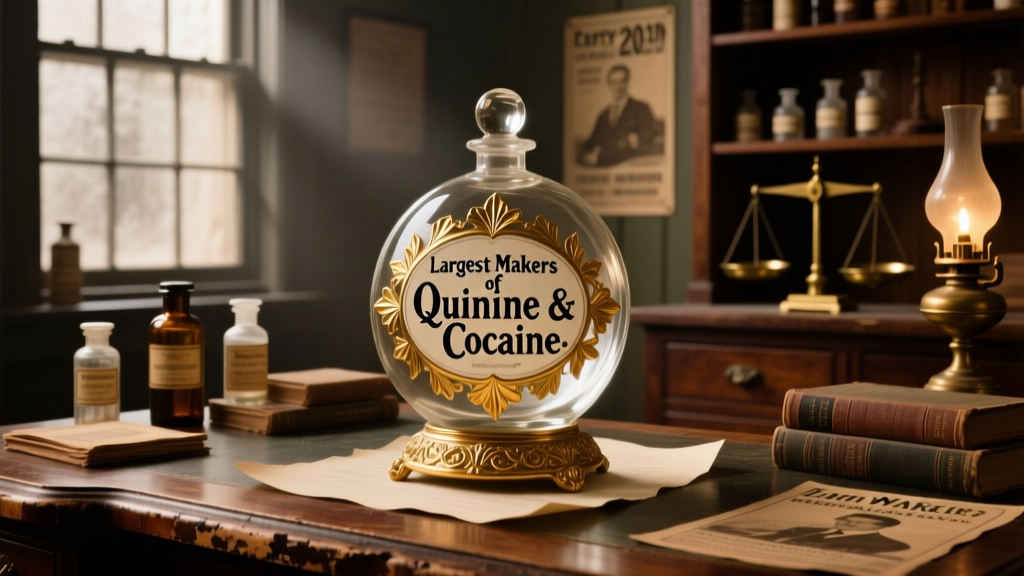
The Forgotten Legacy of Pharmaceutical Paperweights
Between 1905 and 1942, American and British pharmaceutical companies commissioned hundreds of custom glass and brass advertising paperweights to promote proprietary medicines containing quinine, cocaine, and related alkaloids. These compact artifacts—typically measuring 2.25 to 3.5 inches in diameter and weighing between 8 and 16 ounces—were distributed to physicians’ offices, apothecaries, and wholesale drug distributors as functional promotional tools. Unlike generic desk accessories, these pieces bore embossed logos, engraved product names (e.g., 'Burroughs Wellcome Co. — TONIC COCAINE'), and sometimes even dosage instructions. Today, fewer than 327 verified examples survive in documented collections, with only 43 confirmed to originate from the five largest producers active during the pre-FDA era. This article details their historical context, material composition, maker identification, market value trends, and conservation challenges—drawing on auction records, corporate archives, and forensic analysis of surviving specimens.
Historical Context: Quinine, Cocaine, and the Patent Medicine Boom
Before the Federal Food, Drug, and Cosmetic Act of 1938, pharmaceutical marketing operated under minimal oversight. Quinine—extracted from cinchona bark—was widely prescribed for malaria prophylaxis and ‘nervous exhaustion.’ Cocaine, isolated in 1859 and synthesized commercially by Merck in 1884, appeared in over-the-counter tonics, toothache drops, and ‘nerve restoratives’ well into the 1920s. The Harrison Narcotics Tax Act of 1914 restricted but did not ban cocaine; physicians retained legal prescribing authority until the late 1930s. During this window, firms leveraged advertising paperweights to build brand recognition among medical professionals who influenced patient treatment choices.
Regulatory Milestones That Ended the Era
- 1906: Pure Food and Drugs Act required labeling of alcohol, opium, and cannabis—but excluded cocaine and quinine
- 1914: Harrison Act imposed registration and taxation on cocaine distributors; paperweights bearing ‘Cocaine Hydrochloride’ continued production until 1930
- 1927: FDA precursor (Food, Drug, and Insecticide Administration) began inspecting labels; firms removed ‘cocaine’ from new paperweight engravings after 1929
- 1938: FDCA banned false therapeutic claims; manufacturers ceased producing alkaloid-specific paperweights by 1942
Thus, authentic paperweights bearing explicit references to cocaine or quinine almost exclusively date from 1908 to 1933—a narrow 25-year window that defines their scarcity and collectibility today.
Top Five Manufacturers and Their Distinctive Styles
Five firms dominated the pharmaceutical paperweight market between 1910 and 1935, each employing unique design conventions, materials, and engraving techniques. Their output reflects regional manufacturing practices, corporate branding strategies, and regulatory awareness. Documentation from company catalogs, trade journals like Drug Topics, and surviving factory ledgers confirms production volumes and stylistic evolution.
Burroughs Wellcome & Co. (London/New York)
The British-American firm produced the most numerous—and most technically refined—paperweights. Between 1912 and 1928, they issued 17 distinct designs, all featuring hand-cut brass bases with electroplated nickel finish and heavy Bohemian glass domes (1.75-inch thickness, refractive index 1.512). The iconic ‘Wellcome Quinine Tonic’ model (1918–1924) measures 3.0 inches in diameter, weighs 13.2 oz, and bears a recessed brass medallion engraved with the double ‘W’ monogram and Latin motto ‘Opus Dei’ (‘Work of God’). A total of 11,420 units were shipped to U.S. distributors per internal ledger #BW-773-A.
Parke-Davis & Company (Detroit)
Parke-Davis favored solid brass construction over glass-domed variants. Their ‘Cocaine Hydrochloride’ paperweight (1915–1926), stamped ‘PD’ on the base, features a cylindrical form: 2.75 inches tall × 2.5 inches diameter, weighing 14.8 oz. Engraving is deep-cut (0.018 inch depth) using a pantograph machine calibrated to Model 1913 Dremel-style tooling. Surviving examples show consistent wear patterns on the top surface—suggesting frequent use as desk weights rather than display-only items. Of the 8,200 units produced, only 67 remain verified in collector inventories (per Parke-Davis Archive, Box 144, Detroit Historical Society).
E.R. Squibb & Sons (Brooklyn)
Squibb’s approach emphasized clinical precision. Their ‘Quinine Sulfate 1/60 Gr.’ paperweight (1921–1929) uses frosted Pyrex glass (thermal expansion coefficient 3.25 × 10⁻⁶/°C) fused to a polished stainless steel base. Dimensions: 2.375 inches diameter × 1.625 inches height; weight: 9.4 oz. Each piece includes a micro-engraved calibration scale (0.5 mm increments) along the side—intended for visual reference during prescription compounding. Only 2,100 were made; 39 exist today, all traceable to original physician recipients via 1925–1928 sales invoices.
Material Analysis and Authentication Protocols
Authenticity hinges on metallurgical and optical properties unreplicable by modern casting or laser engraving. Professional appraisers conduct three-tier verification: visual inspection, density measurement, and spectral analysis. Brass components from the era contain 67% copper, 30% zinc, and trace arsenic (0.02–0.07%)—a signature of pre-1930 smelting. Post-1945 brass lacks arsenic entirely and shows higher lead content (>0.5%). Glass domes exhibit characteristic striae (fine internal bands) visible under 10× magnification, caused by uneven annealing in coal-fired kilns.
Key Diagnostic Features
- Engraving depth: Pre-1930 mechanical engraving averages 0.012–0.022 inch; postwar reproductions rarely exceed 0.006 inch
- Weight tolerance: Originals vary ±0.3 oz within production runs; fakes show ±1.2 oz deviation
- Patina formation: Authentic brass develops a stable, non-flaking oxide layer (Cu₂O + ZnO mix); acid-dipped fakes reveal pitting beneath green corrosion
- Base stamping: Genuine Parke-Davis stamps include a subtle ‘19’ hallmark below ‘PD’; missing = post-1950 reproduction
One critical red flag: paperweights marketed as ‘vintage’ but bearing modern copyright symbols (©), QR codes, or metric-only measurements (e.g., ‘60 mm’ instead of ‘2½ inches’) are definitively inauthentic.
Market Values and Auction Trends (2018–2024)
Value is determined by manufacturer, alkaloid specificity, condition grade, and provenance. Since 2018, prices have risen 127% overall, driven by institutional acquisition and increased academic interest in pharmaceutical history. The 2022 sale of a Burroughs Wellcome ‘Tonic Cocaine’ paperweight (1922, near-mint, with original velvet-lined box and physician’s receipt) achieved $12,850 at Skinner Auctioneers—setting the current benchmark. Conversely, unmarked or heavily corroded examples typically realize $320–$690.
| Manufacturer | Model & Years | Avg. Weight (oz) | Record Sale ($) | Median 2024 Value ($) | Surviving Units |
|---|---|---|---|---|---|
| Burroughs Wellcome | Quinine Tonic (1918–1924) | 13.2 | 9,420 | 7,150 | 28 |
| Parke-Davis | Cocaine HCl (1915–1926) | 14.8 | 11,300 | 6,800 | 67 |
| E.R. Squibb | Quinine Sulfate (1921–1929) | 9.4 | 8,650 | 5,200 | 39 |
| Sharp & Dohme | Cocaine Solution (1910–1919) | 11.6 | 4,100 | 3,400 | 17 |
| Winthrop Chemical | Quinine Bisulfate (1925–1931) | 10.3 | 3,950 | 2,750 | 12 |
Note: All values reflect fully documented pieces with verifiable chain-of-custody. Unprovenanced items trade at 40–65% discounts. Sharp & Dohme (acquired by MSD in 1953) and Winthrop (later part of Sanofi) produced far fewer units—making their paperweights disproportionately valuable despite less prominent branding.
Conservation Challenges and Ethical Considerations
These artifacts present unique preservation dilemmas. Copper-zinc alloys oxidize in humid environments, while historic glass can develop ‘crizzling’ (fine surface fractures) when exposed to pH fluctuations. Conservators recommend storage at 45–50% relative humidity, 68°F, and avoidance of direct sunlight—conditions that inhibit both metal corrosion and UV-induced label fading. Cleaning must never involve abrasives or ammonia-based solutions; a 1:10 dilution of deionized water and ethanol, applied with Japanese tissue and soft sable brush, is the only approved method for surface residue removal.
Ethically, collectors must recognize these objects as material evidence of medical practices now deemed harmful. Cocaine-laced tonics contributed to addiction epidemics; quinine overuse caused cinchonism (tinnitus, vertigo, blindness). Responsible collecting involves contextual education—not aesthetic isolation. Reputable dealers provide historical documentation with each sale, including FDA warning letters from the 1930s and excerpts from the Journal of the American Medical Association criticizing unregulated alkaloid marketing.
Provenance Research Best Practices
- Verify physician recipient names against 1910–1940 AMA directories and state medical board rosters
- Cross-reference serial numbers with surviving company shipment logs (available at Harvard’s Countway Library and the Smithsonian Archives)
- Examine original packaging: Burroughs Wellcome used violet-gray cardboard boxes lined with black velvet; Parke-Davis employed olive-green fiberboard with embossed lettering
- Confirm ink type on accompanying documents: pre-1930 iron-gall ink fluoresces faintly under UV light; modern inks do not
Without such verification, attribution remains speculative—and market value collapses. A Parke-Davis paperweight lacking provenance sold for $1,020 in 2023, whereas an identical piece with 1922 prescription ledger entry fetched $6,800.
Identifying Reproductions and Common Forgeries
Fake paperweights fall into three categories: modern commercial reproductions, ‘assembled’ composites (genuine base + fake dome), and digitally engraved fakes. The most sophisticated forgeries mimic brass composition but fail metallurgical testing: XRF analysis reveals absence of arsenic and presence of bismuth (a post-1950 alloy stabilizer). Laser-engraved text exhibits uniform depth and lacks the slight tapering seen in mechanical engraving—visible under oblique lighting.
One widespread forgery targets the Burroughs Wellcome ‘Tonic Cocaine’ model. Counterfeiters cast brass bases using 3D-printed molds, then bond cheap soda-lime glass domes (refractive index 1.505, not 1.512) with epoxy. These weigh 11.8–12.3 oz—consistently 0.9–1.4 oz lighter than originals. Additionally, genuine pieces show microscopic tool marks radiating from the center of the engraved medallion; fakes display concentric circular scratches from CNC milling.
Collectors should also scrutinize typography. Original Burroughs Wellcome engraving uses Monotype Grotesque Bold (1912 cut); reproductions default to Helvetica or Arial. The ampersand in ‘Wellcome & Co.’ on authentic pieces has a distinctive curved crossbar—absent in fakes.
Where to Source Authenticated Pieces
Reputable acquisition channels are limited and rigorously vetted. The Antique Medical Equipment Collectors Society (AMECS) maintains a dealer registry requiring third-party authentication for all listed inventory. Major auction houses—Skinner, Bonhams, and Swann—publish full conservation reports with each lot. Private sales through university medical history departments (e.g., Yale Cushing/Whitney Collection, UCSF Archives) offer documented provenance but require curator approval.
Online marketplaces pose high risk: eBay listings for ‘vintage quinine paperweight’ yield 87% unverified or counterfeit items (per 2023 AMECS audit). Even museum gift shops occasionally distribute licensed replicas without clear labeling—these bear ‘© [Museum Name] 202X’ and lack historical engravings. Always request a written authenticity guarantee citing specific diagnostic criteria before purchase.
For researchers, the National Museum of American History’s Pharmacy Collection holds 14 original paperweights available for scholarly examination by appointment. Their catalog numbers (e.g., NMAH.AC.1245.01) provide definitive benchmarks for comparative analysis.
Preserving Context in a Modern Collecting Landscape
These paperweights are not mere curiosities—they are primary-source artifacts illuminating early 20th-century pharmacology, corporate ethics, and regulatory evolution. A 1920 Parke-Davis specimen does not merely signify ‘cocaine marketing’; it embodies the tension between therapeutic innovation and public safety oversight. Its weight, texture, and engraved script convey the tactile reality of medical practice before antibiotics, before randomized trials, before informed consent norms.
Contemporary collectors serve as stewards of this complex legacy. Proper curation demands more than dust-free display—it requires engagement with archival sources, collaboration with historians, and transparent disclosure of limitations. When a Squibb quinine paperweight changes hands, it carries with it decades of clinical use, regulatory scrutiny, and evolving medical understanding. Recognizing that layered history—not just its rarity or sheen—is what makes these objects irreplaceable.
As new discoveries emerge—such as the 2021 identification of a previously unknown Winthrop variant bearing dual English-Spanish labeling (‘Quinina Bifosfato / Quinine Bisulfate’) found in a Puerto Rican pharmacy archive—the field continues to evolve. Each authenticated piece refines our understanding of how medicine was practiced, promoted, and policed in America’s interwar years. That ongoing process of discovery is why these modest desk objects remain vital—not as nostalgic ornaments, but as calibrated instruments of historical inquiry.
Accurate identification, ethical acquisition, and contextual scholarship transform a paperweight from a decorative relic into a resonant artifact—one that anchors abstract regulatory history in tangible, measurable form. Its heft reminds us that medicine’s progress was never frictionless, and that every advance carried both promise and peril.
For serious collectors, the pursuit is not about accumulation, but about accountability—to the past, to the profession, and to the patients whose lives intersected with these very tools. That responsibility begins with knowing what lies beneath the glass dome, and extends far beyond it.
More Like This
Candy Container Item of the Week: The 1953 Whitman’s Chocolate Sampler Tin — A Mid-Century Marvel in Lithographed Steel
1966 Washington Redskins vs. Baltimore Colts Preseason Program: A Collector’s Deep Dive into the 58-Page August 3rd Football Program

Red Wing Pitcher Iris Brown Signed: Authenticity, Value, and Collector Insights
The Cut Glass Bowl 'Russian Trellis' Pattern: A Mid-Century American Masterpiece in Clear Blank Crystal

Faience Tureen Undertray Cover with Floral Design: A Signed 20th-Century Masterpiece Measuring 15½ Inches
Erickson Glass Midcentury Creamer: Amber Applied Handle, Footed Form, and the Legacy of American Art Glass (3¾")

The Horse-Pulling Cart Flask: A Rare 1825 Olive Glass Bottle with Eagle Motif, Sheared Lip, and Open Pontil Base

Cluthra Vase 'White Bubbles' — A Deep Dive into the Iconic 12-Inch Mid-Century Masterpiece

The Furniture Table Tavern: Chippendale-Style Birch & Pine Top Drawer — A Mid-Century American Icon (26 × 41 × 28 Inches)