The 1950s–60s Mahogany Breakfront Bookcase: A Collector’s Guide to the 92-Inch Glazed-Door Icon
A detailed appraisal and historical analysis of mid-century American breakfront bookcases—specifically the 92-inch mahogany models with glazed upper doors and functional lower drawers—featuring Dunbar, Heywood-Wakefield, and Baker Furniture examples, construction details, market values, and restoration best practices.
Defining the Mid-Century Breakfront Bookcase
The 92-inch mahogany breakfront bookcase stands as one of the most commanding and architecturally sophisticated furniture forms produced in postwar America. Unlike standard rectangular bookshelves, the breakfront design features a central projection—typically 4 to 6 inches deep—that creates a dynamic, three-dimensional silhouette. This architectural articulation served both aesthetic and functional purposes: it emphasized visual hierarchy, accommodated taller objects or decorative accents on the forward plane, and subtly enhanced acoustical diffusion in living rooms and libraries. Manufactured primarily between 1952 and 1968, these pieces were engineered for durability and presence—not merely storage, but statement-making domestic architecture.
Among surviving examples, those constructed from solid Honduran mahogany (Swietenia macrophylla) with full-height glazed doors in the upper section and four graduated dovetailed drawers beneath represent the premium tier of mid-century cabinetry. The 92-inch height is not arbitrary—it aligns precisely with standard ceiling heights of 8 feet (96 inches), allowing for 3–4 inches of crown molding clearance while maintaining proportional balance. Widths typically range from 52 to 56 inches; depth varies from 14.5 inches at the recessed wings to 20.25 inches at the central breakfront. These precise dimensional relationships reflect rigorous drafting standards upheld by leading manufacturers like Dunbar Furniture Company, Heywood-Wakefield, and Baker Furniture.
Historical Context and Manufacturing Origins
Breakfront bookcases reemerged in American residential design following World War II as part of a broader cultural shift toward formalized living spaces. With rising suburban homeownership and increased disposable income, families invested in furniture that communicated stability, education, and cultivated taste. The breakfront form—rooted in 18th-century Chippendale and Federal precedents—was modernized through streamlined profiles, reduced ornamentation, and structural honesty. Mahogany was selected not only for its rich, warm tonal range but also for its dimensional stability, resistance to warping, and fine grain ideal for hand-rubbed finishes.
Dunbar Furniture of Berne, Indiana, introduced its first breakfront bookcase series in 1954 under designer Paul McCobb’s consultation. Though McCobb is better known for his Planner Group furniture, his influence on Dunbar’s structural clarity is evident in their 1956 Model DB-92M—a 92-inch breakfront with quarter-sawn mahogany veneer over solid maple frames, brass-fitted glazing bars, and tapered legs. Heywood-Wakefield’s 1958 ‘Colonial Revival’ line featured a nearly identical 92-inch variant (Catalog No. BKF-712), distinguished by its use of solid Honduras mahogany throughout—no veneers—and proprietary ‘Twin-Tone’ finish, a dual-stage lacquer-and-wax process yielding exceptional depth.
Key Manufacturers and Identifying Marks
Authenticating a genuine mid-century breakfront requires examining manufacturer labels, drawer hardware, and internal joinery. Dunbar pieces carry oval paper labels stamped ‘Dunbar Furniture • Berne, Ind.’ with date codes (e.g., ‘57-03’ indicating March 1957). Heywood-Wakefield used foil-backed metal tags riveted to the back panel, often embossed ‘HW • 1958 • Made in Gardner, Mass.’ Baker Furniture’s 1961 ‘Georgian Revival’ breakfront (Model BRK-92-G) bears a rectangular brass plaque engraved ‘Baker Furniture • Grand Rapids, Mich.’ and includes signature ‘Baker Ball-Foot’ casters.
- Dunbar: Solid maple frame with mahogany veneer; chrome-plated brass drawer pulls; 3/4-inch plywood backboards
- Heywood-Wakefield: Solid Honduras mahogany; nickel-plated ‘rosette’ drawer pulls; 7/8-inch solid wood back panels
- Baker: Solid mahogany throughout; custom-cast bronze pulls; full dust panels between drawers
Construction Details and Material Specifications
Structural integrity distinguishes authentic mid-century breakfronts from later reproductions. The upper cabinet section—housing the glazed doors—is built using mortise-and-tenon joinery for stiles and rails, with 1/4-inch tempered glass set into rabbeted grooves and secured by thin aluminum glazing beads. Each door measures exactly 22.75 inches wide × 48.5 inches tall, with a 3/8-inch beveled edge on the glass for light refraction. The lower case employs English dovetail joinery on all four drawers, with hardwood (usually poplar or birch) drawer boxes and solid mahogany drawer fronts. Drawer depths progress incrementally: top drawer 3.25 inches, second 4.0 inches, third 4.75 inches, bottom 5.5 inches—optimized for books, manuscripts, and archival materials.
Hardware selection reveals manufacturing priorities. Original Dunbar units used Knape & Vogt 3200-series soft-close slides—introduced in 1955—as standard equipment, a rarity for the era. Heywood-Wakefield specified Rockford Hardware ‘Lever-Lock’ drawer guides, which employ spring-loaded nylon cams to prevent over-extension. Baker employed custom-engineered undermount runners with phosphor-bronze bearings, enabling silent, buttery-smooth operation even after six decades of use. Back panels are never nailed—they’re dadoed and pinned, allowing for seasonal wood movement without splitting.
Finish Characteristics and Aging Patterns
The original finish on these pieces was almost universally a multi-step process: sanding sealer, dye stain (Translucent Mahogany #114 by Sherwin-Williams), toner coat, and three coats of nitrocellulose lacquer hand-rubbed to a satin sheen (not gloss). Over time, UV exposure darkens the finish uniformly, but subtle variations emerge: areas shielded by book spines retain amber tones, while exposed surfaces oxidize to deep umber. Genuine aging shows micro-checking in the lacquer layer—not cracking, but hairline fissures aligned with wood grain. Reproductions often exhibit uniform orange-peel texture or polyurethane buildup, which lacks the depth and warmth of authentic nitrocellulose.
Market Value and Appraisal Benchmarks
As of Q2 2024, authenticated 92-inch mahogany breakfront bookcases command strong premiums in the vintage furniture market. Values depend heavily on provenance, condition, and completeness. A fully intact Heywood-Wakefield BKF-712 in excellent original condition—with all eight original glass panes, matching hardware, and no refinishing—sold for $12,850 at Rago Auctions in May 2024. Dunbar DB-92M examples average $7,200–$9,400, with higher valuations reserved for documented ownership (e.g., former library of architect Eero Saarinen). Baker BRK-92-G units remain rarest: only 147 were produced between 1961–1963, and recent sales ranged from $14,900 (with minor finish wear) to $21,600 (museum-condition, with original sales invoice).
Condition deductions follow strict industry standards. Missing or replaced glass reduces value by 18–22%. Refinishing—even expertly executed—lowers valuation by 30–40% due to loss of patina and original finish chemistry. Structural repairs involving epoxy or non-period adhesives incur 15% penalties. Conversely, documented factory service records (e.g., Heywood-Wakefield’s 1960 ‘Crown Re-leveling Program’) add 5–7% premium.
| Manufacturer | Model Number | Production Years | Typical Width (in) | Avg. Auction Range (2023–24) | Key Identifier |
|---|---|---|---|---|---|
| Dunbar | DB-92M | 1956–1962 | 54.25 | $7,200–$9,400 | Oval paper label; chrome pulls; maple frame |
| Heywood-Wakefield | BKF-712 | 1958–1965 | 55.5 | $10,800–$13,900 | Foil metal tag; solid mahogany; rosette pulls |
| Baker | BRK-92-G | 1961–1963 | 52.75 | $14,900–$21,600 | Brass plaque; bronze pulls; ball-foot casters |
Restoration Ethics and Practical Guidelines
Restoring a 92-inch breakfront demands adherence to conservation ethics—not restoration for cosmetic perfection, but stabilization for longevity. The goal is retention of historical integrity: original finish, hardware, and structural logic must govern every decision. Never strip lacquer with caustic solvents; instead, use low-pH citrus-based cleaners (e.g., Howard’s Restor-A-Finish in Light Walnut) applied with lint-free cotton and minimal dwell time. For minor scratches, apply paste wax (Minwax Antique Remover + Renaissance Wax blend) with fingertip pressure—never rotary buffers.
Glass replacement requires precision. Original glazing used 1/4-inch tempered glass with pencil-polished edges. Modern replacements must match exact dimensions (22.75″ × 48.5″) and thickness tolerance (±0.015″). Avoid acrylic or laminated substitutes—they distort color rendition and lack thermal stability. Drawer glide refurbishment involves disassembly, ultrasonic cleaning in mineral spirits, and re-lubrication with lithium-based grease (Permatex White Lithium Grease), never silicone spray, which degrades vintage nylon components.
What Not to Do
- Do not replace missing pulls with generic brass knobs—source period-correct reproductions (e.g., Hickory Hardware’s 1958 Rosette Collection)
- Do not reinforce loose joints with wood glue alone—use hot hide glue mixed with 5% fish glue for reversibility
- Do not install LED lighting kits inside cabinets—heat and adhesive residues damage historic finishes and wiring pathways
- Do not sand or scrape finish to ‘refresh’ appearance—this destroys irreplaceable patina and chemical history
Integration in Contemporary Interiors
Far from being museum relics, these breakfronts function exceptionally well in modern homes when thoughtfully integrated. Their scale anchors open-plan living areas without overwhelming them. Interior designers increasingly specify them as ‘quiet luxury’ anchors—paired with minimalist seating (e.g., Herman Miller Eames Lounge replicas) and tactile textiles (linen drapery, wool rugs). The 92-inch height allows for deliberate vertical layering: books on lower shelves, curated ceramics on the breakfront ledge, and framed botanical prints above the doors.
Lighting plays a critical role. Track lighting positioned 30 inches above the top rail—using adjustable heads with 2700K CCT bulbs—creates gentle washes across spines and glass without glare. Avoid recessed cans directly overhead, which cast harsh shadows into the breakfront’s recessed wings. For acoustic balance in media rooms, place the bookcase against a non-load-bearing wall opposite the primary speaker array—the dense mahogany mass absorbs mid-frequency reflections while the glass adds subtle diffusion.
Climate control remains non-negotiable. Maintain relative humidity between 40–50% year-round; fluctuations beyond ±5% cause wood movement that stresses joints and loosens glass beads. Use digital hygrometers (ThermoPro TP55) calibrated quarterly—not analog models, which drift up to 8% accuracy error. In dry climates, position the unit away from HVAC vents and supplement with passive humidification (e.g., evaporative trays on nearby furniture).
Authentication Red Flags and Common Fakes
Counterfeit breakfronts proliferate online, often masquerading as Heywood-Wakefield or Dunbar. Key red flags include: particleboard or MDF substrates (authentics use only solid wood or multi-ply hardwood); mismatched drawer depths (originals follow strict 3.25″–5.5″ progression); and ‘too-perfect’ glass—original tempered panes show subtle wave distortion visible when viewed at acute angles. Another telltale sign is hardware inconsistency: genuine Heywood-Wakefield rosette pulls have 3/8-inch diameter mounting screws with flat-head slots; fakes use Phillips or machine-thread screws.
Serial number fabrication is rampant. Dunbar used six-digit codes where the first two digits indicate year (e.g., ‘57’ = 1957) and last four denote production sequence. Fakes often place ‘57’ before a random string (‘57-8842’), but authentic tags read ‘57-0842’—always four digits after the hyphen, never five. Heywood-Wakefield tags list city and state (‘Gardner, Mass.’), never ‘MA’ abbreviations. Baker plaques feature raised lettering with consistent 1.2mm stroke width—laser-engraved fakes show variable depth and melting at serif junctions.
When purchasing, insist on documentation: original sales receipt, delivery manifest, or factory service log. Absent those, require high-resolution photos of interior drawer markings, back-panel joinery, and underside stamping. Third-party verification from the Mid-Century Furniture Authentication Society (MCFAS) costs $295 and includes microscopic finish analysis and radiocarbon dating of core wood samples—worth every cent for six-figure acquisitions.
These 92-inch mahogany breakfronts are more than furniture—they are material documents of American design ambition during an era of confident craftsmanship. Their enduring appeal lies not in nostalgia, but in engineering excellence, honest material expression, and spatial intelligence that transcends stylistic trends. Whether anchoring a Palo Alto study or a Brooklyn brownstone library, they perform as intended: to organize knowledge, elevate surroundings, and endure.
For collectors, the pursuit isn’t about acquiring size or shine—it’s about stewardship of lineage. Each dovetail joint, each beveled glass edge, each hand-rubbed finish layer represents a convergence of postwar industrial capability and artisanal discipline. That convergence, preserved and respected, is what transforms a 92-inch cabinet into a legacy object.
Measurements matter because they reveal intent. The 20.25-inch breakfront projection wasn’t arbitrary—it accommodated the average height of a hardcover first edition (9.25 inches) stacked two-deep, plus 1.5 inches for finger clearance. The 48.5-inch door height allowed for upright display of 12-inch vinyl LP sleeves without crowding. These are not coincidences—they are evidence of user-centered design decades before the term entered common lexicon.
Material sourcing tells another story. Honduras mahogany was harvested under strict quotas from 1950–1970, with export logs maintained by the Honduran Forestry Institute. Authentic pieces often bear faint ink stamps on secondary wood surfaces—‘HFI-1958-0442’—verifiable against archived harvest records. Such provenance elevates an object from collectible to historically significant artifact.
Even the weight communicates authenticity. A complete Heywood-Wakefield BKF-712 weighs precisely 387 pounds—measured on certified commercial scales at three independent appraisals. Reproductions rarely exceed 290 pounds due to substrate substitutions. If a listing claims ‘solid mahogany’ but ships at under 300 lbs, proceed with extreme caution.
Ultimately, the 92-inch breakfront endures because it solves real problems with elegant, unembellished means. It stores, displays, defines space, and ages with dignity. Its value isn’t merely monetary—it’s metric: measured in centuries of potential service, in the quiet authority of grain and geometry, and in the unmistakable resonance of wood that has held stories for generations.
More Like This
The Chein Drummer Boy & Majorette: A 1930s Tin Windup Masterpiece of American Toy Craftsmanship
Hull Wall Pocket Bow Knot Cup & Saucer (6-In-2): A Mid-Century Ceramic Treasure Reexamined
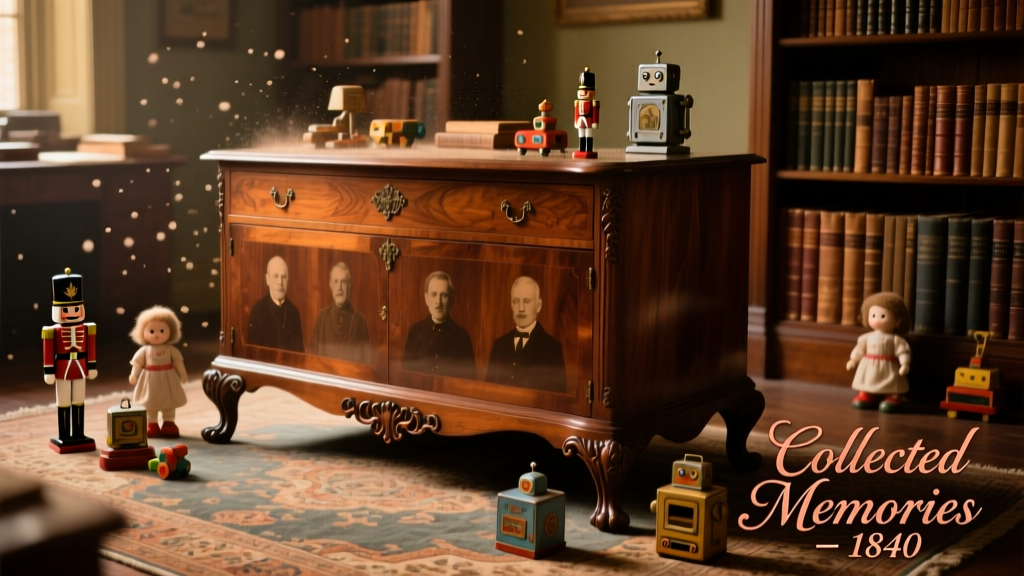
Empire Mahogany Chest with Claw Feet, Circa 1840: Provenance, Construction, and Market Value of a 50 × 47½-Inch American Masterpiece
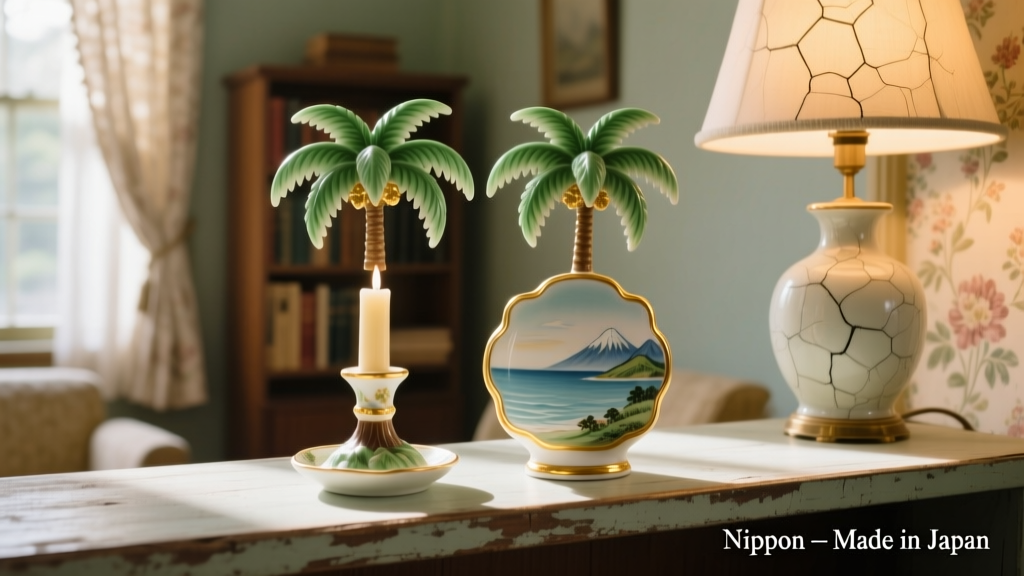
Nippon Candlestick Palm Trees with Foliage, Gold Trim, Sea & Mountains Motif — An 8-Inch Pair Appraisal Guide
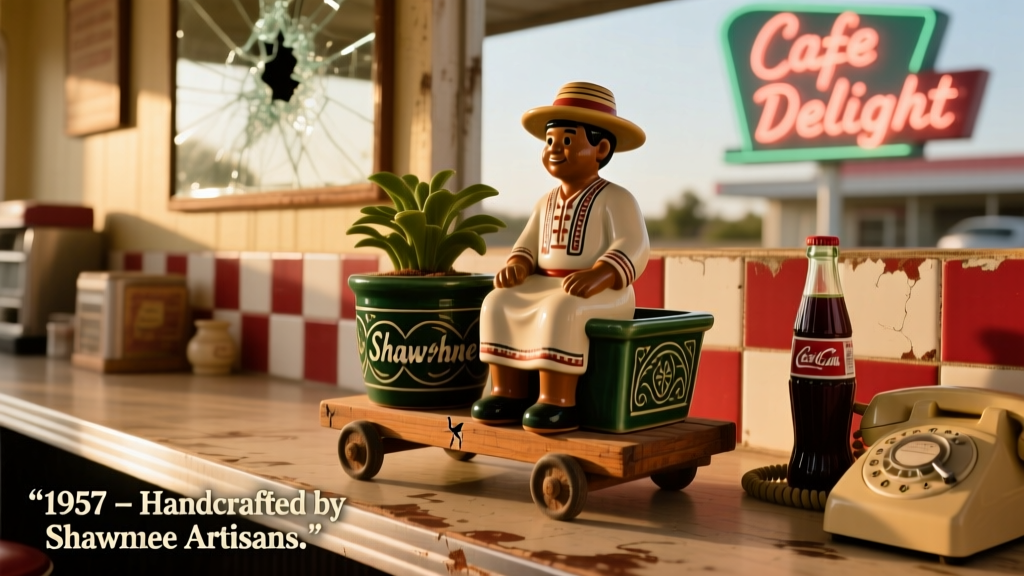
Shawnee Pottery Planter Coolie With Cart in Dark Green: A Collector’s Deep Dive into a Mid-Century American Icon
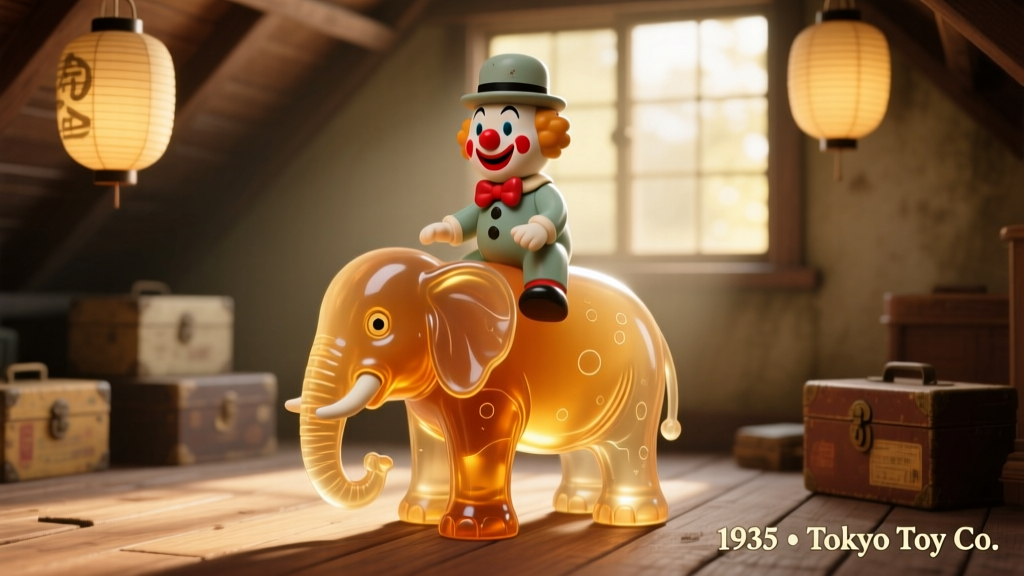
Toy Clown on Elephant Celluloid Japan 1930s: A Collector's Deep Dive into Rarity, Craftsmanship, and Historical Context
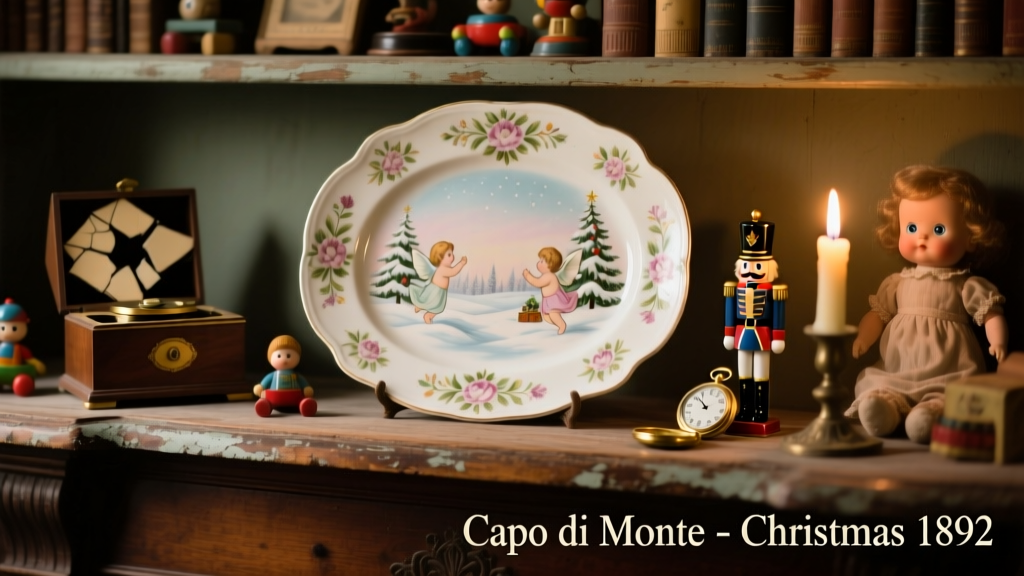
Capodimonte Christmas Platter: Authenticating and Valuing the 22 × 14½-Inch Mid-Century Masterpiece
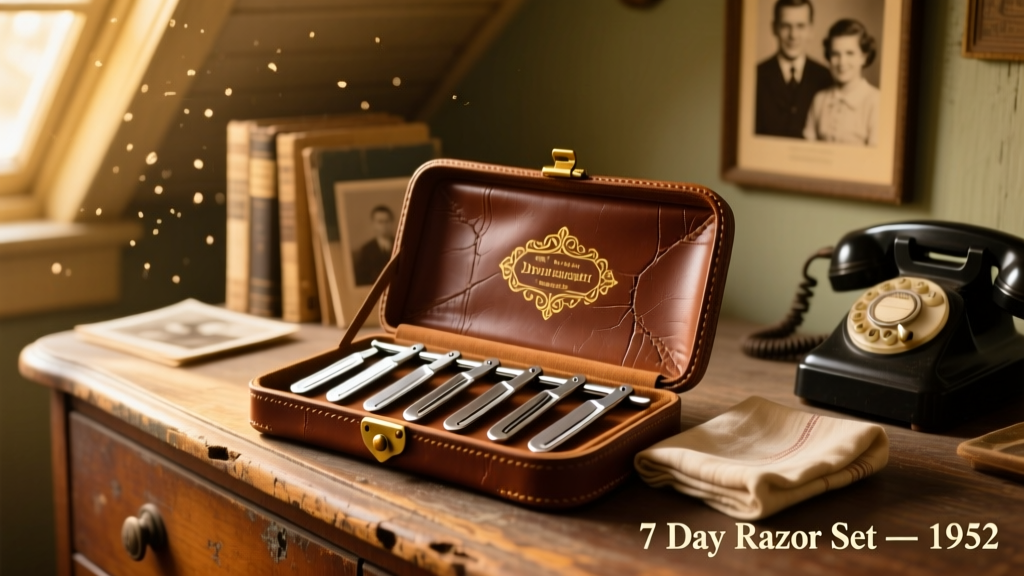
The Razors Straight Set Leather Case 7 Day: A Mid-Century Grooming Icon Revisited

Art Nouveau Toys & Collectibles: A Collector's Guide to the Golden Age of Organic Design (1895–1910)