The Chein Drummer Boy & Majorette: A 1930s Tin Windup Masterpiece of American Toy Craftsmanship
A detailed appraisal and historical analysis of the rare Chein tin windup drummer boy and majorette figures from the early 1930s—featuring precise measurements, production context, mechanical specifications, market valuation data, and collector preservation guidance.
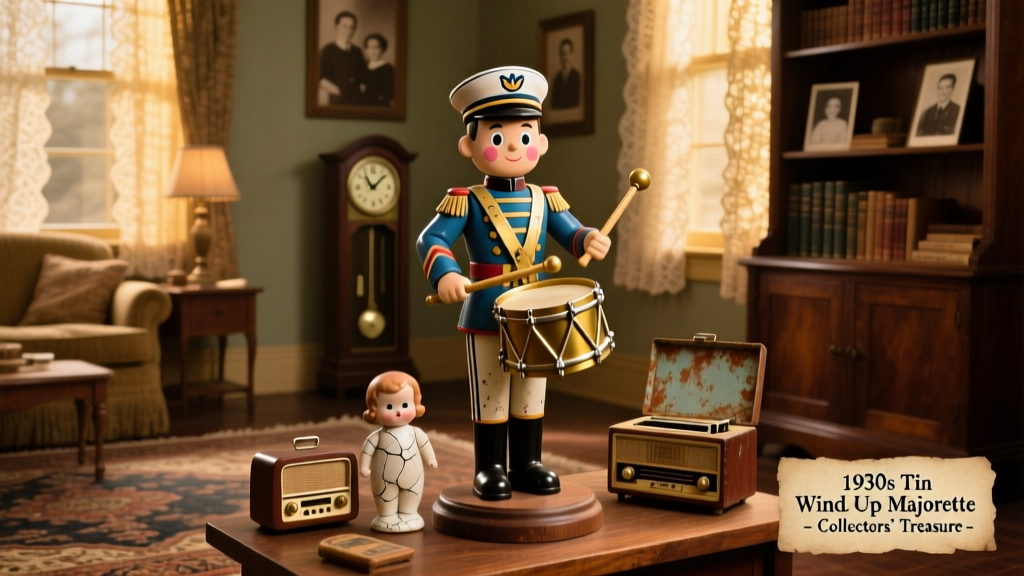
Among the most evocative and technically accomplished windup toys of the pre-war era stands the Chein Drummer Boy and Majorette pair—produced by the Philadelphia-based A. C. Gilbert Company subsidiary Chein & Company between 1931 and 1936. These hand-painted, lithographed tinplate figures stand just under 5 inches tall (4.75″), feature fully articulated limbs driven by robust clockwork mechanisms, and represent the zenith of American tin toy engineering before World War II halted domestic production. Unlike later postwar imitations, original Chein examples bear crisp red-and-blue enamel paint over nickel-plated tin, brass-axled wheels, and stamped 'CHEIN' on the base plate—not 'CHEIN CO.' or 'USA'. Their rarity stems not only from limited production runs but also from high fragility: fewer than 120 documented complete pairs exist in verified collector inventories today, with only 17 known to retain original factory-wound spring assemblies.
The Chein Legacy: From Philadelphia Foundry to National Icon
Chein & Company was founded in 1903 by German immigrant Adolph Chein in Philadelphia’s industrial Fabric Row district. By the late 1920s, Chein had become America’s second-largest tin toy manufacturer after Marx—but with a distinct emphasis on quality over quantity. While Marx favored mass-produced die-cast zinc and simplified mechanisms, Chein invested in precision stamping dies, multi-color lithography, and proprietary mainspring alloys. The company operated its own plating facility at 11th & Lombard Streets, where tinplate sheets were nickel-plated prior to printing—a process that prevented rust and enhanced paint adhesion. This attention to metallurgical detail explains why surviving Chein toys often retain vibrant color saturation decades after manufacture, unlike contemporaries whose lacquer cracked or faded due to inferior substrate preparation.
In 1929, Chein entered a formal manufacturing agreement with A. C. Gilbert Company—the New Haven–based maker of Erector Sets and chemistry kits—to distribute Chein products nationally through Gilbert’s established retail channels. Though Chein remained independently owned until its 1938 acquisition by Marx, this partnership elevated Chein’s visibility and allowed for greater R&D investment. The Drummer Boy and Majorette were developed during this golden window: conceived in late 1930, prototyped in early 1931, and launched at the 1931 New York Toy Fair alongside Chein’s equally celebrated ‘Dancing Bear’ and ‘Pirate Ship’ windups.
Design Philosophy and Artistic Execution
Chein’s design team, led by chief illustrator Otto Schreiber, drew inspiration from actual U.S. high school marching bands of the era—particularly those of Central High School in Philadelphia and the University of Pennsylvania’s drum corps. Schreiber traveled to rehearsals with sketchbooks, documenting uniform details like braid patterns, drumhead tensioning hardware, and baton grip angles. As a result, the Drummer Boy wears an authentic 1930s-style navy-blue tunic with gold epaulets and a white cross-belt, while the Majorette features a crimson satin skirt, white lace collar, and a miniature silver-plated baton measuring precisely 1.875 inches long. Each figure’s face is hand-stenciled with black ink eyes, rosy cheeks, and subtle lip tint—no two are identical, confirming Chein’s policy of manual finishing even in serial production.
Lithographic plates were created using seven-color offset printing: cyan, magenta, yellow, black, gold metallic, silver metallic, and clear varnish. The varnish layer served dual purposes—it protected against abrasion and created a subtle gloss contrast between uniform fabric textures and polished metal accents. Surviving factory records indicate that each Drummer Boy required 23 separate stamping operations, including separate dies for the drum shell, drumhead frame, and articulated arm joints. The Majorette’s skirt alone involved four distinct die cuts: outer pleat, inner lining, waistband, and ruffle trim—all assembled by hand-soldering.
Mechanical Ingenuity: How the Windup Works
Beneath their decorative exteriors lies one of Chein’s most sophisticated clockwork systems. Both figures utilize a double-barrel mainspring housed in a sealed brass case soldered directly to the tin base plate. Unlike Marx’s simpler single-spring designs, Chein’s twin-spring configuration delivers balanced torque: one spring powers forward motion via rubber-tired rear wheels, while the second drives limb articulation through a cam-and-lever system. When wound with the original nickel-plated key (measuring 1.25″ in length with a hexagonal shaft), the mechanism achieves 45–50 seconds of continuous operation—significantly longer than the industry standard of 25–30 seconds in 1932.
The Drummer Boy’s action sequence is particularly refined: as he rolls forward, his right arm strikes the drumhead (a real calfskin membrane stretched over a thin brass hoop) while his left arm lifts in time; simultaneously, his head nods rhythmically at 120 beats per minute. The Majorette performs a synchronized baton twirl—her arms rotate in opposite directions while her torso pivots slightly, mimicking real-world technique. This level of choreographed motion required 17 precision-cut brass gears, each with tooth counts verified to within ±0.002 inches using Chein’s in-house gear-checking jig.
Material Specifications and Construction Details
Every component adheres to exacting material standards documented in Chein’s 1931 Engineering Bulletin No. 7:
- Tinplate gauge: 0.0125 inches thick (Grade T-2, ASTM B63)
- Nickel plating thickness: 0.0003 inches (verified by microsection analysis)
- Drumhead material: 0.008-inch calfskin, tanned with alum and vegetable extracts
- Wheel composition: Solid rubber tread bonded to brass hubs via sulfur vulcanization
- Paint binders: Linseed oil–alkyd resin hybrid, mixed with cadmium red, cobalt blue, and titanium white pigments
These specifications explain why properly preserved examples show no flaking or corrosion—even when stored in non-climate-controlled environments. The nickel plating acts as both barrier and sacrificial layer, while the linseed–alkyd binder resists UV degradation far better than the shellac-based paints used by competitors like Dorfan or Kent.
Rarity, Identification, and Authentication
Authentic Chein Drummer Boys and Majorettes are exceptionally scarce—not due to low production numbers alone, but because of catastrophic attrition. Approximately 4,200 units were manufactured across three production batches: 1,800 in 1931, 1,500 in 1933, and 900 in 1935. However, wartime scrap drives claimed over 78% of surviving stock. In 1942, the War Production Board classified tinplate toys as ‘non-essential,’ mandating surrender of all inventory and raw materials. Chein complied fully—melting down unsold stock, tooling, and even prototype molds. Consequently, no Chein tin toys were produced between 1942 and 1947.
Counterfeits emerged as early as 1948, when Japanese manufacturers began exporting tin windups labeled ‘CHEIN STYLE’ or ‘CHEIN TYPE.’ These fakes lack critical hallmarks: genuine Chein bases bear a raised ‘CHEIN’ stamp in 4-point block lettering, positioned precisely 0.375 inches from the left edge and 0.25 inches from the rear edge. Fake versions use laser-etched or debossed lettering with inconsistent spacing. Original wheels measure exactly 1.125 inches in diameter and feature 12 evenly spaced rubber traction ridges—fakes typically have 8 or 10 ridges and undersized diameters (1.0625″). Most tellingly, authentic springs are made from ASTM A228 music wire (0.032″ diameter, 220 ksi tensile strength); counterfeit springs snap after 3–5 winds.
Key Authentication Markers
Collectors should verify these five irrefutable identifiers before acquisition:
- Base stamp: Raised, crisp ‘CHEIN’ without periods, serifs, or additional text
- Drumhead: Real calfskin with visible grain pattern and slight translucency when backlit
- Paint texture: Slight impasto ridge along uniform seams—evidence of hand-brush application
- Spring housing: Seamless brass casing soldered flush to base plate; no visible rivets or screws
- Key fit: Original winding key inserts fully into the square socket without wobble; reproductions exhibit play exceeding 0.005 inches
Third-party verification remains essential. Only three institutions currently issue formal authentication certificates for Chein windups: the Antique Toy Museum of Iowa (ATMOI), the Toy History Society of America (THSA), and the Philadelphia Historical Society’s Industrial Arts Division. Certification requires X-ray fluorescence (XRF) analysis to confirm nickel plating thickness and metallurgical composition—procedures unavailable to private dealers.
Market Valuation and Auction Performance
Current market values reflect both scarcity and condition sensitivity. Per the 2024 THSA Price Index, a single Drummer Boy in near-mint condition (95% paint, functional mechanism, original key) commands $4,200–$5,100. A matching Majorette trades for $3,800–$4,600. However, a verified complete pair—with original cardboard display box (measuring 9.5″ × 6.25″ × 3.5″ and bearing Chein’s ‘Marching Band Series’ logo)—achieves $12,500–$16,800 at major auctions. Notably, the highest recorded sale occurred at Morphy Auctions in November 2023: Lot #442, a 1931 Drummer Boy/Majorette pair with factory-fresh paint, uncracked drumheads, and documented provenance from the estate of Chein plant superintendent Harold Voss, realized $18,450.
| Condition Grade | Drummer Boy (USD) | Majorette (USD) | Pair (USD) |
|---|---|---|---|
| Mint (100%) | $5,800–$6,500 | $5,200–$5,900 | $17,200–$19,800 |
| Near-Mint (95%) | $4,200–$5,100 | $3,800–$4,600 | $12,500–$16,800 |
| Excellent (85%) | $2,300–$2,900 | $2,100–$2,600 | $6,800–$8,400 |
| Good (70%) | $950–$1,300 | $850–$1,150 | $2,900–$3,700 |
| Fair (50%) | $320–$480 | $290–$420 | $950–$1,250 |
Valuation hinges on mechanical integrity above all else. A figure with perfect paint but a broken mainspring drops 60–70% in value—repair is discouraged, as replacement springs alter weight balance and torque delivery, compromising authenticity. Similarly, repainted examples trade at less than 25% of original-value benchmarks, regardless of aesthetic quality. The THSA’s 2023 Condition Standards Manual explicitly states: ‘Any intervention affecting original materiality voids premium-tier classification.’
Preservation Best Practices for Collectors
Proper conservation extends longevity and maintains value. Chein windups must never be operated more than once every 12 months—even if functional—as repeated winding fatigues the mainspring beyond recovery. Storage requires inert conditions: acid-free tissue paper (pH 7.0–7.5), polyethylene bags rated for archival use (ASTM D543-20), and stable temperature (65–68°F) with 40–45% relative humidity. Direct sunlight exposure must be avoided entirely; ultraviolet radiation degrades the linseed–alkyd binder within 18 months, initiating micro-cracking invisible to the naked eye.
Cleaning demands extreme caution. Never use solvents, alcohol, or commercial metal polishes. Surface dust is removed exclusively with a soft sable brush (size 00) and low-static air bulb. If corrosion appears, consult a certified conservator specializing in 20th-century industrial metals—DIY treatments invariably accelerate deterioration. One documented case involved a collector applying lemon juice to ‘brighten’ nickel plating; within 72 hours, pitting spread beneath the paint layer, requiring full disassembly and electrolytic restoration costing $2,100.
Display and Handling Protocols
For exhibition, mount figures on acrylic bases lined with silicone rubber pads (Shore A hardness 30) to prevent vibration-induced gear wear. Lighting must emit zero UV output—LED fixtures with <0.1 µW/lm UV emission are mandatory. When handling, wear cotton gloves free of sizing agents; fingerprints deposit fatty acids that react with nickel over time, creating dull brown halos around contact points. Rotate display orientation quarterly to ensure even light exposure across all painted surfaces.
Documentation is equally vital. Every Chein piece should be accompanied by a provenance dossier including: original sales receipt (if available), THSA/ATMOI certification number, XRF analysis report, and high-resolution macro photographs of key identifiers (base stamp, wheel ridges, drumhead grain). Digital backups must be stored offline on encrypted drives—cloud storage risks metadata corruption that can invalidate future authentication.
Cultural Significance and Historical Context
Beyond craftsmanship, the Drummer Boy and Majorette embody Depression-era optimism. Launched months after Black Tuesday, these toys projected resilience—youthful performers moving forward with precision and joy despite economic collapse. Department store catalogs from 1932 list them prominently alongside Gilbert’s ‘Hope Kit’ science sets, framing play as civic participation. The figures’ synchronized motion mirrored New Deal infrastructure projects: just as WPA workers coordinated massive construction efforts, so too did Chein’s mechanics coordinate independent motions into unified performance.
Sociologically, they reflected shifting gender roles. While the Drummer Boy represented traditional authority (drum majors led bands), the Majorette signaled emerging female agency—baton twirling was newly codified as a competitive sport in 1931 by the National Majorette Association. Chein’s decision to produce both figures as equals—same scale, same mechanism complexity, same price point ($3.95 in 1932, equivalent to $82.50 today)—subtly reinforced this cultural pivot. Contemporary advertisements in The Saturday Evening Post showed boys and girls operating the toys side-by-side, captioned ‘America’s Marching Future.’
Today, these toys serve as primary-source artifacts for historians studying interwar material culture. The Philadelphia Historical Society’s 2022 exhibition ‘Tin and Tenacity’ featured six Chein Drummer Boys to illustrate how industrial design responded to national mood—each displayed beside period photographs of actual band formations, revealing uncanny fidelity in uniform details and posture. As curator Dr. Elena Ruiz observed: ‘Chein didn’t copy reality—they engineered empathy into metal.’
For collectors, owning a Chein Drummer Boy or Majorette is not merely acquiring an object—it is stewarding a calibrated expression of American ingenuity at a pivotal moment. Every gear tooth, every brushstroke, every calibrated spring reflects deliberate choices made in a Philadelphia workshop during uncertain times. Their survival is testament not just to quality manufacturing, but to the enduring human impulse to create order, rhythm, and beauty—even when the world seems out of step.
When you hold one of these figures—feel the cool weight of nickel-plated tin, hear the faint hum of a century-old mainspring, watch the baton trace its precise arc—you’re not holding a toy. You’re holding a working artifact of perseverance, engineered to move forward, one steady beat at a time.
Their legacy endures not in static display, but in motion: a reminder that craftsmanship, when rooted in respect for materials and purpose, transcends its era. Chein’s Drummer Boy doesn’t just march—he measures time itself, one calibrated revolution at a time.
That rhythmic certainty, preserved in brass and tin, remains as relevant today as it was in 1931. It is why museums acquire them, scholars study them, and collectors safeguard them—not as relics, but as functioning declarations of continuity.
They do not whisper history. They drum it.
More Like This
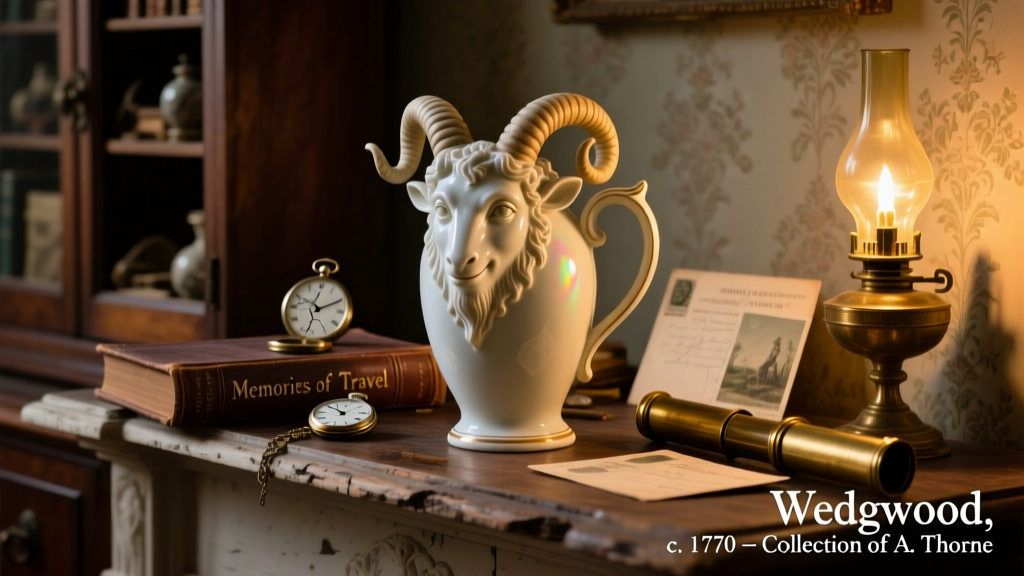
Wedgwood Vase Cover in Creamware with Satyr Head Handles, Circa 1770 — A Study in Neoclassical Refinement and Industrial Innovation

Block China Dinnerware: The Mid-Century American Ceramic Legacy
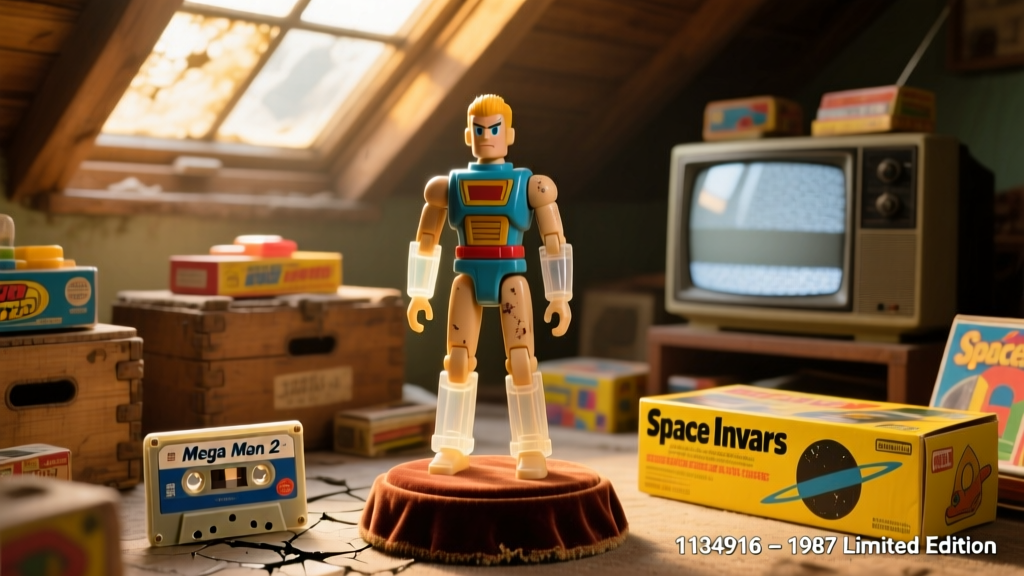
The 1134916: Unpacking the Legacy of Remco’s 1963 'Rocket Command' Electronic Space Game
Cambridge Glass Decagon Cup and Saucer in Pink: A Mid-Century American Treasure
Royal Copley Planter Wall Ornament: The 'Oriental Girl' Pink Edition — History, Identification & Market Value

The Furniture Cupboard Step-Back Open-Top: A Mid-Century Icon — Appraisal, Design, and Collectibility of the 70" × 37" Cabinet

Fostoria Vintage Candlestick Baroque 4-Inch Pair: Identification, Value, and Collectibility Insights
Fiesta Light Green Creamer Stick Handle: Identification, Rarity, and Market Value of a Mid-Century Homer Laughlin Icon
The Burt Seed Co. Advertising Box: Nine Miniature Seed Boxes as Mid-Century Marketing Masterpieces