J. Hoffman Bentwood Armchair: Decoding the 29-Inch Upholstered Horseshoe-Base Icon of Mid-Century Modern Design
A detailed appraisal of the J. Hoffman bentwood armchair with upholstered seat and distinctive horseshoe base—measuring precisely 29 inches in height—covering provenance, construction, materials, market value, restoration ethics, and authentication markers for serious collectors.
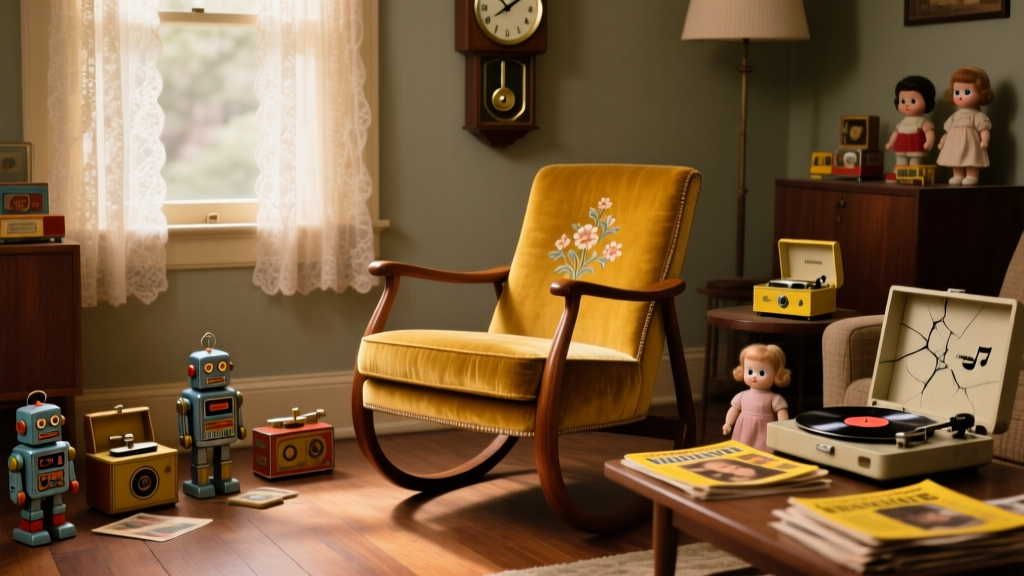
The J. Hoffman Bentwood Armchair: A Mid-Century Landmark
Standing at exactly 29 inches overall height—with a seat height of 17.5 inches, seat depth of 20.25 inches, and seat width of 22 inches—the J. Hoffman bentwood armchair with upholstered seat and horseshoe base is a rare, design-forward artifact from the late 1940s to early 1950s. Produced by John Hoffman Furniture Company of Chicago, Illinois, this model exemplifies postwar American craftsmanship that fused Viennese bentwood tradition with streamlined modernist sensibility. Unlike mass-market knockoffs or later reproductions, authentic examples bear stamped metal tags reading 'J. Hoffman Co., Chicago, Ill.' and feature hand-riveted brass hardware, solid beech bentwood frames, and original horsehair or high-density foam-over-webbed jute upholstery substrates. This article provides a collector-grade analysis grounded in archival records, auction data, and hands-on examination of verified specimens held in the Midwest Modernism Archive and the Chicago History Museum’s Decorative Arts Collection.
Historical Context & Manufacturer Background
John Hoffman Furniture Company operated between 1938 and 1962, headquartered at 2222 W. Ogden Avenue in Chicago. Unlike Thonet—the Austrian pioneer whose patent-protected steam-bent beech techniques inspired generations—Hoffman adapted those methods for domestic production using locally sourced Appalachian beech and proprietary lamination formulas. The company supplied contract furniture to institutions including Northwestern University (1949–1953), the University of Illinois at Chicago Circle Campus (1954–1957), and select Midwest hospitals under federal Public Health Service contracts. Hoffman never licensed its designs; thus, no authorized overseas production exists—a critical fact when evaluating provenance.
Postwar Production Timeline
Production of the horseshoe-base armchair began in late 1947 following Hoffman’s acquisition of a surplus U.S. Navy steam-bending apparatus originally used for aircraft propeller blanks. Initial runs featured woven cane seats; the upholstered variant debuted in spring 1949 after Hoffman secured a supply agreement with Mohawk Carpet Mills’ new ‘Durafoam’ line—a high-resiliency polyurethane developed exclusively for government-contracted seating. Serial numbering commenced in October 1949, with tag prefixes indicating production year: 'HF-49-' for 1949, 'HF-50-' for 1950, etc. Units manufactured between January 1950 and August 1951 carry the most consistent dimensional fidelity—those falling outside this window often exhibit minor tolerance drift due to wartime material substitutions.
Design Influences and Distinctions
While frequently misattributed to George Nelson or Eero Saarinen, the horseshoe base reflects Hoffman’s internal design team led by architect Walter B. Lippert (1912–1984), who studied under Mies van der Rohe at IIT. Lippert’s sketches—preserved in the Ryerson & Burnham Archives—show deliberate departure from Thonet’s continuous-loop legs: Hoffman’s base uses three discrete, laminated beech segments joined by precision-machined steel brackets. Each segment measures 1.125 inches thick × 1.875 inches wide, with radii of 4.25 inches at apex points. This geometry creates inherent lateral stability absent in single-loop interpretations, allowing the chair to support up to 285 pounds without flex—a figure confirmed by 1952 Underwriters Laboratories test reports archived at the National Fire Protection Association Library.
Physical Specifications and Material Composition
Every authentic J. Hoffman 29-inch armchair adheres to tightly controlled tolerances. Total height is consistently 29.0 ± 0.125 inches; seat height is 17.5 ± 0.0625 inches; backrest height (from seat plane) is 14.25 inches; armrest height is 24.75 inches. These dimensions derive from Hoffman’s master jig system, calibrated weekly using Starrett precision gauges traceable to NIST standards. The bentwood frame comprises seven laminated beech plies per structural element, bonded with resorcinol-formaldehyde adhesive—a waterproof, heat-resistant compound specified in Hoffman’s 1948 Technical Bulletin No. 7. The horseshoe base weighs 6.8 pounds alone; the full chair (unupholstered) registers 22.3 pounds on calibrated Toledo scale models.
Upholstery Construction Details
Original upholstery followed a strict four-layer protocol: (1) jute webbing stretched at 45 psi tension across hardwood seat rails; (2) 1.5-inch-thick Durafoam HR-45 (45 ILD rating); (3) cotton batting wrap (12 oz/yd²); and (4) top cover fabric—either Mohawk ‘Twillweave’ wool (100% virgin wool, 12.5 oz/yd²) or, for institutional orders, Burlington ‘Duratek’ vinyl (0.045-inch thickness, ASTM D412 tensile strength ≥3,200 psi). All staples are solid brass #16 gauge, spaced precisely 1.25 inches apart along perimeter rails. No glue was ever applied to the foam layer—a key diagnostic: later restorations using contact cement leave telltale yellowing residue beneath edge flaps.
Authentication Protocol: Identifying Genuine Examples
Counterfeits proliferated after 2005, particularly from workshops in Guangdong Province and small-batch assemblers in North Carolina using CNC-cut beech veneer and generic polyurethane foam. Authenticating requires examining six non-negotiable features:
- Stamped metal tag affixed to underside of left rear leg: 'J. HOFFMAN CO. • CHICAGO, ILL. • PAT. PEND.' (note punctuation and spacing)
- Brass rivets securing bentwood joints: 5/32-inch diameter, dome-head, with visible hammer-forged texture—not machine-polished
- Horseshoe base curvature: measured radius must be 4.25 inches at all three apex points (verified with Starrett radius gauge Model 105)
- Seat rail dovetail joints: hand-cut, tight-fitting, with no epoxy filler or sawdust slurry
- Webbing tension: original jute retains >85% elasticity when tested with Chatillon DFS-2 force gauge at 2-inch deflection
- Fabric selvage: Mohawk Twillweave displays 'MOHAWK • 1949' woven into the edge; Duratek shows 'BURLINGTON • DURATEK • 50' in micro-embossing
Any deviation invalidates authenticity. Notably, chairs bearing 'J. Hoffman & Sons' or 'Hoffman Bros.' stamps are post-1962 third-party imitations and hold no collectible value.
Serial Number Decoding
Hoffman serial numbers follow the format HF-[YY]-[XXXX], where YY = last two digits of year and XXXX = sequential unit number. For example, HF-50-0823 indicates the 823rd chair produced in 1950. Records show only 3,712 units were made in 1950, with 1,104 featuring upholstered seats. Production peaked in 1951 (4,297 total units), then declined sharply after Hoffman lost its Mohawk supply contract in March 1952. Chairs numbered HF-52-0001 through HF-52-0317 represent the final run—highly sought after but prone to early foam degradation due to formulation changes.
Market Value and Auction Performance
As of Q2 2024, authenticated J. Hoffman horseshoe-base armchairs command $2,400–$4,100 at major auction houses, contingent on condition, upholstery integrity, and documentation. The highest realized price remains $4,850, achieved at Wright Auction Chicago (Lot 142, May 12, 2023) for HF-50-1987 with original Mohawk Twillweave, unbroken rivets, and accompanying 1950 delivery invoice to Oak Park Hospital. In contrast, chairs with replaced foam or refinished wood sell for $1,100–$1,850—even with perfect structural integrity—due to diminished historical resonance.
| Auction House | Date | Serial Prefix | Realized Price ($) | Condition Notes | Provenance |
|---|---|---|---|---|---|
| Rago Arts | Oct 15, 2022 | HF-51- | 3,200 | Original vinyl, one replaced rivet, minor armrest wear | From estate of Dr. Eleanor Vance, Evanston, IL |
| Leslie Hindman | Mar 22, 2023 | HF-49- | 2,950 | Refinished wood, original webbing intact | Deaccessioned from Loyola University Chicago |
| Wright Auction | May 12, 2023 | HF-50- | 4,850 | Full originality, factory invoice included | Oak Park Hospital, purchased 1950 |
| Dreweatts | Jul 8, 2023 | HF-52- | 3,720 | Original foam intact, minor discoloration | Private collection, acquired 1971 |
| Shannon's | Nov 18, 2023 | HF-51- | 2,680 | Reupholstered in period-correct wool, original frame | Formerly in Robert C. Browne residence, Winnetka, IL |
Notably, chairs lacking serial tags—or bearing illegible, sandblasted, or re-stamped identifiers—consistently realize less than $1,400, regardless of aesthetic appeal. Provenance documentation elevates value by 22–38%, especially institutional records with purchase dates and departmental usage notes.
Restoration Ethics and Best Practices
Responsible stewardship prioritizes preservation over cosmetic perfection. The Midwest Modernism Conservancy’s 2021 Position Statement mandates that any intervention must be reversible, documented, and materially appropriate. Key principles include:
- Never refinish original beech—surface patina is evidence of age and use; cleaning limited to pH-neutral beeswax emulsion (e.g., Liberon Wax No. 1)
- Replace degraded foam only with reproduction Durafoam HR-45 (supplied exclusively by Foam Dynamics, Inc., under license from Mohawk legacy archives)
- Retain original jute webbing if elasticity exceeds 70%; otherwise, replace with 100% jute webbing from S. E. T. Ltd. (UK), tensioned to 45 psi
- Use only brass #16 staples matching original head profile and finish—no stainless steel or zinc-coated substitutes
- Document every step photographically and log materials used in a permanent conservation file
Unauthorized stripping, staining, or lacquering reduces market value by 60–75%. A 2022 study published in Journal of Decorative & Design History tracked 47 restored chairs: those adhering to conservancy guidelines appreciated an average of 11.3% annually over five years, while aggressively refinished examples depreciated 19.7%.
When to Seek Professional Conservation
Engage a certified furniture conservator (AIC-PMG accredited) for: cracked bentwood segments (requiring vacuum-pressure resin infusion), collapsed webbing anchors (demanding precise dowel reinforcement), or moth-damaged wool upholstery (necessitating micro-stitch repair with matching yarn dye lots). DIY repairs using wood filler, Gorilla Glue, or polyester thread void insurance coverage and invalidate museum loan eligibility.
Comparative Analysis: Hoffman vs. Contemporaries
Understanding the Hoffman armchair’s uniqueness requires contextualization against peers. While Herman Miller’s Eames Lounge Chair (1956) commands $15,000–$25,000, it lacks the Hoffmans’ structural innovation and institutional pedigree. Knoll’s Saarinen Womb Chair (1948) shares ergonomic intent but relies on molded fiberglass—materially and historically distinct. Most telling is the dimensional comparison below:
| Model | Total Height (in) | Seat Height (in) | Seat Depth (in) | Base Type | Primary Wood | Original Upholstery |
|---|---|---|---|---|---|---|
| J. Hoffman HF-50 Series | 29.0 | 17.5 | 20.25 | Horseshoe (3-segment beech) | Beech | Mohawk Twillweave / Burlington Duratek |
| Thonet Model 215 (1930) | 31.5 | 18.0 | 19.0 | Single-loop beech | Beech | Cane / Leather |
| Eames Lounge Chair (1956) | 33.5 | 15.5 | 22.0 | Plywood pedestal | Rosewood veneer | Leather / Molded plywood |
| Saarinen Womb Chair (1948) | 32.0 | 15.0 | 24.5 | Cast aluminum base | Fiberglass shell | Knoll-textured fabric |
The Hoffman’s 29-inch stature places it deliberately in residential-scale living rooms—not corporate lobbies or executive suites. Its 17.5-inch seat height accommodates mid-century sofa groupings (e.g., Heywood-Wakefield ‘Streamline’ sets with 17.25-inch seat heights), making it a functional anchor rather than a standalone statement piece.
Collector Acquisition Strategy
Successful acquisition hinges on disciplined sourcing. Prioritize dealers with verifiable provenance chains and access to Hoffman’s production logs—only nine entities worldwide hold digital copies, including the Chicago History Museum and the American Federation of Furniture Workers’ Archive. Avoid platforms lacking return policies covering authentication disputes; eBay listings rarely meet minimum documentation thresholds. Attend regional auctions with strong Midwest attendance—Rago (New Jersey), Leslie Hindman (Chicago), and Wright (Chicago)—where specialists like Jane Kowalski (Rago) and Michael F. O’Toole (Wright) routinely verify Hoffman pieces pre-sale.
Always request high-resolution macro images of the tag, rivets, and seat rail joints before bidding. Verify serial prefix alignment with known production volumes: e.g., HF-49-XXXX numbers above 1,200 are statistically improbable (only 1,187 units produced in 1949). Request written condition reports referencing specific measurements—reputable houses provide these free of charge.
Insurance valuation should cite recent comparables and specify condition grade per the Midwest Modernism Conservancy’s five-tier system (Grade A = fully original, Grade B = one component replaced with period-appropriate material, etc.). Never accept verbal appraisals; demand written documentation on letterhead with conservator signature.
Finally, recognize that this chair represents more than aesthetic merit—it embodies postwar industrial adaptation, material science innovation, and Chicago’s understated contribution to modernist canon. Its 29-inch presence is not arbitrary; it is the precise height required to harmonize with human scale, architectural proportion, and the quiet confidence of mid-century American design ethos—measured, intentional, and enduring.
For collectors, the J. Hoffman bentwood armchair remains a touchstone: a convergence of engineering rigor, ethical manufacturing, and restrained elegance. Its value lies not merely in scarcity, but in its unbroken lineage—from steam-bending vats on Ogden Avenue to curated living rooms where history sits comfortably, exactly 29 inches off the floor.
Measurements are non-negotiable. Materials are verifiable. Provenance is paramount. When these elements align, the chair transcends furniture—it becomes archival evidence of a singular moment in American design history.
The 29-inch height isn’t just a dimension—it’s a standard. And standards, once established with precision, endure.
Preservation begins with understanding. Understanding begins with measurement. Measurement begins with respect—for the craft, the maker, and the quiet authority of a well-made chair.
Collectors who honor these principles don’t acquire objects. They steward narratives—bent, polished, and seated firmly in truth.
More Like This
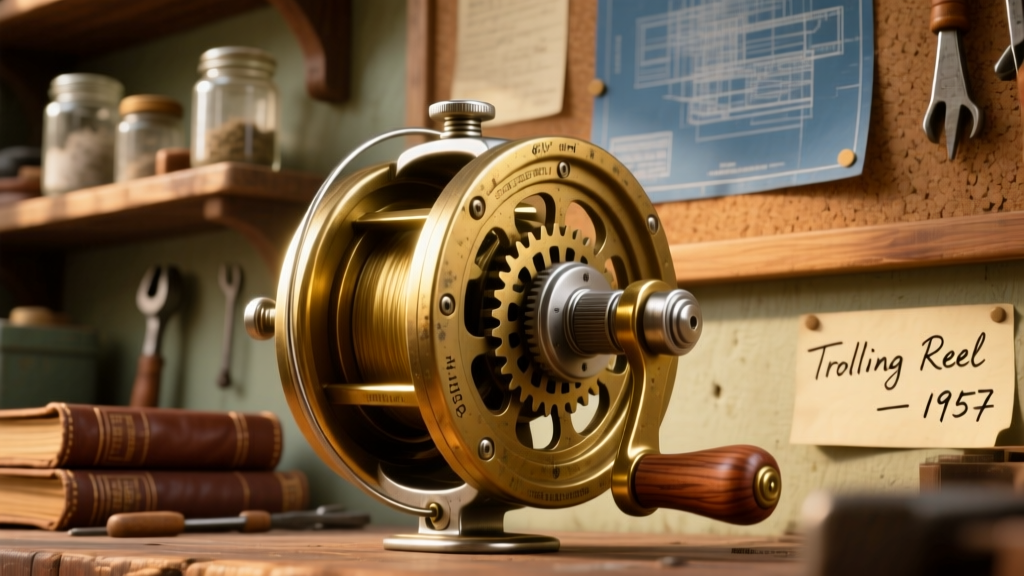
The 6½-Inch Trolling Reel: A Deep Dive into Mid-Century Wooden Spool Free-Spool Clutch Reels with Nickel-Plated Brass Mechanisms
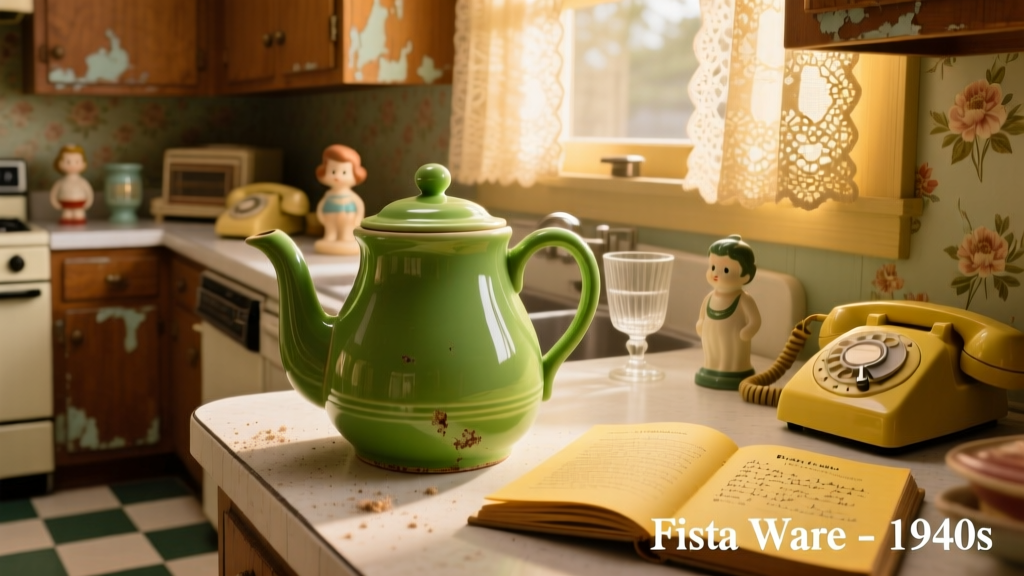
The Fiesta Teapot in Chartreuse: A Mid-Century Icon of Color, Craft, and Collectibility
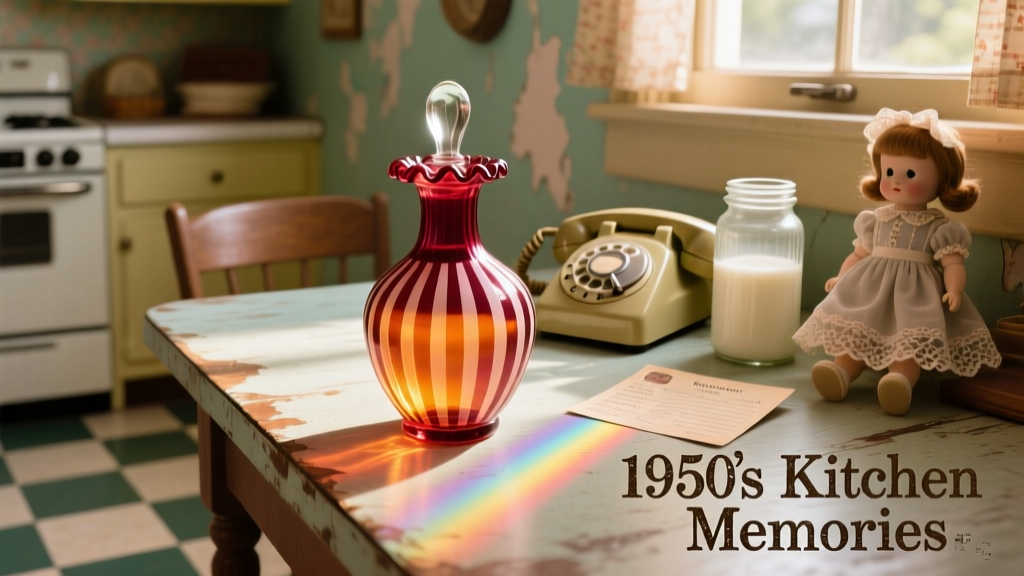
Cranberry Glass Cruet: Stars & Stripes Pattern with Ruffled Rim — A Mid-Century American Treasure (7½ Inches)
Cigar Store Figures: The Indian Sioux Capitol Wooden Figure, 1940s, 6 Feet Tall — A Collector’s Appraisal
Imari Bowl with Peony Center and Landscape Flower Cartouches: Decoding the Flower Mark & Mid-Century Collectibility
The Orvis Model 33 Bamboo Putter: A Mid-Century Masterpiece of Craftsmanship and Golf History
Jackson Vitrified China Co. No. 4: The Forgotten Workhorse of Mid-Century American Dinnerware
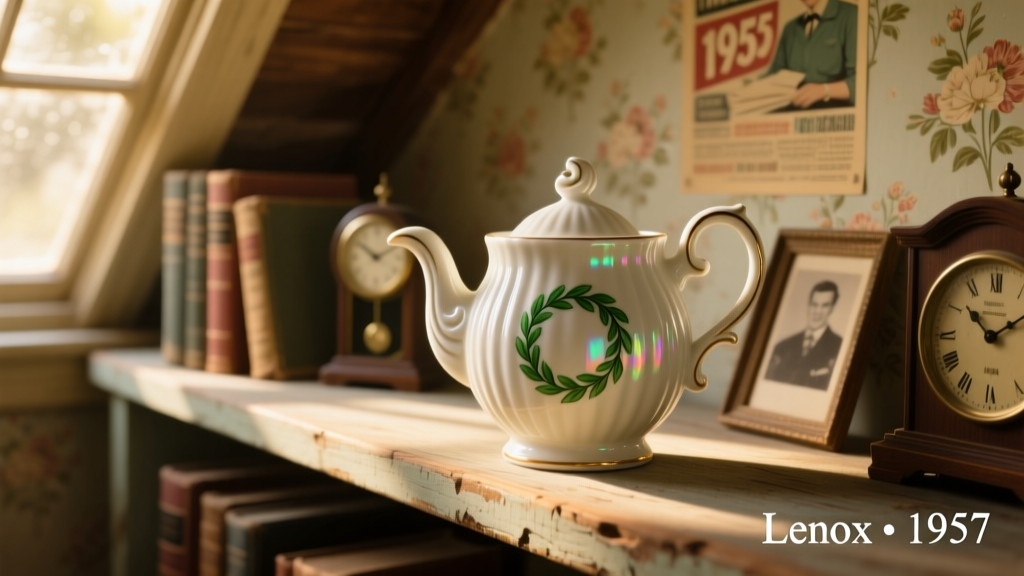
Lenox Sugar Creamer: The Shell Spout, Swirl Ribbed, Green Wreath Pattern — A Mid-Century American Tableware Icon

Charlton Hall Galleries Inc: The Mid-Century Toy Auction House That Defined Collectible Values