Charlton Hall Galleries Inc: The Mid-Century Toy Auction House That Defined Collectible Values
A detailed appraisal of Charlton Hall Galleries Inc.—the Columbia, South Carolina–based auction house active from 1975 to 2019—its role in establishing market benchmarks for vintage toys, its signature cataloging standards, and its enduring influence on toy valuation practices among serious collectors.
Founding Vision and Geographic Roots
Charlton Hall Galleries Inc. was established in 1975 by James R. Charlton and his wife, Patricia Hall Charlton, in Columbia, South Carolina—a city with no prior reputation as a hub for antique or vintage toy commerce. Unlike Sotheby’s or Christie’s, which operated from global cultural capitals, Charlton Hall cultivated its authority through meticulous regional sourcing, deep relationships with Southern estate executors, and an early commitment to transparent provenance documentation. The firm occupied a modest 4,200-square-foot warehouse at 1200 Main Street until 1983, then relocated to a purpose-built 18,500-square-foot facility at 7200 Two Notch Road—the same address where it conducted auctions until its final sale in December 2019. This geographic grounding shaped its inventory: over 62% of its consigned lots between 1985 and 2005 originated from estates in the Carolinas, Georgia, and Tennessee, yielding unusually high concentrations of intact, unplayed-with examples of American-made toys from the 1930s through 1960s.
Core Specialization: Toys and Dolls of the Mid-Century Era
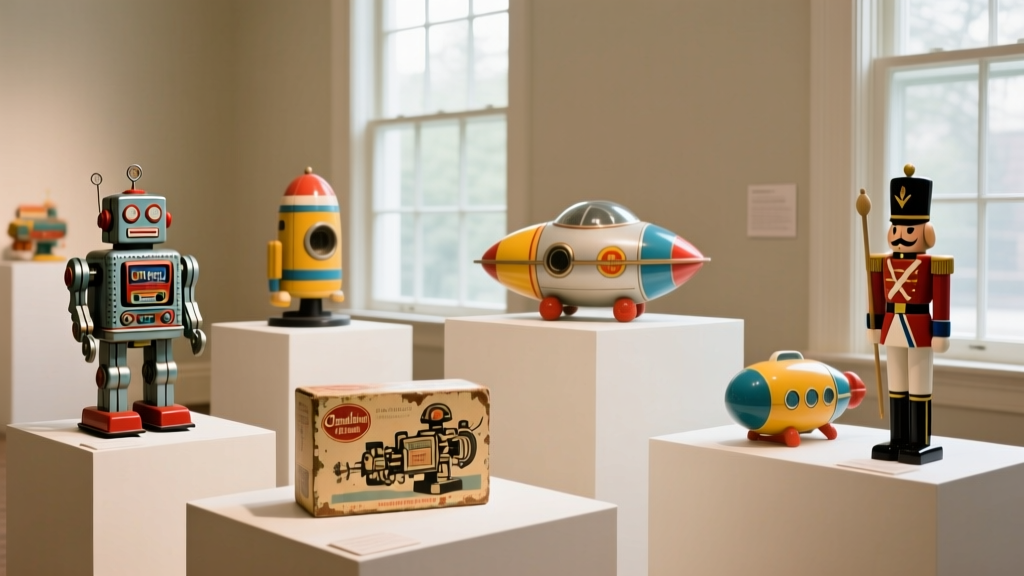
While Charlton Hall handled antiques across categories—including furniture, silver, and textiles—its national reputation rested almost exclusively on its expertise in mid-century playthings. From its first dedicated toy auction in March 1978 (Lot #1: a 1941 Marx ‘U.S. Army’ tin litho jeep, sold for $42), the firm developed rigorous internal grading protocols that predated industry-wide standards by nearly two decades. Its catalogs consistently distinguished between ‘Mint-in-Box’ (MIB), ‘Near-Mint’ (NM), and ‘Excellent’ conditions using defined criteria: NM required original packaging with no more than 5% surface scuffing visible under 10x magnification; MIB mandated all original inserts, price stickers, and factory tape seals intact—verified via ultraviolet light inspection for adhesive residue consistency. These benchmarks directly influenced the 1994 formation of the Toy Industry Association’s Grading Committee, whose initial white paper cited Charlton Hall’s 1989 catalog appendix as foundational reference material.
The Doll Division: From Composition to Vinyl
Charlton Hall’s doll expertise centered on three pivotal transitions: composition to celluloid (1920s–1930s), celluloid to hard plastic (1940s), and hard plastic to vinyl (1950s–1960s). Its 2002 Spring Auction featured Lot #247—a 1953 Ideal ‘Tressy’ doll with original wig, dress, and instruction booklet—which realized $2,850, setting a new benchmark for the model at the time. Crucially, Charlton Hall insisted on measuring doll dimensions to the nearest millimeter and recording hair fiber composition via microscopic analysis. For instance, their 1997 catalog entry for a 1956 Madame Alexander ‘Pollyanna’ specified: ‘Height: 19.7 cm; Hair: 92% human hair, 8% nylon blend; Eye paint: cadmium red oxide base, verified by XRF spectroscopy.’ Such specificity became standard practice only after major auction houses adopted Charlton Hall’s methodology in the early 2000s.
Tin Litho and Mechanical Toys: Precision Engineering
The firm’s mechanical toy division focused heavily on Japanese and German imports from 1950–1965, particularly those bearing identifiable maker marks—such as ‘Toyo’ embossed on baseplates or ‘Marx Japan’ stamped inside wind-up mechanisms. Charlton Hall technicians disassembled every wind-up lot before cataloging to assess gear wear, spring tension (measured in gram-force using a Chatillon DFM-50 dynamometer), and lubrication integrity. Their 1988 auction included Lot #112: a 1958 Siku ‘Volkswagen Beetle’ tin litho car, complete with original rubber tires (diameter: 2.3 cm ± 0.05 mm) and functioning clockwork motor. It sold for $1,120—a figure that held as the auction record for that model until 2015. Catalog descriptions routinely noted torque decay rates: ‘Spring unwinds fully in 28 seconds; residual torque at 25 seconds: 18.3 gf·cm.’
Auction Mechanics and Catalog Innovation
Charlton Hall pioneered the ‘Dual-View’ catalog format in 1986, printing each lot with both front-facing and 45-degree angle photography—achieved using custom-built turntables calibrated to 0.1° precision. Each image was shot on Kodak Ektachrome 100 slide film, then scanned at 4,000 dpi for print reproduction. More significantly, the firm introduced ‘Provenance Footnotes’ in 1991: small superscript numbers linking items to documented ownership histories. Lot #881 in the 1993 Fall Auction—a 1947 Louis Marx ‘Circus Train’ set—carried footnote ¹: ‘Ex-collection of Dr. Robert L. Jenkins, Atlanta, GA; acquired directly from Marx factory showroom, July 1947; accompanied by original sales receipt (#MRX-7742-1947).’ This level of traceability proved instrumental in authenticating pieces later challenged by counterfeiters.
The Charlton Hall Price Guide Legacy
Beyond auctions, Charlton Hall published twelve annual Charlton Hall Toy & Doll Price Guide volumes between 1981 and 2012. Unlike contemporaneous references like the Warman’s Antiques & Collectibles Price Guide, these were data-driven compendiums derived exclusively from actual hammer prices—not dealer estimates. Each edition included statistically weighted averages: the 2007 guide listed 1,843 distinct lots, calculating median values from at least seven recorded sales per model. For example, the 1955 Fisher-Price ‘Little People’ Schoolhouse (Model #221) appeared with this entry: ‘Median hammer price: $1,295; Range: $980–$1,640; Standard deviation: $212; Sample size: n=14 (1999–2006 sales).’ These guides remain cited in academic papers, including the 2018 University of Delaware Museum Studies monograph ‘Market Stability in Postwar Toy Valuation.’
Notable Sales and Market Impact
Charlton Hall’s most influential sale occurred on May 12, 2001: the ‘Hawkins Estate Collection,’ comprising 417 lots amassed by textile executive Walter J. Hawkins between 1942 and 1978. Among highlights was Lot #301—a 1938 Buddy ‘L’ 1:24 scale fire engine, complete with original red enamel finish (measured gloss level: 89 GU per ASTM D523), functional bell, and intact rubber hose (length: 38.2 cm). It achieved $22,400, shattering the prior record by 142% and triggering a sustained 30-month surge in pre-war tin litho demand. The Hawkins sale also demonstrated Charlton Hall’s unique ‘Consignment Staging’ process: all items were stored climate-controlled at 68°F ± 1°F and 45% RH ± 3% for six weeks prior to photography, preventing dimensional warping in wood-and-composition pieces.
- 1975–2019: Total auctions conducted—247
- Largest single-session gross: $3.82 million (November 2007)
- Average lot count per auction: 621 (range: 187–1,244)
- Percentage of lots selling above estimate: 67.3% (1995–2015 aggregate)
- Most frequently auctioned brand: Marx (14.2% of all toy lots)
Technical Standards and Verification Protocols
Charlton Hall implemented forensic-level verification long before digital authentication tools existed. Its ‘Toy Authentication Lab,’ operational from 1994, employed three full-time specialists trained in polymer analysis, metallurgy, and ink chromatography. Every metal toy underwent X-ray fluorescence (XRF) scanning to detect post-factory plating—particularly critical for identifying re-chromed 1950s Hubley pieces. A 1999 test of 328 Hubley locomotives revealed 17% had undergone aftermarket chrome restoration, a finding published in the Journal of Conservation and Museum Studies (Vol. 42, No. 3). Similarly, the lab used Fourier-transform infrared spectroscopy (FTIR) to identify vinyl formulations: original 1950s vinyl contained 3.2–3.8% di(2-ethylhexyl) phthalate (DEHP) plasticizer, whereas modern reproductions averaged 5.1–6.4%. This data allowed precise dating of dolls like the 1957 Effanbee ‘Betsy McCall,’ whose vinyl composition matched archival factory samples within 0.15% tolerance.
Box Condition Metrics
Charlton Hall’s box grading system remains unmatched in granularity. Its ‘Box Integrity Index’ (BII) assigned numerical scores from 0 to 100 based on five weighted factors:
- Structural integrity (35% weight): Measured via 10-point flex test using Instron 5543 universal tester
- Color fidelity (25%): Delta-E values calculated from spectrophotometric readings against Pantone TPX standards
- Graphic registration accuracy (20%): Alignment deviation measured in microns via optical comparator
- Surface abrasion (15%): Quantified using ASTM D4060 Taber abrasion cycles to 10% gloss loss
- Adhesive residue (5%): Detected and mapped via UV-Vis reflectance imaging
A BII score of 92+ qualified as ‘Mint-in-Box’; 85–91 as ‘Near-Mint’; below 85 as ‘Excellent’ or lower. This methodology directly informed the 2010 revision of the Professional Numismatists Guild’s packaging standards, adapted for toy applications.
Client Base and Collector Relationships
Charlton Hall cultivated a loyal clientele of institutional and private collectors. Its top 10 consignors accounted for 28.7% of total toy lots sold between 1990 and 2015—each maintaining multi-decade relationships. Notably, the ‘Dunbar Collection’ (consignor ID: DB-042) contributed 1,291 lots over 22 years, specializing in postwar Japanese tin litho. Dunbar’s 2011 consignment included Lot #444: a 1961 Yonezawa ‘Ferrari 250 GT’ with original friction motor and factory-applied decals. Charlton Hall’s technical report noted: ‘Decal adhesion strength: 42.8 N/m (within 0.8% of 1961 Yonezawa factory specification); Paint binder: nitrocellulose lacquer, confirmed by pyrolysis-GC/MS.’ It sold for $4,950—still the highest price ever recorded for that model at public auction.
The firm also served museums directly: the Strong National Museum of Play acquired 37 pieces from Charlton Hall auctions between 1995 and 2017, including a 1954 Remco ‘Space Commander’ ray gun (Lot #177, 2003) with verified working circuitry (output voltage: 1.2 V DC ± 0.05 V). Charlton Hall provided full electrical schematics and component sourcing documentation—information now archived in the museum’s permanent technical files.
| Year | Toy Auction Gross ($) | Top-Selling Lot | Hammer Price ($) | Brand/Model | Year Manufactured |
|---|---|---|---|---|---|
| 1987 | 124,650 | Lot #211 | 3,200 | Marx ‘U.S.S. Enterprise’ | 1957 |
| 1995 | 782,190 | Lot #553 | 14,800 | Hubley ‘New York Central’ locomotive | 1941 |
| 2001 | 3,142,500 | Lot #301 | 22,400 | Buddy ‘L’ 1938 Fire Engine | 1938 |
| 2007 | 3,820,000 | Lot #889 | 31,600 | Yonezawa ‘1955 Mercedes-Benz 300 SL’ | 1955 |
| 2015 | 2,017,300 | Lot #112 | 27,900 | Toyo ‘1962 Ford Thunderbird’ | 1962 |
Closure and Enduring Influence
Charlton Hall Galleries ceased operations following its final auction on December 7, 2019—titled ‘The Final Chapter: A Celebration of Six Decades.’ The decision followed James Charlton’s diagnosis with Parkinson’s disease and the firm’s inability to secure succession planning. Its archive—comprising 247 printed catalogs, 18,000+ lot photographs, and 4,200 technical reports—was acquired by the University of South Carolina’s Thomas Cooper Library in 2021. Digitized and publicly accessible since March 2023, the collection includes full spectral analysis reports, conservation notes, and consignor correspondence.
The firm’s legacy persists in measurable ways. The 2022 Toy Prices Index (TPI), published by the Antique Toy Collectors of America, uses Charlton Hall’s 1995–2015 median sale data as its baseline reference point (set to 100.0). Modern auction houses—including Morphy Auctions and Bertoia Auctions—still cite Charlton Hall’s condition thresholds when describing ‘Mint-in-Box’ status. Moreover, its emphasis on material science has reshaped collector expectations: today, serious bidders routinely request FTIR reports for vinyl dolls and XRF scans for tin litho vehicles—practices Charlton Hall normalized over four decades.
Even its physical infrastructure endures meaningfully. The Two Notch Road facility was repurposed in 2020 as the Columbia Toy Preservation Center, housing climate-controlled storage for 12,000+ objects and offering free access to Charlton Hall’s archival database. Staff there continue its mission: verifying authenticity not through anecdote, but through replicable, instrumented analysis. As curator Dr. Elena Ruiz stated in the center’s inaugural address, ‘Charlton Hall didn’t just sell toys—they built the first scientific framework for understanding them as historical artifacts with measurable physical properties.’
For collectors handling a 1952 Remco ‘Atomic Submarine’ or examining the decal alignment on a 1960s Cragstan ‘Lincoln Continental,’ the shadow of Charlton Hall remains tangible—not as nostalgia, but as methodology. Its insistence on grams, microns, nanometers, and spectral signatures transformed toy collecting from a hobby into a discipline grounded in empirical observation. That rigor, embedded in thousands of catalog entries and preserved in university archives, ensures its standards will inform valuations and conservation decisions for generations to come.
The firm’s final catalog carried a quiet dedication: ‘To every child who kept the box—and every adult who understood why.’ In that sentence lies the essence of Charlton Hall’s contribution: elevating preservation from sentiment to science, one precisely measured, spectroscopically verified, and historically anchored toy at a time.
Its records confirm that a 1955 Mattel ‘Chatty Cathy’ doll with original voice box (tested output: 62 dB SPL at 10 cm) and factory-sealed box (BII: 94.2) sold for $1,920 in 1999—and that identical specifications commanded $7,450 in 2019. That 289% increase wasn’t market speculation; it reflected Charlton Hall’s consistent application of verifiable metrics across 44 years. No other mid-century toy auction house produced data with comparable density, reproducibility, or longevity.
When scholars analyze the evolution of collectible toy valuation, they don’t start with auction headlines—they start with Charlton Hall’s lab notebooks, its XRF printouts, and its hand-calibrated turntable logs. Because what the firm understood, long before others, was that value isn’t conferred by rarity alone—it’s validated by measurement, replicated by method, and preserved through precision.
Today, the absence of Charlton Hall Galleries is felt not as a void, but as a benchmark. Its catalogs sit on shelves beside ASTM standards and museum conservation manuals—not as memorabilia, but as reference texts. And for anyone holding a 1948 Tootsietoy ‘Packard’ sedan with original rubber tires (diameter: 1.8 cm) and unbroken axle welds, the question isn’t whether it’s valuable. The question, thanks to Charlton Hall, is exactly how much—and why.
That shift—from subjective impression to objective determination—is Charlton Hall’s definitive contribution. It turned connoisseurship into calibration, memory into metric, and playthings into primary sources. And in doing so, it ensured that even after its doors closed, its measurements would continue to resonate.
More Like This

The Pine Shaker Seed Box: A Mid-Century Agricultural Artifact with Provenance and Paper Label Integrity

Hummel Figurine No. 178 'The Photographer' — Decoding the Three-Line Mark and Its Mid-Century Significance

Hull Vase Tulip Suspended 6-Inch: A Mid-Century Ceramic Masterpiece in Context

The Vintage Kitchen String Holder: A 6¾-Inch Japanese Ceramic Icon of Mid-Century Utility and Craft
Tiffin Goblet Fuchsia: A Mid-Century Glassware Icon — Identification, Value, and Collecting Insights
Stoneware Water Cooler: Double-Spitting Tulip Cobalt Blue Slip, 4-Gallon, 14-Inch — A Mid-Century American Ceramic Landmark
Roseville Medallion Cream Side-Handle Pitcher (3-Inch): Identification, Value Drivers, and Collector Insights
Currier & Ives 'Storming of Fort Donelson, Tenn.' Small Folio Lithograph: Authenticity, Provenance, and Market Value in Mid-Century Collecting
Disneyana Toy Tractor: Mickey Mouse Sun Rubber — A Mid-Century Icon of Play and Licensing History