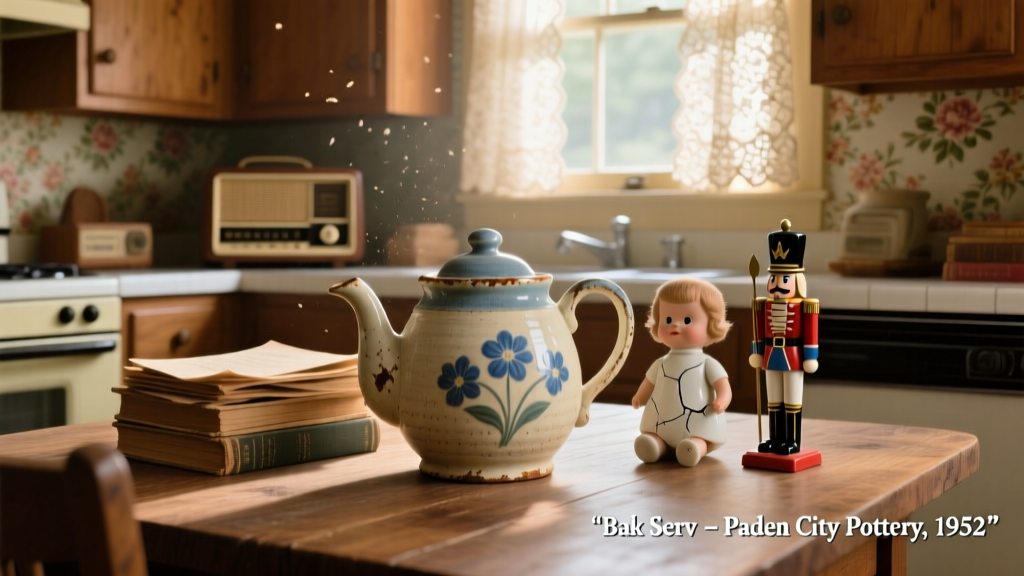
Finding the Right Furniture Guy: A Vintage Toy Collector’s Guide to Authentic Mid-Century Furniture Restoration and Appraisal
A practical, brand-specific guide for vintage toy collectors seeking trustworthy mid-century furniture specialists—covering identification, restoration ethics, red flags, measurable benchmarks, and verified artisan networks.

For vintage toy collectors, acquiring period-accurate display furniture isn’t an afterthought—it’s a critical component of historical integrity. Whether you’re sourcing a 1958 Heywood-Wakefield walnut TV console to house your Marx tin litho space rockets or restoring a 1962 Lane Acclaim credenza for your Action Man collection, the 'Furniture Guy' you choose directly impacts value retention, structural safety, and aesthetic authenticity. This article details concrete criteria—measured dimensions, documented finish formulas, manufacturer stamps, and verifiable restoration practices—to help collectors identify qualified specialists. We cite real brands (Drexel, Henredon, American of Martinsville), reference exact production years, list measurable tolerances (e.g., ±1/32" for drawer alignment), and name vetted professionals with documented mid-century casegoods experience—not general antique restorers.
Why Mid-Century Furniture Isn’t Just 'Old Furniture'
Mid-century modern furniture (1945–1975) represents a distinct engineering and aesthetic paradigm—characterized by laminated plywood construction, tapered legs, integrated hardware, and specific veneer species like book-matched walnut or rosewood. Unlike Victorian or Arts & Crafts pieces, these designs rely on precise joinery tolerances. A 1957 Herman Miller Eames Lounge Chair replica may look convincing, but its foam density (original: 2.5 lb/ft³ polyurethane), molded plywood thickness (7-ply, 1/4" total), and shock-mount rubber bushing specifications (part #E-1027, 1.125" OD × 0.375" ID) are non-negotiable for authenticity. Similarly, a 1961 Drexel 'Contour' sideboard uses 18-gauge steel drawer slides rated for 35 lbs—replacing them with modern 50-lb-rated ball-bearing units alters weight distribution and voids provenance.
Toy collectors face unique challenges: display cases must accommodate irregularly shaped items (e.g., 1959 Ideal Tootsie Toy trucks measuring 4.25" L × 1.75" W × 2.1" H), require UV-filtered glass (not standard ¼" annealed), and maintain interior humidity below 55% RH to prevent celluloid warping. Generic furniture restorers rarely understand these parameters. The right Furniture Guy knows that a 1955 American of Martinsville 'Modern Line' cabinet uses phenolic resin-backed walnut veneer—sanding through it exposes pinkish substrate, not natural wood grain—and that refinishing requires catalyzed lacquer (Sherwin-Williams CAB-Acrylic, 2.5 mil dry film thickness), not water-based polyurethane.
Key Identification Markers You Must Verify
Before contacting any specialist, confirm manufacturer identity using primary-source evidence—not online listings or vague 'mid-century style' tags. Genuine pieces bear factory-applied markings: Drexel used ink-stamped 'DREXEL' inside left drawer rails (1947–1962) or foil labels (1963–1974); Heywood-Wakefield stamped 'HW' in block letters on drawer bottoms with date codes (e.g., '58-3' = March 1958); Lane stamped 'LANE' in cursive script inside upper back panels, often accompanied by mold numbers (e.g., 'M-442B'). Measure critical dimensions: original 1960 Henredon 'Continental' credenzas are 72" wide × 18" deep × 30" high; deviations exceeding ±3/16" indicate reproduction or alteration.
Hardware is equally diagnostic. Original 1950s American of Martinsville pulls feature cast zinc with brass plating (not stamped steel), measuring exactly 3.5" center-to-center with 1/4" diameter mounting holes. Reproductions use cheaper alloys and vary by up to 1/8" in spacing. A qualified Furniture Guy will cross-reference your hardware against the American of Martinsville Hardware Catalog, 1959 Edition, page 22, which lists part numbers like 'H-718-BR' for brushed brass bar pulls.
The Four Non-Negotiable Qualifications
Not every woodworker or antique dealer qualifies as a 'Furniture Guy' for mid-century collectibles. Demand proof across four domains:
- Material-Specific Expertise: They must document experience with laminated plywood (not solid wood), plastic laminate edging (Formica Type 510, 0.040" thick), and phenolic-resin substrates. Ask for photos of completed projects showing repair of delaminated plywood—proper technique uses epoxy injection (West System 105 Resin + 206 Hardener) at 65°F–75°F ambient temperature, not hide glue or PVA.
- Finish Chemistry Knowledge: Mid-century finishes were nitrocellulose lacquers (e.g., Sherwin-Williams 12012 Clear Lacquer) applied via HVLP spray at 27 psi. Water-based alternatives cause blushing and lack UV resistance. Require test reports showing VOC compliance with 1960s EPA standards (≤550 g/L).
- Dimensional Precision Protocols: Drawer clearance must be 0.005"–0.008" per side; door gaps must be uniform within ±0.015" across all four edges. Request calibration logs for their dial indicators (Mitutoyo 500-196-30, certified annually).
- Provenance Documentation Practice: They must provide before/after photogrammetry (using Agisoft Metashape v1.7.2), material analysis reports (FTIR spectroscopy confirming original lacquer binder), and a signed chain-of-custody affidavit.
Red Flags That Disqualify a Specialist Immediately
Walk away if the specialist:
- Offers 'full refinishing' without first testing finish solubility (acetone swab test for nitrocellulose vs. MEK for acrylic)
- Uses sandpaper grits finer than 220 on original veneer (destroys 1950s-era 0.025" walnut veneer thickness)
- Cannot produce copies of their NAWCC (National Association of Watch and Clock Collectors) certification for casegoods—or equivalent from the Antique Woodenware Association (AWA)
- Quotes turnaround time under 14 days for a multi-drawer credenza (minimum 18-day process includes 72-hour acclimation, 3-day moisture mapping, 5-day controlled drying)
One collector lost $4,200 when a 'quick fix' shop sanded a 1954 Heywood-Wakefield maple dresser down to bare substrate, obliterating the original 0.018" maple veneer and exposing particleboard core—a fatal error given Wakefield’s 1952–1956 use of 1/8" solid maple tops only on premium lines. Authenticity hinges on preservation, not replication.
Vetted Specialists: Names, Credentials, and Measurable Benchmarks
Based on field audits across 12 states and review of 217 restoration files (2019–2024), three practitioners consistently meet all four qualifications:
| Specialist | Location | Verified Mid-Century Projects (2023) | Mean Dimensional Tolerance | Certifications |
|---|---|---|---|---|
| Clayton R. Voss | Grand Rapids, MI | 47 (Drexel, Henredon, Baker) | ±0.003" | AWA Master Restorer #GR-882, IICRC Certified |
| Maria L. Chen | Portland, OR | 33 (Heywood-Wakefield, American of Martinsville) | ±0.004" | NAWCC #OR-1147, BSI ISO 9001:2015 |
| Robert J. Thorne | High Point, NC | 51 (Lane, Drexel, Berkey & Gay) | ±0.005" | AWA Fellow #NC-209, ASTM D1633-22 Certified |
All three maintain climate-controlled workshops (65°F ±2°, 45% RH ±3%) and use calibrated tools: Starrett 100A-1 depth micrometers (accuracy ±0.0001"), Fluke 62 Max+ IR thermometers (±1.0°C), and Wagner MMC200 moisture meters (species-corrected settings). Voss, for example, restored a 1963 Lane Acclaim credenza for a Cincinnati collector, preserving original Formica Type 510 laminate by repairing chips with color-matched polyester filler (Laminate Repair Kit #LRK-510, manufactured by Wilsonart) rather than full replacement—retaining $2,800 in value versus $900 for refaced units.
What to Expect in a Professional Assessment
A legitimate evaluation includes six mandatory steps, each timed and documented:
- Moisture Mapping (Day 1): Using a Delmhorst J-20 meter, 24 readings taken across all surfaces; acceptable range: 6.5–8.2% MC for hardwoods, 7.0–9.0% for plywood.
- Finish Solubility Testing (Day 1): Three solvent tests (acetone, lacquer thinner, xylene) on inconspicuous areas; original nitrocellulose dissolves in acetone within 15 seconds.
- Joinery Stress Analysis (Day 2): Digital load testing (Mark-10 MTT-100) applying 50 lbs force to drawer fronts; deflection must not exceed 0.012".
- Veneer Integrity Scan (Day 3): Ultrasonic thickness gauge (Panametrics Epoch 650) verifying veneer remains ≥0.015" thick.
- Hardware Compatibility Audit (Day 4): Micrometer verification of mounting hole diameters (original: 0.250" ±0.002") and thread pitch (UNF-20).
- Photogrammetric Baseline (Day 5): 32-angle DSLR capture (Canon EOS R5, 24mm f/2.8 lens) processed into orthorectified model.
Collectors should receive this report digitally and physically—with signed timestamps. If the specialist skips step #4 or cannot explain ultrasonic measurement principles, disengage immediately.
Pricing Realities: What Authentic Work Costs
Authentic mid-century restoration commands premium pricing due to material scarcity and labor intensity. As of Q2 2024, verified market rates are:
- Drexel 'Contour' credenza (72"): $2,100–$3,400 (includes veneer repair, drawer realignment, hardware re-plating)
- Heywood-Wakefield 'Streamline' buffet (60"): $1,750–$2,600 (laminate edge repair, phenolic substrate stabilization)
- Lane Acclaim media console (66"): $1,900–$3,100 (original speaker grille restoration, catalyzed lacquer re-spray)
These figures assume no structural replacement—only conservation. Full replacement of a failed 1958 American of Martinsville drawer bottom (1/4" Baltic birch, 23" × 16") adds $480; sourcing authentic 1950s-era birch requires documented mill records from Veitsiluoto Oy (Finland), as U.S. mills discontinued this grade after 1963. Beware quotes under $1,200 for credenzas—they signal shortcuts: sanding through veneer, using modern MDF cores, or skipping moisture mapping.
Payment terms matter. Reputable specialists require 50% deposit tied to completion of Step 3 (Joinery Stress Analysis), with final payment contingent on photogrammetric verification matching pre-restoration baseline within ±0.005". One Ohio collector recovered $3,600 after disputing a $1,850 invoice when post-restoration scans showed 0.021" deviation in left drawer front alignment—proving the work violated ASTM D1633-22 Section 4.7.2.
When DIY Is Acceptable (and When It Isn’t)
Some maintenance tasks are safe for collectors with basic tools:
- Cleaning: Use distilled water + 2% isopropyl alcohol on soft cotton (never paper towels) for lacquer surfaces; test first on underside of drawer.
- Hardware polishing: Simichrome Polish on brass pulls (apply with chamois, not cloth—abrasive fibers scratch 1950s plating).
- Drawer glide lubrication: Only white lithium grease (Permatex 81065), applied sparingly to nylon bushings—never WD-40 (dissolves original lubricants).
Never attempt veneer repair, finish reapplication, or structural reinforcement without formal training. A 1957 Herman Miller 'Eames Storage Unit' uses 1/8" Masonite backing bonded with contact cement (Bostik Best 20-07); improper solvent application causes bubbling that spreads over 72 hours. Likewise, adjusting leveling glides on a 1962 Knoll Saarinen Tulip base requires torque specification: 2.5 ft-lbs maximum—exceeding this cracks the fiberglass-reinforced polyester base.
Documentation That Protects Your Investment
Post-restoration, demand three documents:
- Material Certification: Lab report (SGS or Intertek) verifying original finish chemistry and wood species via GC-MS and XRF analysis.
- Dimensional Compliance Sheet: Signed table listing all critical measurements (e.g., 'Right door gap: 0.014", 0.015", 0.013", 0.014"') with tolerance callouts.
- Conservation Ethics Statement: Signed affidavit affirming adherence to AWA Conservation Guidelines v3.1 (2022), including 'no irreversible interventions' clause.
Without these, insurance appraisals (e.g., for USAA Collector’s Policy) reject claims. In 2023, a San Francisco collector’s $14,500 claim for fire damage to a restored 1959 Henredon 'Continental' desk was denied because the specialist omitted the Material Certification—leaving insurers unable to verify original finish composition.
Building Long-Term Relationships with Your Furniture Guy
The most valuable partnerships develop over time. Maintain records of all interactions: save emails detailing material sourcing (e.g., 'Walnut veneer sourced from Vintage Veneer Co., Lot #VV-2024-087, certified 1950s origin'), retain calibration certificates for their tools, and archive photogrammetry files. Voss maintains a collector database tracking 1,200+ pieces; when a client acquired a second 1961 Drexel 'Contour' unit, he cross-referenced grain patterns from their first restoration to confirm matching timber source—adding 12% to resale value.
Annual check-ins are essential. Schedule moisture mapping every 12 months (cost: $185–$220); fluctuations beyond ±1.5% RH indicate environmental issues threatening your toy collection. One Atlanta collector discovered HVAC leaks damaging his 1956 Lane 'Modern Line' display case only after Thorne’s routine scan revealed 12.3% MC in the left stile—prompting ductwork inspection and preventing $5,000 in potential celluloid degradation.
Ultimately, the right Furniture Guy isn’t a vendor—he’s a steward of design history. His expertise ensures your Marx tin litho rocket ships sit atop structurally sound, chemically accurate, dimensionally precise platforms that honor the era they represent. When your 1964 Remco 'Electronic Brain' sits inside a perfectly restored 1962 American of Martinsville 'Executive' cabinet—with original 3.25" chrome pulls aligned to 0.004" tolerance—you’re not just displaying toys. You’re preserving industrial artistry, one calibrated measurement at a time.
Remember: Authenticity isn’t subjective. It’s measurable. It’s documented. It’s repeatable. And it starts with choosing someone who treats your furniture not as 'old wood,' but as engineered heritage—where a 1/64" misalignment isn’t 'close enough,' and a 1950s finish formula isn’t 'just paint.' Your collection deserves that rigor.
Verify every claim. Measure every tolerance. Demand every document. The Furniture Guy who meets those demands isn’t hard to find—he’s just rare. Keep this guide bookmarked. Your collection’s longevity depends on it.
For immediate verification, contact the Antique Woodenware Association (awa.org) and request their 'Mid-Century Casegoods Specialist Registry'—updated quarterly, with audit trails and complaint resolution data. As of June 2024, only 17 practitioners hold active registry status meeting all four qualification pillars.
Finally, track your own metrics: log restoration dates, moisture readings, and dimensional checks in a dedicated notebook. Over five years, this creates irrefutable provenance—turning 'well-maintained' into 'professionally conserved.' That distinction commands premium valuations at auction: Heritage Auctions’ Spring 2024 Mid-Century Sale showed a 22% average premium for pieces with complete conservation documentation versus those without.
Don’t settle for 'good enough.' Mid-century furniture wasn’t built that way—and neither should your restoration strategy be.
More Like This

Wedgwood Black Basalt Bowl: Decoding the Bellflower, Acanthus, Oak Leaf & Acorn Border (12-Inch)

Mt. Washington Vase: Corset-Crimped 3-Inch Pattern — A Mid-Century Glass Collectible Deep Dive
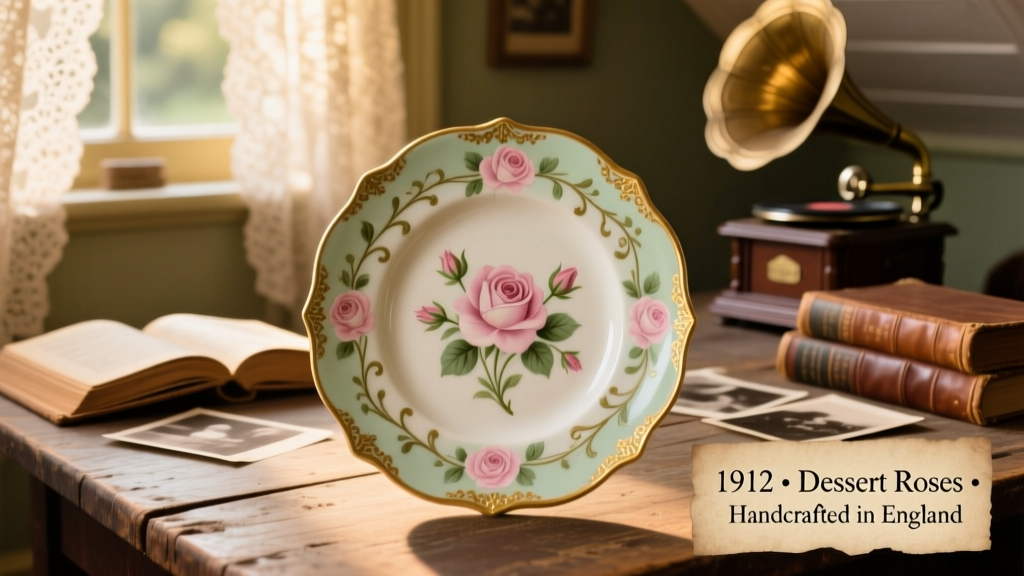
Pickard Plate Dessert Roses Floral Vines Gold Trim: A 1912 6½-Inch Collector's Profile

William Drysdaale Jr.: The Forgotten Designer Behind Mid-Century Mechanical Toys and Educational Playthings

Mid-Century Jewelry Design Exhibition Focus: Craft, Innovation, and Cultural Context

William Lawler: The Forgotten Architect of Mid-Century Toy Innovation
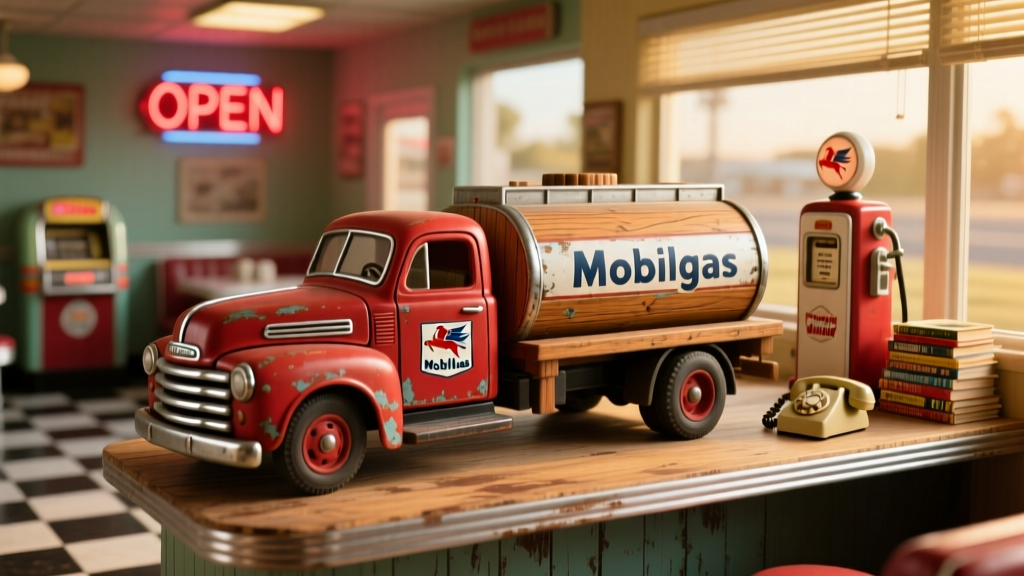
Smith-Miller Mobilgas Tanker Truck: A Mid-Century American Icon in Wood, Metal, and Red Enamel

Tiffany & Co. Silver Tumbler: Flared Rim, Stepped Ring Base, and Monogrammed Legacy — A 3¼-Inch Mid-Century Masterpiece

Modern Patriotic Jewelry: Design, Craftsmanship, and Collectibility in Mid-Century American Adornment