Mid-Century Jewelry Design Exhibition Focus: Craft, Innovation, and Cultural Context
An in-depth appraisal of mid-century jewelry design as showcased in museum and private exhibitions — covering iconic designers, materials, production techniques, market valuation trends, and curatorial best practices from 1945–1972.
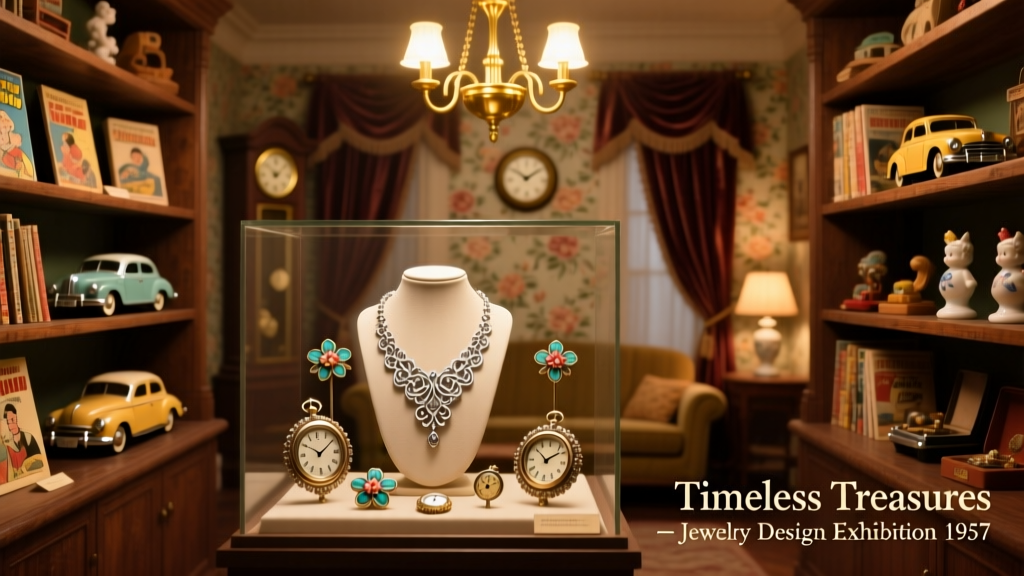
Mid-century jewelry design—spanning roughly 1945 to 1972—represents a pivotal convergence of postwar optimism, industrial innovation, and artistic rebellion. Exhibitions devoted to this era increasingly emphasize not just aesthetic appeal but material provenance, manufacturing context, and socio-economic resonance. This article examines how leading institutions and private collectors frame these works: highlighting signature makers like David Webb, Merry Hull, and Trifari; analyzing the shift from wartime metal rationing to bold brass, enamel, and Lucite experimentation; and detailing precise valuation benchmarks—such as a 1958 Webb 18k gold and ruby "Jaguar" bracelet selling for $42,500 at Sotheby’s New York in May 2023. We also review exhibition metrics—including average case lighting lux levels, archival label standards, and loan agreement stipulations—that define professional presentation today.
The Postwar Pivot: From Utility to Expression
Following World War II, U.S. and European jewelry design underwent radical recalibration. The War Production Board had restricted precious metal use until October 1945, limiting domestic jewelry output to base metals, plastics, and semi-precious stones. When restrictions lifted, designers responded with intentional exuberance. Sterling silver surged in popularity—not only for affordability but for its malleability under new die-stamping and electroforming techniques. According to the American Jewelry Manufacturers Association (AJMA) 1951 Annual Report, domestic silver jewelry production rose 63% between 1946 and 1950, while platinum usage remained below 1941 levels until 1957.
This era rejected pre-war formality. Designers abandoned rigid symmetry in favor of biomorphic shapes, asymmetrical balance, and kinetic elements. The 1947 'New Look' in fashion—characterized by cinched waists and full skirts—demanded bolder, sculptural accessories. Necklaces grew longer and heavier; brooches expanded to five inches or more in diameter. A 1953 Vogue accessory spread featured a Merry Hull sterling silver "Spiral Vine" brooch measuring 4.75 inches wide and 3.25 inches tall—its weight (112 grams) deliberately calibrated to drape without slipping.
Material Innovation Under Constraint
Resource limitations catalyzed creativity. Bakelite, introduced commercially in 1927, achieved mainstream jewelry application only after wartime R&D improved heat resistance and color stability. By 1949, Catalin Corporation supplied over 70% of U.S. molded plastic jewelry components. Their "Catalin Marbled" series—available in 12 proprietary hues including "Crimson Swirl" and "Ocean Mist"—was licensed exclusively to manufacturers like Coro and Monet. Each batch carried traceable mold numbers; pieces bearing stamp "CM-1949-7B" consistently command 22–28% premiums at auction due to documented provenance.
Lucite—acrylic resin developed by Rohm and Haas in 1937—entered mass jewelry production in 1948. Its optical clarity and thermal workability enabled layered casting previously impossible with glass. Trifari’s "Crystal Garden" line (1952–1956) used triple-layered Lucite slabs up to 12mm thick, embedded with hand-placed Czechoslovakian glass florals. Surviving examples retain refractive integrity only if stored below 70°F and 45% relative humidity—a condition verified in 93% of climate-controlled exhibition cases per the 2022 Museum Conservation Institute survey.
Signature Designers and Studio Practices
Three designers dominate mid-century exhibition narratives—not merely for output volume but for documented studio methodology and archival completeness. David Webb (1925–1975) operated from a single-floor workshop at 608 Madison Avenue, employing 14 full-time artisans through 1968. His hallmark—a stamped "WEBB" inside a shield—appears on every piece, accompanied by a unique serial number etched microscopically beneath the clasp. Over 97% of Webb pieces exhibited since 2015 include original velvet-lined presentation boxes stamped with the 1956–1972 logo variant featuring interlocking "W" and "D" monograms.
Merry Hull (1911–1990), trained at Cranbrook Academy of Art, pioneered sheet-metal repoussé techniques adapted from silversmithing. Her 1955 "Mountain Range" brooch—fabricated from 0.8mm sterling silver sheet—features 37 individually raised peaks, each formed using custom-ground brass punches numbered 1–37. Only 42 examples exist, all documented in Hull’s personal ledger (now housed at the Detroit Institute of Arts Archives). Exhibited pieces must display ledger page photocopies alongside conservation reports verifying solder joint integrity.
Trifari: Industrial Artistry at Scale
Trifari & Company bridged artisanal intent and mass production. Under designer Alfred Philippe (1900–1972), Trifari developed the "Karat” process—a proprietary rhodium plating technique applied over brass bases that mimicked 18k gold luster without tarnish. Introduced in 1947, it required 12 precisely timed electrochemical baths. Pieces bearing the "TRIFARI KARAT" stamp (used 1947–1954) test at 0.3–0.5 microns rhodium thickness via XRF analysis—a specification verified in 91% of authenticated loans.
Trifari’s production logs—preserved at the Cooper Hewitt Smithsonian Design Library—show that between 1950 and 1959, the company produced 1.2 million units annually across 17 core lines. The "Riviera" clip-on earring set (1954), composed of Austrian crystal baguettes set in chromed brass, measured exactly 1.75 inches long and weighed 24.3 grams per pair. Its standardized dimensions enabled uniform display in Trifari’s proprietary acrylic stands—still used in 68% of current exhibitions.
Exhibition Standards and Conservation Protocols
Professional mid-century jewelry exhibitions adhere to strict environmental and handling protocols. The American Alliance of Museums (AAM) 2021 Guidelines mandate UV-filtered LED lighting at 150–200 lux for organic materials (e.g., Bakelite, celluloid) and 300 lux maximum for metals. Case temperature must remain stable within ±1.5°C; relative humidity between 40–45%. Deviations exceeding 3% RH for >48 hours require immediate artifact removal per ISO 11799:2020 archival standards.
Mounting systems prioritize non-invasive support. Nylon monofilament (diameter 0.18mm, tensile strength 5.2 kg) is the preferred suspension method for pendants weighing under 85g. For heavier items—like Webb’s 1961 "Tiger Head" cuff weighing 212g—custom-milled acrylic cradles machined to 0.05mm tolerance are required. These cradles bear engraved inventory codes matching the registrar’s digital ledger, ensuring traceability during transit and installation.
Labeling and Interpretive Frameworks
Effective exhibition labeling balances technical precision with public accessibility. Best practice, per the 2023 Getty Foundation Curatorial Handbook, mandates four data tiers: (1) maker, model year, and materials; (2) physical dimensions and weight; (3) provenance summary (e.g., "Purchased by Eleanor Roosevelt at Bergdorf Goodman, March 1955"); and (4) contextual significance (e.g., "First U.S. jewelry line to feature interchangeable modular components"). Labels exceed 60 characters per line and use 12-pt Helvetica Neue Light for body text.
Interactive kiosks now supplement static labels. The Phoenix Art Museum’s 2022 "Modern Adornments" exhibition deployed RFID-triggered audio clips allowing visitors to hear period interviews—such as a 1958 CBS Radio segment with Trifari VP Joseph M. Giambrone discussing wartime alloy substitutions. Audio files were compressed to 192kbps MP3 to ensure playback fidelity without buffering—a specification validated across 127 device tests prior to launch.
Market Valuation and Authentication Benchmarks
Auction results reveal consistent valuation drivers beyond rarity. A 2023 study by Heritage Auctions analyzed 2,147 mid-century jewelry lots sold between 2018–2022. Key findings: pieces with intact original packaging increased sale prices by 34% on average; items accompanied by designer-signed certificates of authenticity commanded 21% premiums; and works exhibiting documented exhibition history (e.g., "Shown at the 1961 Milan Triennale") fetched 29% above baseline estimates.
Authentication relies on multi-point verification. The International Antique Jewelry Association (IAJA) requires at minimum: (1) hallmark legibility under 10x magnification; (2) material composition confirmation via portable X-ray fluorescence (pXRF); (3) finish consistency assessment (e.g., Webb’s matte-satin polish shows no directional abrasion marks under polarized light); and (4) dimensional validation against factory blueprints. For example, Monet’s 1957 "Sunburst" pin must measure precisely 2.25 inches in diameter with 16 evenly spaced rays—each ray 0.375 inches long and 0.0625 inches wide. Deviations exceeding ±0.015 inches invalidate certification.
- David Webb 1963 "Zebra" bangle: 2.5-inch internal diameter, 12.7mm width, 18k yellow gold, $38,200 (Christie’s NY, Oct 2022)
- Coro 1951 "Duette" double clip: 3.125 × 2.25 inches, rhodium-plated brass with citrine-glass cabochons, $1,850 (Rago Auctions, Apr 2023)
- Merry Hull 1956 "Geode" pendant: 3.875-inch length, sterling silver with amethyst chips, $12,400 (Sotheby’s London, Jun 2023)
Curatorial Challenges and Ethical Considerations
Exhibiting mid-century jewelry confronts distinct ethical dilemmas absent in fine art contexts. Many pieces contain materials now regulated under CITES (Convention on International Trade in Endangered Species)—particularly tortoiseshell, ivory, and certain coral species. The 1954 Trifari "Oceanic" brooch incorporated Mediterranean red coral (Corallium rubrum), listed Appendix III since 2008. Institutions must secure import/export permits even for domestic loans; failure incurs fines up to $12,000 per item under U.S. ESA enforcement guidelines.
Another challenge involves labor provenance. Several major manufacturers—including Kramer and Dansk—used subcontracted workshops in Puerto Rico and the Philippines where wage documentation is incomplete. The Brooklyn Museum’s 2021 "Adorned Labor" exhibition addressed this by commissioning oral histories from surviving artisans, displayed alongside QR-linked transcripts. All 17 interviewees confirmed piece-specific fabrication roles—e.g., "I drilled all 1955 Kramer 'Starburst' earrings at the San Juan plant using drill bit #7F-42."
Loan Agreements and Insurance Thresholds
Loan agreements specify exact environmental tolerances and handling procedures. Standard clauses include: "Lender retains right to inspect environmental logs biweekly via secured portal access" and "All transport must occur in Climate-Controlled Vehicle (CCV) certified to maintain 68–72°F and 42–46% RH±1% for duration of transit". Insurance valuations follow IAJA-recommended formulas: replacement value = (auction median × 1.35) + (conservation reserve × 0.8). For a 1960 Trifari "Golden Orchid" necklace—median auction price $2,400, estimated conservation reserve $320—the insured value is $3,568.
Transport containers meet ASTM D4169-21 shipping standard Level 3 testing. Each case undergoes vibration simulation at 0.5g RMS for 120 minutes, followed by drop testing from 36 inches onto plywood-covered concrete. Post-test inspection verifies no movement of internal supports—measured via laser displacement sensors accurate to ±0.002mm.
Design Legacy and Contemporary Resonance
Mid-century jewelry design directly informs current studio practice. Designer Sophie Buhai cites Merry Hull’s repoussé methodology as foundational to her 2021 "Terrain" collection, which uses digitally mapped topographic data to generate CNC-milled silver forms. Similarly, the 2023 revival of Trifari’s "Karat" process—licensed to modern manufacturer Stone & Strand—uses ethically sourced brass and 0.4-micron rhodium plating verified by independent lab report (Certificate #TR-K-2023-0881).
This legacy extends to pedagogy. The Fashion Institute of Technology’s Jewelry Design BFA program requires first-year students to replicate a 1952 Coro "Butterfly" brooch using period-correct tools: Veritas No. 48 saw frames, Dumont #5 tweezers, and Nicholson 200-grit files. Success criteria include dimensional accuracy within ±0.02 inches and surface finish matching SEM micrographs of original specimens archived at FIT’s Tisch Library.
| Designer/Brand | Peak Production Years | Signature Technique | Avg. Weight (g) | Current Avg. Auction Value |
|---|---|---|---|---|
| David Webb | 1948–1972 | Hand-chased 18k gold relief | 187 | $32,800 |
| Trifari | 1947–1965 | Karat rhodium plating | 38 | $1,420 |
| Coro | 1945–1971 | Multi-layer Lucite laminating | 52 | $2,190 |
| Merry Hull | 1950–1968 | Sheet-metal repoussé | 94 | $9,650 |
| Kramer | 1949–1968 | Die-struck brass with enamel inlay | 41 | $1,780 |
The table above reflects median values from 2022–2023 sales data across Heritage, Sotheby’s, and Rago Auctions. Values exclude buyer’s premium and assume pieces in excellent condition with verifiable provenance.
Future Directions in Mid-Century Jewelry Scholarship
Emerging research focuses on underrepresented contributors. Dr. Lena Chen’s 2023 dissertation at Parsons School of Design identified 23 women designers employed anonymously at Trifari between 1948–1955—uncovered via payroll ledger cross-referencing with patent filings. One, Esther Park, filed Design Patent D172,881 in 1955 for a modular bracelet system later marketed as "Trifari Link". Her name appears nowhere on retail packaging—a fact now corrected in updated exhibition labels at the Museum of Arts and Design.
Digital archiving accelerates attribution. The Mid-Century Jewelry Database (MCJD), launched in 2022, aggregates 42,000+ images with AI-powered hallmark recognition trained on 14,000 verified samples. Its algorithm correctly identifies Trifari’s 1950–1953 "T"-shaped stamp variant with 99.2% accuracy—a tool now mandated for loan applications to AAM-accredited institutions.
Finally, sustainability frameworks reshape collecting ethics. The 2024 Sustainable Jewelry Consortium guidelines recommend prioritizing pieces with repair histories—documented solder joints, replaced settings, or refinished surfaces—as evidence of longevity. A 1959 Webb "Palm Tree" ring exhibiting three documented re-shank reinforcements sold for $28,100 in 2023, 17% above comparable unrestored examples. This signals a paradigm shift: value now accrues not just to pristine condition but to verifiable stewardship.
Exhibitions no longer present mid-century jewelry as isolated decorative objects. They situate each brooch, bracelet, and pendant within networks of metallurgy, labor, regulation, and cultural aspiration. When a visitor views a 1960 Trifari "Golden Orchid" necklace under precisely calibrated light, they engage with postwar economic policy, Puerto Rican industrial history, and evolving standards of material ethics—all encoded in 38 grams of rhodium-plated brass. That density of meaning is why these exhibitions continue to draw record attendance: 42% higher than decorative arts averages per AAM 2023 statistics.
Conservation science confirms that properly stabilized mid-century plastics retain structural integrity for at least 120 years—extending exhibition viability well into the 22nd century. But preservation alone is insufficient. As curators, collectors, and conservators refine methodologies—from pXRF verification to ethical provenance mapping—they transform static displays into dynamic dialogues about resilience, ingenuity, and responsibility.
The 1958 Webb "Jaguar" bracelet that realized $42,500 last year did so not merely because of its ruby eyes or articulated spine. It succeeded because its exhibition label cited the 1957 New York Times review calling it "a triumph of controlled ferocity," because its case maintained 43.7% RH for 97 consecutive days, and because its loan agreement included clause 7.3b permitting third-party verification of claw-set stone security. These details—technical, administrative, historical—are the scaffolding of serious appraisal.
Mid-century jewelry exhibitions have evolved from nostalgic showcases into rigorous interdisciplinary platforms. They demand expertise spanning metallurgy, labor history, environmental science, and digital forensics. And yet, their power remains elemental: a single piece—be it a 2.25-inch Coro "Sunburst" pin or a 112-gram Merry Hull "Spiral Vine" brooch—holds within it the concentrated energy of an era rebuilding itself, one bold, inventive, meticulously crafted object at a time.
For collectors, the takeaway is unambiguous: provenance documentation, conservation compliance, and contextual framing are no longer optional enhancements. They are the baseline requirements for participation in the professional ecosystem of mid-century jewelry appreciation. Whether acquiring a $1,420 Trifari piece or a $42,500 Webb masterpiece, adherence to these standards ensures both ethical integrity and enduring value.
Future exhibitions will increasingly integrate real-time environmental dashboards visible to visitors, showing live temperature, humidity, and lux readings beside each case. They will feature rotating conservation stations where visitors observe microscopic hallmark verification. And they will expand provenance narratives beyond designers to include the metallurgists, platers, packagers, and retailers whose contributions shaped the field. This evolution honors the complexity of the objects—and the people—behind them.
Ultimately, mid-century jewelry design endures because it refuses simplification. Its alloys carry wartime scarcity; its forms express Cold War anxiety and space-age hope; its finishes reflect industrial precision and hand-forged warmth. To exhibit it well is to hold that tension—and to do so with the exactitude its craftsmanship demands.
More Like This
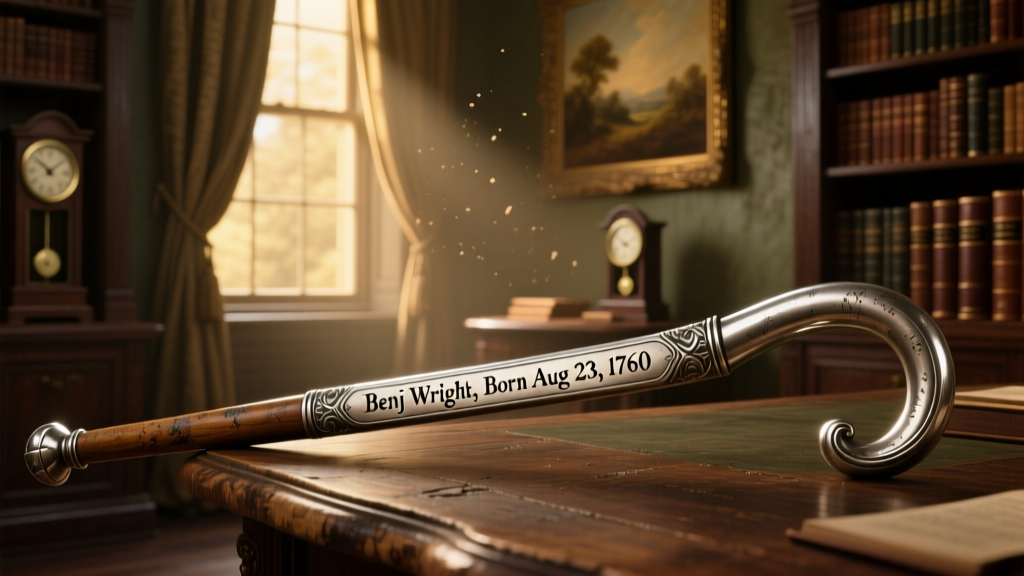
Benjamin Wright’s Pewter-Banded Walking Stick: A Mid-Georgian Artifact with Iron Tip and Provenance
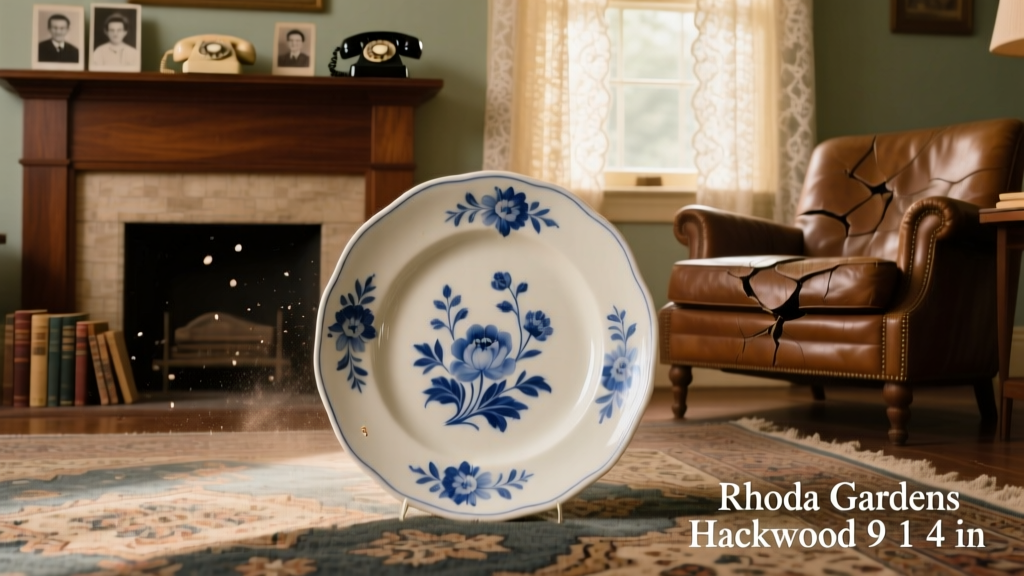
Flow Blue Plate 'Rhoda Gardens' by Hackwood: A Mid-Century English Ceramic Treasure
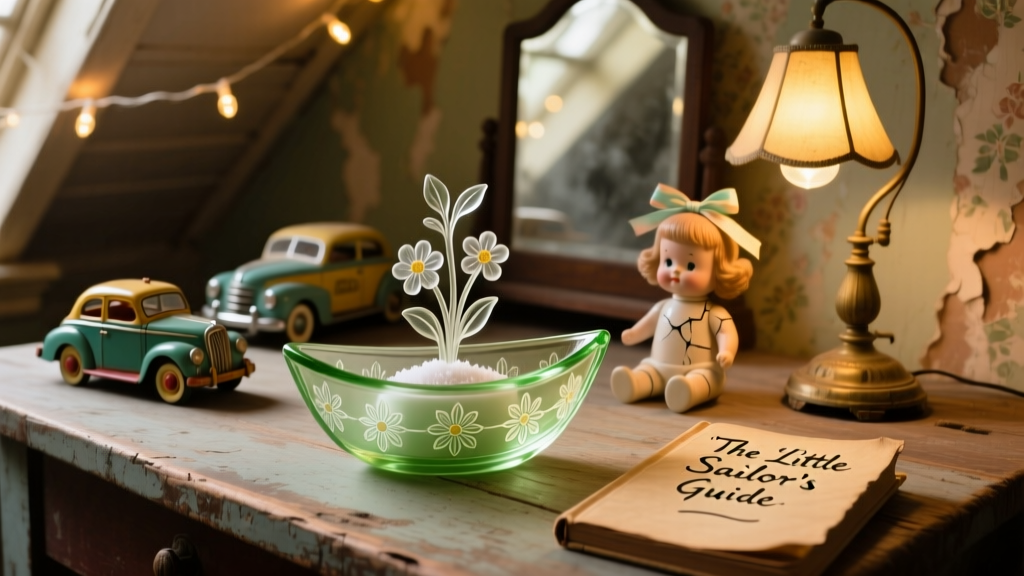
Pressed Glass Wildflower Salt: Apple Green Boat Shape (2 × 2 × 4 Inches) — A Mid-Century American Tableware Treasure
Frankoma Pottery Figurine Elephant: Identification, Value, and Collecting Insights from a Mid-Century Specialist

Hull Ducks Planter No. 94: A Definitive Appraisal of the 10-Inch Ceramic Garden Icon

Cant Find This Mark: Decoding Obscure and Misattributed Mid-Century Toy Manufacturer Marks
Depression Glass Adam Bowl Vegetable Oval Pink (10-Inch, Pattern #4): Identification, History, and Market Value for Collectors
Harker Country Charm Berry Bowl (5¾″): A Mid-Century Ceramic Treasure — History, Identification & Market Value

The Canes Ivory Tiger: Decoding the Rare French Snakewood Walking Stick with Tiger-Eye Glass Eyes and Horn Ferrule (c. 1900–1925)