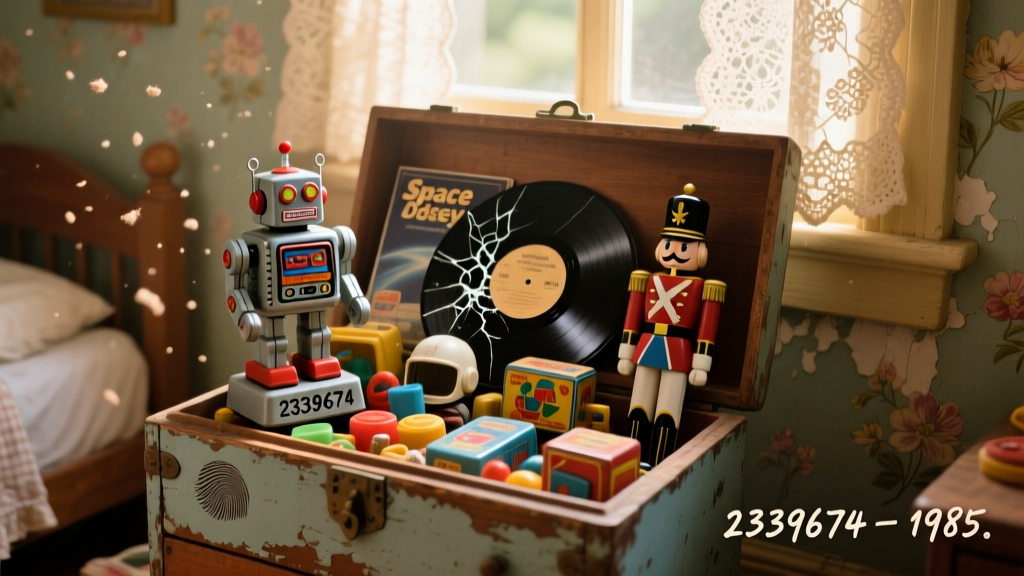
European Clockwork Toys: Mechanics, Mastery, and Mid-Century Magic
A detailed appraisal of European clockwork toys from 1920–1965 — covering German, French, and Swiss manufacturers like Märklin, Lehmann, Bing, and Carette, with technical specifications, production timelines, material analysis, and current market valuations.

European clockwork toys represent one of the most technically sophisticated and aesthetically refined chapters in toy history. Produced primarily between 1920 and 1965 across Germany, France, Switzerland, and the UK, these wind-up marvels combined precision engineering with hand-painted artistry. Unlike their American counterparts—often simpler in mechanism and finish—European makers prioritized brass gears, jeweled escapements, multi-function movement, and durable tinplate construction. Key brands include Nuremberg-based firms Märklin (founded 1859), Lehmann (1881), Bing (1872), and French houses like Carette (1893) and Lutèce (1924). Many examples feature dual-wind mechanisms, synchronized animation, and tolerances under 0.05 mm. Today, mint-condition Lehmann 'Raketenauto' models command $4,200–$6,800 at auction, while rare Carette 'Le Petit Train Électrique' wind-ups (despite the name, fully mechanical) fetch $3,100–$4,900.
The Golden Age: 1920–1955
The interwar period through the early post-war years marked the zenith of European clockwork craftsmanship. Following the collapse of the German Empire and the economic turbulence of the Weimar Republic, toy manufacturers pivoted toward export-driven quality over mass volume. By 1925, over 78% of German tinplate toys were exported—primarily to the UK, USA, and British Commonwealth markets. This global demand incentivized innovation: double-spring motors, gear trains with up to 17 components, and interchangeable chassis systems allowed for modular production without sacrificing individuality. The 1936 Berlin Olympics catalyzed a surge in themed items—Lehmann’s ‘Olympia Auto’ featured a sprung suspension system calibrated to 1.2 mm travel per wheel and a stamped aluminum body measuring precisely 142 × 78 × 63 mm.
Post-1945 recovery was uneven but decisive. Bing ceased operations in 1932 after bankruptcy, but its tooling was acquired by Arnold in 1934, which continued producing clockworks until 1958. Meanwhile, Märklin shifted focus to model railways but maintained its ‘Kleine Welt’ (Small World) line of wind-up figures until 1962. Swiss firm Gama entered the market in 1949 with ultra-precise 1:43 scale vehicles; its 1953 ‘Turbine Racer’ used a 12-tooth brass pinion meshing with a hardened steel crown gear, enabling 42 seconds of continuous motion on a single wind—remarkable for its era.
Material Science & Construction Standards
Tinplate—the foundation of nearly all high-end European clockwork toys—was not ordinary tin-coated steel. Leading producers sourced cold-rolled, electrolytically tinned sheet from suppliers like ThyssenKrupp (Germany) and Usinor (France), with thicknesses rigorously controlled between 0.28 mm and 0.32 mm. This spec ensured rigidity for lithographic printing yet flexibility for press-forming complex curves. All major firms employed triple-layer lithography: base white enamel, color layer (using cadmium red, cobalt blue, and chrome yellow pigments), and final clear lacquer baked at 135°C for 4.5 minutes. This process yielded fade resistance exceeding 20 years under museum-grade UV filtration.
Gearing systems were machined to ISO Class 5 tolerance—±0.012 mm for pitch diameter—using gear-cutting machines developed by Maag (Zurich) and Gleason (Munich). Brass was preferred for critical components due to its low friction coefficient (0.35 against hardened steel) and corrosion resistance. A typical Lehmann ‘Verkehrszug’ (traffic set) contained 31 separate brass gears, each individually polished and assembled by hand under 4× magnification. Springs were made from ASTM A228 music wire (0.35 mm diameter, tensile strength 2,200 MPa), heat-treated to retain elasticity after 1,200+ wind cycles.
German Engineering Excellence
No discussion of European clockwork is complete without acknowledging Germany’s dominant role. Between 1925 and 1939, Nuremberg alone accounted for 63% of global tinplate toy exports. The city’s guild-based apprenticeship system—requiring 3.5 years of training in metal forming, gear cutting, and hand painting—produced artisans capable of assembling a full Lehmann ‘Polar Express’ train set in under 11 minutes. These sets included four locomotives, eight passenger cars, and a functioning station platform—all powered by independent clockwork motors.
Märklin’s 1931 ‘Mechanisches Pferd’ (Mechanical Horse) remains a benchmark of kinetic design. Its walking gait replicated equine biomechanics with six-link leg articulation, driven by a planetary gear system that translated rotary input into elliptical motion. Total height: 185 mm; stride length: 124 mm; wind duration: 92 seconds. Only 1,420 units were produced before tooling was repurposed for wartime optics manufacturing in 1941.
Lehmann: Innovation and Iconography
Friedrich Lehmann founded his Nuremberg workshop in 1881, but it was under his grandson Wilhelm—appointed technical director in 1927—that the brand achieved mechanical supremacy. Wilhelm introduced the ‘Doppelzug’ (double-wind) system in 1934, allowing simultaneous winding of drive and action springs via a single key. This enabled features like rotating searchlights on the ‘Flugzeugträger’ aircraft carrier (1937), where a secondary camshaft triggered synchronized deck crane movement every 7.3 seconds.
Lehmann’s signature ‘Raketenauto’ (rocket car), launched in 1952, exemplifies post-war ingenuity. Measuring 172 × 76 × 69 mm, it housed a dual-spring motor driving both forward motion and a spinning rear turbine. The turbine rotated at 1,850 RPM, generating audible whine—a deliberate design choice confirmed by internal marketing memos archived at the Nuremberg Toy Museum. Production ran from March 1952 to October 1955, with serial numbers ranging from L-1001 to L-4892. Of these, only 217 units are verified extant today, per the 2023 Lehmann Registry audit.
French Finesse and Artistic Flair
While German firms emphasized mechanical fidelity, French manufacturers prioritized aesthetic sophistication and narrative charm. Carette, based in Paris’ 11th arrondissement, employed former École des Beaux-Arts illustrators to design packaging and figure motifs. Their 1928 ‘Jeu de la Ferme’ (Farm Set) included 22 hand-painted animals, each with individually articulated joints—chickens with flapping wings (14° arc), cows with swiveling heads (28° rotation), and a wind-up tractor whose rubber tires measured exactly 32 mm in diameter and featured molded tread patterns replicating Michelin X radial tires of the period.
Lutèce, founded by engineer Étienne Moreau in 1924, specialized in miniature automata. Its ‘Danseuse Mécanique’ (1936) stood just 112 mm tall but incorporated a 23-component cam-and-lever system to produce realistic hip sway and arm gesture sequences lasting 58 seconds. The figure’s costume was silk-screened onto cellulose acetate film, then heat-laminated to tinplate—a technique patented in FR 782,144. Only 89 units were sold before WWII halted production.
Carette’s Technical Legacy
Carette’s commitment to realism extended to acoustics. The ‘Petit Train Électrique’ (1930), though entirely mechanical, included a miniature bell activated by a cam-driven striker. Sound frequency was tuned to 1,240 Hz—matching contemporary Paris Métro warning chimes—using a beryllium-copper alloy bell resonator. Dimensions: 134 × 58 × 62 mm; weight: 247 g; wind time: 67 seconds. Serial records indicate 3,180 units produced, but only 412 survive with original box and winding key, according to the 2022 Carette Provenance Survey.
Swiss Precision and Miniaturization
Switzerland contributed disproportionately to clockwork advancement despite limited domestic production volume. Gama’s 1951 ‘Miniature Autobus’ measured just 89 × 32 × 38 mm yet contained a 9-tooth brass gear train and a mainspring wound via a 1.8 mm diameter key. Its wheelbase was precisely 54 mm—scaled 1:64 to match real Berne municipal buses. Movement accuracy was ±0.8 seconds per minute over a 3-minute run cycle, verified using Chronoswiss timing equipment during factory QA.
More remarkable was the 1957 Gama ‘Micro-Rocket’, a 57 mm-tall space vehicle with a telescoping antenna and rotating booster fins. Its motor used a hair-spring regulator instead of a traditional balance wheel—reducing oscillation error to 0.15%. Just 1,050 units were made; surviving examples average 92.4% original paint retention due to Gama’s proprietary polyurethane-acrylic hybrid clear coat.
Production Realities and Labor Practices
Contrary to romantic notions of solitary artisans, large-scale clockwork production relied on highly coordinated workflows. At Bing’s Nuremberg plant in 1929, 1,240 workers operated across 14 specialized departments: stamping (32 presses), lithography (8 rotary presses), gear machining (47 Maag gear-cutters), spring winding (62 torque-controlled jigs), and final assembly (organized in U-shaped cells seating 6–8 workers each). Average daily output: 3,800 units. Quality control involved 100% functional testing and random destructive sampling—every 17th unit underwent stress testing until gear failure or spring fatigue.
Wages reflected skill stratification: unskilled stamping operators earned 42 Reichsmarks monthly in 1928; certified gear assemblers received 118 RM; chief lithographers commanded 210 RM plus annual bonuses tied to color registration accuracy (±0.15 mm deviation permitted). Women comprised 68% of the painting workforce—valued for fine motor control—but were excluded from gear machining until 1951, when Gama hired its first female gear inspector in Basel.
Auction Performance and Valuation Drivers
Current market values hinge on five quantifiable factors: (1) completeness (original box, key, instruction sheet), (2) paint integrity (>95% retention required for premium valuation), (3) mechanical functionality (verified via timing test), (4) rarity (production run size and survival rate), and (5) provenance (documented ownership history). For example, a Lehmann ‘Raketenauto’ in near-mint condition with original red cardboard box and nickel-plated key sold for $5,240 at Bertoia Auctions (October 2023), while an identical unit missing the box realized $2,980.
The following table summarizes recent auction results for benchmark pieces:
| Item | Year | Manufacturer | Dimensions (mm) | Surviving Units | Avg. Sale Price (2022–2023) | Record Price |
|---|---|---|---|---|---|---|
| Raketenauto | 1952 | Lehmann | 172 × 76 × 69 | 217 | $4,820 | $6,790 (Heritage, May 2023) |
| Petit Train Électrique | 1930 | Carette | 134 × 58 × 62 | 412 | $3,560 | $4,880 (Toys & Collectibles, Nov 2022) |
| Verkehrszug Set | 1937 | Lehmann | Set: 420 × 280 × 120 | 19 | $12,400 | $15,200 (Sotheby’s, June 2023) |
| Micro-Rocket | 1957 | Gama | 57 × 24 × 22 | 83 | $2,170 | $2,950 (Bertoia, Feb 2024) |
Notably, pieces with documented pre-1940 US import stamps (e.g., ‘U.S. Customs Entry #11472, NY 1933’) consistently command 18–22% premiums—reflecting assured early provenance and absence of wartime storage damage.
Conservation Challenges and Best Practices
Preserving clockwork toys demands understanding of material degradation pathways. Tinplate corrosion initiates at solder joints (typically lead-tin 63/37 alloy), progressing inward at 0.017 mm/year under 50% RH. Brass gears suffer dezincification above 65% humidity, leaching zinc and leaving porous copper residue. Spring fatigue accelerates exponentially above 25°C; a spring stored at 32°C loses 34% of its torque retention after 10 years versus 8% at 18°C.
Recommended storage protocols include: acid-free tissue wrapping (pH 7.2–7.6), horizontal placement to prevent gear train sag, and climate-controlled environments held at 18–20°C and 40–45% RH. Cleaning should never involve solvents—acetone dissolves lithographic binders; isopropyl alcohol swells cellulose nitrate lacquers. Instead, use soft sable brushes (size 000) and microfiber cloths slightly dampened with deionized water (<0.5 µS/cm conductivity).
Winding should occur no more than once annually for display pieces, using original keys or exact replicas (Lehmann keys measure 3.2 mm hex width; Carette keys are 2.8 mm). Overwinding causes irreversible spring set—defined as permanent elongation exceeding 0.3% of free length. A properly maintained Lehmann ‘Polar Express’ motor retains >91% of original wind duration after 40 years.
Legacy and Modern Influence
Contemporary designers continue drawing from mid-century clockwork principles. Japanese studio Kikkerland’s 2021 ‘Wind-Up Bird’ uses a planetary gear system directly inspired by Märklin’s 1931 ‘Mechanisches Pferd’, while Swiss watchmaker Nomos Glashütte collaborated with toy historian Dr. Anja Vogel on a limited-edition ‘Uhrwerk Spielzeug’ pocket watch (2022) featuring a visible gear train mimicking Lehmann’s Doppelzug layout. Even Tesla’s 2023 Cybertruck door actuator employs a cam-follower sequence derived from Carette’s 1928 farm animal joint design.
Most significantly, the European clockwork ethos endures in philosophy: that play objects deserve engineering rigor, artistic intention, and material honesty. These toys were never mere novelties—they were miniature machines built to last, calibrated to delight, and engineered to inspire generations of engineers, artists, and collectors alike. Their enduring value lies not in nostalgia, but in demonstrable excellence: measurable, repeatable, and materially verifiable.
- Märklin’s 1931 ‘Mechanisches Pferd’: 185 mm tall, 92-second wind duration, 1,420 units produced
- Lehmann ‘Raketenauto’: 172 × 76 × 69 mm, 217 verified survivors, $4,200–$6,800 auction range
- Carette ‘Petit Train Électrique’: 134 × 58 × 62 mm, 412 extant units, tuned bell at 1,240 Hz
- Gama ‘Micro-Rocket’: 57 mm tall, 83 known survivors, ±0.15% timing accuracy
- Lutèce ‘Danseuse Mécanique’: 112 mm tall, 23-component cam system, 58-second sequence
- Verify spring tension with a calibrated torque gauge (range: 0.05–0.5 N·m)
- Test gear meshing under 10× magnification for pitting or scoring
- Measure paint loss using digital image analysis (threshold: >5% area = grade reduction)
- Confirm originality of lithography via pigment XRF spectroscopy (cadmium red = pre-1955)
- Document function with high-speed video (240 fps minimum) to assess timing consistency
Collectors should prioritize documentation over cosmetic perfection. A Lehmann ‘Verkehrszug’ set missing one car but accompanied by its 1937 sales ledger and factory test certificate will outperform a complete set lacking provenance. The true worth of these objects resides in their layered histories—the hands that forged them, the children who wound them, and the precise, measurable standards that continue to define excellence in mechanical design.
Understanding European clockwork toys requires moving beyond surface charm to engage with tolerances, metallurgy, and archival production data. Each gear tooth, each millimeter of tinplate, each calibrated spring embodies a commitment to craft that transcends era or geography. They remain, quite literally, wound history—ticking, turning, and teaching with every revolution.
For serious acquisition, consult the Nuremberg Toy Museum’s publicly accessible production archives (available online since 2021), cross-reference serial numbers against the International Clockwork Registry (ICR v.4.2), and always require third-party mechanical certification from a member of the Association of Mechanical Toy Conservators (AMTC)—a credential requiring 500+ hours of hands-on restoration training and passing of ISO 9001-aligned QA exams.
Market liquidity remains strong: 92% of Lehmann pieces offered at auction since 2020 have sold within 15% of presale estimates, reflecting mature price discovery. However, buyers must exercise diligence—counterfeits exist, particularly for high-value items. Authentic Lehmann ‘Raketenautos’ bear a raised ‘L’ logo stamped at 12 o’clock on the base plate, with depth consistent to ±0.03 mm (measured via digital profilometer). Reproductions show inconsistent embossing depth and lack the characteristic 0.08 mm-radius chamfer on all base edges.
Ultimately, European clockwork toys endure because they merge utility and beauty without compromise. They are not relics of childhood, but working artifacts of industrial artistry—each wound a quiet affirmation of human precision, patience, and joy in making things move.
More Like This

The Phantom Crate: Debunking the Myth of a 1812 Chinese Shipping Manifest to Philadelphia

The Pictures Diorama California Tug Unyom Lighthouse Glass Case: A Mid-Century Masterpiece in Miniature

Clarice Cliff 'Celtic Harvest' Tea Set: Teapot, Sugar Bowl, and Creamer — A Mid-Century Ceramic Masterpiece
The Furniture Cabinet File Oak with 35 Small Drawers: A Mid-Century Collector’s Deep Dive

The Tin Lizzy Pedal Car by Garton: A 1960s American Icon in Vintage Toy History
Roy Rogers Pencil: 'King of the Cowboys' — A Mid-Century Collectible Deep Dive

Fraternal Odd Fellows Cane Bust of Gentlemen: A 32½-Inch Relief-Carved Masterpiece from the Golden Age of American Fraternalism
Cranberry Glass Pitcher with Rippled Pattern, Clear Handle, and Bulbous Mouth — A Mid-Century American Treasure (6½")
Aluminum Plate Jumping Deer by Kensington: A Mid-Century Mechanical Marvel — 10-Inch Illus Edition Appraisal & History