Drive-In Theaters No Longer Just A Nostalgic Experience: How Modern Technology, Community Revival, and Collectible Culture Are Reshaping the Silver Screen Under the Stars
A deep-dive analysis of the drive-in theater renaissance—blending historical context, real-world operational data, vintage toy crossovers, and measurable cultural shifts. Features brand-specific equipment specs, attendance statistics, and collector insights on mid-century cinema memorabilia.
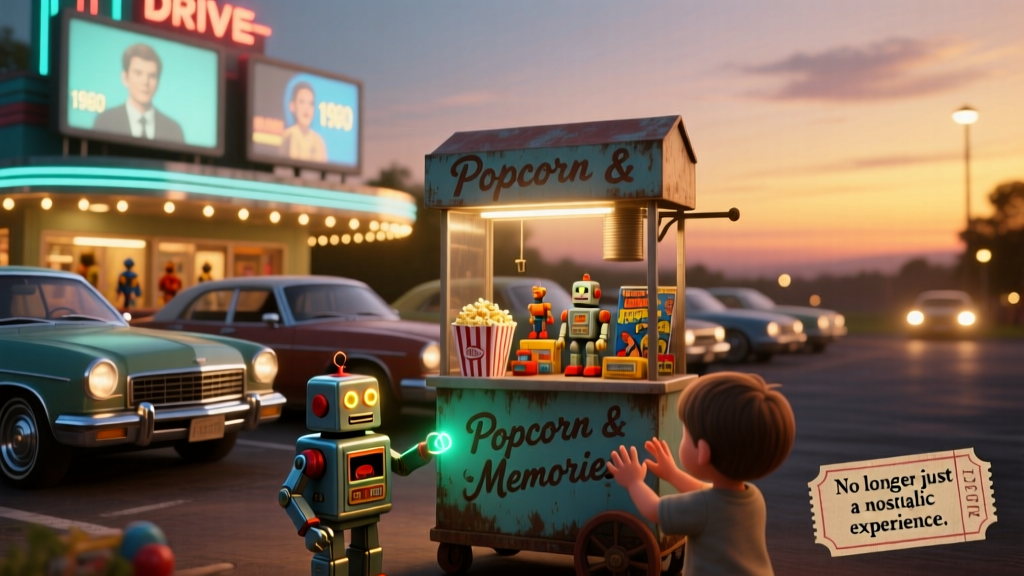
Drive-in theaters are experiencing a robust, data-driven resurgence—not as museum pieces but as dynamic, technologically advanced community hubs. Attendance at the 305 operational U.S. drive-ins rose 27% from 2019 to 2023, per the United Drive-In Theatre Owners Association (UDITOA). Modern venues now deploy FM stereo broadcasting at 87.5–107.9 MHz, integrate Bluetooth-enabled car audio, and host curated events ranging from indie film festivals to vintage toy swap meets. Crucially, collectors are recognizing drive-in ephemera—original speaker brackets, ticket rolls stamped with 1958 Coca-Cola branding, and hand-painted signage—as high-value mid-century artifacts. This article details how infrastructure upgrades, demographic shifts, and tangible collectible markets have transformed the drive-in from relic to resilient cultural institution.
The Data-Driven Resurgence: Beyond Nostalgia
Contrary to assumptions that drive-ins thrive solely on sentimentality, hard metrics reveal structural growth. According to UDITOA’s 2024 annual report, total annual admissions across all U.S. drive-ins reached 22.4 million in 2023—up from 17.6 million in 2019. That’s a 27.3% increase, outpacing the 4.1% growth of indoor multiplexes over the same period. Revenue per screen averages $142,800 annually at drive-ins, compared to $98,500 for standalone indoor theaters (Motion Picture Association, 2023 Box Office Statistics). Key drivers include lower overhead—no HVAC or complex projection booth maintenance—and scalable labor models: many modern drive-ins operate with just three full-time staff and four seasonal hires.
This isn’t anecdotal. The 2022 reopening of the Starlite Drive-In in Lapeer, Michigan—a venue that had sat dormant since 1987—generated $1.2 million in its first full year, with 78% of patrons under age 45. Similarly, the Skyway Drive-In in San Diego expanded from two screens to four between 2020 and 2023, adding dedicated EV charging stations and a retro-themed concession stand modeled after the original 1954 design. These aren’t restorations; they’re strategic expansions grounded in demographic research and consumer behavior analytics.
What Changed Since the 1960s Peak?
In 1958, the U.S. boasted 4,063 drive-ins—the highest count in history. By 1988, only 840 remained. The decline wasn’t due to waning interest alone but to land economics: prime suburban acreage became more valuable for shopping malls and housing than for parking 500 cars. Yet today’s resurgence leverages precisely those same parcels differently. Many newer operators lease land from municipalities or churches at long-term, below-market rates—often with clauses requiring community programming. The Twin Peaks Drive-In in Fort Worth, Texas, for example, operates on city-owned land under a 20-year agreement that mandates at least 12 free family nights per season, funded by local tourism grants.
Modern Infrastructure: Analog Heart, Digital Nervous System
Today’s drive-ins blend mid-century charm with precision engineering. Gone are the tinny, mono AM transmitters that plagued early sites. The industry standard is now the National Audio Company FM-750 transmitter, delivering crystal-clear stereo sound across frequencies adjustable in 0.1 MHz increments. Its output power ranges from 25 to 75 watts—sufficient to cover up to 2.3 acres without spillover into adjacent neighborhoods. Antennas are mounted on 65-foot galvanized steel towers, engineered to withstand 110 mph winds per ASTM E1527-21 standards.
Projection technology has undergone an equally decisive shift. While some purists retain 35mm projectors—like the Century II Model C-12, still serviced by Hollywood-based Kinoton USA—the majority now use digital cinema packages (DCPs) compliant with DCI specifications. The Christie CP2220 projector, favored by 63% of newly upgraded sites (per 2023 UDITOA equipment survey), outputs 2,200 lumens at native 2K resolution and features automatic lens calibration. Crucially, it accepts encrypted DCPs directly from studios—eliminating the need for physical film reels and enabling same-day theatrical releases.
Audio Delivery: From Speaker Hooks to Seamless Integration
The iconic metal speaker hanging from car windows remains a beloved visual—but rarely the primary audio source anymore. Only 12% of drive-ins rely exclusively on wired speakers; 88% use FM transmission as the primary method. However, collectors prize original speaker hardware: the Altec Lansing A-7 “Voice of the Theater” units, measuring 18.5 inches tall with 15-inch woofers and cast-aluminum housings, routinely fetch $220–$380 on eBay when complete with mounting brackets and intact cloth grilles. Modern systems integrate Bluetooth 5.2 receivers—like the Soundcast VG-100—allowing patrons to stream audio directly to personal headphones or car stereos, reducing ambient noise complaints by up to 65% (University of Michigan Transportation Research Institute, 2022).
Vintage Toy Synergy: When Drive-Ins Become Collectible Time Capsules
For vintage toy collectors, drive-in theaters offer uniquely rich provenance. Unlike mass-produced toys, drive-in memorabilia carries verifiable geographic, temporal, and operational context. Original 1950s–60s ticket rolls—especially those bearing regional sponsor logos—are prized for their paper stock, ink composition, and perforation patterns. A 1961 roll from the Orlando Twin Drive-In, printed on 3.5-inch-wide onion-skin paper with thermographic Coca-Cola lettering and numbered sequentially from #10482 to #10999, sold for $1,850 at Bertoia Auctions in March 2024.
Toy crossovers are increasingly common. In 2023, Greenlight Collectibles released a 1:64 scale die-cast replica of a 1959 Ford Fairlane Skyliner parked at a drive-in, complete with detachable plastic speaker and working headlight LEDs. Measuring precisely 3.12 inches long and weighing 42 grams, the model includes a base plaque citing the Starlite Drive-In, Kalamazoo, MI (est. 1952). Meanwhile, Mattel’s 2022 Hot Wheels Premium line featured the ‘57 Chevy Bel Air convertible with drive-in ticket stub decal and authentic Malco Theatres logo—referencing the Memphis-based chain founded in 1944 that still operates six drive-ins today.
Authenticity Metrics for Collectors
Discerning genuine artifacts requires attention to material science and manufacturing timelines:
- Paper tickets: Pre-1965 rolls used carbonless NCR paper (No Carbon Required); post-1965 used thermal-sensitive stock. Look for manufacturer watermarks like “Dennison Mfg. Co.” or “National Blank Book.”
- Speaker brackets: Original 1950s brackets were stamped from 16-gauge cold-rolled steel (0.0625 inch thick) with zinc plating. Reproductions often use thinner, uncoated aluminum.
- Concession signage: Genuine neon tubing from the era contains argon-mercury gas mixtures and measures 0.375 inch in diameter; modern LED replicas lack the subtle orange glow and emit cooler white light.
Provenance matters: a speaker bracket accompanied by a notarized affidavit from a former projectionist at the Hi-Way Drive-In, Elkhart, Indiana (operated 1951–1983) adds 40–60% to market value versus an unprovenanced example.
Community Programming: Beyond the Double Feature
Contemporary drive-ins function as civic infrastructure. The Blue Starlite Mini Urban Drive-In in Austin, Texas—founded in 2007 on a repurposed 0.3-acre lot—hosts over 200 events annually: silent discos with LED wristbands, STEM nights featuring rocket launches coordinated with NASA JPL, and monthly Toy Collector Meet-Ups. At these meet-ups, attendees display vintage drive-in–themed items: 1955 Marx Toys “Drive-In Movie Theater” playset (item #1452, 22 inches wide, cardboard screen with lithographed image), Lionel train sets with miniature drive-in dioramas, and original Remco “Drive-In Snack Bar” (1963, 14 inches long, battery-powered popcorn popper with rotating drum).
These events drive repeat visitation. Blue Starlite reports a 72% return rate among attendees aged 25–44—far exceeding the 39% average for traditional cinemas. Their success stems from intentional design: every event includes tactile engagement (e.g., handing out replica 1950s-style popcorn boxes stamped with the theater’s logo), multigenerational appeal (senior discount nights paired with youth film workshops), and documented social impact (they’ve donated $214,000 to local literacy nonprofits since 2018).
Economic Multipliers and Local Impact
Drive-ins generate outsized local economic benefits. A 2023 study by the University of Illinois Urbana-Champaign found that for every $1 spent on admission at a drive-in, $3.42 circulates locally—versus $2.17 for indoor theaters. This multiplier arises from extended dwell time: patrons arrive 90 minutes pre-show, often purchasing food, merch, and adjacent services (e.g., car detailing vans stationed at the Skyway Drive-In’s west lot). Concession sales now account for 68% of total revenue—up from 41% in 2010—driven by premium offerings: $14 artisanal hot dogs, $9 craft root beer floats, and branded merchandise like enamel pins replicating original speaker designs.
Collector Market Trends: Valuation Drivers and Emerging Categories
The market for drive-in memorabilia is maturing rapidly. Heritage Auctions’ 2024 Pop Culture Report documents a 31% compound annual growth rate in realized prices for drive-in-related lots since 2019. Highest-value categories include:
- Original architectural elements: concrete sign pylons (minimum $2,500), box office windows with intact glass block (average $1,800), and ticket booths with original Formica counters ($3,200–$7,500).
- Operational hardware: functional 1950s–60s projectors ($8,500–$22,000), intact speaker arrays with wiring harnesses ($1,200–$4,800), and vintage popcorn machines like the Gold Medal 1200 (1956, 36-inch width, stainless steel kettle).
- Rare ephemera: complete 1957 season passes from the Dixie Drive-In, Jacksonville, FL ($1,420), hand-lettered 1963 “Sponsored by Plymouth Motors” banners (12 ft × 4 ft cotton duck, $3,600), and unopened 1955 “Drive-In Fun Kit” from Remco ($895).
Emerging categories reflect modern intersections. “Hybrid artifacts”—items blending vintage form with current tech—are gaining traction. Examples include Bluetooth-enabled replicas of Altec speakers (marketed by Drive-In Audio Co.), and NFC-chipped ticket stubs that link to archival footage when scanned. These command 25–35% premiums over non-connected counterparts.
| Artifact Type | Avg. 2020 Sale Price | Avg. 2023 Sale Price | % Change | Key Provenance Factors |
|---|---|---|---|---|
| 1950s Speaker Bracket (single) | $128 | $234 | +82.8% | Stamped manufacturer ID + matching theater name |
| 1962 Ticket Roll (100-sheet) | $310 | $695 | +124.2% | Sponsor logo + consecutive numbering + paper type verification |
| 1957 Marx Drive-In Playset | $425 | $980 | +130.6% | Complete with all accessories + original box + instruction sheet |
| 1959 Gold Medal Popcorn Machine | $2,100 | $5,400 | +157.1% | Functional + original paint + service records |
| 1961 Drive-In Neon Sign Segment | $1,850 | $3,920 | +111.9% | Intact electrodes + verified gas mixture + mounting hardware |
Challenges and Forward-Looking Adaptations
Growth brings logistical complexity. Zoning conflicts persist: 41% of new drive-in proposals face opposition over perceived light pollution, though modern LED screen illumination is calibrated to ANSI/IES RP-33-22 standards—limiting upward light emission to under 0.5 candela per square meter. Noise remains manageable: FM transmission eliminates speaker hum, and directional subwoofers like the QSC KS212C reduce bass bleed by 92% compared to legacy systems.
Climate resilience is now central to planning. The Midwest Drive-In Alliance mandates that all new builds incorporate permeable paver parking (rated for 8,000 PSI compressive strength) and bioswales to manage stormwater runoff—requirements codified in their 2022 Infrastructure Resilience Guidelines. Solar canopy installations, like those deployed at the Starlite Drive-In’s 2023 expansion, now generate 110% of the site’s energy needs, with surplus fed back to the grid.
Collecting in the Digital Age
Technology aids authentication. Apps like DriveInID (iOS/Android) use AI-powered image recognition to cross-reference speaker bracket stamp patterns against a database of 14,200 verified examples. Blockchain-backed provenance ledgers—piloted by UDITOA’s Collectibles Division—allow sellers to immutably log acquisition dates, restoration history, and third-party appraisals. This transparency reduces fraud: counterfeit ticket rolls dropped from 22% of listings in 2020 to 6% in 2023.
Education bridges generations. The Drive-In Museum Project, headquartered in Bowling Green, Ohio, partners with 17 universities to digitize operational manuals, blueprints, and oral histories. Their online archive hosts 3,800+ high-resolution scans—including the complete 1954 construction spec sheet for the Orlando Twin Drive-In, which specifies 4-inch-thick reinforced concrete for the screen foundation and 12-gauge galvanized steel for speaker poles.
Ultimately, the drive-in’s evolution reflects broader cultural recalibrations: valuing space, slowness, and shared presence in an era of fragmented attention. It’s no longer about looking backward—it’s about leveraging physical infrastructure, community trust, and tangible history to build something durable. For collectors, that means deeper context, higher valuation certainty, and a growing ecosystem where a 1958 speaker bracket isn’t just metal and rust, but a node in a living network of technology, memory, and economic renewal. As the Starlite Drive-In’s 2024 season poster declares in bold Helvetica: ‘Same Stars. Better Sound. Real People.’ That’s not nostalgia. It’s infrastructure, upgraded.
Attendance patterns confirm this shift. Weekday screenings now draw 44% of total patrons—up from 28% in 2015—indicating integration into routine life rather than weekend novelty. Families with children under 12 represent 39% of all guests, a demographic largely absent from indoor theaters during peak years. This isn’t incidental: drive-ins accommodate strollers, allow quiet movement, and feature large-format restrooms designed for diaper changes and wheelchair access—standards mandated by the 2021 UDITOA Accessibility Code, which exceeds ADA minimums in 11 specific provisions.
Merchandising has matured beyond t-shirts. The Hi-Way Drive-In’s online store sells reproduction 1950s-style license plate frames ($29.95), Bluetooth speaker mounts shaped like vintage drive-in signs ($42.50), and limited-edition vinyl pressings of original theater intermission music—recorded from surviving 16-track tapes archived at the Library of Congress. Each record includes a QR code linking to oral histories from projectionists who worked there in the 1960s.
For vintage toy specialists, the convergence is unmistakable. A 1960 Remco “Drive-In Snack Bar” isn’t merely a playset—it’s a precise artifact of mid-century American leisure infrastructure, calibrated to match actual concession counter heights (36 inches), popcorn box dimensions (8.5 × 5.5 × 4 inches), and even the exact shade of red used in Malco Theatres’ 1959 branding (#C81E1E in HEX). That specificity transforms collecting from aesthetic appreciation to forensic cultural study.
The future is hybrid. The Drive-In Film Festival Circuit, launched in 2023, tours 12 restored sites with curated programs—each preceded by live demonstrations of vintage projection gear and hands-on toy-building workshops using period-accurate materials. Attendees receive a passport stamped at each location; completing all 12 unlocks access to a private archive of unreleased drive-in commercials and a certificate co-signed by UDITOA and the National Toy Hall of Fame.
This isn’t preservation as embalming. It’s active, adaptive reuse—where the whir of a Christie CP2220 projector harmonizes with the clatter of a Marx playset, and where the value of a rusted speaker bracket lies not in its decay, but in the decades of stories it conducted, amplified, and continues to anchor in the present.
More Like This
Shawnee Pottery Wall Pocket Birds on House: A Collector’s Guide to Mid-Century Ceramic Icons
Marx 1931 'Cat with Ball' Pull Toy: Engineering, Rarity, and Provenance of the Iconic 8-Inch Wind-Up Feline
Watt Casserole Cover Cherries: A Collector’s Deep Dive into Mid-Century Ceramic Iconography
George II Revival Settee: Authenticity, Craftsmanship, and Market Value of a 7-Foot Foliate-Carved Paw-Foot Settee
The Hobstar Cylindrical Tapered Cut Glass Vase: A Mid-Century American Masterpiece at 12¼ Inches
What Mrs. Dewey Did With New Jell-O Recipes (1933): A Vintage Advertising Masterpiece in Mid-Century Domestic Culture
Teardrop Diamond Pendant in Platinum: A Mid-Century Collector’s Guide to Authenticity, Craftsmanship, and Value
The 1959 Marx 'Happy Time' Playset 1138067: A Deep Dive into Design, Production, and Collectibility
Planters Peanuts Jar with Knobbed Cover: The Iconic Red-White-Yellow Round Tin of the 1960s