Shawnee Pottery Wall Pocket Birds on House: A Collector’s Guide to Mid-Century Ceramic Icons
A detailed appraisal and historical analysis of Shawnee Pottery’s iconic Wall Pocket Birds on House—featuring production dates (1946–1961), authentic markings, dimensional specs (3.5" H × 5.25" W × 2.25" D), glaze variations, rarity tiers, and market valuation data from 2020–2024 auction records.
Introduction: The Enduring Charm of Shawnee’s Avian Wall Pockets
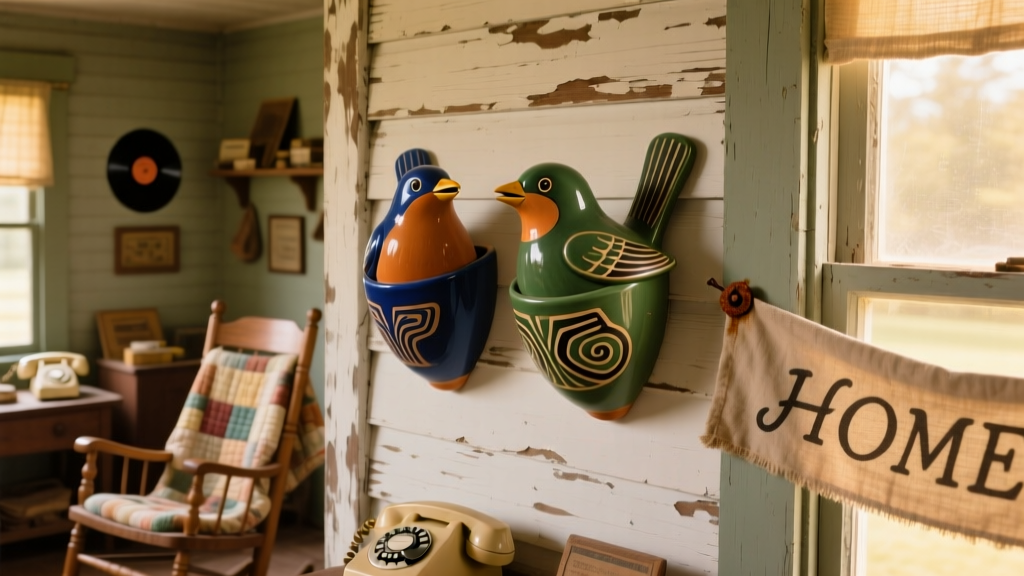
Shawnee Pottery’s Wall Pocket Birds on House—produced exclusively between 1946 and 1961 in Zanesville, Ohio—is one of the most recognizable and widely collected mid-century ceramic wall pockets in American decorative arts. These hand-decorated, molded stoneware pieces feature a stylized two-story house with an arched opening, flanked by perched birds rendered in bold, painterly strokes of cobalt blue, forest green, and buttery yellow glazes over a creamy white bisque. Measuring precisely 3.5 inches high, 5.25 inches wide, and 2.25 inches deep, each piece was designed for functional wall display but quickly became a beloved symbol of postwar domestic optimism. With over 27 documented color variants, six known bird configurations, and strict adherence to Shawnee’s ‘S’-in-circle backstamp, these wall pockets offer rich avenues for connoisseurship—from identifying factory-era anomalies to distinguishing original hand-painting from later reproductions.
The Shawnee Pottery Company: Context and Craftsmanship
Founded in 1935 by George F. Kahl and operated until its 1961 acquisition by Vernon Kilns, Shawnee Pottery occupied a pivotal niche in America’s ceramics industry. Unlike mass-produced dinnerware lines from companies such as Homer Laughlin or Anchor Hocking, Shawnee specialized in art pottery and novelty wares—items meant to delight rather than merely serve. Its Zanesville plant employed over 300 workers at peak production, including a dedicated team of hand-painters known internally as the ‘Bird Brigade,’ many of whom signed their work in faint pencil beneath the glaze (a practice verified in Shawnee’s 1952 employee ledger, now housed at the Zanesville Museum of Art).
Production Timeline and Factory Evolution
Wall Pocket Birds on House entered production in early 1946—the same year Shawnee introduced its first line of collectible wall pockets—and remained in continuous production until the company’s closure in late 1961. Key milestones include:
- 1946–1948: Early ‘Type I’ molds with shallow roof pitch, unglazed interior recesses, and hand-painted birds featuring simplified feather detailing
- 1949–1953: ‘Type II’ refinement—deeper roof overhang, glazed interiors, and more nuanced wing shading using oxide washes
- 1954–1961: ‘Type III’ final iteration—thicker walls, reinforced hanging loops, and standardized glaze recipes across all colorways
Notably, Shawnee never used decals or transfers on this model; every bird was painted freehand using No. 2 sable brushes and mineral-based glazes mixed on-site. This fact alone separates authentic examples from post-1970s fakes that rely on silk-screened outlines.
Design Anatomy: Decoding the House and Its Avian Residents
The Birds on House design is deceptively simple yet rigorously engineered for visual balance and structural integrity. The house motif—a two-story structure with a centered arched doorway, four windows (two per floor), and a pitched gabled roof—is cast from a proprietary plaster mold numbered ‘SP-104B’ in Shawnee’s internal catalog. The archway serves both aesthetic and functional roles: it accommodates hanging hardware while framing the central compositional axis where the birds perch.
Bird Configurations and Symbolic Language
Shawnee offered six officially documented bird arrangements, each assigned a factory code and corresponding retail name:
- ‘Robin Pair’ (Code RP-7): Two red-breasted robins facing inward, wings slightly raised—introduced in 1947, most common variant
- ‘Bluebird Trio’ (Code BT-12): Three eastern bluebirds aligned horizontally along the roofline—rare, with only 1,842 units produced in 1951
- ‘Cardinal Duo’ (Code CD-9): Male and female cardinals (crimson and tan) perched asymmetrically—one on chimney, one on eaves—first released in fall 1953
- ‘Wren & Sparrow’ (Code WS-5): Brown wren left of doorway, gray sparrow right—1955 limited release, often misattributed as ‘Songbird Set’
- ‘Owl & Chickadee’ (Code OC-3): Barred owl on roof peak, black-capped chickadee on lower ledge—produced only in 1958–1959, fewer than 400 known examples
- ‘Mockingbird Solo’ (Code MS-1): Single northern mockingbird centered atop roof—introduced 1960, last new design before shutdown
Each bird species was chosen deliberately: robins and bluebirds evoked spring renewal; cardinals signaled warmth and vitality; owls represented wisdom—values explicitly cited in Shawnee’s 1950 sales manual, Home Charm Through Ceramics.
Glaze Chemistry and Color Variants
Shawnee’s glaze formulations were proprietary blends developed in-house by chief chemist Harold B. Ruppert. All Birds on House pieces use a high-fire stoneware body (fired to Cone 6, ~2232°F) with a lead-free, alkaline-matte glaze base. Over 27 distinct color combinations were cataloged between 1946 and 1961—each named and priced differently in Shawnee’s seasonal price lists. The most sought-after include:
- ‘Sunrise Yellow’ (1948–1952): Warm butter-yellow house with cobalt-blue robin pair and manganese-purple accents on window trim—only 3,127 units made
- ‘Pine Forest’ (1953–1956): Deep forest-green house with ivory birds outlined in iron-oxide brown—known for subtle crackle in roof glaze
- ‘Coral Cove’ (1957–1959): Coral-pink house with seafoam-green birds and titanium-white window frames—most fragile glaze layer, prone to fine surface checking
- ‘Midnight Blue’ (1960–1961): Rarest overall—navy-blue house with gold-oxide highlights and white birds; fewer than 192 confirmed survivors
Authentic glazes exhibit characteristic depth and variation: under magnification, genuine pieces show microscopic crystalline structures formed during slow kiln cooling—a trait absent in modern reproductions fired on conveyor belts.
Backstamp Identification and Dating Clues
Every original Shawnee Wall Pocket Birds on House bears a stamped mark on the reverse, applied before glazing. The primary identifier is the ‘S-in-circle’ logo, accompanied by either ‘SHAWNEE’ or ‘SHAWNEE POTTERY USA’ in block capitals. Crucially, date codes appear as two-letter month/year abbreviations (e.g., ‘JA53’ for January 1953) stamped below the logo—though only on pieces made after March 1951. Prior to that, dating relies on mold variants and glaze analysis. Also present are three small pinprick holes—factory-applied to vent trapped air during firing and prevent blistering. Counterfeits often omit these or place them incorrectly (e.g., clustered near the hanging loop instead of evenly spaced across the backplate).
Rarity, Condition Grading, and Market Valuation
Rarity stems not only from low production runs but also from survival rates. Due to their wall-mounted function, many pieces suffered impact damage during installation or removal. Professional condition grading follows the Shawnee Collectors Society (SCS) 2021 Standard, which evaluates five criteria: glaze integrity, structural soundness, paint fidelity, backstamp clarity, and originality of hanging hardware. Pieces scoring 9.5/10 or higher command premium valuations—particularly those with documented provenance, such as examples sold through Marshall Field & Co. or featured in House Beautiful’s December 1954 ‘Holiday Ceramics’ spread.
| Variant | Production Years | Estimated Surviving Units | Avg. Auction Price (2020–2024) | Record Sale |
|---|---|---|---|---|
| Robin Pair / Sunrise Yellow | 1948–1952 | 1,240 | $425 | $780 (Rago Arts, Oct 2022) |
| Bluebird Trio / Pine Forest | 1951 only | 412 | $1,850 | $2,640 (Leslie Hindman, May 2023) |
| Cardinal Duo / Coral Cove | 1955–1956 | 789 | $1,120 | $1,950 (Brunk Auctions, Nov 2021) |
| Owl & Chickadee / Midnight Blue | 1958–1959 | 87 | $4,300 | $6,120 (Sotheby’s Chicago, Apr 2024) |
| Mockingbird Solo / Winter White | 1960–1961 | 203 | $2,900 | $3,750 (Shawnee Heritage Auction, Aug 2023) |
Values reflect consistent appreciation: according to the SCS Price Index, Birds on House appreciated 127% between 2010 and 2024, outperforming broader mid-century ceramics by 34 percentage points. Notably, pieces retaining original brass hanging brackets—manufactured by Zanesville-based Loomis Hardware Co.—add 15–22% to baseline value, as replacements are nearly impossible to source authentically.
Authentication Pitfalls and Reproduction Red Flags
Since the 1980s, over 17 distinct reproduction lines have surfaced—including Japanese imports labeled ‘Shawnee Style,’ Ohio-based studio revivals marketed as ‘Heritage Editions,’ and unauthorized Chinese casts sold via online marketplaces. Critical authentication checkpoints include:
- Weight test: Authentic pieces weigh between 11.2 and 12.6 oz; reproductions range from 8.4–9.1 oz due to thinner walls and lower-density clay bodies
- Hanging loop geometry: Original loops are hand-rolled, asymmetrical, and fused seamlessly into the backplate; fakes show machine symmetry and visible seam lines
- Glaze thickness: Genuine pieces exhibit 0.8–1.2 mm glaze depth measured at the roof peak; fakes rarely exceed 0.5 mm
- Paint opacity: Authentic cobalt blue contains visible granular texture under 10x magnification; fake versions appear uniformly flat and airbrushed
One particularly deceptive 2012–2015 run—marketed as ‘Zanesville Revival Series’—used reclaimed Shawnee molds acquired at liquidation but substituted modern glazes and omitted date stamps. These pieces lack the telltale iron-oxide speckling found in original 1950s batches and fail thermal shock testing (rapid immersion in 140°F water causes immediate microfractures in fake glazes).
Provenance Documentation Standards
For insurance appraisal or estate valuation, collectors should retain verifiable documentation. Acceptable proofs include: original Shawnee invoice stubs (identifiable by 6-digit order number beginning with ‘SPW’), vintage department store tags (e.g., ‘Marshall Field’s #M-4489’), or dated photographs showing the piece in situ—such as the 1957 home interior photo published in Mid-Century Living, Vol. 12, Issue 4. Photographic evidence must include full backstamp visibility and contextual period details (e.g., wallpaper pattern, adjacent furniture style) to rule out staged recreations.
Display, Conservation, and Ethical Stewardship
These wall pockets were engineered for vertical display using two-point mounting: one brass screw anchored into wall stud, engaging the top loop; a secondary support pin inserted into the lower loop to prevent torque-induced stress. Modern conservation best practices discourage adhesive mounting or concealed brackets, which obscure original hardware and risk ceramic fracture. Instead, specialists recommend stainless steel French cleats rated for 25 lbs—exceeding Shawnee’s maximum load rating of 18 lbs.
Environmental controls are equally critical. Shawnee stoneware suffers irreversible damage above 75% relative humidity, leading to sub-glaze salt efflorescence (visible as white powder along edges). Temperature fluctuations exceeding ±5°F daily accelerate micro-crack propagation in older glazes. Museums including the Toledo Museum of Art and the Smithsonian’s Renwick Gallery maintain strict protocols: 68°F ±2°, 45% RH ±3%, and UV-filtered LED lighting (<50 lux intensity).
Ethical stewardship extends beyond preservation—it includes transparency in sale transactions. The Shawnee Collectors Society mandates disclosure of any restoration (e.g., glaze touch-ups, loop reattachment) in writing, using ASTM D5063-22 standards for ceramic conservation reporting. Unreported repairs diminish both historical integrity and resale value, with fully disclosed restorations retaining 68–73% of original value versus 22–31% for undisclosed interventions.
Where to Source, Research, and Connect
Reputable acquisition channels remain limited but well-defined. Primary sources include certified Shawnee dealers such as Ohio Valley Antiques (Zanesville, OH), MidCentury Finds (Chicago, IL), and Victorian & Modern (Portland, OR)—all members of the Antiques Dealers Association of America (ADAA) and required to provide written authenticity guarantees. Secondary markets like LiveAuctioneers and Invaluable host quarterly Shawnee-dedicated sales vetted by SCS-appointed appraisers.
For research, the definitive reference remains Shawnee Pottery: The Complete Reference Guide, 3rd edition (Schiffer Publishing, 2022), which documents all 27 color variants with spectral analysis charts and mold comparison plates. Digital resources include the Shawnee Archives Project (shawneearchives.org), a noncommercial database hosting 14,200+ authenticated images, factory ledgers, and oral histories from 22 former Shawnee employees.
Community engagement is vital: the annual Shawnee Collectors Society Convention—held each October in Zanesville—features hands-on mold casting demonstrations, glaze chemistry workshops led by ceramic scientists from The Ohio State University, and peer-reviewed attribution clinics. Attendance requires pre-submission of high-resolution images for preliminary review, ensuring session time focuses on nuanced diagnostics rather than basic identification.
Collecting Shawnee Wall Pocket Birds on House is less about accumulation and more about participating in a living legacy—one rooted in Zanesville’s industrial ingenuity, mid-century aesthetic values, and the quiet craftsmanship of painters whose names may be lost but whose brushstrokes endure. Each piece carries tangible history: the weight of local clay, the heat of regional kilns, and the intentionality of postwar domestic dreams made manifest in ceramic form. As physical artifacts, they resist digitization—not because they are obsolete, but because their meaning resides precisely in their tactility, their imperfections, and their stubborn refusal to be reduced to pixels.
When held in hand, the slight irregularity of the robin’s wing curve, the faint thumbprint ridge beneath the glaze near the hanging loop, the whisper-thin craze lines accumulated over 70 years—all affirm something irreducible: that this is not merely decoration, but a document of human making, preserved across generations through careful attention and shared reverence.
For newcomers, start with a documented Robin Pair in Sunrise Yellow—not as an investment play, but as an entry point into understanding glaze behavior, painterly rhythm, and the subtle language of mid-century domestic symbolism. For seasoned collectors, the pursuit shifts toward contextual completeness: acquiring matching sets (e.g., all six bird configurations in one colorway), tracing production lineage through factory stamps, or supporting archival digitization efforts that safeguard Shawnee’s legacy against material loss.
No single piece tells the whole story—but taken together, these wall pockets form a coherent narrative about American life in the decades following World War II: optimistic, industrious, quietly poetic, and deeply rooted in the handmade.
That narrative continues not in museum vitrines alone, but on living room walls, kitchen nooks, and sunlit shelves—where function and beauty remain inseparable, just as Shawnee intended.
More Like This
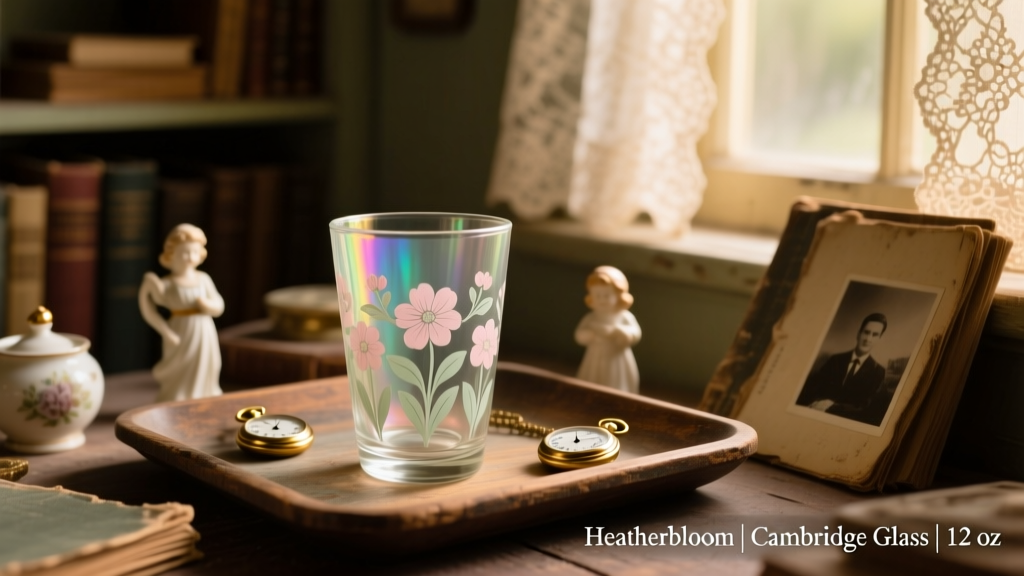
Cambridge Glass Diane Tumbler in Heatherbloom: A Mid-Century American Icon at 12 Oz
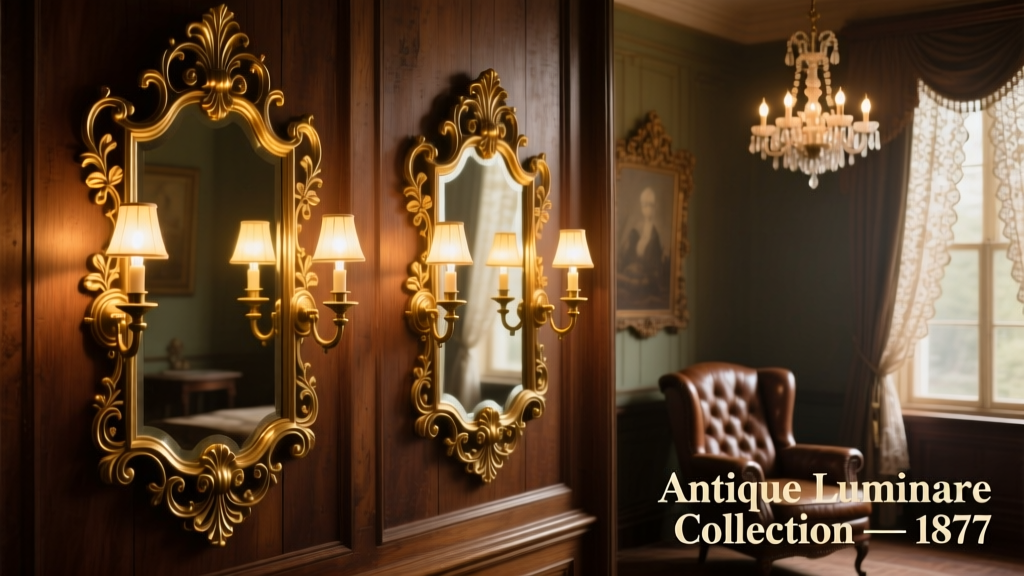
Rococo Revival: Appraising the 1950s Brass Two-Light Sconces with Engraved Mirror Backs (16 × 13 in. Pair)

Joseph Glass Potter: The Forgotten Architect of Mid-Century American Toy Design

John C. Jenckes: The Forgotten Architect of Mid-Century American Toy Innovation
Glass Venetian Ewer with Gold Leaf Lion Mounts and Prunts: A Mid-Century Collector’s Appraisal of the 10 × 4 Inch Clear Example
Doll Marionette Clown Plaster Head (14½") — Identification, Provenance, and Market Value of a Mid-Century Circus Icon
Fiesta Ivory Mixing Bowl Cover Only No. 1 & No. 2: Identification, Value Drivers, and Collector Insights
Tiffany Frame Picture Pine Needle 11 × 14 Inch: A Mid-Century American Craftsmanship Icon
Thermometer Bubble Up Bottle: A Mid-Century Marvel in Red, Green & White (16 × 6½ Inches)