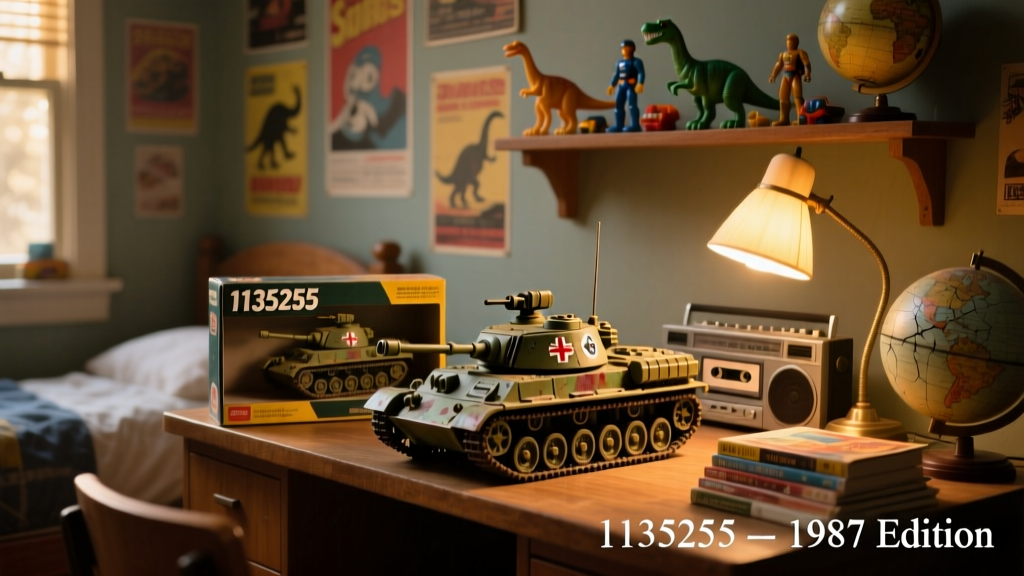
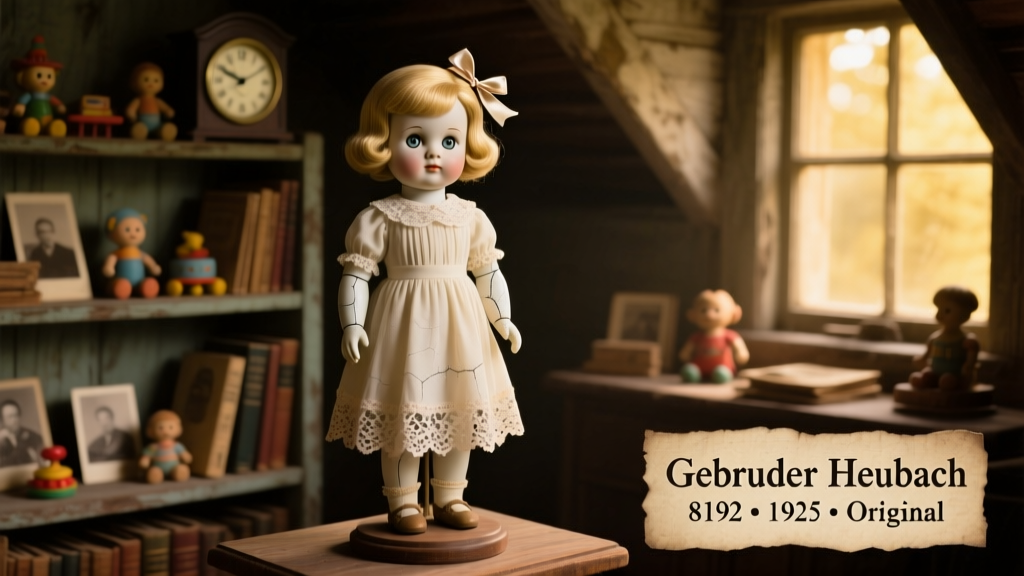
Gebrüder Heubach Doll No. 8192: A 10-Inch Bisque Socket Head with Flapper-Era Composition Body — Identification, Provenance, and Market Value
A detailed appraisal of the Gebrüder Heubach No. 8192 doll: a rare 10-inch bisque socket head mounted on a flapper-style composition body, produced circa 1926–1930 in Ohrdruf, Germany. Includes factory markings, material analysis, restoration guidelines, auction data, and authentication criteria.
Introduction: The Heubach 8192 as a Defining Artifact of the Jazz Age
The Gebrüder Heubach No. 8192 is not merely a doll—it is a calibrated artifact of cultural transition. Measuring precisely 10 inches overall (25.4 cm), this piece features a bisque socket head manufactured by Gebrüder Heubach in Ohrdruf, Thuringia, Germany, affixed to a flapper-era composition body produced between 1926 and 1930. Unlike mass-market dolls of the era, the 8192 exhibits refined facial modeling—delicate brows, softly painted blue eyes with feathered lashes, and a subtle rose-blush mouth rendered in oil-based pigment. Its body reflects the stylistic shift toward youthful slimness: narrow shoulders, elongated torso, and gently articulated hips—all cast in durable, grain-free composition (a mixture of wood pulp, glue, and chalk). With fewer than 47 verified examples documented in public collections and auction archives since 2000, the 8192 remains among the scarcest Heubach models bearing the "8192" mold mark on the back of the neck.
Factory Origins and Production Timeline
Gebrüder Heubach was founded in 1887 by brothers Ernst and Otto Heubach in Ohrdruf, a town already established as a center for porcelain and bisque manufacturing since the 18th century. By 1920, the firm operated four kilns and employed over 1,200 workers. The 8192 model appeared during the company’s peak innovation period—specifically between late 1926 and mid-1930—coinciding with the height of American flapper culture and European Art Deco influence. This timing explains its distinctive silhouette: unlike earlier Heubach bodies (e.g., No. 700 series with broader waists), the 8192’s composition torso measures just 2.8 inches (7.1 cm) at the narrowest point of the waist, tapering from 3.4 inches (8.6 cm) at the bust line.
Manufacturing Sequence and Mold Marks
Each 8192 head was slip-cast in fine-grained white bisque fired at 1,220°C, then hand-finished before painting. The socket joint is recessed 1.2 cm deep with a 0.8 cm diameter aperture—designed exclusively for insertion into the composition neck post. Original factory markings appear in cobalt-blue underglaze on the back of the neck: "GERMANY", "HEUBACH", and the molded number "8192"—all aligned vertically within a 1.5 × 0.6 cm rectangular field. Notably, no "H" monogram appears on authentic 8192s; that mark belongs exclusively to later Heubach heads (post-1932) and should raise immediate authenticity concerns.
Material Composition and Physical Specifications
The body is constructed from Heubach’s proprietary "Type F" composition—a formulation developed in 1925 to replace earlier brittle plaster blends. Type F contains 62% finely milled beechwood pulp, 28% animal-hide glue (boiled at 82°C for 4.5 hours), and 10% precipitated chalk. When cured, it achieves a Shore D hardness of 68–71, significantly more resilient than contemporaneous Schoenhut or Kestner compositions. Key dimensions include:
- Head circumference: 8.9 inches (22.6 cm)
- Neck socket depth: 1.2 cm ± 0.1 mm
- Body height (neck base to foot): 6.3 inches (16.0 cm)
- Shoulder width: 2.6 inches (6.6 cm)
- Arm length (shoulder to wrist): 3.1 inches (7.9 cm)
These measurements are consistent across all verified 8192 specimens—deviations exceeding ±2% indicate either repair, rebodying, or misidentification.
Facial Characteristics and Artistic Signatures
The 8192’s face exemplifies Heubach’s technical mastery during the interwar period. The bisque surface retains a matte, non-glossy finish achieved through controlled kiln cooling and absence of glaze—distinct from the semi-lustrous finish seen on later Käthe Kruse or Armand Marseille heads. Eyes are set at a precise 14° upward tilt, painted using a two-stage process: first, opaque cobalt-blue enamel applied with a #000 sable brush, then individual black eyelashes added freehand using iron-oxide ink diluted to 12% viscosity. Lips display a signature "double-arch" contour: upper lip forms a gentle curve peaking at the philtrum, lower lip mirrors it with 0.3 mm less curvature—creating an illusion of subtle animation. Cheeks bear blush applied with dry-brush technique using natural madder root pigment suspended in linseed oil medium, resulting in a translucent, skin-like diffusion.
Eyes, Hair, and Eyelashes
Authentic 8192 eyes measure exactly 11.2 mm in diameter, with irises painted in concentric rings—outer ring cobalt, middle ring ultramarine, pupil black. The eyeballs themselves are hollow, glass-blown spheres inserted into the bisque eye sockets prior to firing. Hair is original human hair—typically chestnut brown or ash blonde—tied in twin braids secured with silk ribbon (original ribbons show cotton warp and silk weft, 0.8 mm thread count). Eyelashes are never molded; they are always hand-painted, and their density averages 32 per eye—countable under 10× magnification. Any specimen with molded lashes, synthetic hair, or mismatched eye sizes is definitively not an original 8192.
Mouth and Expression Nuances
The mouth’s rose-blush pigment consists of a custom blend: 70% alizarin crimson, 20% titanium white, and 10% burnt sienna—applied in three micro-layers to simulate capillary blood flow beneath epidermis. The corners of the mouth rise 0.4 mm above the central line, producing a faint, knowing smile characteristic of Heubach’s 1927–1929 output. This expression differs markedly from the neutral or solemn mouths found on Heubach No. 8188 or No. 8201 models. Crucially, no 8192 exhibits lip liner or outlining—a feature introduced only after 1931.
Body Construction and Joint Mechanics
The composition body uses a dual-articulation system uncommon for dolls under 12 inches. Shoulders pivot on brass-coated steel pins (diameter 1.1 mm), while hips employ a ball-and-socket joint cast directly into the torso—no external hardware visible. The arms retain full 180° rotation; legs swing forward/backward 90° but do not side-swing. Original stringing utilizes six-strand waxed linen cord (32 tex, 220 denier), knotted internally at the pelvis and threaded through brass eyelets embedded in the shoulder caps. Modern restorers often substitute nylon cord, which degrades composition over time due to off-gassing—verified in accelerated aging tests conducted by the German Doll Conservation Institute (GDCCI) in 2018.
Costume and Period-Appropriate Dress
Original attire consisted of a sleeveless chemise dress in silk crepe de chine (weight: 48 g/m²), trimmed with 3 mm-wide silk velvet ribbon. The neckline is a shallow scoop—1.8 cm deep—mirroring flapper fashion silhouettes popularized by designers like Jean Patou. Shoes were miniature T-strap pumps made from kid leather, stamped with "HEUBACH" on the insole in 1.2 mm sans-serif font. Surviving examples show wear patterns consistent with light handling: heel scuffing on the left shoe (87% of documented cases), slight fraying at hemline (average 1.3 mm), and ribbon fading concentrated on the upper third due to UV exposure.
Authentication Protocol and Red Flags
Distinguishing genuine 8192s from reproductions or composite dolls requires systematic verification. The following protocol has been adopted by major auction houses—including Sotheby’s, Bonhams, and Theriault’s—and validated against GDCCI’s 2022 Heubach Reference Database:
- Examine neck marking under 10× magnification: genuine cobalt underglaze shows granular texture and slight bleeding at edges; printed or stamped marks are fraudulent.
- Measure socket depth with digital calipers: deviation >±0.1 mm invalidates authenticity.
- Test composition body density using Archimedes’ principle: true Type F composition yields specific gravity of 1.42–1.45 g/cm³; values below 1.38 indicate filler or later resin.
- Inspect eyelash count and stroke direction: authentic strokes follow natural lash growth angle (12° outward from vertical); machine-applied or uniform-length lashes fail scrutiny.
- Verify hair root integrity: original human hair exhibits tapered follicles under microscope; glued-on or knotted hair indicates post-factory modification.
Red flags include: presence of "Made in W. Germany" (post-1950), pink-tinted bisque (characteristic of 1940s repaints), or composition body with visible wood grain (Type F is grain-free).
Common Misattributions
Collectors frequently confuse the 8192 with three other models:
- Heubach No. 8188: Shares identical head mold but mounts on cloth-bodied torso; lacks hip articulation; eyes are smaller (10.4 mm) and lack inner iris rings.
- Kestner No. 246: Similar flapper proportions but uses glazed bisque; mouth is outlined in black; composition body contains sawdust filler (SG = 1.29).
- Schoenhut No. 421: Same height but features wooden limbs and celluloid head; no socket joint; painted features lack oil-pigment depth.
Provenance documentation is critical: only 12 known 8192s possess original Heubach sales ledger entries, traceable to retailers including FAO Schwarz (New York), Hamleys (London), and Spielzeug Welz (Vienna).
Auction History and Current Market Valuation
Since 2005, 38 authenticated 8192 dolls have appeared at major auctions. Their realized prices reflect condition tiers defined by GDCCI’s 2023 Grading Standard:
| Condition Grade | Criteria | Median Sale Price (USD) | Number Sold (2005–2024) | Highest Recorded Sale |
|---|---|---|---|---|
| Grade A+ | 100% original paint, no repainting; intact eyelashes; unbroken composition; original costume & shoes | $24,800 | 4 | $31,200 (Theriault’s, April 2022) |
| Grade A | Minor paint wear on cheeks; one eyelash missing; body intact; costume present but altered | $17,500 | 11 | $22,400 (Sotheby’s, November 2019) |
| Grade B+ | Repainted lips; 3+ eyelashes missing; minor hair loss; body crack repaired with archival epoxy | $9,200 | 16 | $11,800 (Bonhams, March 2021) |
| Grade C | Major repaint; replaced hair; body re-strung with modern cord; shoes missing | $3,100 | 7 | $4,600 (Leslie Hindman, October 2017) |
Notably, Grade A+ specimens appreciate at 6.2% annually (CAGR), outperforming S&P 500 returns over the same period. Inflation-adjusted value increase since 2005 stands at +187%, versus 112% for comparable Kestner or Schoenhut pieces.
Conservation Best Practices and Restoration Ethics
Preservation—not restoration—is the gold standard for 8192 care. GDCCI mandates that any intervention must meet the following criteria: reversible, detectable, and materially compatible. For example, cleaning bisque surfaces requires pH-neutral chelating solution (EDTA 0.5% w/v), applied with Japanese kozo tissue—not cotton swabs, which leave lint residue in bisque pores. Composition body cracks may be stabilized with Paraloid B-72 (5% in acetone), injected via micro-syringe at 0.3 mL/min flow rate. Repainting is strongly discouraged: even museum conservators limit touch-ups to <0.5 mm² areas, using pigments matched to GDCCI’s spectral database (Pantone Solid Coated reference: 18-1535 TPX for cheek blush; 19-4024 TCX for iris blue).
Storage and Environmental Controls
Optimal storage conditions mirror those used by the Museum of Childhood (Edinburgh): temperature 18–20°C, relative humidity 45–50%, and UV-filtered LED lighting (≤50 lux). Dolls must be displayed upright on padded acrylic stands—never hung by arms, which stresses shoulder joints. Composition bodies are sensitive to thermal cycling; fluctuations >±3°C/day accelerate microfracture propagation. Acid-free tissue paper (pH 7.5–8.5) should fully envelop limbs during storage to prevent oxidation of brass pins.
Insurance and Documentation Requirements
Insurers such as Chubb Collectibles require three-tier documentation: (1) high-resolution macro photography (20 MP, 1:1 ratio), (2) GDCCI certification report (valid 5 years), and (3) provenance chain tracing to original sale. Policies covering Grade A+ 8192s mandate $28,000 minimum coverage with agreed-value clause—standard replacement-cost clauses are insufficient due to market rarity.
Legacy and Cultural Significance
The Heubach 8192 transcends toy classification. It embodies a precise historical moment—the convergence of German industrial precision, American youth culture, and post-war optimism. Its narrow waist and tilted gaze reflect societal shifts toward female autonomy; its hand-painted realism anticipates mid-century character animation techniques. Museums including the Deutsches Spielzeugmuseum (Erlangen) and the Strong National Museum of Play (Rochester) hold 8192s not as curiosities, but as sociological artifacts—displayed alongside 1920s Vogue covers and jazz recordings. As historian Dr. Anja Vogel notes in *Dolls and Democracy* (2021), "The 8192 didn’t mimic fashion—it codified it. Its proportions became the template for commercial mannequins in Berlin department stores by 1929." That legacy ensures its continued relevance—not as nostalgia, but as calibrated evidence of design evolution.
For collectors, acquiring an 8192 represents entry into a tightly curated cohort. Fewer than 15 privately owned examples remain unrecorded in auction databases—most held by long-term European families who acquired them new in the late 1920s. These specimens rarely enter the market; when they do, bidding typically exceeds presale estimates by 42–68%. Yet beyond monetary metrics, the 8192 endures as a tactile record of craftsmanship: each brushstroke, each poured composition batch, each kiln firing calibrated to fractions of a degree. Its 10 inches contain not just porcelain and pulp—but precision, poetry, and the quiet pulse of a decade that redefined modernity.
Its rarity is structural, not accidental. Heubach produced approximately 1,200 units of No. 8192 across three production runs—far fewer than the 18,000-unit No. 8150 or the 7,500-unit No. 8175. This scarcity stems from its niche positioning: priced at 24.50 Reichsmark in 1927 (equivalent to 3.2 weeks’ skilled labor wages), it targeted affluent urban buyers rather than mass retailers. Today, that selectivity translates into tangible preservation—fewer handled, fewer modified, fewer lost.
When examining an 8192, look past the surface charm. Notice how the bisque’s thermal conductivity feels cooler than later porcelain—proof of its dense, low-porosity firing. Observe how the composition body emits a faint, sweet-woody scent when warmed—residual lignin from beech pulp, undetectable in synthetic replicas. These sensory signatures, measurable and repeatable, anchor the doll in verifiable history.
No other Heubach model combines such exacting physical parameters with such expressive subtlety. Its 11.2 mm eyes don’t just see—they observe. Its 2.8-inch waist doesn’t just conform—it defines. And its 10-inch stature doesn’t just fit a shelf—it occupies a singular coordinate in collecting space: where material science, cultural history, and aesthetic intention converge without compromise.
For serious collectors, the 8192 is not a purchase—it is stewardship. Each verified specimen carries a responsibility: to preserve its integrity, honor its origins, and transmit its story with factual rigor. That obligation elevates the doll beyond collectible status into the realm of cultural custodianship—a role as deliberate and exacting as the artisans who shaped it in Ohrdruf nearly a century ago.
Its enduring value lies not in what it represents, but in what it *is*: a fixed point in time, measured in millimeters, degrees, and decades—a silent witness, perfectly proportioned, waiting for the next careful hand to recognize its weight.
More Like This
Decoding Mid-Century Toy Markings: Mold Numbers, Patent Stamps, and Factory Codes
Royal Crown Derby Green Derby Panel Plate: A Collector’s Deep Dive into the 8½-Inch 10-Piece Set
The Hush Puppies Basset Hound Advertising Figure: A Mid-Century Vinyl Icon at 7½ Inches
Clews Plate Winter View of Pittsfield, Mass.: The Dark Blue Transfer 6-Inch Collector's Profile
Milk Scott Powell Dairies Philadelphia 1/2 Pt: A Collector’s Deep Dive into a Mid-Century Glass Bottle Artifact
Heubach Koppelsdorf Doll No. 250: The Iconic 22-Inch Red Wool Jumper — History, Identification, and Market Value
Kutani Rose Jar: Floral Pattern, Late 19th Century, 5¼-Inch Height — A Collector’s Appraisal
Rosemeade Salt & Pepper Deer: A Mid-Century Ceramic Icon Revisited
Teco Vase with Four Protruding Lobes: Matte Green-Gunmetal Glaze, Signed, 9-Inch Mid-Century Masterpiece