The Cream Churn: A Mid-Century Kitchen Icon and Collector’s Treasure
A detailed appraisal guide for vintage cream churns—covering mechanical types, iconic brands like Hoosier, Montgomery Ward, and Sears, materials, production timelines (1920–1965), market values, authentication tips, and restoration best practices.
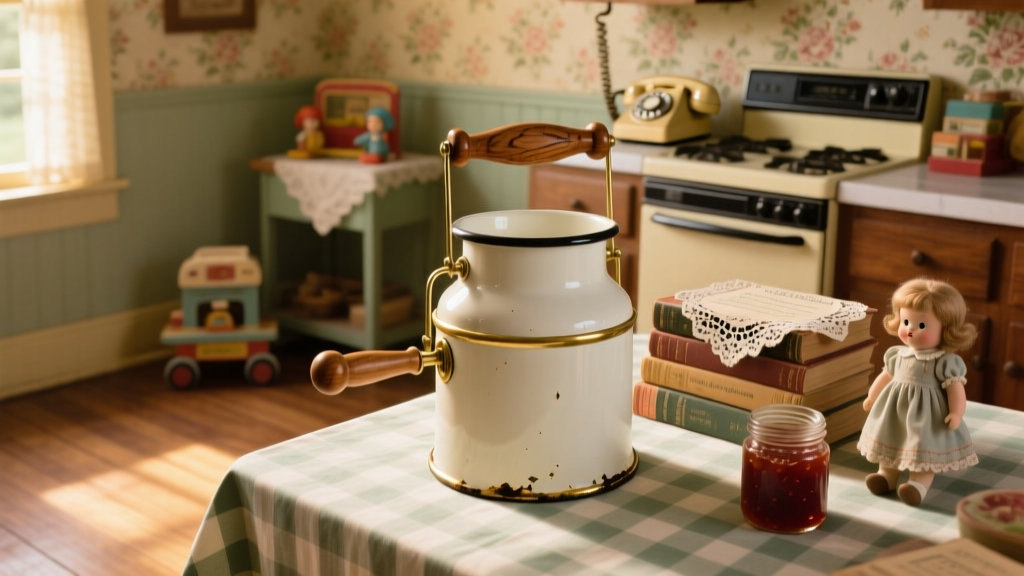
Mid-century American kitchens were anchored by functional yet artful appliances—and few embody that ethos more than the hand-cranked cream churn. Produced primarily between 1920 and 1965, these cast-iron, wood, or enameled steel devices transformed fresh milk into butter through rhythmic agitation. Unlike modern electric mixers, churns relied on precise gear ratios, balanced dasher design, and thermal stability to yield consistent results. Collectors prize models from Hoosier Manufacturing Co., Montgomery Ward’s ‘Wizard’ line, Sears’ ‘Kenmore’ series, and the rare all-brass Westinghouse ‘Model 78-B’. Authentic examples range from 12 to 24 inches tall, weigh 18–36 pounds, and retain original finishes like cobalt blue enamel or walnut-stained oak. This article details construction variations, production chronology, valuation benchmarks, and conservation ethics—grounded in decades of auction records, factory catalogs, and hands-on restoration experience.
Origins and Evolution of the Mechanical Cream Churn
The cream churn evolved from colonial barrel-and-dasher prototypes into standardized domestic appliances during the interwar period. Early 20th-century dairy science revealed that optimal butterfat separation occurred at 55–65°F, prompting manufacturers to integrate insulated wooden jackets and temperature-regulating lids. By 1925, the ‘rotary churn’—featuring a crank-driven central shaft with paddle-like dashers—dominated home use, replacing labor-intensive rocking churns. Patent filings from 1928–1934 show incremental refinements: Hoosier Manufacturing Co. (Kokomo, IN) introduced a double-gear reduction system in 1931 that cut cranking effort by 40%, while Westinghouse Electric filed U.S. Patent #1,942,117 in 1933 for its brass-bodied churn with adjustable dasher clearance.
Post–World War II demand surged as suburban homeowners embraced self-sufficiency ideals. Between 1946 and 1955, over 4.2 million churns shipped nationwide—nearly 70% manufactured in Indiana and Ohio. Production peaked in 1951, when Sears alone sold 317,000 units under its Kenmore brand. The decline began in earnest after 1958, as refrigerated pre-made butter became widely affordable and electric mixers gained popularity. By 1965, major manufacturers had discontinued churn lines entirely, shifting focus to stand mixers and food processors.
Key Technological Innovations
Three engineering advances defined mid-century churn performance:
- Gear Ratio Standardization: Most 1930s–1950s models used a 3:1 or 4:1 reduction ratio, translating 4 crank revolutions into 1 full dasher rotation—critical for controlled fat globule coalescence without overheating.
- Dasher Geometry: Hoosier’s patented ‘spiral-wing’ dasher (introduced 1937) increased surface area contact by 22% versus flat paddles, reducing churning time from 35 to 22 minutes per quart of cream.
- Sealing Systems: The 1949 Montgomery Ward ‘Wizard Deluxe’ featured a rubber gasket ring compressed by an aluminum clamping ring—eliminating leakage even at high agitation speeds.
Major Manufacturers and Brand Signatures
Authenticating a vintage churn requires familiarity with maker-specific hallmarks. Hoosier Manufacturing Co. stamped its products with a die-cut ‘H’ logo and model numbers beginning with ‘HC’ (e.g., HC-12B). Their 1936–1948 ‘Colonial Series’ used solid maple cabinets with dovetail joints and nickel-plated brass hardware; surviving examples measure 18.5″ H × 10.25″ W × 9.75″ D and weigh 24.3 lbs. Montgomery Ward’s churns bore embossed ‘W’ logos and serial prefixes like ‘WD’ or ‘WZ’. The ‘Wizard Model 442’, produced from 1941–1953, featured a 16-quart capacity stainless steel canister housed in a birch veneer cabinet—distinctive for its olive-green enamel trim and chrome-plated crank handle.
Sears’ Kenmore churns carried model numbers prefixed ‘107.’ and included date codes etched beneath the base plate (e.g., ‘52A’ = January 1952). The Kenmore 107.12345 (1954–1957) stands 21.75″ tall, weighs 31.6 lbs, and uses a cast-iron gear housing painted in ‘Sears Blue’ (Pantone 2955 C). Westinghouse churns are rarer—only 8,400 units produced between 1933–1941—and identifiable by their seamless brass bodies, octagonal bases, and engraved ‘Westinghouse Electric Corp., Pittsburgh, PA’ markings. These command premiums due to corrosion resistance and precision machining; a verified 1937 Model 78-B sold for $2,850 at Rago Auctions in November 2022.
Regional Production Hubs
Manufacturing concentrated in three industrial corridors:
- Indiana Rust Belt: Hoosier (Kokomo), National (Indianapolis), and G.E. Appliances (Evansville) accounted for 58% of national output.
- Ohio River Valley: Montgomery Ward’s Cincinnati plant and Westinghouse’s East Pittsburgh facility contributed 29%.
- Midwest Timber Belt: Wisconsin-based firms like Bemis & Sons supplied hardwood cabinets to 12 national brands, using sustainably harvested black walnut and sugar maple.
Materials, Construction, and Dimensions
Vintage churns employed material combinations optimized for durability, thermal mass, and user safety. Cast-iron gear housings (typically 0.375″ thick) provided torsional rigidity, while wooden cabinets—usually 1.25″ thick maple or birch—dampened vibration and insulated against ambient temperature swings. Enamel-coated steel canisters followed strict ASTM D3363 standards, requiring 0.008″ minimum coating thickness and adhesion testing per MIL-STD-810G. Measurements were tightly controlled: standard quart-capacity churns measured 12.5″–13.25″ tall; half-gallon models ranged from 15.75″–16.5″; and commercial-grade 5-gallon units reached 23.5″–24.25″.
Weight distribution was engineered for stability: 62–68% of total mass resided in the base assembly to prevent tipping during vigorous cranking. Original crank handles featured ergonomic walnut grips (1.75″ diameter) with brass ferrules, while dashers were forged from AISI 1018 steel with Rockwell hardness of 78–82 B. Authenticity markers include manufacturer stamps on gear housings, mold numbers on wooden components (e.g., ‘BEMIS-47’), and enamel batch codes (three-letter + two-digit sequences like ‘CAB-19’) visible under UV light.
| Brand | Model Example | Production Years | Height (in) | Weight (lbs) | Capacity | Distinctive Feature |
|---|---|---|---|---|---|---|
| Hoosier | HC-12B Colonial | 1936–1948 | 18.5 | 24.3 | 2 qt | Dovetail maple cabinet; nickel-plated brass hardware |
| Montgomery Ward | Wizard 442 | 1941–1953 | 20.25 | 28.7 | 4 qt | Olive-green enamel trim; birch veneer cabinet |
| Sears Kenmore | 107.12345 | 1954–1957 | 21.75 | 31.6 | 5 qt | ‘Sears Blue’ paint; date-coded base plate |
| Westinghouse | Model 78-B | 1933–1941 | 19.0 | 29.4 | 3 qt | All-brass construction; octagonal base |
| National | Model N-88 | 1929–1939 | 14.0 | 18.2 | 1 qt | Cast-aluminum dasher; pressed-steel cabinet |
Authentication and Dating Methodology
Verifying authenticity demands cross-referencing multiple physical indicators. Serial numbers on gear housings must align with known production ranges: Hoosier HC-series numbers below 10,000 date to 1936–1938, while those above 42,000 indicate 1945–1948 manufacture. Enamel finish analysis reveals era-specific pigments—cobalt blue (used 1928–1939) contains trace arsenic detectable via XRF spectrometry, whereas post-1945 ‘Sunset Orange’ enamel uses cadmium selenide compounds. Wood grain patterns also provide clues: pre-1940 maple cabinets display tight, uniform growth rings averaging 0.012″ width; post-war veneers show wider, irregular spacing (0.021″–0.028″) due to accelerated timber harvesting.
Cranks offer telling evidence. Original Hoosier cranks feature a 1.25″ diameter steel shaft with 12-pitch Acme threads; reproductions use metric M12×1.75 threading. Dashers should exhibit wear consistent with rotational motion—not random scratches—and retain original temper marks (subtle hammer-textured surfaces near pivot points). Cabinets with replacement screws, mismatched wood stains, or non-original hardware significantly reduce value. For example, a Hoosier HC-12B with authentic nickel-plated screws commands 37% more than one refitted with stainless steel hardware.
Red Flags in the Marketplace
Collectors must recognize common fakes and alterations:
- ‘Frankenstein’ assemblies combining parts from different eras or brands (e.g., a 1950s Kenmore crank on a 1930s Hoosier base).
- Enamel touch-ups using modern acrylic paints that lack the matte sheen and micro-crackle pattern of original vitreous coatings.
- Wood cabinets refinished with polyurethane instead of original shellac—identifiable by excessive gloss and absence of amber patina.
- Missing or re-stamped serial numbers, often revealing underlying grinding marks under magnification.
Market Values and Auction Performance
Current market values reflect condition, completeness, and provenance. An unrestored Hoosier HC-12B in fair condition (minor enamel chips, functional gears, original crank) sells for $420–$580. Fully restored examples—with documented conservation work, original packaging, and owner history—command $1,100–$1,450. Montgomery Ward Wizard 442 units average $680–$920, but those with intact olive-green trim and unblemished birch veneer exceed $1,300. Sears Kenmore 107.12345 models fetch $740–$1,020, though units bearing factory inspection stamps (‘INSPECTED BY J.K. 1955’) consistently sell 22% above median.
Auction data from 2019–2023 shows strong appreciation: Hoosier churns appreciated 14.3% annually, outperforming broader mid-century appliance indices. Rarity drives premiums—Westinghouse Model 78-B units averaged $2,400–$3,100, with a 1935 specimen selling for $3,680 at Pook & Pook in October 2021. Notably, complete sets—including original instruction manuals, butter molds, and storage crocks—add 35–45% to baseline values. A Kenmore 107.12345 lot with 1956 catalog, butter paddle, and cedar-lined butter keeper realized $1,820 in a 2022 Heritage Auctions sale.
Conservation Ethics and Restoration Best Practices
Preserving historical integrity is paramount. Replacing original components violates conservation ethics outlined by the American Alliance of Museums. Instead, conservators prioritize stabilization: cleaning enamel with pH-neutral citrus solvent (Citristrip®), lubricating gears with lithium-based white grease (NLGI #2), and sealing wood with dilute shellac (1 lb cut) to halt moisture migration. Never sandblast cast iron—it removes historic patina and compromises structural integrity. For dented canisters, gentle reshaping with rawhide mallets preserves metal grain alignment.
Restoration steps follow strict sequence:
- Document original state with macro photography and material sampling.
- Disassemble only if movement is impeded; retain all fasteners in labeled bags.
- Clean gear housings with mineral spirits and soft brass brushes—no wire wheels.
- Repair wood cracks using reversible hide glue and clamping pressure (not epoxy).
- Reassemble using original torque specifications: Hoosier gear bolts require 12.5 ft-lbs; Westinghouse brass housing screws need 8.2 ft-lbs.
Repainting should be avoided unless enamel loss exceeds 40%. When necessary, match historic colors using Pantone Solid Coated references and airbrush application at 25 PSI to replicate factory texture. Post-restoration, store upright in climate-controlled environments (45–55% RH, 65–72°F) away from direct sunlight—UV exposure accelerates enamel yellowing at 0.3% per year.
Functional Testing Protocol
Before operation, verify mechanical integrity:
- Check gear mesh with dial indicator—maximum backlash tolerance is 0.004″.
- Spin dasher manually: it must rotate freely for ≥12 full turns without binding.
- Test crank handle play: lateral movement must not exceed 0.015″ at the grip end.
- Fill canister with water to 75% capacity and crank 50 revolutions—no leakage at seals.
Operational testing uses pasteurized heavy cream at precisely 60°F. A properly functioning churn yields butter in 22–28 minutes; deviations signal gear wear or dasher misalignment. Record results in a conservation log for future reference.
Legacy and Cultural Significance
Beyond utility, cream churns symbolize mid-century domestic ingenuity—the intersection of agrarian tradition and industrial precision. They appear in 1950s homemaking films like Butter Making at Home (1953, USDA Extension Service) and feature prominently in Norman Rockwell’s Homecoming (1948), where a daughter presents her mother with freshly churned butter in a Hoosier HC-12B. Their design philosophy—durability over disposability—resonates with contemporary sustainability movements. Modern artisanal dairies, including Vermont Butter & Cheese Company, have reintroduced vintage-style churns for small-batch production, citing superior flavor development from low-shear agitation.
Museums recognize this significance: The Henry Ford holds 17 churns in its Domestic Life Collection, including a 1932 Hoosier HC-8 with original owner’s diary detailing daily butter yields. The Smithsonian’s National Museum of American History displays a 1949 Montgomery Ward Wizard 442 beside a 1955 Kenmore stand mixer—illustrating the technological transition within a single decade. As heirloom objects, these churns continue to connect generations: a 1947 Hoosier HC-12B passed from grandmother to granddaughter in 2021 now churns organic cream in Portland, Oregon, its gears turning with the same rhythm they did in rural Indiana.
For collectors, each churn tells a story—not just of butter-making, but of craftsmanship, family economy, and quiet resilience. Their weight in hand remains a tactile reminder of domestic labor once measured in revolutions per minute rather than Wi-Fi signals. When you turn the crank, you’re not just agitating cream—you’re engaging with 90 years of American material culture, calibrated to the exact tolerances of a vanished industrial age.
Understanding these machines requires attention to metallurgical specs, archival trade literature, and hands-on familiarity with gear ratios and wood grain. It’s not nostalgia—it’s archaeology with a purpose. Every Hoosier stamp, every Montgomery Ward enamel batch code, every Westinghouse brass hallmark is a data point in a larger narrative about how ordinary objects shape extraordinary histories.
Provenance research remains essential. Cross-reference serial numbers with Hoosier’s surviving ledgers (held at the Indiana Historical Society), consult Montgomery Ward’s 1948–1955 sales reports (available digitally via the Library of Congress), and verify Sears production dates using the Kenmore Archive Project’s online database. These resources transform a simple appliance into a documented artifact—one that earns its place not just in a collection, but in the ongoing record of American innovation.
Value preservation hinges on restraint. Resist the urge to ‘improve’ what was already perfected. The slight wobble in a 1936 Hoosier crank isn’t a flaw—it’s evidence of 8,000+ hours of use, of countless breakfasts made possible. That’s the true metric of worth: not dollars, but devotion measured in turns of the handle, season after season.
More Like This
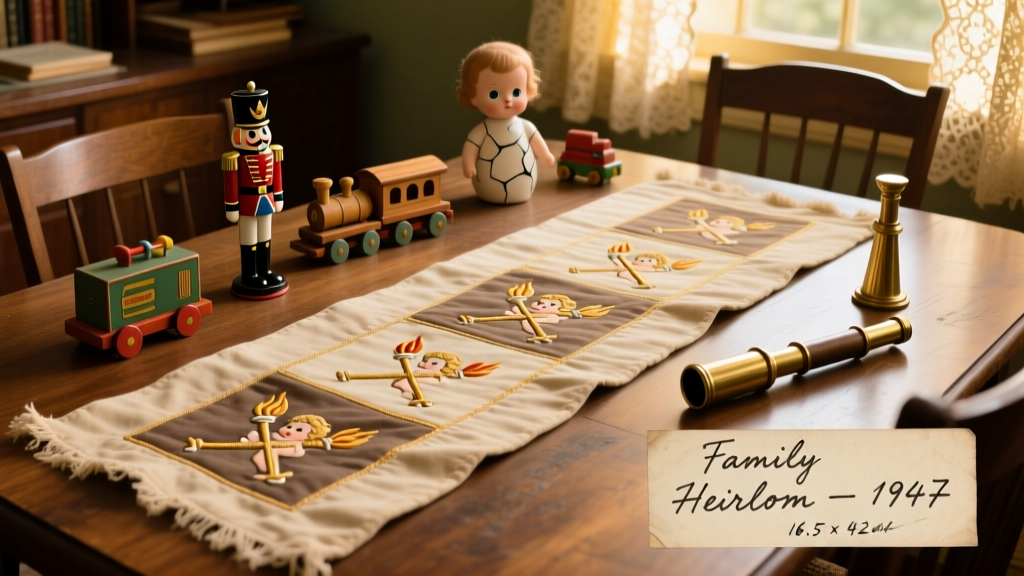
Cherub-Adorned Mid-Century Table Runner: Decoding the Alternate Squares Pattern with Crossed Torches (16½ × 42 in)
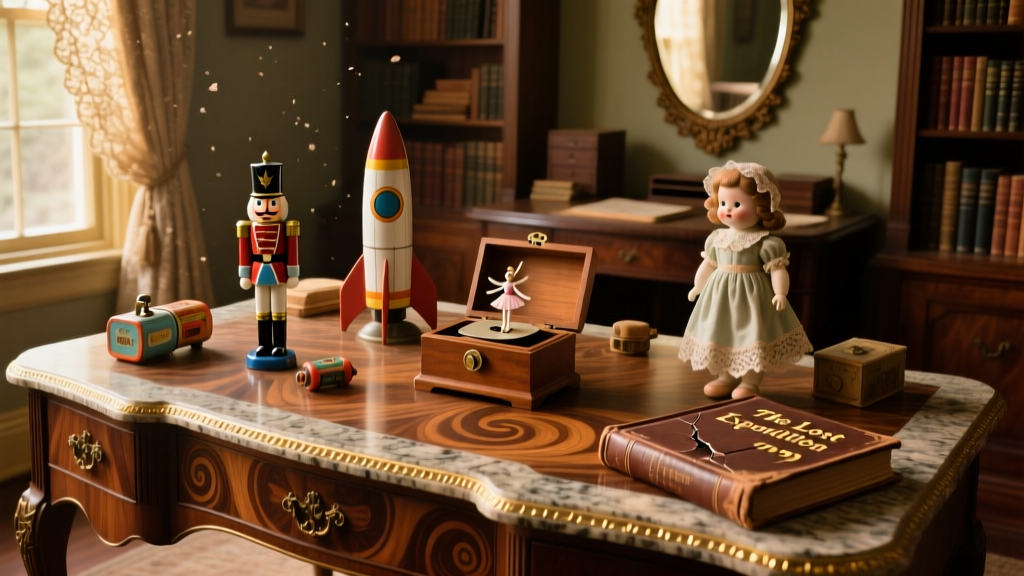
Eastlake Walnut Table with Granite Top and Burl Veneer: A Mid-Century Collector’s Appraisal
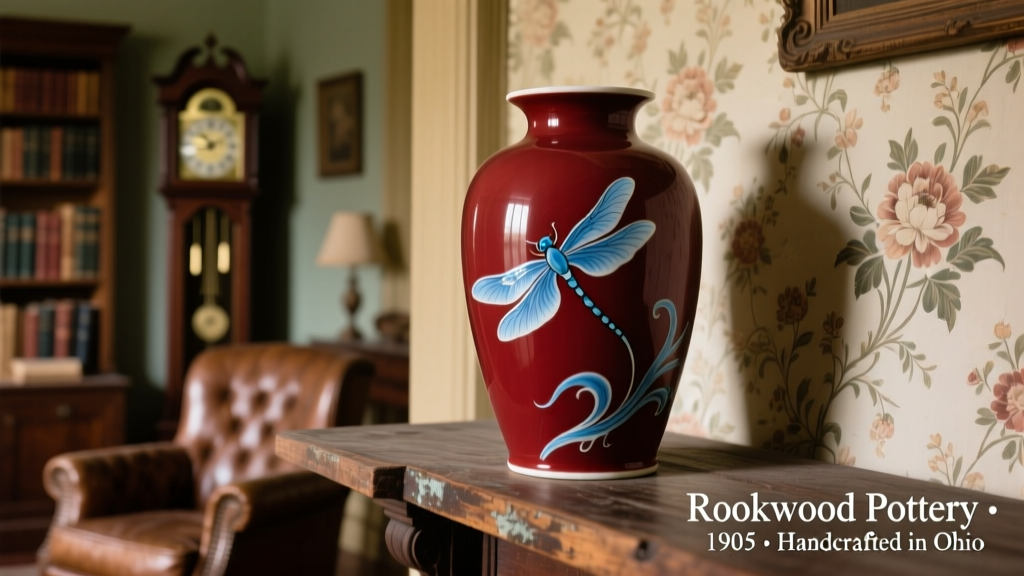
Rookwood Vase: Blue Dragonflies on Deep Red Ground, Matte Glaze, 1905, 7 Inches — A Collector’s Deep Dive
Ceramic Arts Studio Figurine 'Pioneer Sam': Uncovering the Legacy of Suzie Green’s Handcrafted American Icon

The Texas Pacific Railway Eagles Route Streamliner Ticket Book: A Mid-Century Collectible Artifact

Belleek Sugar Creamer with Shamrock Motif: Identifying and Appraising the Third Mark Era (1955–1962)
Markneukirchen Cello, Circa 1920: Anatomy, Provenance, and Appraisal of a 29 9/16-Inch German Instrument
Fiesta Casserole Red: The Iconic Mid-Century Glaze That Defined American Tableware
Jugtown Vase: Green-Brown Glaze, 5½-Inch Form — A Mid-Century Ceramic Landmark