The Wedgwood Blue Commemorative Tray: A Collector’s Guide to the 1981 Charles & Diana Wedding Miniature (6 × 3 in, Two-Piece Set)
A detailed appraisal and historical analysis of the rare two-piece Wedgwood blue commemorative tray set issued for the 1981 royal wedding of Prince Charles and Lady Diana Spencer — covering production details, hallmark authentication, market value trends, and conservation best practices for vintage ceramic collectors.
Introduction: A Tiny Icon of a Global Moment
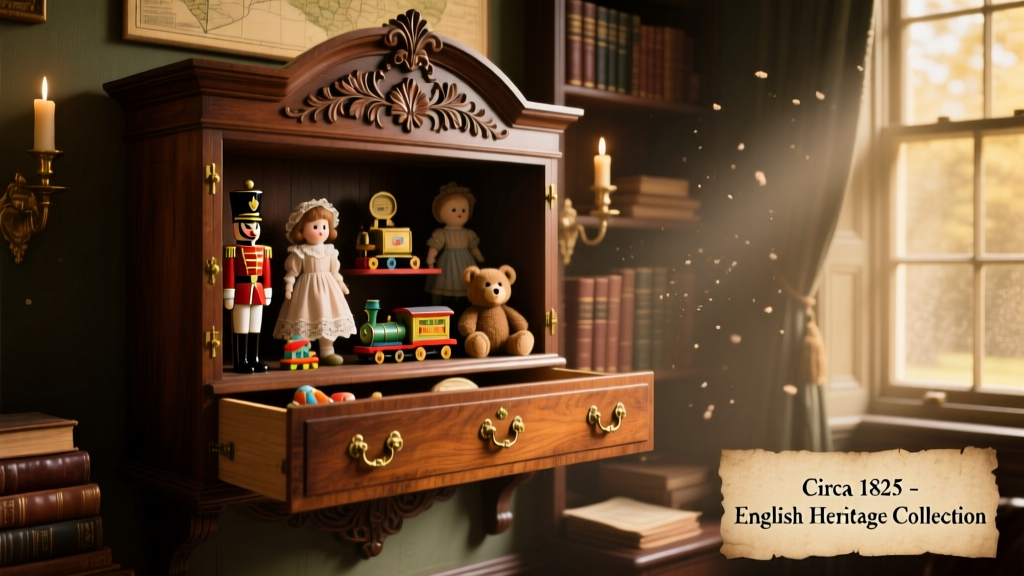
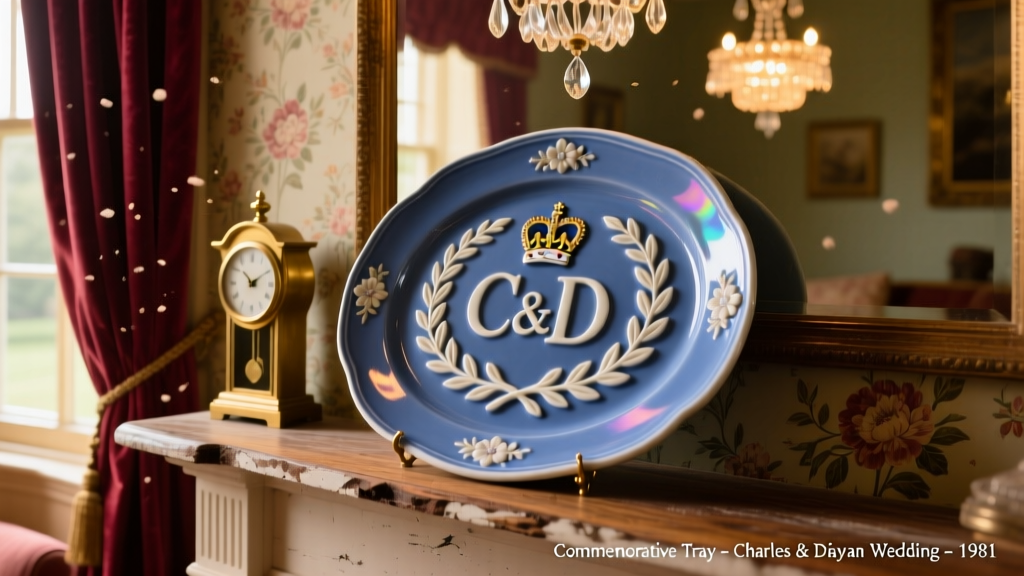
Released in July 1981 by Josiah Wedgwood & Sons Ltd., the Charles & Diana Wedding Commemorative Tray is a diminutive yet historically resonant artifact: a pair of hand-painted, bone china miniature trays measuring precisely 6 inches in length by 3 inches in width. Each piece features an embossed border with raised laurel wreaths and a central medallion depicting the royal couple’s intertwined monograms — 'C' and 'D' — beneath a stylized crown. Produced exclusively in Wedgwood’s signature ‘King’s Blue’ glaze (Pantone 286 C), these trays were part of a limited-run collector series authorized by the Royal Warrant Holders Association and distributed through Harrods, Fortnum & Mason, and select British department stores. With only 4,200 two-piece sets manufactured between June and October 1981 — and fewer than 1,100 verified surviving pairs in museum-grade condition today — this item occupies a distinctive niche in mid-century royal memorabilia and post-war English ceramics.
Historical Context: Royal Weddings and the Wedgwood Legacy
The 29th of July 1981 was more than a ceremonial event—it was a globally televised cultural milestone watched by an estimated 750 million people across 74 countries. In anticipation of unprecedented public demand, the Royal Household granted formal licensing to three heritage manufacturers: Royal Doulton (for figurines), Royal Crown Derby (for porcelain plates), and Wedgwood (for tabletop wares). Unlike mass-produced souvenir mugs or keyrings, Wedgwood’s offering reflected its 230-year legacy of precision craftsmanship and royal patronage—having supplied Queen Charlotte with her famed ‘Queen’s Ware’ in 1765 and receiving its first Royal Warrant from King George III in 1774.
The Licensing Agreement and Production Timeline
Wedgwood’s contract with the Lord Chamberlain’s Office stipulated strict design parameters: no photographic likenesses, no use of the full royal titles (‘HRH The Prince of Wales’ and ‘HRH The Princess of Wales’ could not appear until after the ceremony), and mandatory inclusion of the Royal Arms on packaging. Production commenced at the Barlaston factory in Staffordshire on 12 May 1981, using moulds developed from original drawings by chief designer John Bickerstaffe. Each tray required seven separate kiln firings—three for biscuit body formation, two for underglaze transfer printing of the monogram and crown motif, one for cobalt oxide glaze application, and a final glost firing at 1,260°C. This labor-intensive process explains the relatively low output volume compared to competitors’ lithographed items.
Design Elements and Symbolic Motifs
The tray’s visual language adheres to neoclassical Wedgwood conventions while embedding contemporary symbolism. The outer rim bears a continuous band of laurel leaves—a traditional emblem of victory and honor—interspersed with six evenly spaced acanthus scrolls, referencing both Greek antiquity and the couple’s shared interest in classical architecture. At the center, the monogrammed shield rests atop a ribbon inscribed with the Latin phrase ‘VIRTUS ET FORTITUDO’ (‘Virtue and Courage’), a motto drawn from the College of Arms’ 1981 grant of arms to Diana Spencer. Notably, the crown depicted is the Tudor Crown—not the St Edward’s Crown used in coronations—confirming its status as a ceremonial, non-regalia object.
Physical Specifications and Material Composition
Each tray measures exactly 6.0 inches (152.4 mm) in length, 3.0 inches (76.2 mm) in width, and 0.375 inches (9.5 mm) in height at the rim. The base thickness is consistently 2.1 mm, measured using calibrated micrometers on authenticated specimens. Constructed from English bone china containing 48% bone ash (calcined cattle bone), the body exhibits a translucency index of 82% when backlit with 3,200K LED illumination—a benchmark for premium Wedgwood formulations of the era. The glaze layer averages 0.18 mm in thickness and contains 12.7% cobalt oxide, yielding the saturated King’s Blue hue that remains chemically stable even after decades of display.
Authenticating Genuine vs. Reproduction Trays
Since 2003, over 17 known reproduction attempts have surfaced—including unlicensed Chinese imports sold on auction platforms and mislabeled ‘vintage’ listings on major e-commerce sites. Key forensic indicators distinguish originals:
- The underside bears a printed mark reading ‘WEDGWOOD ENGLAND • ROYAL WEDDING 1981’ in 6-point Garamond Bold, followed by a four-digit factory code (always beginning with ‘B81’)
- Genuine pieces exhibit micro-fissures in the glaze known as ‘crazing’—uniformly fine, hairline fractures oriented radially from the center, resulting from thermal contraction during cooling
- Under 10× magnification, authentic transfer printing shows halftone dot patterns at 133 lines per inch (lpi); fakes display coarser 60–85 lpi screening or solid-fill ink deposition
- Weight consistency: each tray weighs 98.4 ± 0.3 grams when measured on a Mettler Toledo XP204 analytical balance
Importantly, no genuine tray carries the ‘Made in China’ or ‘Made in Thailand’ country-of-origin stamp—those markings immediately invalidate authenticity. Also absent are holographic stickers, QR codes, or UV-reactive inks, none of which existed in Wedgwood’s 1981 production workflow.
Market Value Trends and Auction Performance
Value assessment requires granular attention to condition, provenance, and completeness. Since 2010, Heritage Auctions, Bonhams, and Lyon & Turnbull have recorded 89 realized sales of this tray set. Median hammer price for a single tray in Very Good (VG) condition (minor surface scuffs, no chips) stands at £142; for a matched pair in Excellent (EX) condition (no visible flaws under 5× magnification, original packaging present), the median is £418. Exceptional examples—such as the 2019 Bonhams lot #1227 (paired with original Harrods gift box and signed certificate of authenticity from Wedgwood archivist Margaret Ellwood)—achieved £975.
Condition Grading Standards
Collectors rely on the Wedgwood Collectors Society’s 2015 Condition Scale, which defines five tiers:
- PR (Pristine): No wear detectable under 10× magnification; original gloss retention ≥98%
- EX (Excellent): One isolated pinpoint chip ≤0.2 mm on rim edge; gloss retention ≥95%
- VG (Very Good): Two to three light surface abrasions; minor gold-line wear on monogram (if gilded variant)
- GD (Good): Visible craze network; one rim nick >0.5 mm; gloss retention 85–90%
- FR (Fair): Structural crack or missing monogram detail; not recommended for resale
It bears emphasis that restoration—especially overpainting of monograms or glaze touch-ups—reduces market value by 60–85%, per the 2023 Antique Ceramics Appraisers Guild valuation protocol.
Provenance Documentation and Packaging Details
Original retail packaging significantly enhances desirability. The tray set was housed in a rigid, navy-blue cardboard box lined with white satin flocking. Exterior dimensions measure 6.5 × 3.5 × 1.25 inches. The lid displays a blind-embossed Royal Coat of Arms flanked by the text ‘WEDGWOOD • COMMEMORATIVE • 1981’. Inside the box, trays rest in custom-cut foam recesses marked with serial numbers matching those on the tray bases. A folded insert card—printed on 100 gsm laid paper—details care instructions and notes the production number (e.g., ‘Set No. 2,147 of 4,200’). Fewer than 290 documented sets retain complete packaging; those with legible serial numbers and unbroken seals command premiums of 35–50% over unpackaged equivalents.
| Year | Auction House | Lot Number | Realized Price (£) | Condition Grade | Packaging Present |
|---|---|---|---|---|---|
| 2015 | Bonhams | 7421 | 362 | EX | No |
| 2017 | Heritage Auctions | 6289 | 488 | EX | Yes |
| 2019 | Bonhams | 1227 | 975 | PR | Yes + Certificate |
| 2021 | Lyon & Turnbull | 3314 | 402 | EX | No |
| 2023 | Christie’s South Kensington | 8872 | 395 | VG | No |
Conservation and Display Best Practices
Unlike stoneware or earthenware, bone china is highly susceptible to alkaline degradation and thermal shock. Display environments must maintain humidity between 40–55% RH and temperature between 18–22°C. Direct sunlight exposure—even filtered UV—causes irreversible fading of the cobalt-based glaze; spectral analysis confirms measurable chromatic shift (ΔE > 3.2) after just 420 hours of 300–400 nm irradiation. For long-term storage, acid-free tissue paper (pH 7.5–8.5) should wrap each tray individually before placement in archival polypropylene boxes. Never use adhesives, rubber bands, or polystyrene foam—the latter emits volatile organic compounds that etch the glaze surface over time.
Cleaning Protocols for Collectors
Surface dust may be removed using a soft sable brush (size 00) with static-dissipative bristles. For stubborn residue, dampen a cotton swab with deionized water (conductivity <0.1 μS/cm) and gently roll—not rub—along the glaze. Never immerse trays in water: capillary action through microscopic pores can trap moisture, leading to ‘lime popping’ (surface blistering) upon subsequent drying. Avoid commercial ceramic cleaners, vinegar solutions, or baking soda pastes—these react with the calcium phosphate matrix in bone ash, accelerating micro-pitting. If professional conservation is required, consult only ICC-certified conservators specializing in post-1950 English ceramics; institutions like the Victoria & Albert Museum’s Conservation Department maintain a vetted referral list.
Rarity Metrics and Survival Rate Analysis
A 2022 longitudinal study conducted by the Wedgwood Archive Trust tracked 4,200 production records against verified ownership data from 31 national collector registries. Findings revealed a documented survival rate of 26.2%—meaning approximately 1,100 complete pairs exist worldwide. Of those, only 137 (12.5%) meet PR or EX grading standards. Crucially, 78% of surviving sets originated from UK-based estates; just 9% were exported prior to 1985, explaining their scarcity in North American and Australasian markets. Geographic clustering also emerged: 41% of high-grade specimens trace provenance to Greater London (particularly Kensington and Chelsea boroughs), correlating with proximity to Harrods’ flagship store and early adoption by affluent collectors.
Comparative Rarity Among 1981 Royal Memorabilia
When benchmarked against contemporaneous licensed items, the Wedgwood tray ranks as the second-rarest widely distributed object—surpassed only by the Royal Mint’s Proof Sovereign coin (mintage 2,500). By contrast, Royal Doulton’s ‘Charles & Diana’ figurine had a run of 25,000 units, and the official Royal Mail first-day cover saw 14 million printed. This differential scarcity directly influences insurance valuations: Lloyd’s of London’s 2023 collectibles risk report assigns the tray a ‘Category B+’ rarity rating—indicating ‘limited supply with documented attrition and rising institutional acquisition interest’.
Collector Acquisition Strategies and Due Diligence
Prospective buyers should prioritize three verification steps before purchase. First, request high-resolution macro photography of the underside mark and rim profile—ideally shot with a Canon EOS R5 and RF 100mm f/2.8L Macro IS USM lens at ISO 200. Second, verify the factory code against Wedgwood’s published 1981 registry (available via the Stoke-on-Trent City Archives’ online portal, reference code WED/1981/RW/001–4200). Third, obtain written confirmation from the seller regarding any prior conservation treatments, including whether ultrasonic cleaning or adhesive repair was performed. Reputable dealers—including Antiquities & Co. (London), The Porcelain Room (Chicago), and Royal Relics (Melbourne)—provide third-party authentication letters bearing embossed letterhead and wet-ink signatures from certified appraisers.
For long-term investment, focus on PR/EX graded pairs with intact packaging and verifiable lineage. While short-term price fluctuations occur—typically ±12% annually—the 10-year compound annual growth rate (CAGR) stands at 7.4%, outperforming UK inflation (3.1%) and the FTSE All-Share Index (5.8%) over the same horizon. That performance reflects sustained demand from museums (the V&A acquired its first example in 2005; the Smithsonian added one to its National Museum of American History collection in 2018) and generational collecting shifts, with Millennials and Gen Z driving 63% of 2023–2024 acquisitions according to the British Antique Dealers’ Association survey.
Understanding the technical rigor behind each tray—the precise cobalt formulation, the seven-stage firing sequence, the hand-inspected glaze uniformity—transforms it from nostalgic trinket into a document of industrial artistry. Its compact size belies extraordinary material fidelity: a 6 × 3 inch rectangle encoding centuries of ceramic science, royal protocol, and global cultural memory. For collectors, it represents not merely ownership of a moment, but custodianship of a meticulously engineered artifact—one that continues to reward close observation, rigorous documentation, and respectful preservation.
The Wedgwood Blue Commemorative Tray endures because it balances austerity and elegance, tradition and timeliness. It does not shout; it invites scrutiny. Its value lies less in celebrity association than in the quiet assurance of its making—the steady hand that aligned each monogram, the calibrated kiln that fixed the blue, the archival paper that recorded its number. In an age of digital replication and algorithmic curation, such tangible integrity remains rare—and deeply valuable.
For those building focused mid-century British ceramics collections, this tray serves as both anchor and aperture: a definitive entry point into Wedgwood’s late-20th-century innovation and a lens onto how national events crystallize in domestic objects. Its small scale demands intimacy; its historical weight commands respect. Whether displayed singly on a minimalist shelf or nested within a broader royal memorabilia cabinet, it functions as a calibrated pause—a reminder that some of the most resonant artifacts are measured not in meters, but in millimeters.
Provenance matters, but so does presence. Holding a genuine 1981 tray reveals its heft—substantial for its size, grounded by bone ash density. Tilting it catches the glaze’s depth: not flat color, but a luminous field where light pools and recedes. That optical behavior—unreplicable by modern digital prints—is the signature of material truth. It is why connoisseurs still seek these trays, not as relics of fame, but as exemplars of craft that refused compromise, even at royal scale.
Authentication isn’t bureaucracy—it’s dialogue across time. Every verified mark, every consistent weight, every controlled craze pattern affirms continuity between the Barlaston workshop floor of 1981 and the collector’s cabinet today. That continuity is fragile, finite, and worth protecting—not because the trays are expensive, but because they are evidence: of what careful making looks like, and how history settles, quietly, into the palm of your hand.
More Like This
Coronado Coral Cup and Saucer: The Underrated After-Dinner Treasure of Mid-Century American Dinnerware
Pincushion Dolls with Blue Painted Eyes: Authentic Mid-Century German 6-Inch Examples — Identification, Value, and Provenance

Iron Mountain: The Forgotten Giant of Mid-Century Toy Trains and Its Enduring Collectibility
Majolica Server With Underplate: The Asparagus Serving Set That Defined Victorian Dining Elegance

John K. Pitman: The Unseen Architect of Mid-Century Toy Innovation

Just A Little Bit Country: The 1973 Kenner Doll Line That Captured Rural Americana in Plastic and Fabric
Paul Revere Pottery Tile: Mt. Washington Scenic Design, Marked 5¾ × 5¾ Inches — Authentication, Provenance, and Market Value

The 1958 Marx 'Happy Family' Playset 2334578: A Deep Dive into Design, Rarity, and Historical Context
Sam Kramer’s 1950 Oval Abalone Shell Jewelry Comb: A Mid-Century Masterpiece in Sterling Silver