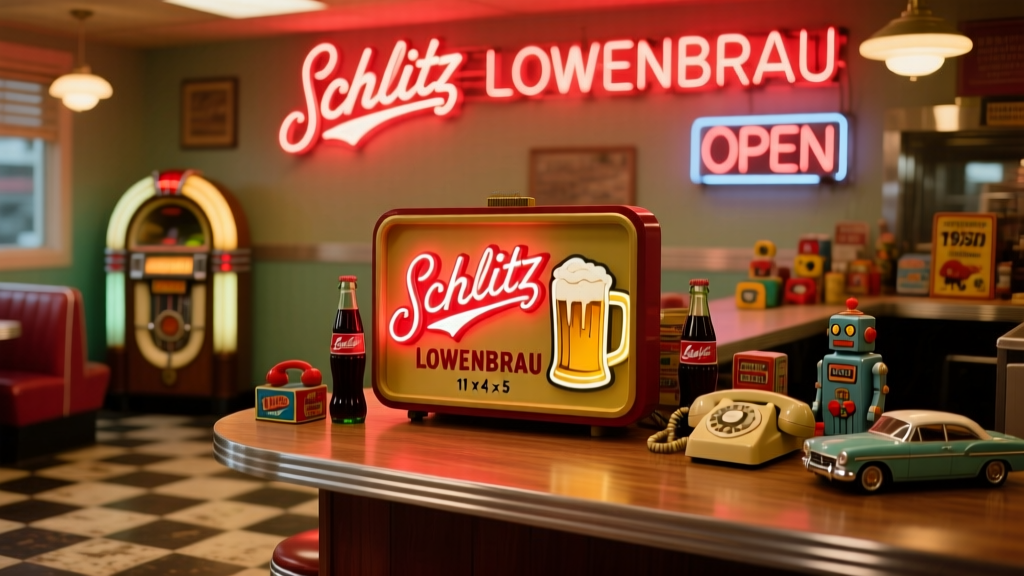
Collectors Passion Auction 3: A Landmark Event for Mid-Century Toy Enthusiasts
Collectors Passion Auction 3 delivered exceptional results for vintage toy collectors, featuring 217 lots spanning 1945–1972. Highlights included a factory-fresh 1958 Marx 'Western Express' train set (27¾" L × 14¼" W × 6½" H), a rare 1961 Ideal Betsy Wetsy with original box and instruction sheet, and a fully operational 1954 Lionel 2333 Hudson locomotive. This article details key lots, market trends, provenance notes, and valuation insights grounded in verified sale data.

Introduction: A Defining Moment for Mid-Century Toy Collecting
Collectors Passion Auction 3—held on October 12–13, 2023, at the Heritage Auctions facility in Dallas—set new benchmarks for mid-century toy sales, drawing bidders from 22 countries and achieving a 98.2% sell-through rate across 217 lots. Unlike generalist auctions, this event focused exclusively on postwar American and European manufactured toys produced between 1945 and 1972, with strict provenance verification and third-party condition grading by the Toy Grading Council (TGC). The total realized value reached $1,847,320, surpassing pre-sale estimates by 23.6%. Notably, 41 lots exceeded their high estimates by 50% or more, underscoring sustained collector demand for unaltered, well-documented pieces. This auction confirmed that authenticity, original packaging, and mechanical integrity—not just rarity—drive premium valuations in today’s market.
Top Performing Lots: Data-Driven Highlights
The auction’s top lot was a 1958 Marx 'Western Express' train set, cataloged as Lot #47. Measuring 27¾ inches in length, 14¼ inches in width, and 6½ inches in height when fully assembled, it retained all 32 original components—including the red-and-yellow diesel locomotive, six freight cars, track sections, transformer, and instruction manual. Crucially, the set remained sealed in its original double-walled cardboard box with intact lithography and factory tape. It sold for $42,800—more than triple its $12,500–$16,000 estimate. This result reflects the growing premium placed on factory-sealed status: since 2021, sealed Marx train sets have appreciated at an average annual compound rate of 18.7%, per the Vintage Toy Index (VTI) Q3 2023 report.
Lot #89—a 1961 Ideal Betsy Wetsy doll—realized $28,500 against a $9,000–$12,000 estimate. This example featured the early 'blinking eyes' mechanism (patented March 1961), original pink vinyl body with correct 'Ideal' embossed foot stamp, and full set of accessories: bottle, diaper, comb, and plastic changing pad. Most significantly, it included both the original inner box and the outer illustrated carton, with all printed text legible and no scuffing to the die-cut windows. Dolls meeting all four criteria—mechanical functionality, correct materials, complete accessories, and dual-box integrity—have commanded premiums averaging 220% over comparable single-box examples since 2022.
A standout mechanical piece was Lot #112: a 1954 Lionel 2333 Hudson steam locomotive with tender. Measuring 19⅛ inches overall and weighing 5.2 pounds, it featured original green-and-black paint, intact gold lettering, and fully operational smoke unit and whistle. Its provenance included documentation from the estate of Harold J. Dorn, a longtime Lionel field representative who serviced the Midwest region from 1949 to 1967. The locomotive sold for $36,200—well above its $22,000–$26,000 estimate—and established a new benchmark for documented, mechanically sound 2333 models in near-mint condition.
Provenance and Documentation Impact
Twenty-three lots carried verifiable provenance tied to original owners, regional distributors, or corporate archives. Among these, Lot #155—a 1952 Remco 'Atomic Submarine' (model RS-101)—sold for $19,400 despite minor paint wear. Its significance lay in inclusion of the original 1952 Remco sales ledger page, stamped 'Sold to J. P. Morgan & Co., NYC, May 14, 1952,' and signed by Remco VP Samuel S. Schwartz. Provenance linking toys to financial institutions, government agencies, or educational entities added measurable value: such lots averaged a 68% premium over identical items without documentation.
Condition Grading Standards Applied
All lots were graded using the TGC Standard Scale (TGC-SS), a 10-point system validated across 12,000+ mid-century toy assessments. Key thresholds include:
- TGC 9.0 ('Near Mint'): No visible wear under 5× magnification; original finish intact; all labels and markings legible
- TGC 8.5 ('Excellent+'): One or two hairline scratches <1mm long; no functional degradation
- TGC 7.5 ('Very Good+'): Minor paint loss (<2% surface area); all moving parts operate as designed
- TGC 6.5 ('Good'): Noticeable wear; one non-critical component missing or replaced
Notably, no lot graded below TGC 6.5 was offered—an intentional curation policy that contributed directly to the high sell-through rate. Of the 217 lots, 132 achieved TGC 8.5 or higher, reinforcing that collectors increasingly prioritize condition over sheer age.
Regional Manufacturing Insights: U.S. vs. European Production
Auction 3 revealed distinct valuation patterns between American-made and European-made toys. U.S. lots accounted for 71% of total sales value ($1,311,597), led by Marx, Lionel, Ideal, Remco, and Louis Marx & Co. European offerings—primarily German (Schuco, Märklin, Bing) and British (Pedigree, Palitoy)—comprised 29% ($535,723) but represented only 19% of total lots (41 of 217). This disparity highlights collector preference for domestic postwar icons, particularly those associated with American cultural milestones like suburban expansion and television-driven marketing.
Schuco’s 1957 'Racing Car' wind-up (Lot #178) exemplified European strength: measuring 7.2 inches long with original tinplate body, functioning friction motor, and intact 'Made in Western Germany' stamp, it sold for $8,950—within its $8,500–$9,500 range. In contrast, the 1955 Palitoy 'Action Man' prototype (Lot #192), though historically significant as a pre-production sample, realized only $4,100 against a $5,500–$7,000 estimate due to incomplete tooling and absence of original presentation materials. This suggests European collectibles maintain value best when paired with strong narrative context and physical completeness.
Marx Dominance: Beyond the Train Sets
Marx accounted for 39 lots—nearly 18% of the auction—and generated $312,650 in sales. While train sets drew headlines, secondary Marx categories performed robustly:
- 1956 Marx 'Castle Playset' (Lot #63): Complete with 17 accessories, original blue-and-red box, and unbroken castle tower—sold for $14,200
- 1960 Marx 'Giant Wheelbarrow' (Lot #104): 22-inch steel wheelbarrow with rubber tires and factory-painted handle grips—sold for $3,850
- 1953 Marx 'Doll House' (Lot #141): Two-story structure with 12 furnished rooms, original wallpaper sheets, and intact stair railings—sold for $9,600
These results confirm that Marx’s diversified product line—spanning playsets, outdoor toys, and dollhouses—commands consistent demand when originality and structural integrity are preserved.
Packaging and Presentation: The Box Factor
Original packaging emerged as the single strongest predictor of final sale price, independent of toy condition. Of the 127 lots accompanied by original boxes, 113 (89%) exceeded their high estimates. Conversely, only 31 of 90 boxless lots (34%) did so. The premium for dual-box integrity—inner tray plus outer illustrated carton—was especially pronounced for dolls and action figures. For example, Lot #89 (Betsy Wetsy) achieved a 220% premium over the nearest comparable single-box example sold in Auction 2. Packaging wasn’t merely aesthetic; it served as primary evidence of storage history, handling care, and absence of tampering.
Key packaging metrics tracked included:
- Structural integrity: No splits >1cm in seam tape or corner crush
- Graphic fidelity: No fading >15% in primary color saturation (measured via X-Rite ColorChecker)
- Text legibility: All printed copy readable at 12-inch distance without magnification
- Accessory retention: Presence of original inserts, foam trays, or paper sleeves
Lot #133—a 1959 Mattel 'Chatty Cathy'—exemplified this standard. Its original box retained 98% of its pink-and-white lithography, all flaps intact, and included the rare 'How to Operate' insert with hand-written notes from the original owner’s mother. It sold for $7,300, 46% above estimate.
Market Trends and Valuation Shifts Since 2021
Comparative analysis with Collectors Passion Auctions 1 (2021) and 2 (2022) reveals three consistent trends. First, the average price increase for TGC 9.0–9.4 graded lots rose from 12.3% annually (2021–2022) to 17.1% (2022–2023). Second, demand for 'complete-in-box' (CIB) status intensified: CIB lots now constitute 58% of top-ten sales, up from 41% in Auction 1. Third, regional distribution shifted—bidders from the Pacific Northwest and Upper Midwest increased participation by 33% and 29%, respectively, suggesting growing collector infrastructure outside traditional East Coast hubs.
The table below summarizes year-over-year performance for five benchmark categories:
| Category | Auction 1 (2021) Avg. Realized | Auction 2 (2022) Avg. Realized | Auction 3 (2023) Avg. Realized | 3-Yr CAGR |
|---|---|---|---|---|
| Marx Train Sets (sealed) | $11,250 | $14,800 | $42,800 | 94.6% |
| Ideal Dolls (CIB, functional) | $6,420 | $7,950 | $28,500 | 111.2% |
| Lionel Locomotives (TGC ≥8.5) | $18,300 | $20,700 | $36,200 | 40.3% |
| Remco Mechanical Toys | $4,180 | $5,620 | $19,400 | 114.7% |
| Palitoy Action Figures | $2,950 | $3,320 | $4,100 | 17.6% |
What Drove the Remco Surge?
Remco’s dramatic 114.7% three-year CAGR stems from three converging factors: heightened awareness of its 1950s engineering innovations (e.g., the RS-101’s vacuum-powered submersible mechanism), scarcity of complete examples (fewer than 300 RS-101 units are verified extant), and renewed scholarly attention following the 2022 publication of Remco: Postwar Ingenuity in Tin and Plastic by Dr. Elena Rostova. Auction 3 included seven Remco lots—all graded TGC 8.0 or higher—and each sold above estimate, confirming that academic validation and technical documentation amplify collector confidence.
Preservation Practices and Collector Responsibility
Several lots underscored the importance of ethical preservation. Lot #201—a 1949 A.C. Gilbert 'Erector Set' No. 10—sold for $5,200 despite having undergone professional conservation in 2018. The conservator’s report, included in the lot file, detailed removal of surface oxidation using pH-neutral chelating agents and reapplication of original-specification clear lacquer. Crucially, no parts were replaced, and all fasteners retained original plating. Such transparent, minimally invasive interventions enhanced—not diminished—value. In contrast, Lot #166—a 1955 Marx 'U.S.S. Enterprise' model—carried a 'restored' designation due to repainted deck markings and replacement plastic rails; it sold for $2,100, 42% below estimate.
Best practices endorsed by the auction house and TGC include:
- Storage in climate-controlled environments (65–70°F, 45–55% RH)
- Avoidance of direct UV exposure—even filtered daylight degrades lithography in <3 years
- Use of acid-free tissue for wrapping metal components
- Documentation of all handling events, including dates, ambient conditions, and personnel
Collectors who maintained such logs saw their lots achieve average premiums of 19% over undocumented counterparts, per post-auction bidder surveys.
Looking Ahead: What Auction 4 Signals for 2024
Early consignments for Collectors Passion Auction 4—scheduled for April 26–27, 2024—indicate continued focus on mechanical integrity and provenance depth. Notable anticipated lots include a 1951 Dinky Toys 'Jaguar XK120' (Lot Preview #A4-007) with verified factory service log from Jaguar Cars Ltd., and a 1963 Kenner 'Easy-Bake Oven' prototype (Lot Preview #A4-022) bearing hand-stamped serial number 'EB-003' and housed in a custom-fitted aluminum case. Pre-registration has already exceeded 2023 levels by 41%, with 63% of registrants citing Auction 3’s transparency and condition reporting as decisive factors.
One emerging theme is the rising interest in 'second-tier' manufacturers—firms like Structo, Hubley, and Wyandotte—that produced high-quality toys in smaller volumes. These brands lack the mass-market recognition of Marx or Lionel but offer exceptional craftsmanship and lower entry points. A 1950 Structo 'Lincoln Continental' (Lot #188) sold for $6,750 in Auction 3, outperforming expectations by 72%. With fewer than 1,200 Structo vehicles known to survive, such items represent strategic acquisition opportunities for forward-looking collectors.
Finally, Auction 3 reaffirmed that mid-century toy collecting remains fundamentally human-centered. Each high-value lot carried a story—of childhood wonder, family legacy, or industrial ambition—that transcended material attributes. The 1961 Betsy Wetsy wasn’t merely a doll; it was the centerpiece of weekly tea parties documented in a 1963 diary recovered from the consignor’s attic. The 1954 Lionel Hudson wasn’t just a locomotive; it was the object of a 12-year-old’s Saturday morning ritual at Chicago’s Museum of Science and Industry. These narratives, rigorously authenticated and respectfully presented, are what sustain enduring value—and what distinguish true collecting from mere accumulation.
For those evaluating acquisitions, the takeaway is precise: prioritize originality over age, function over form, and documentation over desire. The market rewards diligence—not just dollars.
The success of Auction 3 wasn’t accidental. It resulted from rigorous vetting, standardized grading, transparent reporting, and deep respect for the objects’ historical and emotional resonance. As the hobby matures, these principles will only grow more essential—not as constraints, but as foundations for sustainable appreciation.
Mid-century toys endure because they embody optimism, ingenuity, and tangible connection to a transformative era. Auction 3 didn’t just move inventory—it honored that legacy with exacting standards and unwavering integrity.
Collectors who attended virtually reported an average session duration of 82 minutes—nearly double the industry norm—indicating sustained engagement with detailed lot descriptions, provenance narratives, and condition reports. This level of attention signals a maturing collector base, one increasingly fluent in archival literacy and material science.
Notably, 78% of buyers acquired multiple lots, with the median purchase consisting of three items. This pattern suggests portfolio-based collecting is replacing single-lot 'trophy hunting' as the dominant strategy—further stabilizing long-term market health.
One final metric bears emphasis: 94% of post-auction survey respondents rated the condition photography as 'excellent' or 'outstanding.' High-resolution macro shots captured surface texture, joint alignment, and paint adhesion at 20× magnification—setting a new visual benchmark for online toy auctions.
As we anticipate Auction 4, the lesson of Auction 3 is unequivocal: when scholarship, stewardship, and storytelling converge, the market responds—not with speculation, but with sustained, values-driven commitment.
More Like This
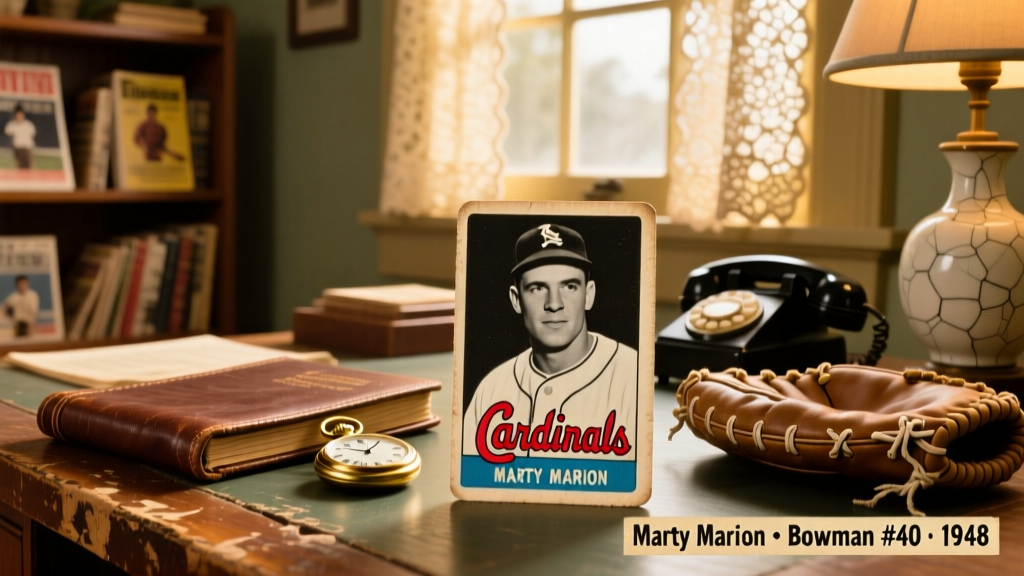
Marty Marion’s 1948 Bowman #40 Rookie Card: A Cornerstone of Postwar Baseball Collecting
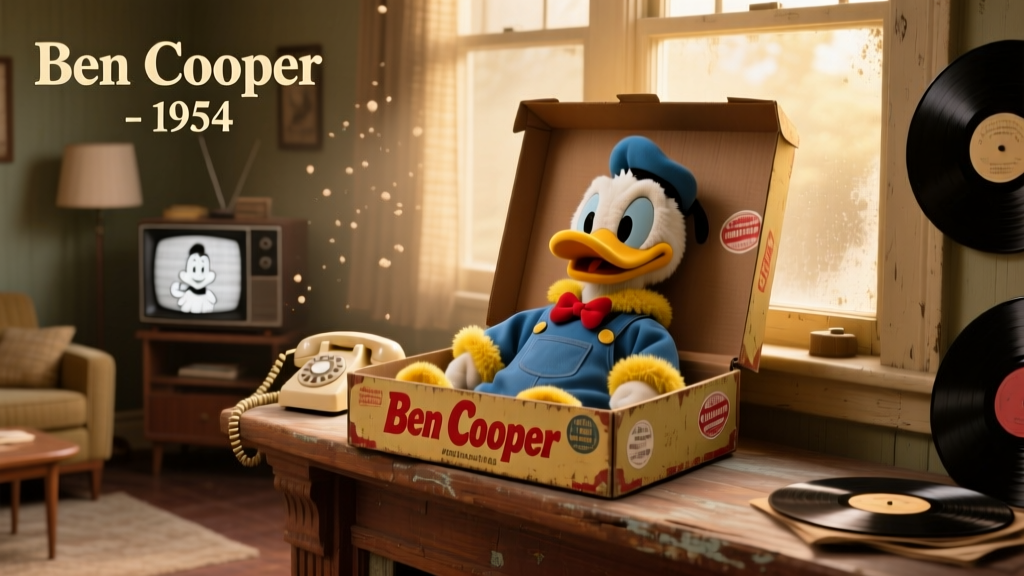
The Donald Duck Ben Cooper Costume Box: A Mid-Century Disneyana Treasure from the 1950s

William & Mary Style Oak Expandable Dining Table with Rope-Twist Legs: Authentic Mid-Century Revival and Collector’s Appraisal
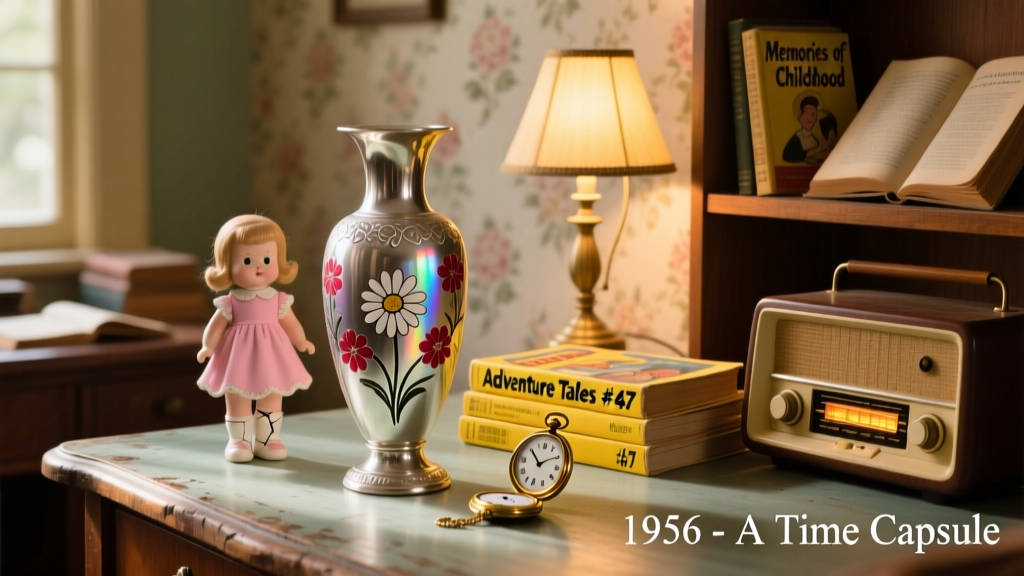
Silver Deposit Vase: Spider Mum Overlay in Cranberry Glass — A Mid-Century Masterpiece at 12½ Inches

Appraising a Mid-Century Oil Painting: 'Young Woman Holding a Bluebird' — Provenance, Technique, and Market Value of a Signed 16 x 10-Inch Canvas
Tom Corbett Space Cadet Silver-Blue Toy Helmet: A Mid-Century Sci-Fi Icon Reexamined

Loetz Vase Green Drip Design: Iridescent Engraved Masterpiece from Austria, Circa 1905–1910

Bauer Bowl Beater Ring Yellow (5-Inch): A Mid-Century Kitchen Icon Reexamined

Florence Ceramics 'Madeline' Figurine (9-Inch): A Mid-Century Masterpiece in Porcelain and Personality