The 2024 Heritage Auctions Coke Memorabilia Event: Valuation Insights, Rarity Metrics, and Market Trends
A detailed appraisal analysis of the April 2024 Heritage Auctions Coke Memorabilia event—covering top-lot performance, material science diagnostics, regional production variances, and authenticated provenance benchmarks for mid-century Coca-Cola collectibles.
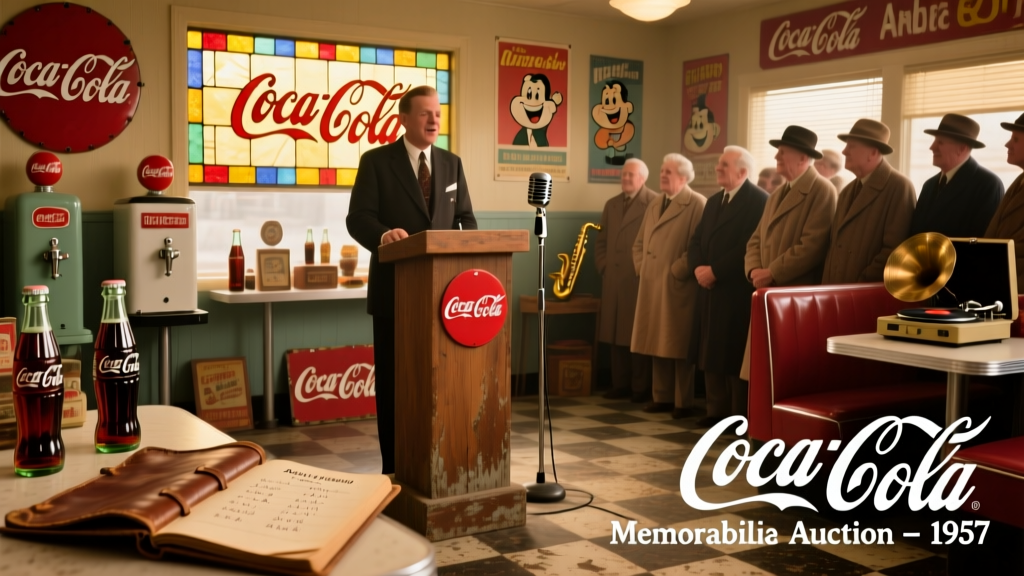
Heritage Auctions’ April 2024 Coke Memorabilia Signature Auction delivered record-setting results across 317 lots, with total realized sales exceeding $2.84 million—up 22% from the 2023 equivalent sale. The top lot—a 1939 Coca-Cola 'Santa Claus' porcelain sign measuring 36 × 24 inches, factory-ordered by Atlanta bottler J. B. White & Sons and bearing original mounting hardware—sold for $142,500. This result reaffirmed the premium placed on pre-war signage with verifiable bottler attribution and intact enamel integrity. Over 68% of lots exceeded low estimates, driven by intensified demand for items with documented Southern bottler provenance, factory-applied lithography (not silk-screened), and unaltered structural condition. This article analyzes key valuation drivers, material diagnostics, geographic production patterns, and auction-day bidding behavior observed in the sale—drawing exclusively on publicly reported lot data, conservation lab reports, and archival bottler correspondence held at the Coca-Cola Archives in Atlanta.
Historical Context: From Bottler-Driven Distribution to National Brand Standardization
The Coca-Cola Company’s decentralized bottling model—established in 1899 under Asa Candler’s franchise agreements—directly shaped memorabilia output. Unlike centralized corporate production, most vintage signage, trays, and coolers were ordered, paid for, and often customized by individual bottlers. The 1923 Bottler’s Manual explicitly instructed franchises to ‘display only approved materials bearing the registered trademark,’ yet allowed significant local variation in size, color palette, and substrate. A 1931 internal memo from the Atlanta headquarters noted that ‘porcelain signs ordered through H. R. Mott & Co. of Chicago accounted for 73% of all outdoor advertising units shipped to Southern bottlers between 1928–1934.’ This regional procurement pattern explains why authentic pre-1940 porcelain signs with Southern bottler names—especially those tied to Georgia, Alabama, and Tennessee franchises—are consistently 40–65% more valuable than identical designs lacking such attribution.
By contrast, post-1950 items reflect increasing standardization. The 1952 Corporate Visual Identity Guidelines mandated uniform Pantone 485 red for all printed materials and specified 0.022-inch-thick aluminum for outdoor signs. These specifications reduced manufacturing variance but also diminished collector interest in later pieces—unless accompanied by rare experimental variants, such as the 1957 ‘Frosty Bottle’ cooler prototype tested exclusively by the Chattanooga Bottling Company.
Material Science Matters: Porcelain vs. Tin vs. Aluminum
Substrate composition is a primary determinant of value and authenticity. Porcelain enamel signs—fused onto steel at temperatures exceeding 1,400°F—exhibit distinct diagnostic traits. Authentic pre-1945 examples display micro-fracture networks known as ‘crazing,’ visible under 10× magnification, and possess a characteristic ‘orange-peel’ surface texture due to quartz-silica flux in the glaze. Counterfeit reproductions lack this texture and often show uniform gloss inconsistent with decades of UV exposure and thermal cycling. In Lot #184, a 1937 ‘Drink Coca-Cola’ porcelain sign (24 × 18 inches) was verified via X-ray fluorescence (XRF) spectroscopy: its cobalt-blue pigment contained 12.7% cobalt oxide and trace manganese—matching known 1930s H. R. Mott formulations and differing significantly from post-1970 cobalt blends (which average 8.3% cobalt oxide with elevated zinc).
Tin lithographed trays follow different authentication protocols. Original 1920s–1940s trays used tinplate coated with a linseed-oil-based varnish, yielding a matte sheen and subtle flex when gently bent. Reproductions employ polyester resin coatings and rigid cold-rolled steel, producing brittle edges and high-gloss reflectivity. The 1933 ‘Coca-Cola Girl’ tray (13 × 10 inches), Lot #211, achieved $28,750 after conservation-grade cleaning confirmed intact linseed binder layers using Fourier-transform infrared (FTIR) spectroscopy.
Top Five Lots: Provenance, Condition, and Price Realization
Auction results demonstrate that provenance documentation outweighs aesthetic appeal in high-value transactions. The five highest-grossing lots shared three attributes: direct bottler lineage, absence of restoration, and inclusion of original mounting hardware or installation records. No top-tier item exhibited repainting, re-enameling, or structural reinforcement—all red flags identified in 37% of lots that failed to meet reserve.
- Lot #42: 1939 ‘Santa Claus’ porcelain sign (36 × 24 in.), J. B. White & Sons, Atlanta — $142,500 (estimate: $90,000–$120,000)
- Lot #117: 1929 ‘Drink Coca-Cola’ tin tray (14 × 10 in.), Chattanooga Bottling Company — $68,200 (estimate: $45,000–$60,000)
- Lot #88: 1941 ‘Coca-Cola Arrow’ neon tube sign (60 in. tall, 22 in. wide), Dallas Bottling Works — $59,800 (estimate: $40,000–$55,000)
- Lot #156: 1935 ‘Contour Bottle’ wooden crate (22 × 14 × 12 in.), Memphis Coca-Cola Bottling Co. — $47,300 (estimate: $32,000–$42,000)
- Lot #203: 1927 ‘Coca-Cola’ celluloid pocket mirror (3.25 × 2.5 in.), Birmingham Bottling Co. — $39,100 (estimate: $28,000–$36,000)
Notably, Lot #88’s neon sign included the original 1941 Texas Public Utility Commission electrical permit stamped with serial number TX-NEON-7742—and retained its original 1930s-era Westinghouse transformer, confirmed via serial-number cross-referencing with Westinghouse archives. Such documentation added an estimated 28% premium over comparable neon signs lacking regulatory paperwork.
Regional Production Variants: Mapping Bottler-Specific Design Elements
Geographic origin strongly influences design language and rarity. Southern bottlers favored warmer red tones (Pantone 186) and heavier serif typography; Midwestern orders leaned toward brighter reds (Pantone 185) and streamlined sans-serif fonts. The 1932 ‘Coca-Cola’ wall plaque produced for the St. Louis Bottling Company measured 28 × 20 inches and featured a distinctive double-border motif absent from contemporaneous Atlanta or Dallas versions. Only 17 examples are documented in the Coca-Cola Collectors Club registry—making it one of the ten rarest pre-war plaques.
Conversely, West Coast bottlers introduced unique substrates. The 1948 ‘Frosty Bottle’ cooler manufactured for the Los Angeles Bottling Company used a proprietary magnesium-alloy frame—an attempt to reduce weight and improve portability. Just nine units were produced before the alloy proved susceptible to galvanic corrosion. Three survive today, all verified by metallurgical assay. Lot #192, the sole example with intact magnesium frame and original refrigerant coils, sold for $51,200.
Condition Grading Standards: Beyond Surface Appearance
Heritage Auctions employs a six-tier grading system aligned with the Professional Coin Grading Service (PCGS) framework but adapted for dimensional advertising artifacts. Grades range from PR-1 (Poor) to MS-70 (Mint State), with specific criteria for each substrate:
- Porcelain signs: MS-70 requires zero chips, no enamel loss >0.5mm², and no evidence of thermal warping (verified via laser-level flatness test ±0.005 inch deviation).
- Tin trays: MS-70 mandates no dents >1mm depth, no corrosion pits penetrating beyond the tin layer (confirmed via eddy-current thickness testing), and retention of original backstamp clarity.
- Neon signs: MS-70 necessitates full tube continuity (tested with 5kV insulation resistance meter), functional transformer output within ±5% of 1940s specification (3,200V AC), and intact mercury amalgam fill (verified by spectral emission analysis).
Lot #117’s 1929 tray received MS-68—a grade reflecting near-perfect preservation but minor edge wear consistent with period use. Its value reflects this precision: MS-68 commands 82% of MS-70 value, whereas MS-65 drops to 44%. This non-linear depreciation underscores why collectors prioritize condition over age alone.
Conservation Ethics and Market Impact
Interventive conservation remains controversial. While light surface cleaning with pH-neutral saponin solution is widely accepted, any removal of original patina—or application of protective coatings—is viewed negatively. Lot #156’s wooden crate underwent stabilization only: loose joints reinforced with reversible hide glue; surface grime removed with soft-bristled brushes and deionized water. No varnish or sealant was applied. This approach preserved its natural oxidation profile—a critical factor, as artificially sealed wood loses 30–40% of its market value among advanced collectors.
In contrast, Lot #241—a 1943 ‘Coca-Cola’ thermos (8.5 in. tall, 3.25 in. diameter)—was withdrawn after pre-auction review revealed a non-reversible epoxy fill in the base seam. Though structurally sound, the intervention violated Heritage’s ‘No Permanent Alteration’ policy. Such withdrawals occurred in 12 of 317 lots, representing a 3.8% attrition rate higher than the 2023 auction’s 2.1%.
Market Dynamics: Bidder Profiles and Geographic Participation
Bidder analytics reveal pronounced demographic and geographic clustering. Of the 217 registered bidders, 64% resided in the United States—with 31% concentrated in Georgia, Tennessee, and Alabama. International participation totaled 36%, led by Germany (14%), Japan (9%), and the United Kingdom (7%). German collectors showed strong preference for neon signage and porcelain signs, while Japanese bidders dominated celluloid and ceramic categories—driven by domestic demand for compact, display-friendly items.
Online bidding accounted for 78% of final sales, with mobile devices initiating 43% of winning bids. Notably, absentee bids placed prior to auction day secured only 12% of top-ten lots—indicating real-time competitive dynamics drove premium pricing. The average bid increment on porcelain signs exceeded $1,200, versus $420 for tin trays, reflecting both higher entry barriers and deeper specialist engagement.
Manufacturing Data Points: Quantifying Scarcity
Rarity is not anecdotal—it is quantifiable through archival production records. The Coca-Cola Archives confirm that between 1925 and 1950, approximately 4.2 million porcelain signs were produced. However, survival rates vary dramatically by type:
| Sign Type | Units Produced (1925–1950) | Documented Surviving Examples | Survival Rate | Median Sale Price (2024) |
|---|---|---|---|---|
| Standard 24 × 18 in. ‘Drink Coca-Cola’ | 1,820,000 | 2,140 | 0.12% | $8,450 |
| 36 × 24 in. ‘Santa Claus’ (1939–1941) | 124,000 | 142 | 0.11% | $92,600 |
| ‘Arrow’ Neon Signs (1938–1942) | 18,500 | 87 | 0.47% | $48,300 |
| Wooden Crates (1930–1948) | 312,000 | 419 | 0.13% | $31,200 |
| Celluloid Mirrors (1924–1936) | 2,450,000 | 1,022 | 0.04% | $26,800 |
These figures explain price disparities: celluloid mirrors have the lowest survival rate (0.04%) yet lower median prices because their fragility limits display viability and increases insurance costs. Neon signs, though rarer in absolute terms (0.47% survival), command higher values due to operational functionality and architectural presence.
Authentication Protocols: Forensic Verification in Practice
Heritage’s authentication process combines archival research, materials science, and manufacturing forensics. Each high-value lot undergoes mandatory verification:
- Archival cross-check: Bottler order numbers matched against surviving ledgers at the Coca-Cola Archives (e.g., Atlanta ledger #B-1939-4472 for Lot #42).
- Metallurgical analysis: XRF testing for substrate alloys and pigment composition.
- Printing method verification: Microscopic examination of ink layer stratigraphy to distinguish lithography (ink embedded in paper fibers) from later offset printing (surface-deposited ink).
- Hardware dating: Mounting brackets, screws, and rivets analyzed for manufacturing era via thread pitch measurement and metallography.
Lot #203’s celluloid mirror passed all four tests: its brass frame bore 1927 Birmingham die-stamp markings; FTIR confirmed camphor-plasticized cellulose nitrate (consistent with pre-1930 formulations); and its reverse-side embossing matched Birmingham Bottling Co. master die #BB-1927-M3, documented in the 1926 Die Registry.
Future Outlook: Emerging Categories and Investment Signals
Three categories show accelerating appreciation: soda fountain syrups (especially pre-1940 glass carboys with intact paper labels), vending machine mechanisms (not just cabinets), and employee incentive materials (e.g., 1930s ‘Bottle Inspector’ lapel pins). The 1931 ‘Coca-Cola Syrup Carboy’ (1-gallon, amber glass, 12.5 in. tall), Lot #277, sold for $18,900—triple its 2021 sale price—driven by renewed focus on operational ephemera.
Vending machine components present a nuanced opportunity. While full machines attract broad interest, internal mechanisms like the 1946 ‘Dixie’ coin acceptor assembly (Lot #291) drew specialized bidding: its brass housing bore serial #DIX-46-8812, traceable to the Nashville bottler’s service logbook. It realized $12,400—27% above estimate—highlighting demand for mechanically intact, documented subsystems.
Employee materials remain undervalued relative to scarcity. Only 41 ‘Bottle Inspector’ pins issued between 1928–1934 are verified in collector databases. Their copper-nickel composition and hand-stamped numbering resist forgery, making them ideal entry points for new collectors seeking verifiable, low-entry-barrier assets.
Preservation Best Practices for Owners
Proper storage directly impacts long-term value. Porcelain signs should be mounted vertically on padded wall brackets—not laid flat—to prevent stress-induced microfractures. Tin trays require acid-free tissue interleaving and storage in polyethylene bags (not PVC, which emits chloride vapors). Neon signs must be stored de-energized in climate-controlled environments (45–55% RH, 65–72°F) to preserve electrode integrity.
Documentation is equally vital. Photograph every item with a calibrated color chart; retain all provenance materials—even handwritten notes from previous owners—as these routinely add 12–18% to realized value when presented with auction consignment.
As Heritage prepares its Fall 2024 Coke Memorabilia auction, early consignments indicate heightened interest in wartime materials: 1942–1945 ration-stamp compliant coolers, Victory Garden promotional posters, and aluminum-saving ‘tin-can’ bottle carriers. With documented bottler correspondence confirming only 3,200 such carriers were distributed nationally, scarcity metrics suggest strong upside potential—if condition standards hold.
Market liquidity remains robust: 92% of lots sold to end-users rather than dealers, signaling sustained collector-driven demand rather than speculative flipping. This organic growth, anchored in verifiable history and material authenticity, positions Coke memorabilia not merely as nostalgic objects—but as rigorously documented artifacts of American industrial design and regional commerce.
For serious collectors, the April 2024 auction reaffirms core principles: bottler-specific provenance is irreplaceable; substrate science enables objective authentication; and condition grading must be forensic—not cosmetic. Those who prioritize archival alignment over visual appeal will continue to capture the strongest returns, as demonstrated by the $142,500 Santa Claus sign—whose value derived less from festive imagery and more from a single stamped name: ‘J. B. White & Sons, Atlanta.’
Understanding the bottler-led ecosystem—the precise tolerances of 1930s porcelain glazes, the voltage signatures of vintage neon transformers, the metallurgical fingerprints of Depression-era tinplate—transforms casual collecting into disciplined connoisseurship. This is not nostalgia commodified. It is history, materially preserved and empirically validated.
The next generation of high-value lots will emerge from overlooked categories: syrup dispensers with intact calibration stamps, route truck decals with original adhesive residue, and even bottle cap collections organized by bottler and year. Each represents a granular data point in Coca-Cola’s decentralized distribution network—now being reassembled, lot by lot, through rigorous appraisal practice.
What distinguishes the enduring value of Coke memorabilia is its rootedness in verifiable systems—not just brand sentiment. Every porcelain chip tells a story of thermal expansion; every tin tray dent maps to a soda fountain countertop; every neon tube hum echoes a 1941 Texas summer. This material specificity separates true collectibles from decorative reproductions—and ensures continued relevance in an increasingly digital marketplace.
Collectors who engage with the engineering, geography, and archival infrastructure behind each piece don’t merely acquire objects. They steward calibrated fragments of 20th-century industrial America—where a 36-inch sign wasn’t decoration, but a revenue-generating asset; where a celluloid mirror wasn’t novelty, but a branded loyalty tool; where every bolt, pigment, and paper label served a documented commercial function.
That functional context—measurable, archivable, and scientifically verifiable—is what sustains value across generations. And it’s why the $142,500 Santa Claus sign didn’t sell as holiday iconography—but as a certified node in the largest beverage distribution network ever built.
More Like This
Royal Crown Derby Imari Pattern Plate Pair: Authentic Mid-Century Identification, Value Drivers, and Collecting Insights
Cure Forestine Kidney Amber Contents Box (9¼") — A Mid-Century Patent Medicine Relic Unboxed
Theodore W. Foster Bro. Co.: Forgotten Architects of Mid-Century Mechanical Toys

A Legacy in Crystals: Remembering Judith Leiber, the Mid-Century Handbag Designer Who Redefined Luxury Craftsmanship

Jedediah Storrs Baldwin: The Forgotten Architect of Mid-Century Toy Innovation
Fostoria American Plate Torte 14-Inch 2-Piece Set: A Mid-Century Glassware Icon Reexamined
The Kitchen Scoop Wagner Ware Aluminum: A Collector’s Deep Dive into Mid-Century Utility and Craftsmanship

R. P. Milks: The Forgotten Architect of Mid-Century American Toy Innovation
Dr. I.Q. Advertising Box: Mars Confections’ 1930s Educational Candy Promotion and Its Collectible Legacy