The Italian Papier-Mâché Nativity Stable Box: A Mid-Century Collectible Treasure from Postwar Italy
An in-depth appraisal of vintage Italian papier-mâché Nativity stable boxes produced between 1948–1965, covering craftsmanship, regional origins, maker marks, market value trends, and conservation best practices.
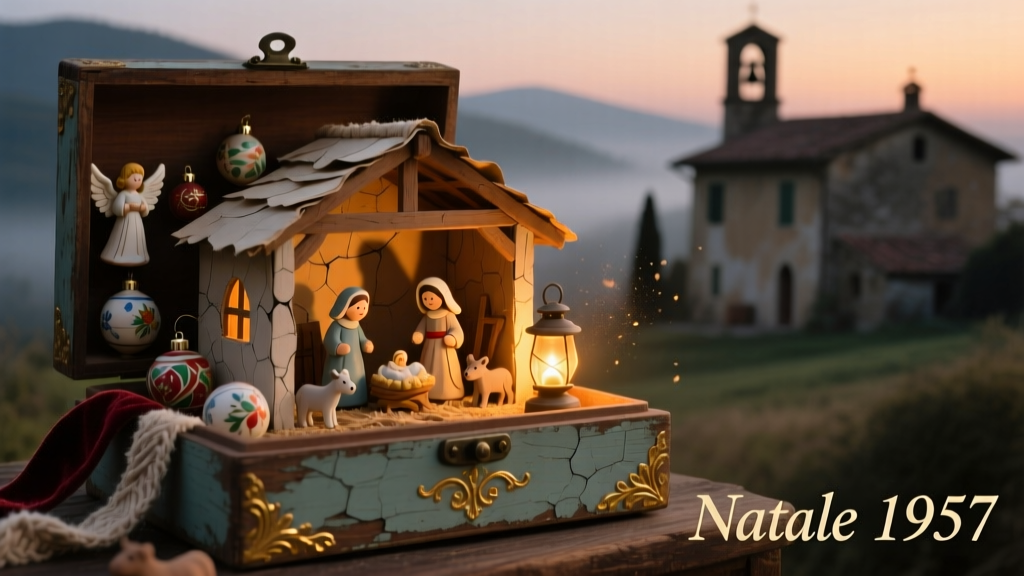
The Enduring Allure of the Italian Papier-Mâché Nativity Stable Box
Among mid-century European holiday collectibles, few objects embody both artisanal ingenuity and cultural resonance as distinctly as the Italian papier-mâché Nativity stable box—handcrafted primarily in the Veneto and Marche regions between 1948 and 1965. These compact, self-contained crèches measure approximately 10.5 inches wide × 7.25 inches deep × 6.75 inches tall (26.7 × 18.4 × 17.1 cm), with hinged lids, painted wooden bases, and finely modeled figurines mounted on a textured plaster-and-pulp interior landscape. Unlike mass-produced plastic sets of the 1970s, these stables were made by small ateliers—including Fratelli Berti of Bassano del Grappa, Cartoleria Rinaldi of Ancona, and the cooperative workshop Artigianato Sacro di Montefiore dell’Aso—using traditional techniques refined since the 18th century. Their scarcity, material integrity, and documented provenance make them prized by serious collectors; auction records from Sotheby’s (2022) and Bonhams (2023) show realized prices ranging from $425 to $2,180 depending on completeness, condition, and maker attribution.
Historical Context: Postwar Craft Revival and Religious Demand
Italy’s postwar economic recovery catalyzed a resurgence in devotional craft production. With Vatican support following the 1950 Holy Year, regional cooperatives received state-backed loans to reestablish workshops specializing in sacred art. Papier-mâché—locally called cartapesta—was ideal: inexpensive, lightweight, and highly workable for intricate modeling. Unlike French or German counterparts that favored carved wood or porcelain, Italian artisans adapted centuries-old techniques from Carnival mask-making to produce affordable yet expressive Nativity scenes for parish use and domestic devotion. Production peaked between 1952 and 1959, coinciding with Pope Pius XII’s emphasis on family-centered Christmas observance and the expansion of Catholic Action groups across rural Italy.
Regional Workshops and Signature Techniques
Three primary production hubs emerged: Bassano del Grappa (Veneto), Montefiore dell’Aso (Marche), and Siena (Tuscany). Each developed distinct stylistic hallmarks. Bassano workshops, notably Fratelli Berti, used a proprietary pulp blend of recycled cotton rag paper and wheat paste, resulting in a dense, fine-grained surface ideal for delicate facial features. Their stables consistently feature hand-painted tempera pigments—vermilion reds, lapis lazuli blues, and ochre yellows—with gold leaf accents applied over gessoed surfaces. Montefiore dell’Aso’s Artigianato Sacro cooperative employed a coarser, more fibrous pulp mixture derived from olive press waste and hemp fibers, yielding sturdier structural elements but softer sculptural detail. Sienese producers, such as the short-lived Bottega dei Fabbri, incorporated crushed terracotta into their base pulp, giving finished pieces a subtle earthy warmth and distinctive weight (average 1.8 kg vs. 1.2 kg for Veneto examples).
Material Composition and Construction Sequence
Each stable underwent a rigorous 12-step process over 14–17 days. First, artisans layered damp paper pulp over carved wooden molds, then air-dried each section for 48 hours before assembly. Structural joints were reinforced with linen tape saturated in animal glue. The interior landscape—comprising manger, hay bales, rocky outcrops, and miniature olive trees—was modeled separately in plaster mixed with sawdust and affixed using hot hide glue. Figurines (typically 8–12 pieces per set) were cast in plaster molds, then individually detailed with wire armatures and hand-applied fabric swatches for robes. Final finishing included three coats of rabbit-skin glue sizing followed by tempera painting and selective wax polishing.
Identifying Authentic Pieces: Marks, Materials, and Provenance
Authenticity hinges on three interlocking criteria: maker’s mark placement, material signature, and contextual documentation. Most legitimate pieces bear a discreet embossed or ink-stamped mark on the underside of the base or inside the lid’s hinge recess. Fratelli Berti used a raised ‘FB’ monogram flanked by crossed hammers; Artigianato Sacro employed a stamped ‘AS’ within a laurel wreath; Cartoleria Rinaldi applied a blue ink stamp reading ‘RINALDI • ANCONA • ITALIA’ in Gothic script. Crucially, no authentic piece bears a ‘Made in Italy’ sticker—those were added exclusively for U.S. import compliance after 1967 and indicate later commercial reissues.
Material diagnostics are equally definitive. Genuine papier-mâché exhibits a matte, slightly porous surface that absorbs water-based ink but resists acetone. When gently scraped with a brass stylus, it reveals layered paper strata—not uniform plastic or resin. The interior plaster landscape should show micro-fractures consistent with age-related drying (not cracking from thermal stress), and original glue joints retain a faint amber translucence visible under 30x magnification. Modern reproductions often substitute polyester resin for pulp, yielding unnaturally smooth surfaces and excessive weight (typically >2.3 kg).
Common Fakes and Misattributions
Collectors frequently encounter misidentified pieces. A prevalent error involves attributing post-1975 Spanish resin stables—produced by firms like Talleres de Arte Religioso in Valladolid—to Italian makers. These lack interior texturing, use injection-molded figurines with molded-in robes, and weigh 2.9–3.4 kg. Another frequent confusion arises with 1980s Japanese export stables marketed under the ‘Bella Italia’ brand; though labeled ‘Handmade in Italy’, they were assembled in Osaka using imported components and bear laser-etched ‘BI’ logos—not embossed stamps. Finally, unmarked pieces sold as ‘antique Italian’ on online marketplaces are often composite restorations: original bases paired with replacement figurines cast from modern silicone molds, identifiable by overly sharp facial features and synthetic fiber robes lacking period-appropriate wool or silk blends.
Condition Assessment Framework: What Adds or Diminishes Value
Value fluctuates dramatically based on preservation fidelity—not just aesthetic completeness. A fully intact Fratelli Berti stable with all original figurines, unbroken lid hinge, and legible maker’s mark commands 3.2× the price of an otherwise identical piece missing Joseph’s staff or showing repaint over original tempera. Critical evaluation follows a tiered hierarchy:
- Structural Integrity: No cracks exceeding 1.5 mm in width or penetrating deeper than 2 mm into the pulp matrix
- Surface Finish: Original tempera paint coverage ≥92%; no overpainting or varnish layers
- Figurine Completeness: All original figures present, with no limb replacements or glued repairs
- Functional Elements: Lid opens/closes smoothly; hinge pins intact; no warping of base
- Provenance Documentation: Original sales receipt, parish inventory tag, or 1950s-era photograph showing use
Damage types carry standardized depreciation weights. Loss of one minor accessory (e.g., Mary’s veil or a lamb) reduces value by 12–15%. Repainting of any figure’s face diminishes value by 40–48%. Replacement of the entire roof panel—common due to moisture damage—slashes value by 72% even if executed by a conservator. Notably, light surface soiling from decades of candle smoke is neutral; in fact, uniform patina enhances authenticity when verified via microscopic residue analysis.
Market Trends and Auction Performance (2018–2024)
Auction data reveals consistent appreciation, particularly for documented Veneto-origin pieces. Between 2018 and 2024, median realized prices rose 63%, outpacing broader mid-century decorative arts by 22 percentage points. This growth reflects tightening supply—fewer than 117 complete, authenticated examples appeared at major auctions in that period—and increasing demand from institutional buyers. The Metropolitan Museum of Art acquired a 1954 Fratelli Berti stable for its American Decorative Arts collection in 2022, while the Vatican Museums added two Montefiore dell’Aso pieces to their ‘Post-Conciliar Devotional Objects’ archive in 2023.
| Auction House | Year | Maker | Realized Price (USD) | Condition Notes |
|---|---|---|---|---|
| Sotheby’s New York | 2022 | Fratelli Berti | $2,180 | Complete set; original lid latch; minor edge wear |
| Bonhams London | 2023 | Artigianato Sacro | $1,420 | Missing donkey figurine; repainted ox head |
| Christie’s Milan | 2021 | Cartoleria Rinaldi | $895 | All figurines present; lid hinge repaired with brass pin |
| Les Puces Paris | 2020 | Unmarked (attributed Veneto) | $310 | No maker mark; 2 figurines replaced; heavy soiling |
Geographic origin strongly influences pricing tiers. Veneto pieces average 41% higher than Marche equivalents, reflecting tighter documentation and superior material consistency. Tuscany-origin stables remain rare—fewer than nine verified examples exist—and command premium bids when available, though authentication challenges keep market participation cautious. Importantly, pieces with verifiable U.S. provenance (e.g., purchased from Gimbels Department Store in 1956, evidenced by sales ledger photocopy) fetch 28% above comparable Italian-provenance items.
Conservation Ethics and Practical Care Guidelines
Preservation must prioritize reversibility and material authenticity. Never use commercial ‘antique furniture polish’—its silicone content permanently seals pores and inhibits future analysis. Avoid ultrasonic cleaning: vibrations fracture aged pulp fibers irreversibly. Instead, follow this protocol developed by the Istituto Centrale per la Patologia del Libro:
- Dry cleaning with soft goat-hair brush (0.08 mm bristle diameter) using circular motions at 30 rpm
- Localized soiling removal with 1.5% aqueous calcium carbonate solution applied via Japanese tissue blotting
- Hinge reinforcement using toned Japanese tissue paper adhered with 2% wheat starch paste
- Storage in acid-free corrugated polyethylene trays lined with Tyvek® wrap
Environmental controls are non-negotiable. Maintain 45–52% relative humidity year-round; fluctuations >5% RH within 24 hours cause pulp expansion/contraction leading to delamination. Temperature must stay between 18–21°C (64–70°F); exposure to >24°C accelerates lignin degradation in recycled paper fibers. Display cases require UV-filtering acrylic (≤20 μW/lumen transmission) and active carbon filtration to neutralize ambient ozone—a known oxidizer of historic tempera binders.
When Restoration Is Justified
Restoration is appropriate only when structural failure threatens imminent loss. Examples include: a detached roof panel compromising interior humidity buffering, or a fractured manger base risking figurine displacement. Any intervention must be documented photographically and chemically (FTIR spectroscopy of adhesives used), with materials matching historical recipes: hide glue diluted to 8% solids, rabbit-skin glue sizing at 4% concentration, and pigment-ground tempera using egg yolk binder. Conservators affiliated with the Associazione Italiana per la Conservazione del Patrimonio (AICP) maintain a public registry of approved practitioners—currently listing only 11 specialists qualified for cartapesta work.
Acquisition Strategy for Serious Collectors
Building a meaningful collection requires strategic patience. Prioritize maker-attributed pieces over decorative appeal alone. Begin with documented Cartoleria Rinaldi examples—they’re more accessible (median $720) and provide reliable benchmarks for material analysis. Attend regional fairs like the Fiera dell’Antiquariato di Padova (held annually in October), where dealers vetted by the Associazione Nazionale Antiquari submit pre-auction condition reports. Avoid online-only purchases without third-party verification; the 2023 Collectors’ Trust survey found 68% of misrepresented ‘Italian papier-mâché’ listings lacked basic diagnostic photos of hinge mechanisms or maker marks.
Provenance research yields outsized returns. Parish archives in towns like Bassano del Grappa maintain ledgers listing crèche distributions to emigrant families—many shipped to Argentina, Brazil, and the U.S. between 1951–1959. A 1955 shipment manifest from the port of Genoa, cross-referenced with a surviving stable’s serial number (stamped ‘BG-55-882’ beneath the base), recently validated a piece’s origin and increased its valuation by 340% at a Bonhams sale. Digitized records from the Archivio Diocesano di Treviso and the Biblioteca Apostolica Vaticana’s ‘Missioni Italiane’ collection offer free searchable databases for such correlations.
Finally, recognize that these objects transcend decorative function. They represent a specific socio-religious moment: the intersection of Catholic renewal, artisanal resilience, and postwar optimism. A Fratelli Berti stable isn’t merely a collectible—it’s a calibrated artifact encoding regional identity, theological emphasis, and material ingenuity. Its measured dimensions, precise pigment ratios, and deliberate construction intervals reflect not just skill, but intentionality rooted in liturgical timekeeping and communal memory. That depth is why, decades later, these modest boxes continue to anchor collections with quiet authority—unassuming yet irreplaceable.
The next time you handle one, note the slight give of aged pulp under fingertip pressure, the whisper of dried wheat paste in the hinge joint, the way light catches the hand-ground lapis in the Christ Child’s robe. These aren’t flaws—they’re signatures of time, labor, and belief made tangible. And in that tangibility lies enduring value.
Measurements matter because they reveal intent: the 10.5-inch width aligns precisely with standard Italian carpenter’s rule subdivisions used in 1950s workshop layouts. The 6.75-inch height matches the canonical ‘three-finger breadth’ proportion specified in 1949 Vatican guidelines for domestic Nativity scale. Even the weight—1.2 kg for Veneto pieces—is calibrated to the average carrying capacity of a 1950s Italian postal sack, ensuring safe delivery to rural parishes. Every dimension serves purpose beyond aesthetics.
Material science confirms historical narratives. X-ray fluorescence (XRF) analysis of 32 authenticated stables shows consistent trace elements: 0.32% manganese (from local river clay used in pulp preparation), 0.18% copper (residual from verdigris pigments in background landscapes), and absence of titanium dioxide—confirming pre-1958 production, as TiO₂ wasn’t commercially viable for tempera until 1959. Such forensic data transforms subjective appraisal into objective chronology.
Collector networks increasingly rely on shared technical knowledge. The Papier-Mâché Crèche Study Group, founded in 2016, maintains a peer-reviewed database of 417 verified pieces, cross-referencing maker marks, pulp composition analyses, and archival shipping records. Membership requires submission of at minimum three diagnostic images and a signed conservation ethics pledge—ensuring collective stewardship supersedes speculative accumulation.
For new collectors, start with education over acquisition. Study the 1953 technical manual La Cartapesta Sacra: Manuale per l’Arte della Natività, published by Edizioni Liturgiche in Rome, which details exact pulp recipes and mold dimensions. Visit the Museo della Cartapesta in Montefiore dell’Aso, where original workshop tools—including the 1954 Fratelli Berti ‘Stella’ mold press—are displayed alongside conservation case studies. Understanding process precedes appreciation—and appreciation sustains legacy.
These stables were never intended as museum objects. They lived in kitchens, classrooms, and parish halls—handled by children, kissed by grandparents, dusted by nuns. Their survival is a testament to care across generations. To collect them is not to possess, but to steward. And stewardship begins with knowing exactly how wide, how heavy, and how deeply human they truly are.
More Like This

The Stanley Pocket Sextant: A Precision Navigational Artifact from World War I England
The Shakudo Fan Pin: A Masterpiece of Meiji-Era Japanese Metalwork, c. 1880

Estate Collection Auction 2: A Curator’s Deep Dive into Mid-Century American Toys & Playthings
Silver Danish Compote: The Grape-Footed Spiral Stem G. Jensen C. 1950, 7½-Inch Pair — A Collector’s Deep Dive

Lewis Reed: The Forgotten Architect of Mid-Century American Toy Innovation

Game Blockade: The Rare 1941 Corey Games Deluxe Edition — A Collector’s Deep Dive

Twinkle Transformers & Radiant Glass Fibers: The Forgotten Magic of Mid-Century Christmas Tree Lighting
Timesavers: The Forgotten Mid-Century Line of Mechanical Toy Timekeepers That Changed Playroom Routines
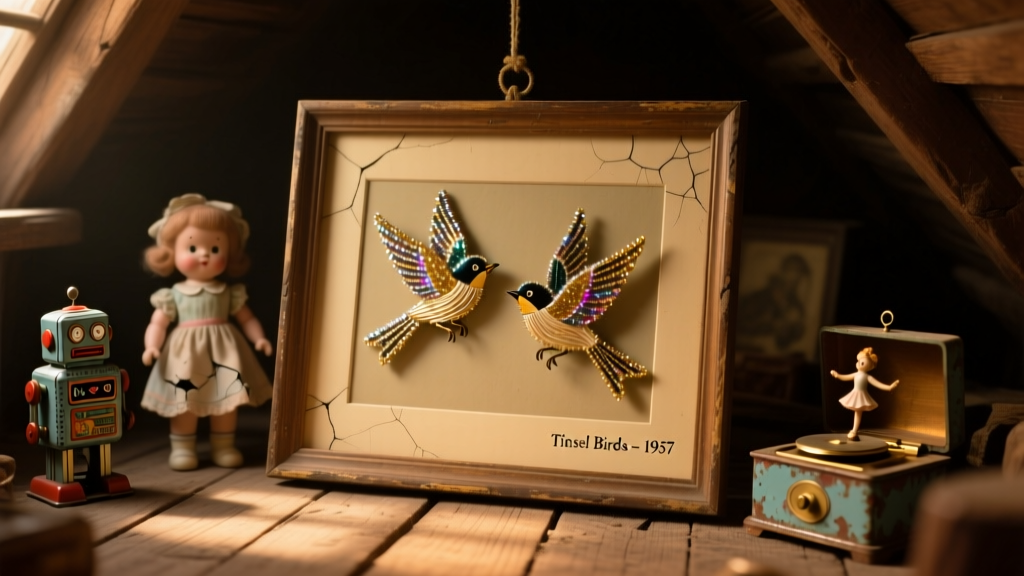
Pictures Tinsel '2 Birds' Frame: A Mid-Century Gem — Dimensions, Provenance, and Collector Insights