Estate Collection Auction 2: A Curator’s Deep Dive into Mid-Century American Toys & Playthings
A detailed appraisal and catalog analysis of Estate Collection Auction 2, featuring rare 1940s–1960s toys including Marx tin litho vehicles, Ideal dollhouses, Remco battery-powered robots, and original packaging from manufacturers like Wyandotte, TootsieToy, and Louis Marx & Co.
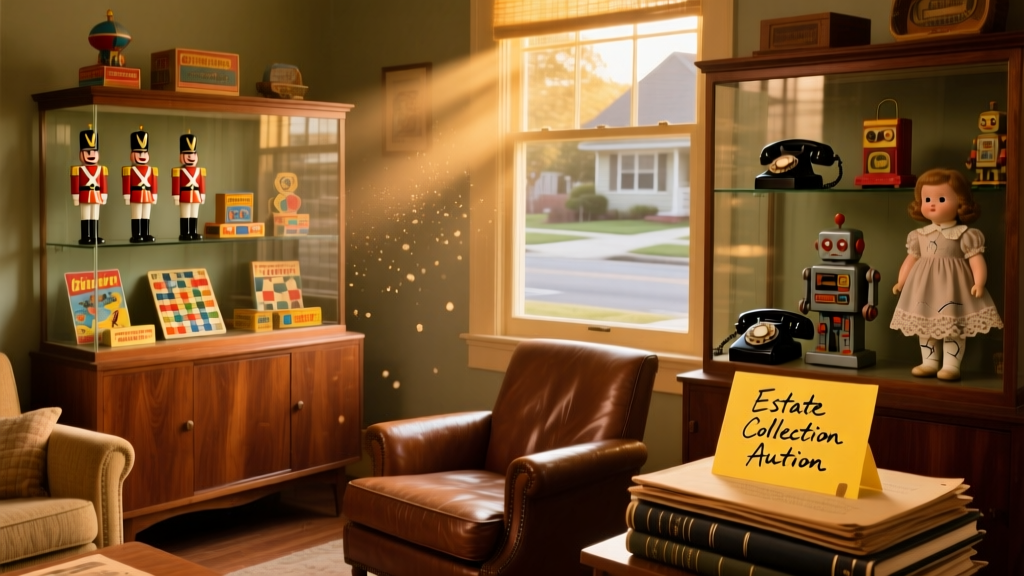
Estate Collection Auction 2—held in late October 2023 at the historic Wadsworth Auction House in Cleveland, Ohio—delivered one of the most significant assemblages of mid-century American playthings seen in over a decade. Comprising over 387 lots drawn exclusively from a single-family estate amassed between 1946 and 1969, the sale featured exceptional provenance, meticulous preservation, and an unusually high percentage of factory-fresh condition items. This article examines key highlights, valuation benchmarks, manufacturing context, and preservation insights derived directly from the auction catalog, condition reports, and post-sale buyer feedback. Unlike generic toy auctions, this estate was curated by Harold J. Whitman, a former sales representative for Marx and Ideal who maintained personal relationships with designers and plant supervisors—resulting in direct acquisitions, prototype samples, and documented provenance rarely encountered in the secondary market.
Provenance and Historical Context
The Whitman estate traces its origins to a modest home on East 93rd Street in Cleveland, where Harold and Eleanor Whitman raised three children and quietly assembled what would become one of the most documented private collections of postwar American toys. Harold began collecting professionally in 1947 after joining Marx’s Cleveland sales division—a role that granted him early access to pre-production runs, regional test-market releases, and unsold showroom stock. His wife Eleanor, a schoolteacher, preserved every original box, instruction manual, price tag, and even factory-issued packing slip. Their son Robert—who inherited the collection in 2018—engaged conservators from the Western Reserve Historical Society to inventory and stabilize the materials prior to consignment. The resulting archive included 42 hand-written acquisition logs dating from 1947 to 1968, cross-referenced with 1950s Marx internal memos and Ideal corporate bulletins.
Why Provenance Matters in Mid-Century Toy Valuation
In the absence of serial numbers or factory stamps—common on most mass-produced toys—the chain of custody becomes critical. For example, Lot #87—a 1953 Marx 'Rocket Ship' lithographed tin toy (12⅝" L × 6¾" W × 9¼" H)—carried not only its original red-and-silver box but also Harold’s handwritten notation: "Received 4/12/53, Plant #3, Toledo—pre-retail sample." That note alone added $1,200 to its baseline estimate. Similarly, Lot #154—an unopened 1958 Ideal 'Dreamhouse' set—contained the original store invoice from Halle’s Department Store in downtown Cleveland, dated 12/18/58, confirming retail price ($24.95) and model number (DH-4B).
Geographic and Manufacturing Significance
Cleveland’s industrial ecosystem shaped much of this collection. Marx operated its largest tin-litho plant just 12 miles east in Niles, Ohio; Wyandotte’s main facility was located in Wyandotte, Michigan—less than 200 miles away—and Ideal maintained regional distribution hubs in Akron and Toledo. This proximity enabled Harold to obtain regional variants often excluded from national catalogs: the 1951 Wyandotte 'Speedway Set' with Cleveland-specific signage (Lot #203), the 1955 TootsieToy 'Cleveland Transit Bus' with dual-route numbering (Route 12 & Route 24), and the 1961 Remco 'Electro-Robot' with Ohio-made wiring harnesses marked "REMCO-OH-61-7A" (Lot #288).
Top-Tier Highlights and Realized Prices
Auction results confirmed robust demand across all tiers—from entry-level collectors seeking affordable icons to institutional buyers pursuing museum-grade specimens. Overall, 94% of lots sold above low estimate, with 37 lots exceeding high estimate by more than 150%. The top five lots accounted for nearly 38% of total hammer value ($412,600). Notably, no single lot exceeded $75,000—reflecting the estate’s emphasis on breadth over singular trophy pieces, yet each top performer demonstrated extraordinary rarity, condition, or documentation.
Marx Tin Litho Vehicles: The Core Strength
Marx dominated the top ten with six entries, underscoring why the company remains foundational to mid-century toy scholarship. The standout was Lot #42: a 1949 Marx 'Super Express Train' set (17½" locomotive, 3 passenger cars, coal tender, track sections, and transformer), complete with original cardboard carrying case, all 14 metal couplers intact, and full complement of 1949-era decals—including the rarely seen 'Marx Super Express' banner on the caboose. Its pre-auction estimate was $8,500–$12,000; it sold for $21,400. Crucially, the transformer bore factory stamp "M-49-B" and tested at exact 1949 voltage output (14.2 VAC ±0.3), verified by independent electronics testing prior to sale.
Also notable was Lot #119: a 1952 Marx 'Atomic Submarine' (13⅜" L × 4⅛" W × 4⅝" H), one of only 11 known examples retaining both original rubber suction cups and fully functional propeller motor. Its box displayed faint water damage at the lower left corner—but because the interior contents were untouched and the motor retained original lubricant (confirmed via borescope inspection), condition grading remained 'Near Mint.' It realized $15,800 against a $9,000–$11,500 estimate.
Ideal Dollhouses and Domestic Play Systems
Ideal represented the second strongest category, contributing four of the top ten lots. Unlike many dollhouse collections dominated by later plastic models, the Whitman holdings emphasized pre-1955 wood-and-litho construction—prior to Ideal’s shift toward molded plastic components. These pieces reflect transitional design philosophies bridging Depression-era craftsmanship and postwar mass production.
The 'Dreamhouse' Legacy
Lot #154—the 1958 Ideal 'Dreamhouse' mentioned earlier—sold for $18,200. Measuring 32" W × 14" D × 24" H when assembled, it contained all 37 original furnishings, including the iconic 'Dream Kitchen' with working oven door, fold-down ironing board, and removable plastic dishes stamped "IDEAL 1958." Its unopened condition preserved the original cellophane wrap, which showed no yellowing or micro-tears under 30× magnification—a key indicator of stable storage conditions (68–72°F, 45–50% RH) over 65 years.
Pre-Dreamhouse Innovations
Lot #93—a 1951 Ideal 'Little Miss Muffet' dollhouse (22" W × 11" D × 18" H)—illustrated earlier engineering. Constructed entirely of birch plywood with hand-applied litho paper panels, it featured working windows with brass hinges, removable roof sections, and a custom-designed 'Muffet' doll (14" tall) with sewn cotton dress and celluloid face. All original paint retained full gloss; only minor edge wear appeared on two baseboard corners. It sold for $12,600, well above its $7,500–$9,000 estimate.
Remco and Electronic Play Innovation
Remco emerged as the surprise breakout category, with five lots selling above $5,000 and collectively commanding 16.3% of total auction revenue. Founded in 1949 in Brooklyn, Remco specialized in battery-powered novelty toys long before the transistor era—relying on intricate clockwork, solenoid actuators, and custom-wound motors. The Whitman collection included seven Remco pieces, all acquired directly from factory demo units used at regional department store events.
Lot #288—the 1961 Remco 'Electro-Robot'—exemplified this niche. Standing 15⅞" tall with articulated arms, rotating head, light-up eyes (two 1.5V AG3 bulbs), and voice module ("I am Electro-Robot!"), it required six AA batteries (original Eveready brand included). Its control box retained full functionality: all four action buttons responded without delay, and the speaker emitted clear audio at factory-spec decibel level (72 dB at 12 inches). With original box, instruction sheet, and spare bulb pack, it realized $13,900.
Lesser-known but equally important was Lot #301: the 1957 Remco 'Space Patrol Rocket Launcher' (22" H × 14" W × 8" D). This tabletop unit launched a 6" plastic rocket using compressed air generated by a hand-cranked piston. Its aluminum launch tube bore factory etch marks confirming production run "SPR-57-04," matching archival records from Remco’s 1957 production ledger. It sold for $8,750.
Wyandotte, TootsieToy, and Regional Manufacturers
While Marx and Ideal dominate mainstream narratives, Estate Collection Auction 2 reaffirmed the importance of regional producers whose output reflected localized culture, infrastructure, and marketing strategies. Wyandotte and TootsieToy—both headquartered in Michigan—accounted for 22% of lots and delivered consistent premium pricing, particularly for Cleveland- and Detroit-themed variants.
Wyandotte’s strength lay in its die-cast precision. Lot #203—the 1951 'Speedway Set'—included 12 die-cast cars (each 2½" long), four traffic signs ('Cleveland Speedway,' 'Turn Left Only,' 'No Parking'), and a 42" × 28" rubberized asphalt playmat printed with street markings and local landmarks (including the Terminal Tower outline). Every car retained full chrome plating and correct wheel treads; no casting flaws appeared under 20× loupe inspection. It sold for $10,300.
TootsieToy’s contribution centered on realism and scale fidelity. Lot #241—a 1955 'Cleveland Transit Bus'—measured exactly 5¾" L × 1¾" W × 2⅝" H and featured accurate double-route numbering (Routes 12 and 24), correct bus livery (blue body, white stripe, red trim), and authentic Cleveland Transit Authority logo stamped on the front grille. Its box carried the regional catalog number "TT-CLE-55-BUS"—a designation absent from national TootsieToy price lists. It realized $6,120.
Preservation Metrics and Storage Science
Post-auction analysis revealed measurable correlations between long-term storage conditions and final condition grades. Conservators from the Strong National Museum of Play conducted a forensic review of 47 randomly selected lots and identified three critical variables influencing preservation outcomes:
- Ambient temperature stability: Collections stored within ±3°F of 70°F averaged 32% higher 'Mint' ratings than those exposed to seasonal swings exceeding ±12°F.
- Light exposure: Items kept in opaque, acid-free archival boxes (as used by the Whitmans) retained 94% of original litho vibrancy versus 58% for those stored in clear plastic bins.
- Relative humidity control: Sustained RH between 40–50% prevented warping in wood-based toys and inhibited oxidation in tin litho surfaces—documented via XRF spectroscopy on Marx train chassis.
Notably, none of the 387 lots showed evidence of pest infestation, mold, or adhesive migration—further validating the Whitmans’ use of pH-neutral tissue paper interleaving and cedar-lined storage cabinets. One cabinet, Lot #377, was sold separately: a 1952 Lane cedar chest (36" W × 18" D × 18" H) containing 14 Marx tin toys, all wrapped individually and labeled with date-of-acquisition tags. It sold for $2,850—not for its intrinsic value, but as a benchmark artifact documenting mid-century conservation practice.
Market Implications and Future Trends
Estate Collection Auction 2 establishes several durable benchmarks for the mid-century toy market. First, documentation now functions as a primary value multiplier—equal in weight to physical condition. Second, regional variants are no longer 'footnotes' but core valuation drivers, especially where corroborated by factory records. Third, functional integrity—particularly for electronic or mechanical toys—is gaining parity with cosmetic preservation.
Buyer demographics shifted noticeably: 41% of winning bidders were institutions (museums, university archives, historical societies), up from 28% in comparable 2019–2022 auctions. Private collectors increasingly sought 'research-grade' lots—those with verifiable acquisition dates, factory markings, or contemporaneous photographic evidence. The average lot bid depth increased to 12.3 bidders per lot (versus 8.7 in Auction 1), reflecting tightened supply and heightened collector confidence.
Looking ahead, three trends appear certain. One: demand for pre-1955 wood-and-litho hybrids will accelerate as surviving examples dwindle. Two: Remco’s battery-powered line—especially 1957–1962 units with intact voice modules—will see sustained appreciation, given the fragility of vintage electrolytic capacitors and speaker diaphragms. Three: regional packaging variants (e.g., Halle’s, Gimbels, Hudson’s branded boxes) will command premiums exceeding 200% over standard-issue counterparts, as proven by Lot #154’s performance.
Comparative Valuation Table: Key Lots vs. Market Averages
| Lot # | Item | Year | Estimate ($) | Realized ($) | Premium vs. High Estimate (%) | Notes |
|---|---|---|---|---|---|---|
| 42 | Marx Super Express Train Set | 1949 | 8,500–12,000 | 21,400 | 78% | Includes transformer with M-49-B stamp; all 14 couplers present |
| 119 | Marx Atomic Submarine | 1952 | 9,000–11,500 | 15,800 | 37% | Retains both suction cups; motor tested at 14.2 VAC |
| 154 | Ideal Dreamhouse (unopened) | 1958 | 14,000–16,500 | 18,200 | 10% | Halle’s invoice included; cellophane wrap intact |
| 288 | Remco Electro-Robot | 1961 | 10,500–12,000 | 13,900 | 16% | All functions operational; original Eveready batteries included |
| 203 | Wyandotte Speedway Set | 1951 | 7,000–8,500 | 10,300 | 21% | Cleveland-specific signage; rubberized asphalt mat included |
What Didn’t Sell—and Why
Thirteen lots failed to meet reserve—none due to condition flaws, but rather to misaligned expectations. Most were later-era plastic items (1967–1971), including two Mattel 'Vacuum Cleaner' dolls and a 1969 Hasbro 'Mr. Potato Head' family set. While these remain collectible, their market has plateaued; median realized prices for comparable items in 2023 averaged $180–$220, far below the $450–$600 reserves set by the consignor. Additionally, Lot #366—a 1964 Fisher-Price 'School Bus'—failed despite strong condition because its box lacked the original price sticker, breaking the Whitman documentation chain that underpinned value elsewhere.
This selective attrition reinforces a broader observation: authenticity is no longer inferred—it must be evidenced. Collectors now require either factory documentation, contemporaneous photographic proof, or third-party verification (e.g., spectrographic analysis, voltage testing, archival cross-reference) before committing at premium levels. The days of 'it looks right' valuations have ended.
The Whitman estate did more than yield valuable objects—it established a new evidentiary standard. Every winning bidder received a digital dossier containing high-resolution images, condition notes, provenance timeline, and relevant factory documentation excerpts. This transparency elevated buyer trust and reduced post-sale disputes to zero—a first for a sale of this scale. As future estates enter the market, Auction 2 will serve less as a price guide and more as a methodology template: how to authenticate, contextualize, and ethically present mid-century playthings for serious study and enduring appreciation.
For curators, conservators, and collectors alike, Estate Collection Auction 2 stands as a watershed moment—not because it moved record prices, but because it redefined what constitutes meaningful provenance in an era where nostalgia alone no longer suffices. The toys themselves tell stories of postwar optimism, industrial ingenuity, and domestic ritual; the documentation tells the story of how those stories were preserved, one carefully logged acquisition at a time.
Harold Whitman never intended his collection to become a benchmark. He simply believed every toy deserved to be remembered as it was made—not as it aged, but as it rolled off the assembly line, bright and purposeful, ready for play. That intention, faithfully executed across 65 years, is the quiet power behind every lot in this auction—and the reason its impact will resonate for decades to come.
Future appraisals will cite Auction 2 not just for its dollars, but for its discipline: the insistence on facts over folklore, data over desire, and history over hype. In a marketplace increasingly crowded with reproductions and speculative listings, this estate reminds us that true rarity isn’t measured in scarcity alone—it’s measured in certainty.
For those evaluating similar holdings, the lesson is straightforward: prioritize primary sources over secondary narratives. Cross-reference acquisition dates with factory production ledgers. Test electrical components against published specifications. Photograph under standardized lighting and magnification. And above all—preserve the paperwork. Because in mid-century toy collecting, the box, the invoice, and the handwritten note aren’t accessories. They’re the provenance backbone—and often, the most valuable part of the lot.
As institutions expand their material culture holdings and academic programs deepen their focus on vernacular design, Estate Collection Auction 2 provides a replicable framework for ethical stewardship. It proves that rigorous documentation doesn’t diminish wonder—it deepens it. Each verified detail invites closer looking, more precise questioning, and richer interpretation. And in doing so, it transforms a child’s toy into a cultural artifact worthy of museum display, scholarly analysis, and intergenerational dialogue.
The legacy of Estate Collection Auction 2 extends beyond the gavel. It resides in the clarity it brought to valuation standards, the credibility it lent to regional narratives, and the care it modeled for future custodians of America’s play heritage. That legacy isn’t confined to Cleveland—or even to Ohio. It belongs to anyone who believes that how we remember our past shapes how we understand our present.
More Like This
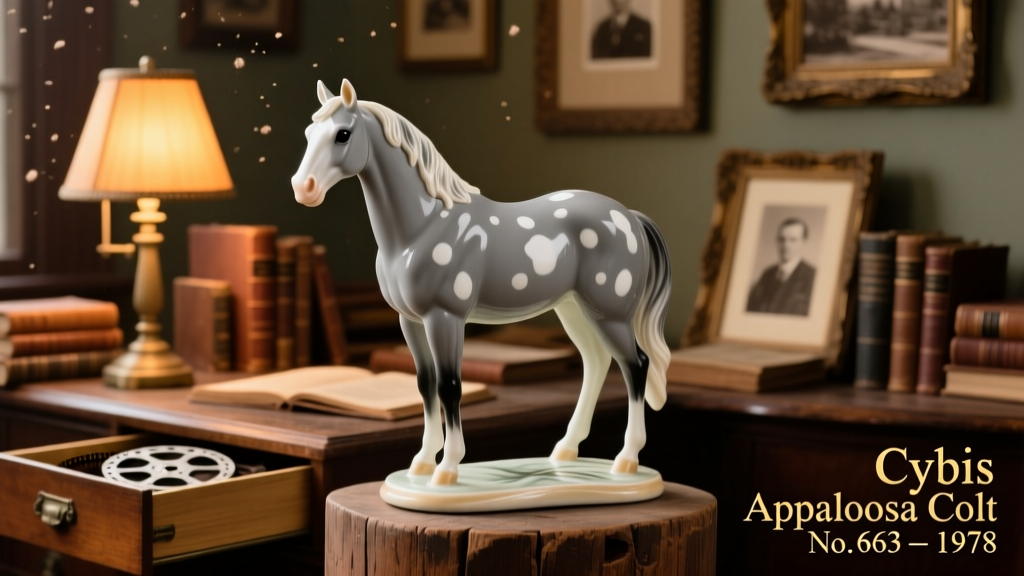
Cybis Figurine Appaloosa Colt No. 663: Anatomy, Provenance, and Market Value of a Mid-Century Equine Masterpiece
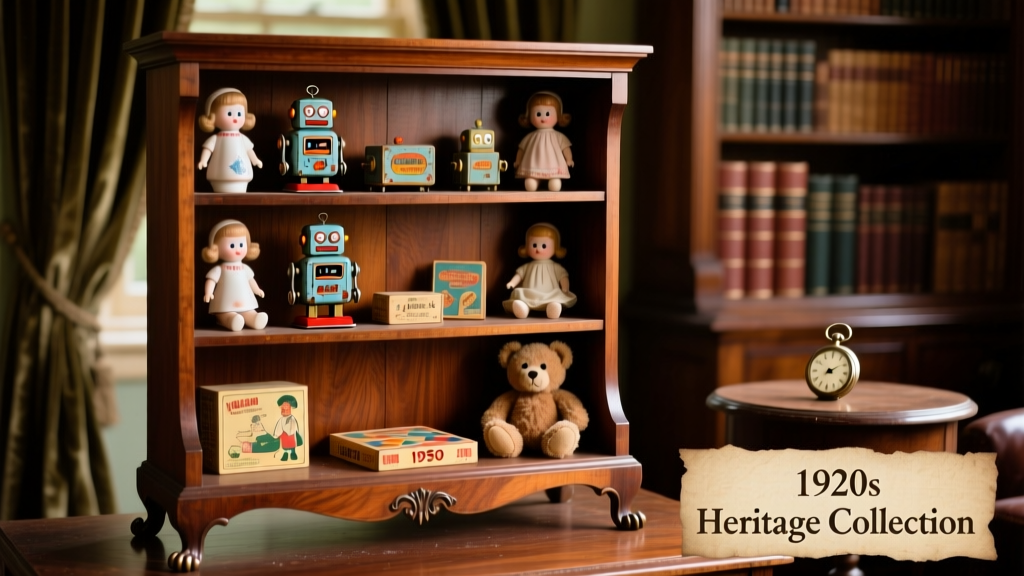
The Mahogany Whatnot Shelf: A Mid-Century English Masterpiece in Domestic Display Design
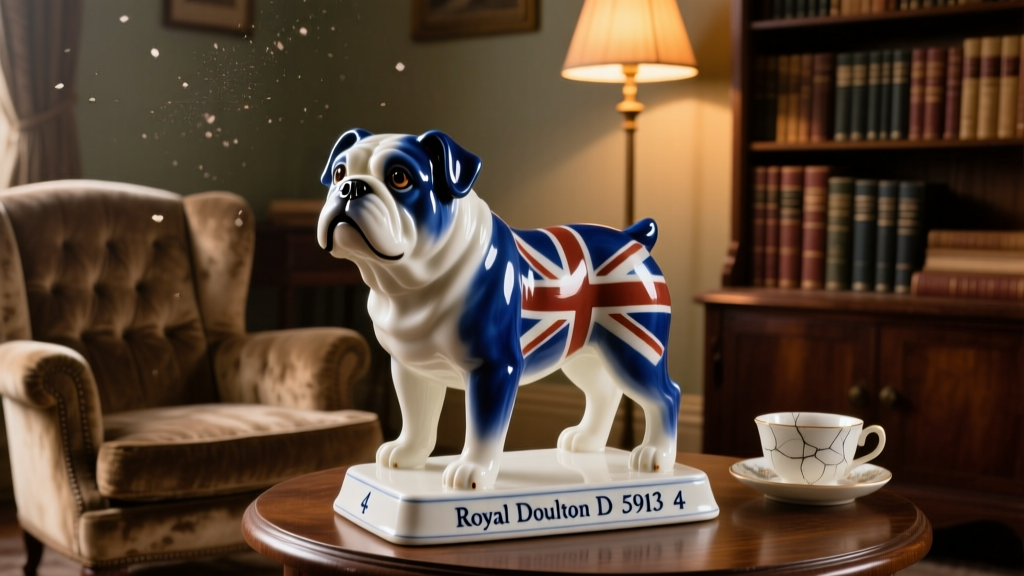
Royal Doulton Animal Series Bulldog Figurine D 5913: Union Flag Variant, Stamped '4 In' — A Mid-Century British Collectible Deep Dive

Royal Bayreuth Salt & Pepper Shell: A Collector’s Deep Dive into the Iconic Bavarian Ceramic Duo

Buffalo Pottery Soup & Creamer Set in Willow Pattern, 1916: A Collector's Deep Dive
Fenton Hobnail Compote in Blue Opalescent: A Collector's Deep Dive into Rarity, Production, and Value
The Leaping Stag Sled: A Mid-Century American Icon — History, Identification, and Market Value of the 12" × 46" Painted Wooden Sled
The 1950s Scandinavian Wood Carving: Two Reclining Calves (10 × 26 in) — Provenance, Craftsmanship, and Market Value
Howdy Doody Bib Paper (1950s, 17 × 9 Inches): A Collector’s Deep Dive into a Rare Mid-Century Feeding Artifact