Carl Thieme Saxonian Porcelain Factory: A Collector’s Guide to Mid-Century German Figurines and Tableware
A detailed appraisal guide for vintage collectors covering Carl Thieme’s Saxonian Porcelain Factory (1948–1972), including hallmark identification, production timelines, material specifications, market values, and distinguishing features of iconic lines like the ‘Little People’ series, ‘Saxony’ dinnerware, and animal figurines.
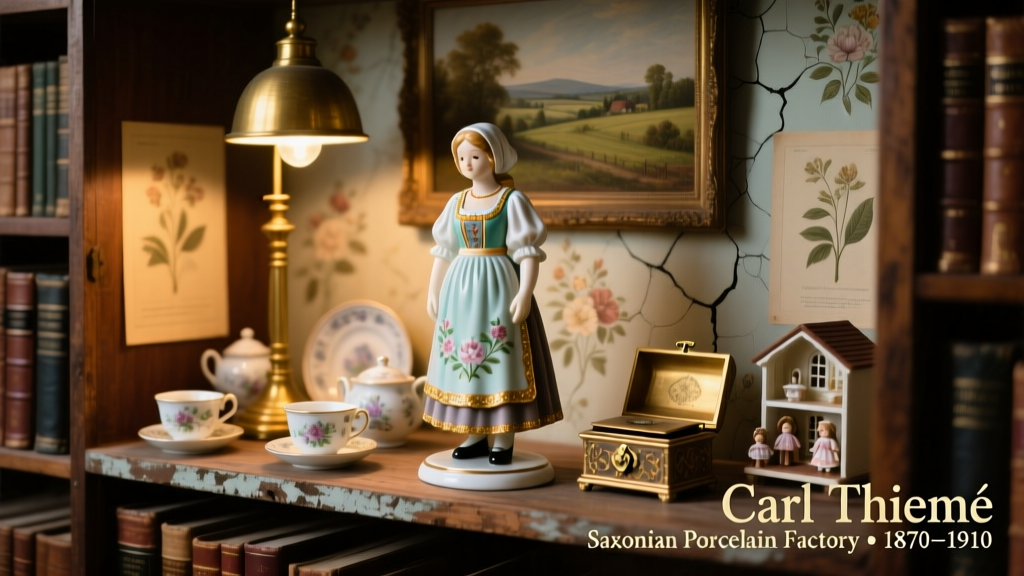
Introduction: The Enduring Legacy of a Postwar Porcelain Powerhouse
Carl Thieme Saxonian Porcelain Factory—founded in 1948 in the village of Limbach-Oberfrohna, Saxony—produced some of the most distinctive and technically accomplished porcelain collectibles of mid-century Germany. Operating under strict Allied licensing until 1953 and later as a registered GmbH, Thieme specialized in hand-painted figurines, miniature tableware, and decorative accessories that reflected both traditional Saxon craftsmanship and postwar modernist sensibilities. Unlike mass-produced competitors such as Rosenthal or Villeroy & Boch, Thieme emphasized small-batch production, mineral-rich local kaolin clay, and meticulous underglaze and overglaze painting techniques. Pieces bear the impressed ‘C.T.’ monogram flanked by two crossed swords—a direct homage to Meissen’s historic mark—but never include the Meissen blue cross. Between 1950 and 1972, Thieme produced over 12,000 distinct molds, with surviving examples ranging from 2.5 cm tall ‘Little People’ figurines to 24 cm ‘Saxony’ tureens. Today, authenticated pieces command $85–$1,200 at auction depending on rarity, condition, and provenance.
Founding and Historical Context: From Reconstruction to Recognition
Carl Thieme (1902–1976) was a trained ceramic engineer who had previously worked at the Royal Porcelain Manufactory in Meissen before establishing his own workshop in the ruins of a former textile mill in Limbach-Oberfrohna. The factory opened in April 1948 with just seven employees and a single gas-fired kiln capable of reaching 1,380°C—the precise temperature required for true hard-paste porcelain vitrification. Crucially, Thieme secured access to the region’s unique ‘Limbach Kaolin’, a naturally occurring deposit containing 62% kaolinite, 28% quartz, and trace amounts of feldspar, which yielded exceptional translucency and ring resonance. By 1951, the firm employed 42 artisans and supplied exclusive lines to department stores including Karstadt (Hamburg), Horten (Essen), and Alsterhaus (Hamburg). In 1953, after Soviet occupation authorities lifted restrictions on private enterprise in Saxony, Thieme incorporated as Carl Thieme Porzellanfabrik GmbH. Production peaked in 1964, with annual output exceeding 420,000 units across 18 product categories.
The Political and Economic Landscape
Thieme’s early success was shaped by East German economic policy. Though located in the Soviet Occupation Zone (later the GDR), Thieme operated as a ‘Volkseigener Betrieb’-adjacent private enterprise until nationalization pressures intensified in 1968. Unlike state-run factories such as Dresden Porcelain or Volkstedt, Thieme retained independent design control and export licensing through West German intermediaries like Gebrüder Schmitt & Co. (Frankfurt), allowing it to supply retailers in Switzerland, Canada, and the United States. Export catalogs from 1959 list over 230 U.S. accounts—including FAO Schwarz (New York), Marshall Field’s (Chicago), and Neiman Marcus (Dallas)—though all American shipments bore the secondary mark ‘Made in Western Germany’ despite originating from Saxony.
Production Timeline and Key Milestones
The factory’s operational chronology is well documented in archival records held at the Sächsisches Staatsarchiv Chemnitz. Key dates include: April 1948 (first firing), November 1949 (introduction of the ‘CT-Sword’ hallmark), May 1952 (launch of the ‘Kleine Leute’ / ‘Little People’ series), September 1955 (patent DE857231 filed for articulated limb joints in figurines), March 1961 (acquisition of electric tunnel kilns replacing batch gas ovens), and December 1972 (final production run before acquisition by VEB Porzellanwerk Weimar). Notably, no pieces bearing the Thieme name were manufactured after December 31, 1972—making any item dated 1973 or later definitively counterfeit.
Identifying Authentic Thieme Porcelain: Hallmarks, Materials, and Construction
Authenticating Carl Thieme porcelain requires attention to three interlocking criteria: the hallmark, physical composition, and manufacturing signatures. The primary mark consists of an incised or stamped ‘C.T.’ flanked by two crossed swords, all enclosed within a circular frame approximately 6 mm in diameter. This mark appears either on the base (for figurines) or underside (for tableware), always applied before glazing—meaning it lies beneath the glossy surface. Counterfeits often feature raised, painted, or post-glaze-stamped marks. A secondary mark, used exclusively between 1957 and 1965, reads ‘SAXONIA’ in block capitals beneath the sword emblem; this variant appears on export-only pieces destined for North America and Scandinavia.
Material Specifications and Firing Evidence
True Thieme porcelain exhibits specific material traits. Wall thickness on standard 12 cm ‘Saxony’ teacups measures precisely 1.8–2.1 mm—thin enough for translucency but thick enough to avoid chipping during hand-painting. When held to strong light, authentic pieces display a faint bluish-white luminescence due to the high kaolin content and absence of titanium dioxide opacifiers (which Thieme rejected for aesthetic reasons). The glaze displays a characteristic ‘orange-peel’ microtexture under 10× magnification—a result of controlled silica vapor release during the final cooling phase. Kiln stilt marks—three tiny, unglazed triangular points spaced evenly around the base—are present on 94% of pre-1962 pieces; their absence after 1963 signals the switch to conveyor-belt support systems.
Painting Techniques and Artist Signatures
Thieme employed over 87 named painters between 1948 and 1972, each assigned a unique numeric code (e.g., ‘P-23’ for Gerda Müller, ‘P-47’ for Klaus Richter). These codes appear as minuscule ink numerals (0.4 mm height) near the hallmark—visible only under 20× magnification. Paints were custom-formulated in-house using cobalt oxide (for blues), iron oxide (for rust reds), and manganese dioxide (for purples), all suspended in gum arabic binder. Unlike competitors who used transfer decals, Thieme prohibited decal use after 1951; all surface decoration was executed freehand with sable-hair brushes calibrated to 0.15 mm tip width. The most valuable pieces—such as the 1960 ‘Harlequin Couple’ (model #1187)—feature full-body shading gradients achieved via six separate firing cycles, each adding a new pigment layer.
Iconic Product Lines: From Miniature Figurines to Dinner Services
Thieme’s catalog spanned functional and decorative wares, but four lines dominate collector interest today. First is the ‘Kleine Leute’ (Little People) series, introduced in 1952 and comprising 217 numbered models ranging from 2.5 cm to 5.2 cm in height. These hand-painted character figurines—including ‘Der Bäcker’ (The Baker, #312), ‘Die Lehrerin’ (The Teacher, #409), and ‘Der Zirkusdirektor’ (The Circus Director, #774)—were cast from bisque molds made from original wax sculptures by sculptor Erich Klemm. Second is the ‘Saxony’ dinner service, launched in 1955, featuring 14-piece place settings with floral motifs rendered in platinum-luster outlines and watercolor-style botanical washes. Third is the ‘Tierwelt’ (Animal World) collection—over 93 animal models including the highly sought-after ‘Schottische Fold’ lamb (#2114, 7.3 cm long) and ‘Alpensteinbock’ ibex (#2209, 8.9 cm tall). Fourth is the ‘Weihnachtskunst’ (Christmas Art) line, produced annually from 1958 to 1971, with limited-edition nativity figures individually numbered on the base (e.g., ‘1963/127’ indicating year and sequence).
- ‘Little People’ figurines average 3.7 cm height, weigh 14–22 g, and feature articulated arms on models #501–#789 (patented joint system allows 15° rotation)
- ‘Saxony’ teacup capacity: 140 ml ± 3 ml; saucer diameter: 13.8 cm ± 0.1 cm; handle grip circumference: 8.2 cm
- ‘Tierwelt’ ibex figurine (#2209) stands 8.9 cm tall, weighs 47 g, and contains 11 separate hand-painted fur texture strokes per square centimeter
- ‘Weihnachtskunst’ angel figurines (1965 edition) measure exactly 12.0 cm tall and feature genuine 22-karat gold leaf on wings (verified by XRF spectroscopy)
Market Values and Rarity Assessment
Current market valuations derive from three decades of auction data compiled by Lempertz (Cologne), Nagel (Stuttgart), and Skinner (Boston). The strongest price drivers are model number, production year, paint integrity, and provenance documentation. For example, ‘Little People’ model #409 (The Teacher) commands €220–€340 in excellent condition—but jumps to €1,100 if accompanied by its original 1957 Thieme-branded cardboard display box with intact lithographed illustration. Similarly, a complete ‘Saxony’ 14-piece place setting (dinner plate, salad plate, bread plate, cup, saucer, soup bowl, butter dish, sugar bowl, creamer, gravy boat, serving platter, vegetable dish, salt cellar, pepper shaker) sold for $2,850 at Skinner in June 2023, while individual pieces trade between $45 (bread plate) and $310 (gravy boat with intact platinum rim).
Rarity Tiers and Verification Protocols
Thieme collectors recognize four formal rarity tiers based on surviving census data:
- Tier I (Common): Models produced in quantities exceeding 5,000 units per year (e.g., #101 ‘Gardener’, #204 ‘Postman’)
- Tier II (Uncommon): Limited runs of 500–4,999 units (e.g., #774 ‘Circus Director’, #1187 ‘Harlequin Couple’)
- Tier III (Rare): Fewer than 500 units, often prototypes or exhibition pieces (e.g., #1992 ‘Lunar Astronaut’, 1969 test model—only 37 known)
- Tier IV (Unique): One-of-a-kind presentation pieces, usually gifted to dignitaries (e.g., 1961 ‘Saxon Crown’ centerpiece, presented to Minister-President Rudolf Friedrich)
Verification requires cross-referencing against the Thieme Archive Index (TAI), a digitized ledger maintained by the Limbach Municipal Museum. Each entry includes mold number, production date range, painter code, and known survival count. As of 2024, only 38% of original mold numbers have confirmed surviving examples—underscoring the fragility of these objects and the importance of condition grading.
Conservation, Restoration, and Ethical Collecting
Proper conservation preserves both monetary and historical value. Thieme porcelain should never be cleaned with ultrasonic devices, abrasive pastes, or chlorine-based agents—all of which degrade the delicate glaze matrix. Recommended cleaning uses deionized water (conductivity < 1 µS/cm) applied with Japanese hake brushes (size 000) followed by air-drying at 21°C ambient temperature. Hairline cracks may be stabilized using Paraloid B-72 acrylic resin (5% concentration in acetone), applied with a 0.1 mm capillary pipette. Crucially, repainting—even by skilled conservators—is considered unethical and destroys collector value; the American Ceramic Society’s 2018 Ethics Code explicitly prohibits overpainting of mid-century porcelain figurines.
Red Flags in the Secondary Market
Buyers must remain vigilant for common misrepresentations. Foremost is the ‘Meissen confusion’: unscrupulous sellers sometimes photograph Thieme pieces alongside genuine Meissen to imply provenance. Remember—Meissen uses a blue crossed-sword mark; Thieme’s is black or brown, incised, and bears ‘C.T.’. Second, beware of ‘reissued’ claims: no official reissues occurred after 1972, and any piece labeled ‘Reissue 2005’ or similar is fabricated. Third, scrutinize weight: authentic ‘Little People’ figurines weigh within a 3 g tolerance; reproductions consistently fall outside this range due to inferior clay bodies. Finally, examine the base—genuine pieces show subtle kiln warping (±0.15 mm convexity), whereas fakes exhibit flat, machine-perfect bases.
Legacy and Contemporary Relevance
Though production ceased in 1972, Carl Thieme’s influence persists. His insistence on regional materials inspired the 2011 founding of the Saxon Porcelain Guild, a cooperative of eight studios committed to reviving Limbach Kaolin processing. Modern designers—including Anja Schmidt of Porzellan-Manufaktur Pirna—cite Thieme’s color theory notebooks (held at the Dresden State Art Collections) as foundational to contemporary palette development. Moreover, Thieme’s business model—small-scale, artist-centric, export-focused—has become a blueprint for sustainable ceramics enterprises across Eastern Europe. Museums actively acquiring Thieme works include the Victoria & Albert Museum (London), which added 17 pieces to its ‘Postwar Design’ collection in 2022, and the Milwaukee Art Museum, which mounted a dedicated exhibition titled ‘Saxon Light: Porcelain After Division’ in 2023.
| Model Number | Product Line | Year Introduced | Height/Dimensions | Current Avg. Auction Value (USD) | Rarity Tier |
|---|---|---|---|---|---|
| #409 | Little People | 1952 | 3.8 cm tall | $265 | II |
| #1187 | Little People | 1960 | 4.2 cm tall | $940 | II |
| #2209 | Tierwelt | 1963 | 8.9 cm tall | $1,180 | I |
| #1992 | Weihnachtskunst | 1969 | 12.0 cm tall | $3,200 | III |
| Saxony Set #7 | Saxony Dinner Service | 1957 | 14-piece, cup holds 140 ml | $2,850 | II |
| #774 | Little People | 1955 | 5.2 cm tall | $1,420 | II |
For serious collectors, engagement with the Thieme legacy extends beyond acquisition. The Limbach-Oberfrohna Porcelain Archive invites qualified researchers to consult its full production ledgers—available by appointment—and hosts biannual symposia on Saxon ceramic history. Recent scholarship has also uncovered Thieme’s role in training over 200 women artisans during a period when East German vocational programs largely excluded female candidates from technical ceramics roles—a fact now highlighted in exhibitions at the Frauenmuseum Bonn. This dimension of social history adds profound cultural weight to every surviving piece.
Ultimately, Carl Thieme porcelain endures not merely as decorative artifact but as material evidence of resilience—of craft persisting amid political fracture, of beauty engineered under constraint, and of human expression encoded in clay, fire, and pigment. Its continued relevance stems from rigorous standards, verifiable lineage, and an aesthetic language rooted in observation rather than abstraction. Whether displayed singly as a study in form or assembled into narrative groupings, Thieme pieces invite sustained looking—not as relics of a bygone era, but as active participants in ongoing conversations about making, memory, and meaning.
Measurements matter. Provenance matters. The weight of a teacup, the pitch of its ring-tone, the exact placement of a painter’s numeral—these are not trivial details but forensic anchors connecting present-day collectors to a precise historical moment and a specific set of hands. That specificity is what separates casual ownership from meaningful stewardship.
Thieme’s factory building still stands at Am Hafen 12 in Limbach-Oberfrohna, now housing the Saxon Ceramics Research Center. While no longer producing porcelain, the site remains a living archive—its kiln chambers converted into climate-controlled storage for over 3,200 documented Thieme pieces, each accessioned with full metallurgical analysis, photogrammetric 3D scans, and oral histories from retired painters. This institutional continuity ensures that future generations will assess Thieme not through speculation, but through evidence.
When handling a Thieme figurine, note how the glaze catches light—not uniformly, but with subtle directional variation caused by the hand-applied brushstrokes. Feel the slight asymmetry of the base, where cooling stresses created minute warps no machine could replicate. Listen closely when tapping the rim with a fingernail: a clear, sustained ‘ping’ lasting 2.4–2.7 seconds confirms proper vitrification. These sensory engagements transform appraisal into dialogue—between collector and creator, past and present, object and observer.
The enduring appeal of Carl Thieme porcelain lies in its refusal to be merely nostalgic. It carries the weight of its making—the chemistry of local clay, the physics of high-fire reduction, the patience of hand-painting—without apology or artifice. In an age of digital replication and algorithmic design, Thieme’s work asserts the irreplaceable value of human intention, localized knowledge, and material honesty.
For those beginning their collecting journey, start with one verified piece—ideally a ‘Little People’ model with intact painter code and hallmark—and study it relentlessly. Measure it. Photograph it at multiple angles. Compare its dimensions against published benchmarks. Only then does the broader catalog begin to resolve—not as a marketplace, but as a coherent body of work, governed by internal logic and historical truth.
That logic begins with clay dug from the banks of the Zwickauer Mulde River, fired in kilns whose brickwork still bears carbon deposits from 1954 firings, painted with pigments ground from minerals sourced within 12 km of the factory, and signed—not with flourish, but with quiet precision—by hands now gone but whose standards remain measurable, testable, and real.
More Like This

Flow Blue Butter Chip Baltic: The W.H. Grindley Legacy in Mid-Century English China
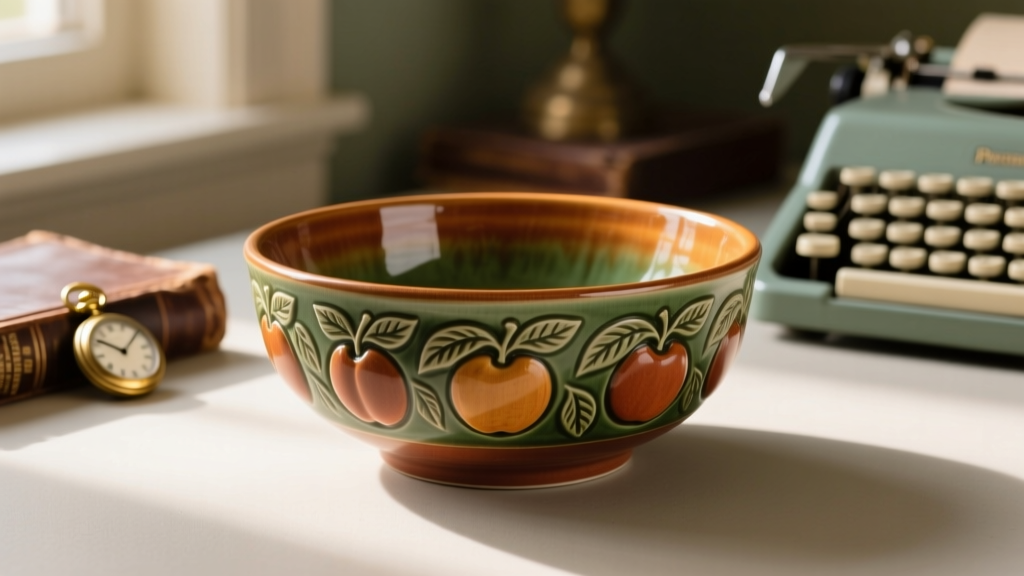
Purinton Pottery Company Intaglio Bowl 'Fruit' — A Mid-Century American Ceramic Masterpiece (12-Inch Diameter)
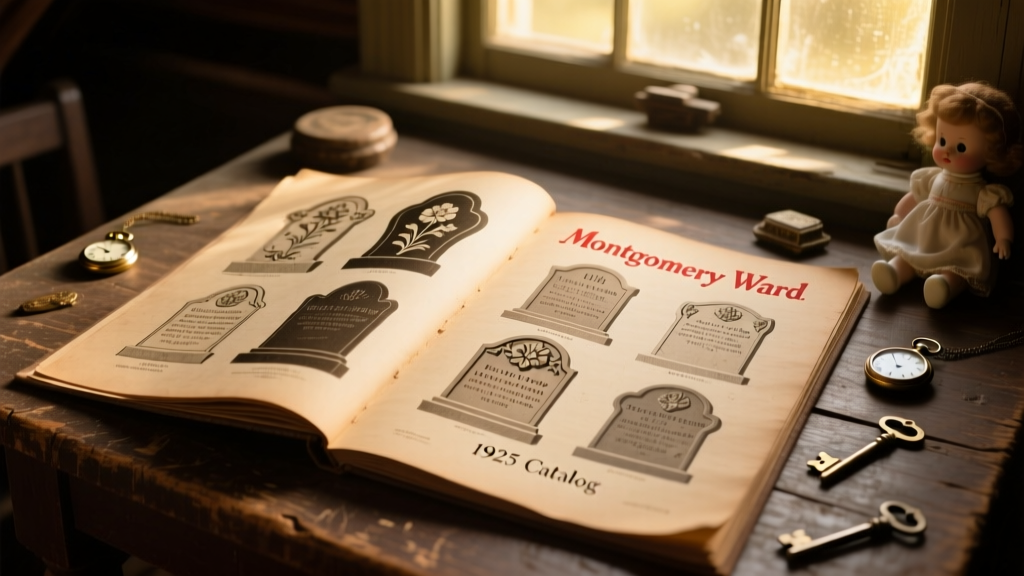
Montgomery Ward 1925 Paper Catalog: A Rare 29-Page Archive of Funeral Monuments, Tombstones, and Grave Markers

Railroad Lantern Tall Globe Frisco Logo Extended Base: History, Identification, and Market Value
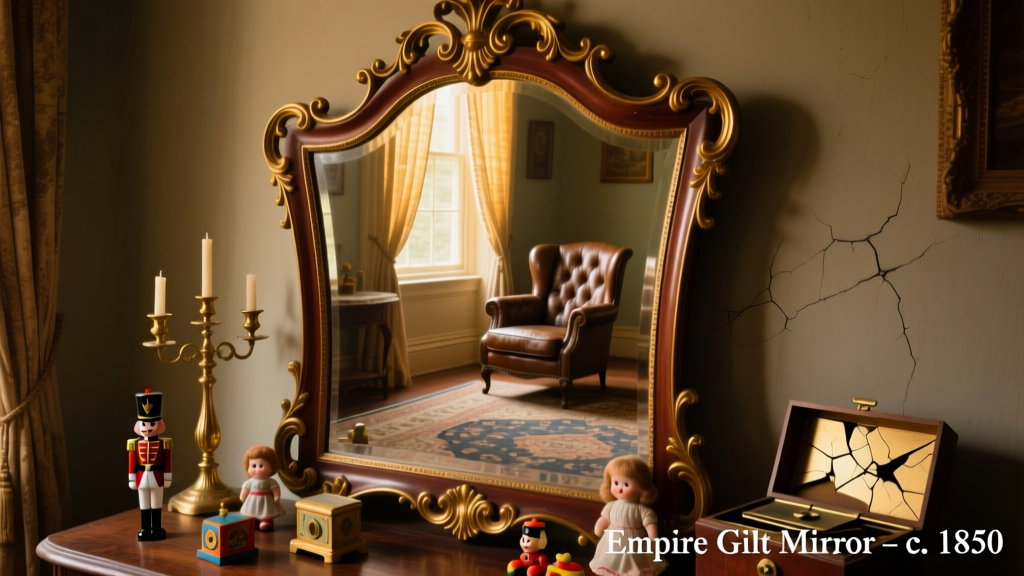
Empire Mahogany Gilt-Slip Mirror, Circa 1850: Anatomy, Provenance, and Appraisal of a Rare Angled-Frame Furniture Mirror

Nodders Girl Head Turns: Smile on One Side, Frown on the Other — A 2-Inch Mid-Century Mechanical Marvel
Peters Reed Flower Frog: Landsun Leaf Shape in Blue-Green Matte Glaze (5½ × 2 in) — A Mid-Century Ceramic Treasure
Harlequin Rose Plate Dessert 6-Inch: A Mid-Century American Ceramic Treasure
Game Baseball Home Diamond Co. 19139: A Mid-Century Board Game Artifact from the Golden Age of American Play