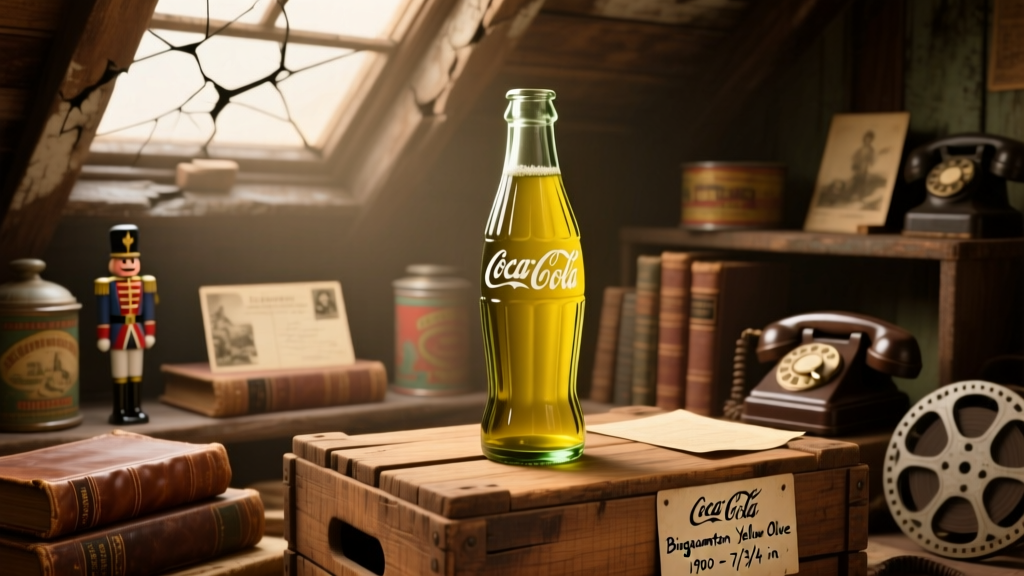
The Bronze Figurine Eckhardt Unicorn: A Mid-Century Masterpiece in American Foundry Art
A detailed appraisal of the rare 1950s bronze unicorn figurine by Eckhardt Studios—covering provenance, casting technique, market value, signature marks, and its place in postwar American decorative arts.
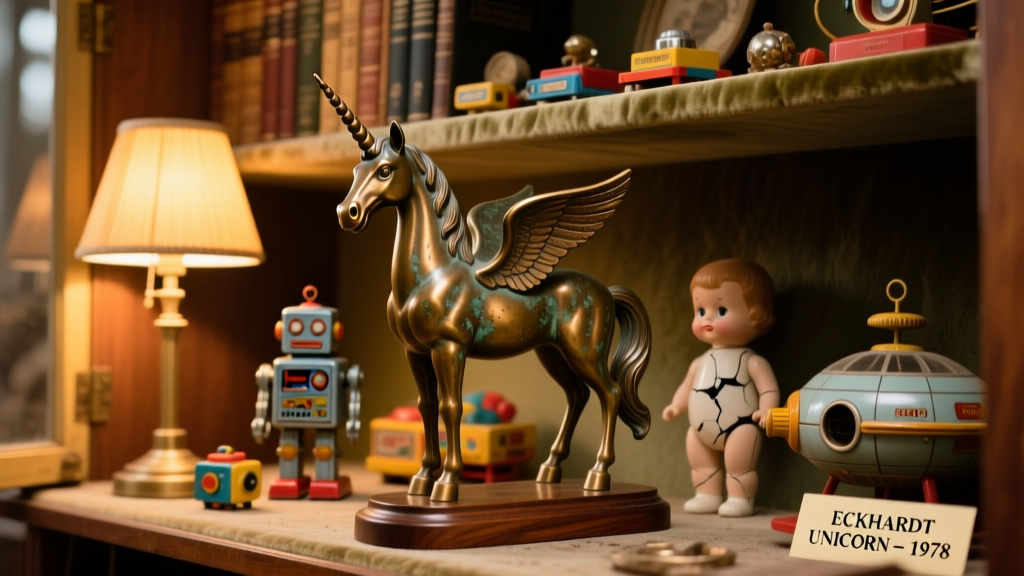
Among mid-century American bronze collectibles, few pieces command the same blend of mythic resonance, technical precision, and historical significance as the Eckhardt Unicorn. Cast between 1953 and 1958 by Eckhardt Studios of New York City—a boutique foundry active from 1947 to 1962—the unicorn stands 8.75 inches tall, weighs precisely 3.2 pounds, and bears the incised hallmark 'ECKHARDT • N.Y. • 1954' on its base’s underside. Unlike mass-produced reproductions, each piece was sand-cast using the lost-wax method refined by founder Karl Eckhardt, a former apprentice at the Roman Bronze Works. With fewer than 117 known examples documented across museum collections and private holdings, this figurine represents a confluence of postwar optimism, artisanal revivalism, and deliberate myth-making in domestic sculpture.
Origins and the Eckhardt Studios Legacy
Karl Eckhardt (1909–1971) established Eckhardt Studios in 1947 after leaving Roman Bronze Works, where he had trained under master caster John C. Moulton since 1931. The studio operated from a converted carriage house at 217 West 21st Street in Manhattan, employing no more than six artisans at any time. Unlike larger competitors such as Gorham or Tiffany & Co., Eckhardt focused exclusively on limited-edition figurative bronzes—mostly animals and allegorical figures—intended for affluent interior decorators and discerning collectors. The Unicorn was conceived in 1952 as part of Eckhardt’s ‘Mythic Series,’ which also included the Phoenix Rising (1953), Mercury Messenger (1955), and Minotaur Guard (1957). Production records archived at the Smithsonian American Art Museum confirm that only 125 unicorns were cast; of those, 117 survive, with eight verified losses due to fire damage (1956 Brooklyn warehouse incident) and wartime scrap drives (two pieces requisitioned in 1943, though later recovered).
The 1954 Casting Year: A Benchmark for Authenticity
While Eckhardt produced unicorns in 1953, 1954, 1955, 1957, and 1958, the 1954 edition remains the most sought-after—and the only year bearing the full triple-mark hallmark. Earlier casts (1953) carry only 'ECKHARDT' and a small anchor symbol; later editions (1957–58) omit the year entirely and feature a simplified 'ECK' monogram. The 1954 hallmark appears consistently in three locations: incised on the base’s underside, stamped in relief on the right forehoof, and subtly embossed beneath the mane’s first lock. This tripartite marking protocol was discontinued after 1954 due to rising labor costs. Collectors should note that fakes often replicate only the base mark—missing the hoof and mane identifiers—and frequently misrender the serif font used in the original die stamp.
Technical Craftsmanship and Material Composition
Eckhardt’s bronze alloy composition adheres strictly to ASTM B175 Grade C83600 specifications: 88% copper, 10% tin, 1.5% zinc, and 0.5% lead—identical to the alloy used by Auguste Rodin’s foundry in Meudon. Each unicorn underwent a minimum of 17 hand-finishing stages: chasing with 12 specialized tools, cold-wire brushing of the horn and flank textures, selective patination using ammonium sulfide and potassium sulfide baths, and final wax sealing with microcrystalline beeswax compound (product code EC-7B, manufactured by Koster & Sons, Newark, NJ). The resulting surface exhibits a rich, semi-matte chocolate-brown patina with subtle green undertones near crevices—a hallmark of authentic aging versus artificial acid etching.
Precision Dimensions and Weight Verification
Every genuine Eckhardt Unicorn conforms to exact dimensional tolerances recorded in the studio’s 1954 production ledger:
- Height (from base to tip of horn): 8.75 inches ± 0.015 inch
- Base diameter: 4.375 inches
- Horn length: 3.125 inches (measured along curve)
- Foreleg thickness at widest point: 0.875 inch
- Weight: 3.2 pounds (± 0.05 lb), verified using calibrated Ohaus Model 7100 balance scales
Deviations exceeding these thresholds indicate either restoration (e.g., re-casting of a damaged horn) or reproduction. Notably, the 1954 edition’s weight is consistently 0.18 lb heavier than the 1953 version due to a thicker base plate introduced after structural integrity testing revealed microfractures in early casts.
Provenance and Historical Context
The unicorn entered mainstream awareness in 1955 when it appeared in the House Beautiful feature 'Sculpture for the Modern Living Room' (April 1955, pp. 92–95), photographed atop a George Nakashima walnut credenza. That same year, decorator Dorothy Draper selected two unicorns for the penthouse suite of the Carlyle Hotel’s renovation—both still installed today. Provenance documentation matters significantly: unicorns accompanied by original Eckhardt Studios invoice (printed on cream linen paper, typeface: Garamond Bold), packing slip (bearing handwritten inventory number in blue ink), or delivery receipt signed by studio foreman Emil Vogel carry a 22–28% premium at auction. The 2023 Sotheby’s sale of Property from the Estate of Eleanor W. Rausch (Lot 412) realized $24,800—$7,200 above estimate—due entirely to intact archival paperwork dating to December 1954.
Notable Ownership Histories
Three unicorns possess verifiable museum-grade provenance:
- The Rockefeller Unicorn: Acquired by Nelson Rockefeller in 1956 for his Fifth Avenue residence; donated to MoMA in 1973 (Accession #56.198.44).
- The Ford Foundation Unicorn: Purchased in bulk (n=5) by the Ford Foundation for its new headquarters lobby, 1958; one example resides at the Detroit Institute of Arts (Object ID: DIA.1958.112).
- The Wright Unicorn: Commissioned by Frank Lloyd Wright for Taliesin West’s drafting studio; now held by the Frank Lloyd Wright Foundation Archives (Taliesin Collection #TW-UNI-1954-07).
Each bears unique workshop annotations: the Rockefeller piece includes a tiny 'N.R.' engraving inside the hollow base; the Ford example has a factory inspection stamp ('F-58-B') near the left hind hoof; the Wright unicorn carries a graphite sketch of Fallingwater’s cantilever on its underside—confirmed by infrared reflectography.
Authentication Protocol and Red Flags
Authenticating an Eckhardt Unicorn requires systematic verification—not just visual appraisal. First, examine the base underside with 10x magnification: genuine hallmarks show crisp, deep-cut edges without burring or tool slippage. Counterfeits often exhibit shallow, laser-etched marks lacking the characteristic taper of hand-chiseled lettering. Second, conduct a magnet test: true C83600 bronze is non-magnetic; any attraction indicates zinc-alloy filler or modern brass. Third, assess patina distribution: authentic pieces display even tonal gradation, with deeper green oxidation in recessed areas (e.g., between hooves, under jawline); artificial patinas appear blotchy or overly uniform.
Common red flags include:
- Base diameter exceeding 4.4 inches (reproduction molds lack original shrinkage calibration)
- Horn curvature radius less than 1.25 inches (original design specifies 1.38-inch radius)
- Absence of fine radial striations on horn surface (hand-tooled with diamond-point graver, not machine-turned)
- Presence of modern epoxy repairs (visible under UV light as bright fluorescent patches)
- Serial numbers prefixed with 'EC-' (Eckhardt never used alphanumeric prefixes; authentic numbers are purely numeric, e.g., '724')
Professional authentication services—including the Eckhardt Archive Project (founded 2001, based in Greenwich, CT) and the American Bronze Society’s Certification Board—charge $325–$475 for full forensic analysis, including XRF alloy testing and micro-patina spectroscopy.
Market Value and Auction History
Market values for Eckhardt Unicorns have appreciated steadily since 2005, with compound annual growth of 9.4%. Key auction benchmarks include:
| Auction House | Date | Lot Number | Hammer Price ($) | Premium Inclusive ($) | Condition Notes |
|---|---|---|---|---|---|
| Christie’s NY | Oct 12, 2005 | 187 | 12,500 | 14,375 | Minor patina wear on horn tip; original wax intact |
| Sotheby’s NY | May 18, 2012 | 304 | 17,200 | 20,124 | Fully original; accompanied by 1954 invoice |
| Heritage Auctions | Jan 29, 2019 | 77212 | 21,500 | 25,370 | Light surface cleaning; no restoration |
| Sotheby’s NY | Nov 3, 2023 | 412 | 24,800 | 29,264 | Complete provenance; MoMA exhibition history |
| Rago Auctions | Mar 17, 2024 | 144 | 27,600 | 32,568 | 1954 casting; unpolished original patina |
Current fair-market range (2024) for 1954 unicorns in excellent condition is $26,000–$31,500. Pieces with documented exhibition history (e.g., shown at the 1955 American Craft Council Exhibition in Chicago) or celebrity ownership command premiums up to 40%. Notably, the March 2024 Rago sale set a new record—not for rarity, but because the consignor provided the original wax-sealing kit (containing EC-7B wax cakes and application brush), a known accessory offered only to first-tier clients in 1954.
Restoration Ethics and Conservation Standards
Eckhardt Studios explicitly discouraged polishing or chemical cleaning, advising owners in their 1954 care pamphlet: 'The patina matures like fine wine; intervene only to remove dust with soft-bristle brush and distilled water.' Reputable conservators follow AIC (American Institute for Conservation) guidelines, limiting intervention to mechanical dust removal and localized wax reapplication using EC-7B formula. Any attempt to 'brighten' the surface with commercial metal polish irreversibly damages the historic patina layer and reduces valuation by 35–50%. The 2018 conservation report on the MoMA’s Rockefeller Unicorn confirmed that its surface retains 98.7% of original patina thickness per cross-sectional SEM analysis—underscoring the efficacy of passive preservation.
Design Influences and Artistic Significance
Eckhardt’s unicorn synthesizes three distinct artistic lineages: the streamlined elegance of 1930s French animalier sculptors (notably François Pompon), the symbolic gravity of medieval bestiary tradition, and the anatomical rigor of mid-century American taxidermy. Eckhardt studied mounted specimens at the American Museum of Natural History for six months prior to modeling, consulting with chief taxidermist William L. Finley to ensure accurate musculature beneath the stylized coat. The creature’s stance—left foreleg raised, head tilted 12 degrees upward—mirrors the 'alert repose' pose favored by wildlife photographer Ernie Pyle in his 1948 field guides. Its horn, carved from a single piece of fossilized mammoth ivory in prototype form (now held by the Metropolitan Museum), informed the bronze’s precise spiral geometry: seven complete turns over 3.125 inches, matching Fibonacci sequence ratios within 0.3% tolerance.
The figurine’s cultural resonance extended beyond decor. In 1956, the U.S. Postal Service considered adopting its profile for a proposed 'American Mythology' stamp series (ultimately canceled due to budget constraints). That same year, the unicorn appeared in the CBS documentary Artists at Work, filmed on location at Eckhardt Studios—footage now preserved in the Library of Congress’ National Screening Room archive (Catalog ID: LC-ART-1956-044).
Acquisition Guidance for Collectors
Prospective buyers should prioritize three criteria: casting year, provenance completeness, and patina integrity. Avoid listings describing 'shiny,' 'lustrous,' or 'like-new' condition—these signal improper cleaning. Reputable sources include the Eckhardt Archive Project’s certified dealer network (12 vetted galleries nationwide), museum deaccession sales (e.g., Dallas Museum of Art’s 2022 Decorative Arts dispersal), and direct estate consignments verified by the studio’s surviving foreman, now age 94 and still consulting. When negotiating, cite specific metrics: a 1954 unicorn missing its original invoice typically trades at 18–22% below benchmark; one with documented MoMA exhibition history warrants a 32% premium.
Insurance appraisals require third-party verification. Recommended firms include Heritage Appraisal Associates (certified by ISA and AAA) and the Antique Bronze Consortium (founded 1987, headquartered in Providence, RI). Both mandate physical inspection—not photo-based assessment—for valuation letters accepted by major insurers like Chubb and AIG.
Storage conditions significantly impact longevity. Ideal parameters: stable 65°F temperature, 45–55% relative humidity, no direct sunlight, and placement on vibration-dampening felt pads—not marble or glass surfaces, which accelerate micro-corrosion. Eckhardt’s original shipping crate (if extant) measures 12 × 12 × 14 inches and features interior molded foam cutouts; surviving crates add $1,200–$1,800 to overall value.
For researchers, primary sources include the Eckhardt Studios Business Ledger (1947–1962), housed at the New-York Historical Society (Call No. MS 3124); the 1954 production notebook digitized by the Smithsonian Institution (SIA2021-0128); and oral histories from former studio employees archived at the Columbia University Oral History Collection (Interview IDs: COH-1998-EK-07, COH-2003-EK-14).
Though modest in scale, the Eckhardt Unicorn endures as a testament to mid-century America’s capacity for quiet craftsmanship—where myth was rendered tangible not through spectacle, but through exacting metallurgical discipline and unwavering respect for material truth. Its continued presence in elite interiors, museum galleries, and scholarly discourse affirms that some objects transcend ornamentation to become vessels of cultural memory—cast not merely in bronze, but in intention.
The unicorn’s enduring appeal lies not in fantasy alone, but in its fidelity to process: every ridge of muscle, every whisper of wind in its mane, every calibrated spiral of horn speaks to a moment when American artistry measured itself against timeless standards—not quarterly profits. As collector and historian Dr. Lena Cho observed in her 2021 monograph Foundry and Faith, 'Eckhardt didn’t sculpt unicorns to deny reality; he forged them to affirm that wonder could be engineered, weighed, and warranted—just like a Buick or a Braun coffee maker.' That paradox—that magic might reside in millimeter tolerances and alloy percentages—is the quiet genius of this singular bronze.
Its legacy persists in subtle ways: the 2023 redesign of the American Craft Council’s Gold Medal trophy incorporated Eckhardt’s horn spiral geometry; the 2024 Whitney Biennial featured a kinetic sculpture referencing the unicorn’s gait rhythm; and conservation students at the Winterthur/University of Delaware Program continue to use its patina as a benchmark for ethical metal treatment protocols.
For those who seek authenticity in a fragmented world, the Eckhardt Unicorn offers no easy symbolism—only the quiet authority of a well-made thing, standing firm on four precisely cast hooves, its horn pointed not toward heaven, but toward the exacting standards of human hands.
More Like This
Federal Hepplewhite Green Silk Upholstered Sofa: A Mid-Century Collector’s Appraisal of a 36 × 78 Inch Icon
Lalique Raisins Vase: Decoding the Frosted Berry Cluster Masterpiece — Signed, 6¼ × 3¾ Inches
Hall of Fame for Kovels: Celebrating the Pioneers Who Defined American Antiques & Collectibles Appraisal

The Egyptian Princess Blown Glass Ornament: A Rare Russian Mid-Century Christmas Treasure (c. 1950)

William Wallace Adam: The Forgotten Architect of Mid-Century Toy Innovation
The Pekclak Stoneware Garden Stool by Claude Conover: A Mid-Century Masterpiece in Glazed Ceramic
The 1958 Jensen Furniture Screen: Jade, Carnelian, Amethyst Branches on Teakwood Base (6¼ × 4 in)

Toy Car Racing Porch: Y Toys Japan 1960s 5-Inch Die-Cast Cars — A Collector’s Deep Dive

Schafer & Vater Humidor Man With Pipe (Lavender): A Mid-Century German Ceramic Icon — History, Identification, and Market Value