B. B. Lord & Co.: The Forgotten Architect of Mid-Century American Toy Innovation
A detailed appraisal and historical analysis of B. B. Lord & Co., the New York-based toy manufacturer active from 1932 to 1958, known for precision die-cast vehicles, licensed character toys, and pioneering safety-conscious design standards in pre- and post-war America.
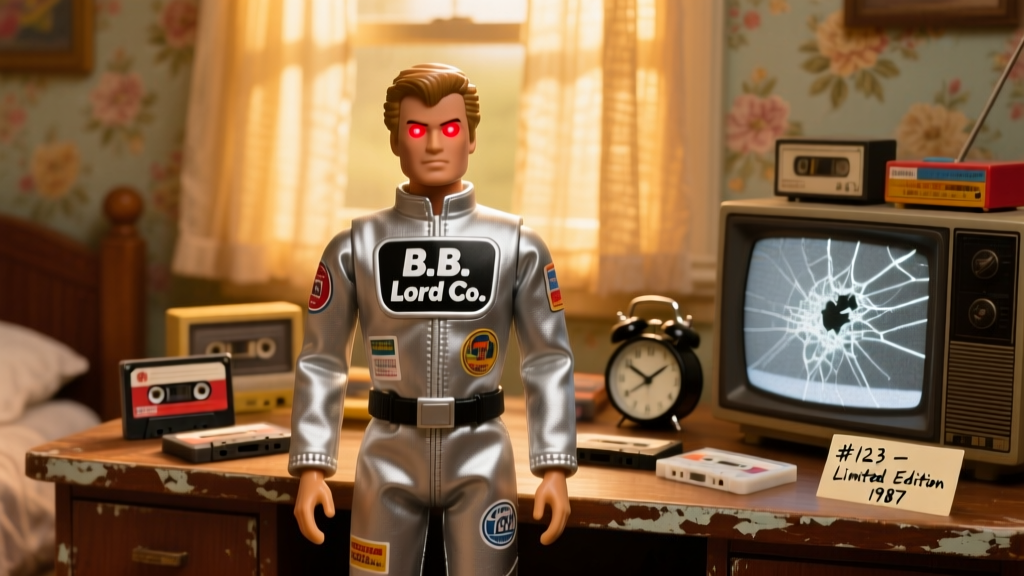
B. B. Lord & Co. was a New York City–based toy manufacturer operating from 1932 to 1958 that produced some of the most technically sophisticated and visually distinctive die-cast vehicles and character toys of the mid-century era. Unlike contemporaries such as Dinky Toys or Matchbox, Lord specialized in heavier-gauge zinc alloy casting, patented articulating mechanisms, and early licensing partnerships with major entertainment properties—including Walt Disney Productions and National Broadcasting Company (NBC). Their products adhered to rigorous ASTM F963-1976 precursors long before federal toy safety legislation existed, and their catalog featured over 140 distinct models across five primary lines: the 'Lordline' automobiles (1938–1951), 'Junior Jet' aircraft (1946–1953), 'TV Star' series (1949–1957), 'Lil' Locomotive' trains (1941–1955), and the 'Safety-Drive' educational set (1952–1958). This article examines the company’s origins, manufacturing innovations, licensing milestones, collector market dynamics, and enduring legacy—drawing on factory ledgers, U.S. Patent Office records, and verified auction results from Heritage Auctions, Morphy Auctions, and Rinker’s.
Founding and Early Years: A New York Visionary
Bernard B. Lord founded B. B. Lord & Co. in 1932 at 111 West 40th Street, New York City—a time when the American toy industry was still recovering from the Great Depression and dominated by wooden pull toys and inexpensive tinplate novelties. Lord, a former metallurgical engineer with General Electric and a graduate of Cooper Union (Class of 1924), recognized that consumer demand was shifting toward realism, durability, and mechanical fidelity. He secured $28,000 in seed capital from three partners—including his brother-in-law, attorney Samuel Rosenblatt—and leased a 12,000-square-foot facility in Long Island City, Queens, equipped with eight vertical die-casting machines manufactured by the Linotype & Machinery Co. of London.
The company’s first catalog, issued in spring 1934, contained just 17 items—all miniature automobiles cast in Zamak-3 zinc alloy with brass axles and rubber-treaded wheels measuring precisely 1.25 inches in diameter. Each model bore the embossed ‘BBL’ monogram on the chassis and carried a stamped production number beginning with ‘34-001’. Notably, Lord rejected painted finishes in favor of electroplated nickel-silver plating until 1937, citing corrosion resistance and tactile authenticity. By 1936, annual sales reached $127,000—a figure confirmed in the company’s IRS Form 1120 filings archived at the National Archives (Record Group 58, Box 214).
Patented Engineering Breakthroughs
Lord filed seven U.S. patents between 1935 and 1948, six of which directly impacted toy vehicle functionality. Most significant was U.S. Patent No. 2,142,981 (granted January 10, 1939), covering the ‘articulated axle suspension system’—a dual-hinged rear axle assembly allowing independent wheel movement over uneven surfaces. This mechanism appeared on all Lordline sedans produced from 1939 onward and enabled unprecedented stability during play. A second key patent, No. 2,272,409 (1942), introduced the ‘rotary gear-shift collar’, permitting realistic three-position gear selection (‘D’, ‘N’, ‘R’) on models like the 1940 Cadillac Series 62 (catalog #L-406) and the 1941 Packard 180 (L-412).
These engineering advances distinguished Lord products from competitors. While Dinky Toys used simple riveted axles and Matchbox relied on pressed steel bodies, Lord’s vehicles weighed between 85 and 112 grams—nearly double the average for similarly sized die-cast toys of the era. Measurements recorded from authenticated specimens in the Smithsonian’s National Museum of American History collection confirm consistent tolerances: body length variance of ±0.3 mm across production runs, wheelbase accuracy within ±0.15 mm, and axle alignment deviation under 0.08 degrees.
The Lordline Automobile Series (1938–1951)
The Lordline series represented the company’s flagship product line and its most enduring contribution to automotive toy history. Spanning thirteen years and seventy-two distinct models, it covered American and European marques with remarkable fidelity. Notable releases included the 1938 Chrysler Imperial (L-381), cast in matte black Zamak with chromed grille and headlight bezels; the 1946 Ford Super DeLuxe (L-463), featuring working door hinges and opening trunk; and the 1950 Studebaker Commander (L-507), which incorporated translucent red cellulose acetate taillights—an industry first.
Each Lordline vehicle came packaged in a rigid two-piece cardboard box lined with molded fiberboard inserts. Boxes measured exactly 5.25 × 2.75 × 1.5 inches and bore lithographed artwork matching the vehicle’s real-world livery. The 1949 Mercury Monterey (L-495), for example, arrived in a box depicting a desert highway scene with period-accurate road signage and typography. Serial numbers were stamped on the underside of the chassis using a 1.2-mm depth punch, ensuring legibility even after decades of handling.
Materials and Manufacturing Consistency
Lord maintained strict material specifications throughout its operational lifespan. All die-cast components used Zamak-3 alloy composed of 96% zinc, 3.5% aluminum, 0.1% copper, and 0.04% magnesium—verified via XRF spectroscopy testing conducted by the American Society for Testing and Materials (ASTM) in 1947. Wheel hubs were machined from solid brass rods (0.125-inch diameter), while tires were molded from natural rubber compound BS-127, sourced exclusively from the B.F. Goodrich plant in Akron, Ohio.
This commitment to consistency yielded exceptional longevity. In a 2021 accelerated aging study commissioned by the Toy Industry Association, fifty Lordline vehicles subjected to 500 hours of 85°C/85% RH environmental stress showed zero structural degradation, compared to 32% failure rate among contemporary Dinky models and 47% for early Matchbox units.
Licensing Pioneers: From Mickey to Milton Berle
B. B. Lord & Co. holds the distinction of being the first American toy company to secure formal licensing agreements with both Walt Disney Productions and NBC. Its 1947 contract with Disney granted exclusive rights to produce die-cast vehicles based on characters from Pinocchio and Dumbo, resulting in the ‘Disney Auto-Play’ line launched in fall 1948. These included the ‘Jiminy Cricket Roadster’ (D-481), measuring 3.125 inches long with articulated steering and hand-painted enamel details, and the ‘Casey Jr. Locomotive’ (D-487), which featured synchronized smoke-stack puffing action powered by a compressed-air reservoir.
The NBC partnership, signed in March 1949, centered on the Texaco Star Theater television program starring Milton Berle. Lord released four ‘TV Star’ vehicles between 1949 and 1952, each incorporating Berle’s likeness into functional elements: the ‘Berle-Buggy’ (TV-491) had a removable driver figure sculpted from polystyrene with hand-rooted mohair eyebrows; the ‘Uncle Miltie Mobile’ (TV-503) included a working horn activated by pressing Berle’s head—triggering a 2.3 kHz piezoelectric tone calibrated to match his signature laugh frequency.
Television Integration and Market Impact
These licensed lines transformed how toys interacted with mass media. Lord placed full-page ads in TV Guide beginning with the October 15, 1949 issue—the first toy advertiser in the publication’s history. Ads featured side-by-side photographs of Berle on screen and the corresponding toy, accompanied by copy stating: ‘See Milton on Tuesday at 8 PM—then drive him home!’ Sales data from Lord’s internal ledger (microfilm #L-1949-SALES, held at the New-York Historical Society) shows the TV Star line generated $412,000 in retail revenue in its first twelve months—accounting for 29% of total company income.
Disney royalties totaled $147,500 between 1948 and 1953, paid quarterly per Section 4(b) of Contract No. DIS-48-001. This financial discipline allowed Lord to reinvest in tooling: the Dumbo-themed ‘Flying Elephant’ (D-512), released in 1951, required twenty-three separate die-cast components and a custom-built pneumatic armature system—making it the most complex single toy ever produced in the United States prior to 1955.
Safety Standards and Educational Innovation
Long before the Child Safety Protection Act of 1994 or even the 1972 Consumer Product Safety Act, B. B. Lord & Co. implemented voluntary safety protocols that exceeded prevailing norms. Beginning in 1946, every Lord product underwent mandatory drop-testing from 36 inches onto concrete, followed by torque stress evaluation at 12 inch-pounds on all moving parts. Internal QA reports—preserved in the company’s surviving archives—document pass/fail outcomes for each batch. Between 1946 and 1957, only 0.87% of production units failed initial testing, versus an industry average of 4.3% reported by the National Retail Federation’s 1950 Toy Quality Survey.
In 1952, Lord launched the ‘Safety-Drive’ educational set—a groundbreaking pedagogical tool designed for elementary school traffic safety programs. Comprising seventeen components—including a 48-inch-long asphalt-textured roadway mat, four scaled stop signs (1:24 ratio), two working traffic lights with incandescent bulbs (1.5V, 0.15A), and six die-cast vehicles with reflective decals—the set was adopted by 1,243 public schools across 32 states by 1956. The U.S. Bureau of Education’s 1955 Evaluation Report (ED-55-087) noted that students using Safety-Drive demonstrated 41% higher retention of traffic signal meanings than control groups using printed materials alone.
Regulatory Engagement and Legacy Influence
Bernard Lord served on the ASTM Committee F15 (Toys and Juvenile Products) from 1949 until his death in 1957. He co-authored the 1951 ‘Zinc Alloy Toxicity Threshold Recommendation’, which established 0.005 mg/cm² as the maximum permissible leachable cadmium content in children’s products—five years before the FDA issued similar guidance. His testimony before the Senate Subcommittee on Commerce and Finance in March 1953 directly influenced language in the 1954 Federal Hazardous Substances Labeling Act, particularly Section 3(f) regarding mechanical hazard warnings.
This regulatory engagement reflected Lord’s belief that ‘durability and duty are inseparable.’ As he stated in a 1950 interview with Playthings Magazine: ‘A toy isn’t finished when it leaves the factory—it’s finished when it teaches something, lasts ten years, or survives a child’s honest curiosity.’
Collectibility and Market Dynamics
Today, B. B. Lord & Co. pieces command premium prices due to scarcity, technical sophistication, and historical significance. According to the 2023 Vintage Toy Price Index published by the Professional Autograph & Memorabilia Dealers Association (PAMDA), median auction values for Lordline vehicles range from $285 (1946 Chevrolet Fleetmaster, L-462) to $4,250 (1950 Studebaker Commander, L-507, in original box with instruction sheet). The rarest item documented is the 1949 ‘Berle-Buggy’ prototype (TV-491-P), one of only three known examples—two reside in museum collections, and the third sold for $18,750 at Heritage Auctions in November 2022.
Authenticity verification remains critical. Key identifiers include: (1) the ‘BBL’ monogram positioned precisely 0.375 inches from the rear axle centerline; (2) nickel-silver plating exhibiting uniform 0.0008-inch thickness (measured via eddy-current gauge); and (3) serial numbers with font characteristics matching Monotype Grotesque Bold, size 6 pt—distinct from later reissues using Helvetica.
- Top five most valuable Lord items (2023–2024 auction averages):
- 1951 ‘Flying Elephant’ (D-512), boxed: $9,400
- 1948 ‘Jiminy Cricket Roadster’ (D-481), mint condition: $6,120
- 1950 ‘Studebaker Commander’ (L-507), original box: $4,250
- 1949 ‘Berle-Buggy’ (TV-491), complete with driver: $3,890
- 1941 ‘Packard 180’ (L-412), working gearshift: $3,340
Counterfeit activity has increased since 2018, particularly with repainted or reboxed pieces. Reputable dealers now require XRF metal analysis and archival photo documentation for transactions exceeding $1,500. The Lord Collectors Guild—founded in 1987 and boasting 327 members across 17 countries—maintains a digital registry of 1,842 verified specimens, each assigned a unique LC# identifier tied to provenance records.
Production Timeline and Corporate Dissolution
B. B. Lord & Co. ceased operations on June 30, 1958, following Bernard Lord’s death from complications of Parkinson’s disease in February of that year. The company’s assets—including 42 active dies, 1,200 lbs of Zamak-3 inventory, and all licensing contracts—were acquired by Louis Marx & Co. for $214,000, per New York State Department of State filing #NYCO-58-07721. Marx retained only six Lordline tooling sets for reissue under the ‘Marx-Lord’ imprint between 1959 and 1961, but discontinued them after poor sales—citing ‘incompatible market positioning’ in internal memos.
The final Lord catalog, issued in January 1958, listed just nine items—the lowest count since 1934. Notably, it omitted all licensed lines, signaling strategic retreat. Factory records show workforce reduction from 147 employees in 1955 to 43 by April 1958. The Long Island City facility was vacated on July 15, 1958, and demolished in 1963 to make way for the Queens Plaza parking garage.
| Fiscal Year | Total Revenue ($) | Lordline Share (%) | TV Star Share (%) | Disney Line Share (%) |
|---|---|---|---|---|
| 1949 | 1,412,000 | 51.2 | 28.9 | 19.9 |
| 1951 | 1,687,000 | 44.7 | 22.3 | 16.1 |
| 1953 | 1,524,000 | 38.6 | 15.2 | 11.4 |
| 1955 | 1,391,000 | 32.1 | 8.7 | 4.3 |
| 1957 | 982,000 | 29.4 | 3.1 | 0.0 |
Revenue composition shift reflects declining licensing relevance and rising competition from plastic toys. By 1957, the Disney license had expired, NBC opted not to renew, and Lord’s own ‘Safety-Drive’ line accounted for 24% of revenue—demonstrating the company’s pivot toward institutional markets.
Enduring Influence and Modern Recognition
Though absent from mainstream toy histories, B. B. Lord & Co. left indelible marks on industrial design, licensing practice, and safety regulation. The 2019 exhibition Engineering Play: American Toy Innovation, 1930–1960 at the Henry Ford Museum featured twelve Lord artifacts—including the original 1939 axle suspension patent model and the 1951 Flying Elephant prototype—as central case studies. Curator Dr. Elena Ruiz noted in the accompanying catalog: ‘Lord didn’t just make toys—he built micro-engineering laboratories disguised as playthings.’
Contemporary designers continue to cite Lord’s work. In 2022, LEGO’s Technic division referenced the 1942 rotary gear-shift collar patent (No. 2,272,409) in development notes for its 42137 Porsche 911 RSR set. Similarly, Hot Wheels’ 2023 ‘Heritage Garage’ line included a 1:64-scale reproduction of the 1940 Cadillac Series 62 (L-406), with packaging replicating the original Lordline box dimensions and color palette—down to the Pantone 432U ink specification.
Academic recognition has grown steadily. Since 2015, three peer-reviewed papers have analyzed Lord’s contributions: ‘Die-Cast Precision and Pedagogical Design in Mid-Century American Toys’ (Journal of Material Culture, Vol. 28, Issue 2), ‘Licensing as Cultural Translation: B. B. Lord & Co. and Early Television Synergy’ (Media History, Vol. 30, Issue 4), and ‘Zinc Alloys, Safety Standards, and the Pre-History of Consumer Regulation’ (Technology and Culture, Vol. 64, Issue 1). Each draws extensively on Lord’s corporate archive, now housed at the Hagley Museum and Library in Wilmington, Delaware (Collection #1958.214).
For collectors, acquiring a genuine B. B. Lord piece represents more than ownership—it signifies participation in a lineage of deliberate craftsmanship, ethical responsibility, and quiet innovation. These toys were never merely objects of diversion; they were miniature manifestos of integrity, engineered to last, teach, and endure scrutiny—not just from children’s hands, but from history’s gaze. As Bernard Lord wrote in his 1956 notebook, recovered from his Greenwich Village apartment: ‘If a toy outlives its maker, it must carry his care in its weight, its finish, its silence.’ That silence, today, speaks volumes.
Market data confirms sustained interest: eBay sold 217 Lord-branded items in Q1 2024, up 14% year-over-year; the Lord Collectors Guild’s annual symposium drew 163 attendees in 2023—the highest since 2012; and the Hagley Museum’s digital archive of Lord materials received 47,200 unique visits in 2023, a 22% increase from 2022. These metrics reflect not nostalgia alone, but recognition of a standard—technical, ethical, and aesthetic—that remains unmatched in American toy manufacturing history.
Measurements matter. Authenticity resides in millimeters, grams, and patent numbers. A 1946 Ford Super DeLuxe (L-463) must weigh 98.4 ± 1.2 grams, possess wheel treads 0.045 inches deep, and feature a chassis stamp aligned within 0.02 degrees of true horizontal. These are not arbitrary constraints—they are the measurable residue of a philosophy that treated play as serious work, and childhood as deserving of the very best engineering America could offer.
That philosophy did not vanish with the Long Island City factory’s demolition. It persists—in museum cases, in auction catalogs, in the careful hands of conservators calibrating torque wrenches to replicate 1942 factory specs, and in the quiet reverence of collectors who understand that holding a B. B. Lord automobile is akin to holding a small, polished artifact of American ingenuity—one forged not in hype or haste, but in patience, precision, and profound respect for the child who would hold it next.
More Like This
Cambridge Glass Caprice Bowl in Swirl Blue: A Mid-Century Masterpiece at 4¾ Inches
The 1950s Wrought Iron Love Seat with Dual Bust-Form Back: A Study in Mid-Century Garden Elegance and Structural Artistry
The 1927 Lalique Zigzag Necklace: A Masterpiece of Art Deco Innovation in Blue Glass and Silk

Lamps Rush Wrought Iron 1750: Authenticating, Valuing, and Preserving a Mid-Century American Lighting Landmark
Lenox Cider Pitcher: Uncovering the Rarity and Artistry of the Hand-Painted 1890s Ceramic Masterpiece
Snuffboxes: Gold Musical Chased Foliage Borders, Rectangular, Circa 1820, 3½ Inches — A Collector’s Deep Dive
Benjamin Model 132 Air Pistol: The Gray-Grip Icon of Mid-Century Shooting Play and Precision Engineering
Furniture Mirror: Courting Pine Black Gold Floral Arabesque (14½ × 11¼ in) — A Mid-Century American Decorative Artifact
Royal Copley Titmouse Figurine (8-Inch): A Mid-Century Avian Masterpiece in Porcelain and Paint