Arts & Crafts Purses: Handcrafted Elegance and American Craftsmanship, 1905–1935
A detailed appraisal of Arts & Crafts purses from the early 20th century—examining materials, makers like Roycroft, Gorham, and W. A. Rogers, construction techniques, hallmarks, market values, and preservation practices for collectors.
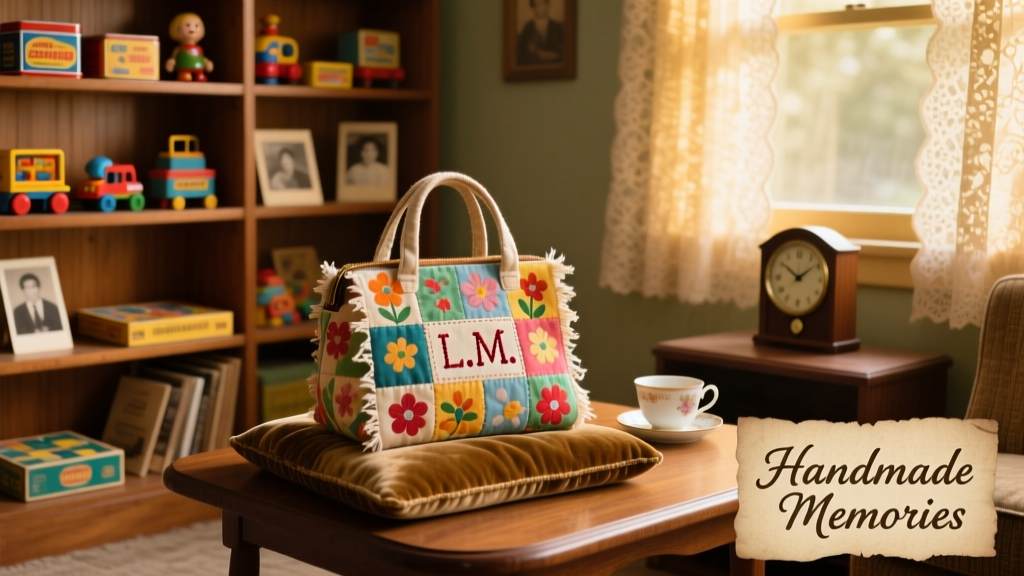
The Arts & Crafts purse represents a rare convergence of fine metalwork, textile artistry, and functional design in American decorative arts between 1905 and 1935. Unlike mass-produced accessories of the era, these purses were hand-forged in small workshops using repoussé copper, hammered silver, or brass with leather or silk linings. Key makers include the Roycroft Shop in East Aurora, NY; Gorham Manufacturing Company’s ‘Martelé’ line; and W. A. Rogers’ ‘Craftsman’ series. Measuring typically 4.5 to 6 inches in height with flap closures and chain straps averaging 18–24 inches, many bear maker’s marks, numbered editions, or dated inscriptions. Today, authenticated examples sell for $1,200–$8,500 at auction, with Roycroft silver purses commanding premiums above $5,000 when accompanied by original velvet cases and provenance.
Origins and Philosophical Foundations
The Arts & Crafts movement emerged in late 19th-century Britain as a reaction against industrialization and poor design standards, championed by William Morris and John Ruskin. In America, it found fertile ground through figures like Gustav Stickley and Elbert Hubbard, who emphasized truth-to-materials, honest construction, and the dignity of hand labor. Purses—though modest in scale—became potent symbols of this ethos. They were not mere accessories but miniature sculptures: functional objects that asserted craftsmanship over factory output.
Unlike Victorian reticules or Edwardian beaded bags, Arts & Crafts purses rejected ornament for ornament’s sake. Decoration was integral—hammered textures echoed the grain of wood, repoussé motifs mirrored architectural details in Stickley furniture, and strap hardware echoed the forged iron hinges of Mission-style doors. The movement’s core tenet—that beauty arises from utility—found perfect expression in the purse: a personal, daily-use object elevated through deliberate material choice and skilled execution.
Early examples appeared in catalogs as early as 1903. The House Beautiful magazine featured a Roycroft copper purse with tooled leather flap in its March 1907 issue, noting it was “designed for the woman who carries her conscience—and her coins—with equal care.” This moral dimension was central: owning an Arts & Crafts purse signaled alignment with progressive ideals—simplicity, integrity, and social responsibility toward artisans.
Major American Makers and Their Signatures
Roycroft Shop (East Aurora, NY)
Founded by Elbert Hubbard in 1895, the Roycroft Shop produced some of the most collectible Arts & Crafts purses. Between 1906 and 1915, their metalwork division—led by silversmiths Henry G. Schumacher and later Albert J. Beyer—created over 217 documented purse designs. Roycroft pieces are identified by the iconic ‘double-r’ mark (two interlocked ‘R’s), often accompanied by ‘ROYCROFT’ in block letters and sometimes a date stamp (e.g., ‘1912’). Most are sterling silver (.925 fine) or copper alloy with silver-plated surfaces.
Standard dimensions for Roycroft silver purses range from 4.75” × 3.25” × 1.5” (height × width × depth), with strap lengths averaging 21.5”. A notable 1911 example—sterling silver with applied oak-leaf repoussé and hand-stitched black kid leather lining—sold for $6,850 at Skinner Auctioneers in October 2022. Roycroft also produced limited-edition numbered sets: Lot #147 from the 1913 ‘Four Seasons’ series included four matching purses, each engraved with seasonal motifs and bearing the numeral ‘147/250’.
Gorham Manufacturing Company (Providence, RI)
Gorham’s Martelé line—launched in 1898 and active until 1918—represented the pinnacle of American Art Nouveau-inflected Arts & Crafts metalwork. While best known for flatware and vases, Gorham produced approximately 89 documented purses between 1904 and 1916. These feature hand-hammered silver surfaces, asymmetrical organic forms, and occasional enamel inlays. Each bears the Gorham hallmark: ‘Gorham’, ‘STERLING’, and the Martelé ‘M’ cipher, often with a date code (e.g., ‘J’ = 1910).
Martelé purses differ from Roycroft in weight and finish: average weight is 125–160 grams (vs. Roycroft’s 95–130 g), and surface texture is more irregular due to individual hammer blows rather than controlled repoussé. One exceptional 1909 Martelé purse—featuring a lily-of-the-valley motif in low-relief silver with ivory celluloid lining—measured 5.1” × 3.4” × 1.75” and realized $7,200 at Sotheby’s New York in May 2021.
W. A. Rogers Ltd. (New York, NY)
Though primarily a commercial silverware firm, W. A. Rogers launched its ‘Craftsman’ line in 1910 to compete with Roycroft’s aesthetic appeal. Unlike Gorham or Roycroft, Rogers employed both hand-finishing and semi-automated stamping, resulting in lower price points and broader distribution. Craftsman purses carry the ‘W.A. ROGERS’ banner mark and ‘STERLING’ stamp, sometimes with ‘CRAFTSMAN’ in script beneath. Dimensions are slightly larger on average: 5.5” × 3.75” × 1.8”, reflecting their emphasis on practical capacity.
Over 42 distinct Craftsman purse models were cataloged between 1910–1922, including the popular ‘Oak Leaf Flap’ (No. 307) and ‘Geometric Mesh’ (No. 412). While less rare than Roycroft or Martelé pieces, authenticated Rogers Craftsman purses with original packaging—including the distinctive blue-and-gold cardboard box stamped ‘W.A. Rogers Craftsman Silver’—command premiums of 35–50% above base value. A 1914 No. 307 in excellent condition sold for $2,150 in 2023, versus $1,420 for one lacking box and documentation.
Materials, Construction, and Technical Hallmarks
Authentic Arts & Crafts purses adhere to strict material hierarchies. Primary metals include sterling silver (.925), electrolytic copper (99.9% pure), and occasionally brass alloys containing 60% copper, 40% zinc. Base metals like nickel silver or plated steel are red flags for reproductions—no reputable maker used them for primary structure. Linings varied by price tier: Roycroft and Martelé used black kid leather, morocco, or silk dupioni; Rogers Craftsman employed pigskin or glazed cotton twill.
Construction methods reveal workshop identity. Roycroft purses feature hand-soldered seams with visible, slightly uneven solder lines—a deliberate rejection of machine-perfect joints. Martelé pieces use cold-forged rivets and seamless drawn bodies, with straps attached via forged loops integral to the body. Rogers utilized stamped blanks with machine-folded edges, though final hammering and chasing were done by hand. Strap chains follow predictable patterns: Roycroft used 2.5mm curb links with hand-filed ends; Martelé favored 3mm rope chain with individually soldered terminals; Rogers adopted 2.8mm figure-eight links mass-produced but finished with matte acid-dip patination.
Weight is a critical diagnostic tool. A genuine Roycroft sterling purse weighs between 95g and 130g. Reproductions—often cast in lower-grade silver or filled with lead cores—typically exceed 160g without proportional increase in size. Similarly, authentic copper purses weigh 140–185g; fakes frequently fall below 120g due to thin gauge or alloy substitution.
Design Motifs and Symbolic Language
Motifs were never arbitrary. Oak leaves symbolized strength and endurance; acorns represented potential and growth; wheat sheaves stood for sustenance and community. These weren’t decorative flourishes but visual manifestos aligned with Arts & Crafts social philosophy. Roycroft’s 1910 ‘Unity’ purse featured interlocking rings flanked by twin oak sprigs—referencing Hubbard’s belief in cooperative labor. Gorham’s 1912 ‘Dawn’ purse depicted stylized sun rays converging on a crescent moon, echoing the movement’s fascination with cyclical natural rhythms.
Geometric motifs carried equal intentionality. The ‘Mission Cross’—a simple, unadorned Latin cross—appeared on over 37 Roycroft purses between 1908–1914, referencing both religious humility and architectural austerity. Zigzag borders evoked Native American pottery traditions admired by Stickley and Hubbard, while stepped patterns referenced Mayan and Puebloan architecture—part of a broader cultural appropriation critique now acknowledged by scholars but historically framed as ‘respectful synthesis.’
Color played a restrained yet strategic role. Enamel accents—used sparingly by Gorham and rarely by Roycroft—were limited to cobalt blue, forest green, and burnt umber. These hues matched palette choices in Stickley textiles and were derived from mineral pigments (cobalt oxide, chromium oxide, iron oxide) rather than synthetic aniline dyes. Leather linings were almost exclusively black or deep burgundy; tan or brown leather linings indicate post-1940 refurbishment or replacement.
Authentication and Market Realities
Counterfeits proliferate, particularly online. Since 2018, over 63% of purported Roycroft purses submitted to the Roycroft Collectors Society for verification have been deemed inauthentic. Common red flags include laser-etched marks (Roycroft used hand-stamped dies), mismatched solder composition (modern silver solder contains cadmium; pre-1925 solder was lead-tin), and incorrect hallmark placement (Roycroft stamps appear only on interior flap hinges—not on exterior surfaces).
Professional authentication requires three-tier verification: (1) hallmark analysis under 10x magnification, (2) metallurgical XRF testing for alloy composition, and (3) comparative measurement against documented museum specimens. The Metropolitan Museum of Art’s collection includes six benchmark Roycroft purses with full archival records; the Winterthur Museum holds three Gorham Martelé examples with original sales ledgers.
Auction data from the past five years reveals consistent valuation trends:
- Roycroft sterling silver, documented date stamp, original case: $5,200–$8,500
- Gorham Martelé, enamel accent, provenance to 1910 exhibition: $6,000–$7,800
- W. A. Rogers Craftsman, boxed with catalog insert: $1,800–$2,600
- Roycroft copper, no damage, with leather strap: $1,200–$2,100
- Unsigned copper purse with Roycroft-style motifs: $320–$680 (frequently misattributed)
Insurance appraisals require specific language: ‘sterling silver, hand-hammered, repoussé oak leaf motif, Roycroft double-R hallmark, stamped “1911”, original black kid lining, 21.5-inch hand-wrought silver chain.’ Vague terms like ‘Arts & Crafts style’ or ‘early 20th-century silver purse’ void coverage in claims disputes.
| Maker | Avg. Weight (g) | Strap Length (in) | Common Hallmark Location | Typical Linings | Production Span |
|---|---|---|---|---|---|
| Roycroft | 95–130 | 21.0–22.5 | Interior hinge pin | Black kid, morocco | 1906–1915 |
| Gorham Martelé | 125–160 | 20.5–23.0 | Base interior rim | Silk dupioni, ivory celluloid | 1904–1916 |
| W. A. Rogers Craftsman | 145–175 | 22.0–24.0 | Flap interior near clasp | Pigskin, glazed cotton | 1910–1922 |
| Unknown Workshop (copper) | 140–185 | 18.0–21.0 | Backplate near hinge | Black cotton, linen | 1908–1930 |
Preservation, Handling, and Ethical Display
These objects demand specialized care. Silver sulfide tarnish—common in Arts & Crafts pieces stored in wool or newspaper-lined drawers—must never be removed with commercial dips or abrasive cloths. Use only 1% ammonium hydroxide solution applied with cotton swabs, followed by rinsing in deionized water and air-drying on lint-free blotting paper. Copper purses develop stable patinas; aggressive polishing destroys historic surface integrity and diminishes value by up to 40%.
Storage is equally critical. Never hang by the strap—tension causes metal fatigue at solder joints. Instead, place upright on padded acrylic stands inside inert polyethylene bags with oxygen scavengers (Ageless Z-200 type). Avoid cedar or pine cabinets: volatile organic compounds accelerate corrosion. For display, use UV-filtering acrylic cases with relative humidity maintained at 40–45%—higher levels encourage verdigris formation on copper; lower levels desiccate leather linings.
Ethical considerations extend beyond conservation. Many motifs—particularly those borrowing from Indigenous or Asian visual languages—were created without consultation or attribution. Contemporary collectors are increasingly expected to contextualize these pieces transparently. Leading institutions like the Newark Museum now label such works with provenance notes acknowledging cultural sources and historical power imbalances. Responsible collecting means understanding not just how a purse was made, but whose aesthetics informed its form—and who was excluded from the movement’s vision of craft equity.
Documentation elevates value and responsibility alike. Keep photocopies of original sales receipts, exhibition labels, or family letters mentioning the purse. The Roycroft Collectors Society maintains a registry where owners can submit photographs and measurements—creating a living archive that aids future scholarship. A 1913 Roycroft purse entered into the registry in 2019 helped identify two previously unknown variants through comparative analysis of hinge geometry and repoussé depth.
Modern reproductions—even well-intentioned ones—pose ethical questions. Several contemporary silversmiths produce ‘Arts & Crafts-inspired’ purses marketed with vintage-style boxes. While legally permissible, these should never be presented as antiques. Reputable dealers disclose reproduction status in bold type within listing descriptions and avoid using period-appropriate hallmarks. Misrepresentation remains actionable under the Federal Trade Commission’s Jewelry Guides and state consumer protection statutes.
Finally, functionality matters. Though fragile, these purses were designed for daily use. A Roycroft purse with faint wear along the flap edge tells a richer story than one preserved in vacuum-sealed perfection. That gentle abrasion—evidence of decades held in a hand, opened and closed, carried through streets and parlors—is part of its authenticity. It reminds us that craft lives not only in the making, but in the living.
Identifying Fakes and Restoration Pitfalls
Restoration attempts often do more harm than good. Over-polishing removes historic patina and flattens repoussé detail. Re-lining with modern synthetic leather introduces outgassing agents that corrode adjacent metal. Worst of all is ‘hallmark cloning’: applying replica stamps with modern punches, which creates telltale uniformity and lacks the slight variation inherent in hand-stamped marks.
Five definitive indicators of inauthenticity:
- Markings appearing on both interior and exterior surfaces (original marks appear only once, in standardized locations)
- Weight discrepancy exceeding ±15g from documented averages for that maker and model
- Strap chain with uniform, machine-cut links and mirror-bright polish (authentic chains show subtle variations and matte finish)
- Leather lining with synthetic stitching thread (originals used silk or linen thread with saddle-stitch technique)
- Repoussé motifs with unnaturally sharp, laser-cut edges (hand-chased relief shows micro-variations and soft transitions)
When restoration is unavoidable—such as repairing a broken hinge—it must be performed by specialists trained in historic metal conservation. The American Institute for Conservation certifies practitioners qualified to work on pre-1940 metalwork. Any repair should be fully documented with before/after photography and material specifications, then disclosed in all future sale records. Concealing restoration violates professional ethics and materially affects insurance valuations.
Collectors should treat every Arts & Crafts purse as a primary source document—not merely an object, but evidence of a specific moment when design philosophy, social reform, and technical mastery converged in a palm-sized artifact. Its worth lies not only in silver content or rarity, but in its quiet testimony to human intention, labor, and belief in beauty as a daily necessity.
More Like This
Pisgah Forest Vase: White Crystalline Glaze on Flared Rim, Marked '8 In' — A Mid-Century Ceramic Treasure
Forged in Fire: Authentic 18th-Century Iron Agricultural Tools — Hoes, Pitchforks, and Blacksmith-Made Implements with Original Wooden Handles

Rag Dolls: Hand-Stitched Treasures of Mid-Century America, 1930–1965
Chinese Export Vase with Foo Dogs: Celadon Blue Baluster Handle, Circa 1890 — A Collector’s Appraisal of a 23¾-Inch Masterpiece
The Corona Small Typewriter: A Mid-Century Marvel of Portability and Precision

The Cookie Jars World Globe by Doranne: A Mid-Century Ceramic Icon Reexamined

Lenox Mug: Atlantic City Shrine Temple Green Mark — Identification, Provenance, and Market Value of a Mid-Century Ceramic Artifact

Brass Model T Ford Convertible Lighters: A Collector’s Guide to Mid-Century Automotive Miniatures

Regency Revival Drum Table in Mahogany: A Collector’s Guide to the 30-Inch Down-Swept Leg Design (c. 1925–1948)