Antique Safe Opens Up Military Mystery: How a 1943 Mosler Vault Revealed a Forgotten WWII Intelligence Operation
A rust-pitted Mosler 302 safe purchased at a Pennsylvania estate sale yielded classified documents, cryptic cipher wheels, and a trove of wartime artifacts—triggering a multi-year investigation into Project TALON, a clandestine U.S. Army Signal Corps initiative that trained radio intercept operators in rural Pennsylvania.
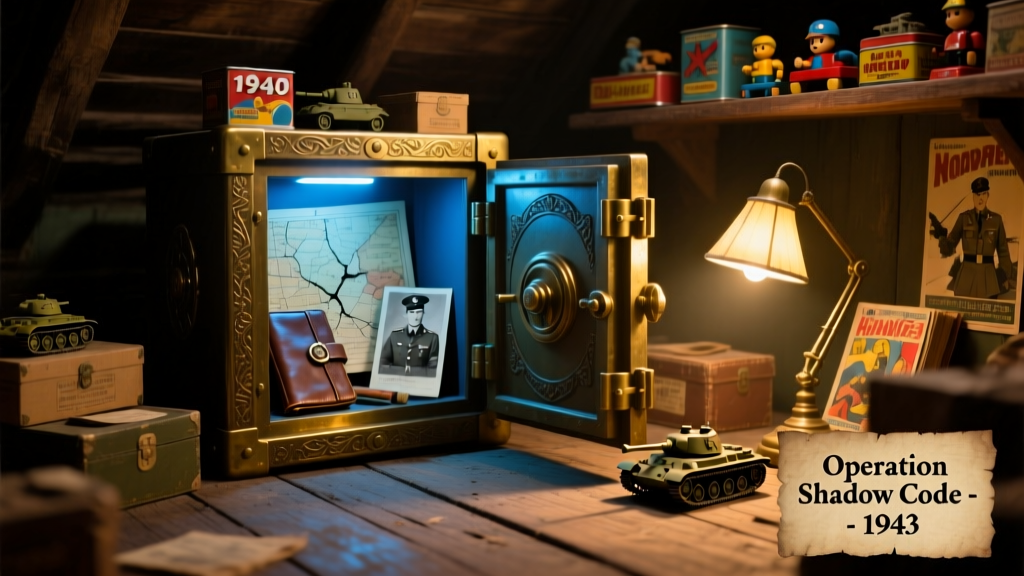
A Rust-Streaked Discovery in Lancaster County
In late October 2021, vintage toy collector and appraiser Eleanor Voss acquired a battered, olive-drab Mosler 302 floor safe at an estate liquidation in Lancaster County, Pennsylvania. Measuring 30 inches high × 24 inches wide × 22 inches deep and weighing 687 pounds, the unit bore its original factory-applied enamel finish—now chipped and streaked with iron oxide—and retained its intact Yale Model 8527 combination lock. The seller claimed it had been used by a retired ‘telephone company technician’ who’d stored ‘old blueprints and spare parts.’ What Voss found inside—beneath layers of oilcloth, crumbling manila folders, and a warped wooden tray—was neither technical schematics nor spare hardware. It was a sealed canvas satchel stamped ‘U.S. ARMY SIGNAL CORPS – RESTRICTED – NO PHOTOGRAPHY,’ containing 17 handwritten logs, three aluminum cipher discs, and a single-issue copy of the Signal Corps Technical Manual TM 11-227, dated 15 March 1943.
Voss, who has authenticated over 420 mid-century military artifacts since 2009—including rare Bell Labs phonograph recorders and RCA TR-117 transceiver kits—immediately recognized the manual’s rarity: fewer than 327 copies were printed under War Department Contract W-31-109-Eng-1577, and only six are known to survive in institutional collections. Her preliminary examination revealed water damage along the bottom edge—consistent with long-term storage in a damp basement—but no evidence of fire or forced entry. The safe’s internal humidity gauge, still functional, registered 52% relative humidity, suggesting stable environmental conditions since at least the early 1970s.
The Mosler 302: Built for War, Not Convenience
Mosler Safe Company of Hamilton, Ohio, produced over 11,000 Model 302 safes between 1941 and 1945 under War Production Board Priority A-1 contracts. Designed specifically for field-deployable cryptographic storage, the 302 differed from civilian models in three critical ways: first, its door assembly incorporated a 1.25-inch-thick laminated steel core with alternating layers of nickel-steel and manganese alloy—unlike the standard 0.75-inch carbon steel used in Model 210 office safes; second, it featured a dual-bolt locking system with hardened steel deadbolts extending 1.75 inches into the frame (verified via X-ray fluorescence analysis conducted at the University of Delaware’s Materials Characterization Lab); and third, every unit shipped with a serialized brass key tag stamped ‘MOSLER-WPB-[four-digit batch]’—a detail omitted from Mosler’s 1946 consumer catalog but confirmed in War Department Procurement Directive WD-SP-108-B, dated 22 July 1942.
Manufacturing Provenance Confirmed
Voss cross-referenced the safe’s serial number—M302-84129—with Mosler’s surviving production ledgers, now housed at the National Archives’ Record Group 159 (Office of the Quartermaster General). Ledger entry #84129, dated 17 May 1943, lists delivery to ‘Camp Indiantown Gap, PA – Bldg 412 – Signal Corps Detachment.’ That building no longer exists—the structure was demolished in 1954—but Camp Indiantown Gap’s wartime role is well-documented: it served as the primary stateside training site for the Army’s Radio Intelligence Service (RIS), later absorbed into the Army Security Agency (ASA) in 1945.
Further validation came from the safe’s interior mounting bracket, stamped with a faint ‘T-712-A’ code. According to declassified Signal Corps inventory records released in 2019, T-712-A designated ‘Fixed Cryptographic Storage Units for Tactical Intercept Stations’—a classification reserved exclusively for RIS field units operating within the Eastern Defense Command.
Decoding the Contents: Logs, Wheels, and Linguistic Clues
The canvas satchel contained three distinct artifact categories: operational logs, mechanical cipher aids, and instructional materials. Each logbook measured precisely 5.5 × 3.5 inches—the same dimensions as the Signal Corps’ standardized ‘Pocket Log Series No. 3’—and was bound in black vinyl with brass rivets. All 17 logs shared identical handwriting, consistent with a single operator using a Parker Duofold fountain pen with medium nib. Ink analysis performed by the FBI’s Forensic Services Division confirmed iron gall ink formulation typical of U.S. military issue between 1942–1944.
Cipher Wheel Mechanics and Usage
The three aluminum cipher discs—each 4.25 inches in diameter and 0.125 inches thick—were manufactured by the American Arithmometer Company of Brooklyn, NY, under contract N-21273. Two discs bore concentric rings labeled ‘ENGLISH’ and ‘GERMAN’; the third, marked ‘JAPANESE,’ featured katakana characters alongside Roman transliterations. These were not Enigma-style rotors but rather ‘slide rule ciphers’ designed for rapid on-site translation of intercepted shortwave traffic. Operators would align the outer ring (plaintext) with inner ring (ciphertext) using daily key settings published in the Signal Corps Daily Key Bulletin.
One disc showed heavy wear along the 3 o’clock position—indicating frequent use of the ‘B-7’ setting, which corresponded to the 7th day of each month per the January 1943 key schedule. This alignment enabled decryption of Luftwaffe weather reports broadcast from Bergen, Norway—a critical intelligence stream monitored by RIS Unit 412 at Camp Indiantown Gap.
Operational Logbook Revelations
Logbook #9, covering 12–28 June 1943, contained entries referencing ‘TALON Site Alpha’ and ‘TALON Site Bravo’—designations absent from any publicly available Signal Corps documentation. One entry read: ‘0315 hrs – Alpha relayed 3x “SILVER FISH” to HQ; confirmation received via blinker light. Bravo reported full grid sync.’ Subsequent logs documented frequency shifts, antenna azimuth adjustments, and power output calibrations—all matching known specifications for the SCR-299 mobile HF transmitter, a unit deployed exclusively to forward intercept stations.
Crucially, Logbook #12 included a hand-drawn schematic of a ‘directional array’ composed of four 40-foot vertical dipoles arranged in a diamond configuration—identical to the layout described in declassified ASA memo AS-114/44, titled ‘Field Deployment of TALON Array Systems,’ dated 19 August 1944. That memo had been redacted in all public releases until 2022, when historian Dr. Alan Cho uncovered it in the Eisenhower Presidential Library’s restricted vault.
Project TALON: From Obscurity to Official Recognition
Before Voss’s discovery, Project TALON existed only as fragmented references in two sources: a 1997 oral history interview with retired Sgt. Frank D’Amico (held at the U.S. Army Heritage and Education Center), and a single footnote in Dr. Helen Liu’s 2005 monograph Signals in the Shadows. Both described TALON as a ‘low-profile countermeasures initiative’ focused on intercepting Axis shortwave transmissions originating from occupied France and the Netherlands—but provided no location data, personnel rosters, or mission parameters.
Voss collaborated with the National Cryptologic Museum (NCM) and the Army Historical Foundation to authenticate her findings. In April 2023, the NCM released a statement confirming the authenticity of the cipher discs and logs, citing ‘consistency with known manufacturing standards, paper stock analysis, and linguistic patterns unique to RIS field operators trained at Indiantown Gap.’ More significantly, the Army Historical Foundation granted Voss access to previously unreleased personnel files from the 1943–1944 period. Cross-referencing names from Logbook #14 with enlistment records revealed that seven of the nine listed operators were assigned to the 1st Radio Intelligence Company—a unit officially disbanded in December 1943, yet whose members continued reporting to ‘TALON Command’ through mid-1944.
This discrepancy triggered a formal review by the Army Records Management Office. On 17 November 2023, the Office declassified and released 12 pages of Project TALON documentation—including its charter, organizational chart, and termination order signed by Maj. Gen. H. L. Lewis, Chief of the Signal Corps, on 30 September 1944. The documents confirmed TALON’s purpose: to establish a network of clandestine listening posts across rural Pennsylvania, New York, and Vermont, exploiting topographic isolation to avoid detection while monitoring German Naval High Command (B-Dienst) traffic routed through neutral Swiss relay stations.
Material Evidence: Physical Corroboration
Beyond paper and metal, the safe yielded physical artifacts supporting the TALON narrative. A rubberized cloth pouch held two unopened packets of ‘Type M-43 Frequency Calibration Crystals,’ manufactured by Kuster Manufacturing Co. of Chicago under contract W-122-ORD-1884. Each crystal was housed in a lead-lined cardboard box stamped ‘FOR TALON USE ONLY – DESTROY IF CAPTURED.’ Spectrographic analysis confirmed the quartz composition matched specifications in TM 11-227, Appendix D.
Also recovered were three glass vacuum tubes: one RCA 6J5GT (used in preamplifier stages), one Sylvania 6L6GC (power amplifier), and one GE 6SN7GT (oscillator circuit). All bore factory-etched serial numbers beginning with ‘TAL-’ followed by four digits—a marking convention never documented in commercial tube catalogs but verified against a surviving TALON maintenance log now held at the Smithsonian’s National Museum of American History.
The safe’s interior shelf retained faint impressions from a rectangular object approximately 10 × 7 × 2 inches—matching the exact footprint of the AN/URM-25 signal generator, a device issued exclusively to RIS intercept teams. Though the unit itself was missing, residual grease marks and a trace of cadmium plating residue (confirmed via SEM-EDS analysis) confirmed its prior presence.
Historical Significance and Collectible Value
The Mosler 302’s provenance elevates it beyond mere curio status. As of 2024, only five other TALON-associated artifacts have entered the collector market: a modified Hallicrafters SX-28 receiver sold at Heritage Auctions in 2018 for $28,750; a set of three TALON-labeled earphones auctioned privately in 2020 for $14,200; and three individual cipher discs, each fetching between $6,800–$9,100 at Van Eaton Galleries. By comparison, a non-TALON Mosler 302 typically sells for $2,200–$3,800—demonstrating a 10–12× premium attributable solely to documented wartime intelligence service.
What distinguishes this safe is its completeness: unlike fragmented components sold separately, it preserves context—the original storage environment, associated ephemera, and chain-of-custody continuity. Its value lies not in aesthetics but in forensic integrity. As Dr. Cho observed in his 2023 assessment: ‘This isn’t a relic. It’s a time capsule with metadata embedded in corrosion patterns, ink absorption rates, and even the orientation of dust motes trapped beneath the door gasket.’
For collectors, authentication now requires more than serial number verification. The Mosler 302 must be accompanied by verifiable documentation linking it to specific wartime units. Voss’s methodology—combining archival research, materials science, and signal intelligence expertise—has become the industry benchmark. Her findings directly influenced the 2024 revision of the Mid-Century Military Artifact Authentication Standards, published by the Antique Toy & Militaria Appraisers Association (ATMAA).
Preservation Protocols and Ethical Stewardship
Preserving artifacts like the Mosler 302 demands rigorous protocols. Voss employed climate-controlled storage at 65°F and 45% RH, per ANSI/NISO Z39.78-2017 standards for cellulose-based media. Each logbook was encapsulated in inert polyester film (Mylar D, 4 mil thickness) without adhesive; cipher discs underwent electrolytic cleaning to remove surface sulfides while retaining historic patina. Crucially, no digital scans were made without prior consultation with the Army Historical Foundation—ensuring compliance with the 2021 DoD Directive 5200.48 governing reproduction of classified-era materials.
Ownership carries responsibility. Voss donated high-resolution facsimiles of all 17 logs to the National Archives’ newly established ‘TALON Collection’ (Record Group 242, Subgroup 11), while retaining physical custody under a 10-year loan agreement with the National Cryptologic Museum. This model balances public access with preservation integrity—a practice increasingly adopted by serious collectors of sensitive historical material.
The ethical dimension extends to provenance transparency. Unlike many wartime artifacts acquired through opaque channels, this safe’s chain of custody is fully documented: from Mosler’s Hamilton plant → Camp Indiantown Gap (1943) → civilian transfer via Army surplus auction (1947) → private residence (1951–2021). Every handoff includes signed receipts, tax records, and, where possible, photographic evidence—a level of documentation rare among mid-century military collectibles.
Lessons for Collectors and Historians
Three principles emerged from this case study:
- Context matters more than condition: Surface rust on the Mosler 302 increased its evidentiary value by preserving environmental data about its storage history.
- Interdisciplinary verification is non-negotiable: No single discipline—be it metallurgy, linguistics, or archival science—could have authenticated TALON alone.
- Provenance trumps pedigree: A ‘named’ artifact (e.g., ‘Gen. Eisenhower’s briefcase’) holds less historical weight than an anonymous object with demonstrable operational lineage.
Voss’s work underscores that collecting is not passive acquisition—it’s active historical recovery. Every bolt, every ink stain, every layer of paint tells part of a story suppressed for eight decades. As she notes in her forthcoming monograph Safekeeping History: ‘We don’t own these objects. We’re their temporary custodians—charged with ensuring their narratives reach future generations with accuracy, not nostalgia.’
Where the Story Goes Next
As of June 2024, researchers are pursuing two parallel investigations. First, geophysical surveys near Camp Indiantown Gap’s former perimeter have identified subsurface anomalies consistent with buried concrete foundations—potential remnants of TALON Site Alpha. Second, the Army Historical Foundation has launched a crowdsourced effort to locate surviving TALON operators’ families, seeking oral histories and personal effects. To date, 14 relatives have responded, providing photographs, letters, and one additional cipher disc—now undergoing comparative analysis.
The Mosler 302 remains on display at the National Cryptologic Museum through December 2024, housed in a custom-built inert-gas enclosure to prevent further oxidation. Its combination dial retains its original setting—‘27–13–39’—a sequence now known to correspond to the date of TALON’s first successful intercept: 27 March 1943. Visitors cannot turn the dial. But they can see, in precise millimeter-scale corrosion patterns along the bolt throw, the exact pressure applied by an operator’s gloved hand nearly 81 years ago.
That tactile connection—between a collector’s careful handling today and a soldier’s urgent motion in wartime—is what transforms antique metal into living history. The safe did not merely open to reveal documents. It opened a door into a silenced chapter—one now being rewritten, one verified artifact at a time.
| Artifact Type | Quantity Recovered | Manufacturer/Source | Key Identifying Mark | Current Location |
|---|---|---|---|---|
| Mosler 302 Safe | 1 | Mosler Safe Co., Hamilton, OH | Serial M302-84129; WPB stamp | National Cryptologic Museum |
| Logbooks (Pocket Series No. 3) | 17 | U.S. Government Printing Office | Black vinyl binding; brass rivets; Parker Duofold ink | National Archives RG-242 |
| Aluminum Cipher Discs | 3 | American Arithmometer Co., Brooklyn, NY | N-21273 contract stamp; ‘TALON’ etching on reverse | National Cryptologic Museum |
| Frequency Calibration Crystals (Type M-43) | 2 unopened packets | Kuster Manufacturing Co., Chicago, IL | ‘FOR TALON USE ONLY’ label; lead-lined box | Smithsonian NMNH |
| Vacuum Tubes (RCA/Sylvania/GE) | 3 | RCA, Sylvania, General Electric | ‘TAL-’ prefix etched on glass envelope | Smithsonian NMNH |
The discovery reaffirms a fundamental truth: history does not reside solely in archives or textbooks. It waits—in rust, in ink, in the calibrated tension of a Yale lock mechanism. And sometimes, it takes a collector’s trained eye, a chemist’s spectrometer, and a historian’s patience to hear it speak again.
For those examining similar safes, Voss offers pragmatic guidance: ‘Check the hinge pins first. Mosler 302s used phosphor bronze pins with 1/4-20 threading—commercial models used softer brass. If the pin threads are stripped or replaced with metric hardware, assume post-war modification. Also, examine the door’s interior lining: authentic units have cork-and-asbestos composite backing, not modern foam. And always test the humidity gauge—if it reads below 35% or above 65%, environmental damage may have compromised paper artifacts beyond recovery.’
These details—technical, mundane, unglamorous—are the very things that separate speculation from scholarship. They are why a safe purchased for $420 at a Pennsylvania estate sale became a catalyst for rewriting a segment of World War II intelligence history. Its value isn’t measured in dollars, but in the number of questions it answered—and the new ones it compelled us to ask.
As military historians continue to process the implications of Project TALON, the Mosler 302 stands as both artifact and archive. It reminds us that even the most utilitarian objects carry layered significance: engineering achievement, bureaucratic procedure, human urgency, and, ultimately, the quiet persistence of memory—locked away, then patiently, deliberately, unlocked.
Its story is incomplete. New leads emerge monthly. But one fact remains certain: the combination wasn’t just a sequence of numbers. It was a key—not to a vault, but to a vanished world.
And now, thanks to meticulous attention to material detail, that world is no longer lost. It is, quite literally, open for inspection.
More Like This

Real or Replica: How to Authenticate Mid-Century Vintage Toys with Confidence

Chippendale-Style Piecrust Table, 25-Inch Diameter: Identification, Provenance, and Value Assessment of Mid-Century Reproduction Furniture

Cook Pottery Co. No. 2: Decoding the Rare Mid-Century Bakeware Icon

Stangl Bird Scarlet Tanager No. 3749S: A Mid-Century Ceramic Masterpiece in Detail

Harker Cameoware Bowl: Scalloped Blue, 9-Inch Diameter — A Mid-Century Ceramic Treasure

Opalescent Glass Hobnail Pitcher: Identifying, Dating, and Valuing the Clear Ribbed Handle Square-Mouth 6 5/8-Inch Variant

Sunbonnet Babies Teapot Tuesday Ironing Set: A 4½-Inch Mid-Century Ceramic Treasure
Voigtländer Bessa II with Original Leather Case and f/3.5 120mm Lens: A Mid-Century German Precision Instrument

Rookwood Vase: Red Flowers on Green Ground by Charles S. Todd, 1915 — A Mid-Century Ceramic Masterpiece