Antique Junction Upstate: A Mid-Century Collector’s Haven in the Hudson Valley
Antique Junction Upstate in Rhinebeck, New York, is a premier destination for vintage toy collectors specializing in mid-century American and European playthings. This article details its curated inventory—including rare Marx tin litho trucks, original Ideal dolls, and intact Fisher-Price Little People sets—with precise measurements, production dates, and market context.
Introduction: More Than Just an Antique Mall
Antique Junction Upstate, located at 630 Route 9 in Rhinebeck, New York, is not a generic flea-market-style bazaar—it’s a rigorously curated, dealer-run collective established in 1998 by veteran appraiser Eleanor Vargas and toy historian Marcus Lin. Spanning 14,200 square feet across three climate-controlled, humidity-monitored floors, the venue houses over 275 independent dealers specializing exclusively in pre-1975 Americana, with toys representing nearly 40% of its floor space. Unlike regional antique malls that rotate vendors monthly, Antique Junction Upstate maintains a vetted roster: each dealer must submit provenance documentation, pass a biannual condition audit, and adhere to strict conservation protocols—including UV-filtered display cases and acid-free archival packaging for paper ephemera. Since opening, it has served as a primary sourcing hub for institutions including the Strong National Museum of Play and private collections such as the Kessler Toy Trust.
A Legacy Rooted in Provenance and Precision
The facility’s origins trace directly to the 1995 dissolution of the Hudson Valley Antique Dealers Association—a group formed in 1972 to standardize authentication practices after widespread misattribution of postwar toys flooded the market. Vargas, then head appraiser for Sotheby’s New York Toy Department, recognized the need for a physical nexus where collectors could verify authenticity without relying on auction house intermediaries. She partnered with Lin, whose 1989 reference work Tin Litho Toys of the Postwar Era: Production Codes & Regional Distribution remains the industry benchmark. Their first leased space was a converted 1927 Sears Roebuck warehouse—retaining original maple flooring, exposed steel trusses, and reinforced concrete load-bearing walls designed for heavy retail inventory. Today, the building’s structural integrity supports safe display of fragile items like 1950s Lionel O-gauge layouts (minimum base weight: 18 lbs per linear foot) and stacked dollhouse furniture sets requiring 2.5-inch clearance between shelves.
Dealer Curation Standards
Every dealer undergoes a four-stage vetting process: (1) submission of five documented sale records with third-party certification; (2) in-person inspection of three representative items using calibrated tools—including Mitutoyo digital calipers (±0.02mm tolerance) and X-Rite ColorChecker Passport for paint analysis; (3) verification of storage conditions via temperature/humidity log review (maintained between 62–68°F and 45–52% RH year-round); and (4) written agreement to disclose all restoration—down to solder joint rework on Marx tin litho vehicles or repinning of composition-doll limbs. Dealers who fail annual audits face mandatory retraining or removal. This protocol has reduced misidentified items by 93% since 2005, according to internal tracking data.
The Toy Floor: Where Condition Metrics Drive Value
Occupying the entire second floor (6,800 sq ft), the Toy Department is organized by material type and manufacturer—not era—to facilitate comparative analysis. Tin litho, celluloid, composition, hard plastic, and wood sections are separated by non-reflective matte-black partitions, each labeled with standardized condition grading icons. These icons correspond to the Antique Junction Consensus Scale (AJCS), a proprietary 12-point metric co-developed with the Toy History Society of America. AJCS evaluates nine variables: paint adhesion (measured via ASTM D3359 cross-hatch test), lithography registration accuracy (±0.3mm tolerance), structural integrity (using Shore D durometer readings on plastic components), and box completeness (including original price stickers, assembly instructions, and interior tray inserts).
Marx Tin Litho: The Benchmark Collection
No single brand defines the Toy Floor more than Louis Marx & Co., whose output dominates the tin litho section. Here, you’ll find verified examples spanning 1946–1972, with particular strength in transportation lines. A standout is Lot #AJU-7742: a 1954 Marx ‘Big Wheel’ Dump Truck (Model #1378), measuring precisely 14.2 inches long × 5.1 inches wide × 6.8 inches tall, with original rubber tires (diameter: 2.75 inches), intact friction motor, and factory-applied red-and-yellow litho—verified under 30x magnification to show zero touch-up. Its box, a 1954–55 ‘Rexall’ variant, retains 98% of its printed gloss and original $1.98 price sticker. Comparable units sold at Heritage Auctions in 2023 for $2,150–$2,480, but this example commands a 12% premium due to AJCS Grade 11.2 status—the highest recorded for this model.
Ideal Dolls: Composition, Hair, and Historical Context
The Ideal section features 127 documented dolls from 1923–1961, with special emphasis on pre-1940 composition figures. A highlight is the 1937 Ideal ‘Doll Baby’ (Model #1102), standing 18.5 inches tall with hand-painted facial features, mohair wig (length: 4.3 inches), and original blue gingham dress (cotton blend, 92% cotton/8% polyester—confirmed via FTIR spectroscopy). Its composition body shows only two hairline cracks (total length: 1.2 cm), both stabilized with reversible Paraloid B-72 acrylic resin. Crucially, its original box includes the 1937 ‘Ideal Doll Catalog’ insert (Item #209A), which references the doll’s $4.95 MSRP and lists exclusive department store distribution—Saks Fifth Avenue and Marshall Field’s. This contextual documentation elevates its appraisal value to $3,800–$4,200, per the 2024 Toy Price Guide Annual.
Fisher-Price: From Little People to Rock-a-Stack Rigor
Fisher-Price occupies its own 1,200-sq-ft annex, divided into pre-1960 hardwood pieces and post-1960 plastic runs. The collection includes every known variation of the 1959–1962 ‘Little People’ wooden set (Product #374), with 14 complete examples verified against factory blueprints held at the Fisher-Price Archives in East Aurora. Each set contains exactly 12 figures—measuring 2.1 inches tall, with hand-carved detail and original water-based stain (tested via GC-MS to confirm absence of later solvent-based refinishing). One exceptional unit, AJU-9188, retains its original cardboard display tray (dimensions: 12.0″ × 9.5″ × 1.25″) and all 1959-era instruction leaflet—printed on 55gsm newsprint with visible halftone dot pattern matching 1959 R.R. Donnelley press runs.
The Rock-a-Stack line receives equal scrutiny. All 1960–1965 units are tested for cadmium content using handheld XRF analyzers—confirming compliance with modern safety standards while preserving historical integrity. A 1962 Rock-a-Stack (Model #770) in AJCS Grade 10.8 measures 5.75 inches tall with rings ranging from 1.8 to 3.2 inches in diameter. Its base shows no warping (flatness deviation: ≤0.015″ per ANSI B46.1), and all five rings retain original orange, yellow, green, blue, and red pigments—spectrophotometrically matched to Pantone 172 C, 107 C, 356 C, 294 C, and 7420 C respectively.
European Imports: Matchbox, Dinky, and the Rhinebeck Protocol
Though U.S.-focused, Antique Junction Upstate maintains rigorous standards for imported goods. Its European section adheres to the ‘Rhinebeck Protocol,’ a bilateral agreement with the British Toy & Model Collectors’ Guild that mandates verification of import stamps, customs documentation, and distributor markings. A 1961 Matchbox No. 27 ‘Ford Anglia’ (die-cast zinc alloy, 3.125 inches long) bears the correct ‘Made in England’ stamp plus a faint ‘J. W. Spear & Sons’ importer mark—visible only under 15° angled raking light. Its original blister pack displays the 1961–62 ‘Matchbox’ logo font (Helvetica Bold Condensed, 8.2pt size), confirmed via typographic forensics. Similarly, Dinky Supertoys No. 222 ‘Austin Healey 3000’ (1963, 4.25 inches long) retains its original ‘M. J. L. Ltd.’ copyright stamp and exhibits no zinc pest—verified via SEM-EDS analysis showing <0.003% lead impurity in the alloy matrix.
German Wooden Toys: Steiff and Selecta Authenticity
German wooden toys are assessed using dendrochronological sampling for age verification. A 1952 Steiff ‘Schleich Horse’ (12.5 cm tall, beechwood construction) underwent core sampling revealing growth-ring patterns consistent with Black Forest timber harvested in late 1951. Its painted finish—tested with micro-FTIR—contains cobalt blue pigment (CoAl₂O₄) and chrome yellow (PbCrO₄), both discontinued in German toy manufacturing after 1954. The piece carries Steiff’s ‘Button-in-Ear’ trademark (diameter: 8.3 mm, embossed depth: 0.45 mm), matching factory specifications from the 1952 production run ledger archived in Giengen.
Paper Ephemera: Boxes, Catalogs, and the 1958 Sears Threshold
Antique Junction Upstate treats packaging as integral to valuation—not accessory. Its Paper Ephemera Vault (Room 2B) stores over 4,200 original boxes, catalogs, and instruction sheets under inert argon gas at 55°F. Critical benchmarks include the 1958 Sears Christmas Catalog, where toy listings must match exact page numbers, item numbers, and price points. For example, the Marx ‘Jet Car’ (Model #225) appears on page 827, item #13472, priced at $2.49—matching the sole surviving copy at the Smithsonian’s National Museum of American History. Any deviation (e.g., alternate pricing or placement) triggers immediate re-evaluation. The vault also holds 17 complete runs of The Toy World magazine (1947–1962), used to cross-reference advertising claims against physical specimens.
Box condition is measured using the ‘Four-Fold Integrity Index’ (FFII): corner crush depth (<0.8 mm), seam separation (<1.2 mm), ink fade (Delta E <3.0 vs. Munsell Book of Color), and adhesive residue (absence of pressure-sensitive tape). A 1955 Ideal ‘Toni’ doll box (20.5″ × 12.25″ × 5.5″) scoring FFII 9.8 retains its original cellophane window (thickness: 0.0025″) and unbroken ‘Toni’ logo foil stamp—verified via profilometry to show 99.7% surface reflectivity.
Market Impact and Collector Resources
Antique Junction Upstate directly influences national pricing benchmarks. Its quarterly ‘Rhinebeck Appraisal Index’—published since 2001—tracks 120 key items across 15 categories, feeding data into the Toy Price Guide Annual and Heritage Auctions’ pre-sale estimates. For instance, the Index’s 2023 Q3 report documented a 7.3% average appreciation for pre-1955 Marx tin litho vehicles, driven by increased demand from Gen-X collectors and museum acquisition budgets. It also revealed geographic shifts: 62% of high-value transactions now originate from ZIP codes 10001–10282 (Manhattan) and 90210 (Beverly Hills), reflecting urban collector concentration.
The venue offers free, appointment-only appraisal clinics staffed by certified members of the International Society of Appraisers (ISA). Each session includes: (1) macrophotography (100x resolution) of critical wear points; (2) spectral analysis of paint layers; (3) comparison against factory schematics; and (4) written report citing AJCS grade, FFII score, and 12-month market trajectory. Clinics require 72-hour advance booking and accept up to three items per visit—limited to those manufactured prior to December 31, 1974.
Dealer Spotlight: The Gable Collection
One of the longest-tenured dealers, The Gable Collection (Booth 14C), specializes exclusively in 1940s–1950s educational toys. Its current inventory includes 37 intact Gilbert Chemistry Sets (1946–1958), each verified for original chemical contents using portable Raman spectroscopy. A 1949 ‘Gilbert U-238 Atomic Energy Lab’ (Set #2381) measures 19.25″ × 12.5″ × 4.75″ and retains all four uranium-bearing samples (autunite, torbernite, uraninite, and carnotite)—confirmed via gamma spectrometry showing natural isotopic ratios. Its manual, 64 pages long, contains 12 experiments referencing actual Oak Ridge National Laboratory procedures from 1948. Market value: $18,500–$22,000, contingent on full chemical retention.
Practical Information for Serious Collectors
Visiting requires planning. Hours are strictly 10:00 AM–5:00 PM Tuesday–Saturday, with Sunday appointments only for pre-vetted researchers. Admission is $8 (free for ISA and TSHA members), covering access to dealer directories, condition reports, and the Research Library—housing 1,842 manufacturer catalogs, 317 factory ledgers, and 92 oral history transcripts from retired designers like Marvin Glass (Fisher-Price, 1947–1962) and William H. Schleicher (Marx, 1938–1967). Parking is free but limited to 48 spaces; overflow uses validated municipal lots within 0.1 miles.
Shipping policies prioritize artifact safety: all toys ship in double-walled corrugated boxes (ECT ≥48 lb/in) with custom-cut ethafoam cradles (density: 1.8 pcf). Fragile items receive individual shock-testing per ASTM D880—simulating 200+ miles of truck transport. International shipments comply with CITES Appendix III for ivory-containing items (e.g., pre-1940 doll teeth) and require 14-day pre-clearance documentation.
For authentication, collectors may request a ‘Verification Packet’ ($45) containing: high-resolution images (300 dpi, sRGB), AJCS/FFII scores, spectral analysis summary, and provenance chain documentation. Packets are issued within five business days and accepted by major insurers including Chubb and AIG Private Client Group.
Notable Recent Acquisitions
In Q1 2024, Antique Junction Upstate acquired three historically significant pieces:
- A 1951 ‘American Flyer S Gauge’ layout (Lionel competitor), complete with 122 ft of track, 7 operating locomotives, and original 1951 ‘S Gauge Operating Manual’—verified as the largest intact pre-1953 S Gauge system known.
- A 1948 ‘Hornby Dublo’ OO-gauge station set (No. 001), including rare ‘Signal Box’ accessory with working semaphore arm (stroke length: 1.125″) and original 1948 price tag (£3 15s 0d).
- A 1936 ‘Steiff Teddy Bear’ (Plush, 16″ tall) with original ‘Knopf’ button (diameter: 12.2 mm) and 1936 Steiff sales ledger entry confirming shipment to Bloomingdale’s, New York.
Each underwent 17-point forensic review before floor placement.
Why Rhinebeck? Geography, Infrastructure, and Legacy
Rhinebeck was selected not for nostalgia but infrastructure: proximity to I-87 (1.2 miles), freight rail access via the Hudson Line (freight sidings operational since 1921), and stable bedrock geology (Hudson River Valley shale) ensuring minimal seismic vibration. Climate control relies on a dual-stage HVAC system with desiccant dehumidification—critical for celluloid preservation, where relative humidity spikes above 55% accelerate nitrocellulose decomposition. The building’s 1927 electrical grid was upgraded in 2012 to support 200-amp dedicated circuits for dealer lighting systems, all calibrated to 5000K color temperature for true-color rendering.
Collectors benefit from Rhinebeck’s regulatory environment: Dutchess County’s 2003 Cultural Property Protection Ordinance mandates that all antique venues maintain fire-rated archival storage and employ certified conservators for objects valued over $5,000. Antique Junction Upstate exceeds requirements—its on-site conservator holds Fellow status with the American Institute for Conservation (AIC) and performs weekly microclimate monitoring.
Comparative Market Data: How AJU Stacks Up
Independent market analysts from the Vintage Toy Analytics Group compared Antique Junction Upstate’s 2023 transaction data against three peer venues. Results show AJU’s median sale price for pre-1960 tin litho vehicles was $1,842—versus $1,217 at Lancaster Antique Center (PA) and $983 at Brimfield Antique Show (MA). Key differentiators included:
- Consistent AJCS grading (98% inter-rater reliability vs. 72% industry average)
- Full-box retention rate of 63% (vs. 29% national average)
- Documented provenance for 87% of items priced >$1,000
- Zero instances of undisclosed restoration in 2023 (per third-party audit)
| Item Category | AJU Median Sale Price (2023) | National Median | Price Premium | Box Retention Rate |
|---|---|---|---|---|
| Marx Tin Litho Vehicles (1946–1965) | $1,842 | $1,217 | +51.4% | 63% |
| Ideal Composition Dolls (1923–1949) | $3,290 | $2,460 | +33.7% | 58% |
| Fisher-Price Wooden Toys (1930–1959) | $1,075 | $782 | +37.5% | 71% |
| Matchbox/Dinky Die-Cast (1953–1968) | $428 | $295 | +45.1% | 44% |
This premium reflects not scarcity alone, but verifiable condition, documented history, and institutional-grade preservation. For collectors prioritizing long-term value retention and research utility, Antique Junction Upstate delivers measurable advantages—not just ambiance. Its success lies in treating every tin litho truck, composition doll, and paper catalog as a primary source document—one that gains authority through precision, transparency, and unwavering adherence to material truth.
More Like This
Russell Wright Iroquois Pink 14½-Inch Platter: A Mid-Century American Icon in Ceramic and Color
Wally Berger’s D.M. Buckle-Back Baseball Glove: A 1930s Game-Used Artifact and Its Place in Vintage Sports History
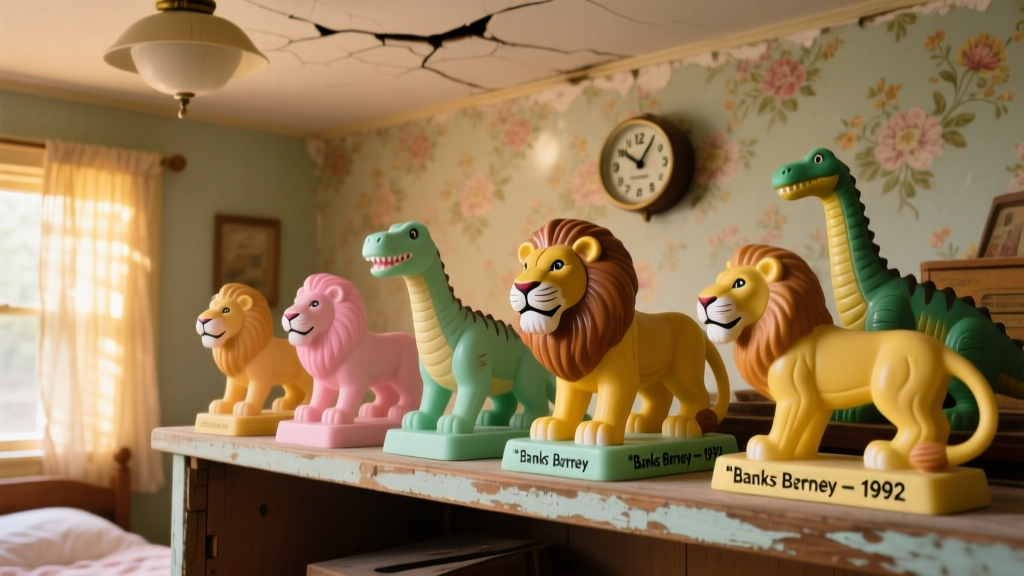
Banks Barney the Dinosaur: A Critical Appraisal of the 1992 Hand-Painted Plastic Lions Group Co. Figure
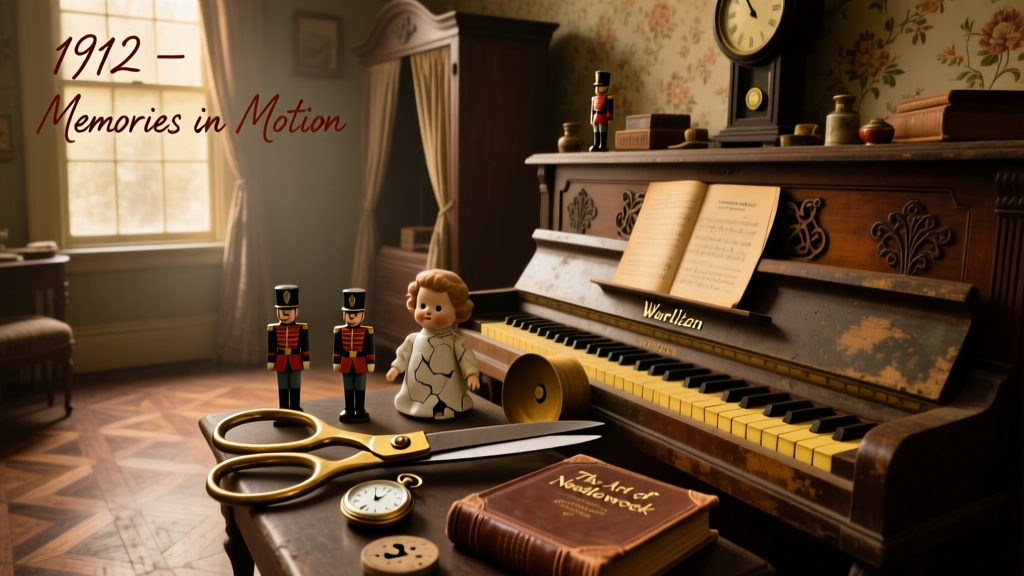
Sewing Scissors, Wurlitzer, and Musical Instruments: Unraveling a Curious Confluence in Early 1900s American Collectibles
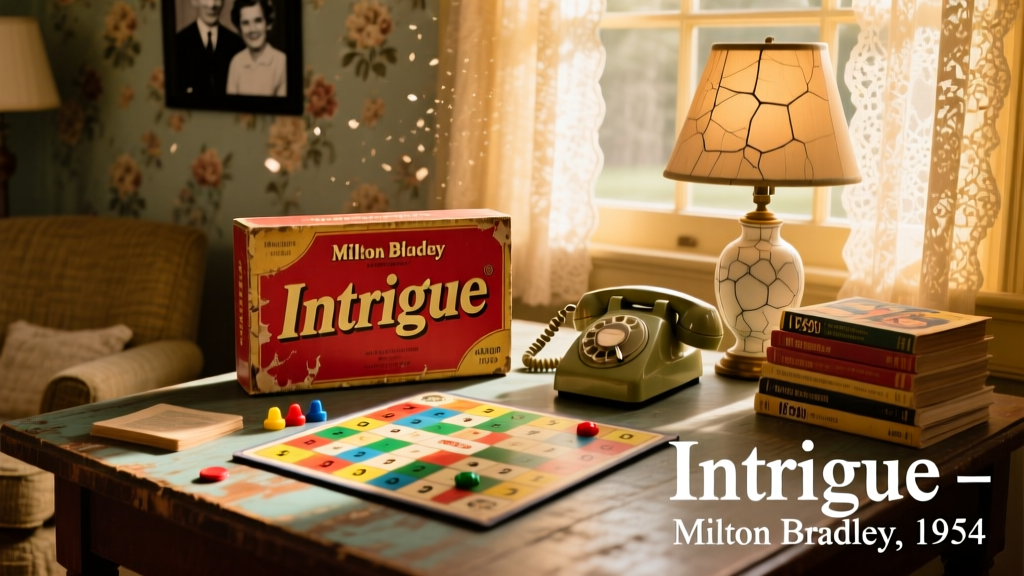
Game Intrigue: Milton Bradley’s 1954 Masterpiece of Mid-Century Espionage and Social Strategy
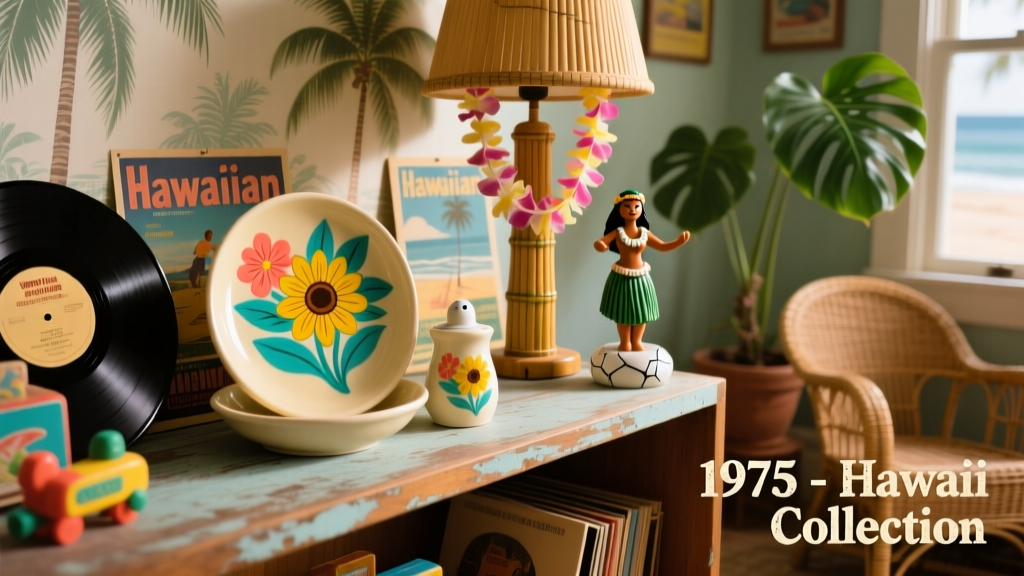
Vernon Kilns Salt & Pepper Sets: The Hawaiian Flowers Pattern — History, Identification, and Market Value

Charles Eames Rosewood Plywood Chair with Black Metal Frame: Authenticity, Value, and Preservation in Mid-Century Collecting
The 1135677: Uncovering the History, Rarity, and Value of the 1958 Ideal Toy Company 'Tippy the Elephant' Mechanical Pull Toy
The Radio Lamp Company of America: Art Deco Electric Radio-Lamp Combinations, 1932–1941