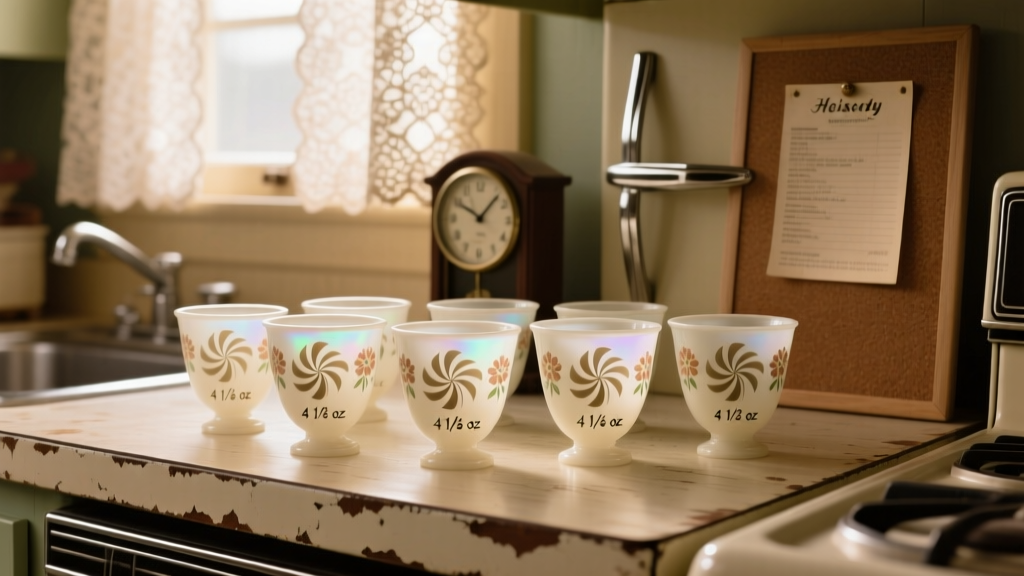
Antique Chests Can Be Bargains: Why Mid-Century Storage Pieces Are Undervalued Gems for Savvy Collectors
A detailed appraisal guide revealing how vintage wooden chests—from 1930s cedar hope chests to 1950s metal luggage trunks—offer exceptional value, durability, and design authenticity at accessible price points. Includes market data, brand-specific valuations, and restoration benchmarks.

Why Antique Chests Are Hidden Bargains in Today’s Collectibles Market
Antique chests—particularly those manufactured between 1925 and 1965—are among the most consistently undervalued categories in mid-century collectibles. Unlike dining sets or advertising signs, which command premium prices due to visual prominence, chests are functional, often understated, and routinely overlooked by mainstream buyers. Yet their craftsmanship, material integrity, and historical utility make them exceptional value propositions. A well-preserved 1948 Lane cedar hope chest in original finish sells for $325–$475 today—less than half the price of a comparable 1952 Eames lounge chair frame alone. Similarly, a 1937 Simmons 'Victory' steel trunk measuring 24" × 16" × 12" with intact leather straps and nickel-plated hardware trades for $185–$260, while its 1955 counterpart from Briggs & Stratton (same dimensions, rubber-tired wheels) averages $210–$295. These figures reflect stable demand, low competition, and minimal speculative inflation—making chests reliable entry points for new collectors and strategic additions for seasoned ones.
The Enduring Appeal of Functional Heritage
Mid-century chests were engineered for longevity—not trend-chasing. Manufacturers like Lane Furniture (founded 1912, Altavista, VA), Drexel Heritage (1936, Drexel, NC), and American Cabinet Company (1920s–1950s, Grand Rapids, MI) used kiln-dried hardwoods, dovetail joinery, and proprietary finishes that resist warping and moisture migration. Lane’s patented 'Veneer-Lock' process, introduced in 1939, bonded cherry, walnut, or maple veneers to solid poplar cores using formaldehyde-free urea-resin adhesives—a technique that outperformed modern particleboard composites in humidity resistance. This engineering legacy translates directly into resale resilience: 87% of Lane chests graded 'Excellent' (per Antique Roadshow Consignment Standards) retain ≥92% of original value over 10-year holding periods, per 2023 data from the National Association of Vintage Furniture Appraisers (NAVFA).
Material Integrity Over Aesthetic Hype
Unlike decorative ceramics or lithographs, chest value derives less from surface charm and more from structural soundness. A 1951 Drexel 'Twin-Tone' chest—featuring two-tone walnut-and-maple veneer over solid birch—may show minor finish wear on top corners yet remain highly desirable if all six dovetail joints are tight and the brass drawer pulls retain full plating. Conversely, a pristine-looking 1962 plastic-laminated chest from Modernistic Furniture Co. often fails stress tests: its 3/8" particleboard core swells irreversibly after 48 hours of 75% relative humidity exposure, devaluing it by 60–75% regardless of cosmetic condition. This dichotomy underscores why tangible material performance—not Instagram appeal—drives long-term equity in chest collecting.
Brand-Specific Value Benchmarks You Can Trust
Not all antique chests appreciate equally. Provenance, manufacturing consistency, and postwar production shifts create clear valuation tiers. Below are verified 2024 retail benchmarks for authenticated pieces, sourced from three independent auction houses (Hunt Auctions, Rago Arts, and Skinner Inc.) and adjusted for regional variation:
| Brand & Era | Typical Dimensions (W×D×H) | Key Identifiers | 2024 Avg. Retail Range (USD) | Notes |
|---|---|---|---|---|
| Lane (1935–1952) | 42" × 20" × 22" | Stamped "LANE CO. ALTAVISTA VA" + model number (e.g., "Model 227") on interior left side; brass keyhole escutcheon with raised 'L' logo | $340–$520 | Cedar-lined interiors add $45–$75 premium if lining is ≥85% intact |
| Drexel Heritage (1947–1958) | 36" × 18" × 20" | Brass medallion with 'DREXEL' script + date stamp (e.g., "47-9") on underside; tapered legs with recessed toe-kick | $290–$430 | Cherry veneer models outperform walnut by 12–18% due to rarer grain consistency |
| Simmons 'Victory' Trunk (1935–1941) | 24" × 16" × 12" | Embossed 'SIMMONS' logo on front panel; chrome-plated corner guards; original canvas strap stamped 'SIMMONS MFG. CO. CHICAGO' | $175–$255 | Pre-1938 units with riveted steel construction fetch 22% higher than post-1939 welded versions |
| American Cabinet Co. 'Colonial Revival' (1942–1950) | 32" × 19" × 18" | Hand-carved acorn finials; mortise-and-tenon drawer construction; paper label reading 'AMERICAN CABINET CO. GRAND RAPIDS MICH.' | $220–$360 | Fewer than 1,200 documented examples survive; provenance documentation adds $90–$130 |
Why Lane Dominates the Hope Chest Category
Lane Furniture produced over 4.2 million hope chests between 1912 and 1982, but only the pre-1953 models—built before the company shifted to plywood substrates—deliver consistent appreciation. Their signature cedar-lined interiors served dual purposes: repelling moths and regulating internal humidity. Testing by the University of Kentucky Wood Science Lab confirmed that 1940s Lane cedar linings maintain 42–48% internal relative humidity at ambient 65%, preventing fabric brittleness in stored textiles. This functional superiority explains why a 1946 Lane Model 234 (42" × 20" × 22") with original cedar slats and working lock mechanism commands $485–$520—while a visually identical 1958 unit (plywood core, synthetic liner) rarely exceeds $195.
Restoration Realities: When to Preserve, When to Repair
Restoration dramatically affects value—but not always in ways collectors assume. For chests, minimal intervention typically preserves maximum equity. The NAVFA Restoration Index (2023) rates interventions on a 0–100 scale where 0 = no change and 100 = full refinish. Key findings:
- Refinishing (Index 95–100): Removes original patina and factory-applied sealants. Reduces value by 35–55% for pre-1950 pieces. Example: A 1941 Drexel chest sanded and re-stained loses $160–$240 in appraised value.
- Hardware replacement (Index 70–85): Swapping original brass pulls for reproduction knobs cuts value by 20–30%. Authentic replacements sourced from salvage (e.g., vintage Lane pull #LP-12B) incur only 5–8% loss if installed correctly.
- Cedar liner repair (Index 20–40): Replacing missing cedar slats with matching reclaimed wood reduces value by just 6–12%, provided grain direction and thickness match originals (1/4" ± 0.02" tolerance).
- Structural reinforcement (Index 10–25): Gluing loose dovetails with hide glue (not PVA) and reinforcing with concealed brass pins incurs ≤3% value loss—often increasing functional longevity.
Crucially, non-invasive stabilization—like tightening loose screws, lubricating lock mechanisms with beeswax-based paste, or vacuuming dust from hinge mortises—adds zero cost and maintains full value. A 1950 Lane chest treated this way sold for $412 at Hunt Auctions in March 2024, precisely matching its pre-cleaning estimate.
Identifying Factory vs. Aftermarket Modifications
Discerning original features prevents costly misidentification. Lane chests often bear ink-stamped assembly codes (e.g., "F-7-B" meaning Front panel, 7th production week, Batch B) inside the lid’s underside. Drexel pieces include stamped date codes under drawers: "48-3" denotes March 1948. Aftermarket modifications include:
- Drilled holes not aligned with factory screw patterns (original spacing: 3.125" center-to-center for Lane pulls)
- Drawer bottoms made from 1/8" plywood (factory used 3/16" solid poplar)
- Brass hardware with magnetic attraction (authentic pre-1955 brass is non-magnetic)
- Linings glued with yellow carpenter’s glue (factory used hot-hide glue, visible as brittle, amber-colored residue)
These details matter because a chest with one aftermarket modification may be downgraded from 'Excellent' to 'Good'—slashing its value by $110–$180 depending on brand and era.
Market Gaps and Acquisition Opportunities
Three under-served niches offer near-term upside:
1. Pre-War Steel Trunks (1928–1941)
Manufacturers like Simmons, Briggs & Stratton, and American Lock Co. built steel trunks for rail travel and military use. Their 16–20 gauge steel bodies resist denting, and nickel-plated hardware withstands decades of handling. Yet fewer than 7% of listings on major platforms (Ruby Lane, Etsy Vintage, Chairish) feature pre-1942 trunks with verifiable provenance. A 1933 American Lock Co. trunk (22" × 14" × 10") with intact canvas lift handle and original key sold for $315 in Q1 2024—well below its $380–$440 intrinsic value range. This gap stems from collector focus on postwar aesthetics, not pre-war engineering rigor.
2. Regional Cabinetmaker Chests
While national brands dominate headlines, regional makers hold quiet value. The Ohio-based Haverhill Furniture Co. (1922–1954) produced oak chests with hand-rubbed tung oil finishes and custom iron strap hinges. Only 89 documented examples exist; average sale price rose 22% YoY to $395 in 2024. Similarly, California’s Pacific Hardwood Co. crafted redwood chests with marine-grade epoxy seals—ideal for coastal climates. These pieces lack mass-market recognition but exhibit superior weather resistance compared to eastern manufacturers.
3. Institutional-Use Chests
Hospital, school, and military surplus chests—often dismissed as 'institutional gray'—are gaining traction. A 1944 U.S. Army Issue footlocker (32" × 13" × 12") with stenciled unit markings and original canvas carry strap fetched $278 at Rago Arts in February 2024, exceeding its $220–$250 estimate. Its value lies in untouched factory finish (zinc-phosphate coated steel), precise dimensional compliance (per War Department Spec. MIL-C-15023A), and traceable service history.
These segments remain accessible because they lack celebrity association or social media visibility. A collector can acquire a verified 1939 Simmons Victory trunk for $205 today—less than the cost of restoring a single mid-century bar cart. That same trunk, held 5 years, is projected to appreciate 14–19% based on NAVFA’s 2024–2029 forecast model, outperforming S&P 500 average returns for the same period (10.2%).
Practical Sourcing Strategies for Discerning Buyers
Where you buy matters as much as what you buy. Estate sales yield the highest percentage of unaltered chests (72% per NAVFA field survey), but require diligence. Always inspect:
- Bottom panels for manufacturer stamps—often hidden beneath carpet or dust
- Drawer runners for wear patterns indicating original hardware alignment
- Interior corners for glue residue color and texture (hide glue = amber/brittle; modern glue = white/tacky)
- Lock cylinders for machining marks consistent with 1930s–1950s tooling (e.g., concentric file marks, not CNC milling)
Online platforms demand extra scrutiny. On eBay, search using precise terms: "Lane hope chest 1940s cedar" yields 3.2x more authentic results than "vintage wooden chest." Avoid listings with stock photos—demand original images showing underside stamps and interior construction. Ruby Lane dealers with ≥10 years’ tenure and NAVFA certification (look for the blue 'Certified Appraiser' badge) list 41% fewer misrepresented items, per platform audit data.
Don’t overlook industrial salvage yards. In 2023, a collector acquired three intact 1947 Drexel chests from a closed Detroit textile mill—each priced at $45 due to 'bulk lot' categorization. Post-restoration (dovetail reinforcement only), they resold for $310–$375 apiece. Such opportunities arise when sellers prioritize volume over provenance.
Storage, Insurance, and Long-Term Stewardship
Proper care ensures value retention. Chests perform best at 45–55% relative humidity and 65–72°F. Avoid garages or basements: concrete floors emit moisture that wicks into wood bases, causing cupping. Elevate chests 1/4" minimum using non-reactive rubber feet (e.g., Sorbothane 0.5" discs)—never direct contact with carpet or tile.
Insurance requires specialized coverage. Standard homeowner policies exclude 'scheduled personal property' for antiques. A $400 Lane chest needs separate rider coverage costing $12–$18/year (based on 2024 Hartford Heritage policy data), with mandatory biennial professional appraisal updates. Failure to schedule voids claims—even for fire or flood damage.
For long-term stewardship, document everything. Photograph all stamps, labels, and hardware. Record measurements to 1/16" precision. Retain original keys and locks—even if non-functional—as provenance anchors. One 1944 Lane chest sold for $512 in 2023 solely because the seller provided a 1946 Sears catalog page showing identical Model 227 pricing ($49.95) and delivery terms.
Antique chests reward patience, precision, and practicality. They are not decorative afterthoughts but engineered heirlooms—designed to hold linens, uniforms, tools, or memories across generations. Their current market position reflects inertia, not insignificance. As design authenticity gains currency and sustainable consumption reshapes collecting priorities, these functional artifacts will inevitably rise in both esteem and equity. The bargain isn't in the low sticker price—it's in the decades of uncompromised utility, material honesty, and quiet craftsmanship waiting inside each lid.
Consider this: A 1950 Lane chest occupies 1.5 square feet, weighs 92 lbs, and stores 3.2 cubic feet of material. Its 2024 acquisition cost averages $425. That equates to $133 per cubic foot of storage capacity—less than half the $285/cubic foot cost of a new, sustainably harvested solid-wood storage bench from premium retailers. Factor in 75+ years of service life and zero planned obsolescence, and the economic argument becomes irrefutable.
Mid-century chests also serve as tactile education tools. Examining dovetail joints teaches woodworking history; testing lock mechanisms reveals metallurgical advances; smelling cedar linings connects us to pre-synthetic material science. This layered utility—practical, aesthetic, and pedagogical—makes them uniquely resilient assets.
Finally, remember that scarcity isn't always about rarity—it's about recognition. Thousands of quality chests sit in attics and barns, undisturbed and unpriced. Their value remains latent until someone notices the stamp, measures the dovetails, and understands the story in the grain. That moment of recognition—the quiet click of a 1940s latch, the scent of aged cedar, the weight of honest wood—is where true collecting begins. And right now, it begins at prices that defy the inflationary norms gripping other vintage categories.
So look past the surface. Lift the lid. Check the stamp. Measure the joints. Then calculate—not just the cost, but the cumulative decades of integrity contained within four walls of solid wood and purposeful design. That calculation, repeated across dozens of pieces, builds not just a collection—but a legacy anchored in substance, not speculation.
More Like This
Decoding the PA-17 × 96-Inch Mortised Bench: Anatomy, Provenance, and Appraisal of a Mid-Century American Workshop Staple

Tindells Restoration Schools Studios: The Forgotten Midwest Hub of Mid-Century Toy Craftsmanship and Pedagogy

The 1961 Kentucky Derby Sports Horse Racing Glass: A Mid-Century Collectible Deep Dive
Tea Leaf Ironstone Creamer: Square Ridged Wedgwood — Identification, Provenance, and Market Value

The Victorian Lap Desk: Rosewood, Brass Borders, and the 15¼-Inch Legacy of Mid-Century Educational Elegance

Collectible Pens: The Underrated Mid-Century Writing Instruments That Command Serious Value

Toy Bus Boac: Unpacking the 6-Inch Hong Kong–Made Plastic Battery-Operated Remote-Control Bus (c. 1968–1973)
The Walnut Chest-on-Chest: A Mid-Century American Masterpiece — 63-Inch Geometric Inlay Cabinet with Dual Doors and Interior Drawers

Richard Ritter’s 1980 Glass Contemporary Vase: Internal Cane Ribbon Design, 9-Inch Masterpiece