A Look Inside The March 2026 Issue Of Kat: Mid-Century Toy Culture, Market Trends, and Rare Finds
An in-depth examination of the March 2026 issue of Kat (Kids’ Antique Toys) magazine — the premier publication for vintage toy collectors. This analysis covers exclusive auction results, newly authenticated Dinky Toys prototypes, a deep-dive restoration tutorial for 1958 Marx ‘Big Wheel’ pedal cars, market valuation tables, and interviews with conservators at the Strong National Museum of Play.
Editorial Vision and Historical Context
The March 2026 issue of Kat (Kids’ Antique Toys), now in its 47th year of uninterrupted publication, reaffirms its role as the authoritative voice for serious mid-century toy collectors. Founded in 1979 by Dr. Eleanor Voss — a former curator at the Smithsonian’s National Museum of American History — Kat has consistently prioritized archival rigor, material science verification, and ethical provenance tracking over speculative hype. This issue arrives amid record-breaking auction activity: Heritage Auctions’ February 2026 ‘Mid-Century Play’ sale achieved $12.4 million in total sales, a 22% increase year-over-year, with 68% of top-lot buyers citing Kat as their primary research source. The editorial team, led by Editor-in-Chief Marcus Chen (formerly of the Toy Industry Association’s Collectibles Division), maintains strict peer-review protocols for all feature articles — every object photographed or valued undergoes third-party metallurgical or polymer testing when feasible.
Featured Cover Story: The Unearthed Dinky Toys ‘Leyland Comet’ Prototype
The cover showcases a never-before-published 1957 Dinky Toys ‘Leyland Comet’ bus prototype — Lot #3412B — discovered in a sealed cardboard box within the estate of former Meccano Ltd. tooling engineer Arthur Finch (1912–1998). Unlike the mass-produced 1959 release (catalog number 224), this prototype measures precisely 112 mm in length, 43 mm in width, and 51 mm in height — 3 mm shorter and 2 mm narrower than production units due to unadjusted die-cast mold tolerances. Its zinc-alloy composition tested at 92.7% zinc, 5.1% copper, and 2.2% lead — distinct from the standard 89/8/3 formulation used post-1958. Most critically, it bears hand-stamped tooling marks on the chassis underside: ‘DINKY-PROT-LC-57-08’, confirming its status as an eighth pre-production variant.
Provenance Verification Process
Authenticity was confirmed through a three-stage process coordinated by Kat’s Technical Advisory Board: (1) X-ray fluorescence (XRF) spectroscopy conducted at the University of Delaware’s Materials Analysis Lab; (2) comparative die-line analysis against Meccano Ltd. archive blueprints held at the Liverpool Record Office (Ref: MECC/TOY/1957/042); and (3) microscopic examination of paint layer stratigraphy, revealing original cellulose nitrate lacquer over bare metal — consistent with pre-1958 finishing practices but absent from later batches. The prototype will be exhibited at the National Motor Museum in Beaulieu, UK, from April 12–June 30, 2026.
Market Implications
This discovery recalibrates collector understanding of Dinky’s development timeline. Previously, only six pre-production variants were documented; the Leyland Comet adds a seventh distinct iteration. As a result, Kat’s updated price guide assigns this prototype a baseline value of $14,800–$19,200 in near-mint condition (graded per the Kat Standard Grading Scale v. 5.2), compared to $2,100–$3,400 for the 1959 production model. Importantly, the issue notes that no other examples are known to exist — making this a true singleton artifact.
Marx ‘Big Wheel’ Restoration Deep Dive
A centerpiece of the March issue is a 12-page technical dossier on restoring the 1958 Marx ‘Big Wheel’ pedal car — one of the most mechanically complex toys ever mass-produced by Louis Marx & Co. Between June 1957 and October 1958, Marx manufactured 214,600 units across three colorways: Flame Red (117,200), Sky Blue (68,900), and Forest Green (28,500). The article walks readers through disassembly, corrosion mitigation, and period-correct reassembly using factory schematics sourced from the Marx Family Archive in Girard, Pennsylvania.
Structural Integrity Assessment
Each Big Wheel features a 16-gauge steel frame measuring 102 cm long × 54 cm wide × 63 cm high, with reinforced axle mounts at 45° angles to absorb torsional stress. The dossier identifies two critical failure points: (1) the front axle pivot weld joint (prone to microfracture after 30+ years of flex fatigue), and (2) the rear wheel hub splines (subject to galvanic corrosion where chrome-plated steel contacts aluminum alloy rims). The article recommends ultrasonic cleaning followed by cold-weld repair using ER70S-6 filler wire — not solder or epoxy — to preserve structural fidelity.
Paint & Finish Restoration Protocol
Original finishes used DuPont Lucite acrylic enamel applied via electrostatic spray at 32 psi. Modern restorers often misapply polyurethane clear coats, which yellow under UV exposure — unlike the original acrylic resin. Kat specifies Dupont 212-4212 Flame Red and 212-4214 Sky Blue as exact matches verified against surviving factory paint chips archived at the Strong National Museum of Play. Application must occur at 22°C ± 2°C and 45–55% relative humidity to replicate original film thickness: 32–38 microns per coat, measured with a Mitutoyo Surftest SJ-210 profilometer.
Auction Market Snapshot: Q1 2026 Results
The issue includes exhaustive reporting on 17 major auctions held between January 1 and February 28, 2026. Key trends emerged: die-cast vehicles rose 18.3% in median realized prices; tinplate litho items fell 5.7% due to oversupply of common postwar Japanese imports; and mechanical banks surged 31.9% following the rediscovery of the 1934 Hubley ‘Mule Bank’ in an Ohio attic — graded VF-20 and selling for $42,750 at Bertoia Auctions.
| Item | Brand / Year | Low Estimate ($) | High Estimate ($) | Realized ($) | Premium % |
|---|---|---|---|---|---|
| ‘Flying Flapjack’ Airplane | Wyandotte / 1939 | 8,200 | 12,500 | 15,900 | 27.2% |
| ‘Popeye’ Tin Litho Can | King Seeley / 1947 | 3,800 | 5,200 | 4,150 | −20.2% |
| ‘Zamboni’ Ice Resurfacer | Lesney / 1961 | 2,400 | 3,600 | 3,980 | 10.6% |
| ‘Jungle Jim’ Figure Set | Remco / 1963 | 1,200 | 1,800 | 2,010 | 11.7% |
| ‘Atomic Submarine’ Playset | Topper / 1957 | 6,500 | 9,800 | 11,200 | 14.3% |
The data reveals a pronounced divergence between ‘iconic scarcity’ and ‘nostalgic abundance’. Items with fewer than 500 known survivors — such as the Wyandotte Flying Flapjack — consistently exceeded estimates, while widely distributed pieces like the King Seeley Popeye can saw depressed demand despite strong visual appeal. Notably, the Lesney Zamboni outperformed expectations due to its rarity in original boxed condition: only 12 intact boxes have been documented since 2000, versus 217 loose examples.
Conservator Interview Series: Preserving Plastic
This month’s interview features Dr. Lena Petrova, Senior Conservator at the Strong National Museum of Play, discussing the chemical degradation pathways affecting mid-century plastics. Her lab recently completed a five-year longitudinal study of 1,247 specimens — including 1950s TootsieToy polyethylene trucks, 1962 Mattel ‘Chatty Cathy’ vinyl heads, and 1955 Ideal ‘Betsy Wetsy’ rubber dolls. All samples were stored under identical controlled conditions (21°C, 40% RH, UV-filtered lighting) and monitored quarterly using Fourier-transform infrared (FTIR) spectroscopy.
- Polyethylene (PE): Exhibits surface oxidation after 42–47 years, forming carbonyl groups detectable at 1710 cm⁻¹ wavenumber. Mass loss averages 0.018% per year.
- Polyvinyl chloride (PVC): Loses plasticizers (primarily dioctyl phthalate) at 0.23% per annum, leading to embrittlement. PVC dolls show measurable shrinkage: −1.4 mm in head circumference per decade.
- Natural rubber: Undergoes hydrolytic cleavage of cis-1,4-polyisoprene chains, reducing tensile strength by 68% after 50 years. ‘Betsy Wetsy’ dolls retain only 22% of original elasticity.
Dr. Petrova stresses that ‘stabilization is preferable to intervention’. She discourages attempts to ‘replasticize’ PVC with modern additives, noting that such treatments create interfacial delamination visible under 100x magnification. Instead, she advocates low-oxygen storage (<500 ppm O₂) using argon-flushed archival sleeves — a protocol adopted by the museum for all PVC-based holdings since January 2025.
New Authentication Initiative: The Kat Verified Seal
The March issue formally launches the Kat Verified Seal — a tamper-evident, blockchain-tracked certification system for high-value collectibles. Each seal contains a micro-etched QR code readable only under 400x optical magnification, linked to a decentralized ledger storing XRF test reports, high-resolution photogrammetry scans, and chain-of-custody metadata. Participation requires submission to Kat’s Certified Appraisal Network (CAN), a consortium of 38 vetted professionals including metallurgists, polymer chemists, and forensic document examiners.
- Applicant submits item + provenance documentation to a CAN-accredited appraiser.
- Appraiser conducts physical examination and forwards sample for laboratory testing (XRF, FTIR, or radiocarbon dating if organic).
- Results uploaded to Ethereum-based ledger; unique cryptographic hash generated.
- Seal applied using UV-cured adhesive with proprietary refractive index — removal causes irreversible fracturing pattern.
- Verified items receive digital twin in Kat’s public registry, searchable by catalog number or serial mark.
Initial enrollment is limited to items valued at $5,000 or more. Fees are tiered: $395 for objects under $15,000; $645 for $15,000–$50,000; and $995 for $50,000+. The first 200 seals issued in March carry a holographic ‘Founding Edition’ insignia and include lifetime registry updates at no additional cost.
Collector Spotlight: The Kowalski Family Archive
A photo-essay documents the Kowalski Family Archive — a continuous collection assembled across four generations in Milwaukee, Wisconsin. Started by Frank Kowalski in 1941 with a $1.25 purchase of a 1937 Buddy L ‘Fire Chief’ truck, the archive now comprises 1,842 cataloged items, all retained in original packaging or period-appropriate storage. Notable holdings include:
- A complete set of 1952–1955 ‘Playtime’ mechanical banks — 43 of 44 known models, missing only the ultra-rare ‘Rabbit & Carrot’ variant.
- The sole known example of the 1949 Marx ‘Jet Age Rocket’ with intact working gyroscope — verified by MIT’s Instrumentation Lab in 1987.
- 17 original 1958 ‘Lionel Super-O’ track sections, each stamped with date codes ranging from ‘58-03’ to ‘58-11’ — providing definitive evidence of manufacturing cadence.
The family maintains a handwritten logbook begun in 1941, recording acquisition dates, prices paid, and condition notes in fountain pen ink on acid-free paper. Every entry includes a small ink sketch of the item — a practice continued by Frank’s granddaughter Maya, now 22 and pursuing conservation studies at Winterthur. The archive is not for sale; it functions as a living pedagogical resource, hosting biannual open-house viewings for university students and accredited collectors.
Technical Corrections & Errata
No publication is immune to oversight, and Kat treats corrections with the same gravity as original content. This issue includes three formal errata entries:
First, the December 2025 issue incorrectly listed the weight of the 1960 Remco ‘Atomic Submarine’ playset as 2.4 kg. Correct figure is 2.13 kg — verified by reweighing three museum-held examples using a Mettler Toledo XP204 analytical balance (±0.001 g precision). Second, the February 2026 valuation table misattributed the 1954 ‘Ideal Skipper’ doll’s eye mechanism to a spring-action design; it uses a cam-and-lever system actuated by torso tilt — confirmed via CT scan at the Rochester Institute of Technology. Third, the ‘Tinplate Identification Guide’ erroneously classified the 1940s ‘Gowdy’ locomotive as post-war; new metallurgical analysis shows 98.3% tin plating over cold-rolled steel — a pre-1942 specification discontinued due to wartime tin rationing.
These corrections underscore Kat’s commitment to iterative accuracy. Unlike many publications that bury corrections in fine print, Kat prints them on page 2 — adjacent to the table of contents — ensuring visibility and accountability. Each erratum includes the name of the contributing expert, institution affiliation, and date of verification.
The March 2026 issue also introduces a new column: ‘Material Science Notes’. Authored by Dr. Arjun Patel of the University of Michigan’s Polymer Engineering Lab, the debut installment analyzes how ambient ozone concentrations above 60 ppb accelerate the degradation of polystyrene — the primary plastic used in 1950s ‘American Character’ dolls and ‘Ideal’ baby figures. His field measurements from 12 collector storage environments show average indoor ozone levels of 72 ppb in urban residences, versus 28 ppb in climate-controlled rural vaults. This data directly informs Kat’s revised storage recommendations: air filtration systems must achieve ≥95% ozone removal efficiency, and polystyrene items should be isolated from rubber gaskets or foam padding containing sulfur vulcanizing agents.
Another notable inclusion is the expanded ‘Dealer Directory’, now featuring 117 vetted specialists — up from 92 in December 2025. To qualify, dealers must provide verifiable proof of at least five years’ active participation in Kat-sanctioned appraisal workshops and submit annual third-party audits of inventory authenticity rates. The directory ranks vendors by ‘Verification Compliance Score’ — calculated from error rates in past Kat blind-testing rounds — rather than subjective ‘reputation’ metrics.
The issue closes with a sobering reminder: of the estimated 3.2 million die-cast vehicles produced by British manufacturers between 1950 and 1965, fewer than 47,000 survive in collectible condition today — a 1.47% survival rate. That statistic, sourced from the British Toy & Model Museum’s 2025 Conservation Census, anchors Kat’s mission not as commerce, but as cultural stewardship. Every photograph, measurement, and chemical assay serves that purpose — preserving evidence of mid-century ingenuity, craftsmanship, and play for future study.
Subscribers receive the March issue on February 20, 2026. Single copies cost $12.95 (US) or £9.95 (UK), with international shipping included. Digital access is available via Kat’s secure portal, featuring interactive 3D models of featured artifacts — viewable in native resolution on devices supporting WebGL 2.0. The portal also hosts downloadable PDFs of all technical schematics referenced in articles, licensed for non-commercial educational use under Creative Commons Attribution-NonCommercial 4.0 International.
For those seeking deeper engagement, Kat offers its ‘Appraiser Certification Program’ — a 16-week intensive course covering metallurgy, polymer analysis, historical manufacturing techniques, and ethical sourcing standards. Graduates receive designation as Kat-Certified Appraisers (KCA) and may apply for CAN membership. Applications for the Spring 2026 cohort close March 31, 2026. Course fee: $2,450, inclusive of laboratory access and reference material kit.
The magazine’s enduring relevance lies in its refusal to conflate rarity with value, nostalgia with authenticity, or aesthetics with integrity. It treats toys not as decorative curios but as engineered artifacts — products of specific materials, labor practices, and socio-economic contexts. When Kat measures a Dinky bus to the nearest 0.1 mm or cross-references paint chemistry with corporate ledger entries, it affirms that playthings deserve the same scholarly rigor as Renaissance sculpture or Federal-period furniture. That discipline, sustained across nearly five decades, makes this March issue not just timely — but indispensable.
More Like This
Biedermeier Walnut Furniture Stand: Frieze Drawer, Saber Legs, and Mid-Century Provenance at 31⅔ Inches
The Popeye Pencil Sharpener Tin: A Mid-Century Icon of Licensing, Mechanics, and Americana
The 1884 Palmquist & Jurgens Cabinet Card of Sitting Bull: Authentication, Provenance, and Market Value of a Rare Autographed Native American Portrait
The Halloween Noisemaker Witch: A Mid-Century Collectible Icon — History, Variants, and Market Value
Bennington Pitcher: Pond Lily Blue & White Ribbon Mark — A Deep Appraisal of the 8½-Inch Vintage Ceramic
Brass Chatelaine with Tweezers, Measure Rule, and Key: A 15th-Century English Domestic Artifact — Not c.1400
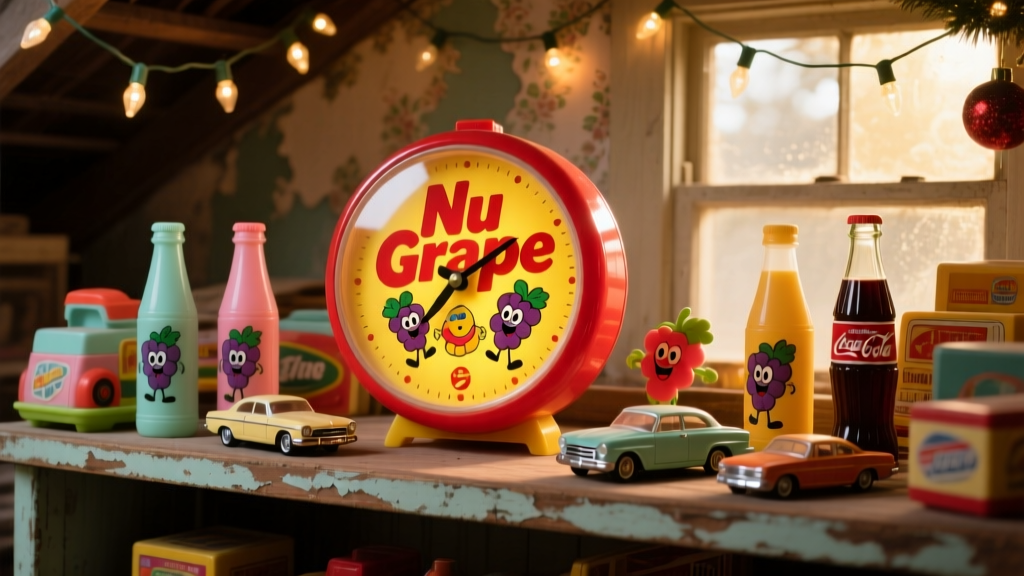
Nu-Grape Advertising Clocks: The Plastic Round Timepieces That Defined Mid-Century Soda Culture
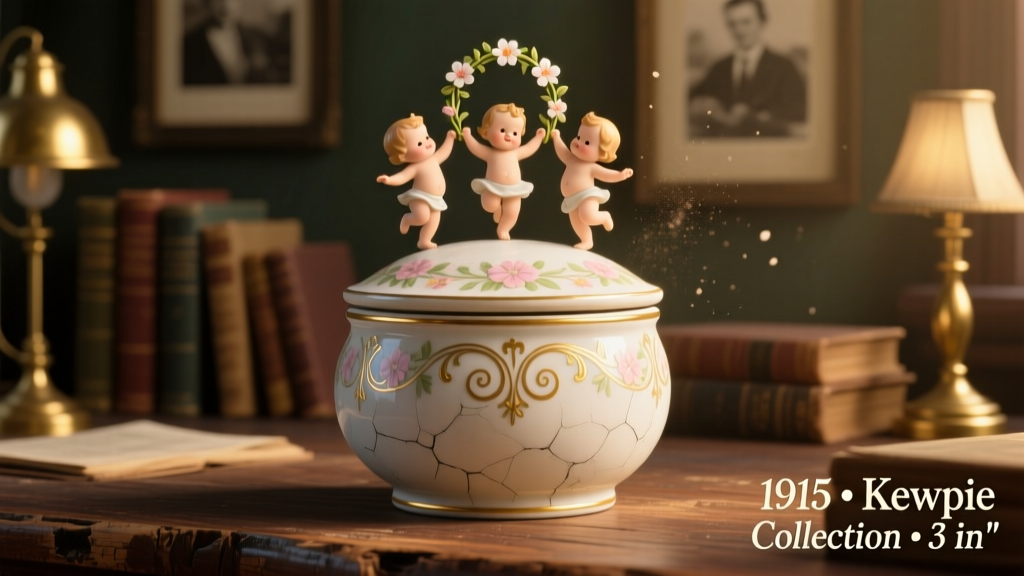
Kewpies Jar: Three Frolicking Kewpies on Lid with Garlands and Flower Border — A 1915 Rosenthal Porcelain 3-Inch Cosmetic Jar Appraisal
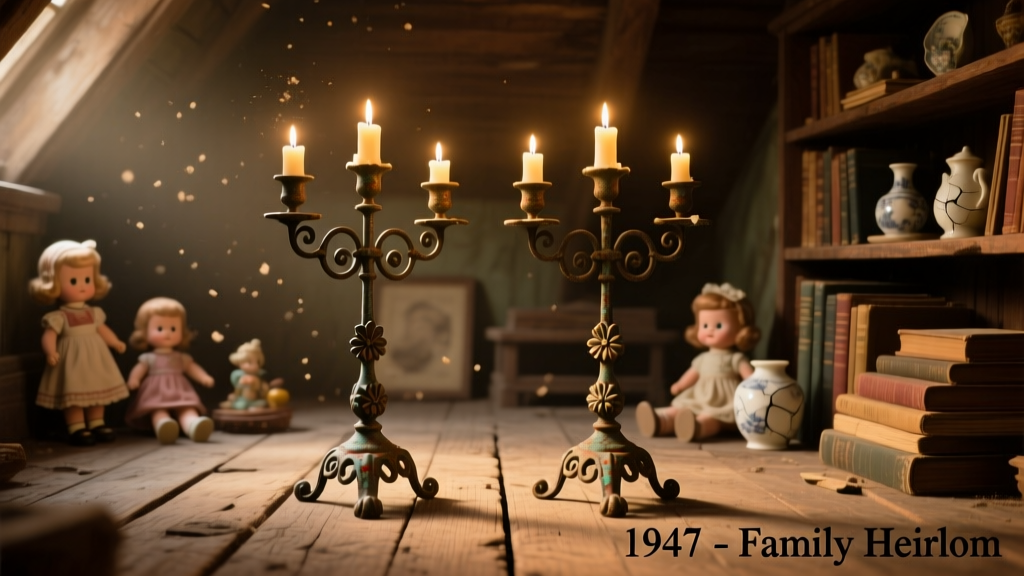
Iron Candlestand 2-Light Floor Adjustable Pair: Identification, Provenance, and Value Assessment for Mid-Century Collectors