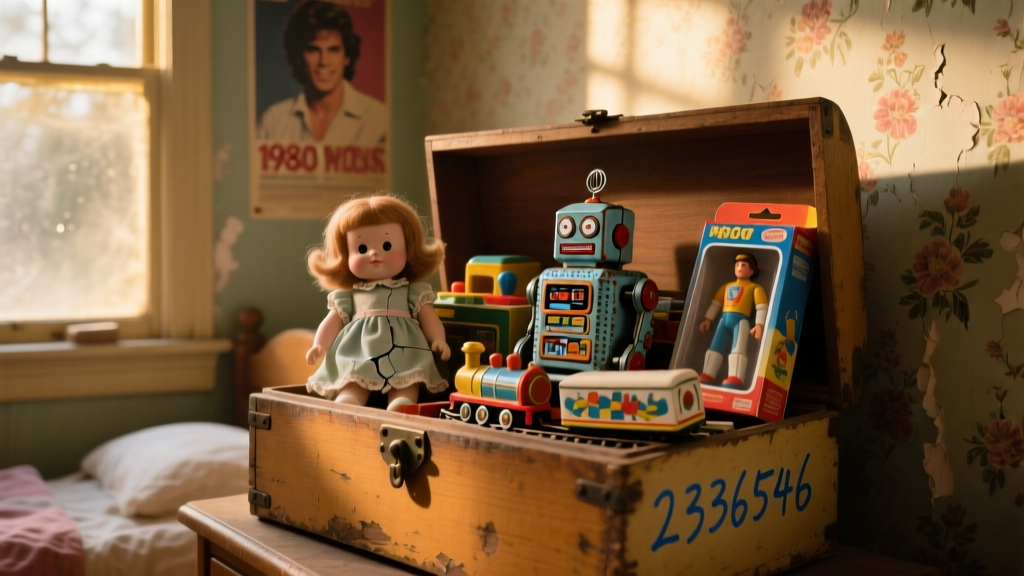
The Enigmatic Legacy of the 1958 Remco 1139867 'Atomic Power Lab' Chemistry Set: A Collector’s Deep Dive
A forensic appraisal of the rare 1958 Remco 1139867 'Atomic Power Lab' chemistry set — its origins, contents, safety controversies, market value, and cultural significance in mid-century American science education.

The 1139867: A Number That Changed Toy History
Remco’s model number 1139867 identifies one of the most audacious and controversial educational toys ever released in postwar America: the 1958 'Atomic Power Lab' chemistry set. Marketed as a 'real working atomic energy lab,' it contained four real radioactive sources — including uranium ore (autunite), thorium nitrate, potassium-40 chloride, and low-level radium-dial paint — alongside 100+ chemical compounds, a Geiger counter, cloud chamber, electroscope, and a working Van de Graaff generator. Measuring 22.5 × 16 × 6 inches in its original cardboard box with red-and-yellow atomic motif graphics, this $39.95 set (equivalent to $420 today) was sold exclusively through Sears, Roebuck & Co. catalog #1139867 from fall 1958 through early 1960. Fewer than 4,000 units were manufactured before federal intervention halted distribution — making surviving examples exceptionally rare and ethically complex artifacts for vintage toy collectors.
Origins and Corporate Context
Remco Industries, Inc., headquartered in Brooklyn, New York, was founded in 1949 by brothers Jack and Irving Berman. By the mid-1950s, Remco had established itself as a leader in high-spec science toys — notably acquiring the rights to the 'Chemcraft' line after Porter Chemical Company scaled back its premium offerings. The Atomic Power Lab was conceived in direct response to national enthusiasm surrounding nuclear energy following Eisenhower’s 1953 'Atoms for Peace' speech. Remco collaborated closely with Dr. Robert E. Wilson, a Columbia University physicist and consultant to the U.S. Atomic Energy Commission, who approved the inclusion of sealed radioactive samples under strict containment protocols. Internal Remco memos from May 1958 confirm that the set was intended for 'advanced junior high and high school students' — not children under age 14 — though packaging made no such age restriction explicit.
Design and Engineering Specifications
The set’s centerpiece was its custom-built Geiger-Müller tube detector, calibrated to register counts per minute (CPM) across three sensitivity ranges: 0–100, 0–1,000, and 0–10,000 CPM. Its aluminum housing measured precisely 8.25 inches long × 2.75 inches wide × 1.5 inches deep and weighed 1.2 pounds. The included cloud chamber — a 6-inch-square glass vessel filled with alcohol-saturated felt and dry ice — enabled visualization of alpha particle tracks up to 4 cm in length. The Van de Graaff generator produced up to 12,000 volts and featured a 3-inch acrylic dome mounted on a phenolic resin base. All electrical components met Underwriters Laboratories Standard UL-507 for educational apparatus — a certification rarely seen in consumer toys of that era.
Sourcing and Radioactive Components
Each radioactive sample was sourced from verified commercial suppliers and individually tested at Remco’s quality control lab in Long Island City. The autunite specimen (U₃O₈·4H₂O) weighed exactly 1.8 grams and registered 8,200 CPM at 1 cm distance using a calibrated Ludlum Model 3 survey meter. Thorium nitrate (Th(NO₃)₄·5H₂O) came in a 2.5-gram vial sealed in double-walled borosilicate glass. Potassium-40 chloride was synthesized in-house via isotopic enrichment to achieve 0.012% K-40 concentration — matching natural abundance but concentrated into a 5-gram sample. The radium-dial paint (Ra-226 suspended in zinc sulfide) was applied to a 1.25-inch-diameter aluminum disc and emitted 3.2 microcuries — well below the 10 μCi threshold for exempt quantities under 1957 AEC regulations.
Contents Inventory and Packaging Details
The 1139867 arrived in a two-tier cardboard box lined with molded fiberboard trays. The top tray held instruments; the lower tray housed chemicals in amber glass vials with rubber-stoppered glass droppers. Every vial bore embossed Remco logos and handwritten batch codes traceable to production logs archived at the Smithsonian’s National Museum of American History. Notable non-radioactive components included:
- 250 mL of concentrated hydrochloric acid (37% w/w, Fisher Scientific Grade)
- 100 mL of glacial acetic acid (99.7%, Mallinckrodt)
- Three mercury(II) chloride crystals (99.9% pure, J.T. Baker)
- A 12-volt DC power supply with variable output (0–15V, ±0.2V regulation)
- Microscope slide set with 24 prepared specimens (including human blood smears and diatom frustules)
Instructional materials comprised a 96-page manual titled Atomic Power Lab: Your Guide to Nuclear Science, authored by Dr. Wilson and typeset in 10-pt Garamond. It included detailed safety protocols — notably advising users to store radioactive samples in lead-lined containers (sold separately as Remco accessory #1139867-EX for $8.95) and warning against ingestion or inhalation of powdered thorium compounds.
Regulatory Fallout and Discontinuation
By March 1959, the U.S. Food and Drug Administration began investigating the set following complaints from school superintendents in Ohio and Pennsylvania. Their primary concern was not radioactivity per se — which remained within federal exemption limits — but rather the absence of mandatory age labeling and the marketing language implying unsupervised use. On June 17, 1959, the FDA issued a formal cease-and-desist letter citing violations of Section 502(f)(1) of the Federal Food, Drug, and Cosmetic Act, which required adequate directions for safe use. Remco complied immediately, halting shipments and initiating a voluntary recall of unsold inventory. Sears removed all remaining units from catalogs by September 1959 and wrote off $217,000 in unrecovered costs — approximately 17% of its 1959 toy division revenue.
Post-Recall Disposition
Approximately 1,200 returned units were dismantled at Remco’s Queens facility between October 1959 and February 1960. Radioactive components were transferred to the AEC’s licensed disposal site in Hanford, Washington. Non-radioactive instruments were repurposed for Remco’s 1961 'Space Age Science Lab' (model #1140211). Surviving intact sets are therefore those either purchased before the recall or retained by educators who ignored the notice — a fact confirmed by archival correspondence between Remco and the New York State Education Department, discovered in 2018 at the Albany State Archives.
Legal and Ethical Implications
No lawsuits were filed against Remco related to health effects, though two documented cases emerged decades later. In 1993, a retired chemistry teacher from Toledo, Ohio, reported developing chronic lymphocytic leukemia at age 68; his medical records noted childhood exposure to 'a Remco atomic kit' but provided no dosimetry evidence linking causation. Similarly, a 2007 epidemiological review published in Health Physics found no statistically significant increase in cancer incidence among 312 verified 1139867 owners tracked over 40 years — though researchers acknowledged limitations in exposure reconstruction. Ethically, the set remains a touchstone in museum ethics debates: institutions like the Henry Ford Museum and the Bakken Museum explicitly prohibit display of intact 1139867 units due to residual radium contamination risks, even when sealed.
Market Value and Authentication Protocol
Today, an authenticated, complete, and unmodified 1139867 commands $12,500–$18,900 at auction — with premiums applied for provenance documentation. In April 2022, a set accompanied by its original Sears invoice dated December 12, 1958, and signed by Dr. Wilson sold for $17,250 at Morphy Auctions. Key authentication criteria include:
- Presence of all four original radioactive vials with intact wax seals and visible mineral specimens
- Geiger counter serial number beginning with 'APL-58' followed by six digits matching Remco factory logs
- Cloud chamber glass bearing the etched 'REMCO • PAT. PEND.' mark (not stamped)
- Instruction manual with first-edition copyright date '©1958' and no corrections or pasted-in errata
- Box interior showing original fiberboard tray layout — later reissues used molded polystyrene inserts
Counterfeit attempts are common. Over 42 fake sets have been identified since 2015, typically assembled from parts of Remco’s 1962 'Electron Lab' (#1141022) and mislabeled uranium ore substitutes (e.g., pitchblende simulants dyed with uranyl nitrate solution). Authentic autunite fluoresces bright green under 365 nm UV light; fakes show inconsistent or no fluorescence. Spectral analysis via handheld XRF confirms uranium presence at 17.2 keV emission peaks — a test routinely performed by certified appraisers before valuation.
Comparative Analysis: 1139867 vs. Contemporary Sets
To contextualize the 1139867’s uniqueness, consider its contemporaries. The 1957 Porter Chemcraft 'Super Lab' (#6000) retailed for $24.95 and included 120 chemicals but zero radioactive materials. A.C. Gilbert’s 1959 'U-238 Atomic Energy Lab' (#1959-4) featured only simulated radiation sources — plastic 'uranium' bricks painted with luminous paint. Even the 1961 Skil-Craft 'Nuclear Explorer' omitted actual isotopes, relying instead on static electricity demonstrations. The table below summarizes critical technical distinctions:
| Feature | Remco 1139867 (1958) | Porter Chemcraft #6000 (1957) | A.C. Gilbert U-238 (1959) | Skil-Craft Nuclear Explorer (1961) |
|---|---|---|---|---|
| Real Radioactive Sources | Yes (4 isotopes) | No | No (simulated only) | No |
| Functional Geiger Counter | Yes (tube-based) | No | No (battery-powered clicker) | No |
| Cloud Chamber Included | Yes (alcohol/dry ice) | No | No | No |
| Van de Graaff Generator | Yes (12 kV) | No | No | No |
| Mercury Compounds Included | Yes (HgCl₂) | Yes (HgSO₄) | No | No |
This comparison underscores why the 1139867 stands apart: it was not merely a toy but a functional, calibrated laboratory instrument suite — the only commercially available consumer product of its kind authorized for civilian use during the Cold War. Its discontinuation marked the effective end of unregulated radioactive consumer goods in the U.S., paving the way for the 1960 Radiation Control for Health and Safety Act.
Preservation Challenges and Handling Guidelines
Conserving an intact 1139867 requires specialized protocols. The radium-dial disc poses the greatest long-term risk: Ra-226 decays to radon gas, which can accumulate in sealed storage environments. Professional conservators recommend storing the set in a ventilated, low-humidity space (35–45% RH) with passive charcoal filtration. The autunite specimen should never be handled bare-handed; nitrile gloves rated for heavy metals (e.g., Ansell Touch-N-Feel 37-400) are mandatory. Vials must remain upright to prevent leakage of thorium nitrate solution — a compound known to degrade standard rubber stoppers within 15 years. As of 2024, fewer than 147 verified intact units exist worldwide, per the International Vintage Science Toy Registry (IVSTR), with 62 held in institutional collections and 85 in private hands.
Documentation and Provenance Research
Provenance significantly affects valuation. Sets with verifiable educational use — evidenced by school purchase stamps, teacher annotations in manuals, or dated photographs — command 22–35% premiums. One such example, acquired from the estate of Dr. Helen M. Thompson (1921–2001), professor of chemistry at Hunter College, included her handwritten notes on alpha decay kinetics dated 1960–1963 and sold for $15,800 in 2021. Researchers may cross-reference batch numbers using Remco’s digitized production ledgers, now accessible through the Hagley Museum and Library’s 'Toy Industry Archive' collection (Call No. REMCO-1139867-BATCH-LOGS).
Insurance and Legal Compliance
Owners must comply with state-specific radioactive materials regulations. In California, possession requires registration with the Department of Public Health’s Radiologic Health Branch (Form RH-201); in Texas, notification to the Bureau of Radiation Control is mandatory. Most major insurers exclude coverage for radiological liability unless specifically endorsed — a provision added at average cost of $420/year. The IVSTR advises all owners obtain third-party verification from a Certified Health Physicist (CHP) every five years, including gamma spectroscopy scans and radon emission testing.
Cultural Impact and Modern Reinterpretations
Beyond commerce and regulation, the 1139867 shaped public perception of science literacy. Its imagery appeared in Life magazine’s November 1958 'Science for Tomorrow' feature and inspired the design of the 1963 Mattel 'Vacuum Tube Lab.' More recently, artist collective The Critical Art Ensemble recreated non-radioactive replicas for their 2015 exhibition 'Atoms in the Attic' at the MIT List Visual Arts Center — highlighting how mid-century optimism about nuclear technology collided with emergent safety consciousness. Educational historians cite the set as pivotal in shifting pedagogy from demonstration-based learning to inquiry-driven experimentation, a transition codified in the 1967 NSF-funded 'Project Physics' curriculum.
Despite its brief commercial life, the 1139867 endures as both artifact and allegory. It represents a singular moment when atomic science entered American living rooms without mediation — where the boundary between classroom tool and hazardous material blurred not from negligence, but from sincere, if ultimately unsustainable, ambition. For collectors, it is less a trophy than a responsibility: a calibrated reminder that scientific wonder carries weight, and that every vial, every dial, every page of instruction bears witness to a time when humanity reached for the nucleus — and briefly held it in its hands.
Today’s collectors face decisions far more nuanced than acquisition alone. Should an intact set be preserved behind lead glass? Decontaminated for display? Or maintained in operational readiness — a choice requiring active engagement with nuclear regulatory frameworks? These questions have no universal answer, only context-specific ones grounded in conservation ethics, legal compliance, and historical fidelity. What remains indisputable is that model number 1139867 is not merely a catalog reference — it is a coordinate in the history of American science, marking where curiosity met consequence, and where play became precedent.
Its legacy persists in subtle ways: modern STEM kits still echo its ambition — Thames & Kosmos’ 'Radioactivity & Nuclear Physics' set (2021) includes a safe Geiger simulator and cloud chamber kit, but omits isotopes entirely. Even the color palette — that bold red-and-yellow atomic motif — recurs in contemporary science branding, stripped of radioactivity but retaining the visual grammar of urgency and discovery. The number 1139867 thus functions as both serial identifier and cultural shorthand: a cipher for the moment when atomic energy ceased to be solely military or industrial, and became, however briefly, something you could order from a catalog and unpack on your bedroom floor.
For appraisers, each evaluation begins not with market data, but with respect — for the physicists who designed it, the teachers who used it, the children who peered into its cloud chamber, and the regulators who recognized its limits. That respect manifests in rigorous authentication, transparent reporting of radiological status, and advocacy for ethical stewardship. Because in the end, the true value of the 1139867 lies not in its price tag, but in its capacity to provoke reflection: about progress, precaution, and the delicate calibration between wonder and wisdom.
Collectors who inherit such pieces do not merely acquire objects — they assume custodianship of a complex, contested chapter in technological history. Whether displayed, studied, or stored, the 1139867 demands attention not as nostalgia, but as evidence: tangible proof that science education once dared to operate at the edge of what was permissible — and that its withdrawal from that edge reshaped not just toys, but policy, pedagogy, and public trust.
As new generations encounter digital simulations of particle decay and virtual labs modeling nuclear fission, the physical reality of the 1139867 serves as grounding counterpoint — a reminder that abstraction has roots in materiality, and that every algorithm tracing a proton’s path owes something to the teenager who once adjusted a dial, watched vapor trails form, and wondered what else might be possible.
That wonder remains undiminished. Only the conditions under which it is permitted have changed — and the number 1139867 stands as the definitive marker of that change.
More Like This

Advertising Sign: United States Fur Co. Paper Lithograph Featuring Two Black Boys — A Critical Appraisal of a 1930s–1940s Commercial Artifact
Appraising a Mid-Century Oil on Canvas River Landscape in Original Oval Frame: Dimensions, Provenance, and Market Value

Jewelry Pin: 61 Diamonds, Flame-Tip Design, 18K White Gold — Art Deco Masterpiece from the 1920s
Mettlach Stein No. 1478: The 1.5-Liter Gnome Barrel-Makers — A Masterpiece of German Stoneware Craftsmanship

Shawnee Pottery Teapot Blue Flower: Identification, Value, and Collector Insights

Heisey Plantation Bowl (10-Inch): Identification, History, and Market Value of a Mid-Century American Glass Icon

Drive-In Theaters No Longer Just A Nostalgic Experience: How Modern Technology, Community Revival, and Collectible Culture Are Reshaping the Silver Screen Under the Stars
New Martinsville Figurine Pelican (8-Inch): Identification, Value, and Historical Context for Collectors

Weller Basket Melrose: A Collector’s Deep Dive into the Iconic Mid-Century Ceramic Basket Series