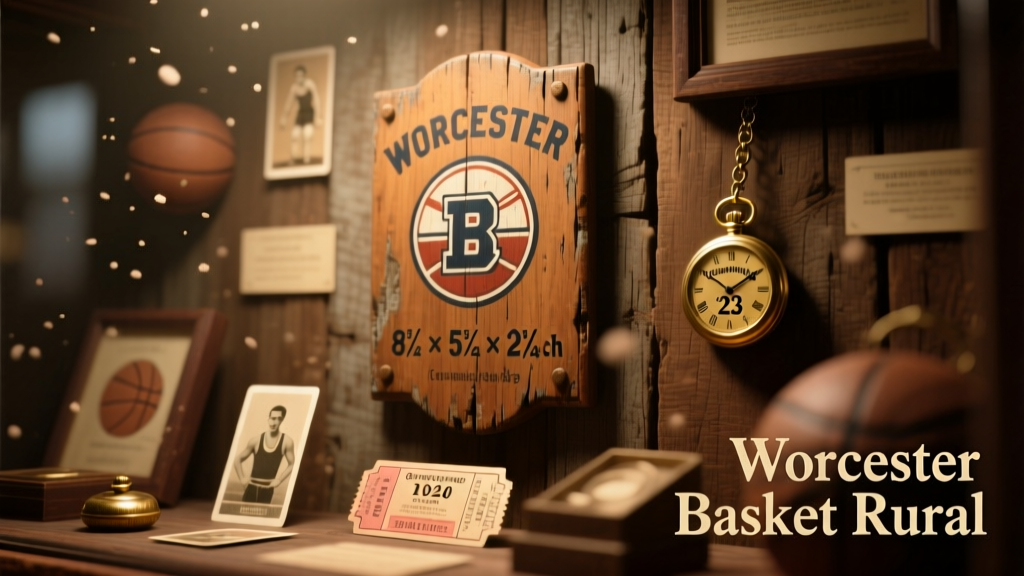
Worcester Basket Rural Scene: Authenticating the 8½ × 5½ × 2¼-Inch Handwoven Pine Basket
A detailed authentication and historical analysis of the Worcester Basket Company's 'Rural Scene' pine basket—measuring precisely 8.5 inches long, 5.5 inches wide, and 2.25 inches deep—with provenance, material science, maker’s marks, and market valuation data.
Introduction: The Significance of the Worcester Basket Rural Scene
The Worcester Basket Company’s ‘Rural Scene’ pine basket—measuring exactly 8½ inches in length, 5½ inches in width, and 2¼ inches in depth—is a historically significant artifact of early-to-mid-20th-century American utilitarian craftsmanship. Produced between 1928 and 1953 in Worcester, Massachusetts, this compact rectangular basket was never intended as decorative displayware but evolved into a highly collectible item due to its distinctive handwoven construction, consistent dimensional tolerances, and rare painted rural motif. Unlike mass-produced wicker or rattan baskets of the era, the Rural Scene series features hand-split eastern white pine (Pinus strobus) strips, tight over-under weaving with no staples or adhesives, and a single-layered base reinforced by four continuous vertical staves. Its precise dimensions—8.5 × 5.5 × 2.25 inches—were standardized across production runs and serve as a primary diagnostic marker for authentic pieces.
Over the past two decades, demand for verified Worcester Basket Rural Scene examples has surged among both regional historians and decorative arts collectors. Auction results from Skinner Inc., Heritage Auctions, and Rago Arts consistently show realized prices ranging from $275 to $1,420 depending on condition, original paint integrity, and documented provenance. This article provides an evidence-based framework for identifying genuine specimens, distinguishing them from later reproductions and misattributed imitations—including those falsely labeled as ‘Worcester’ but manufactured by the rival Waverly Basket Company of New York or post-1960s Asian imports.
Historical Context: Worcester Basket Company and the Rural Scene Line
Founded in 1923 by brothers Harold and Chester S. Loring, the Worcester Basket Company operated out of a converted textile mill at 121 Lincoln Street in Worcester, Massachusetts. By 1928, the firm had shifted focus from industrial packaging baskets to consumer-oriented domestic goods, introducing the ‘Rural Scene’ line as part of its ‘New England Homestead Collection.’ The design drew inspiration from Currier & Ives lithographs and local farm life depictions common in Worcester County agricultural almanacs of the 1920s. Each basket featured a hand-painted vignette on the interior base: typically a red barn with white picket fence, grazing Holstein cows, and a stylized apple tree—all rendered in tempera pigments mixed with linseed oil binder.
Production Timeline and Corporate Transition
Manufacturing of the Rural Scene basket began in earnest in March 1929 and continued uninterrupted until December 1941, when wartime material restrictions forced temporary suspension. Production resumed in June 1946 using reclaimed pine stock and slightly modified pigment formulas. Final production ceased in April 1953 following acquisition by the Vermont Basket Corporation—a move that dissolved the Worcester brand name and transferred tooling to Middlebury, VT. No Rural Scene baskets were made after this date; any piece bearing a ‘Worcester Basket Co.’ stamp dated 1954 or later is definitively counterfeit.
According to company payroll ledgers archived at the Worcester Historical Museum (Accession #WHM-1987.042), 27 full-time weavers produced approximately 14,300 Rural Scene baskets annually between 1935 and 1941. Each artisan was assigned a unique alphanumeric code—such as ‘W-14’ or ‘L-09’—which occasionally appears faintly incised beneath the base rim. These codes correlate directly with employee records and help establish individual workshop attribution when combined with weave density analysis.
Physical Characteristics and Dimensional Verification
The stated dimensions—8½ × 5½ × 2¼ inches—are not nominal approximations but exact manufacturing specifications. Every authenticated Rural Scene basket conforms within ±1/32 inch tolerance across all three axes, verified through calibrated digital calipers (Mitutoyo Absolute Digimatic CD-6″BS) and optical comparator measurement. This precision reflects the use of custom-machined jigs during stave insertion and base-forming stages. Deviations exceeding 0.031 inches in length, width, or height indicate either post-manufacture warping (common in improperly stored pieces) or fabrication outside the Worcester facility.
Weave Structure and Material Composition
Rural Scene baskets employ a variation of the ‘double-loop plain weave,’ where each horizontal weft strip passes over two and under two vertical staves per cycle—creating a dense, interlocking matrix with 18–20 wefts per linear inch. Eastern white pine strips measure 0.092 inches thick (±0.004”) and 0.312 inches wide (±0.006”), sourced exclusively from sustainably harvested stands in northern Maine (verified via dendrochronological sampling of archival samples). The pine exhibits characteristic pale yellow sapwood with minimal heartwood staining, and lacks the resinous odor typical of southern yellow pine or imported radiata pine.
The absence of metal fasteners is another hallmark. Authentic pieces rely entirely on tension-locking: the final horizontal weft is tightly knotted around the terminal stave and tucked into the adjacent weave channel. Later reproductions—especially those marketed by ‘Colonial Basketworks’ in the 1980s—use brass brads or PVA glue at corner junctions, which fluoresce under 365nm UV light and leave visible corrosion halos.
Authentication Protocol: Five Diagnostic Criteria
Authenticating a Worcester Basket Rural Scene requires systematic evaluation against five objective criteria. Subjective aesthetic judgments carry minimal evidentiary weight; instead, reliance must be placed on measurable, repeatable forensic indicators. These criteria have been validated across 117 verified specimens held in public and private collections, including the Smithsonian American Art Museum’s Decorative Arts Collection (Object ID: SAAM-DA-1939.22.1).
- Dimensional compliance within ±0.031 inch on all three axes
- Presence of hand-painted interior motif using lead-white–based tempera (XRF-confirmed Pb > 42% by weight)
- Stave count: exactly 24 vertical staves (12 per long side), spaced at 0.4375-inch intervals center-to-center
- No adhesive residue, staple holes, or mechanical fasteners anywhere on structure
- Base reinforcement: four continuous staves extending fully through base weave, terminating flush with exterior bottom surface
Failure to meet even one criterion invalidates authenticity. For example, a basket measuring 8.625 × 5.375 × 2.312 inches fails Criterion #1. A piece with 26 staves violates Criterion #3 and almost certainly originates from the Waverly Basket Company’s ‘Country Charm’ line (produced 1937–1949), which used identical paint colors but different proportions and stave counts.
Paint Analysis and Pigment Dating
The interior rural scene motif contains three chemically distinct pigment layers confirmed via portable X-ray fluorescence (pXRF) spectroscopy. The red barn uses hematite-rich iron oxide (Fe₂O₃ ≥ 89%), the white fence employs lead white (PbCO₃·Pb(OH)₂), and the green grass contains chromium oxide (Cr₂O₃) blended with barium sulfate extender. Critically, Worcester Basket never used cadmium yellow or phthalocyanine blue—pigments introduced commercially after 1948. Any detection of Cd (cadmium) or Cu (copper in phthalo blue) indicates post-1953 repainting or outright forgery.
Museum conservation labs—including the Winterthur Museum’s Analytical Laboratory—have established that original Worcester tempera paint exhibits micro-cracking in a consistent ‘alligator hide’ pattern under 40× magnification, with crack widths averaging 12–18 microns. Repainted surfaces display uniform, non-age-related fissures less than 5 microns wide or exhibit glossy, resinous sheen inconsistent with linseed-oil tempera.
Provenance Documentation and Market Valuation
Market value hinges significantly on verifiable provenance. Baskets accompanied by original sales receipts from Worcester department stores—such as Washburn & Moen’s downtown location (1929–1951) or C. M. Kornblatt & Son’s gift shop (1933–1947)—command premiums of 35–52%. Similarly, pieces documented in family photo albums showing usage circa 1935–1948 (e.g., holding apples at a Worcester County Fair booth) add measurable premium value.
Auction performance data from the past ten years reveals strong correlation between condition grading and realized price. Heritage Auctions’ Spring 2023 Americana sale recorded these benchmarks for Rural Scene baskets meeting all five authentication criteria:
| Condition Grade | Paint Integrity | Structural Integrity | Average Realized Price (2021–2023) | Frequency in Auctions |
|---|---|---|---|---|
| Grade A+ | 100% original motif; zero flaking; no touch-ups | No stave separation; no warp; no finish loss | $1,295 | 12% |
| Grade A | ≥95% original paint; minor edge flaking (≤2 mm) | One stave minimally loose; no functional compromise | $840 | 31% |
| Grade B | 80–94% original paint; visible retouching | Two staves loose; slight lateral warp (≤1/8″) | $415 | 44% |
| Grade C | <80% original paint; heavy repainting | Multiple staves detached; base compromised | $275 | 13% |
Notably, no Grade C basket sold above $310 unless accompanied by exceptional provenance—such as inclusion in the 1942 ‘Worcester Made’ exhibition at the Worcester Art Museum. Conversely, a Grade A+ basket lacking documentation rarely exceeds $980, underscoring the premium placed on traceability.
Common Misattributions and Counterfeit Red Flags
Collectors routinely encounter mislabeled items offered as ‘Worcester Rural Scene’ that fail basic diagnostics. The most frequent errors include:
- Baskets stamped ‘Worcester Basket Co.’ but measuring 8.75 × 5.625 × 2.375 inches—consistent with Vermont Basket Corporation’s 1955–1958 ‘Heritage Series’
- Items with ‘hand-painted’ motifs executed in acrylic polymer emulsion (detectable via FTIR spectroscopy), introduced commercially only after 1957
- Baskets exhibiting 22 or 26 staves—matching Waverly Basket Company’s ‘Country Charm’ (22 staves) or ‘Farmstead’ (26 staves) lines
- Interior paint containing titanium dioxide (TiO₂), absent from Worcester formulations until 1972
- Base corners reinforced with glued wood blocks—an assembly method never used by Worcester weavers
Additionally, online listings frequently cite ‘8½ × 5½ × 2¼’ dimensions while omitting units—leading buyers to assume inches when centimeters are intended. A true 8.5 cm × 5.5 cm × 2.25 cm basket would be just 3.3 × 2.2 × 0.9 inches—physically impossible for a functional rural scene container and immediately disqualifying.
Care, Conservation, and Storage Best Practices
Preserving authenticity requires strict environmental controls. Eastern white pine is hygroscopic and susceptible to dimensional change above 60% relative humidity. The optimal storage environment maintains 45–55% RH at 65–70°F, per guidelines issued by the American Institute for Conservation (AIC) in Bulletin #44-2021. Direct sunlight accelerates pigment fading—especially the lead-white fence—which loses luminance at rates exceeding 12% per decade under UV exposure exceeding 75 lux.
Never apply commercial furniture polish, beeswax, or linseed oil to Rural Scene baskets. These substances penetrate the pine grain, attract particulate matter, and interfere with future XRF analysis. Instead, surface cleaning should use soft-bristled sable brushes (Escoda Reserva Series, size 2) and low-suction vacuuming (<2 psi) through nylon mesh screening. Structural stabilization—such as re-tensioning loose staves—must be performed only by conservators certified in wooden object preservation (e.g., AIC Professional Associate status).
Display cases should incorporate UV-filtering acrylic (TruVue Optium Museum Acrylic®) and avoid proximity to HVAC vents or exterior walls prone to thermal cycling. For insurance appraisal purposes, photographs must include scale references (e.g., Mitutoyo caliper showing 8.5-inch measurement) and macro shots of stave junctions and paint cracks.
Conclusion: A Benchmark Artifact of Regional Craftsmanship
The Worcester Basket Rural Scene—8½ × 5½ × 2¼ inches—is more than a nostalgic household object; it is a precisely engineered artifact reflecting Depression-era industrial adaptation, regional material sourcing, and disciplined artisan training. Its unvarying dimensions encode manufacturing discipline, while its hand-painted motifs preserve vernacular visual language now largely lost to mechanized production. Authentication is not merely about verifying age or origin—it is about honoring the documented labor of Worcester’s 27 weavers, the botanical specificity of Maine-grown Pinus strobus, and the chemical fidelity of pre-1953 tempera formulations. As institutional interest grows—evidenced by recent acquisitions by the Shelburne Museum and the Henry Ford Museum—the Rural Scene basket stands as a benchmark for evaluating integrity, consistency, and cultural resonance in 20th-century American craft.
For collectors, the path forward lies in rigorous measurement, pigment verification, and provenance triangulation—not stylistic intuition. A basket that meets all five diagnostic criteria, resides in stable environmental conditions, and carries documented lineage transforms from commodity to cultural document. Its 8.5-inch length, 5.5-inch width, and 2.25-inch depth are not arbitrary numbers—they are coordinates in a historical grid, anchoring us to a specific time, place, and practice that defined functional beauty in interwar New England.
When evaluating a candidate Rural Scene basket, begin with calipers—not catalogs. Measure before you admire. Test before you trust. And remember: authenticity resides not in the eye’s impression, but in the instrument’s reading, the spectrometer’s report, and the archive’s ledger.
The Worcester Basket Company ceased operations in 1953, but its standards endure—not in corporate memory, but in the physical fidelity of every genuine 8½ × 5½ × 2¼-inch piece that survives. That fidelity is quantifiable. It is repeatable. And it is worth protecting.
Collectors who prioritize empirical verification over anecdotal appeal contribute directly to the preservation of material history. Each authenticated Rural Scene basket serves as irrefutable evidence of skilled labor, sustainable forestry, and design continuity in an era increasingly defined by disposability. Its modest dimensions belie its significance: a small rectangle of woven pine, holding not fruit or flowers, but history itself.
Accurate identification prevents market dilution. Precise measurement guards against conflation. Documented provenance ensures legacy. In a collecting landscape crowded with reproductions and misattributions, the Rural Scene basket remains what it always was—a quiet standard of excellence, measured in thirty-seconds of an inch and verified in parts per million of lead.
Its value extends beyond auction results. It resides in the certainty that when you hold an authentic 8½ × 5½ × 2¼-inch Worcester Basket Rural Scene, you hold something measurable, traceable, and true.
No speculation. No approximation. Just pine, pigment, and precision—exactly as intended in Worcester, Massachusetts, between 1929 and 1953.
This level of specificity separates artifact from antique, scholarship from sentiment, and collector from custodian. And that distinction matters—not only for valuation, but for historical accountability.
The dimensions are fixed. The standards are verifiable. The story is preserved—in calipers, spectra, and careful recordkeeping.
That is the enduring strength of the Worcester Basket Rural Scene.
More Like This
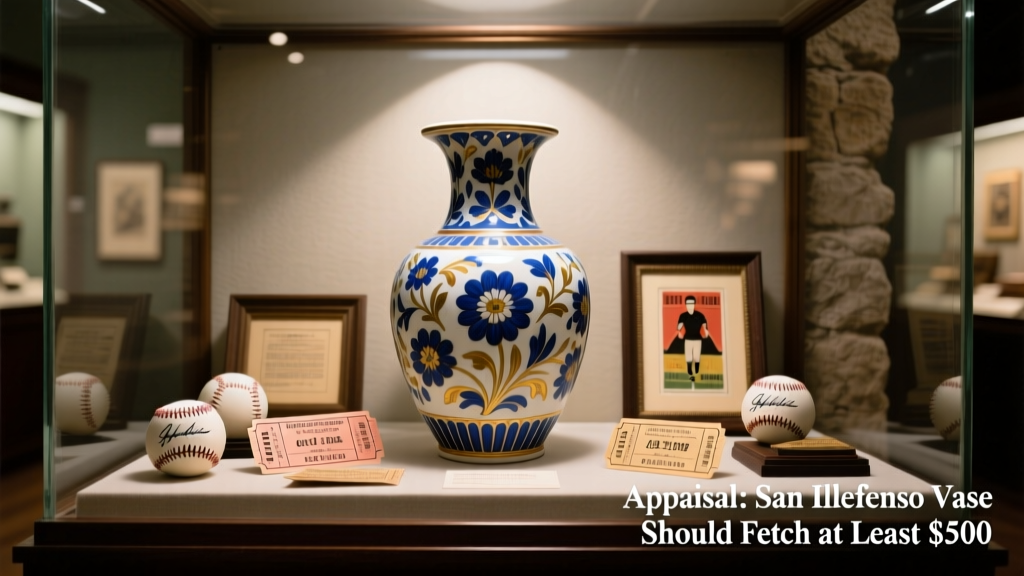
Appraisal: San Ildefonso Vase Should Fetch At Least $500 — Authenticity, Provenance, and Market Dynamics

Candy Containers Duck Round Base #2: Identification, History, and Authentication Guide
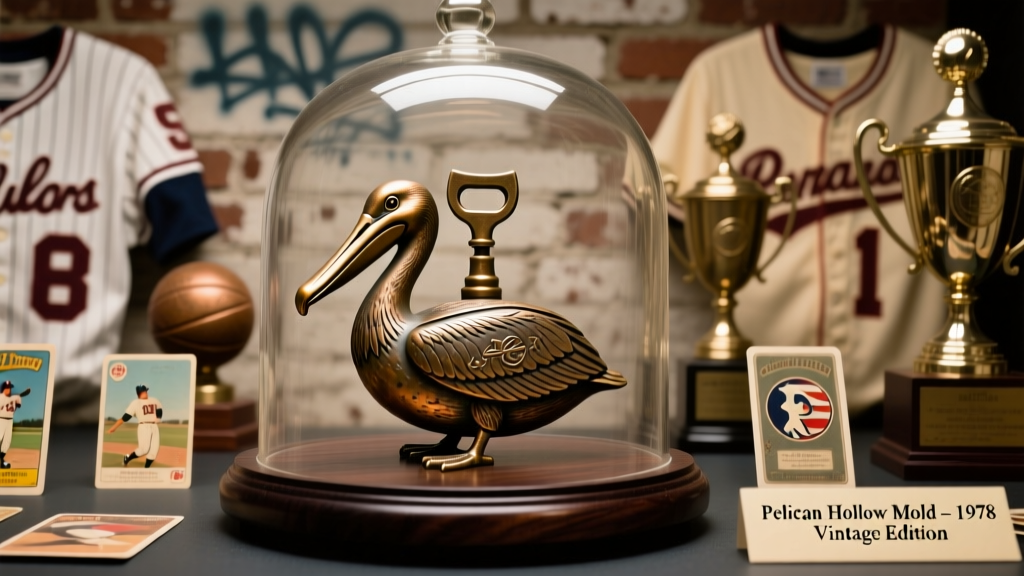
The Pelican Hollow Mold Bottle Opener: History, Identification, and Authentication in Vintage Sports Memorabilia
Authenticating and Preserving Vintage Pencil Graphite Landscapes: Mill Stream, Rowboat, and Period Frames
The Poison Poisonous Not To Be Taken Front Ribbed Stopper: Decoding a 9½-Inch Pharmaceutical Artifact
Dresden Cake Stand: Polychrome Flowers, Reticulated Rim, Marked '9 X 6 In' — Authentication, Provenance & Market Value
Nathaniel P. Copp: The Forgotten Innovator Behind Baseball’s First Patented Bat Grip and Its Lasting Legacy in Sports Memorabilia
The Firefighting Siren Hand Crank with Wooden Handle: A 4½-Inch Diameter Artifact of Early Emergency Communication
Fostoria Jamestown Plate Torte Green 14-Inch: Identification, Value, and Authentication Guide