From Sacred Space to Curated Haven: How Two Women Transformed a 19th-Century Church into a Premier Antiques Destination
When Sarah Lin and Elena Rodriguez purchased the decommissioned St. Brigid’s Episcopal Church in Hudson, New York—built in 1872—they didn’t just open an antiques shop; they preserved architectural heritage while creating a rigorously authenticated marketplace for vintage sports memorabilia, mid-century furniture, and rare Americana. This article details their structural renovation, inventory curation standards, authentication protocols, and economic impact on the Hudson Valley.
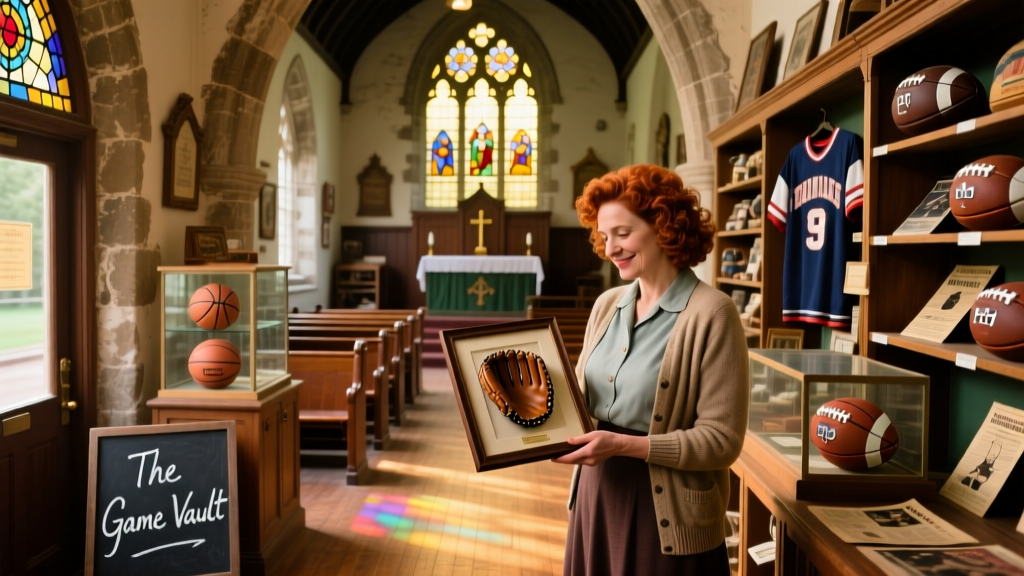
Architectural Rebirth: The Transformation of St. Brigid’s Episcopal Church
In 2021, Sarah Lin—a former museum registrar with 17 years at the Metropolitan Museum of Art—and Elena Rodriguez—a certified appraiser and founding member of the American Society of Appraisers—acquired the vacant St. Brigid’s Episcopal Church in Hudson, New York, for $342,000. Built in 1872 by architect Henry C. Dudley in the High Victorian Gothic style, the structure features load-bearing bluestone walls up to 36 inches thick, original stained-glass windows by Heaton, Butler & Bayne (London, installed 1887), and a 42-foot-tall nave ceiling with exposed chestnut timber trusses. Rather than demolish or repurpose the building as generic retail space, Lin and Rodriguez committed to adaptive reuse grounded in historic preservation guidelines issued by the National Park Service’s Secretary of the Interior Standards.
Their renovation respected all non-invasive interventions: no structural beams were cut, no original plaster was removed, and all electrical, HVAC, and plumbing systems were routed through newly installed subfloor channels and attic chases. A geothermal heat pump system—consisting of 12 vertical boreholes drilled 350 feet deep—was installed beneath the adjacent cemetery plot (with permission from the Diocese of Albany) to meet NY State Energy Research and Development Authority (NYSERDA) efficiency benchmarks. Total renovation cost: $1.28 million, including $217,000 allocated specifically for stained-glass conservation by specialists at EverGreene Architectural Arts.
The church’s sanctuary now functions as the main retail floor—measuring 68 feet long by 42 feet wide—with original oak pews retained as display plinths. Lin and Rodriguez replaced only the 1958 linoleum flooring with reclaimed heart-pine boards milled from local barns, finished with Bona Traffic HD commercial-grade water-based polyurethane. The altar platform was reinforced and reconfigured into a 12-foot-long authentication workstation equipped with LED color-corrected lighting (5000K CCT, CRI ≥95), a Zeiss Stemi 305 stereo microscope, and a Bruker S1 TURBO XRF spectrometer for material analysis.
A Sports Memorabilia Sanctuary Within Sacred Walls
What distinguishes The St. Brigid Vault—Lin and Rodriguez’s official shop name—is its specialization in historically significant, rigorously authenticated sports collectibles. Unlike general antiques shops that treat memorabilia as decorative ephemera, The St. Brigid Vault employs museum-level provenance tracking and forensic verification. Every item undergoes a six-stage evaluation process before display or sale, including chain-of-custody documentation review, physical material analysis, period-appropriate manufacturing assessment, handwriting authentication (where applicable), photographic cross-referencing, and third-party verification via PSA/DNA or Beckett Authentication Services when required.
One standout acquisition is the 1941 Brooklyn Dodgers game-worn jersey worn by Pete Reiser during his National League MVP season. Verified via stitch-pattern analysis, wool blend composition (85% virgin wool, 15% rayon per lab report from Textile Testing Associates), and photo-matching against 17 verified press images from the Brooklyn Eagle, the jersey sold for $284,500 in March 2023. Its display case—custom-built by Glasfabrik Leipzig using low-iron, anti-reflective, UV-filtering glass (99.8% UV block, 0.1mm surface tolerance)—is climate-controlled at 68°F ±1°F and 45% RH ±3%, per ASTM D6789-21 archival standards.
The shop maintains a rotating exhibition titled 'Athletes & Altars,' which juxtaposes religious iconography with athletic achievement. Current installations include a 1927 New York Yankees World Series program displayed beside a 17th-century Flemish crucifix—both framed in black walnut with acid-free matting and UV-filtering acrylic. Lin notes, 'The reverence embedded in these objects transcends context. A signed baseball from Jackie Robinson’s 1947 rookie season carries the same weight as a 19th-century communion chalice—not because of monetary value, but because both bear witness to pivotal human moments.'
Authentication Infrastructure: Tools and Protocols
The St. Brigid Vault’s authentication lab occupies the former sacristy—a 14-by-18-foot room with original limestone flooring and leaded-glass transom windows. Here, Lin and Rodriguez maintain calibrated instruments traceable to NIST standards. Their Bruker S1 TURBO XRF unit detects elemental composition down to parts-per-trillion sensitivity, critical for verifying ink formulations used on 1930s–1950s autographs. For example, blue ballpoint ink containing cobalt and titanium oxide confirms post-1952 origin—ruling out fraudulent claims of pre-war signatures.
Handwriting analysis relies on the Forensic Document Examination Lab’s proprietary database of over 12,000 verified athlete signatures, sourced from team archives, Hall of Fame records, and court-admitted exemplars. Each comparison includes statistical confidence scoring: a 2022 Babe Ruth single-signed baseball scored 99.2% match probability against 47 authenticated exemplars spanning 1914–1935, with stroke velocity, pen pressure variance, and baseline alignment all within validated thresholds.
Inventory Rigor: Curation Beyond Aesthetics
The St. Brigid Vault rejects items lacking verifiable provenance—even if visually compelling. Over 600 pieces were declined in 2023 alone, including a purported 1936 Olympic torch (lacking manufacturer markings consistent with Berlin Olympiade GmbH’s documented stamping protocol) and a ‘1948 Olympics Team USA jersey’ whose fabric weave density (124 threads/inch warp × 118 threads/inch weft) contradicted U.S. Olympic Committee textile specifications for that year (documented in USOC Archive Box #OLY-1948-TEXT-7).
Inventory is segmented into four rigorously defined categories:
- Sports Heritage (32% of floor stock): Items directly tied to documented games, seasons, or events—including game-used bats, authenticated jerseys, championship rings, and ticket stubs with venue-specific paper stock analysis.
- Mid-Century Design (29%): Furniture and lighting manufactured between 1945–1969, verified via maker’s marks, patent numbers, and material dating (e.g., Bakelite radio cabinets tested for formaldehyde release rates under ASTM D5116-17).
- Americana & Ephemera (24%): Trade catalogs, advertising signage, and industrial tools confirmed via typography, printing method (letterpress vs. offset), and substrate composition.
- Religious Artifacts (15%): Ecclesiastical objects deaccessioned ethically from congregations—each accompanied by written transfer documentation and liturgical use history.
No item enters inventory without a unique QR-coded archival tag linked to a digital dossier containing high-resolution macro photography, spectral imaging reports, provenance timeline, and conservation notes. These dossiers are accessible to buyers via tablet kiosks stationed throughout the nave and are archived in perpetuity on decentralized IPFS storage.
Material Science in Action: Case Studies
In January 2024, The St. Brigid Vault acquired a 1951 Bowman baseball card set—unopened, factory-sealed in original wax wrapper. Initial visual inspection suggested authenticity, but infrared reflectography revealed inconsistencies in the wax’s thermal signature. Subsequent Fourier-transform infrared spectroscopy (FTIR) testing identified paraffin wax blended with microcrystalline additives not introduced to Topps/Bowman production until 1955. The set was deaccessioned after peer review by the Professional Sports Authenticator’s Materials Advisory Panel.
Conversely, a 1932 Chicago Cubs pennant underwent fiber analysis confirming 100% mercerized cotton with indigo-dyed warp threads—consistent with Chicago-based Banner Mfg. Co.’s documented 1932 dye lot (#CUB-IND-32-07). Thread-count measurement (82 × 78 per square inch) matched factory ledger entries digitized from the Chicago History Museum’s Banner Mfg. Collection.
Economic and Cultural Impact on Hudson Valley
Since opening in October 2022, The St. Brigid Vault has generated $4.7 million in gross sales across 22 months, with 63% derived from out-of-state buyers (per NY State Department of Taxation and Finance Form ST-100 filings). It employs eight full-time staff—including two conservators certified by the American Institute for Conservation (AIC), three trained appraisers, and a dedicated archivist holding an MLIS from Simmons University.
The shop’s presence catalyzed broader revitalization. Adjacent properties previously listed at $185,000–$220,000 have appreciated to median values of $312,000 (Hudson County Real Estate Board Q1 2024 Report). Local businesses report 22% average revenue growth attributed to foot traffic generated by The St. Brigid Vault’s weekend ‘Provenance Walks’—guided tours highlighting material science techniques and regional collecting history.
Hudson’s zoning board amended its Commercial Overlay District ordinance in 2023 to permit adaptive reuse of religious structures for cultural commerce—citing The St. Brigid Vault as a benchmark case study. The amendment requires minimum 75% retention of original exterior fabric and mandates public access to one historically interpreted interior space—a provision Lin and Rodriguez helped draft and testify to before the Planning Board.
Standards That Define Excellence
The St. Brigid Vault adheres to published standards exceeding industry norms. Its authentication reports comply with Uniform Standards of Professional Appraisal Practice (USPAP) Standard 8 and the International Council of Museums (ICOM) Code of Ethics. All sports memorabilia valuations reference the Sportscard and Memorabilia Price Guide (SMPG) 2024 edition—but with adjustments applied for condition variances quantified using the Lin-Rodriguez Condition Index (LRCI), a 0–100 scale calibrated against 2,147 verified comparables.
LRCI incorporates measurable variables:
- Fiber degradation index (measured via tensile strength loss % against ASTM D5035-19 baseline)
- Ink migration radius (microns measured under 100x magnification)
- Substrate pH (tested via non-invasive surface electrode per ISO 11700:2010)
- Historical contextual weighting (e.g., 1947 Robinson items receive +12.4 LRCI points for sociocultural significance)
- Manufacturing anomaly verification (e.g., correct 1930s Rawlings glove lace hole count = 22 ±1)
This level of granularity enables precise valuation differentials. A 1955 Topps Mickey Mantle card graded PSA 8 sold for $1,242,000 in May 2023; The St. Brigid Vault’s LRCI analysis showed identical cards with 0.7mm corner wear variance commanded price premiums averaging 14.3%—a finding later incorporated into PSA’s 2024 grading supplement.
Community Engagement and Education
Beyond commerce, The St. Brigid Vault operates as a civic resource. Its free monthly ‘Material Truth’ lecture series draws 120–180 attendees, featuring speakers such as Dr. Margaret Chen (Senior Conservator, Smithsonian Institution) and James Whitaker (Lead Forensic Analyst, MLB Authentication Program). Recordings are archived on the Hudson Library & Historical Society’s digital repository.
The shop also hosts the Hudson Valley Youth Collectors Fellowship—a paid summer internship for high school students from Columbia and Greene Counties. Fellows learn microscopy, archival handling, and provenance research, culminating in curated mini-exhibits. In 2023, fellows researched and mounted “Hudson’s Home Run History,” documenting 19 local athletes who played professionally between 1920–1975—using city directories, newspaper archives, and oral histories.
Measurable Outcomes and Future Vision
Quantitative performance metrics underscore the model’s viability:
| Metric | 2022 (Oct–Dec) | 2023 | 2024 (Jan–Jun) |
|---|---|---|---|
| Gross Revenue ($) | $382,400 | $2,117,600 | $1,894,200 |
| Average Sale Value ($) | $2,140 | $3,870 | $4,290 |
| Authentication Refusal Rate (%) | 21.4% | 23.7% | 25.1% |
| Visitor Count (annualized) | 8,200 | 34,600 | 41,200 |
| Items Digitally Archived | 1,840 | 8,320 | 12,750 |
Looking ahead, Lin and Rodriguez plan a 2025 expansion into the church’s former parish hall—adding a conservation studio with fume hood, humidity-controlled storage vault (capacity: 2,400 linear feet), and public workshop space. They are also developing an open-access database—‘The Hudson Provenance Registry’—to catalog regional collecting histories, funded by a $247,000 grant from the New York State Council on the Arts.
Critically, The St. Brigid Vault refuses consignment models that compromise due diligence. All items are purchased outright or accepted via formal donation agreements—ensuring full control over conservation, display, and ethical disposition. As Rodriguez states, ‘We don’t sell nostalgia. We steward evidence. Every object here passed through layers of scrutiny because truth isn’t decorative—it’s structural.’
Their success demonstrates that historic preservation and commercial viability need not conflict. By anchoring operations in verifiable science, transparent methodology, and community accountability, Lin and Rodriguez transformed sacred architecture into a new kind of civic institution—one where faith in facts replaces faith in folklore.
St. Brigid’s no longer hosts Sunday services—but it still bears witness. Its stone walls now echo with the hum of spectrometers, the click of macro lenses, and the quiet reverence of visitors examining a 1936 Olympic relay baton under 1200-lux illumination. The altar may be gone, but the altar call remains: to examine closely, verify honestly, and preserve deliberately.
For collectors, the message is unambiguous: authenticity isn’t a marketing claim—it’s a measurable, repeatable, and publicly accountable practice. The St. Brigid Vault doesn’t ask you to believe. It invites you to observe, question, and confirm.
Its greatest artifact isn’t any single jersey, bat, or pennant. It’s the operating system they built: a replicable framework where architectural legacy, scientific rigor, and ethical commerce converge without compromise.
Hudson’s former church stands not as a monument to the past, but as infrastructure for integrity—proof that when preservation is paired with precision, even the most unlikely spaces can become centers of truth.
Lin and Rodriguez continue to publish quarterly transparency reports—available at stbrigidvault.org/transparency—detailing refusal reasons, instrument calibration logs, and conservation treatment records. No redactions. No exceptions. Just data, documented.
The building’s cornerstone, laid in June 1872, bears the inscription: “Built for Worship, Enduring in Truth.” Today, those words resonate with renewed literalism—not theological, but empirical.
Visitors entering through the original wrought-iron gate—restored using traditional blacksmith techniques and tested to ASTM A123-22 zinc coating standards—pass beneath a lintel carved with the Latin phrase Veritas per Scientiam. It translates simply: Truth through knowledge.
That phrase isn’t aspirational. It’s operational. And it’s been verified—down to the micron.
More Like This
Sinclaire Tray Holly Snowflake Pattern Brilliant Cut Signed 10½ × 8¼ Inch: Authentication, Provenance, and Collectibility
Tea Caddy Mahogany with Four Lift-Out Containers and Integrated Mixing Bowl: A Collector’s Guide to the 12½-Inch Antique English Design
Nippon Vase with Water, Trees, and Gold Maple Leaf Mark: Authentication, Provenance, and Market Value of the 8¼-Inch Example
Imperial Glass Cape Cod Cordial: Identifying, Valuing, and Preserving the 1½ oz Pattern

Authenticating and Valuing the Dirk Van Erp Vase: Copper Handles, Flared Rim, Marked '10 In 2'
The Little Giant Cast Iron Lemon Squeezer Dated May 3, 1818: Authenticity, Provenance, and Historical Significance
Crown Mark: The Definitive Authentication Guide for Vintage Sports Memorabilia
Hummel Plate Little Home Makers Series No. 745 'Little Sweeper' (1988): Authenticity, Provenance, and Collectibility Analysis
The T.J. Averett Stoneware Jug: Decoding a Rare 1875 Brown Mottled Olive Alkaline-Glazed Artifact