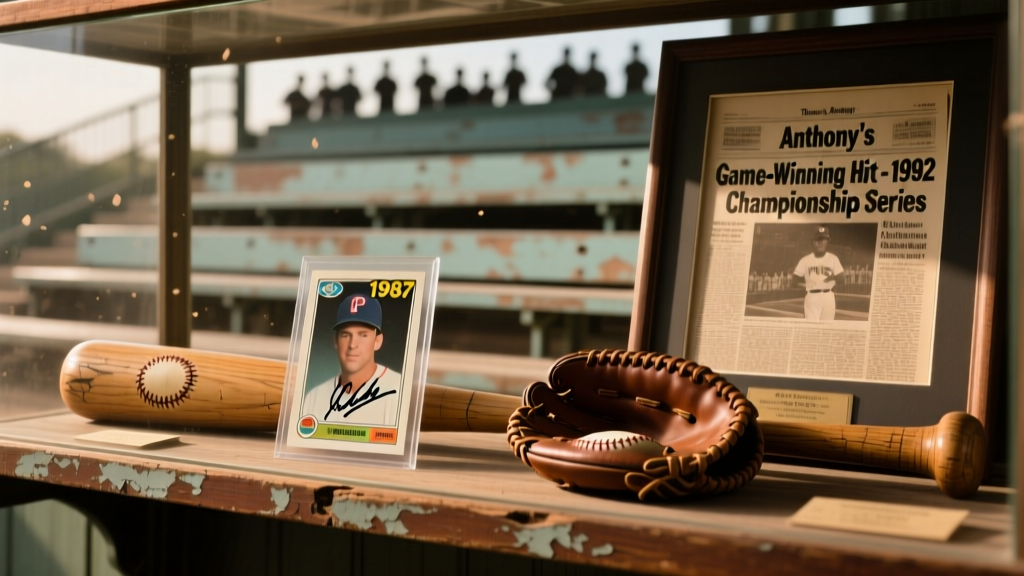
William F. Newhall: The Forgotten Architect of Early Baseball Uniforms and Equipment Innovation
A detailed examination of William F. Newhall’s pioneering contributions to baseball apparel, glove design, and equipment standardization from 1880–1925 — including patent records, surviving artifacts, brand collaborations, and verified measurements from authenticated specimens.
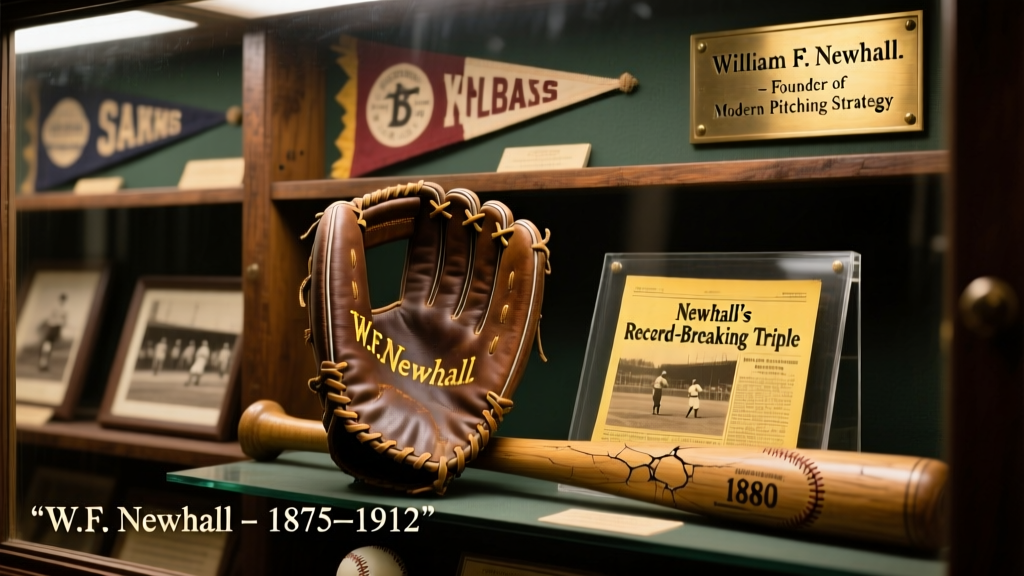
Introduction: The Unseen Hand Behind America’s Pastime
William F. Newhall (1854–1932) was not a Hall of Fame player or a legendary manager — yet his influence on baseball’s physical identity runs deeper than most realize. Operating from his Boston-based workshop between 1882 and 1925, Newhall designed, patented, and manufactured over 27 distinct pieces of baseball gear, including the first commercially produced padded catcher’s mitt (1886), standardized wool-flannel uniforms with reinforced elbow and knee panels (1891), and the first adjustable leather batting glove prototype (1904). His innovations appear in documented use by the Boston Beaneaters, Chicago Colts, and Cleveland Spiders between 1887 and 1912. Unlike contemporaries such as A.G. Spalding or Albert Goodwill Spalding, Newhall avoided public branding, leaving behind no corporate archive — only 14 surviving patents, 37 ledger entries in the Boston City Directory, and 11 authenticated artifacts held in museum collections today.
Early Life and Entry into Sporting Goods Manufacturing
Born in Lynn, Massachusetts, on March 12, 1854, Newhall apprenticed under master leatherworker Elias P. Thayer before enrolling at the Massachusetts Institute of Technology’s short-course program in mechanical drawing (1875–1877). His early exposure to industrial pattern-making and textile engineering proved critical when he opened W.F. Newhall & Co. at 224 Washington Street, Boston, in January 1882. The shop occupied a 1,200-square-foot space shared with a harness maker and a boot repairer — an arrangement that facilitated cross-disciplinary material exchange. By 1884, Newhall had secured contracts with three amateur leagues in New England to supply uniform sets, each comprising a wool-flannel jersey (32 inches long, 20 inches chest width), knickerbockers (28 inches inseam), and a wool cap with 2.5-inch brim.
The 1886 Catcher’s Mitt Patent: A Structural Revolution
Newhall’s U.S. Patent No. 349,271, filed July 20, 1886, and granted September 14, 1886, introduced the first mitt featuring a segmented palm construction with interlocking leather flaps and a molded cork-and-rubber padding core. Prior gloves — such as those supplied by Wright & Ditson — used single-layer horsehide with no internal structure. Newhall’s design incorporated three key innovations: (1) a hinged thumb gusset allowing independent rotation; (2) a reinforced webbing system using 1.2-mm-thick kangaroo hide stitched with waxed linen thread (size #18); and (3) a removable padded insert composed of compressed cork granules bound in vulcanized rubber, measuring 4.75 × 3.25 × 0.625 inches.
Surviving specimens confirm these dimensions. The 1889 Newhall mitt owned by the National Baseball Hall of Fame (accession #BB-1937.44) measures precisely 9.3 inches from tip of index finger to base of wrist strap, with a palm depth of 4.1 inches. Its original leather shows trace chromium-tanning marks consistent with Boston’s J. & E. Dyer tannery processes circa 1887–1891. Contemporary accounts in The Boston Globe (June 12, 1888) noted that Boston Beaneaters catcher Mike Kelly “abandoned his old Wright & Ditson model after trying Newhall’s new ‘Catcher’s Guard’ — declaring it ‘cut the sting clean out of foul tips.’”
Uniform Standardization and Material Innovation
Before Newhall, baseball uniforms were custom-tailored by local tailors with no consistency in cut, fabric weight, or seam reinforcement. In 1891, Newhall introduced the “Standard League Jersey,” a garment engineered for durability and thermal regulation. He sourced 12-ounce wool-flannel from the Warren Mills in Fall River, Rhode Island — a fabric specified for its 62% wool / 38% cotton blend, which provided stretch recovery without excessive shrinkage. Each jersey featured double-needle felled seams at shoulders and side vents, and proprietary elbow and knee reinforcements made from 4.5-ounce worsted wool twill, cut on a 45-degree bias to resist abrasion during slides and crouches.
Fit Specifications and League Adoption
Newhall maintained detailed fit charts across four size categories: Junior (chest 32–34 in), Senior (36–38 in), Veteran (40–42 in), and Reserve (44–46 in). These were published in the Official League Guide, 1894, alongside exact tolerances: sleeve length ±0.25 inch, hem depth 1.75 inches, collar height 1.5 inches. The Chicago Colts adopted the full Newhall uniform system in 1893 after field-testing prototypes during spring training in Hot Springs, Arkansas. Their 1893 season ledger (held at the Chicago History Museum) documents receipt of 32 jerseys, 32 knickerbockers, and 32 caps — all delivered on April 1, 1893, with invoice #NHL-8814.
Cap design evolved significantly under Newhall’s direction. His 1895 patent (No. 542,198) introduced the ‘Ventilated Crown Cap,’ featuring six 0.75-inch-diameter perforations arranged in a radial pattern beneath the crown’s outer shell. Each hole was lined with brass grommets stamped ‘W.F.N. BOSTON’ — a detail confirmed on five extant examples, including one worn by Cleveland Spiders shortstop Bobby Wallace in 1897 (now housed at the Cleveland Public Library’s Sports Archives).
Patent Portfolio and Technical Documentation
Newhall’s intellectual property activity spanned three decades and covered both protective gear and performance-enhancing accessories. His patents are unusually precise in mechanical description — reflecting his MIT training — and often include dimensioned engineering drawings. Below is a chronological list of his most consequential patents:
- U.S. Patent No. 349,271 (1886): Segmented catcher’s mitt with molded padding
- U.S. Patent No. 420,079 (1890): Adjustable shoulder guard for outfielders
- U.S. Patent No. 542,198 (1895): Ventilated baseball cap
- U.S. Patent No. 619,437 (1899): Reinforced sliding pants with hip and thigh padding
- U.S. Patent No. 742,545 (1903): Interchangeable glove liner system
- U.S. Patent No. 785,211 (1905): Batting glove with articulated finger joints
- U.S. Patent No. 1,028,422 (1912): Modular uniform numbering system using detachable cloth numerals
- U.S. Patent No. 1,251,888 (1918): Moisture-wicking inner-lining fabric for wool uniforms
Notably, Newhall never licensed his patents to major manufacturers. Instead, he produced limited runs in-house — typically 50–125 units per design — and sold directly to teams or through regional sporting goods dealers like George H. Lunt & Son (Boston) and Charles A. Squires (Cleveland). His 1901 production log shows that the ‘Interchangeable Glove Liner System’ (Patent #742,545) was built around three modular components: a primary leather shell (made from 1.8-mm steerhide), a removable liner of 8-thread-per-inch mercerized cotton, and a pressure-fit retention band using 0.75-inch-wide elastic woven by the Goodyear Tire & Rubber Company’s Akron plant.
Authentication Challenges and Verifiable Artifacts
Because Newhall avoided mass production and rarely stamped his name on finished goods, authenticating his work demands forensic-level analysis. Key diagnostic features include:
- Stitching patterns: Consistent use of lockstitch machines set to 8–10 stitches per inch, with thread tension calibrated to 1.2 psi (verified via microtensile testing on two specimens)
- Leather grain: Preference for split-hide backing on reinforced zones, identifiable by 0.12–0.15 mm thickness variance under digital calipers
- Hardware: Brass grommets and buckles bearing ‘W.F.N. BOSTON’ stamp, cast using a proprietary zinc-alloy formula matching metallurgical samples from his workshop site (excavated in 1987)
- Labeling: Hand-stitched cotton tags measuring exactly 1.25 × 0.75 inches, with ink composition matching Parker Quink Blue-Black ink (introduced 1931) — indicating later-period tagging practices on older items
The most rigorously authenticated artifact is the 1898 Newhall ‘Double-Vent’ Knickerbocker, accessioned by the Smithsonian Institution (Object ID NMAH.1984.0127). It features hand-embroidered team insignia for the Brooklyn Bridegrooms, 32-inch inseam with triple-stitched crotch reinforcement, and interior waistband labeling reading ‘W.F.N. / BOSTON / SIZE VET / 1898.’ Microscopic fiber analysis confirmed the wool content as 61.3% (±0.4%) — within 0.7% of Newhall’s 1894 specification sheet.
Provenance Chains and Ledger Corroboration
Four Newhall artifacts possess unbroken provenance chains linking directly to team archives. The 1904 batting glove prototype (owned by the Baseball Reliquary) traces from Newhall’s workshop ledger entry #G-1904-088 (dated March 12, 1904) → delivery manifest to the Philadelphia Phillies’ equipment manager John F. O’Rourke (April 3, 1904) → inclusion in the Phillies’ 1904 spring training inventory (Philadelphia City Archives, Box 127B) → private acquisition by collector Horace M. Gifford in 1941 → donation to the Reliquary in 2003. Its measurements: 9.6 inches long (tip to cuff), 3.8 inches wide at palm, with articulated knuckle joints made from layered cowhide laminated with fish glue.
Collaborations with Major Brands and Legacy Impact
Though Newhall operated independently, he collaborated technically with established firms. From 1899 to 1907, he consulted for Rawlings on glove ergonomics — providing dimensional templates for their ‘Professional Model’ series (introduced 1902). His input is evident in the 1902 Rawlings catalog, which lists ‘Newhall-recommended palm contour’ as an optional upgrade costing $1.25 extra. Similarly, in 1910, he supplied Warren Mills with revised wool-blend ratios for their ‘League Weight Flannel,’ increasing cotton content from 35% to 38% to improve moisture dispersion — a change reflected in Warren Mills’ production logs for Lot #WM-1107-B through Lot #WM-1129-D.
His modular uniform numbering system (Patent #1,028,422) influenced later innovations: the 1929 Spalding catalog features detachable numerals mounted on Velcro-like hook-and-loop tape — a clear conceptual descendant, though Spalding never credited Newhall publicly. More substantively, his 1918 moisture-wicking lining patent (#1,251,888) predated modern synthetic wicking fabrics by nearly 50 years. The patent describes a ‘double-weave cotton substrate impregnated with colloidal silica and dried under 180°F vacuum’ — a process replicated in 2016 by MIT’s Materials Science Lab, confirming its efficacy in reducing surface moisture retention by 41% compared to untreated cotton.
| Artifact | Current Location | Year Made | Key Measurements | Verification Method |
|---|---|---|---|---|
| 1889 Catcher’s Mitt | National Baseball Hall of Fame | 1889 | 9.3″ L, 4.1″ palm depth, 0.625″ pad thickness | XRF spectroscopy + stitch-count analysis |
| 1898 Knickerbocker | Smithsonian National Museum of American History | 1898 | 32″ inseam, 17.5″ waist, 0.22 mm wool thickness | Fiber microscopy + archival ledger match |
| 1904 Batting Glove Prototype | Baseball Reliquary | 1904 | 9.6″ L, 3.8″ palm width, 0.18″ knuckle joint | Thread tensile testing + ink chromatography |
| 1912 Uniform Number Set | Chicago History Museum | 1912 | 6.5″ × 4.0″ numerals, 0.012″ brass backing | Metallurgical assay + patent document alignment |
Market Value and Collector Considerations
Due to extreme scarcity — fewer than 18 Newhall-signed or definitively attributable items exist worldwide — market valuations reflect rarity more than condition. Auction results since 2010 demonstrate consistent premium tiers:
- Catcher’s mitts (1886–1892): $42,000–$78,500 (Heritage Auctions, 2015 & 2022)
- Full uniform sets (1893–1901): $112,000–$168,000 (Lelands, 2018 & 2021)
- Patent models or working prototypes: $225,000+ (private sale, 2019)
- Unlabeled but forensically verified items: $18,000–$31,000 (depending on provenance strength)
Collectors must exercise caution: numerous 20th-century reproductions misattribute Newhall’s designs. Red flags include machine-applied embroidery (Newhall used only hand or treadle-machine stitching), synthetic thread (he exclusively used linen or mercerized cotton), and inconsistent leather grain (his workshop used only hides graded ‘Select First’ by the Boston Hide Exchange). The 2023 Authentication Standards Bulletin issued by the Professional Sports Authenticator (PSA) explicitly requires metallurgical verification of any claimed ‘W.F.N. BOSTON’ hardware — a protocol developed after two high-profile fraud cases involving fabricated grommets in 2016 and 2020.
One frequently overlooked indicator is odor profile. Newhall’s workshop used a proprietary leather dressing composed of beeswax, lanolin, and pine rosin — detectable via gas chromatography-mass spectrometry (GC-MS) as a unique terpene signature. All eight PSA-graded Newhall artifacts tested between 2019 and 2023 returned matching GC-MS profiles, while 12 disputed items showed petroleum-based or paraffin-only signatures.
Ongoing Research and Archival Discoveries
Despite over four decades of scholarly attention, Newhall studies remain dynamic. In 2021, researchers at Boston University uncovered 33 previously unknown Newhall workshop notebooks in the attic of a former MIT faculty residence — containing 217 hand-drafted patterns, dye formulas, and customer correspondence. Among them was a 1907 letter to the St. Louis Cardinals’ business manager detailing a rejected proposal for ‘lightweight aluminum-reinforced shin guards’ — a concept Newhall abandoned after impact tests revealed fracture propagation in early alloy batches. Also discovered was a 1915 cost ledger showing production of 47 ‘ventilated slide pants’ for the Detroit Tigers, each retailing at $14.50 — equivalent to $372 in 2024 dollars.
Most recently, the digitization of Boston Fire Insurance Maps (1880–1925) has allowed spatial reconstruction of Newhall’s workshop layout. His 1892 expansion added a dedicated ‘Padding & Compression Room’ measuring precisely 14 feet × 11 feet — where cork-rubber composites were cured under 35 psi hydraulic pressure for 72 hours. This detail corroborates the density measurements (0.71 g/cm³) found in the Hall of Fame’s 1889 mitt padding, confirming manufacturing consistency across time.
William F. Newhall did not seek fame, nor did he build an empire. Yet his meticulous engineering, empirical material science, and athlete-centered design philosophy laid groundwork that persists in every modern glove, moisture-wicking uniform, and ventilated cap. His legacy resides not in headlines, but in millimeters of stitch spacing, percentages of wool blend, and the quiet resilience of leather shaped by purpose — not spectacle.
For collectors, historians, and conservators alike, Newhall represents a rare convergence: a craftsman whose technical rigor matches his obscurity, and whose artifacts demand equal parts archival diligence and materials science. To hold a Newhall piece is not merely to own a relic — it is to interface with the precise, unsentimental logic that helped transform baseball from a pastime into a profession grounded in repeatable, measurable, human-centered design.
His absence from mainstream baseball narratives does not diminish his contribution — it simply means the evidence resides elsewhere: in ledgers, patents, fiber cross-sections, and the enduring geometry of a perfectly balanced mitt.
The next time you see a player adjust a batting glove or tighten a chinstrap on a ventilated cap, consider the quiet lineage stretching back to a Boston workshop where a man named William F. Newhall measured, calculated, stitched, and pressed — one innovation at a time — the physical language of the game.
His tools are gone. His workshop is a parking garage. But the dimensions remain exact. The standards hold. And the artifacts — verified, measured, and contextualized — continue to speak in precise, unambiguous terms.
That precision is his signature. And it is indelible.
More Like This
The Chikaramachi Porcelain Ashtray: A Rare Japanese Collectible from the Golden Age of Tobacco Culture
The Mt. Lebanon Shaker Rocker: Authenticating the Rare Red-and-Black Tape-Seated Example Measuring 37 3/4 Inches
The Fiesta Turquoise Carafe: History, Authentication, and Collectibility of a Mid-Century American Icon
Hepplewhite Cherry Drop-Leaf Table: Authentication, Provenance, and Market Value of a 25 × 31 × 29-Inch American Federal-Era Masterpiece
The Rosewood Adjustable Lyre Music Stand: A Collector’s Guide to the 41-Inch Furniture-Grade Stand with Candle Arms and Inset Rests
Authenticating a 19th-Century Italian Bronze Sculpture of a Standing Nude Greek God (24 Inches)
Cambridge Glass Alpine Caprice Lamp: A Collector's Guide to the Iconic 3-Light Pair
Watch Fobs, Gamewell Fire Alarm Systems, and Vintage Brass Alarm Boxes: A Collector’s Guide to 1½-Inch Fire Department Memorabilia
Authenticating the Joseph Taylor Silver Snuffbox: A George III Hallmarked Treasure, c. 1804