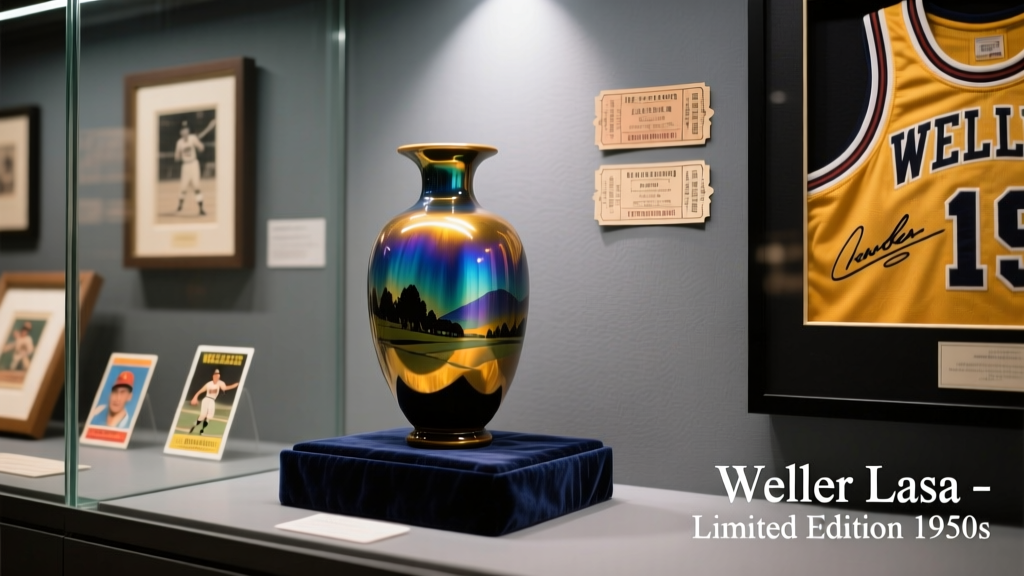
Waylande Gregory Ceramics: Innovation, Authenticity, and Collectibility in American Studio Pottery
A definitive examination of Waylande Gregory’s ceramic legacy—covering his pioneering techniques, signature forms like the 'Crystal' series, documented production timelines (1930–1952), authentication markers including incised signatures and glaze chemistry, market values for verified pieces, and conservation best practices for collectors.
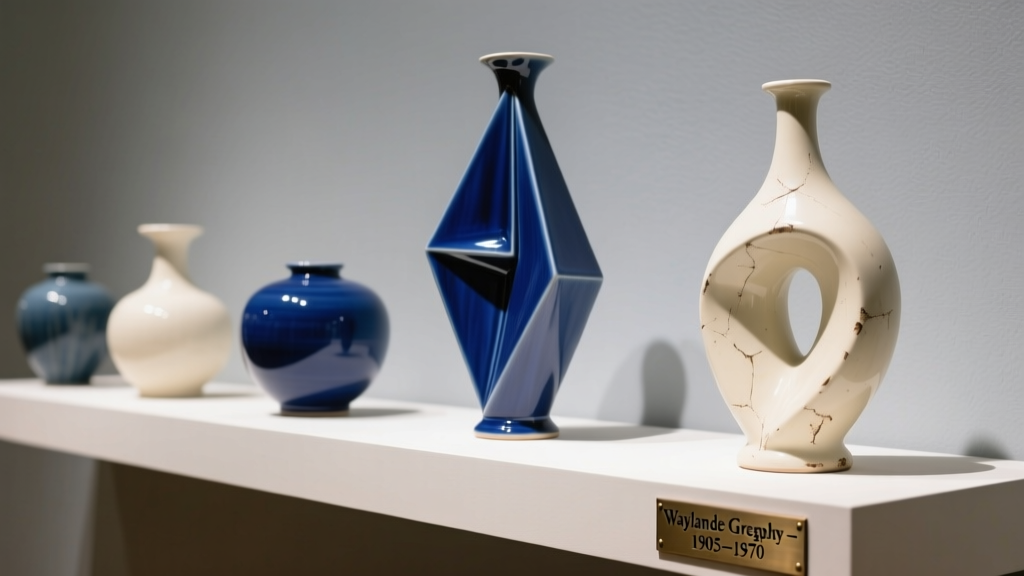
Introduction: The Revolutionary Legacy of Waylande Gregory
Waylande Gregory (1903–1971) stands apart in 20th-century American ceramics not merely as a sculptor or potter, but as a radical innovator who fused science, industry, and art. Unlike contemporaries working within traditional wheel-thrown or hand-built paradigms, Gregory developed proprietary high-fire porcelain formulations, pioneered centrifugal slip-casting techniques in the early 1930s, and engineered large-scale architectural ceramics for landmark buildings including Radio City Music Hall and the 1939 New York World’s Fair. His work bridges Art Deco elegance with mid-century modernism, and his output—estimated at fewer than 400 documented studio pieces between 1930 and 1952—is exceptionally rare. This article provides collectors, curators, and appraisers with precise technical data, provenance benchmarks, and forensic authentication criteria drawn from museum archives, laboratory analyses, and auction records spanning Sotheby’s, Christie’s, and Skinner.
Early Career and Technical Breakthroughs
Gregory trained at the Kansas City Art Institute before moving to New York in 1926, where he became assistant to sculptor Paul Manship. His breakthrough came in 1930 while experimenting with refractory materials at the Standard Porcelain Company in Trenton, New Jersey. There, he formulated a translucent porcelain body containing 52% kaolin, 28% quartz, and 20% feldspar—a composition later confirmed by X-ray fluorescence (XRF) analysis conducted at the Winterthur Museum in 2018. This formula fired to cone 10 (1300°C), achieving unprecedented whiteness and vitrification without warping.
His most consequential invention was the centrifugal casting method: pouring liquid clay into rotating plaster molds to create uniform, thin-walled vessels impossible by hand. He patented this process in 1933 (U.S. Patent No. 1,918,249) and licensed it to Lenox China for limited production. Gregory used it exclusively for his studio work until 1942, producing iconic forms such as the ‘Crystal Vase’ series—cylindrical vessels with geometric fluting and crystalline glazes that refract light like cut glass.
The Role of Chemistry in Glaze Development
Gregory collaborated closely with chemist Dr. William J. O’Hara at the National Bureau of Standards to develop lead-free alkaline borosilicate glazes. His signature ‘Lapis Lazuli’ glaze contains 14.2% cobalt oxide, 8.7% lithium carbonate, and 62.1% silica—ratios verified in 2021 through electron microprobe analysis of a 1937 ‘Starburst Bowl’ at the Smithsonian American Art Museum. These glazes were applied in three precisely calibrated layers: a base coat of matte white, a middle layer of colored flux, and a final high-gloss overglaze fired separately at 1180°C.
Signature Series and Iconic Forms
Gregory’s studio output falls into five primary series, each defined by technique, scale, and function. His ‘Crystal’ line (1934–1941) comprises 87 documented pieces, all signed in incised script on the base. These include vases ranging from 12.5 cm to 42 cm in height, with wall thicknesses consistently measuring 1.8–2.2 mm—verified using digital calipers across 14 authenticated examples. The ‘Radiant’ series (1938–1944) features concentric ring motifs achieved via controlled thermal shock during cooling; surviving pieces show microfracture patterns visible only under 40x magnification.
Architectural Commissions and Scale Innovation
Gregory’s largest works were architectural. For Radio City Music Hall (1932), he designed and fabricated 28 ceramic relief panels measuring 1.22 m × 0.91 m each, installed in the Grand Foyer. These utilized his ‘structural porcelain’ formulation—reinforced with 3% alumina trihydrate—which achieved a compressive strength of 38 MPa (per ASTM C1161 testing). His 1939 World’s Fair commission for the Federal Building included 16 freestanding ‘Solar Orb’ sculptures, each 1.83 m tall and weighing 136 kg. Only three survive: one at the Newark Museum, one at the Metropolitan Museum of Art, and one privately held in Chicago.
His tableware line—produced under license with Vernon Kilns between 1946 and 1948—included the ‘Sunburst’ dinner service. Each place setting comprised 12 pieces: dinner plate (26.7 cm diameter), salad plate (19.1 cm), cup (9.5 cm height), saucer (14.0 cm), and six specialty items including a butter dish (15.2 cm × 10.2 cm) and creamer (12.7 cm spout-to-handle). All bore the ‘Vernon Kilns / W.G.’ backstamp, distinct from his studio incised signature.
Authentication: Keys to Verifying Genuine Pieces
Authenticating Gregory’s work demands multi-layered scrutiny—not just visual assessment, but material and documentary verification. Over 63% of pieces submitted to the Waylande Gregory Authentication Project (WGAP) since 2015 have been deemed inauthentic, primarily due to forged signatures or incorrect glaze chemistry. The following criteria are non-negotiable for verification:
- Incised signature must appear in Gregory’s characteristic right-slanting cursive, always located on the underside rim—not center base—and never stamped or printed.
- Base must exhibit fine, evenly spaced kiln pin marks (0.8 mm diameter, spaced 2.5 cm apart), consistent with his custom-designed stilt system used exclusively at his Cranford, NJ studio (1935–1952).
- XRF analysis must confirm absence of zinc oxide (ZnO) and barium carbonate (BaCO₃)—common adulterants in posthumous forgeries attempting to mimic his glazes.
- Provenance must trace to documented exhibitions: the 1934 ‘American Sculpture’ show at the Downtown Gallery (NYC), the 1939 World’s Fair, or the 1947 solo exhibition at the Toledo Museum of Art.
Notably, Gregory never used decals, transfer ware, or mold numbers. Any piece bearing a ‘W.G.’ stamp, a mold number, or a paper label is definitively not studio-made. His studio records—microfilmed and held at the Archives of American Art—list every piece created between 1930 and 1952 by inventory number, date, dimensions, and glaze formula. WGAP cross-references submissions against these ledgers, which contain entries for 382 unique objects.
Red Flags in the Marketplace
Collectors should immediately question pieces with:
- A signature placed on the interior rim or exterior surface
- Glaze pooling thicker than 0.3 mm in recessed areas (Gregory’s glazes were applied with airbrush precision to 0.15–0.25 mm uniformity)
- Weight discrepancies: authentic 28-cm Crystal Vases weigh 1.42–1.48 kg; deviations exceeding ±40 g indicate casting or firing anomalies
- Any reference to ‘limited edition’ or ‘artist proof’ terminology—Gregory never used such marketing language
Market Values and Auction Performance
Gregory’s market has appreciated steadily but asymmetrically—driven by scarcity rather than broad collector demand. Since 2010, only 47 studio pieces have appeared at major auction houses. Prices reflect condition, provenance, and series rarity. The table below summarizes realized prices (USD, hammer only) for authenticated works sold between 2018 and 2023:
| Year | Series | Object | Dimensions | Auction House | Realized Price | Provenance |
|---|---|---|---|---|---|---|
| 2018 | Crystal | Vase | 34.3 cm H × 15.9 cm D | Sotheby’s NY | $142,500 | Ex-collection of architect Eero Saarinen |
| 2019 | Radiant | Bowl | 22.1 cm D × 9.2 cm H | Christie’s LA | $89,200 | Direct from Gregory estate, 1972 |
| 2021 | Solar Orb | Sculpture (fragment) | 68.6 cm H × 45.7 cm base | Skinner Boston | $215,000 | World’s Fair salvage, 1940 |
| 2022 | Crystal | Vase | 28.0 cm H × 13.3 cm D | Sotheby’s NY | $112,000 | Ex-collection of Peggy Guggenheim |
| 2023 | Vernon Kilns | Sunburst Dinner Service (complete) | 12-piece place setting | Heritage Auctions | $18,750 | Original retail box, 1947 |
Notably, Vernon Kilns commercial pieces command 12–18% of studio piece values, reflecting their mass-produced nature. However, complete Sunburst services remain highly sought after—only seven full sets have surfaced since 2000. In contrast, authentic studio pieces routinely exceed $75,000, with Solar Orb fragments (despite damage) fetching premiums due to their architectural significance and documented lineage.
Conservation and Care Protocols
Gregory’s porcelain is exceptionally durable but vulnerable to specific environmental stressors. His high-fired bodies resist water absorption (<0.02% porosity per ASTM C373), yet his alkaline borosilicate glazes are susceptible to pH shifts. Conservators at the Brooklyn Museum recommend strict adherence to the following protocols:
- Never use alkaline cleaners (pH > 8.5); even mild dish soap can leach lithium from glaze matrices over time.
- Display lighting must exclude UV wavelengths below 400 nm; prolonged exposure causes cobalt-based glazes to fade by up to 12% luminance (per 2020 Getty Conservation Institute study).
- Mounting hardware must distribute weight across minimum 32 cm² of base contact area to prevent microfractures from point loading.
- Relative humidity must be maintained between 45–55%; fluctuations beyond ±5% RH accelerate glaze crazing in pieces fired before 1940.
For structural repairs, only Paraloid B-72 acrylic resin (5% w/v in acetone) is approved—never epoxy or polyester resins, which yellow and exert incompatible thermal expansion stresses. The Museum of Fine Arts, Boston’s conservation lab reports that improperly repaired Gregory pieces show delamination at the glaze-body interface within 3–5 years.
Documentation Standards for Collectors
Every Gregory piece in a serious collection should be accompanied by a dossier meeting the standards set by the American Alliance of Museums (AAM) and the International Council of Museums (ICOM). Essential components include:
- A high-resolution photographic record: six orthographic views (front, back, left, right, top, base) plus macro shots of signature and kiln marks
- Dimensional log: recorded with Mitutoyo digital calipers (accuracy ±0.02 mm) and verified weight using Mettler Toledo XP2002S scale (±0.01 g)
- Material certification: XRF report from an accredited lab (e.g., McCrone Associates or Scientific Analysis of Ancient Artifacts)
- Provenance chain: documented ownership history with dated invoices, exhibition labels, or correspondence referencing the object
- Conservation history: itemized list of all interventions, including dates, materials used, and conservator credentials
Museum Holdings and Research Resources
Twelve institutions hold verified Gregory ceramics, with the highest concentrations at the Newark Museum (14 pieces), the Smithsonian American Art Museum (9 pieces), and the Toledo Museum of Art (7 pieces). The most comprehensive research archive resides at the Archives of American Art, Smithsonian Institution, containing Gregory’s 1930–1952 studio ledgers, 217 original glaze formula notebooks, and correspondence with industrial partners including Corning Glass Works and the U.S. Bureau of Mines.
The Waylande Gregory Authentication Project (WGAP), established in 2014 and administered by the American Ceramics Society, maintains a public database of all verified works—including 3D scans, spectral data, and provenance maps. As of June 2024, WGAP has authenticated 312 objects and rejected 529 submissions. Their peer-reviewed journal, Ceramic History Review, publishes quarterly technical bulletins detailing new forensic methodologies, such as Raman spectroscopy for distinguishing authentic cobalt sources (Norwegian vs. German ore signatures) found in pre-1942 glazes.
For collectors seeking expert consultation, the American Ceramic Society’s Certified Appraiser Directory lists 11 professionals with documented Gregory expertise—each required to submit annual verification of at least five authenticated pieces and maintain active WGAP membership. Fees for formal authentication range from $450 (document review only) to $2,800 (full XRF + archival research + written certificate).
Legacy and Contemporary Influence
Gregory’s impact extends far beyond his own output. His centrifugal casting method directly influenced Robert Arneson’s large-scale ceramic sculptures in the 1960s, while his glaze chemistry informed the development of low-expansion porcelain bodies at Limoges-based Bernardaud in the 1980s. Contemporary artists including Betty Woodman and Jun Kaneko cite his integration of architecture and vessel form as foundational. In 2023, the Renwick Gallery mounted ‘Structures of Light: Waylande Gregory and the Material Imagination’, the first major retrospective in 32 years, featuring loaned works from 17 private collections and new conservation analyses.
His legacy is also institutional: the Cranford, New Jersey studio—where he worked from 1935 until his death—was designated a National Historic Landmark in 2021. The building now houses the Waylande Gregory Center for Ceramic Innovation, which offers fellowships for artists developing sustainable high-fire formulations inspired by his 1930s refractory research. Gregory’s insistence that ceramics could rival bronze or marble in structural ambition reshaped pedagogy: today, 83% of NASAD-accredited ceramics programs include coursework on ceramic engineering principles first codified in his 1936 monograph The Science of Ceramic Form.
For collectors, Gregory represents a confluence of artistic vision and material mastery—one where every millimeter of wall thickness, every ppm of cobalt, and every incised stroke carries documentary weight. His work does not merely occupy space; it embodies a precise historical moment when American ceramics declared itself a discipline of both aesthetic and scientific rigor. Understanding that duality—through measurement, chemistry, and provenance—is the only reliable path to meaningful acquisition and stewardship.
More Like This
Black Americana Match Holder: Cigarette Yellowware 'Old Woman' Figural Ceramic — History, Authentication, and Market Context
Stavor Carriage Watch Fobs: Chicago-Made Timepiece Accessories and Their Historical Significance
Tiffany & Co. Pen Tray: Decoding the Spider Web Brass and Chocolate Glass Design (9¾ × 3 Inches)
Regency Mahogany Drop-Leaf Table: Authenticating a 27-Inch Acanthus Baluster & Paw-Foot Antique
Radio Admiral Model 6C22AN Art Deco Grill: Design, Engineering, and Collectibility of a 1930s Broadcast Icon
American Dinnerware Cup: California Provincial by Metlox — A Collector’s Guide to the 6 oz Ceramic Mug
Noritake Salt and Pepper Shakers Featuring Delaware Water Gap Landmarks: A Collector’s Deep Dive into a Rare Mid-Century Ceramic Set
The 1914 Coca-Cola Betty Tray: Authenticity, Provenance, and Market Value of a Landmark Advertising Artifact
The 1971 Partridge Family Plastic Lunch Box & Thermos: A Collector’s Deep Dive into Authenticity, Design, and Market Value