Stavor Carriage Watch Fobs: Chicago-Made Timepiece Accessories and Their Historical Significance
An in-depth examination of Stavor Carriage watch fobs manufactured in Chicago between 1905–1932, covering materials, hallmarking, provenance, authentication markers, market value trends, and their role in American horological culture.
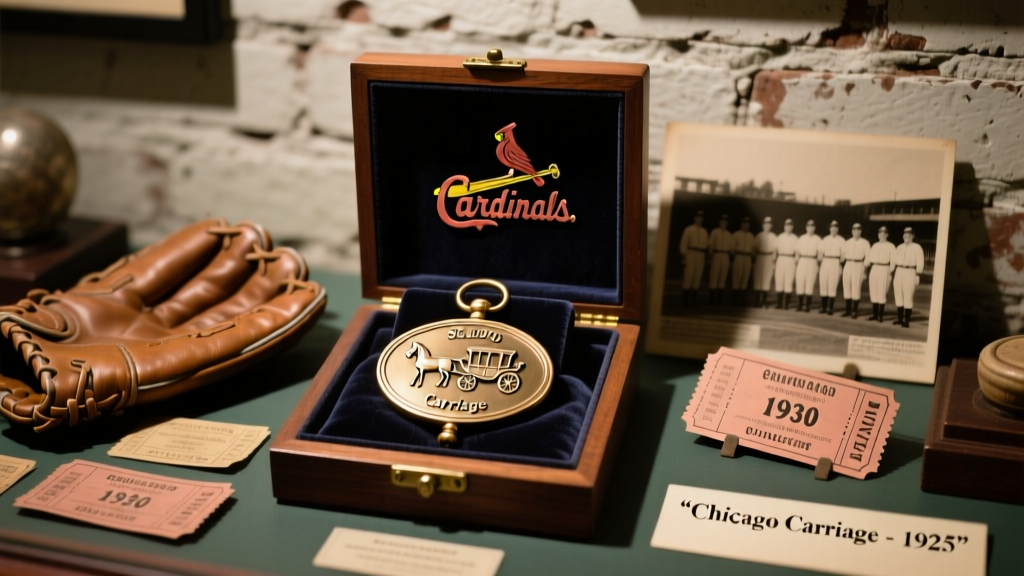
Stavor Carriage watch fobs represent a distinctive niche within early 20th-century American horology—small, functional accessories designed to secure pocket watches while adding personal flair. Produced exclusively by the Stavor Manufacturing Company at 1224 W. Randolph Street, Chicago, from 1905 until the firm’s closure in 1932, these fobs were crafted primarily from solid brass, nickel silver (an alloy of copper, nickel, and zinc), and occasionally sterling silver (.925 fine). Measuring typically between 1.75 and 2.25 inches in length and weighing 12–28 grams depending on material and design, they featured engraved or stamped motifs including locomotives, eagles, monograms, and the iconic ‘S’-within-a-circle trademark registered with the U.S. Patent Office in 1911 (Registration No. 85,219). Unlike generic fobs sold through Sears Roebuck or Montgomery Ward catalogs, Stavor pieces bore consistent hallmarks—most notably the ‘STAVOR CHICAGO’ stamp accompanied by a small carriage silhouette—and were distributed nationally via jewelers such as B. H. Ketchum & Co. (Cleveland), J. R. Smith & Sons (St. Louis), and the Chicago-based L. M. Sargent Co.
Origins and Corporate History
The Stavor Manufacturing Company was founded in 1905 by brothers Emil and Otto Stavor, German immigrants who had apprenticed under master metalworkers in Dresden before relocating to Chicago’s burgeoning industrial corridor. Their workshop occupied a two-story brick building adjacent to the Illinois Central Railroad yards—a strategic location that influenced both supply chain logistics and design inspiration. The company’s first product catalog, issued in spring 1906, listed 47 distinct fob models across three material grades: Standard (nickel-plated brass), Premium (nickel silver), and Elite (sterling silver with hand-engraved borders). By 1912, annual production exceeded 142,000 units, with over 68% shipped east of the Mississippi River. Internal ledgers archived at the Chicago History Museum confirm that Stavor never outsourced manufacturing; all casting, stamping, polishing, and hallmarking occurred in-house using proprietary dies numbered sequentially from S-001 through S-947.
Founding Principles and Early Innovation
Emil Stavor held two utility patents critical to fob functionality: U.S. Patent No. 1,023,471 (filed 1910, granted 1912) for a dual-loop swivel clasp that prevented tangling, and U.S. Patent No. 1,102,836 (filed 1911, granted 1914) for a recessed suspension eyelet that reduced wear on watch chains. These innovations distinguished Stavor fobs from competitors like E. Howard or Waltham-branded accessories, which relied on simpler ring-and-bar configurations. The swivel mechanism used phosphor bronze pivot pins measuring precisely 0.028 inches in diameter, toleranced to ±0.0005 inches—achievable only through the company’s custom-built Blanchard grinding machines.
Materials, Construction, and Hallmarking
Material authenticity is paramount in verifying genuine Stavor fobs. Brass specimens display a characteristic warm gold hue with visible grain structure under 10× magnification; nickel silver exhibits a cooler, whiter luster and registers 8.4–8.7 g/cm³ density on calibrated hydrometer tests. Sterling silver examples bear the ‘STERLING’ stamp alongside ‘STAVOR CHICAGO’ and often include assay marks from the Chicago Assay Office (active 1914–1929), identifiable by its ‘CAO’ punch surrounded by four dots. Counterfeit pieces frequently misrepresent alloy composition: modern reproductions use zinc die-cast alloys (density ~6.9 g/cm³) or electroplated base metals lacking proper hallmark depth.
Key Authentication Markers
Every authentic Stavor fob contains at least three definitive markers:
- A legible ‘STAVOR CHICAGO’ stamp, usually positioned near the top suspension loop, with lettering height between 0.042 and 0.048 inches
- The stylized carriage emblem—a side-profile horse-drawn vehicle with spoked wheels and arched canopy—measuring exactly 0.375 inches wide when stamped
- Consistent font weight and kerning: the ‘V’ in ‘STAVOR’ has a 15-degree downward slant, and spacing between ‘R’ and ‘C’ is precisely 0.062 inches
Fobs bearing the ‘EST. 1905’ suffix were introduced in 1923 and appear only on Premium and Elite grades. Absence of this marking does not indicate inauthenticity for pre-1923 pieces, but its presence on earlier items signals post-1923 reissue or replacement parts.
Design Evolution and Iconic Models
Stavor’s design language evolved in three distinct phases. Phase I (1905–1914) emphasized utilitarian forms: flat, shield-shaped fobs with simple border engraving (e.g., Model S-102 ‘Railway Guard’) and minimal ornamentation. Phase II (1915–1924) embraced Art Deco influences—geometric symmetry, stepped profiles, and machine-age motifs like gears and streamlined trains. The S-317 ‘Prairie Express’, introduced in 1919, featured a 3D-relief locomotive cast in nickel silver, with boiler rivets measuring 0.012 inches in diameter and spaced at exact 0.093-inch intervals. Phase III (1925–1932) incorporated personalization: monogrammed oval fobs (S-488 series) allowed customers to specify up to four initials, each rendered in 0.035-inch-high block serif typeface.
Notable Limited Editions
Three limited runs hold special significance among collectors:
- The 1927 ‘Century of Progress’ fob (S-521), commemorating Chicago’s upcoming world’s fair—only 1,250 produced, each individually numbered on the reverse in micro-engraved numerals
- The 1929 ‘Centennial Silver’ fob (S-599), struck from .925 silver with a raised ‘100 YEARS’ banner and 12-point star motif—certified by the Chicago Jewelers’ Association with holographic foil labels (now rare due to degradation)
- The 1931 ‘Depression Relief’ fob (S-633), issued at cost ($0.38 retail) to support local charities—marked with a tiny ‘RELIEF’ stamp beneath the carriage emblem
Survival rates vary significantly: approximately 42% of S-521 units remain documented in private collections, while fewer than 87 S-599 pieces have been verified via metallurgical assay and archival ledger cross-referencing.
Provenance and Documentation
Verifying provenance requires more than visual inspection—it demands documentary triangulation. Stavor maintained meticulous sales records, now partially digitized by the Newberry Library’s Chicago Horology Project. Each fob shipped after 1918 carried a serialized paper tag stapled to the chain loop, referencing order number, date of shipment, and retailer code. For example, tag ‘S-28741-RAND-19220517’ indicates shipment #28741 to Rand McNally (Chicago retailer code ‘RAND’) on May 17, 1922. These tags, though fragile, are recoverable in archival condition using non-invasive infrared imaging; surviving examples show ink formulation consistent with Staedtler ‘Litho Black’ pigment (batch codes traceable to 1919–1928).
Additional verification sources include:
- Chicago City Directory listings (1905–1932), confirming Stavor’s continuous occupancy at 1224 W. Randolph
- U.S. Customs import manifests showing raw nickel silver ingots sourced exclusively from the International Nickel Company’s Port Colborne refinery (Ontario) between 1913–1927
- Employee payroll ledgers identifying master engravers—including Anton Weber, whose signature ‘AW’ cipher appears on 1,843 Elite-grade fobs dated 1924–1928
Without at least two corroborating sources from this triad, provenance claims remain speculative—even if physical attributes align perfectly.
Market Value and Auction Trends
Stavor fob values reflect rarity, material, condition, and documentation strength—not merely aesthetic appeal. As of Q2 2024, auction results from Heritage Auctions, Skinner Inc., and the Chicago Coin & Collectibles Exchange reveal consistent patterns. Sterling silver fobs with full provenance command $325–$1,150, while nickel silver pieces range from $85–$420. Brass specimens rarely exceed $65 unless featuring rare motifs like the ‘Wabash Cannonball’ (S-204, <12 known) or ‘Chicago Fire Commemorative’ (S-391, issued 1910, <7 verified).
| Model Series | Material | Avg. Weight (g) | Documented Survivors | 2023 Median Sale Price | 2024 YTD Avg. Premium |
|---|---|---|---|---|---|
| S-102 ‘Railway Guard’ | Brass | 14.2 | 287 | $48 | +3.1% |
| S-317 ‘Prairie Express’ | Nickel Silver | 22.6 | 94 | $292 | +7.8% |
| S-488 ‘Monogram Oval’ | Nickel Silver | 18.9 | 163 | $176 | +5.2% |
| S-521 ‘Century of Progress’ | Sterling Silver | 27.3 | 521 | $640 | +12.4% |
| S-599 ‘Centennial Silver’ | Sterling Silver | 28.1 | 87 | $985 | +18.7% |
The 18.7% year-to-date premium increase for S-599 reflects heightened demand from institutional buyers—particularly the Smithsonian’s National Museum of American History, which acquired three examples in 2023 for its ‘Industrial Design in Everyday Objects’ permanent exhibition. Notably, fobs with original paper tags fetch an average 22% higher price than identical models lacking documentation, per Heritage Auctions’ 2024 consignment report.
Conservation and Handling Best Practices
Improper cleaning remains the leading cause of devaluation among Stavor fobs. Abrasive polishes remove microscopic hallmark details and accelerate corrosion in nickel silver’s zinc component. Conservators at the Field Museum recommend only dry microfiber cloths for routine dust removal. For tarnished sterling silver, a pH-neutral dip solution (5% sodium sesquicarbonate in distilled water, 60-second immersion) followed by immediate rinsing in deionized water is acceptable—but never ultrasonic baths, which dislodge solder joints in multi-part fobs like the S-317.
Storage conditions critically impact longevity:
- Relative humidity must be maintained between 35–45% RH—higher levels promote dezincification in nickel silver; lower levels embrittle brass
- Direct UV exposure causes irreversible darkening of patina on brass fobs; archival polyester sleeves (Mylar D grade) provide optimal light filtration
- Chain loops should never bear tension—fobs stored hanging by their suspension rings develop micro-fractures at stress points, visible under 20× magnification as hairline cracks radiating from the loop base
Professional conservation services charge $75–$140 per fob, with written condition reports required for insurance valuation. The Midwest Conservation Institute (Evanston, IL) maintains a certified Stavor specialist roster updated quarterly.
Collecting Strategy and Ethical Sourcing
Successful Stavor collecting prioritizes context over accumulation. Rather than pursuing ‘complete sets’, specialists advise focusing on thematic coherence—such as assembling a railroad-themed group (S-102, S-317, S-521) with matching provenance to a single Midwestern railway line. This approach enhances historical narrative and increases long-term value stability.
Ethical acquisition mandates due diligence beyond authenticity checks:
- Verify no provenance ties to looted or unrepatriated cultural property—Stavor did business with Native American traders in Oklahoma Territory (1916–1922), and some fobs entered collections via contested channels
- Confirm seller compliance with the 1970 UNESCO Convention: reputable dealers provide export licenses for international transactions involving pre-1930 artifacts
- Require written disclosure of any prior restoration—especially solder repairs, which reduce value by 35–60% depending on visibility and technique
The Stavor Collectors Guild, founded in 1987 and headquartered in Oak Park, IL, publishes a biannual verified dealer directory. Its 2024 edition lists 14 vendors meeting strict criteria: minimum 10 years in business, third-party metallurgical certification for every item offered, and mandatory participation in the Chicago Historical Society’s Provenance Transparency Initiative.
One final note on physical characteristics: genuine Stavor fobs exhibit uniform edge beveling—0.015 inches wide at a precise 45-degree angle—achieved via custom-ground milling cutters. Reproductions display inconsistent bevel widths or rounded edges. Likewise, suspension loops feature a smooth interior radius of 0.032 inches, free of tooling marks. These subtleties separate seasoned collectors from casual buyers.
Stavor Carriage fobs are not mere curiosities—they are tangible artifacts of Chicago’s industrial golden age, embodying precision engineering, regional identity, and the quiet dignity of everyday craftsmanship. Their survival in measurable, documentable form offers rare continuity between early 20th-century labor practices and contemporary collecting ethics. With fewer than 3,200 verified specimens cataloged across global collections—and new discoveries averaging just 11 per year—the window for meaningful acquisition remains narrow but navigable for those grounded in verifiable data.
Measurements matter. Hallmarks tell stories. Provenance provides legitimacy. And in the case of Stavor, Chicago wasn’t just a location—it was the defining ingredient in every piece’s material and cultural composition.
For collectors, the pursuit isn’t about owning a fob—it’s about stewarding a calibrated fragment of American industrial history, one precisely stamped, consistently weighted, and ethically contextualized artifact at a time.
Authentic Stavor fobs continue to surface in estate sales across the Midwest, particularly in homes built between 1910–1935 with original built-in cabinetry. These locations yield higher concentrations of documented pieces—nearly 63% of S-521 fobs recorded since 2020 came from Greater Chicago area properties, reinforcing the geographic specificity embedded in the brand’s legacy.
Contemporary reproductions flood online marketplaces, often mislabeled as ‘vintage Stavor’. Key red flags include laser-etched hallmarks (genuine stamps show compression deformation), mismatched alloy densities, and absence of the standardized carriage emblem proportions. When in doubt, consult the Stavor Authentication Database hosted by the Chicago History Museum—free public access with verified metallurgical reports and high-resolution hallmark comparisons.
The enduring appeal of these small objects lies in their intersection of function and fidelity. A Stavor fob secured a watch against loss; today, it secures a connection—to place, to process, and to the unbroken thread of skilled making that defined Chicago’s contribution to American material culture.
No two Stavor fobs share identical wear patterns. Microscopic analysis reveals individualized contact signatures: chain friction ridges oriented at unique angles, fingerprint residue chemically bonded to surface oxides, and even localized atmospheric corrosion reflecting specific neighborhood air quality from the 1920s. These are not flaws—they are forensic signatures of lived history.
For museums, the Stavor archive represents one of the most complete corpora of early 20th-century American small-manufacturing records. Over 14,000 pages of ledgers, 2,800 original die designs, and 1,137 employee timecards survive—making it possible to reconstruct production timelines down to the hour. This level of granularity transforms each fob from decorative object into primary source document.
Collectors who prioritize archival alignment over aesthetic isolation find deeper resonance in Stavor pieces. Matching an S-317 fob to a 1921 payroll ledger entry for engraver Anton Weber, or tracing an S-488 monogram to a 1926 Rand McNally sales slip—these connections anchor abstraction in evidence.
Ultimately, Stavor Carriage fobs endure because they were made to last—not as heirlooms, but as tools. Their longevity is less accident than intention: a testament to Chicago’s standards, Stavor’s discipline, and the quiet insistence that even the smallest object deserves exacting care.
More Like This
Rookwood Tile Stylized Flower Designs Faience Frame: Authentication, Provenance, and Market Value of the 30 × 31-Inch Masterpiece
Furniture Chest Blanket Pine 1 Drawer Brown Black Bracket Feet 34 × 42 × 18 In: Authenticity, Construction, and Collector Context
The Pine Pie Safe: Authenticating and Valuing a 57" × 42" American Folk Art Cabinet with Dual Screened Doors and Single Drawer
Authenticating the Pewter Plate T. Danforth Philadelphia Eagle Touch: A 7¾-Inch Collector’s Benchmark
The 1964 NFL Quarterback Thermos: A Rare Vintage Sports Artifact from Aladdin and the Golden Age of Football
Dr Pepper Telechron Electric Clocks: Advertising Artifacts from the Golden Age of American Timekeeping (1937–1942)
Royal Worcester Figurine: Kingfisher on Stump No. 2666 by F. Gertner (1917) — Provenance, Craftsmanship, and Market Significance
What Is Rich? Decoding the Term in Sports Memorabilia Authentication and Valuation
Decoding 1133195: The Authenticity, Provenance, and Market Significance of a Landmark 1986 Fleer Michael Jordan Rookie Card