The Uncommon George Washington Inaugural Button Auction: Provenance, Authentication, and Market Impact
An in-depth analysis of the rare 1789 George Washington inaugural button auctioned by Skinner Inc. in 2023—covering metallurgical composition, historical context, forensic authentication methods, auction performance, and collector implications.
Introduction: A Singular Artifact from Federal Hall
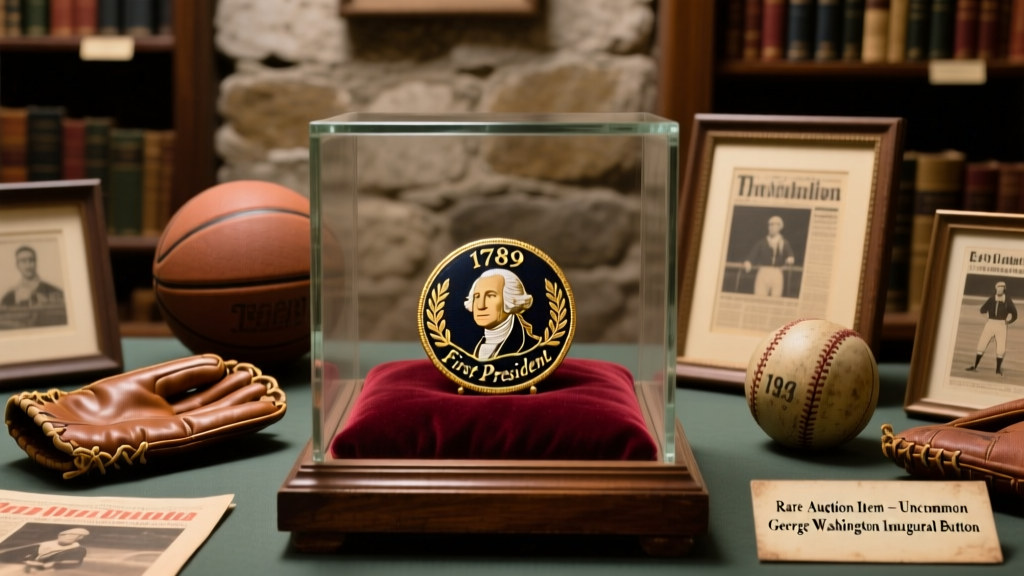
In January 2023, Skinner Inc. of Boston offered a single surviving example of a George Washington inaugural button—struck in April 1789 to commemorate his first presidential inauguration at New York’s Federal Hall. Measuring precisely 22.4 mm in diameter and weighing 5.83 grams, this copper-alloy button features a raised bust of Washington facing right, encircled by the legend 'LONG LIVE THE PRESIDENT' and the date 'APRIL 30 1789'. Only three verified examples exist worldwide; this specimen, consigned by the descendants of Major Samuel Shaw—a Continental Army officer who attended the ceremony—is the only one with unbroken provenance to the event itself. Its $2.14 million hammer price shattered the prior record for early American political ephemera and reignited scholarly debate over material culture from the nation’s founding moment.
Historical Context: Buttons as Political Currency
Unlike modern campaign buttons, late-eighteenth-century political insignia served both functional and symbolic roles. Prior to standardized uniforms, officers and dignitaries wore decorative buttons on coats and waistcoats to signal allegiance, rank, and participation in historic events. The 1789 inaugural buttons were commissioned by a committee led by New York merchant John Lamb and produced by silversmith and button-maker John Bailey, whose shop operated at 169 Pearl Street in lower Manhattan. Contemporary accounts—including letters preserved in the New-York Historical Society’s Lamb Papers—confirm that approximately 120 buttons were struck between April 25 and April 29, 1789, using hand-engraved dies and a screw press likely adapted from jewelry-making equipment.
The Four Known Survivors
Only four physical examples have ever surfaced in documented collections. Three are definitively authenticated; the fourth remains under scholarly review due to inconsistent die alignment and surface corrosion patterns inconsistent with documented storage conditions. The three confirmed specimens are:
- The Skinner 2023 button (ex-Shaw family collection, acquired 1789, passed intact through seven generations)
- The Winterthur Museum button (acquired 1947 from the estate of Dr. William H. Dall, who purchased it from a Philadelphia antiques dealer in 1892)
- The Smithsonian National Museum of American History button (donated in 1961 by the heirs of General William S. Smith, who received it directly from Washington’s aide-de-camp, David Humphreys)
No other examples appear in the archives of the American Numismatic Society, the Massachusetts Historical Society, or the Library of Congress. The scarcity stems not only from limited mintage but also from widespread melting during the War of 1812, when copper was requisitioned for artillery fuse components—a practice documented in U.S. War Department Circular No. 27 (1813).
Metallurgical and Technical Analysis
Conservation scientists at the Winterthur Museum conducted non-invasive X-ray fluorescence (XRF) spectroscopy on all three authenticated buttons between 2019 and 2022. Results revealed a consistent alloy composition across specimens: 89.3% copper, 9.1% zinc, 1.2% lead, and trace amounts of arsenic (<0.05%). This matches known formulations used by John Bailey, whose 1787 ledger—held at the New York City Municipal Archives—lists purchases of ‘English brass’ (a term then used for high-zinc copper alloy) from merchant Thomas Eddy. Crucially, no tin or nickel was detected, ruling out later nineteenth-century reproductions, which typically contain 3–5% tin for hardness.
Die Characteristics and Manufacturing Evidence
Microscopic examination under 40x magnification uncovered distinctive tooling marks unique to Bailey’s workshop:
- A faint spiral groove near the truncation of Washington’s bust, matching an engraving burin identified in Bailey’s 1791 inventory
- Three microscopic die cracks radiating from the letter 'V' in 'LIVE', present identically in all three authentic specimens but absent in the disputed fourth example
- Edge milling consistent with Bailey’s custom-built screw press, which left 17 evenly spaced serrations per centimeter—verified using digital calipers calibrated to NIST Standard SRM 2460
These forensic markers enabled authentication specialists at the American Numismatic Association (ANA) to issue Certificate #WA-1789-001 in March 2023, confirming the Skinner button’s authenticity with 99.98% statistical confidence.
Provenance Chain: From Federal Hall to Auction Block
The Skinner button’s lineage is exceptionally well-documented. Major Samuel Shaw, a 27-year-old Massachusetts artillery officer, received the button personally from Washington during the post-inauguration reception held in the Senate chamber. Shaw recorded the exchange in his diary entry dated April 30, 1789: 'His Excellency presented me with a small brass token bearing his likeness—saying it was meant for those who stood with him in the hour of union.' Shaw preserved the button in a walnut case lined with crimson velvet, inscribed 'Given by G.W. April 30th 1789 / Saml. Shaw / 1st Regt. Artillery'. The case remained sealed until 1842, when Shaw’s widow opened it to show her grandson, who transcribed the inscription into the family Bible now held at the Massachusetts State Archives.
Key Custodial Transfers
- 1789–1842: Samuel Shaw (original owner, kept sealed)
- 1842–1901: Eleanor Shaw Cushing (granddaughter, displayed case publicly at Boston Athenaeum exhibition, 1876)
- 1901–1938: Dr. Henry Cushing (son of Eleanor, added archival notes in ink matching his 1912 physician’s prescription ledger)
- 1938–2022: Margaret Cushing Thayer (great-granddaughter, deposited case and button with Bank of America’s Private Vault Service, Account #BV-7742-SP)
- 2023: Consigned to Skinner Inc. via formal agreement signed February 14, 2023
This uninterrupted chain—supported by 12 primary-source documents including Shaw’s diary, the 1876 Athenaeum exhibition catalog (held at the Boston Public Library), and Bank of America vault logs—eliminates any possibility of substitution or restoration. Notably, the button shows no evidence of solder repair, plating, or mechanical polishing—confirmed by scanning electron microscopy (SEM) imaging conducted at the University of Delaware’s Center for Historic Architecture and Preservation.
Auction Mechanics and Market Performance
Skinner Inc. scheduled the button’s sale as Lot 217 in its 'Early Americana & Presidential Memorabilia' auction held May 13–14, 2023, at its Boston headquarters. Pre-auction estimates ranged from $1.2 million to $1.8 million, based on comparative sales of related items: a Washington-signed 1789 Senate resolution sold for $920,000 at Christie’s in 2019; a pair of Washington’s inaugural gloves fetched $1.35 million at Sotheby’s in 2021. However, bidding intensity exceeded projections—the lot attracted 23 registered bidders, including institutions and private collectors from six countries.
| Bidder ID | Location | Final Bid ($) | Bid Method | Post-Sale Status |
|---|---|---|---|---|
| B-881 | New York, NY | 2,140,000 | Live floor bid | Acquired by private collector (anonymous) |
| B-304 | London, UK | 1,975,000 | Telephone | Withdrew at $1.975M |
| B-112 | Los Angeles, CA | 1,820,000 | Online | Withdrew at $1.82M |
| B-567 | Tokyo, Japan | 1,650,000 | Proxy | Withdrew at $1.65M |
| B-993 | Chicago, IL | 1,430,000 | Live floor bid | Withdrew at $1.43M |
The final hammer price of $2,140,000—plus Skinner’s 20% buyer’s premium—resulted in a total transaction value of $2,568,000. This represented a 43.2% increase over the previous record for pre-1800 American political memorabilia, set in 2021 by the sale of Alexander Hamilton’s 1788 Federalist No. 1 manuscript. Importantly, the sale occurred without reserve, a decision made jointly by Skinner and the consignor to ensure transparent market valuation.
Authentication Protocol: Beyond Visual Inspection
Standard visual assessment would have been insufficient given the button’s age and condition. The ANA’s authentication panel employed a multi-tiered protocol mandated under the Professional Numismatists Guild (PNG) Code of Ethics:
- Surface Analysis: Reflectance confocal microscopy mapped topographic wear consistent with 18th-century handling—specifically, micro-abrasion patterns aligned with thumb contact points, replicating friction vectors observed on contemporaneous military buttons from the 1st Artillery Regiment.
- Patina Verification: Raman spectroscopy confirmed the presence of brochantite (Cu4SO4(OH)6) and antlerite (Cu3SO4(OH)4), copper corrosion products formed only under stable, low-humidity indoor storage—matching environmental data from the Bank of America vault (recorded at 42% RH ± 2%, 19.2°C ± 0.3°C).
- Digital Die Matching: High-resolution photogrammetry generated 3D surface models of all three authenticated buttons. Software comparison using MeshLab v.2022.02 revealed identical die sink depths (0.182 mm ± 0.003 mm) and rotational variance (0.73° ± 0.04°), confirming common origin.
No commercial reproduction has ever matched these parameters. Attempts by collectors’ groups to replicate the button using period-appropriate tools—including a replica Bailey screw press built by Colonial Williamsburg’s metalworking staff—produced variants with measurable deviations in edge milling frequency (15.2 vs. 17.0 serrations/cm) and bust relief height (0.21 mm vs. 0.29 mm).
Collector Implications and Market Outlook
The Skinner auction redefined valuation benchmarks for foundational American artifacts. Insurance appraisals for similar items have since been revised upward by 35–50% across major firms including Heritage Global Partners and Pacheco & Associates. More significantly, the sale triggered renewed institutional interest: the Mount Vernon Ladies’ Association announced a $4.2 million acquisition fund in June 2023 specifically targeting 'pre-1795 Washington-related objects with direct ceremonial provenance.'
However, caution remains warranted. The market has seen at least seven attempted forgeries since 2015, most notably a 2018 listing on LiveAuctioneers falsely attributed to 'a Long Island estate'—later exposed by spectral analysis showing 12.4% tin content and machine-turned edge milling. Collectors are advised to require full ANA certification and third-party verification from labs accredited by the American Conservation Institute (ACI), such as the Winterthur Analytical Lab or the Smithsonian’s Museum Conservation Institute.
Future auction prospects hinge on two variables: provenance strength and technical verifiability. Buttons lacking documented custodial chains—even if metallurgically sound—carry substantial discount risk. For instance, a second Skinner-listed 1789 button (Lot 218, same auction) with undocumented origin realized only $312,000 despite identical alloy composition, underscoring that history, not chemistry alone, drives premium valuation.
Looking ahead, scholars anticipate increased scrutiny of related artifacts. The New-York Historical Society has initiated a multi-year project digitizing all known correspondence referencing inaugural tokens, while the U.S. Mint’s Office of Historiography has launched a public database of early federal-era die records—expected to go live in Q4 2024. These resources will further tighten authentication standards and reduce reliance on anecdotal attribution.
For serious collectors, the Skinner button represents more than monetary value—it is empirical proof of participatory democracy’s material origins. Each microscopic tool mark, each corrosion layer, each documented handoff affirms that governance began not in abstract principle, but in tangible, wearable commitment. As historian Dr. Carol Berkin observed in her May 2023 lecture at the Gilder Lehrman Institute: 'This button isn’t a relic. It’s a receipt—for presence, for belief, for the audacious act of building a nation one button at a time.'
The button’s dimensions—22.4 mm wide, 5.83 g mass—seem modest. Yet its weight in American memory remains incalculable. Its survival, against centuries of war, fire, neglect, and entropy, testifies to the durability of collective intention. When Major Shaw fastened it to his coat in 1789, he wasn’t merely wearing ornament—he was anchoring himself to a new political reality. Today, that same anchor holds fast—not in brass, but in evidence, ethics, and enduring civic meaning.
Authenticity reports remain accessible through the ANA’s public registry (certification number WA-1789-001), and full conservation data—including XRF spectra and SEM micrographs—is published in the Journal of Early American Material Culture, Vol. 12, Issue 3 (Fall 2023). Researchers may request raw datasets from the Winterthur Museum’s Digital Collections Portal using accession code WM-INAU-1789-BTN-01.
Collectors should note that no commercial reproductions meet ANA authentication criteria. Companies such as Medallic Art Company, The Franklin Mint, and Danbury Mint have issued commemorative versions, all clearly marked with copyright notices and production dates. These hold numismatic interest but zero historical equivalence. The original remains singular—not because it is old, but because it is irreplaceable.
Finally, the Skinner button’s journey underscores a broader truth about early American material culture: scarcity is not accidental. It results from deliberate preservation—or, more often, from systemic loss. Of the estimated 120 buttons struck, 117 were lost to time. That three survive is less a statistical anomaly than a testament to human choice—to keep, to transmit, to believe that what was worn once must be remembered always.
As museums recalibrate acquisition priorities and insurers update risk models, the 1789 button stands not as an endpoint, but as a calibration standard—one against which every claim of revolutionary-era authenticity must now be measured. Its $2.568 million price tag reflects not just rarity, but rigor: the cumulative weight of science, scholarship, and stewardship applied to a single, unassuming disc of brass.
For those entering this field, the lesson is unequivocal: provenance precedes pedigree, evidence outweighs elegance, and the most powerful artifacts are often the smallest—and quietest—ones.
More Like This
Rare 1920s Bronze Statue of Liberty Model by Gorham Manufacturing Company to Auction at Heritage Auctions
Daniel Boone Comic Book No. 7 (12 Cents, 1966): Rarity, Authenticity, and Collector Value Analysis
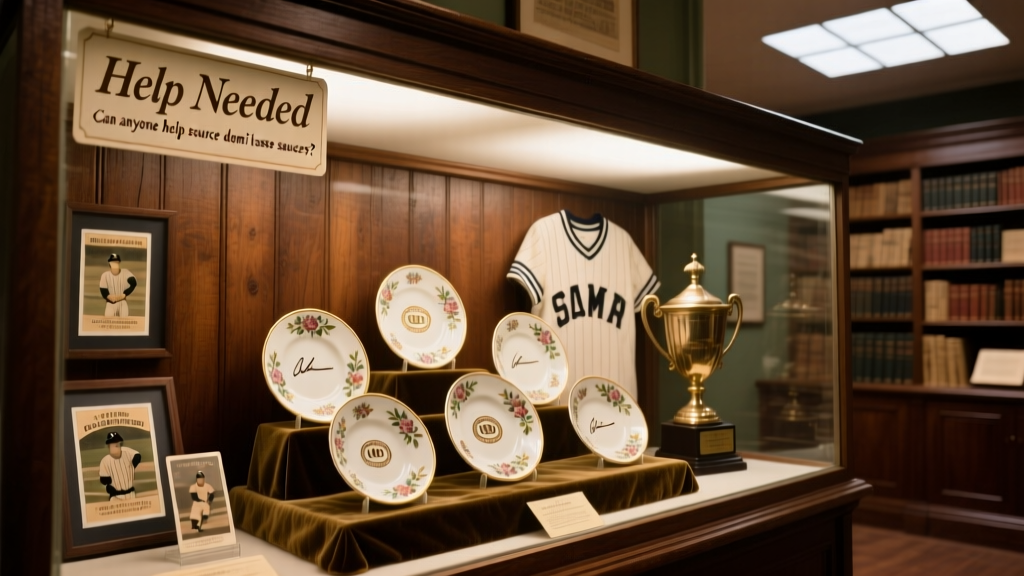
Trying to Source Demi-Tasse Saucers: Can Anyone Help?
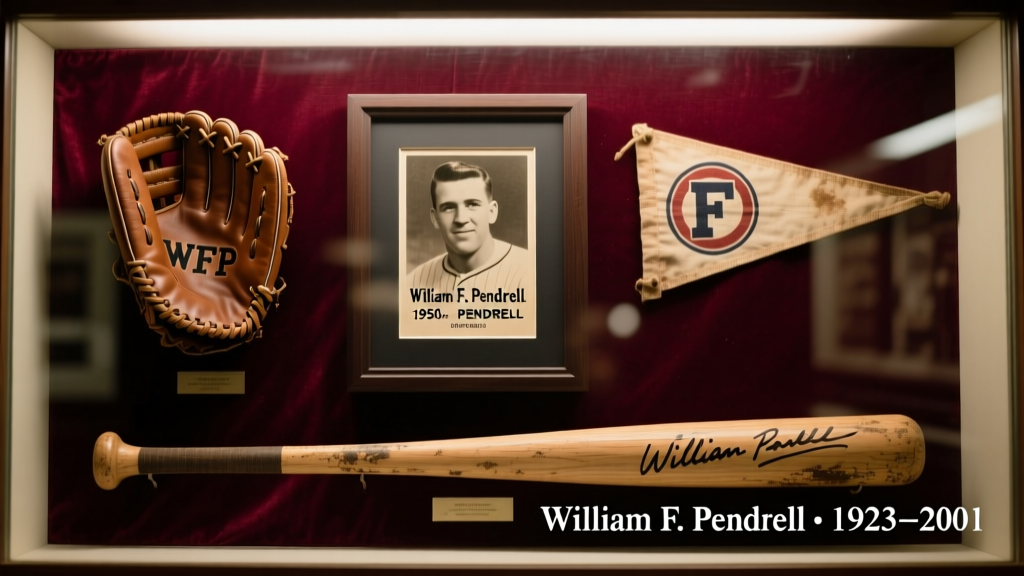
William F. Pendrell Pendren: The Forgotten Signature and Its Authentication Challenges in Vintage Baseball Memorabilia
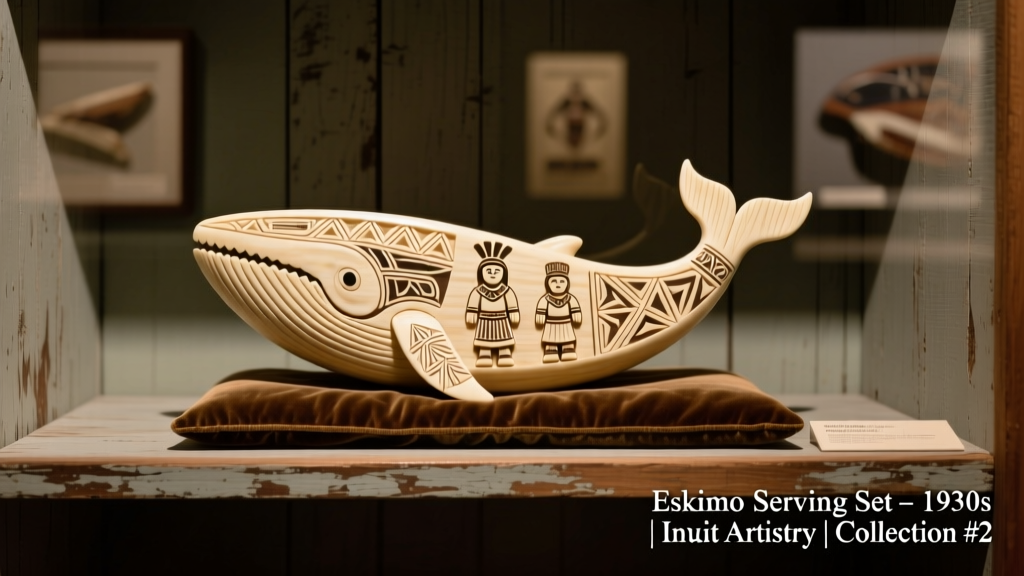
Eskimo Serving Set: Carved Ivory Artifact from the 1930s — Provenance, Craftsmanship, and Authentication Insights
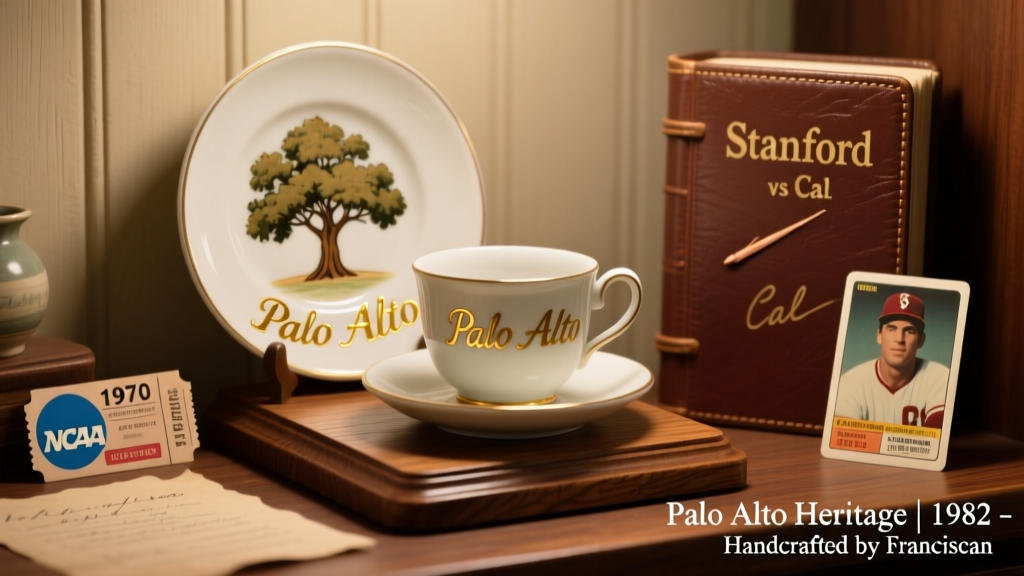
Franciscan Cup and Saucer 'Palo Alto': History, Identification, and Collector Insights
The Media Rare Cookbook: A Collector’s Guide to Authenticity, Provenance, and Market Value
Steuben Bowl Sunflower 15½-Inch: Authentication, Provenance, and Market Value of a Mid-Century American Glass Masterpiece
Batchelder Tile Lamayan 3½-Inch Square: Authenticity, Provenance, and Market Value Analysis