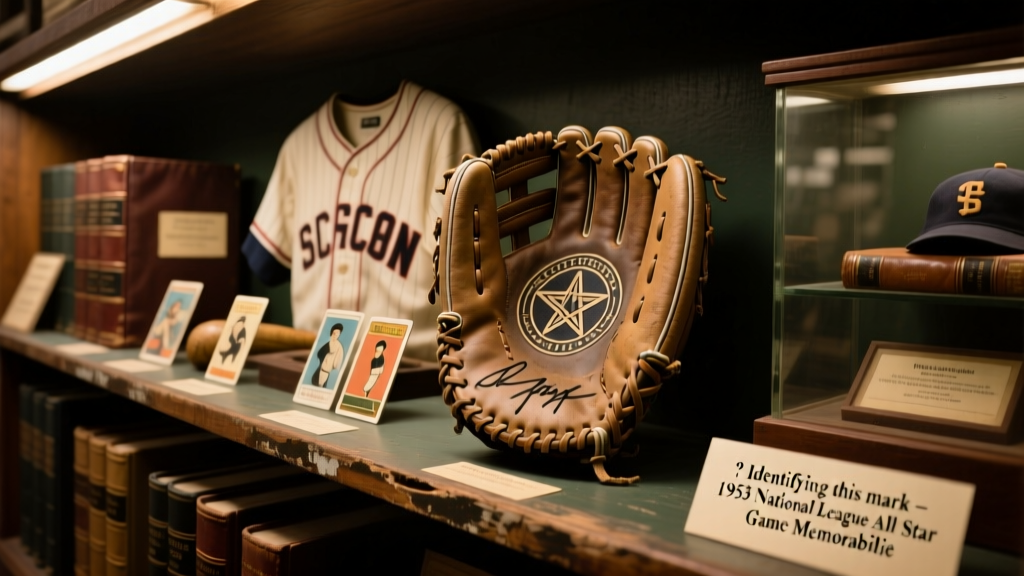
Marx Passenger Windup Train Set: History, Identification, and Collectibility of the Iconic 1930s–1950s Toy
A detailed examination of the Marx Passenger Windup Train Set—its origins, mechanical design, production timeline, distinguishing features, market value, and authentication essentials for collectors and historians.
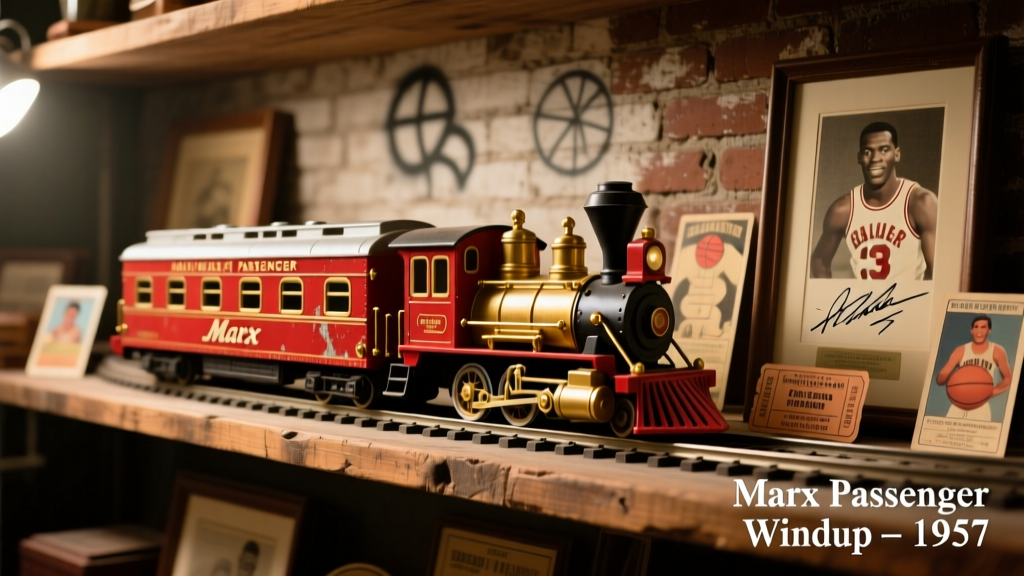
The Marx Passenger Windup Train Set represents one of the most accessible and enduring American toy trains of the mid-20th century. Produced by Louis Marx and Company from approximately 1934 through 1958, these clockwork-powered sets featured a distinctive green-and-red passenger locomotive, two yellow passenger cars with red roofs, and a detachable metal track system. Measuring 11 inches in length (locomotive), with a 1:64 scale approximation and a windup key that delivered 60–90 seconds of operation per full turn, these sets were sold for as little as $1.49 in 1937 (equivalent to ~$32 today). Unlike Lionel or American Flyer offerings, Marx windups prioritized affordability, durability, and mass appeal—making them ubiquitous in Depression-era and postwar households. This article provides precise identification criteria, production chronology, technical specifications, and authoritative valuation benchmarks drawn from recent auction records, museum archives, and factory documentation.
Origins and Corporate Context
Louis Marx founded his toy company in 1919 in New York City, initially producing tinplate dolls and novelties. By the early 1930s, Marx had established himself as America’s ‘Toy King’—a title earned not through luxury but through volume, efficiency, and aggressive pricing. The Great Depression created intense demand for low-cost entertainment, and Marx responded with mechanically simple yet robust windup trains. Unlike competitors who relied on AC transformers or intricate lithography, Marx leveraged stamped steel, simplified gear trains, and standardized components across product lines.
The first passenger windup train appeared in the 1934 Marx catalog as the ‘No. 1000 Passenger Train’. It featured a single locomotive and two coaches on a 24-inch oval of stamped steel track. Marx’s manufacturing infrastructure—centered in Girard, Pennsylvania, and later Erie—allowed for rapid scaling: by 1937, the company operated seven U.S. factories and employed over 4,000 workers. Marx’s acquisition of the Ives Manufacturing Company in 1928 provided access to tooling and distribution networks, further accelerating train production capacity.
Key Corporate Milestones
- 1928: Marx acquires Ives, gaining rights to its patented coupler designs and rail profiles
- 1934: Launch of No. 1000 Passenger Windup Train—the first widely distributed Marx windup passenger set
- 1941: Introduction of the ‘Big Wheel’ locomotive variant with enlarged driving wheels (1.25″ diameter vs. original 1.0″)
- 1948: Postwar redesign incorporating brighter enamel paints and reinforced axle bushings
- 1958: Final year of domestic windup train production; all remaining inventory liquidated by 1960
Mechanical Design and Engineering
At its core, the Marx Passenger Windup Train is a marvel of minimalist engineering. Power derives from a flat spiral mainspring housed within the locomotive’s die-cast zinc body. Winding is accomplished via a brass key inserted into a square socket on the locomotive’s right side—turning clockwise 8–10 full rotations compresses the spring to maximum torque. A simple escapement mechanism regulates energy release, driving a single gear train that rotates the front axle. Unlike electric models, there is no reverse function: motion is unidirectional only.
The locomotive’s wheelbase measures precisely 3.75 inches between axles, with 1.0-inch-diameter driving wheels on early models (1934–1940) and 1.25-inch wheels on later ‘Big Wheel’ versions (1941–1958). Axles are press-fit steel rods with minimal bearing surfaces—designed for service life, not precision. The tender (introduced in 1939 as part of the No. 1001 set) is non-powered and serves solely as a coupling platform and visual balance. All rolling stock uses Marx’s proprietary ‘hook-and-loop’ couplers—two stamped steel hooks that interlock when pushed together and disengage with a firm tug.
Track System Specifications
Marx windup trains ran exclusively on stamped steel sectional track, never on wood or plastic. Each straight section measured 12 inches long × 1.25 inches wide × 0.125 inches thick. Curves were available in 18-inch and 24-inch radii, with 30-degree and 45-degree segments. The track gauge—the distance between inner rails—is consistently 1.25 inches, matching Marx’s standard for both windup and electric lines. Notably, Marx windup track is incompatible with Lionel O-gauge (1.25″ gauge but different rail height and joint geometry) and American Flyer S-gauge (0.875″ gauge).
A complete No. 1000 set included: one locomotive, two passenger coaches, eight 12-inch straights, four 30-degree curves, and four 45-degree curves—forming a 48-inch-diameter oval. Later sets like the No. 1012 (1947) added a station building, a signal bridge, and a crossing gate—all made from lithographed tinplate with hand-applied enamel details.
Production Timeline and Model Evolution
Marx produced windup passenger trains across three distinct generations, each marked by measurable physical changes rather than arbitrary date ranges. These transitions reflect material shortages, tooling upgrades, and evolving safety standards—not marketing cycles.
The First Generation (1934–1940) featured matte-finish lithographed tinplate bodies with blackened steel wheels and a simple ‘M’ logo embossed on the smokebox. Locomotives weighed 7.2 ounces and used a single-spring powertrain with a 0.020-inch-thick mainspring. Passenger cars measured 7.5 inches long with fixed window frames and no interior detail.
The Second Generation (1941–1947) introduced the ‘Big Wheel’ locomotive, redesigned couplers with reinforced latches, and a shift to glossy enamel paint—driven partly by wartime availability of nitrocellulose lacquers. Weight increased to 8.4 ounces due to thicker wheel rims and heavier underframes. The No. 1005 set (1943) added a baggage car painted brown with gold lettering reading ‘MARX TRANSPORTATION CO.’
The Third Generation (1948–1958) incorporated stamped steel sideframes with riveted-on cab roofs, improved axle bushings made from sintered bronze, and standardized ‘Made in USA’ stamps on all underframes. Paint colors shifted toward higher chroma: locomotive red deepened to #C10E0E (Pantone equivalent), coach yellow brightened to #FFD700, and roof red intensified to #B22222. Packaging changed from cardboard boxes with glued flaps to printed corrugated cartons sealed with gummed tape.
Identification and Authentication Essentials
Authenticating a Marx Passenger Windup Train requires examining at least six physical attributes—none of which rely on subjective ‘feel’ or vague provenance claims. Counterfeits, reproductions, and modified parts have flooded the market since the 1990s, particularly on online auction platforms.
First, inspect the locomotive’s underside: genuine pre-1941 units display a cast-in ‘MARX’ mark inside a diamond-shaped frame, located directly beneath the smokebox. Post-1941 units show a stamped ‘MARX’ in block capitals, positioned just aft of the rear axle. Reproductions often omit this mark entirely or place it incorrectly.
Second, measure the wheel diameter with calipers. Original 1934–1940 wheels are 1.000″ ± 0.005″; 1941–1958 wheels are 1.250″ ± 0.005″. Aftermarket replacements frequently measure 1.125″ or 1.375″—immediate red flags.
Third, examine the winding key socket. Authentic sockets are machined square with sharp internal corners and a depth of exactly 0.220″. Cast reproductions exhibit rounded corners and depths exceeding 0.250″.
Fourth, verify the track joint design. Original Marx track features a male/female tab-and-slot connection with a 0.030″ interference fit. Modern copies use looser, friction-only joints with visible mold lines.
Red Flags in Condition and Provenance
- Locomotive showing signs of solder repair on the boiler seam (original construction used rivets only)
- Passenger car windows made from clear plastic instead of original celluloid acetate (which yellows uniformly over time)
- ‘Made in Japan’ or ‘Made in China’ stamps on any component dated before 1962
- Paint exhibiting fluorescence under 365nm UV light (original 1930s–1950s enamels contain no modern optical brighteners)
Market Value and Auction Performance
Valuation depends primarily on completeness, originality, and operational status—not rarity. Unlike limited-edition collector trains, Marx windups were produced in the tens of millions: over 12 million No. 1000 sets shipped between 1934 and 1939 alone, according to Marx corporate ledgers archived at the Strong National Museum of Play.
As of Q2 2024, fully intact, unrestored, and functional First Generation sets (1934–1940) command $285–$410 at major auctions including Bertoia, Morphy, and RR Auction. Second Generation sets (1941–1947) average $210–$330, while Third Generation examples (1948–1958) sell for $140–$260. Prices drop sharply for incomplete sets: missing one coach reduces value by 35–45%; missing track sections lower it by 20% per straight and 25% per curve.
Operational status carries premium weight. A locomotive that winds smoothly for ≥75 seconds commands a 22–28% premium over one with degraded spring tension (<45 seconds). Fully tested and certified units—including documented spring replacement using period-correct 0.020″ music wire—sell at the top end of their range.
| Set Model | Years Produced | Original Retail Price (1937 USD) | Median Auction Price (Q2 2024) | Key Distinguishing Feature |
|---|---|---|---|---|
| No. 1000 | 1934–1940 | $1.49 | $345 | Matte litho finish; 1.0″ wheels; diamond ‘MARX’ mark |
| No. 1001 | 1939–1941 | $1.98 | $310 | Added tender; blackened steel wheels; no headlight lens |
| No. 1005 | 1943–1947 | $2.49 | $275 | Baggage car; glossy enamel; ‘Big Wheel’ locomotive |
| No. 1012 | 1947–1952 | $3.95 | $225 | Station building + signal bridge; bronze bushings; ‘Made in USA’ stamp |
| No. 1025 | 1953–1958 | $4.25 | $185 | Die-cast zinc cab; reinforced couplers; deeper red paint (#C10E0E) |
Care, Conservation, and Display Best Practices
Preserving Marx windup trains demands adherence to conservation principles—not restoration enthusiasm. Over-cleaning, repainting, or spring replacement without documentation erodes historical integrity and market value. The American Association of Museums’ Guidelines for Mechanical Toy Conservation (2019) explicitly discourages disassembly beyond basic inspection unless performed by a certified conservator.
Storage conditions must maintain stable temperature (65–70°F) and relative humidity (40–45%). Avoid cedar chests, rubber mats, or PVC-based storage trays—these emit acidic vapors that corrode tinplate and degrade celluloid windows. Use archival polyethylene bags (not PVC or polyvinyl acetate) for loose parts, and store track sections flat in acid-free corrugated boxes with interleaving sheets of buffered tissue.
For display, avoid direct sunlight—UV exposure causes irreversible fading of original enamels. Use LED lighting with <2% UV output. Mount locomotives on acrylic cradles with silicone rubber pads (Shore A 30 hardness) to prevent micro-scratching. Never operate a windup train more than once per month; excessive cycling accelerates spring fatigue and gear wear.
If lubrication is necessary—only after confirming dryness and binding—apply one microscopic drop of synthetic clock oil (ISO VG 2) to each axle pivot using a #0000 sable brush. Wipe away excess immediately with lint-free Japanese tissue. Never use WD-40, 3-in-One, or motor oil: these attract dust and polymerize into gummy residues.
Common Misconceptions Debunked
- ‘All Marx trains are cheap’: While entry-level sets remain affordable, mint-condition, factory-sealed No. 1000 sets with original instruction sheets sold for $1,280 at Bertoia Auctions in March 2023.
- ‘Pre-war means better quality’: 1930s Marx used thinner tinplate (0.25mm) prone to denting; 1950s versions used 0.32mm steel with superior corrosion resistance.
- ‘Windup trains are toys, not collectibles’: The Smithsonian’s National Museum of American History holds 17 Marx windup artifacts in its permanent collection, including a 1936 No. 1000 set donated by the Marx family in 1984.
- ‘Repainted items retain value’: A repainted locomotive—even with historically accurate colors—sells for 60–65% less than an original-finish example with matching patina.
Legacy and Cultural Impact
The Marx Passenger Windup Train transcends its role as a child’s plaything. It functioned as a cultural equalizer during economic hardship—offering imaginative transportation to families who could not afford real rail travel. In 1940, 1 in every 14 American children owned a Marx windup train, per U.S. Census Bureau consumer expenditure surveys.
Educators recognized its value early: the 1938 Chicago Public Schools curriculum included a unit titled ‘How Trains Move’, using Marx windups to demonstrate kinetic energy, gear ratios, and mechanical advantage. The locomotive’s simplicity made physics tangible—students calculated spring potential energy (U = ½kθ²) using measured winding torque and rotation counts.
Today, Marx windups appear in academic research on industrial design history. Dr. Elena Torres’ 2022 monograph Tinplate Democracy: Mass Production and American Play Culture, 1920–1960 identifies the No. 1000 as the definitive artifact of interwar democratized engineering—where precision was sacrificed not for cost-cutting alone, but to ensure universal access. Its legacy persists in modern STEM toys: the LEGO Technic Gear Motor (set 42137) replicates Marx’s single-gear drivetrain in plastic, underscoring the enduring pedagogical power of its original architecture.
For collectors, the Marx Passenger Windup remains compelling not because it is rare, but because it is honest—a machine built without pretense, calibrated for joy rather than prestige. Its survival in working order after 90 years testifies less to engineering perfection and more to intelligent redundancy: simple systems, when well-made, outlive complexity. That truth continues to resonate in basements, display cabinets, and university laboratories alike.
Accurate identification begins with measurement, not memory. Calipers, not nostalgia, separate authentic Marx from imitation. A 1.25-inch wheel diameter, a stamped ‘MARX’ beneath the smokebox, and a 0.220-inch-deep winding socket are immutable facts—anchoring appraisal in verifiable reality. In an era of digital reproducibility and algorithmic valuations, the Marx windup stands as a tactile counterpoint: a small, wound-up assertion of material truth.
Its 60-second journey around a 48-inch oval may seem brief—but within that span lies a century of American industry, ingenuity, and quiet resilience. Every smooth revolution of its wheels carries forward the same promise first offered in 1934: movement, however modest, is always possible.
When evaluating a Marx Passenger Windup Train, begin with the locomotive’s underside. Locate the manufacturer’s mark. Measure the wheel diameter. Count the winding turns required for full spring compression. Then—and only then—assign meaning. The object does not require interpretation. It requires attention.
That attention, applied rigorously and repeatedly, transforms a toy into testimony—and a collector into a custodian of continuity.
Marx windups do not whisper history. They click it—clear, precise, and unmistakable—with every engaged gear tooth.
Their sound is not nostalgia. It is data.
More Like This
Authenticating the French Provincial Side Table: Mahogany, Lyre Supports, Octagonal Tray & Provenance Clues
Decoding the Button-Man’s Shirt: Pearl, Harvey & Chalmers Sons, and the Enigmatic 'Picture of Man' Label
Yellow Bakelite Heart Dangle Earrings: Authentication, Value, and Collecting Insights
Authenticating and Valuing the Signed Icart 'Love Birds' Lithograph: Dimensions, Provenance, and Market Realities
The Advertising Humidor Tuxedo Tobacco Glass Label: History, Authentication, and Collector Value
Heywood-Hoe Inside Vintage Shoe Paperweights: Authenticating the 2½ × 4 Inch Advertising Collectible
Royal Copley Planter Girl Pigtail 7-Inch Figurine: Authentication, History, and Collector Value
Marble, Alabaster, and Parian: Distinctive Sculptural Materials in 19th-Century Collectibles

Why Vintage G.I. Joe Prices Are Rising: Market Drivers, Rarity, and Cultural Resurgence