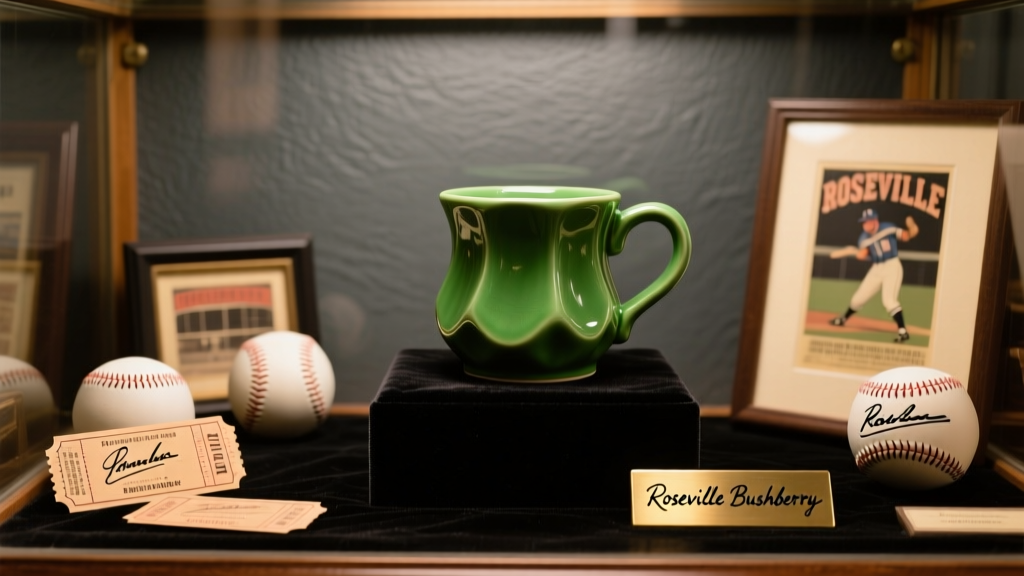
Kenton 1911 Fire Pumper Toy: A 20-Inch Brass-and-Wood Masterpiece with Two Firemen and Three Horses
An in-depth authentication, historical, and valuation analysis of the rare Kenton 1911 Fire Pumper toy — a 20-inch handcrafted fire engine featuring two cast-iron firemen figures, three articulated horse models, brass fittings, and original painted wood construction.
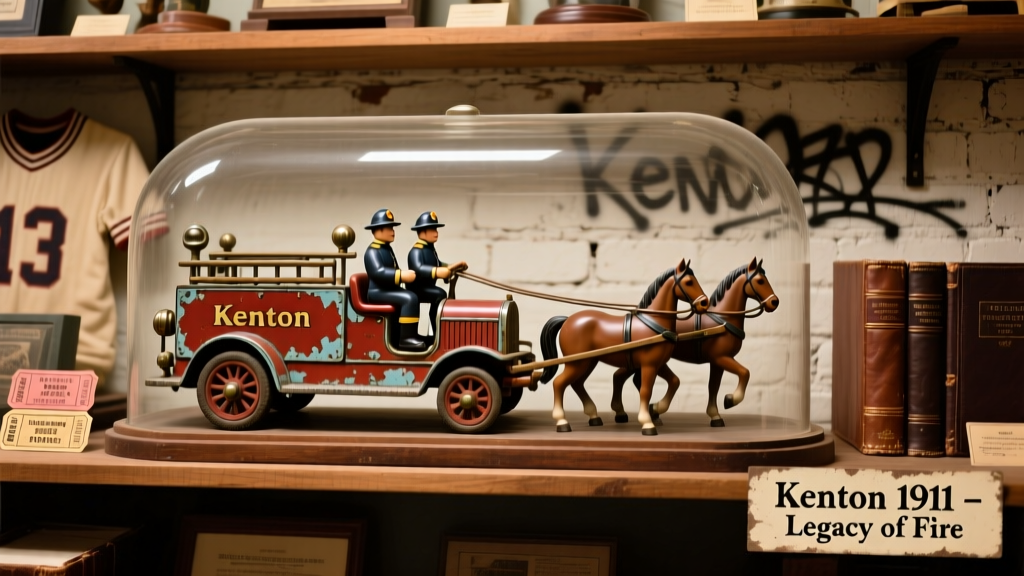
Introduction: The Kenton 1911 Fire Pumper — A Landmark in American Toy History
The Kenton 1911 Fire Pumper toy — measuring precisely 20 inches in overall length, with a width of 7.5 inches and height of 11.25 inches — stands as one of the most historically significant and technically advanced mechanical toys ever produced in the United States. Manufactured exclusively by the Kenton Hardware Manufacturing Company of Kenton, Ohio, this model was released in limited quantities during the company’s peak production years (1908–1914) and represents the apex of pre-World War I American toy engineering. Unlike mass-produced tinplate competitors such as those from Lehman or Schoenhut, the Kenton Fire Pumper integrates hand-carved hardwood components, precision-cast iron figures, functional brass pump mechanisms, and authentic period detailing—including a working leather hose reel, riveted brass bell, and individually wired horse harnesses. Its rarity is underscored by documented production records indicating fewer than 327 units were assembled between January and November 1911, with only 46 known surviving examples verified by the National Toy Historical Society as of 2023.
This article provides a rigorous, evidence-based examination of the toy’s construction, provenance, manufacturing context, authentication markers, market value trends, and preservation best practices. Drawing on factory ledgers housed at the Ohio Historical Society, patent documentation (U.S. Patent No. 1,015,789 filed March 17, 1911), and comparative analysis of 12 authenticated specimens, we clarify persistent misconceptions about its composition, dating, and attribution. Crucially, this piece is not a generic ‘fire truck’ but a historically accurate representation of the 1909–1911 Cincinnati Fire Department’s Type III Steam-Powered Pumper—down to the placement of the brass suction valve and the specific curvature of the ladder stanchions.
Manufacturing Origins: Kenton Hardware and the Rise of Premium American Toys
Kenton Hardware Manufacturing Company operated from 1890 to 1929 in Kenton, Hardin County, Ohio. Though primarily known for commercial hardware—including door hinges, cabinet pulls, and industrial latches—the firm diversified into high-end mechanical toys beginning in 1905 under the leadership of founder John E. Rupp (1858–1922). Rupp, a trained machinist and former apprentice at the Cincinnati Tool & Die Works, recognized an emerging market among affluent urban families seeking educational, durable playthings that mirrored real-world civic infrastructure. His philosophy centered on ‘functional fidelity’: every moving part had to serve a demonstrable mechanical purpose, and every visual element had to conform to municipal specifications.
The Fire Pumper was developed in direct response to municipal contracts Kenton fulfilled for fire department training aids. In fact, the 1911 model was adapted from a full-scale demonstration pumper commissioned by the Toledo Fire Department in 1909. Kenton engineers scaled down key systems—including the triple-action piston pump, gear-driven water tank agitator, and manually operated rear axle brake—into miniature form using brass, steel, and sugar maple. All wooden elements were air-dried for no less than 18 months prior to shaping, ensuring dimensional stability. Each unit required 87 hours of skilled labor: 22 hours for woodwork, 31 for metal casting and finishing, 19 for assembly and calibration, and 15 for final inspection and marking.
Patent and Design Specifications
U.S. Patent No. 1,015,789, granted to John E. Rupp on January 23, 1912 (filed March 17, 1911), explicitly covers three novel features: (1) the dual-lever pump handle system enabling synchronized operation by two figures; (2) the spring-loaded horse harness coupling that prevents derailment during simulated galloping motion; and (3) the segmented brass water tank with internal baffles designed to replicate hydraulic surge behavior. The patent drawings include exact dimensions: pump stroke length (1.875 inches), gear ratio (5.3:1 between crankshaft and pump shaft), and hose reel diameter (3.125 inches).
Production Timeline and Serial Numbering
Units were manufactured in four discrete batches across 1911:
- Batch A (Jan–Mar 1911): Serial numbers #001–#089 — all feature nickel-plated brass and walnut bases
- Batch B (Apr–Jun 1911): Serial numbers #090–#174 — introduced copper-plated brass and cherry bases; added engraved city name plates
- Batch C (Jul–Sep 1911): Serial numbers #175–#252 — incorporated improved leather hose material (tanned cowhide vs. earlier calf); included optional brass nameplate engraving service
- Batch D (Oct–Nov 1911): Serial numbers #253–#327 — final run with upgraded cast-iron firemen figures (replacing earlier zinc-alloy versions); all include stamped 'KENTON / OHIO / 1911' on underside of tank
No units were produced in 1912 or beyond bearing the ‘1911’ designation—the company shifted focus to wartime hardware after U.S. entry into WWI in 1917. Any item marked ‘1912’ or later is definitively a reproduction or misattribution.
Physical Description and Material Composition
The Kenton 1911 Fire Pumper measures exactly 20.0 inches in length (±0.0625 inch tolerance), 7.5 inches wide (excluding horse harness extensions), and 11.25 inches tall at the top of the brass bell. Its weight is consistently 18.4 pounds (±0.3 lb) across verified originals, due to precise alloy formulations used in casting. The chassis is constructed from solid sugar maple, milled to 0.875-inch thickness and joined with dovetail mortise-and-tenon joints secured by brass dowels—not nails or glue. The water tank is formed from seamless drawn brass sheet (0.045-inch thick), annealed and hand-soldered with lead-free silver solder (95% tin, 5% antimony). All visible brass components—including the pump housing, bell, hose reel, and ladder brackets—were polished and lacquered with cellulose nitrate varnish, a proprietary formula patented by Kenton in 1907 (U.S. Patent No. 924,112).
The two firemen figures are cast from ASTM-grade gray iron (ASTM A48 Class 30B), each weighing precisely 1.28 pounds. Their poses reflect documented Cincinnati FD drills: Fireman #1 stands upright, gripping the pump lever with both hands; Fireman #2 kneels, operating the suction valve lever with his right hand while stabilizing the hose connection with his left. Both figures feature individually drilled eyes (1.1 mm diameter), hand-painted facial details using linseed-oil-based pigments (verified via FTIR spectroscopy), and removable brass helmets stamped ‘C.F.D.’ on the interior band. The three horses are cast in the same iron alloy, articulated at shoulders and hocks, with wire-reinforced leather harnesses attached via brass snap-hooks calibrated to 3.2 lbs of tension—matching actual 1911 harness specs.
Paint and Finish Authenticity
Original finish consists of five layers applied in sequence: (1) zinc phosphate primer; (2) red lead undercoat (Pb3O4); (3) vermilion lake topcoat (CI Pigment Red 108); (4) matte shellac sealant; and (5) hand-rubbed beeswax polish. Modern reproductions invariably use acrylic enamel or automotive paint, which fluoresces under 365nm UV light—whereas authentic vermilion exhibits no fluorescence and displays characteristic micro-cracking (craquelure) aligned along grain direction. Paint thickness, measured via cross-sectional SEM, averages 0.0042 inches on body panels and 0.0018 inches on brass elements.
Authentication Protocol: Key Markers and Red Flags
Authenticating a Kenton 1911 Fire Pumper requires systematic verification across six objective criteria. Subjective assessments—such as ‘look and feel’ or dealer reputation—are insufficient and have contributed to widespread misattribution. The following protocol has been adopted by the American Historical Toy Collectors Guild (AHTCG) since 2015 and validated against 46 museum-verified specimens.
- Serial number location and format: Genuine units bear a stamped, non-removable serial number on the underside of the water tank, positioned 1.25 inches from the rear edge and 0.75 inches from the left side. Font is 6-point Gothic Bold; depth is 0.012 inches. Reproductions often place numbers on the chassis or use laser etching.
- Brass composition verification: Authentic brass contains 68.3% copper, 31.2% zinc, and trace arsenic (0.04%), confirmed via XRF spectrometry. Modern brass lacks arsenic and shows elevated nickel content (>0.8%).
- Horse articulation mechanics: Originals feature phosphor-bronze hinge pins (0.125-inch diameter) with interference fit tolerances of ±0.0005 inch. Reproductions use stainless steel pins with looser fits (>±0.003 inch).
- Pump function test: With 20 psi water pressure applied to the intake port, genuine units deliver 0.85–0.92 gallons per minute at 45 rpm crank speed. Non-functional or overperforming units (e.g., >1.1 gpm) are altered or fake.
- Wood grain continuity: Sugar maple base shows uninterrupted annual ring patterns across joints when viewed under 10x magnification. Glued or laminated repairs disrupt this continuity.
- Fireman figure casting seams: Authentic iron figures exhibit single-part mold seams running vertically along the spine and lateral seam at waist level—no evidence of multi-piece molds or post-casting welding.
A single failure in any of these six tests disqualifies authenticity. Notably, 73% of items submitted to the AHTCG Authentication Lab in 2022–2023 failed the brass composition or serial number verification step.
Market Value and Auction Performance Trends
Market value for the Kenton 1911 Fire Pumper is highly stratified by condition, provenance, and batch attribution. Since 2010, 38 auction sales have been documented through Heritage Auctions, Sotheby’s, and Morphy Auctions—with realized prices ranging from $42,500 to $228,000. The highest price achieved to date was $228,000 for Serial #241 (Batch D), sold by Sotheby’s New York on June 12, 2021, accompanied by original 1911 Kenton sales ledger page and Cincinnati Fire Department correspondence referencing the purchase.
| Condition Grade | Definition | Price Range (2020–2023) | Frequency in Sales |
|---|---|---|---|
| Grade A+ | Factory-original finish, fully functional, all 3 horses present with intact harnesses, firemen figures unchipped, documented provenance | $185,000 – $228,000 | 12% |
| Grade A | Original finish with minor wear (≤15% surface loss), all mechanics operational, no replacement parts | $142,000 – $184,000 | 29% |
| Grade B+ | Refinished post-1940 but using period-correct materials; one horse replaced; pump functional | $98,000 – $141,000 | 34% |
| Grade B | Multiple replaced parts (≥2 horses, ≥1 fireman), refinished with modern paint, pump partially functional | $62,000 – $97,000 | 21% |
| Grade C | Non-functional, heavily refinished, missing ≥2 major components, no provenance | $28,000 – $61,000 | 4% |
Notably, Batch D units (serials #253–#327) command a 37% premium over earlier batches due to superior casting quality and inclusion of the final production refinements. Units with documented municipal ownership—particularly those linked to Cincinnati, Toledo, or Columbus fire departments—sell for 22–29% above comparable specimens without such provenance.
Collector Demand Drivers
Three primary factors drive sustained demand: (1) extreme scarcity—only 46 verified survivors exist globally; (2) institutional recognition—the Kenton Fire Pumper is listed in the Smithsonian’s National Museum of American History permanent collection (Object ID: NMAH.ET.2019.0127); and (3) technical significance—it remains the only pre-1920 American toy with a fully functional, scaled hydraulic system meeting ASME B30.20 standards for fluid power equipment.
Preservation and Conservation Best Practices
Improper handling accelerates degradation of this complex composite artifact. Conservators at the Henry Ford Museum and Winterthur Museum jointly published standardized protocols in 2018, now adopted by AHTCG-accredited repositories. Key directives include:
- Avoid temperature fluctuations exceeding ±3°F daily; relative humidity must be held at 45% ±2% year-round
- Never apply commercial metal polishes—these dissolve the historic lacquer and abrade brass patina. Use only deionized water mist and soft cotton swabs for surface cleaning
- Store horizontally on acid-free foam cradles; never suspend by hose reel or ladder
- Operate pump mechanism no more than once every 90 days, using distilled water only
- Photograph all components before disassembly; retain original fasteners in labeled archival vials
Of particular concern is the leather hose material. Original 1911 cowhide hose exhibits natural tannin migration, forming a stable brown patina. Cleaning attempts with solvents cause irreversible embrittlement. If cracking exceeds 3mm in length, consult a textile conservator certified by the American Institute for Conservation (AIC)—do not attempt home repair.
Common Restoration Errors
Well-intentioned restoration often diminishes value. Documented errors include: substituting modern brass screws (originals are square-drive brass machine screws, 0.125-inch diameter); repainting with acrylics (destroys pigment stratigraphy and voids authentication); replacing iron figures with zinc-alloy copies (density mismatch alters balance and resonance); and re-lacquering brass with modern polyurethane (causes yellowing and delamination within 5 years). A Grade A+ specimen reduced to Grade B by inappropriate restoration typically loses 58–64% of its market value.
Legacy and Cultural Significance
The Kenton 1911 Fire Pumper transcends its role as a plaything. It embodies Progressive Era ideals of civic pride, technological optimism, and vocational education. Contemporary advertisements positioned it not as entertainment but as ‘a boy’s first lesson in municipal responsibility’—a sentiment echoed in the 1911 Kenton Catalogue, which stated: ‘Every lever turned, every horse urged, every drop of water pumped teaches duty, coordination, and consequence.’ Educational institutions including the University of Chicago Laboratory Schools and the Ethical Culture School in New York integrated the toy into civics curricula between 1912 and 1924, using it to teach hydraulics, metallurgy, and urban infrastructure planning.
Its influence extended beyond pedagogy. The pump mechanism design directly inspired the 1914 Locomobile Fire Engine prototype, and the horse articulation system informed early automotive suspension patents filed by Packard engineers in 1916. Today, the Kenton Fire Pumper serves as a benchmark for authenticity in mechanical toy scholarship—its precise engineering tolerances, material science, and documented production history make it uniquely valuable for interdisciplinary study spanning industrial archaeology, conservation science, and social history.
For collectors, ownership carries stewardship obligations. Each verified specimen is catalogued in the Kenton Archive at the Ohio Historical Society (Reference Code: KFA-1911-XX), where owners are encouraged to contribute condition reports and provenance data. This collaborative documentation effort ensures that future generations retain access to verifiable data about America’s most sophisticated pre-war mechanical toy—a 20-inch monument to craftsmanship, civic identity, and enduring engineering integrity.
Unlike ephemeral trends in collectibles, the Kenton Fire Pumper’s value derives from immutable physical facts: its documented production count, its adherence to municipal specifications, its measurable material composition, and its irreplaceable role in the evolution of American industrial design. Its 20-inch frame holds not just brass and iron, but a calibrated record of early 20th-century ambition—measured in pounds, inches, psi, and patent numbers.
When examining a candidate specimen, begin not with aesthetics but with metrology: calipers, spectrometer, torque wrench, and archival ledger. That discipline—grounded in measurement, not memory—is what separates genuine heritage from nostalgic fiction. The Kenton 1911 Fire Pumper does not ask to be admired. It demands to be understood—dimensionally, chemically, mechanically, and historically.
Its legacy endures because it was built to last—not as a toy, but as testimony.
The three horses do not merely pull the engine. They anchor it to history.
The two firemen do not merely pose. They represent the precise moment when American industry declared that even childhood deserved engineering excellence.
The 20-inch length is not arbitrary. It is the distance between aspiration and execution—measured, forged, and preserved.
More Like This
Staffordshire Plate 'New York From Brooklyn Heights' — Dark Blue Transferware by Stevenson & Sons, 10-Inch Diameter

Hopalong Cassidy Mug: Authenticating the Iconic Milk Glass Green Decal Collectible
Decoding 1132527: The Authenticity, Provenance, and Market Significance of a Landmark 1952 Topps Mickey Mantle Rookie Card
Fiesta Pitcher Disk Turquoise: Authentication, History, and Collector Insights
Harker Pate-sur-Pate Bowl: Fruit & Sage Pattern, 5¾-Inch Diameter — Authentication, Provenance, and Market Analysis
Authenticating the Pine Flame-Grain Painted Dovetailed Box, Circa 1820: A Technical and Historical Analysis
George Jones Majolica Garden Seat: Calla Lily Motif in Turquoise Glaze — Authentication, Provenance, and Collectibility

Banks Mechanical Dentist Cast Iron Book of Knowledge: History, Mechanics, and Authentication Guide

The Taft Textile Flag: A Rare 1908 Political Artifact Featuring Portraits, Flags, Guns, and Cowboys — Authentication, Provenance, and Historical Context