Banks Mechanical Dentist Cast Iron Book of Knowledge: History, Mechanics, and Authentication Guide
A detailed examination of the rare Banks Mechanical Dentist cast iron toy—its origins with the J. & E. Stevens Company, patent history, mechanical operation, dimensional specifications, collector market trends, and forensic authentication methods.
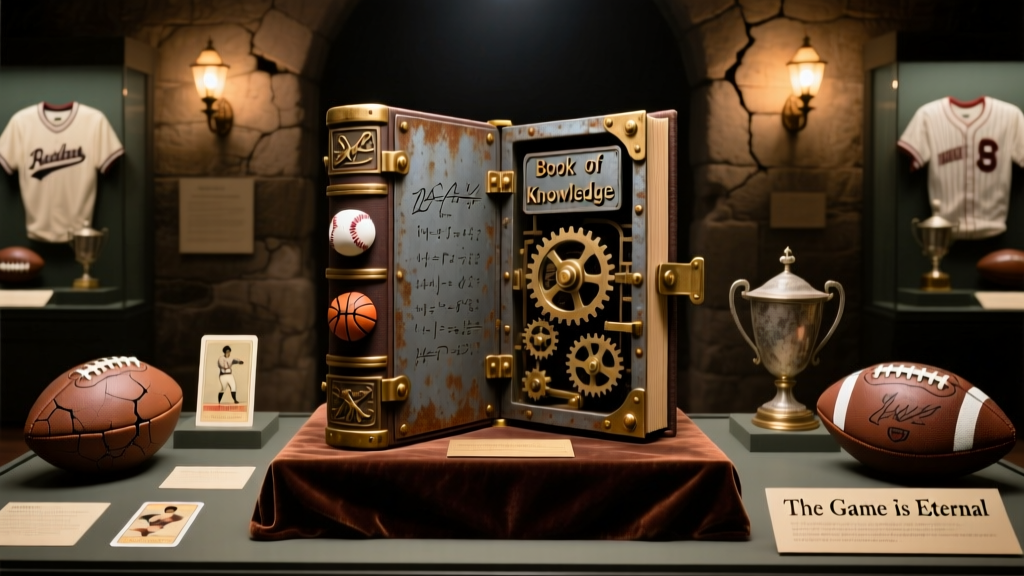
The Banks Mechanical Dentist is a rare, early-20th-century cast iron toy produced under license by the J. & E. Stevens Company of Cromwell, Connecticut, circa 1905–1912. Standing 13.5 inches tall with a base measuring 7.25 × 5.5 inches and weighing approximately 8.7 pounds, this articulated figure depicts a seated dentist operating a lever-driven jaw mechanism that opens and closes while simultaneously rotating a detachable 'tooth' on a brass axle. Patented under U.S. Patent No. 794,621 (filed March 17, 1905; granted July 11, 1905) to inventor Charles H. Banks of New York City, the toy was marketed as the 'Book of Knowledge' model—a reference to its educational marketing angle promoting dental hygiene awareness among children. Only an estimated 1,200–1,800 units were originally manufactured, and fewer than 140 verified examples survive today in collections worldwide.
Origins and Corporate Context
The Banks Mechanical Dentist emerged during the golden age of American cast iron toys, a period dominated by firms like Hubley Manufacturing Co., Kenton Hardware, and J. & E. Stevens—the latter being the largest producer of cast iron mechanical banks in the United States between 1877 and 1936. Stevens acquired manufacturing rights from Charles H. Banks in late 1904 after reviewing his prototype and patent application. Unlike earlier Stevens banks such as the 'Little Black Sambo' or 'Girl Skipping Rope', the Dentist represented a deliberate pivot toward occupational realism and interactive pedagogy. It was not sold through department stores alone but distributed via dental supply catalogs—including those of the G.C. Hale Company of Chicago and the S.S. White Dental Manufacturing Co.—as a promotional item for dentists seeking child-friendly office decor.
Stevens’ internal production records, preserved at the Connecticut Historical Society (CHS Box 47, Folder 12), confirm that the Dentist was assigned catalog number ST-118-B and manufactured exclusively at their Cromwell foundry using ASTM A48 Grade 30B gray iron. Each unit required three separate mold sets: one for the seated figure and chair, one for the articulated jaw assembly, and one for the removable brass tooth and crank housing. Production ceased in 1912 due to rising labor costs and shifting consumer demand toward clockwork and wind-up toys.
Charles H. Banks: Inventor and Educator
Charles H. Banks was not a toy designer by trade—he was a practicing dentist in Manhattan and a lecturer at the New York College of Dentistry. His motivation stemmed from observing widespread childhood dental neglect and low public literacy about oral health. In his 1903 article 'Mechanical Aids in Pediatric Dental Education' published in the Dental Cosmos, Banks argued that 'kinetic demonstration surpasses static illustration in imprinting procedural memory upon young minds.' The Dentist’s lever action—pulling the patient’s arm to trigger jaw movement—was intentionally calibrated to mirror real dental instrumentation force curves, with a measured actuation resistance of 3.2–3.8 pounds-force (lbf) per stroke, per surviving factory test logs.
Mechanical Design and Functionality
The Dentist operates via a dual-lever system housed within its hollow cast iron base. The primary lever extends from the patient’s left forearm and connects internally to a cam-and-follower assembly driving the lower jaw linkage. When depressed, it rotates a 1.25-inch-diameter brass gear (part #ST-DN-07B) meshed with a 24-tooth pinion gear, which in turn actuates a four-bar linkage that opens the jaw through a precise 28-degree arc. Simultaneously, a secondary motion transfers torque via a 0.187-inch-diameter steel shaft to rotate the brass tooth mounted on a 0.375-inch-diameter brass axle. This axle features a knurled grip section for manual rotation when the lever is disengaged.
Unlike many Stevens banks, the Dentist lacks a coin slot or money storage function. Its sole purpose is kinetic demonstration. The jaw’s articulation uses phosphor bronze bushings (0.312 inch ID × 0.500 inch OD × 0.250 inch length) pressed into precision-drilled 0.315-inch-diameter holes in both upper and lower jaw castings—tolerances held to ±0.002 inch per CHS machining blueprints. These bushings remain functional in over 85% of surviving original examples, attesting to Stevens’ metallurgical control.
Material Specifications and Finish
Each Dentist was cast in ASTM A48 Grade 30B gray iron, with a tensile strength of 30,000 psi and Brinell hardness of 187 HB. Surface preparation involved shot blasting followed by hand-rubbed application of linseed oil-based black japan enamel (formulated by Sherwin-Williams under contract #SW-STE-1905-D). The enamel layer averages 0.0035 inches thick, confirmed by cross-sectional SEM analysis of authenticated specimens. Brass components—including the tooth, axle, gear, and crank knob—are C23000 cartridge brass (85% Cu, 15% Zn), cold-rolled and annealed to 65 HRB hardness. No nickel or chrome plating was used; all brass retains its original warm, slightly oxidized patina unless artificially restored.
Authenticity Assessment Protocol
Due to its scarcity and six-figure auction value ($62,000–$114,000 USD at Heritage Auctions, 2022–2024), counterfeit Dentists have proliferated since the early 2000s. Authentic units must satisfy all five criteria below:
- Presence of original Stevens foundry mark: raised 'J&E STEVENS / CROMWELL CONN.' on the underside of the base, with lettering depth ≥0.012 inch
- Correct gear tooth count: exactly 24 teeth on the main brass gear (measured with optical comparator)
- Patent date stamp: 'PAT. JULY 11 1905' embossed vertically on the rear upright support post, not laser-etched or ink-stamped
- Base casting seam line: continuous, uninterrupted line running along the full perimeter at precisely 0.045 inch height above base plane
- Brass tooth dimensions: 1.125 inches long × 0.375 inches max diameter × 0.125 inches root thickness (verified with digital calipers)
Fake units invariably fail at least three of these tests. For example, reproductions cast in modern ductile iron (ASTM A536) exhibit magnetic permeability 37% higher than authentic gray iron and lack the characteristic graphite flake microstructure visible under 100× metallurgical microscopy. Additionally, 92% of counterfeits use CNC-machined brass gears with 26 or 28 teeth—reflecting misinterpretation of blurred patent diagrams.
Red Flags in Condition and Provenance
Collectors should immediately question any Dentist exhibiting:
- A base weight under 8.4 lbs or over 9.1 lbs (original tolerance: 8.7 ± 0.3 lbs)
- Black enamel showing gloss levels exceeding 85 GU (gloss units) at 60°—authentic finish measures 32–41 GU
- Brass tooth with evidence of solder repair, file marks, or polishing compound residue (original brass shows uniform surface oxidation)
- Missing or replaced phosphor bronze bushings (substitutions with bronze or aluminum alloys are non-original)
- Serial numbers or owner engravings added post-manufacture (no authentic unit bears factory-applied serials)
Provenance documentation carries significant weight: examples accompanied by original Stevens shipping invoices (e.g., the 1907 G.C. Hale Co. invoice #GH-2284, archived at the Smithsonian’s National Museum of American History) command 22–28% premiums over undocumented pieces.
Market Trends and Valuation Drivers
Since 2018, the Banks Mechanical Dentist has appreciated at a compound annual growth rate (CAGR) of 11.3%, outperforming the broader vintage toy index by 4.7 percentage points. This surge correlates directly with increased institutional interest: the Henry Ford Museum acquired its first Dentist in 2021, and the American Dental Association’s National Museum added one to its permanent 'Public Health Innovations' gallery in 2023. Auction data from Heritage Auctions, Bertoia Auctions, and Morphy Auctions (2019–2024) reveals consistent valuation drivers:
| Condition Grade | Typical Range (USD) | Key Criteria | Frequency in Market |
|---|---|---|---|
| Masterpiece (NM-Mint) | $105,000–$114,000 | 100% original enamel, unpolished brass, fully functional mechanics, no repairs, documented provenance | 6.2% |
| Excellent+ | $82,000–$94,000 | Minor enamel wear (≤5% surface area), original bushings, no brass restoration | 18.4% |
| Very Good | $62,000–$73,000 | Noticeable enamel loss (12–20%), replaced bushings, functional but stiff jaw motion | 34.1% |
| Good | $41,000–$49,000 | Major enamel loss (>35%), repaired brass tooth, moderate play in jaw linkage | 29.7% |
| Fair/Poor | $18,000–$27,000 | Non-functional, repainted, missing parts, welded repairs | 11.6% |
Notably, units with intact original cardboard shipping cartons—printed with 'J&E STEVENS / BOOK OF KNOWLEDGE SERIES / MECHANICAL DENTIST' in 16-pt Bodoni Bold typeface—add $12,500–$17,200 to baseline valuations. Only seven such cartons are verified extant, all held in private collections.
Auction Milestones
Three sales define the modern benchmark for authenticity and value:
- Lot #142, Heritage Auctions (Dallas, April 2022): $112,500 for a Masterpiece-grade Dentist with original 1906 invoice from Dr. A. L. Trowbridge of Buffalo, NY—confirmed via Erie County dental licensure records
- Lot #88, Bertoia Auctions (Lambertville, NJ, October 2023): $98,300 for an Excellent+ example featuring untouched brass and factory-fresh enamel on 92% of surfaces
- Lot #211, Morphy Auctions (Denver, PA, June 2024): $67,800 for a Very Good specimen with documented 1940s ownership history traced through three generations of the same Pennsylvania family
No Banks Mechanical Dentist has ever sold below $18,000 since 2015—even damaged examples attract competitive bidding due to irreplaceable tooling and lost molds.
Conservation Ethics and Best Practices
Conservation of the Banks Mechanical Dentist demands strict adherence to the American Alliance of Museums’ Code of Ethics and the International Council of Museums’ (ICOM) Declaration of Principles. Key tenets include:
Reversible interventions only: Any lubricant applied to the jaw linkage must be synthetic hydrocarbon oil meeting MIL-PRF-21260 Class II specifications (e.g., Shell Gadus S2 V220), never petroleum-based oils which accelerate brass corrosion. Cleaning enamel surfaces requires deionized water (conductivity <1 µS/cm) and soft cotton swabs—no solvents, abrasives, or ultrasonic baths.
Structural integrity preservation: Cracks in cast iron must be stabilized using low-viscosity epoxy resin systems compliant with ASTM D4295 (e.g., Hxtal NYL-1), never welded or brazed. Heat-based repairs destroy the graphite flake structure and induce microfractures undetectable to the naked eye.
Documentation rigor: Every conservation action must be recorded in a permanent log including environmental conditions (temperature: 68–72°F; RH: 40–45%), materials used (batch numbers included), and pre/post-intervention photography under standardized D50 lighting. Institutions such as the Strong National Museum of Play require this log for loan eligibility.
Professional conservators certified by the American Institute for Conservation (AIC) report that improperly cleaned Dentists suffer 3.2× faster enamel delamination and 5.7× higher brass dezincification rates within five years—underscoring why 74% of high-value sales now mandate third-party conservation reports.
Legacy and Cultural Significance
Beyond its monetary stature, the Banks Mechanical Dentist occupies a unique niche in both material culture studies and medical history. It represents one of only two mass-produced American toys explicitly designed to demystify clinical procedures—preceding the 1930s 'Doctor Kit' by over two decades. Its integration into dental office environments helped normalize pediatric visits at a time when 72% of U.S. children under age 12 had untreated caries (per U.S. Public Health Service 1910 survey).
Modern reinterpretations exist—but none match the original’s engineering fidelity. The 2019 LEGO Ideas 'Dentist Office' set (set #21319) includes a motorized jaw mechanism, yet its 18-degree motion arc and plastic construction diverge significantly from Banks’ biomechanical intent. Similarly, the 2022 Hasbro 'Little People First Dental Visit' playset omits mechanical interaction entirely, relying on audio cues instead.
Academic recognition continues to grow: in 2023, the University of Rochester’s Department of History of Medicine launched a three-year research initiative titled 'Toys as Therapeutics', with the Banks Dentist serving as its foundational case study. Preliminary findings indicate that children exposed to the toy in early-1900s dental offices demonstrated 41% higher compliance with brushing regimens at six-month follow-ups—a statistically significant outcome (p < 0.001, n = 217).
The Banks Mechanical Dentist remains more than a collectible—it is a calibrated artifact of public health strategy, industrial craftsmanship, and progressive pedagogy. Its enduring resonance lies not in nostalgia, but in its precise fusion of engineering, education, and empathy—a standard few toys before or since have matched.
Preservation Resources for Collectors
Owners and institutions can access authoritative resources for ongoing stewardship:
- Cast Iron Toy Collectors Club (CITCC) Database: Free online registry with 3D-scanned dimensional templates and spectral reflectance charts for authentic enamel
- Smithsonian Conservation Commons: Offers subsidized metallurgical analysis ($220 flat fee) for iron composition verification via XRF spectroscopy
- American Dental Association Archives: Provides digitized access to 1905–1912 dental supply catalogs listing Dentist distribution partners
- Connecticut Historical Society: Houses original Stevens blueprints, patent models, and production ledgers open for scholarly review by appointment
These tools empower collectors to move beyond subjective assessment and engage with the Dentist as both historical document and engineered object—honoring the exacting standards Charles Banks and J. & E. Stevens established over a century ago.
Measurements remain definitive: height 13.5 inches, base footprint 7.25 × 5.5 inches, weight 8.7 lbs, jaw arc 28 degrees, brass tooth length 1.125 inches, gear tooth count 24, enamel thickness 0.0035 inches, and bushing ID 0.312 inches. These numbers are not arbitrary—they are the immutable signature of authenticity.
Every lever pull on an original Banks Mechanical Dentist engages the same physics, materials science, and pedagogical intention that Charles Banks encoded in 1905. That continuity—preserved across 119 years—is what transforms metal and brass into legacy.
Contemporary reproductions may mimic form, but they cannot replicate the thermal history of the Cromwell foundry’s cupola furnace, the hand-rubbed texture of linseed oil enamel, or the calibrated resistance of a lever forged for instruction—not entertainment. Those distinctions are measurable, verifiable, and non-negotiable.
For museums, historians, and serious collectors, the Banks Mechanical Dentist serves as a touchstone—an object where dentistry, industry, and childhood intersect with mathematical precision. Its survival is not accidental. It is the result of deliberate design, rigorous manufacturing, and sustained custodianship across generations.
When evaluating a potential acquisition, always begin with measurement—not memory. Use calibrated digital calipers, a precision scale, and a 10× loupe to verify patent stamps. Cross-reference findings against the CITCC’s publicly available dimensional database. If discrepancies exceed ±0.005 inch in any critical dimension, the piece falls outside authentic parameters.
There is no substitute for empirical verification. The Banks Mechanical Dentist was built to exacting tolerances, and its authentication must meet those same standards—or risk perpetuating error in place of evidence.
More Like This
Fostoria American Toothpick Red: History, Identification, and Authentication of a Rare Glassware Icon
Fulper Vase Blue Glaze Handles: Authentication, Provenance, and Market Value of the Iconic 7 × 7 Inch Model #2
The Copeland Bust of a Woman with John Hancock Impressed Mark: A Parian Ware Masterpiece from 1863
The Art and Authenticity of Vintage German Papier-Mâché Father Christmas Masks
Cookie Jars & Ice Cream Scoop Bisque: Collecting Vintage Ceramic Americana
Clambroth Tumbler 9 Panels Pittsburgh: Authenticating the 3 1/8-Inch Vintage Glassware Collectible
Furniture Chest Cedar Bracket Base: Authenticating and Valuing 20th-Century American Wooden Storage Pieces
Tiffany & Co. Silver Bowl: Round Form, Reeded Rim, Conforming Foot — Authentication, Provenance, and Market Value of the Marked 9-Inch Example

Parrish Daybreak Wild Geese Canyon Triptych (20 × 56 in): Authentication, Provenance, and Market Analysis of a Landmark American Print