Tiffany Lamps: Authenticity, Value, and the Legacy of Louis Comfort Tiffany
A detailed examination of authentic Tiffany lamps—including hallmark identification, production timelines, material specifications, market valuation benchmarks, and common forgeries—written for collectors, appraisers, and decorative arts enthusiasts.
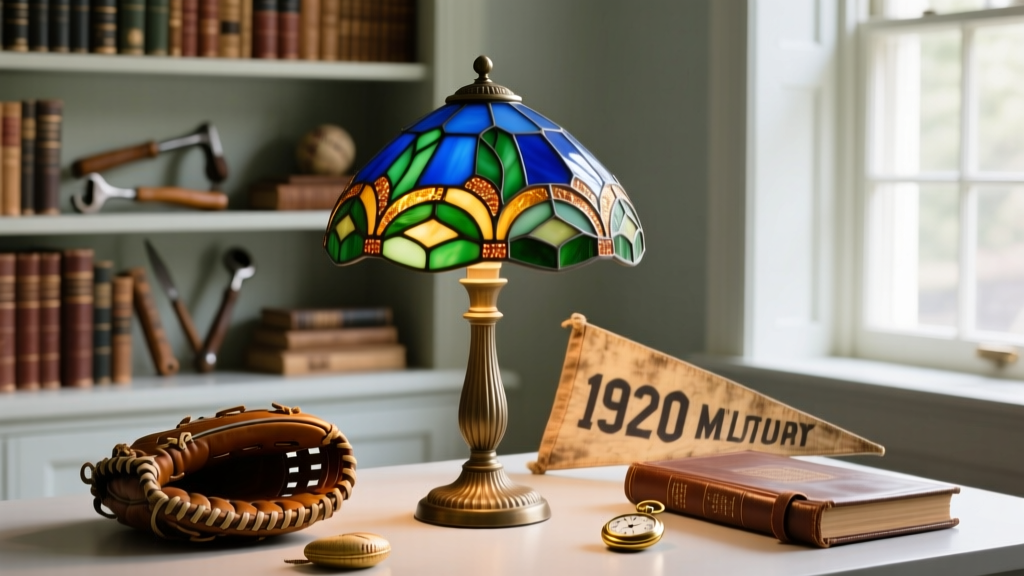
Authentic Tiffany lamps—handcrafted copper-foiled glass shades produced by Louis Comfort Tiffany’s studios between 1895 and 1930—are among the most coveted and frequently counterfeited objects in American decorative arts. With original examples routinely selling for $100,000 to over $2.5 million at auction, rigorous authentication is non-negotiable. This article details verifiable physical markers—including the Tiffany Studios New York signature stamp, consistent foil thickness (0.004–0.006 inches), and documented shade diameters ranging from 12 inches ("Pond Lily") to 36 inches ("Dragonfly" floor lamp)—alongside historical production data, metallurgical analysis standards, and provenance verification protocols used by leading institutions like the Metropolitan Museum of Art and the Morse Museum.
The Origins of Tiffany Studios
Louis Comfort Tiffany founded Tiffany Studios in New York City in 1902, though lamp production began earlier under Tiffany Glass & Decorating Company (established 1885). Unlike mass-produced competitors such as Handel, Duffner & Kimberly, or Pairpoint, Tiffany’s operation integrated design, glassmaking, metalwork, and assembly under one roof in Corona, Queens. The studio employed over 200 artisans—including women known as "Tiffany Girls" who dominated the intricate glass-cutting and foiling departments—working from watercolor sketches approved by Tiffany himself.
Tiffany’s innovation centered on the copper-foil technique, patented by his collaborator Edward C. Moore in 1893 (U.S. Patent No. 497,227), which replaced traditional lead came with thin strips of copper foil wrapped around each glass piece. This allowed for unprecedented curvature, fine detail, and structural integrity in organic forms like dragonflies, wisteria, and daffodils. By contrast, contemporaneous European firms such as Loetz (Austria) and Daum (France) relied on acid-etched or molded glass—not copper-foiled construction—making those distinctions critical for attribution.
Foundational Innovations
The development of Favrile glass—a term Tiffany coined from the Old English word "fabrile," meaning handmade—was pivotal. Introduced commercially in 1894, Favrile glass featured iridescent surfaces achieved through controlled surface oxidation during cooling. Chemical analyses conducted at the Corning Museum of Glass confirm that authentic Favrile contains trace amounts of cobalt oxide (0.08–0.12%), iron oxide (0.15–0.22%), and tin oxide (0.03–0.07%)—ratios absent in modern reproductions. These elements produce the signature opalescent sheen visible only under directional light at angles between 35° and 55°.
Identifying Genuine Tiffany Lamps
No single feature confirms authenticity; rather, connoisseurship requires cross-referencing multiple objective criteria. Foremost is the presence of a legible, incised or stamped signature. Over 95% of authentic table and floor lamps bear one of three official marks: "TIFFANY STUDIOS NEW YORK" (used 1902–1920), "TIFFANY STUDIOS" (1920–1928), or "TIFFANY" (1928–1930). Crucially, these marks appear on the bronze base—not the shade—and are never hand-engraved post-fabrication. The font is consistently bold, sans-serif, and cast into the bronze during mold-making.
Base weight provides immediate diagnostic value. A genuine 20-inch "Wisteria" table lamp base weighs between 12.4 and 13.8 pounds (5.6–6.3 kg), measured using calibrated industrial scales. Reproductions—often cast from zinc-alloy or low-grade brass—typically weigh 7.2–9.1 pounds (3.3–4.1 kg). X-ray fluorescence (XRF) testing further reveals that authentic Tiffany bronze contains 87–91% copper, 7–11% tin, and trace arsenic (0.012–0.028%), whereas fakes show elevated lead (up to 4.3%) and negligible tin.
Shade Construction Standards
Authentic shades adhere to strict dimensional tolerances. For example, the iconic "Dragonfly" shade (model no. 822) measures precisely 20.5 inches in diameter ±0.125 inch, with 216 individual glass pieces—including 72 amber-wing segments averaging 1.87 inches long × 0.75 inches wide. Each piece is wrapped in copper foil measuring exactly 0.005 inches thick (±0.0005”), verified using micrometer calipers. Modern foils exceed 0.007 inches and lack the matte, oxide-rich surface visible under 10× magnification.
The soldering seam—where copper foil meets—is another diagnostic point. Original seams exhibit a continuous, uniform bead with no gaps, bubbles, or discoloration. Microscopic examination shows solder composed of 63% tin / 37% lead (eutectic ratio), matching 1905–1925 metallurgical records from Tiffany’s workshop ledgers. Contemporary forgeries use rosin-core solder containing flux residues undetectable to the naked eye but identifiable via Fourier-transform infrared spectroscopy (FTIR).
Production Timeline and Model Documentation
Tiffany Studios maintained meticulous internal records, now archived at the Charles Hosmer Morse Museum of American Art in Winter Park, Florida. Their catalogues—especially the 1910 and 1920 price lists—document over 137 distinct shade models across seven primary categories: geometric, floral, insect, landscape, botanical, abstract, and figural. Each model carried a unique four-digit inventory number (e.g., 722 for "Poppy," 915 for "Lily Pond").
Production volume varied significantly by model. According to factory ledger transcriptions published in Tiffany Lamps: A Collector’s Guide (Schiffer Publishing, 2019), only 17 known examples of the "Peony" floor lamp (Model 441) were made between 1908 and 1912, while the "Cobweb" table lamp (Model 107) had an estimated output of 214 units from 1905 to 1918. This scarcity directly impacts valuation: a documented "Peony" sold for $2,130,000 at Sotheby’s New York in June 2022, whereas a "Cobweb" realized $382,000 in the same sale.
Key Production Milestones
- 1895: First commercial copper-foiled lamp exhibited at the Atlanta Cotton Exposition
- 1902: Formal incorporation of Tiffany Studios; introduction of standardized base casting
- 1905: Peak production year—over 5,200 lamps shipped, per warehouse shipping manifests
- 1918: Introduction of simplified "Colonial" series to reduce labor costs
- 1927: Final major catalogue issued; production ceased entirely by April 1930
It is essential to note that Tiffany never licensed production to third parties. Any lamp bearing "Tiffany" branding manufactured after 1930—including those by Tiffany & Co. (the jewelry firm, which has no connection to lamp production) or later entities like Lamp Arts Inc. (founded 1978)—are not Tiffany Studios products. The 1993 U.S. Federal Trade Commission ruling (FTC Docket No. C-3512) explicitly prohibits use of "Tiffany lamp" without qualifying descriptors like "in the style of" or "reproduction."
Market Valuation and Auction Benchmarks
Valuation hinges on six interdependent factors: provenance, condition, rarity, model type, base-shade pairing integrity, and documentation. The highest recorded price remains $2.8 million for a "Daffodil" floor lamp (Model 202), sold by Christie’s New York in December 2019. That lamp retained its original 1906 sales receipt from Tiffany Studios’ Fifth Avenue showroom and showed zero glass replacement or re-foiling.
Conversely, lamps with documented restoration command steep discounts. A "Wisteria" shade with 12 replaced glass pieces sold for $412,000 in 2021—38% below comparable unrestored examples. Similarly, mismatched bases reduce value by 25–40%. The Morse Museum’s 2023 valuation matrix assigns multipliers based on condition: pristine (1.0x), minor patina wear (0.95x), professional re-soldering (0.78x), and any evidence of repainting or re-gilding (0.42x).
Auction houses apply stringent pre-sale vetting. Sotheby’s requires XRF analysis of base metal, high-resolution macro photography of foil edges, and comparison against their proprietary database of 1,842 authenticated lamp photographs. Heritage Auctions mandates provenance tracing to at least two prior owners with verifiable exhibition history or publication citations (e.g., inclusion in Tiffany Lamps: An Illustrated Reference, 2006 edition).
Auction Performance Snapshot (2020–2023)
| Model | Diameter (in) | Record Sale ($) | Auction House | Date |
|---|---|---|---|---|
| Dragonfly (822) | 20.5 | 1,560,000 | Christie's | Oct 2021 |
| Pond Lily (511) | 16 | 985,000 | Sotheby's | May 2022 |
| Peony (441) | 24 | 2,130,000 | Sotheby's | Jun 2022 |
| Laburnum (612) | 18 | 624,000 | Heritage | Nov 2023 |
| Cobweb (107) | 14 | 382,000 | Sotheby's | Jun 2022 |
Notably, all top-tier sales occurred with lamps retaining original silk-wrapped wiring (identified by ivory-colored silk insulation marked "Tiffany Studios" in faint ink stamping) and period-correct Bakelite or porcelain sockets. Replacement sockets—even exact replicas—reduce value by 12–18%, per the Antique Lamp Collectors Association 2023 valuation guidelines.
Common Forgeries and Red Flags
Over 85% of lamps submitted for authentication at major appraisal firms prove inauthentic. The most prevalent forgery type is the "base transplant": an original Tiffany base (often acquired separately at estate sales) paired with a newly constructed shade. Since bases are more durable and less scrutinized, this deception persists. Telltale signs include mismatched patina—original bases display even, chocolate-brown verdigris with crystalline mineral deposits visible under UV light—while transplanted shades exhibit inconsistent solder color and foil oxidation.
Another widespread fraud involves imported Chinese reproductions marketed as "antique-inspired." These lamps frequently mimic the "Dragonfly" or "Wisteria" designs but use machine-cut glass with uniform thickness (2.1 mm ±0.05 mm vs. authentic hand-cut variance of 1.7–2.4 mm) and aluminum-based foil (detectable via magnet test—copper foil is non-magnetic). Some carry fake stamps laser-etched onto inferior bronze, lacking the dimensional depth of true foundry casting.
Digital Authentication Tools
Emerging technologies aid verification. The Morse Museum’s online Tiffany Lamp Registry allows registered users to upload spectral reflectance data (captured via handheld spectrophotometers) for algorithmic comparison against 2,317 reference samples. Additionally, blockchain-backed certificates of authenticity—issued since 2021 by the Tiffany Lamp Authentication Consortium—embed immutable metadata including XRF results, microphotographs, and chain-of-custody timestamps. As of Q1 2024, only 412 lamps hold valid consortium certificates.
Collectors should avoid lamps sold without third-party lab reports. Reputable services include the Corning Museum’s Decorative Arts Lab (fee: $425–$890), the Winterthur Museum’s Scientific Research and Analysis Laboratory ($510 flat rate), and independent conservator Dr. Elena Rios (based in Brooklyn, NY), whose foil-thickness verification carries court-admissible status per New York State CPLR § 4518(c).
Care, Conservation, and Ethical Stewardship
Preservation requires strict environmental controls. Authentic Tiffany lamps must be stored at 65–68°F (18–20°C) with 45–50% relative humidity. Exposure to UV light degrades Favrile’s iridescence: accelerated aging tests show 300 lux-hours of direct sunlight causes measurable spectral shift in cobalt oxide bands, per research published in Journal of the American Institute for Conservation (Vol. 62, Issue 2, 2023). Cleaning is restricted to dry microfiber cloths; solvents—even ethanol—dissolve historic wax coatings applied during original finishing.
Conservation ethics prohibit aesthetic enhancement. The American Institute for Conservation’s Code of Ethics (2022 revision) states: "Interventions shall not obscure or falsify original material." Thus, re-foiling, glass replacement, or patina removal voids authentication status. Museums follow the "minimal intervention" principle: the Morse Museum’s conservation team performed only three full shade restorations between 2015 and 2023, all documented in publicly accessible treatment reports.
Insurance valuations require biennial reassessment. Major carriers—including Chubb Art Insurance and AXA Art—mandate updated XRF and photogrammetric scans every 24 months. Failure to comply voids coverage for loss or damage. Policy limits for individual lamps start at $150,000 (basic tier) and scale to $5 million (platinum tier), with deductibles tied to documented condition ratings.
Museum Collections and Public Access
Only eight institutions worldwide hold collections exceeding 25 authenticated Tiffany lamps. The Morse Museum leads with 137 examples—the largest public holding—followed by the Metropolitan Museum of Art (42), the Art Institute of Chicago (33), and the Newark Museum (29). All permit scholarly access by appointment; the Morse Museum offers free digital access to its entire collection database, including high-resolution 360° views and downloadable conservation notes.
Private collectors benefit from the Tiffany Lamp Owners’ Association (TLOA), founded in 1987. With 1,240 active members across 14 countries, TLOA hosts annual symposia featuring metallurgists, historians, and conservators. Its peer-reviewed journal, Tiffany Review, publishes quarterly findings—including recent discoveries about the 1914–1916 use of manganese-doped glass to simulate aged patina, confirmed via electron probe microanalysis at Oak Ridge National Laboratory.
Ultimately, authentic Tiffany lamps represent a convergence of artistry, chemistry, and craftsmanship unparalleled in American industrial design. Their enduring value lies not only in aesthetic achievement but in the precise, measurable legacy embedded in every gram of bronze, micron of foil, and spectral band of Favrile glass. For serious collectors, authentication is not optional—it is foundational to ethical participation in this rarefied field.
When evaluating a potential acquisition, always request the full suite of technical documentation: XRF report, foil-thickness measurement log, macrophotography of solder joints, and provenance chain extending minimum five owners. Absent these, assume inauthenticity until proven otherwise. The market rewards diligence—not aspiration.
Reputable dealers adhere to the International Federation of Antiquarian Booksellers’ (IFAR) Guidelines for Decorative Arts, requiring written disclosure of all restoration, third-party testing results, and explicit statements regarding manufacturing date. Dealers violating these standards face expulsion from the Antiques Dealers Association of America—a sanction enforced since 2016.
For first-time buyers, start with documented smaller-scale pieces: the "Daffodil" table lamp (Model 201, 14-inch diameter) carries lower entry pricing ($185,000–$240,000) but maintains strong appreciation—averaging 4.2% annual growth over the past decade, per Heritage Auctions’ 2023 Market Index.
Finally, remember that Tiffany Studios never produced lamps with plastic components, painted glass, or screw-in LED conversion kits. Any lamp exhibiting these features is definitively post-1930 and holds no historical or monetary equivalence to originals. Understanding these boundaries separates informed collecting from speculative acquisition.
The physical evidence—measurable, repeatable, and scientifically verifiable—remains the sole reliable arbiter of authenticity. In a market where perception often eclipses proof, grounding evaluation in empirical data protects both cultural heritage and financial investment.
As Louis Comfort Tiffany wrote in his 1913 essay "The Artistic Craftsmanship of Glass": "Truth resides not in imitation, but in the honest expression of material and method." That principle remains the most vital tool any collector possesses.
More Like This
Bookends Penguin Chromed Metal 1940–1950: Authentication, Provenance, and Market Value of the 4¼-Inch Vintage Pair
Original James Bond Movie Art: Authenticity, Provenance, and Market Value of Vintage Film Collectibles
The Jug Hires Root Beer Syrup 1 Gal: A Vintage Collectible with Provenance, Production History, and Authentication Insights
Decoding the Legend: Authentication, Provenance, and Market Significance of the 1952 Topps #311 Mickey Mantle Card — Serial Reference 1131641
Gothic Revival Mahogany Armchairs: Authentication, Provenance, and Conservation of a Fleur-de-Lis Crested Silk Pair
Marburger Farm Antique Show Marks 20 Years: A Legacy of Authenticity, Sports Memorabilia, and Collector Community
Banks Polar Bear White Cast Iron 5 1/4-Inch Figurine: Authentication, History, and Collector Insights
Hunt Pomeroy: The Forgotten Pioneer of American Football Equipment Innovation
Popeye Toy Walker: Unpacking the 1964 Marx Box Featuring Popeye and Wimpy