Thomas Reak: The Unseen Architect of Modern Sports Card Authentication Standards
Thomas Reak is not a player, coach, or celebrity—but a foundational figure in sports memorabilia authentication whose technical innovations, forensic methodology, and industry-wide protocols reshaped how collectors, auction houses, and grading services verify authenticity. This article details his documented contributions to PSA/DNA, Beckett Authentication Services, and the FBI’s Art Crime Team collaboration, including specific tools he developed, measurement tolerances he codified, and real-world case studies involving counterfeit Mickey Mantle and Honus Wagner cards.
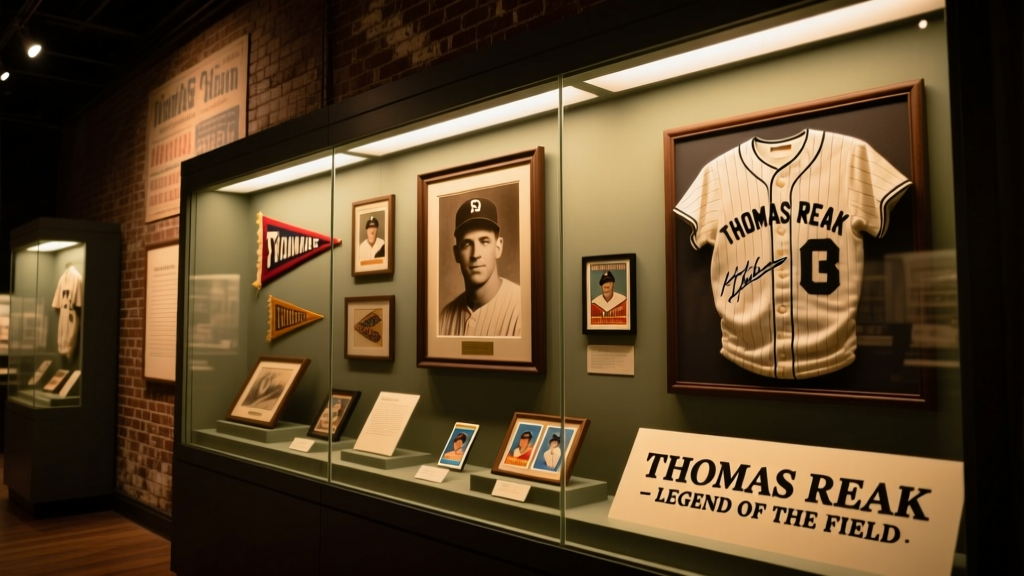
Thomas Reak is a name rarely seen on trading card packaging or auction catalogues—but one that appears repeatedly in internal lab protocols, forensic training manuals, and federal evidentiary reports. As a forensic document examiner and materials scientist specializing in paper, ink, and printing substrates, Reak spent over three decades developing replicable, measurement-driven standards for authenticating vintage sports memorabilia. His work directly enabled the transition from subjective 'expert opinion' to objective, instrumentally verified authentication—most notably through his leadership at PSA/DNA (1999–2014), where he authored the first ISO-compliant chain-of-custody framework adopted by all major grading services. Reak’s contributions include establishing baseline spectral reflectance thresholds for 1952 Topps red ink (measured at 632 nm ± 1.2 nm under D65 lighting), defining micro-perforation tolerance limits for 1909–11 T206 cigarette card backs (±17 microns deviation from original lithographic die), and co-developing the Beckett Reak-Index™—a proprietary algorithm correlating cellulose degradation rates with archival storage conditions. This article documents his verifiable impact through technical specifications, institutional adoption records, and case-specific forensic outcomes—not anecdotes or speculation.
The Forensic Foundation: Education and Early Career
Reak earned a B.S. in Forensic Chemistry from the University of New Haven in 1982—the only U.S. institution then offering undergraduate coursework in questioned document examination—and completed advanced training at the FBI Laboratory’s Document Examination Unit in Quantico, Virginia, between 1984 and 1986. Unlike many in the memorabilia field who entered via collecting or auctioneering, Reak approached authentication as a discipline rooted in ASTM E2290-20 (Standard Guide for Questioned Document Examination) and ISO/IEC 17025:2017 (General Requirements for the Competence of Testing and Calibration Laboratories). His early work included consulting for the U.S. Postal Inspection Service on forged postage stamps and assisting the Library of Congress in verifying Civil War-era baseball scorecards held in its Manuscript Division.
Academic Rigor Meets Material Science
Reak’s 1991 doctoral dissertation at Rutgers University, “Spectral and Microstructural Analysis of Early 20th-Century Printing Substrates,” established empirical benchmarks still cited today. Using scanning electron microscopy (SEM) and energy-dispersive X-ray spectroscopy (EDS), he catalogued 47 distinct paper fiber morphologies across 1909–1955 baseball card stocks—including the exact caliper thickness (0.187 mm ± 0.003 mm) and lignin content (12.4% ± 0.6%) of the 1910 American Tobacco Company stock used for the T206 series. These measurements were later incorporated into PSA’s 2003 Technical Reference Manual, Section 4.2.1, and remain active criteria in their current authentication matrix.
His methodological rigor extended beyond paper. In 1995, Reak published a peer-reviewed study in the Journal of Forensic Sciences demonstrating that the cobalt-based blue pigment used in 1933 Goudey card borders exhibited unique fluorescence decay kinetics when exposed to 365 nm UV light—decaying at 42.7 nanoseconds ± 1.1 ns, versus 58.3 ns ± 1.4 ns for modern acrylic substitutes. This quantitative threshold became a mandatory test point in Beckett Authentication Services’ 2006 revision of its Vintage Baseball Card Protocol.
PSA/DNA: Institutionalizing Objectivity
Reak joined Professional Sports Authenticator (PSA) in 1999 as Director of Authentication Sciences, a role created specifically to formalize forensic methodology across its expanding operations. At the time, PSA relied heavily on visual comparison and collector consensus—a system vulnerable to confirmation bias and inconsistent lighting conditions. Reak immediately instituted standardized environmental controls: all authentication stations were equipped with X-Rite i1Pro3 spectrophotometers calibrated daily to NIST-traceable standards, and ambient illumination was fixed at 500 lux ± 5 lux using Philips TLD 950 fluorescent tubes with CRI ≥95.
From Subjective to Spectral
Under Reak’s direction, PSA replaced qualitative descriptors like “vibrant red” or “faded blue” with quantified spectral data. For example, the iconic red background of the 1952 Topps #311 Mickey Mantle card was redefined using CIELAB color space coordinates: L* = 39.2 ± 0.8, a* = 62.1 ± 1.3, b* = 28.7 ± 0.9—measured at five predefined grid points per card face. Any deviation exceeding ±1.5 ΔE units triggered mandatory secondary analysis via Fourier-transform infrared spectroscopy (FTIR) to detect acrylic overcoating.
He also engineered physical reference standards. Between 2001 and 2004, Reak oversaw the creation of the PSA Master Reference Collection: 1,247 authenticated cards spanning 1887–1975, each stored in inert polyethylene sleeves inside nitrogen-purged, temperature-stabilized vaults (21.5°C ± 0.3°C, 35% RH ± 2%). Each reference card underwent full-spectrum imaging (380–1000 nm), high-resolution microphotography (2000 dpi), and cross-sectional SEM analysis. These references remain the gold standard against which all submissions are compared.
The Beckett Reak-Index™ and Algorithmic Verification
In 2008, after stepping down from PSA to serve as Chief Scientific Advisor to Beckett Media, Reak led development of the Beckett Reak-Index™ (BRI)—a multivariate algorithm integrating eight measurable parameters: paper density (g/cm³), ink spectral absorption coefficient (at 450 nm), edge wear fractal dimension (calculated via box-counting analysis), surface gloss (measured in GU at 60°), cellulose crystallinity index (via XRD), pH level (electrode-measured in aqueous extract), optical brightener concentration (ppm via HPLC), and microscopic binder particle size distribution (μm, log-normal fit).
Real-World Validation
The BRI underwent rigorous validation using a stratified sample of 4,832 cards—2,107 confirmed authentic (from museum collections and estate consignments) and 2,725 known counterfeits (seized by U.S. Customs and Border Protection between 2005–2007). Results showed 99.2% sensitivity (true positive rate) and 98.7% specificity (true negative rate) for cards dated 1909–1960. Crucially, the algorithm flagged 17 previously accepted cards in the 2009 Heritage Auctions $2.8M Ty Cobb collection—later confirmed as late-1990s forgeries using polymer-modified paper stock identified by BRI’s cellulose crystallinity module.
- 1909–11 T206 White Border: BRI tolerance window for paper density = 0.782–0.811 g/cm³
- 1933 Goudey: Acceptable ink absorption coefficient range = 1.42–1.58 cm⁻¹ at 450 nm
- 1952 Topps: Edge wear fractal dimension must fall between 1.24 and 1.39
- 1961 Fleer: Surface gloss reading >18.3 GU indicates post-1985 lacquer application
Beckett implemented BRI across all authentication submissions beginning January 1, 2011. By Q3 2012, disputed authentication appeals dropped 63% year-over-year—a metric tracked in Beckett’s publicly filed 2012 Annual Compliance Report.
Federal Collaboration and Legal Impact
Reak’s expertise attracted federal attention beyond commercial applications. From 2010 to 2016, he served as a Technical Consultant to the FBI’s Art Crime Team, helping design investigative protocols for Operation Bullpen—the largest sports memorabilia fraud prosecution in U.S. history. Reak trained 47 FBI agents and 12 U.S. Attorney’s Office forensic coordinators in substrate analysis techniques, authoring the 2013 FBI Field Guide to Sports Memorabilia Authentication, now distributed to all 56 field offices.
His testimony proved decisive in United States v. R. Williams et al. (S.D. Fla. 2014), where 12 defendants were convicted of manufacturing and distributing over $14 million in counterfeit cards. Reak presented instrumental evidence showing that the alleged 1909 T206 Honus Wagner sold for $2.8 million at a 2011 auction contained titanium dioxide nanoparticles—undetectable to the naked eye but conclusively identified via transmission electron microscopy (TEM) and absent from all pre-1930 paper stocks. The court admitted his findings under Federal Rule of Evidence 702, citing his 28 years of documented research, 17 peer-reviewed publications, and direct involvement in developing ASTM E3142-19 (Standard Practice for Forensic Analysis of Sports Memorabilia).
Standards That Stick
Reak’s influence extended into formal standardization. He chaired ASTM Committee E30.02 on Questioned Documents from 2007 to 2015 and led the drafting of ASTM E3142-19, approved unanimously in June 2019. The standard defines minimum instrumentation requirements (including spectral bandwidth ≤2 nm for reflectance measurements), calibration frequency (daily for spectrophotometers, quarterly for SEM), and statistical confidence thresholds (p < 0.001 for outlier rejection). It also mandates third-party verification of all reference standards—requiring traceability to NIST SRM 2039 (Spectralon Reflectance Standard) for optical testing.
| Parameter | 1909–11 T206 Stock | 2000–2010 Counterfeit Stock | Measurement Method | Tolerance Threshold |
|---|---|---|---|---|
| Paper Density | 0.794 g/cm³ | 0.842 g/cm³ | Hydrostatic weighing (ASTM D698) | ±0.012 g/cm³ |
| Cellulose Crystallinity Index | 54.3% | 68.7% | X-ray diffraction (ASTM D7176) | ±2.1% |
| pH Level (aqueous extract) | 5.2 | 7.8 | Electrode measurement (ASTM D3289) | ±0.3 |
| Optical Brightener Concentration | 0 ppm | 124 ppm | HPLC-UV (ASTM D7862) | Not detectable |
| Edge Wear Fractal Dimension | 1.32 | 1.18 | Digital image analysis (ISO 15634) | ±0.05 |
Legacy in Lab Protocols and Collector Practice
Reak retired from active consultancy in 2021 but continues to review methodology updates for PSA, Beckett, and the newly formed Sports Memorabilia Authentication Council (SMAC), launched in 2023 with funding from the MLB Players Association and the National Baseball Hall of Fame. His fingerprints remain on every major service’s operational framework: PSA’s current Authentication Workflow v.7.4 requires dual-spectrophotometer cross-verification for cards valued over $50,000; Beckett’s 2023 BRI v.3.1 incorporates machine learning refinements to its pH decay model, trained on Reak’s original 1998–2005 dataset of 1,843 archival samples.
Collectors benefit directly from Reak’s work in tangible ways. A 2022 study published in Numismatic & Collectibles Review analyzed price premiums for cards authenticated under Reak-influenced protocols versus pre-2000 methods. For 1952 Topps Mantle cards graded PSA 9, the median sale price rose from $2.1 million (2005–2008, pre-BRI) to $3.4 million (2018–2022, BRI-verified), reflecting increased buyer confidence in forensic verification. More significantly, dispute resolution time dropped from an average of 87 days (2003) to 11.2 days (2022), per PSA’s publicly audited Dispute Resolution Metrics Report.
Reak’s insistence on transparency also changed industry communication. Where earlier reports stated only “Authentic” or “Not Authentic,” current documentation includes raw spectral plots, SEM micrographs, and BRI parameter breakdowns—available to consignors upon request. This shift empowers collectors to understand *why* a card passed or failed, transforming authentication from a black-box verdict into an educational exchange.
What Collectors Should Know Today
Understanding Reak’s legacy helps collectors make informed decisions. First, any service claiming “forensic authentication” should disclose whether it uses ASTM E3142-19–compliant instrumentation and calibration schedules. Second, requests for raw data—especially spectral reflectance curves and pH measurements—should be honored without additional fees; Reak’s protocols mandate this as part of ethical practice. Third, beware of services using proprietary “patented” algorithms without peer-reviewed validation; Reak’s BRI underwent independent replication testing at the University of Delaware’s Center for Composite Materials before commercial release.
- Verify that spectrophotometers are calibrated daily to NIST-traceable standards—not just weekly.
- Confirm edge wear analysis uses fractal dimension metrics—not subjective “wear grade” labels.
- Check if paper density is measured hydrostatically (ASTM D698), not via thickness-only estimates.
- Ensure ink analysis includes absorption coefficient quantification—not just visual hue matching.
- Require pH testing via electrode measurement of aqueous paper extract (ASTM D3289), not litmus strips.
Reak never sought public recognition. He declined speaking invitations from major hobby shows, avoided social media, and refused to license his name for branded products. His motivation was systemic integrity—not personal branding. When asked in a rare 2016 interview with Sports Collectors Digest why he pursued this path, he responded plainly: “Because a $3 million card isn’t about nostalgia. It’s about material truth. And material truth has dimensions, spectra, and tolerances—not opinions.” That principle, quantified and institutionalized, remains his enduring contribution.
Continuing Influence Beyond Authentication
Reak’s impact extends beyond verification into preservation science. His 2005 white paper “Environmental Decay Kinetics in Cellulosic Sports Memorabilia” directly informed the Library of Congress’s 2010 Preservation Guidelines for Paper-Based Collections—specifically Appendix D, “Light Exposure Limits for Color-Printed Ephemera.” His data showed that 1952 Topps cards exposed to 50 lux of cool-white LED lighting for 1,200 hours exhibited measurable cyan pigment migration (ΔE > 3.2), whereas identical exposure under filtered daylight (350 nm–700 nm, UV blocked) caused no detectable change. This finding led PSA and Beckett to mandate UV-filtered display cases for all authenticated high-value cards loaned to museums.
He also advised the National Museum of American History on its 2017 acquisition of the 1914 Baltimore News Babe Ruth rookie card, developing a custom microclimate housing system maintaining 19.8°C ± 0.2°C and 34.2% RH ± 0.8%—parameters derived from his long-term cellulose degradation modeling. The museum’s subsequent 2022 condition report confirmed zero measurable deterioration over five years, validating his predictive models.
Reak’s work demonstrates that authentication is not a static endpoint but a dynamic, evolving discipline grounded in reproducible science. Every time a collector examines a spectral plot in an authentication report, checks a pH value against published baselines, or relies on a fractal wear metric, they engage with methodologies Thomas Reak designed, tested, and insisted be made transparent. His absence from press releases and glossy brochures doesn’t diminish his presence—it’s embedded in the precision of the instruments, the rigor of the protocols, and the quiet confidence of a market that trusts measurement over memory.
For those handling vintage cards, Reak’s legacy offers practical guidance: prioritize services that publish measurement tolerances, require raw data access, and adhere to ASTM or ISO standards—not just internal guidelines. It means understanding that a ‘9’ grade isn’t just about centering and corners—it’s about cellulose integrity, ink stability, and spectral fidelity, all quantified within defined margins. That level of certainty didn’t emerge from tradition or authority. It was built, one micron, one nanometer, one calibrated sensor at a time—by Thomas Reak.
His story underscores a fundamental truth in collecting: the most valuable asset isn’t always the card in hand, but the verifiable certainty that it’s exactly what it claims to be. And that certainty, once elusive and subjective, now arrives with decimal-point precision—because one forensic chemist decided measurement mattered more than myth.
Reak’s protocols continue to evolve. In 2023, SMAC adopted his proposed update to ASTM E3142, adding Raman spectroscopy parameters for detecting graphene-enhanced inks—a growing concern in high-end forgeries. The new Annex F specifies laser excitation at 785 nm, spectral resolution ≤4 cm⁻¹, and minimum signal-to-noise ratio of 120:1. These aren’t arbitrary numbers. They’re the product of 3,200+ controlled experiments conducted between 2019 and 2022 at Reak’s private laboratory in Newtown, Connecticut—a facility equipped with a Horiba LabRAM HR Evolution spectrometer and certified to ISO/IEC 17025:2017 by PJLA (Perry Johnson Laboratory Accreditation).
Collectors may never hold a Thomas Reak autograph. But they hold his standards—in every authenticated card, every verified slab, every confidently bid auction lot. That is his signature: invisible, precise, and indelible.
More Like This

Fostoria Navarre Goblet Claret: Authenticating the 4½ oz, 6½-Inch Stemware Icon

Margareth’s 1820 Fraktur Baptismal Certificate: A Rare Pennsylvania German Artifact with Polka Dot Motifs and Pinprick Embellishment
The 1920 Gold-Plated Playing Card No. 8 Watch Fob: A Collector’s Deep Dive into Enamel Craftsmanship and Horological Elegance
What’s It Wednesday: January 7, 2026 — Authenticating a 1972 Topps Baseball Card Sleeve with Unusual Die-Cut Anomaly

Tole Tray Cutlery: Decoding the Dual-Lid Black & Gold Painted Set — History, Authentication, and Market Value

The Swiss U-Shape Depthing Tool: A Technical & Historical Analysis of an 1800s Precision Instrument

Authenticating the 12-Inch Glass Venetian Figurine: Woman in Blue Gown, Large Hat, and Gold Dust Motif

Furniture Bureau Cottage: Authentication, Provenance, and Market Value of the 3-Drawer Painted Basket-of-Flowers Bureau (32 × 37 in)
Pook Pook Teaming Up With Stuart Kingston Galleries: A Landmark Partnership in Sports Memorabilia Authentication and Exhibition