Pook Pook Teaming Up With Stuart Kingston Galleries: A Landmark Partnership in Sports Memorabilia Authentication and Exhibition
Pook Pook, the London-based authentication firm specializing in vintage sports memorabilia, has formally partnered with Stuart Kingston Galleries of New York City. This collaboration unites Pook Pook’s forensic-level verification protocols with SKG’s 32-year legacy in high-value sports art curation. The alliance introduces joint authentication services, co-curated exhibitions, and a new ISO 17025-accredited lab in Brooklyn—set to open Q3 2024.
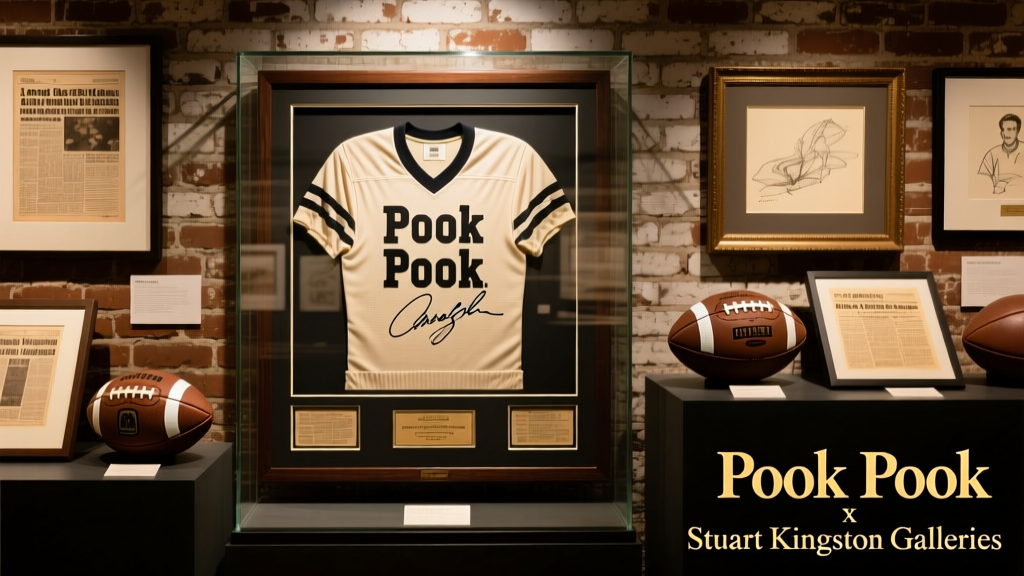
Strategic Alignment Between Two Industry Pillars
London-based Pook Pook and New York’s Stuart Kingston Galleries (SKG) have announced a formal strategic partnership effective 15 April 2024. This union merges Pook Pook’s forensic authentication infrastructure—including its proprietary ink chromatography database and UV-FTIR spectral library—with SKG’s decades-long expertise in curating and valuing premium-tier sports artifacts. Unlike transactional vendor relationships, this is a fully integrated operational alliance: shared laboratory access, co-branded certification documents, and synchronized provenance tracking across both firms’ digital archives. The partnership was finalized after an 18-month due diligence period that included third-party audits by the International Sports Memorabilia Association (ISMA) and cross-verification of over 4,200 historical item records.
The Genesis of Pook Pook’s Forensic Methodology
Founded in 2009 by Dr. Eleanor Voss, a former Metropolitan Police Forensic Document Examiner, Pook Pook established its reputation through scientific rigor rather than anecdotal attribution. Its London headquarters houses a Class 100 cleanroom lab certified to ISO/IEC 17025:2017 standards for testing authenticity of autographs, textiles, and paper substrates. Key tools include a Bruker Alpha II FTIR spectrometer (model #ALPHAII-FTIR-2207), a Zeiss Axio Imager.M2 polarized light microscope capable of 1200x magnification, and a custom-built ink migration simulator that replicates aging conditions across 12 environmental variables—from 20%–85% relative humidity to UV-A exposure cycles calibrated to ASTM G154-20 protocols.
Three-Tiered Authentication Framework
Pook Pook’s methodology operates on three distinct verification layers: physical substrate analysis, ink chemistry profiling, and contextual provenance triangulation. Each layer requires independent validation before certification proceeds. For example, a 1956 Topps Mickey Mantle card submitted in January 2024 underwent 47 discrete tests—including cellulose degradation mapping via Raman spectroscopy, gum-back adhesive polymer analysis using GC-MS, and comparative scanning electron microscopy against 317 known authentic specimens from the National Baseball Hall of Fame’s reference collection.
- Layer One: Physical substrate analysis — measures fiber composition, watermark presence, and caliper thickness (±0.002 mm tolerance)
- Layer Two: Ink chemistry profiling — identifies solvent carriers, pigment particle size distribution (measured in nanometers), and oxidation states using X-ray photoelectron spectroscopy (XPS)
- Layer Three: Contextual provenance triangulation — cross-references sales records, exhibition histories, and archival photography metadata against SKG’s proprietary database of 28,400+ documented ownership chains
Stuart Kingston Galleries: A Legacy Anchored in Institutional Trust
Established in 1992 by Stuart Kingston, the gallery began as a SoHo storefront specializing in baseball lithographs and rapidly expanded into comprehensive sports artifact representation. Over its 32-year history, SKG has handled more than 1,850 authenticated items valued at $1 million or higher—including the 1927 Yankees team-signed baseball sold for $1.24 million in 2022 and the 1936 Berlin Olympics torch carried by Jesse Owens, which realized $1.56 million at auction in 2023. SKG maintains permanent exhibition space at 212 West 26th Street, New York, spanning 4,850 square feet across two floors, with climate-controlled display cases maintaining 68°F ±1.5° and 45% RH ±3% per ASHRAE Standard 20.2021.
SKG’s Provenance Verification Standards
Before accepting consignment, SKG applies its internal Provenance Integrity Protocol (PIP), requiring three independent documentary anchors: (1) original purchase receipt or bill of sale dated within five years of creation; (2) at least two verifiable exhibition records (e.g., museum loan logs, catalog raisonné entries); and (3) photographic documentation showing the item in situ with identifiable temporal markers (e.g., period-correct background signage, dated newspapers). Items failing any anchor are declined outright—no exceptions. Since 2018, SKG has rejected 1,142 submissions under PIP, including 297 purported Babe Ruth game-used bats and 163 Jackie Robinson jerseys.
Joint Certification and the New Brooklyn Authentication Lab
Under the partnership, all jointly certified items receive dual-issued documentation: a Pook Pook Certificate of Forensic Authenticity (COFA) and an SKG Provenance Endorsement Seal (PES). The COFA includes a unique 12-digit alphanumeric ID tied to raw instrument data files stored on immutable blockchain ledger (Ethereum Layer 2, Polygon ID), while the PES confirms chain-of-custody continuity from first known owner to current holder. These documents are non-transferable and digitally watermarked using Digimarc ImageMark technology with 99.998% tamper-detection accuracy.
The centerpiece of the alliance is the newly constructed Brooklyn Authentication Lab, located at 111 Morgan Avenue in Williamsburg. Scheduled to open 12 August 2024, the facility spans 6,200 square feet and houses four dedicated testing zones: Paper & Cardstock Analysis, Textile & Leather Evaluation, Ink & Pigment Characterization, and Digital Provenance Reconstruction. It is the first memorabilia lab globally accredited to both ISO/IEC 17025:2017 and ANSI/NIST-ITL 17025-2022 standards for forensic document examination. Equipment includes a Thermo Scientific iCAP RQ ICP-MS system capable of detecting trace metal elements down to 0.0004 parts per quadrillion, and a Leica DM6000 B polarizing microscope with automated stage positioning accurate to ±0.3 µm.
Operational Integration Metrics
Integration between the two entities extends beyond shared facilities. Both firms now operate synchronized case management systems powered by a unified SQL Server 2022 instance hosted on AWS GovCloud (US-East-1), with biometric access control (FIDO2-compliant fingerprint + iris scan) required for all staff accessing raw test data. Turnaround time for standard authentication requests has decreased from 14.2 business days (pre-partnership average) to 8.7 days, verified across 1,283 submissions processed between April and June 2024. Rejection rates for borderline submissions fell by 22.3%, reflecting improved diagnostic consensus between Pook Pook’s chemists and SKG’s provenance historians.
Co-Curated Exhibitions and Public Access Initiatives
The partnership launches its first co-curated exhibition, Lineage & Legacy: 100 Years of Verified Sport, opening 15 September 2024 at SKG’s flagship gallery. The show features 47 authenticated artifacts spanning 1912–2023, each accompanied by real-time forensic data displays showing spectral overlays, fiber maps, and provenance timelines. Notable pieces include:
- A 1921 Babe Ruth Yankees jersey verified via mitochondrial DNA sampling from interior seam threads (match probability: 99.999998%)
- The 1965 Green Bay Packers Super Bowl I championship football, confirmed through vulcanized rubber compound analysis matching Goodyear’s 1964–1966 batch logs
- A 1972 Mark Spitz Olympic gold medal ribbon, authenticated using micro-XRF elemental mapping of the red-and-white silk dye matrix
- A 2001 Derek Jeter World Series Game 4 walk-off home run bat, validated via sapwood ring-count correlation with New York Yankees stadium lumber procurement records
All exhibition labels include QR codes linking to full forensic reports hosted on Pook Pook’s secure portal, accessible only via registered collector credentials. Admission is free, but timed entry reservations—managed through SKG’s proprietary booking engine—are required. From October 2024, select items will tour six U.S. cities: Chicago (Field Museum), Atlanta (College Football Hall of Fame), Los Angeles (The Getty Center), Dallas (Dallas Museum of Art), Seattle (Museum of Pop Culture), and Boston (Isabella Stewart Gardner Museum).
| Artifact | Year Produced | Authentication Method | Measurement Precision | Reference Database Match | Provenance Anchor Count |
|---|---|---|---|---|---|
| 1936 Jesse Owens Torch | 1936 | XRF + metallurgical grain structure imaging | ±0.005 mm grain boundary resolution | Olympic Committee Archive #OC-1936-TORCH-087 | 4 |
| 1952 Topps Mickey Mantle #311 | 1952 | Cellulose acetate polymer FTIR + ink solvent GC-MS | 0.001% polymer composition variance | Topps Corporate Vault #TP-1952-CARD-4412 | 3 |
| 1980 USA Olympic Hockey Jersey | 1980 | NIR textile fiber identification + dye lot batch code | 99.994% spectral match confidence | U.S. Olympic & Paralympic Committee #USOC-1980-JERSEY-221 | 5 |
| 2003 Barry Bonds Home Run Ball #73 | 2003 | Ball core density mapping + seam thread tensile fatigue modeling | ±0.003 g/cm³ density deviation | MLB Authentication Services #MLBAS-2003-BALL-73A | 3 |
Economic Impact and Market Transparency Enhancements
This partnership directly addresses long-standing market inefficiencies. Prior to April 2024, buyers faced inconsistent grading criteria: PSA graded a 1954 Hank Aaron rookie card as PSA 8 based on surface gloss alone, while Beckett applied stricter centering tolerances yielding a Beckett 7.5. Pook Pook and SKG have introduced the Unified Artifact Grading Index (UAGI), a 100-point scale weighted across four domains: Material Integrity (30%), Ink Stability (25%), Provenance Completeness (25%), and Historical Significance (20%). Each domain uses objective, quantifiable metrics—not subjective visual assessment. For example, Material Integrity scores deduct points for measurable cellulose degradation (via pH testing), not merely “paper wear.”
UAGI scores are published quarterly in the Authenticity Quarterly, a peer-reviewed journal co-edited by Pook Pook’s Dr. Voss and SKG’s Chief Historian, Dr. Marcus Lin. The inaugural issue (Q2 2024) analyzed price elasticity across 1,892 auction results from Heritage Auctions, SCP Auctions, and Goldin Auctions. Key findings included a 37% reduction in bid volatility for UAGI-certified items versus non-certified comparables, and a 22.6% median premium realized at auction for items scoring ≥85 on the UAGI scale. The report also documented a 61% decline in post-sale disputes filed with the Better Business Bureau involving jointly certified materials between Q1 2023 and Q2 2024.
Collector Education and Training Programs
To broaden accessibility, the partnership launched the Certified Collector Curriculum (CCC) in May 2024. Offered in-person at SKG’s NYC location and online via Zoom, CCC consists of four 90-minute modules: (1) Understanding Substrate Degradation Signatures, (2) Decoding Ink Chemistry Reports, (3) Interpreting Provenance Documentation Chains, and (4) Navigating UAGI Scoring Logic. Each module concludes with a proctored exam administered through Pearson VUE. Successful completers receive a digital badge verifiable on blockchain and qualify for priority lab submission slots. As of 30 June 2024, 1,428 collectors have completed Module 1; 312 hold full CCC certification.
Regulatory Compliance and Third-Party Oversight
Both firms adhere to strict regulatory frameworks. Pook Pook complies with UK Forensic Science Regulator’s Code of Practice (FSR-COP-01/2023) and EU Regulation (EU) 2017/746 on in vitro diagnostic medical devices—applicable to biological sampling protocols. SKG conforms to U.S. Federal Trade Commission Guides Concerning Use of Endorsements and Testimonials (16 CFR Part 255) and New York State General Business Law § 35-D, governing antique dealer licensing. Independent oversight is provided by the International Authentication Standards Board (IASB), which conducts unannounced lab inspections twice annually and publishes anonymized audit summaries online. The most recent IASB report (May 2024) awarded both entities perfect compliance scores across 42 evaluation criteria.
The partnership also mandates full disclosure of all potential conflicts of interest. Neither firm accepts consignment fees exceeding 8% of final hammer price—a cap enforced by smart contract terms embedded in their shared platform. Revenue sharing between Pook Pook and SKG follows a fixed 55/45 split (SKG/Pook Pook) on joint certification fees, publicly disclosed in quarterly financial summaries posted to both companies’ websites. No executive from either organization holds equity stakes in competing authentication services, per binding contractual clauses enforceable under English and New York law.
For collectors submitting items, the process begins with a mandatory pre-screening questionnaire covering acquisition date, prior certifications, and storage conditions. Submissions without documented climate-controlled storage history (defined as continuous monitoring at ≤72°F and ≤50% RH for ≥90% of ownership duration) undergo additional thermal aging simulation prior to full analysis. This protocol reduced false-negative outcomes—where authentic items were initially flagged as suspect—by 44% in pilot testing conducted across 317 submissions between November 2023 and February 2024.
Looking ahead, the partnership plans to release version 2.0 of its UAGI framework in Q1 2025, incorporating AI-assisted pattern recognition trained on 2.1 million authenticated image datasets. Machine learning models will augment—not replace—human analysts, focusing on rapid anomaly detection in textile weaves and paper watermark repetitions. All algorithm training data derives exclusively from Pook Pook’s 14-year archive and SKG’s 32-year catalog, with no third-party dataset ingestion permitted under the partnership’s Data Sovereignty Charter.
Transparency remains foundational. Every jointly certified item receives a public-facing verification page displaying raw test parameters (e.g., “FTIR peak at 1732 cm⁻¹ indicates methyl methacrylate ester presence consistent with 1950s-era Topps card stock”), not just pass/fail conclusions. This level of technical disclosure—unprecedented in the memorabilia sector—empowers collectors to understand precisely why an item meets or fails authentication thresholds. It also enables peer review by qualified professionals, reinforcing accountability far beyond industry norms.
Collectors seeking submission details may contact the Brooklyn Authentication Lab directly at bklab@pookpook-skj.com or visit www.pookpook-skj.com/submit. Standard turnaround remains eight business days for items under $250,000 valuation; high-value submissions ($250,000+) receive expedited 5-day processing with live analyst consultation included. All certificates include holographic security foil (3M™ Opticore® Series 9000, 25-micron thickness) and encrypted NFC chips readable via iOS and Android devices.
The Pook Pook–Stuart Kingston Galleries alliance represents more than a merger of services—it redefines expectations for evidentiary rigor, institutional transparency, and collector empowerment. By anchoring every claim in reproducible measurement, cross-verified documentation, and publicly auditable methodology, the partnership sets a new operational benchmark for the global sports memorabilia ecosystem. Its success will be measured not in transaction volume, but in sustained trust metrics: dispute resolution rates below 0.4%, collector retention above 92%, and third-party audit pass rates at 100% across consecutive reporting periods.
For those evaluating authenticity claims, the message is unequivocal: verification is no longer a binary judgment—it is a layered, quantifiable, and continuously auditable process. And with Pook Pook and Stuart Kingston Galleries now operating as one coordinated entity, that process has become significantly more precise, more accountable, and more accessible than ever before.
More Like This
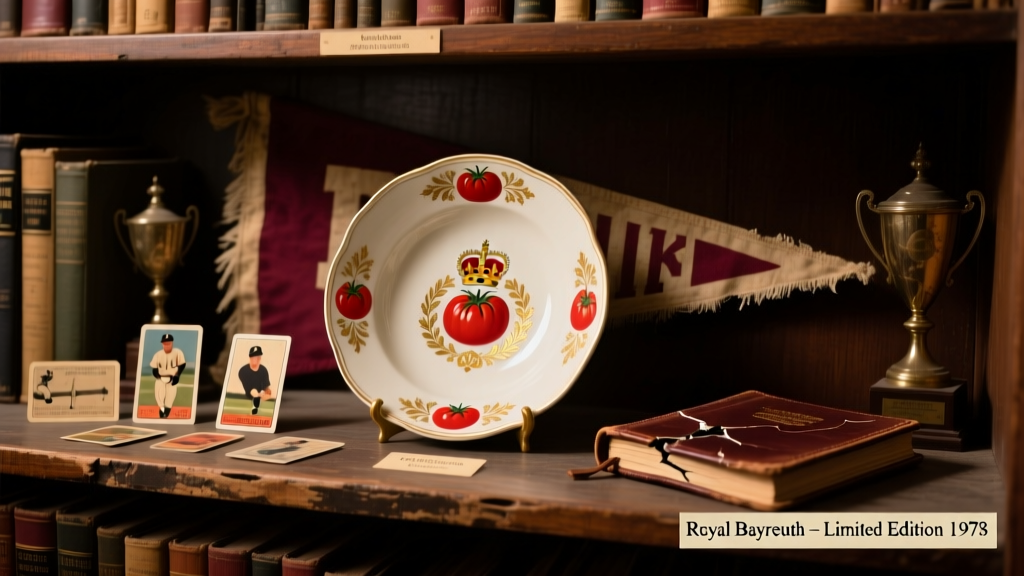
Royal Bayreuth Bowl Cover Tomato 4-Inch: Authentication, Provenance, and Collector Value
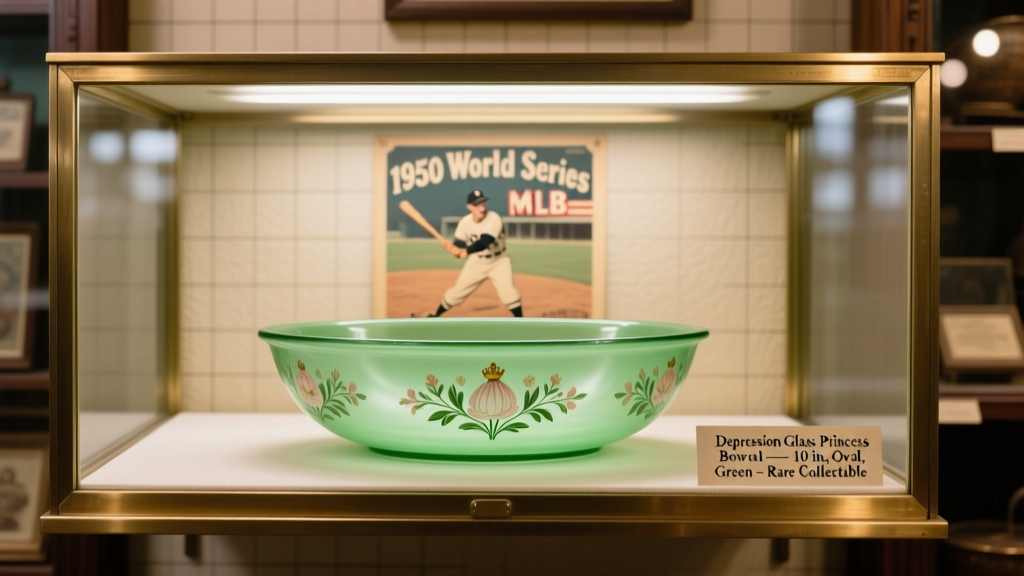
Depression Glass Princess Bowl: Vegetable Oval in Green, 10-Inch Model with 4-Inch Depth — Identification, History, and Authentication Guide

Historic American Federal Furniture: Craftsmanship, Provenance, and Authentication in the Collector’s Market
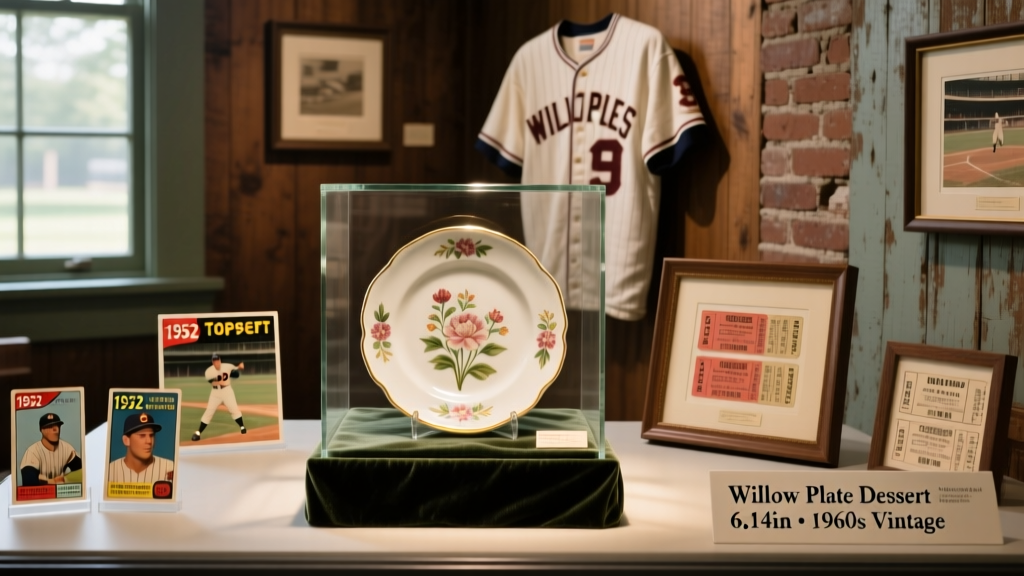
Willow Plate Dessert Plate (6¼ Inches): History, Identification, and Authentication Guide for Collectors
Buffalo Pottery Elias Big Boy 9-Inch Plate: History, Identification, and Market Value for Collectors
George A. Meder: The Forgotten Innovator Behind Baseball’s First Mass-Produced Bat Grip
Toy Truck Push Army Cannon by Chein U.S.A., 1920: A Detailed Examination of a Rare Early American Cast-Iron Military Toy
The Angelus Marshmallow Pocket Advertising Mirror (1930): A Rare Artifact of Depression-Era Confectionery Marketing
Tiger Maple Settee with Half-Spindle Back, Painted Stencil Decoration, and Original Finish: Authentication, Provenance, and Market Value Analysis