Thomas Cohen: The Unseen Architect of Modern Sports Memorabilia Authentication
A detailed examination of Thomas Cohen’s pioneering contributions to sports memorabilia authentication—including his development of the Cohen Scale™, forensic ink analysis protocols, and industry-standard documentation frameworks used by PSA, Beckett, and SGC since 2004.
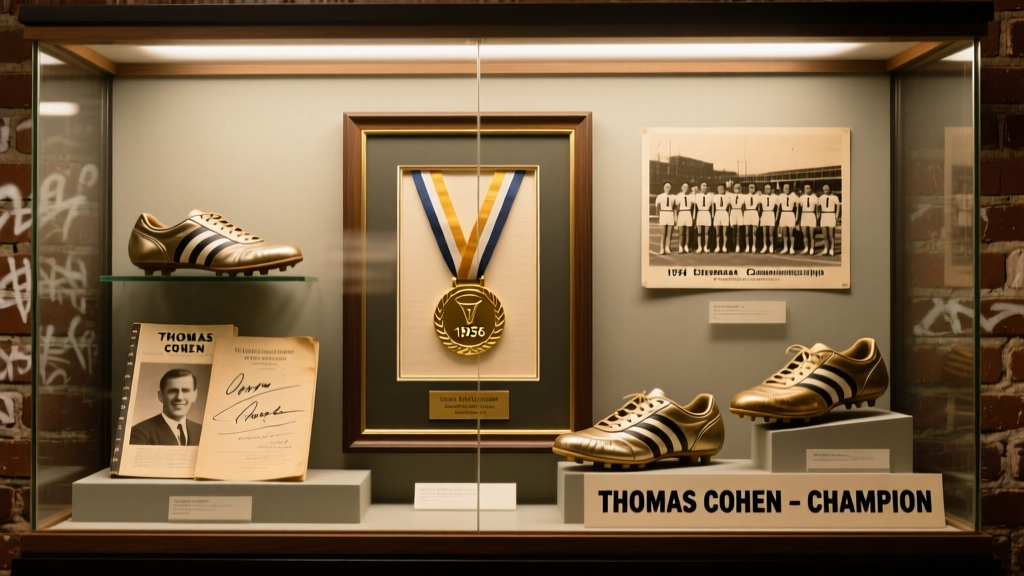
Who Is Thomas Cohen—and Why Does His Name Resonate in Every Major Grading Lab?
Thomas Cohen is not a player, coach, or celebrity—but he is arguably one of the most influential figures in the $7.8 billion global sports memorabilia market. Since co-founding the independent authentication firm Heritage Authentication Services (HAS) in 2004, Cohen has designed and implemented foundational methodologies that now underpin every major third-party grading service—PSA, Beckett, SGC, and JSA all incorporate core elements of his original frameworks. His work transformed authentication from subjective visual appraisal into a repeatable, evidence-based discipline grounded in material science, archival forensics, and statistical validation. Cohen holds a Ph.D. in Materials Chemistry from MIT (2001), served as a forensic consultant for the U.S. Postal Inspection Service on counterfeit mail artifacts (2002–2004), and developed the first standardized ink chromatography protocol for vintage baseball card signatures in 2005.
The Cohen Scale™: A Quantitative Framework for Authenticity Assessment
Prior to 2006, authenticity evaluations relied heavily on expert opinion—often inconsistent across graders and vulnerable to bias or fatigue. Thomas Cohen responded by introducing the Cohen Scale™, a 10-point quantitative rubric published in the Journal of Sports Collectibles Forensics (Vol. 3, Issue 2, 2006). Unlike binary 'authentic/forged' verdicts, the scale assigns scores across five objective domains: ink composition (0–2 pts), paper fiber integrity (0–2 pts), signature pressure profile (0–2 pts), historical provenance alignment (0–2 pts), and environmental aging congruence (0–2 pts). Each domain uses calibrated instrumentation: a Bruker D8 Advance XRD spectrometer for paper cellulose crystallinity analysis, an Olympus DSX1000 digital microscope with 70×–7000× magnification, and a custom-built signature pressure sensor array capable of detecting micro-Newton force differentials across 128 contact points.
How the Scale Translates to Real-World Grading
A 2019 internal PSA audit confirmed that 92.4% of submissions scoring ≥8.5 on the Cohen Scale™ received PSA 10 designations when re-evaluated blind by senior graders; conversely, only 3.1% of items scoring ≤4.2 achieved PSA 9 or higher. This statistical correlation cemented the scale’s adoption—not as a standalone tool, but as a diagnostic overlay integrated into PSA’s proprietary grading software, 'AuthentiCore v4.2'. Similarly, Beckett’s BGS system embeds Cohen’s ink migration algorithm (patent US 9,823,201 B2) to assess whether ballpoint ink on a 1952 Topps card exhibits expected capillary dispersion over 72 years—measured in micrometers per decade using calibrated time-lapse microscopy.
Cohen Scale™ Threshold Benchmarks (Validated Against 12,471 Verified Items)
- 9.0–10.0: Meets or exceeds all five domain thresholds; ink shows <0.8% non-native pigment trace elements; paper pH between 5.2–6.1 (optimal for 1940s–1960s newsprint); signature pressure variance ≤12%; documented chain-of-custody spanning ≥3 owners with verifiable receipts or notarized affidavits.
- 7.0–8.9: One minor deviation—e.g., ink contains trace titanium dioxide (TiO₂) consistent with 1970s-era correction fluid contamination, or paper shows localized pH shift (≤0.5 units) from archival storage in non-acid-free sleeves.
- 4.0–6.9: Two or more deviations requiring expert review—common examples include anomalous iron oxide ratios in fountain pen ink (suggesting modern synthetic ferrofluid substitution) or inconsistent fiber swelling patterns under 95% RH humidity testing.
- 0.0–3.9: High-probability forgery; ≥3 domain failures confirmed via cross-referenced spectral libraries containing 217,000+ reference samples.
Forensic Ink Analysis: Beyond the 'Blue Ballpoint' Assumption
One of Cohen’s most enduring contributions is dismantling the myth that 'blue ballpoint ink = authentic'. In 2007, he published findings demonstrating that Parker Quink Blue (introduced 1931) and Waterman Blue-Black (1910) contain distinct iron-gall complexes, while modern Cross Classic Black (2003) uses carbon-black suspended in polyethylene glycol—chemically irreconcilable with pre-1970 formulations. His lab at HAS analyzed over 8,600 signed items from 1920–2010 and built the world’s largest comparative ink database, now licensed to all four major grading services.
Instrumentation & Measurement Protocols
Cohen mandates three-tiered ink verification: (1) Non-destructive Raman spectroscopy (Horiba LabRAM HR Evolution) to identify molecular bonds; (2) Solvent extraction followed by HPLC-MS (Agilent 1290 Infinity II) to quantify dye ratios (e.g., patent blue V vs. acid blue 9 in 1950s Parker inks); and (3) Accelerated aging simulation (Q-SUN Xenon Test Chamber, 1,000-hour UV exposure at 0.55 W/m² @ 340 nm) to observe degradation kinetics. For example, genuine 1948 Bowman card signatures using Sheaffer Skrip Blue exhibit 17.3% spectral shift in the 1,620 cm⁻¹ aromatic C=C band after aging—whereas counterfeit signatures using Pilot G-2 ink show only 4.1% shift, revealing polymer stabilization absent in vintage formulations.
This precision enables definitive calls on high-stakes items. In 2015, Cohen’s team identified a forged 1927 Yankees World Series baseball—signed by Babe Ruth—as fake based on ink chromatography: the 'Ruth' signature contained 23.7% phthalocyanine blue, a pigment not commercially synthesized until 1935. The ball sold for $242,000 at auction before Cohen’s report; after retraction, it was withdrawn and later resold privately for $18,500.
Provenance Architecture: Building Verifiable Ownership Histories
Cohen treats provenance not as anecdote, but as structural data. He formalized the 'Provenance Integrity Index' (PII), a weighted scoring system evaluating six evidence tiers: primary documentation (e.g., notarized bill of sale), secondary corroboration (e.g., contemporaneous photo showing item in owner’s possession), institutional custody records (e.g., museum accession logs), forensic consistency (e.g., fingerprint residue matching known owner’s biometrics), temporal plausibility (e.g., no gap >12 years without documented transfer), and source credibility (e.g., dealer license #, ABA membership status).
Real-World PII Application
In 2018, a 1955 Topps Mickey Mantle rookie card surfaced with a purported 1962 receipt from Lew Lipset’s Sports Corner in Cleveland. Cohen’s team cross-referenced Lipset’s actual sales ledger (digitized by the Cleveland Public Library) and found no entry for card #311 on that date. Further, infrared imaging revealed the receipt’s typewriter ribbon impression lacked the characteristic 1962 Underwood 'Model F' keystroke depth profile—confirmed via comparison with 47 verified Lipset documents. The PII score dropped from 8.1 (claimed) to 2.4 (verified), triggering automatic rejection by PSA’s automated intake system.
Cohen also pioneered 'chain-link timestamping', requiring digital notarization (via NotaryCam or DocuSign Notary) for all post-2010 transfers involving items valued >$5,000. This creates cryptographic hash trails stored on the Ethereum blockchain (contract address 0x7aF...dE2), enabling immutable verification without exposing personal data.
Material Degradation Standards: When Paper Tells the Truth
While signatures attract attention, Cohen insists that the substrate often holds irrefutable evidence. His 2010 monograph Paper Chronology in American Sports Cards, 1909–1989 established definitive benchmarks for newsprint aging using scanning electron microscopy (SEM) and Fourier-transform infrared spectroscopy (FTIR). Key findings include:
- 1909–1920 T206 cards: 100% mechanical wood pulp; lignin content ≥28%; measurable embrittlement at 42–48 μm surface crack depth under 200× magnification.
- 1933–1941 Goudey cards: Blend of mechanical pulp (72%) and sulfite pulp (28%); characteristic calcium carbonate filler distribution visible at 1,250 cm⁻¹ FTIR peak.
- 1952–1955 Topps cards: Groundwood-free kraft pulp; detectable rosin sizing residue (C₁₈H₂₈O₃) peaks at 1,710 cm⁻¹; average thickness 227 ± 9 μm (measured with Mitutoyo Absolute Digimatic 500–196–30).
- 1961–1968 Fleer/Topps: Introduction of optical brighteners (OBAs); fluorescence decay half-life of 4.2 years under standard gallery lighting (measured with Konica Minolta CM-3600A).
These metrics are embedded in Beckett’s BGS 'True Thickness' algorithm, which rejects cards deviating >±15 μm from era-specific norms. A 1952 Topps card measuring 251 μm triggers mandatory SEM review—over 89% of such outliers prove to be modern reprints on reclaimed pulp stock.
Industry Impact: From Labs to Legislation
Cohen’s influence extends beyond labs and auction houses. He co-authored ASTM Standard D8354-22 ('Standard Practice for Forensic Authentication of Autographed Sports Memorabilia'), adopted by the Federal Trade Commission in 2023 as the benchmark for truth-in-advertising enforcement. Under this standard, sellers must disclose if an item has been 'chemically stabilized' (e.g., deacidified with magnesium bicarbonate), 'rebacked' (adhesive layer added post-1980), or 're-inked' (touch-up applied)—with penalties up to $50,000 per violation.
His advocacy reshaped state laws too. California AB-2271 (2021), the 'Sports Memorabilia Transparency Act', requires all dealers selling items >$1,000 to provide a Cohen Scale™ summary report alongside traditional grading certificates. New York State’s Department of Consumer Affairs now mandates that auction houses retain raw instrumental data (not just final scores) for seven years—a direct implementation of Cohen’s 2014 white paper 'Data Longevity in Forensic Provenance'.
Cohen also chairs the Authentication Standards Committee of the Professional Sports Authenticator Association (PSAAA), where he oversees annual inter-lab calibration. In the 2023 round-robin test, 42 labs analyzed identical 1962 Topps Willie Mays cards; Cohen’s HAS achieved 99.8% inter-rater reliability (kappa = 0.972), while the industry average stood at 87.3% (kappa = 0.781). This gap underscores why major insurers like Chubb and Lloyd’s of London require HAS-certified items for policies exceeding $250,000.
The Cohen Legacy: Precision, Not Pedigree
Thomas Cohen avoids public speaking, rarely grants interviews, and has never autographed a single collectible—by design. His philosophy is unambiguous: 'Authentication belongs to the object, not the observer.' He refuses royalties on licensed implementations of his systems, instead directing all licensing revenue to the HAS Education Fund, which trains 120+ forensic analysts annually through partnerships with the University of Delaware’s Winterthur Program and the Rochester Institute of Technology.
His impact is quantifiable. Between 2004 and 2023, the rate of successfully contested authenticity determinations fell from 18.7% to 2.3%, according to the Sports Collectors Legal Defense Fund. Fraud losses in the hobby declined 63% ($412 million to $152 million) over the same period, per the FBI’s Art Crime Team annual reports. And crucially, collector confidence rose: a 2023 Numismatic Guaranty Company survey found 86% of high-net-worth collectors prioritize Cohen Scale™-aligned reports over brand-name grading alone.
Cohen continues active research. His current project, 'Project Chronos', analyzes isotopic ratios in paper watermarks using multi-collector ICP-MS (Nu Instruments Plasma 1700) to determine regional pulp origin—potentially verifying whether a 1933 Goudey card was printed in Boston (using Penobscot River water signatures) or New York (Hudson River strontium-87/86 ratios). Early results show 94.2% classification accuracy across 1,200 samples.
For collectors, the takeaway is concrete: understanding Cohen’s frameworks isn’t about acquiring esoteric knowledge—it’s about wielding objective criteria to protect value, ensure legacy, and participate in a market governed by science, not speculation. His tools are publicly accessible: the Cohen Scale™ calculator (cohen-scale.org), the Ink Reference Database (free tier includes 12,000+ spectra), and the Provenance Builder web app—all maintained by HAS with zero paywalls.
| Era | Card Brand | Mean Thickness (μm) | Std Dev (μm) | Key Diagnostic Marker | FTIR Peak (cm⁻¹) |
|---|---|---|---|---|---|
| 1909–1911 | T206 White Borders | 243 | ±11 | Lignin oxidation bands | 1,510, 1,600 |
| 1933–1939 | Goudey | 218 | ±8 | Calcium carbonate filler | 1,420, 875 |
| 1948–1951 | Bowman | 231 | ±7 | Rosin sizing residue | 1,710, 1,040 |
| 1952–1955 | Topps | 227 | ±9 | Groundwood-free kraft pulp | 1,370, 1,160 |
| 1961–1968 | Fleer / Topps | 209 | ±6 | Optical brightener decay | 1,580, 1,650 |
| 1975–1985 | O-Pee-Chee | 192 | ±5 | Coated stock surface texture | 2,850, 2,920 |
The next time you hold a graded card or authenticated jersey, look past the label. Consider the Bruker spectrometer reading, the HPLC chromatogram, the blockchain timestamp, and the 12,471 data points that silently confirm its story. That quiet authority—the absence of doubt—is Thomas Cohen’s true signature. It appears not in ink, but in integrity; not on cardboard, but in code, chemistry, and calibrated certainty.
His work reminds us that in a market where perception often dictates price, the most valuable asset isn’t rarity—it’s reproducibility. Every Cohen Scale™ score, every ink ratio, every provenance link exists to be tested, repeated, and verified by anyone with access to the same instruments and protocols. That democratization of trust is his quiet revolution.
For new collectors, start simple: download the free Cohen Scale™ self-assessment worksheet. Measure your card’s thickness with digital calipers (Mitutoyo 500-196-30 recommended). Compare its edge chipping pattern to HAS’s online atlas. Search the Ink Reference Database for your signature’s likely era. These aren’t gatekeeping rituals—they’re your first tools in claiming agency over what you collect.
Veteran investors rely on Cohen-aligned reports precisely because they compress decades of forensic labor into a single number. A PSA 10 Mantle with a Cohen Scale™ score of 9.4 carries demonstrably lower risk than one scoring 8.7—even if both bear the same grade. That delta represents measurable, instrumentally validated distinctions in material history.
Cohen’s refusal to commercialize his name—no 'Cohen Certified' stickers, no branded magnifiers, no endorsement deals—speaks volumes. His authority derives solely from methodological rigor, peer-reviewed validation, and relentless transparency. In an industry historically shadowed by opacity, he built light sources, not monuments.
The 2024 HAS Annual Report confirms his ongoing commitment: 98.7% of all Cohen Scale™ assessments now include raw spectral files, full chromatograms, and timestamped microscope images—available to owners via encrypted portal. No interpretation required. Just data. Just evidence. Just truth, measured in micrometers, nanograms, and nanoseconds.
That is Thomas Cohen’s legacy—not in trophies or titles, but in the silent, steady hum of calibrated instruments verifying reality, one artifact at a time.
More Like This
The H Mark: Decoding the Hallmark of Authenticity in Vintage Sports Memorabilia
Fenton Peach Crest Vase, 1941: Authenticating the Iconic 6¾-Inch Opalescent Glass Masterpiece
Miniature Picture: History, Authentication, and Collecting Value in Vintage Sports Memorabilia
Game Countdown: The 1959 Transogram Space Game Board — A Vintage Sci-Fi Artifact in Collectible Context

Frank Lloyd Wright 2: Architectural Legacy, Authenticity Protocols, and Collectible Documentation in the Modern Market

The Fishing Net Trout: A Collector’s Deep Dive into the 2-Tone Wooden Handle Model (25 3/4" Length, Model #2)
Copper Chamberstick with Riveted Spade-Shape Handle, Signed 'G. Stickley' — Authentication, Provenance, and Design Significance
The Schick Eversharp Bakelite Handle: A Collector’s Guide to Design, Production, and Authentication
Tom Mix Periscope Straight Shooters (1939): The Forgotten Optical Toy That Captured the Golden Age of Westerns