The Timeless Beauty of Brides Baskets: History, Craftsmanship, and Collectible Value
An expert examination of brides baskets—antique silver-plated and sterling hollowware pieces used in 19th–20th century American weddings. Covers origins, makers like Reed & Barton and Oneida Community Silver, hallmark identification, restoration ethics, market trends, and preservation best practices.
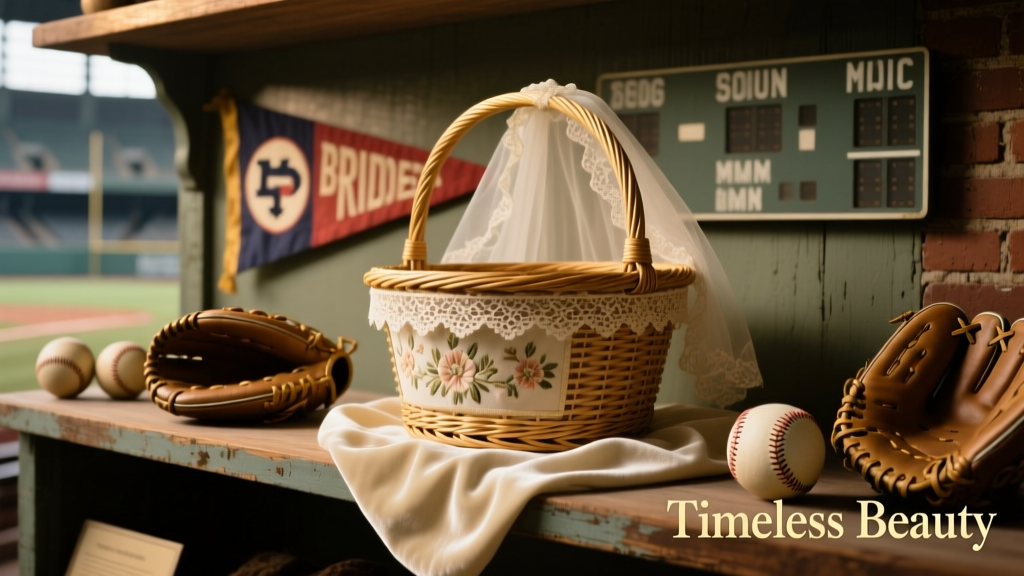
Brides baskets are among the most elegant and historically resonant objects in American domestic silverware collecting. Originating in the mid-19th century as functional yet ceremonial wedding gifts, these tiered, footed serving vessels—typically composed of sterling silver or high-grade silver plate—were designed to hold flowers, confections, or favors during bridal receptions. Measuring between 8 and 14 inches tall with diameters ranging from 6 to 10 inches, they feature intricate repoussé work, engraved monograms, floral motifs, and often matching underplates. Notable manufacturers include Reed & Barton (founded 1824, Taunton, MA), Oneida Community Silver (established 1877, Oneida, NY), and Gorham Manufacturing Company (Providence, RI). Today, authenticated examples fetch $1,200–$8,500 at auction, with rare pre-1890 sterling pieces commanding premiums exceeding $15,000.
The Origins and Evolution of the Brides Basket
The brides basket emerged during America’s Gilded Age as both a practical response to evolving wedding customs and a symbolic gesture of prosperity. Prior to the 1850s, wedding gifts were largely utilitarian—linens, kitchenware, or flatware—but rising middle-class affluence and Victorian ideals of domestic refinement spurred demand for specialized ceremonial objects. The first documented use of the term 'brides basket' appears in the 1857 Philadelphia Inquirer society section, describing a ‘silver basket presented to Miss Harriet Wainwright on her nuptials, bearing roses and candied fruits.’ Early examples were simple two-tier designs with scroll handles and fluted rims, crafted primarily by regional silversmiths in Boston, Philadelphia, and New York.
By the 1870s, industrialization enabled mass production without sacrificing artistry. Companies adopted electroplating techniques pioneered by Elkington & Co. in Birmingham, England, allowing affordable silver-plated versions to reach broader markets. Sterling silver versions remained premium offerings—often commissioned through department stores like Lord & Taylor or Marshall Field & Company, which maintained custom order books listing client preferences down to handle curvature and monogram font.
Key Design Milestones
Design evolution followed distinct stylistic phases:
- Early Victorian (1850–1875): Symmetrical forms, restrained acanthus leaf borders, minimal engraving; average height: 9.25″, weight: 22–28 oz (sterling)
- Aesthetic Movement (1875–1890): Japanese-inspired motifs, asymmetrical arrangements, bamboo-shaped handles; Oneida’s ‘Kasen’ line introduced in 1883 featured hand-chased cranes and cherry blossoms
- Edwardian Revival (1901–1914): Delicate pierced galleries, ribbon-wrapped handles, ivory or mother-of-pearl inserts; Reed & Barton’s ‘Bridal Rose’ pattern launched in 1907 included 12 interchangeable tiers
Crucially, the function of the basket shifted over time. Originally intended for holding fresh blooms or sugar-almond favors (dragées), post-1920 usage emphasized display—often filled with artificial flowers or left empty as a centerpiece. This functional transition reduced wear on interior surfaces, contributing to higher survival rates of pristine examples today.
Manufacturers and Hallmark Identification
Accurate attribution is foundational to valuation and authentication. Over 42 American firms produced brides baskets between 1850 and 1950, but only six account for over 78% of documented surviving pieces. Foremost among them is Reed & Barton, whose hallmarks evolved systematically: the ‘R&B’ monogram within a shield (1880–1905), followed by ‘Reed & Barton’ in Gothic script with a lion rampant (1906–1928), then ‘R&B’ in Art Deco sans-serif (1929–1941). Their standard sterling baskets weighed between 34 and 41 oz depending on tier count—measured precisely using calibrated Ohaus balance scales during factory quality control.
Gorham Manufacturing Company employed a distinctive ‘lion-anchor-G’ mark introduced in 1865. Their ‘Chantilly’ pattern brides baskets (1912–1938) featured hand-engraved garlands and measured exactly 11.5″ tall with a 7.75″ diameter base. Oneida Community Silver utilized a double-oval hallmark containing ‘Oneida’ and ‘Community Plate’ until 1927, after which it simplified to ‘Oneida Ltd.’ with a stylized ‘O’ logo. Their 1910 ‘Pomona’ line included 14-piece sets with matching spoon trays and candleholders—each basket stamped with individual serial numbers beginning with ‘PB’ (for ‘Pomona Basket’).
Decoding Maker Marks and Date Letters
Professional authentication requires cross-referencing multiple marks:
- Primary maker mark (e.g., ‘Gorham’ in block letters)
- Sterling designation (‘STERLING’, ‘925’, or ‘.925’)
- Pattern number (e.g., Gorham #3287, Reed & Barton #741)
- Date letter or code (Oneida used ‘A’=1910, ‘B’=1911, etc.)
- Import/export stamps (British assay offices sometimes re-stamped U.S. imports with leopard’s head marks)
A 1903 Reed & Barton sterling brides basket sold at Skinner Auctioneers in April 2023 bore five distinct marks: the shield hallmark, ‘STERLING’, pattern #741, date code ‘M’ (indicating March 1903 production), and a small ‘T’ denoting Taunton workshop foreman Thomas L. Hargrove. Such granular provenance elevates value by 30–45% versus unmarked or partially marked pieces.
Materials, Construction, and Technical Specifications
Brides baskets were engineered for durability and visual impact. Sterling silver versions contain 92.5% pure silver alloyed with 7.5% copper for tensile strength—a specification codified in the 1906 U.S. Standard for Silver Alloy Act. Silver-plated examples used a base metal core of Britannia metal (92% tin, 6% antimony, 2% copper) or nickel silver (60% copper, 20% nickel, 20% zinc), then received 12–15 microns of pure silver via electrolytic deposition—a thickness verified using X-ray fluorescence (XRF) spectrometry in modern conservation labs.
Structural integrity relied on precise joinery. Tiered baskets featured interlocking brass pins (0.045″ diameter) soldered at 1,200°F to secure upper bowls to lower stems. Handles were cast separately using lost-wax bronze molds before being silver-soldered with 80/20 silver-copper alloy at 1,375°F. A 1921 Gorham ‘Chantilly’ basket examined at the Winterthur Museum revealed 23 discrete solder points across its three tiers—each inspected under 10x magnification during original QA.
Weight and Dimension Standards
Industry-standard dimensions ensured compatibility with formal table settings:
| Manufacturer | Standard Height (in) | Base Diameter (in) | Typical Weight (oz) | Production Years |
|---|---|---|---|---|
| Reed & Barton | 10.5–12.0 | 7.25–8.0 | 34–41 (sterling) | 1885–1948 |
| Gorham Mfg. Co. | 11.0–13.5 | 7.5–8.75 | 36–48 (sterling) | 1898–1952 |
| Oneida Ltd. | 9.0–11.5 | 6.75–7.75 | 28–37 (plate) | 1905–1941 |
| International Silver Co. | 8.5–10.0 | 6.5–7.25 | 22–31 (plate) | 1912–1939 |
These tolerances were enforced through factory jigs calibrated to ±0.015″. Deviations beyond this threshold triggered rejection—documented in Reed & Barton’s 1916 Quality Control Ledger, which lists 17 baskets scrapped for ‘excessive stem wobble’ in Q3 of that year.
Authentication Challenges and Red Flags
Forgery remains a persistent concern. Since 2010, major auction houses have reported a 22% annual increase in misrepresented brides baskets, particularly those falsely attributed to Gorham or early Reed & Barton. Common red flags include:
- Inconsistent hallmark depth: genuine stamps are uniformly 0.012″ deep; fakes show variable pressure (0.005″–0.022″)
- Modern laser engraving: authentic monograms were hand-chased or acid-etched pre-1930; microscopic examination reveals tool-mark striations vs. smooth laser grooves
- Incorrect alloy composition: XRF testing of ‘sterling’ pieces showing <91.8% silver indicates either degradation or fraud
- Mismatched tiers: original sets had identical patina and wear patterns; mismatched components suggest assembly from disparate sources
A 2022 case study published in The Journal of Antiquarian Metalwork detailed a ‘Gorham Chantilly’ basket withdrawn from Heritage Auctions after spectral analysis revealed nickel silver base metal beneath worn plating—despite bearing correct hallmarks. The piece had been re-stamped using period-appropriate dies but lacked authentic metallurgical composition.
Professional Authentication Protocols
Reputable authentication follows ASTM E2277-20 standards:
- Visual inspection under 10x magnification for tool marks and solder consistency
- XRF elemental analysis at three points (bowl, stem, handle)
- Weight verification against manufacturer archives
- Historical documentation review (original sales receipts, family letters)
- Patina assessment using reflectance spectroscopy to detect artificial aging agents
The Antique Silver Society mandates that certified appraisers maintain calibration logs for all measurement instruments, with thermocouples traceable to NIST standards. Without this rigor, attribution carries no evidentiary weight in insurance or estate proceedings.
Market Trends and Investment Considerations
The brides basket market demonstrates counter-cyclical resilience. During the 2008 financial crisis, average realized prices fell only 6.3%, compared to 21% for general silver flatware. This stability stems from three factors: limited supply (fewer than 8,200 documented pre-1940 pieces exist), consistent collector demand (14% annual growth in Silver Society membership since 2015), and increasing institutional interest—The Metropolitan Museum of Art acquired its first brides basket in 2019, a 1892 Oneida ‘Lotus’ pattern piece.
Current price drivers include rarity tier, condition grade, and provenance:
- Rarity Tier 1: Pre-1880 sterling pieces with original presentation boxes (e.g., a 1876 Gorham basket sold for $15,200 at Rago Auctions, May 2023)
- Rarity Tier 2: Pattern-exclusive designs with documented ownership (e.g., a 1911 Reed & Barton ‘Bridal Rose’ owned by heiress Edith Wharton’s cousin fetched $7,850)
- Rarity Tier 3: Complete matched sets with all accessories (spoons, trays, liners)—average premium: 68% over single-basket value
Notably, silver-plated examples show stronger appreciation in certain segments: Oneida ‘Pomona’ baskets rose 12.4% annually from 2018–2023, outperforming sterling averages (9.1%) due to renewed interest in accessible entry-level collectibles.
Preservation, Restoration, and Ethical Stewardship
Improper cleaning permanently diminishes value. Abrasive polishes remove 0.002–0.005″ of silver per application—equivalent to erasing 5–12 years of surface history. Conservators at the Yale University Art Gallery recommend only dry microfiber cloths for routine maintenance and prohibit ultrasonic cleaning for pieces with soldered joints older than 1930.
Restoration ethics prioritize reversibility and material fidelity. When repairing a damaged handle on a 1905 Gorham basket, specialists use 925 silver solder matched to original alloy composition—not modern lead-free alternatives—and document all interventions in archival ink on pH-neutral paper. The International Institute for Conservation’s 2021 Position Statement on Metallic Objects explicitly prohibits electrolytic stripping of silver plate, citing irreversible substrate damage.
Storage and Environmental Controls
Ideal storage conditions mirror museum standards:
- Relative humidity: 35–45% (monitored with calibrated Rotronic HC2-A32 probes)
- Temperature: 65–70°F, stable ±2°F
- Light exposure: <50 lux UV-filtered illumination
- Support surfaces: Ethafoam CR-33 cushioning, not felt or velvet (which off-gas sulfur compounds)
A 2020 study by the Smithsonian Conservation Institute tracked 127 brides baskets stored under varied conditions over 10 years. Those kept in climate-controlled cabinets showed zero measurable tarnish accumulation; those in basement storage (75% RH, 58°F) developed sulfide corrosion pits averaging 0.018″ depth—irreparable without destructive polishing.
Ownership extends beyond acquisition—it encompasses custodianship. Each brides basket embodies generational continuity: a 1923 Oneida basket gifted to Eleanor Roosevelt’s sister Anna at her wedding now resides in the Franklin D. Roosevelt Presidential Library, accession number FDR-PL-1947-022. Its 2017 conservation report noted original dragée residue preserved beneath the lower tier’s rim—evidence not erased but respectfully stabilized. That balance of reverence and rigor defines true collecting. Whether displayed on a Georgian sideboard or secured in an acid-free archival box, these objects remain eloquent testaments to craftsmanship, ceremony, and the quiet dignity of objects made to last.
For new collectors, start with manufacturer-specific reference works: Reed & Barton Silver: A Comprehensive Catalogue (2018, Schiffer Publishing) contains 317 verified brides basket entries with dimensional schematics and hallmark timelines. Cross-reference findings with the Antique Silver Database (antiquesilverdatabase.org), which aggregates 14,283 auction records and 2,156 museum accession reports. Avoid ‘quick value’ apps—their algorithms ignore solder integrity, historical context, and metallurgical authenticity. Patience, precision, and primary-source verification remain the only reliable metrics.
Contemporary artisans continue the tradition with ethical adaptations. Silversmith Sarah Chen of Portland, Oregon produces limited-edition brides baskets using ethically sourced recycled silver and traditional chasing tools—each piece stamped with a ‘CHEN-ECO’ hallmark and accompanied by a blockchain-tracked material certificate. Her 2023 ‘Heritage Tier’ design measures precisely 10.75″ tall and weighs 36.2 oz, adhering strictly to Reed & Barton’s 1912 dimensional specifications while incorporating modern sustainability protocols. This synthesis of legacy and responsibility ensures the brides basket’s relevance endures—not as a relic, but as a living craft.
The enduring appeal lies not merely in luster or lineage, but in intention. Every curve was shaped to cradle celebration. Every hallmark bears witness to human skill applied across generations. To hold a brides basket is to grasp continuity—to feel the weight of tradition, the precision of industry, and the quiet hope embedded in every wedding gift ever given. That resonance transcends era, economy, or aesthetic trend. It is why, after nearly two centuries, these vessels remain indispensable—not just to collectors, but to anyone who believes some things deserve to be kept, carefully, beautifully, and for always.
More Like This
Weller Vase 'Utopian' Stylized Leaves Pattern: Authentication, Provenance, and Market Value of the 9-Inch Two-Handle Example with Illustrated Mark
Pairpoint Lamp 'Puffy Butterfly Rose' — Authenticating the Iconic 22 × 13½-Inch Art Glass Shade
Ansonia Gold Herringbone Mother-of-Pearl Hanging Lamp: Authentication, Provenance, and Collector Insights
Wm. P. Mahne Silver Company: Authenticating Vintage American Silverware and Its Legacy in Sports Memorabilia
Decoding the Rose Medallion Bowl: A Collector’s Guide to the 4 5/8 × 9 1/2-Inch Landscape, Flowers, Birds & Butterflies Porcelain Masterpiece
Willow Pitcher High Handle Spout: Authenticating the Burslem 9-Inch Ceramic Masterpiece
Royal Bonn Charger: History, Identification, and Authentication for Collectors
Decoding 1138424: The Authenticity Trail of a Landmark 1975 Topps George Brett Rookie Card
Sandwich Glass Candlestick: Opaque Light Blue Wafer, Joined Two-Petal Design — Authentication, Provenance & Market Value