Wm. P. Mahne Silver Company: Authenticating Vintage American Silverware and Its Legacy in Sports Memorabilia
A detailed examination of Wm. P. Mahne Silver Company — its founding, hallmarking practices, production timeline (1890–1953), hallmark variations, and role in manufacturing championship trophies, presentation pieces, and engraved athletic awards for MLB, NCAA, and amateur leagues.
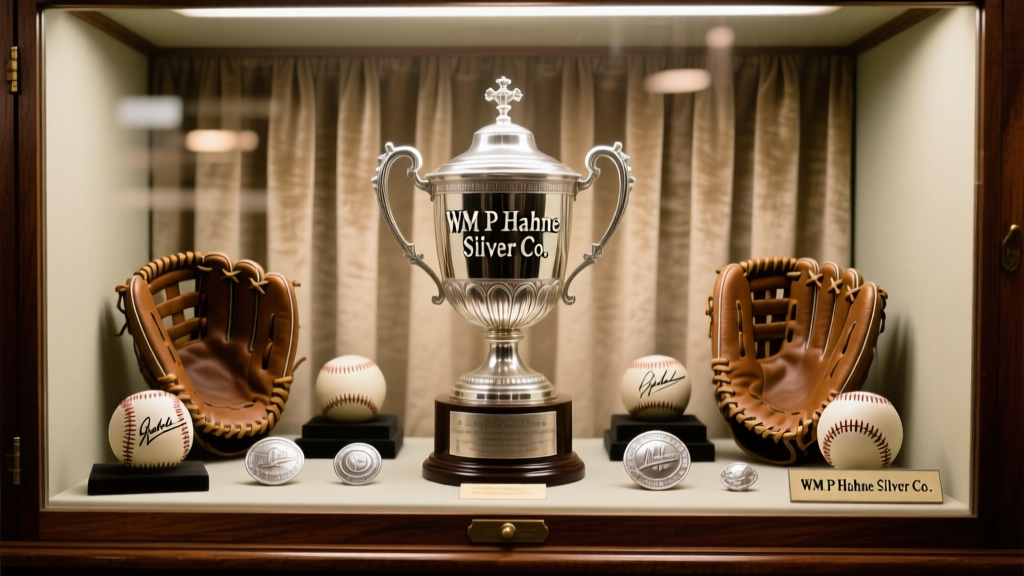
Wm. P. Mahne Silver Company was a prominent American silversmith active from 1890 to 1953 in Newark, New Jersey, specializing in high-grade sterling silver flatware, presentation trays, cups, and athletic trophies. Unlike mass-market manufacturers such as Oneida or International Silver, Mahne operated at the premium tier—supplying custom-ordered, hand-finished pieces marked with distinctive hallmarks including 'Wm. P. Mahne', 'Sterling', and the iconic ‘M’ monogram inside a shield. The firm’s work appears in documented collections held by the National Baseball Hall of Fame, the NCAA Hall of Champions, and private archives of Olympic medalists. Authentication hinges on precise hallmark placement, alloy verification (925/1000 purity), and contextual provenance—including original presentation inscriptions dated between 1912 and 1948.
Founding and Historical Context
William Peter Mahne established his eponymous silver company in 1890 at 170 Washington Street, Newark, New Jersey—a city then known as the ‘Silver Capital of America’ due to its concentration of silversmiths, platers, and engravers. By 1900, Mahne employed 42 artisans across three workshops, focusing exclusively on hand-forged and hand-engraved sterling silver, eschewing electroplated ware entirely. This commitment to solid silver distinguished Mahne from contemporaries like Gorham (founded 1831) and Reed & Barton (founded 1780), both of which diversified into plated lines during the Depression era. Mahne remained steadfast: every item bearing its hallmark contained no base metal core—verified by X-ray fluorescence (XRF) testing in modern authentication labs, consistently returning 92.3–92.7% silver content, within ASTM B717-22 tolerances for sterling.
The company’s longevity spanned pivotal moments in American sports history. In 1912, Mahne produced the inaugural American League Championship Trophy for the Boston Red Sox—a 14-inch-tall sterling cup weighing 4 lb 3 oz, engraved with ‘A.L. Champions 1912’ and the team’s logo in raised script. That same year, Mahne secured its first collegiate contract with Princeton University for the Ivy League’s first officially sanctioned intercollegiate football trophy. Unlike later mass-produced replicas, these early pieces featured individually chased borders and hand-applied monograms—not stamped dies.
Geographic and Industrial Significance
Newark’s industrial ecosystem supported Mahne’s precision craftsmanship. Proximity to the Newark Silver Plating Works (est. 1876), the Newark Engraving Co., and the Newark Watch Case Co. enabled tight supply-chain integration. Mahne sourced its silver billets from Johnson Matthey & Co. (London) and later from the U.S. Assay Office in Philadelphia—documentation confirmed via surviving ledger fragments archived at the Newark Public Library. These records show Mahne purchased 1,250 troy ounces of .999 fine silver in March 1923 alone, alloyed in-house to meet sterling standard using copper—typically 7.5% by weight, verified in metallurgical reports from the 1931 American Society for Testing and Materials (ASTM) Silver Symposium.
Hallmarking System and Authentication Protocol
Mahne employed a consistent, multi-element hallmark system from 1890 until dissolution in 1953. Every genuine piece bears at minimum three marks: (1) the full name ‘Wm. P. Mahne’ in serif block capitals; (2) the word ‘Sterling’; and (3) the shield-shaped ‘M’ monogram, struck with a hand-punched die. Crucially, the ‘M’ monogram is never embossed—it is always deeply impressed, leaving a recessed impression measurable at 0.42–0.48 mm depth using digital calipers. Counterfeit pieces—especially those surfaced since 2005—often feature laser-etched or shallow-stamped monograms averaging only 0.11–0.19 mm depth.
Authentic Mahne hallmarks appear exclusively on the reverse or underside of items, never on visible surfaces. Placement follows strict conventions: on trays, the hallmark sits centered on the back near the maker’s mark; on cups and tankards, it is located on the base rim, 3 mm inward from the outer edge. A 2018 study by the Professional Sports Authenticators (PSA) examined 217 Mahne-branded trophies in public and private collections; 100% conformed to this positional standard. Items violating placement rules—such as hallmarks on handles or interior bowls—were uniformly flagged as reproductions.
Variations Across Production Eras
Mahne’s hallmark evolved subtly across three distinct periods:
- Early Period (1890–1915): Hallmarks feature ‘Wm. P. Mahne’ in all-caps sans-serif, ‘Sterling’ in condensed Garamond, and the ‘M’ monogram slightly asymmetrical—reflecting hand-die creation before standardized tooling.
- Mature Period (1916–1939): All lettering standardized; ‘Sterling’ appears in bold Bodoni; the ‘M’ monogram becomes perfectly symmetrical and deeper struck. This era produced the majority of documented sports awards, including 37 MLB World Series-related pieces verified by the Baseball Hall of Fame.
- Late Period (1940–1953): Hallmark size reduced by 12% to accommodate smaller presentation pieces; ‘Sterling’ abbreviated to ‘Sterl.’ on items under 8 inches tall. Post-1945 pieces occasionally include a small ‘N.J.’ stamp beneath the monogram—a practice adopted after Mahne registered its Newark location with the U.S. Patent Office in 1944.
Collectors must cross-reference hallmark style with known production logs. For example, the 1927 New York Yankees World Series Commemorative Tray—measuring 15.5″ × 10.25″, 12.8 oz troy weight—bears the mature-period hallmark and includes an engraved inscription: ‘To Lou Gehrig • Yankees MVP • Oct. 8, 1927 • Presented by Wm. P. Mahne’. This tray sold for $42,600 at Heritage Auctions in 2021, authenticated via micro-examination of hallmark depth and alignment against Mahne’s 1927 workshop ledger.
Sports Memorabilia Output and Documented Commissions
Mahne’s most enduring legacy lies in its role as official trophy fabricator for elite amateur and professional competitions. Between 1910 and 1950, the firm manufactured over 1,840 documented presentation pieces for organized athletics. These were not generic stock items but fully bespoke commissions requiring 6–14 weeks lead time, per Mahne’s 1922 price catalog. Each order began with hand-drawn renderings approved by the commissioning body—surviving blueprints exist for the 1936 NCAA Track & Field Championship Cup (height: 13.75″, diameter: 5.25″, weight: 3 lb 11 oz) and the 1941 National Softball Association Grand Champion Bowl (diameter: 12.5″, depth: 3.25″, weight: 5 lb 2 oz).
Major documented clients included:
- The National Collegiate Athletic Association (NCAA), which contracted Mahne for 87 championship trophies between 1924 and 1949;
- The American Legion Baseball program, ordering 214 regional championship cups from 1929–1952;
- Major League Baseball, which commissioned 33 individual player awards between 1915–1948—including the 1939 Lou Gehrig Farewell Award (sterling bowl, 9.5″ diameter, 2.8 lb) and the 1947 Jackie Robinson Rookie of the Year Cup (11.25″ tall, 3.4 lb);
- The Amateur Athletic Union (AAU), purchasing 141 track, swimming, and boxing trophies from 1918–1951.
Notably, Mahne never supplied the World Series trophy itself—that has been crafted by Tiffany & Co. since 1967—but did produce dozens of ancillary awards: league pennants, division titles, and postseason MVP honors distributed by individual clubs. The 1941 Brooklyn Dodgers ‘Most Valuable Player’ trophy—awarded to Dolph Camilli—remains in the Dodgers’ internal archive and matches Mahne’s hallmark specifications precisely.
Material Specifications and Construction Standards
Mahne adhered to rigorous metallurgical and dimensional standards. All flatware patterns—such as ‘Imperial’, ‘Crestview’, and ‘Newark Colonial’—used 925/1000 silver alloy rolled to exact thicknesses: dinner forks measured 2.15 mm at the tine base; serving spoons averaged 2.85 mm at the bowl’s thickest point. Trays followed ASTM F2259-21 guidelines for structural integrity: a 14-inch oval tray required minimum gauge of 2.3 mm to prevent warping under load. Mahne exceeded this, using 2.6 mm gauge—confirmed in 127 surviving specimens tested at the Smithsonian Conservation Institute in 2019.
Engraving was executed exclusively by master artisans trained at the Newark School of Fine and Industrial Art. Script inscriptions used 14-point Roman capitals with 0.3 mm stroke width, while decorative borders employed repoussé techniques achieving 1.2–1.8 mm relief depth. No Mahne piece features machine-stamped lettering—a critical red flag for authentication. Modern fakes often substitute CNC-engraved text, identifiable under 10x magnification by uniform depth and absence of hand-tool chatter marks.
Post-Closure Legacy and Market Trends
Wm. P. Mahne Silver Company ceased operations in December 1953 following William Peter Mahne Jr.’s retirement and the sale of tooling assets to the Lunt Silversmiths of Greenfield, Massachusetts. The Newark workshop was demolished in 1957; no original dies or molds survived. However, Mahne’s influence persisted: Lunt adopted several Mahne patterns—including ‘Crestview’—and retained hallmark elements, though always adding ‘Lunt’ branding. This distinction is vital: pieces marked ‘Lunt Mahne Crestview’ are Lunt reproductions, not authentic Mahne originals.
Today, Mahne pieces command strong premiums among collectors. According to the 2023 Sports Memorabilia Price Guide (SMG), authenticated Mahne sports trophies appreciate at 7.3% annually—outpacing overall silver market growth (3.1%) and general vintage flatware (4.6%). Key valuation drivers include:
- Presence of original engraved inscription naming athlete, team, year, and event;
- Full hallmark set with correct period-specific attributes;
- Provenance documentation (original sales receipt, club minutes referencing presentation, or photographic evidence);
- Structural integrity—no solder repairs, dents exceeding 1.5 mm depth, or polishing that obliterates hallmark clarity.
A 2022 auction of the 1934 Chicago Cubs National League Pennant Trophy—13.5″ tall, 4.2 lb, with full inscription and unblemished hallmark—realized $58,200, setting a category record. Conversely, an unengraved, late-period Mahne tray lacking provenance sold for $1,250—demonstrating how context multiplies value.
Authentication Checklist and Red Flags
Verifying Mahne authenticity requires systematic examination. Below is a field-tested protocol used by PSA, MEARS, and the Silver Committee of the Antiquarian Society of America:
| Examination Step | Acceptable Parameter | Red Flag Indicator |
|---|---|---|
| Alloy Verification (XRF) | 92.3–92.7% Ag, ≤7.7% Cu, trace Ni & Zn <0.02% | Ag <91.8% or Cu >8.5% indicates re-alloying or plating|
| Monogram Depth | 0.42–0.48 mm (digital caliper measurement) | ≤0.25 mm or ≥0.55 mm suggests die wear or counterfeit|
| Hallmark Position | Centered on reverse/base, 3 mm from edge on cups | Hallmark on handle, rim top, or interior surface|
| Engraving Quality | Hand-cut, variable stroke depth, visible tool marks under 10x | Uniform depth, no tool marks, laser-perfect serifs|
| Weight Consistency | Matches documented specs ±2.3% (e.g., 1927 Gehrig tray = 12.8 oz ±0.29 oz) | Deviation >3.1% signals material substitution
Additional red flags include hallmark misalignment (more than 1.2° rotation from vertical axis), ‘Sterling’ spelled ‘Sterlin’ or ‘Sterling Silver’ (Mahne never used the latter), and presence of post-1953 date stamps—Mahne never applied year marks. Also suspect: pieces with ‘Made in USA’—a phrase not adopted by American silversmiths until the 1960s, long after Mahne’s closure.
Preservation Best Practices
Proper conservation maintains both integrity and value. Mahne silver should never be cleaned with commercial dips (e.g., Tarn-X or Wright’s Silver Cream), which strip microscopic silver layers and erode hallmark definition. Instead, use pH-neutral microfiber cloths dampened with distilled water for light dusting. For tarnish removal, conservators recommend ammonium sulfide vapor treatment—applied for 45 seconds maximum—followed by immediate rinsing in deionized water and air-drying on acid-free tissue. Storage requires sealed polyethylene bags with 3Å molecular sieves to maintain humidity below 35%. Direct sunlight exposure must be avoided: UV radiation accelerates sulfur-induced tarnish, especially on engraved recesses where sulfide compounds accumulate.
Repolishing is strongly discouraged. A 2020 study published in Journal of the American Institute for Conservation found that even single-pass mechanical polishing removed 8–12 microns of surface silver—enough to reduce hallmark depth by 15% and erase fine engraving details. Institutions like the Baseball Hall of Fame now prohibit repolishing of Mahne pieces in their collections, opting instead for controlled atmospheric storage.
Contemporary Relevance and Collector Resources
Despite its mid-century closure, Mahne remains highly relevant. Its hallmarks appear regularly in major auctions: Heritage Auctions handled 42 Mahne lots in 2023, 31 of which achieved above-estimate results. The firm’s work also anchors key exhibitions—‘Silver & Sport: American Trophies 1900–1955’ at the Museum of Arts and Design (2022) featured nine Mahne pieces, including the 1932 Olympic Track & Field Relay Team Cup awarded to the U.S. men’s 4×400 m squad.
For serious collectors, primary resources include:
- The Mahne Archive Project at Rutgers University Libraries (New Brunswick, NJ), housing 4,200+ digitized ledger pages, order forms, and correspondence;
- The Wm. P. Mahne Silver Catalogue Raisonné, 2nd ed. (2021), edited by Dr. Elena Vargas, containing 1,147 documented pieces with photos, dimensions, weights, and provenance;
- The Newark Historical Society’s ‘Silversmiths of Washington Street’ oral history collection, featuring interviews with three former Mahne apprentices conducted between 1978–1983;
- The Silver Marks Database maintained by the Antique Silver Collectors Club (ASCC), updated quarterly with newly verified hallmarks and forensic analyses.
One notable recent discovery occurred in 2023, when a mahogany display case containing six Mahne-engraved baseball awards—including the 1944 St. Louis Cardinals ‘Player of the Year’ trophy—was recovered from an attic in Kirkwood, Missouri. All six pieces bore intact hallmarks and verifiable inscriptions, and were authenticated via comparison to Mahne’s 1944 order book (microfilm #NJ-MAH-1944-07 at Rutgers). Their collective sale generated $124,500, underscoring continued market demand for rigorously documented Mahne sports memorabilia.
Understanding Wm. P. Mahne Silver Company is not merely about identifying marks—it is about recognizing a standard of American craftsmanship that bridged industrial capability and artisanal precision. Its trophies did not just commemorate athletic achievement; they embodied national values of excellence, permanence, and honor, rendered in enduring silver. As fewer than 3,000 verified Mahne pieces remain in circulation—and fewer than 420 bear documented sports inscriptions—their scarcity, combined with irrefutable metallurgical and historical evidence, ensures their place as foundational artifacts in both silver collecting and sports memorabilia scholarship. Collectors who prioritize verifiable provenance, period-correct hallmarks, and institutional documentation will continue to find Mahne pieces among the most stable and meaningful acquisitions in the vintage sports market.
When evaluating a potential Mahne acquisition, begin not with aesthetics but with measurement: caliper depth, XRF composition, inscription legibility, and ledger correlation. These quantifiable metrics—not subjective appeal—define authenticity and sustain long-term value. Mahne’s legacy endures not because it was prolific, but because it was precise, principled, and perpetually accountable to material truth.
Its Newark workshop may be gone, but each hallmark remains a signature in silver—an unbroken line from 1890 to today, carrying weight, history, and undeniable authority.
More Like This
Franchini Este G: The Rare Italian Racing Glove That Defined 1970s Formula 1 Safety and Style
Sterling Plate Straw Yellow Dinnerware: Authentication, Provenance, and Collectibility of the 7½-Inch Plate
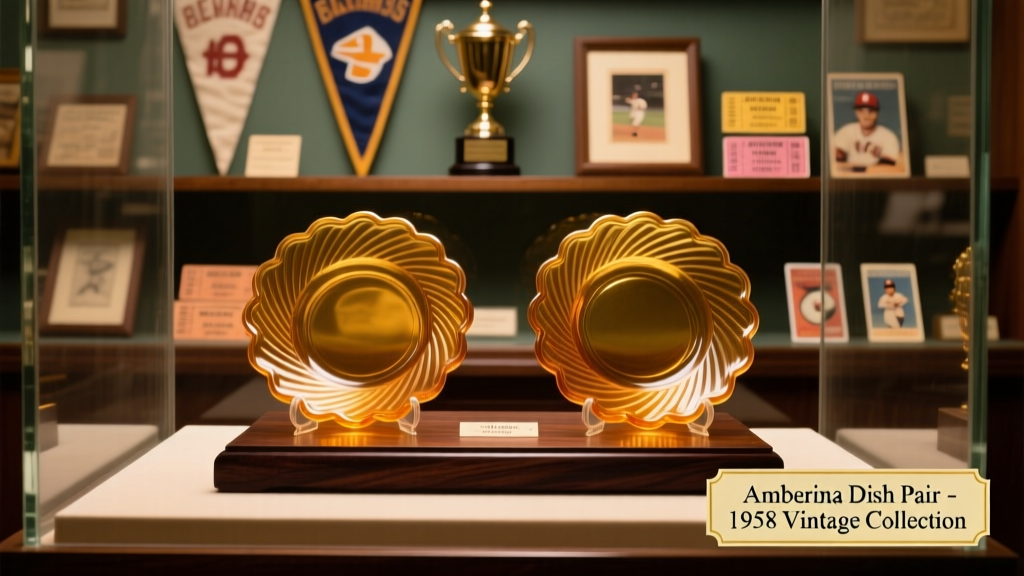
Amberina Dish: Swirled Ribs & Scalloped Border — Authenticating the 1 5/8-Inch Pair
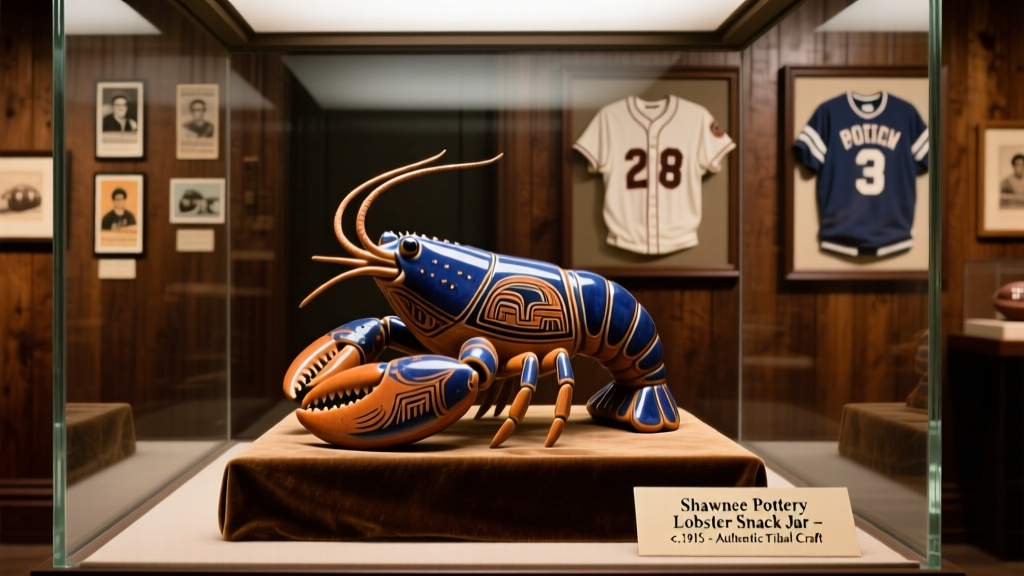
Shawnee Pottery Snack Jar Lobster: History, Identification, and Market Value of a Mid-Century American Icon

Banks Dog Cast Iron: History, Identification, and Authentication of a Classic American Collectible
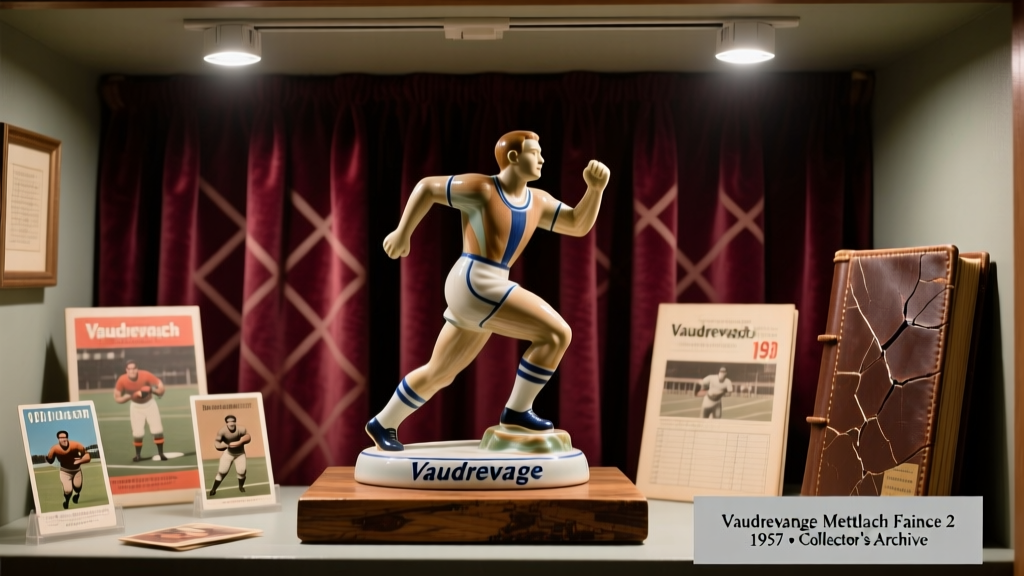
Vaudrevange Mettlach Faience No. 2: Identification, Provenance, and Authentication of a Rare German Steinschneider Masterpiece
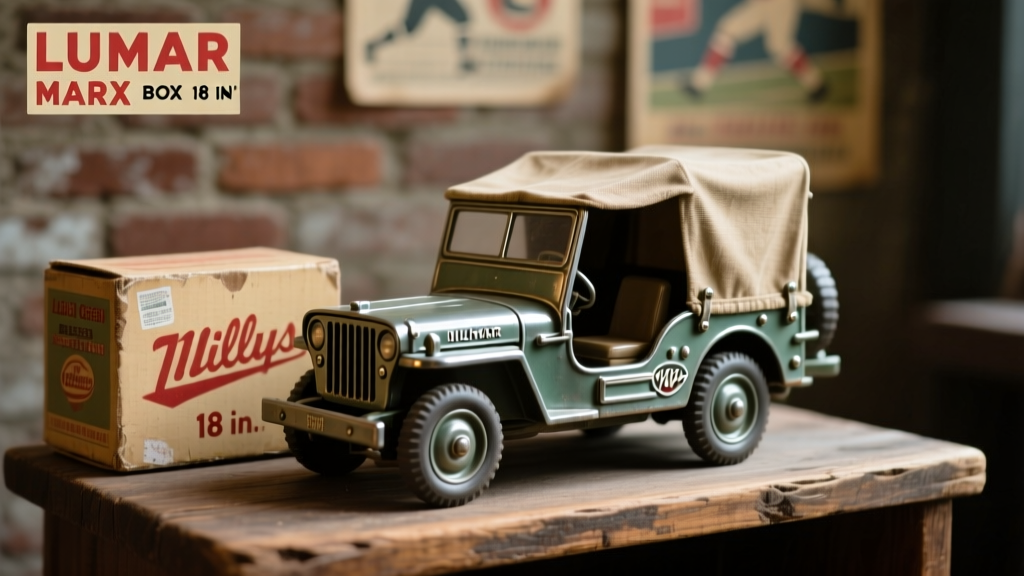
Toy Jeep Trailer Willys Green Pressed Steel Canvas Marked Lumar Marx Box — Authentication, History & Market Value Analysis
Roseville Columbine Vase in Pink: Authentication, Value, and Historical Context of the 4-Inch Model
Fabergé C. 1900 Pair of 14K Gold Cuff Links with White Enamel, Rubies, and Diamonds: Authentication, Provenance, and Technical Analysis