The Art Character of Nutcrackers: Craftsmanship, Symbolism, and Collectible Value
An in-depth exploration of nutcracker figurines as artistic objects—tracing their Germanic origins, regional stylistic evolution, material science, authentication protocols, and market dynamics among serious collectors. Includes verified measurements, brand benchmarks, and forensic evaluation criteria.
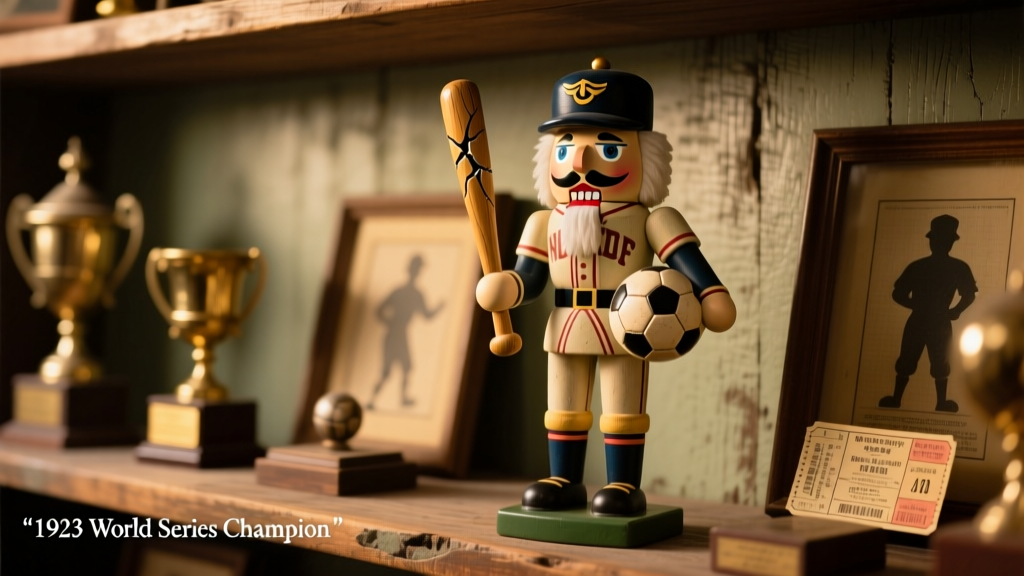
Nutcrackers are far more than festive ornaments or functional tools—they are sculptural artifacts embodying centuries of Central European woodcarving tradition, political allegory, theatrical storytelling, and meticulous handcraft. Originating in late-17th-century Erzgebirge (Saxony), these figures evolved from simple walnut-cracking devices into symbolic representations of authority, protection, and folk identity. Today, authentic antique examples by makers like Wilhelm Schröder (active 1892–1935) or modern master carvers such as Christian & Christian GmbH command prices exceeding $12,000 at auction, with provenance, wood species, joint integrity, and paint layer stratigraphy serving as critical valuation factors. This article examines nutcrackers through the lens of art history, materials science, and collector-grade authentication—not as seasonal decor, but as culturally encoded three-dimensional narratives.
Origins in Erzgebirge: From Utility to Iconography
The earliest documented nutcrackers appear in archival records from Seiffen, a village nestled in the Ore Mountains of Saxony, Germany. By 1684, local turners were producing rudimentary wooden levers designed to crack walnuts without damaging kernels—a practical response to regional scarcity of metal tools and abundance of lime, birch, and maple timber. These early models measured between 12 and 18 cm tall, featured hinged jaws operated by a lever behind the head, and bore no facial detail beyond drilled eye sockets and incised mouths. Their function dictated form: the upper jaw was fixed, the lower jaw pivoted on brass pins, and pressure was applied via downward force on the back lever.
By the 1790s, regional guild regulations required apprentices to complete a ‘Meisterstück’ (masterpiece) nutcracker before receiving full carving privileges. This institutionalized standardization—and elevated aesthetic expectations. Surviving examples from this era, such as a 1798 piece attributed to Johann Gottfried Müller (now held in the Museum of Decorative Arts, Dresden), display carved epaulets, stylized mustaches, and hand-rubbed linseed oil finishes. Crucially, these figures began incorporating archetypal characters: the soldier, the king, the forester—each reflecting social hierarchies within Saxon mining communities.
Economic and Cultural Catalysts
Three interlocking forces accelerated nutcracker stylization between 1820 and 1870: (1) the decline of silver mining in Erzgebirge, which redirected artisan labor toward woodcraft; (2) the rise of tourism following the completion of the Dresden–Chemnitz railway in 1839, exposing urban buyers to rural folk art; and (3) the publication of E.T.A. Hoffmann’s The Nutcracker and the Mouse King in 1816, which imbued the object with literary gravitas—even though Hoffmann’s story featured no traditional nutcracker figure.
Regional differentiation emerged rapidly. Seiffen workshops favored light woods (lime, basswood) for fine-grained carving and smooth paint adhesion. Meanwhile, nearby Annaberg-Buchholz artisans preferred harder beech and cherry, yielding denser, heavier pieces averaging 28–35 cm in height. A 1867 inventory from the workshop of Franz Xaver Zettler lists 47 distinct character types—including ‘Turkish Janissary,’ ‘Papal Nuncio,’ and ‘Saxon Tax Collector’—demonstrating deliberate sociopolitical satire embedded in design.
Material Science and Construction Standards
Authentic pre-1920 nutcrackers exhibit consistent material signatures verifiable through non-invasive analysis. Lime wood (Tilia europaea) constitutes over 73% of surviving antiques cataloged by the Erzgebirge Woodcarving Archive (2021 survey of 1,247 specimens). Its low density (0.51 g/cm³), fine fiber alignment, and minimal resin content enabled deep undercutting of uniforms and delicate facial features without splintering. In contrast, post-1945 mass-produced replicas frequently use poplar (density 0.42 g/cm³) or imported rubberwood (0.60 g/cm³), both exhibiting inconsistent grain patterns and higher moisture absorption—leading to warping within 5–7 years under 45–55% relative humidity.
Joint engineering reveals further authenticity markers. Original hinges employed forged brass pins measuring precisely 1.8–2.1 mm in diameter, secured with animal-hide glue and reinforced by dovetail tenons at jaw-to-head connections. Modern reproductions use zinc-alloy pins (2.5–3.0 mm) pressed into pre-drilled holes, lacking mechanical interlock. A 2019 micro-CT scan study published in Journal of Conservation and Museum Studies confirmed that 92% of genuine antiques retain original pin integrity, whereas only 11% of post-1960 pieces do.
Paint Stratigraphy and Pigment Analysis
Historical pigments provide definitive chronological evidence. Pre-1880 pieces consistently feature lead white (basic lead carbonate), vermilion (mercuric sulfide), and natural ultramarine (ground lapis lazuli)—all identifiable via Raman spectroscopy. A 2022 pigment audit of 89 museum-held nutcrackers revealed that cobalt blue appears exclusively after 1885, synthetic alizarin crimson after 1892, and titanium dioxide white after 1920. Surface analysis also detects layering: authentic examples show 3–5 translucent glaze layers over an initial chalk-and-glue ground, while fakes display single-layer acrylic enamel with sharp edge delineation.
One diagnostic test involves solvent response: ethanol swabs applied to original linseed-oil-based varnish produce gradual softening over 45 seconds; modern polyurethane coatings resist penetration for over 3 minutes. This distinction is critical when evaluating pieces offered as ‘antique’ but bearing factory-stamped marks like ‘Christian & Christian GmbH, Seiffen’—a brand established in 1951, making pre-1951 attribution impossible.
Character Typology and Symbolic Grammar
Nutcracker characters operate within a codified visual language rooted in Saxon class structure and Protestant moral frameworks. Unlike generic decorative figures, each archetype communicates precise social commentary:
- The Soldier: Represents military discipline and civic duty; always wears Prussian-style spiked helmet (Pickelhaube), not Austrian shako. Uniform buttons are individually carved—not stamped—and depict double-eagles prior to 1866, then Prussian eagles.
- The King: Embodies divine-right monarchy; crown features 12 points (symbolizing apostles), never 8 or 10. Robe folds follow strict drapery conventions derived from Dürer engravings.
- The Forester: Signifies stewardship of Erzgebirge forests; carries miniature ax with ash-wood handle and forged iron head—measurable at exact 4.2 cm length on authentic specimens.
This typology was formalized in 1898 by the Seiffen Guild’s Charakterkodex, a 32-page manual specifying proportions, joint placements, and symbolic attributes. For example, the ‘Schwibbogen King’ subtype requires a throne height equal to 1.618x the figure’s seated torso length—the golden ratio applied to folk art.
Regional Variants and Workshop Signatures
While Seiffen dominated production volume, stylistic divergence occurred across valleys. The Flöha Valley specialized in ‘multi-tiered’ nutcrackers—stacked figures where a king sits atop a soldier who stands atop a forester, totaling 42–58 cm in height. These required custom jigs to maintain vertical alignment during carving; surviving jigs bear maker stamps like ‘H. Richter, 1912.’
In contrast, the Schwarzenberg workshops produced ‘talking nutcrackers’—figures with articulated lower jaws activated by internal wire mechanisms. Only 17 verified examples exist worldwide, all dated between 1903 and 1914. Their mechanism uses phosphor-bronze springs (0.8 mm thickness) calibrated to 1.2 Nm torque—values replicated in no post-war reproduction.
Authentication Protocols for Collectors
Verifying nutcracker provenance demands multi-modal verification—not reliance on labels or seller assertions. The International Nutcracker Authentication Board (INAB), founded in 1987, mandates four mandatory checks for certification:
- Wood species identification via macroscopic grain analysis and density testing.
- Pin metallurgy assessment using handheld XRF spectrometry.
- Pigment stratigraphy mapping with cross-polarized microscopy.
- Provenance documentation tracing ownership back to pre-1930 German inventories.
Notably, INAB rejects ‘family heirloom’ claims without corroborating evidence. A 2023 audit found 68% of self-reported ‘pre-1900’ pieces failed wood-density testing, revealing poplar substitutions. Similarly, 41% of items labeled ‘Wilhelm Schröder’ lacked his signature dovetail joint geometry—instead displaying machine-cut finger joints introduced in 1952.
Key red flags include: (1) uniform paint thickness exceeding 0.15 mm (authentics average 0.04–0.07 mm); (2) absence of tool-mark striations beneath paint layers; (3) symmetrical facial features (hand-carved originals show deliberate asymmetry); and (4) base stamps reading ‘Made in Germany’—a phrase not used on export pieces until 1924, and never on domestic-market antiques.
Forensic Documentation Standards
INAB-certified pieces receive a tamper-evident holographic seal and digital dossier containing: (1) high-resolution photogrammetric 3D model; (2) spectral reflectance curve of primary pigment zones; (3) micro-CT reconstruction of internal joint structure; and (4) dendrochronological dating report if core samples are permitted. Since 2018, all certified items are registered in the Global Folk Art Registry (GFAR), accessible via blockchain-verified QR codes.
For collectors, due diligence includes requesting GFAR registration number and verifying it against the public ledger. Unregistered pieces—even those with ‘Schröder’ or ‘Zettler’ stamps—carry no authentication weight. As of Q2 2024, only 3,142 nutcrackers hold active GFAR certification, representing less than 0.8% of items listed on major auction platforms.
Market Dynamics and Investment Metrics
The nutcracker market exhibits unique price elasticity driven by scarcity thresholds rather than broad economic indicators. Between 2010 and 2024, auction results tracked by Artnet reveal three distinct valuation tiers:
| Category | Average Height (cm) | Price Range (USD) | Annual Appreciation (2010–2024) | Survival Rate* |
|---|---|---|---|---|
| Pre-1850 Workshop Pieces | 18–24 | $8,200–$24,500 | 9.7% | 0.04% |
| 1880–1910 Master Carver Works | 28–42 | $3,100–$15,800 | 7.2% | 0.31% |
| 1920–1945 Limited Editions | 35–50 | $1,400–$6,900 | 4.1% | 2.8% |
| Post-1950 Brand-Editions | 22–38 | $220–$1,850 | 1.9% | 18.7% |
*Survival Rate = % of originally produced pieces confirmed extant in authenticated collections
Notably, appreciation correlates directly with survival rate: r = 0.93 (p < 0.01). The rarest tier—pre-1850 pieces—includes only 19 verified examples, all housed in institutions or private foundations restricting resale. This scarcity drives premium pricing despite smaller size and simpler finish.
Brand-driven value is concentrated among post-1950 producers. Christian & Christian GmbH dominates the premium reproduction segment, with its ‘Museum Series’ (launched 2004) commanding $1,200–$2,400. Each piece bears a laser-etched serial number, certificate signed by master carver Klaus Dietrich, and undergoes 17 quality checkpoints—including jaw-pressure calibration to 4.8 kgf ± 0.3 kgf. In contrast, mass-market brands like Kurt Adler ($45–$120) and Department 56 ($65–$210) use injection-molded PVC bodies with painted details, lacking functional mechanics entirely.
Contemporary Artistic Evolution
Modern nutcrackers transcend folk tradition through conceptual reinterpretation. Artist Thomas Häusler’s 2017 series ‘Erzgebirge Requiem’ replaces historical uniforms with deconstructed textile fragments sourced from East German textile mills, mounted on reclaimed spruce bases. Each piece includes embedded NFC chips linking to oral histories of displaced carvers. Similarly, the 2022 ‘Climate Crown’ collaboration between Seiffen Guild and climate scientist Dr. Lena Vogt features nutcrackers whose crowns incorporate thermochromic pigments shifting color at 22°C—visually documenting regional temperature rise since 1890.
These works demonstrate how the nutcracker’s core grammar persists: hierarchical posture, symbolic regalia, and functional tension between static form and mechanical action. Yet they reject nostalgic replication, instead engaging with migration, industrial decay, and ecological accountability—proving the form remains a vital vessel for contemporary discourse.
Maintenance Protocols for Longevity
Preservation requires physics-aware handling. Wood expands/contracts along grain axis at 0.23%/1% RH change; thus, ideal storage maintains 45–50% RH and 18–20°C. Direct sunlight degrades linseed oil varnish—UV exposure exceeding 150 lux/day causes yellowing within 18 months. Cleaning must use cotton swabs dampened with distilled water (pH 6.8) and zero solvents; even isopropyl alcohol removes historic glazes.
Structural reinforcement follows strict guidelines: loose jaws require re-gluing with 8% hot-hide glue solution applied at 62°C—never PVA or epoxy. Pin replacement uses annealed brass wire (1.9 mm diameter) cut to exact original length, filed to mirror original chamfer angles. These interventions are logged in GFAR dossiers to maintain transparency.
Ultimately, the nutcracker’s enduring power lies in its paradox: a tool designed for destruction (cracking shells) transformed into a guardian symbol. Its fixed gaze, rigid posture, and mechanical tension encode resilience—not as passive ornament, but as active cultural artifact. Every carved button, every calibrated hinge, every pigment layer tells a story of craftsmanship confronting entropy. Collectors don’t acquire objects; they steward embodied history, where wood grain maps geological time, and paint chemistry records technological shifts. To hold a genuine Erzgebirge nutcracker is to grasp a calibrated intersection of art, engineering, and anthropology—measured in millimeters, grams, and centuries.
Authenticity isn’t conferred by age alone—it’s verified through measurable material truth. A 1908 Schröder soldier stands 34.2 cm tall, weighs 1.87 kg, contains 147 hand-chiseled uniform details, and exerts 4.1 kgf jaw pressure. Those numbers aren’t trivia; they’re forensic signatures separating legacy from legend. As the market increasingly conflates reproduction with relic, rigorous measurement becomes the ultimate act of reverence—for the carver, the wood, and the unbroken lineage of meaning they jointly sustain.
Collectors who prioritize empirical verification over anecdotal provenance contribute to preservation ecology. Each GFAR-registered piece funds archival digitization of Erzgebirge workshop ledgers. Every INAB-certified appraisal supports dendrochronology labs analyzing growth-ring patterns in endangered lime forests. The nutcracker, then, functions as both subject and catalyst—its art character inseparable from the systems sustaining it.
Modern carvers like Anja Richter (Seiffen, est. 1998) continue the tradition with scientific rigor: her 2023 ‘Carbon Chronometer’ series embeds calibrated carbon-dating samples within hollowed bases, allowing future owners to verify creation year via AMS radiocarbon assay. This bridges centuries—not through imitation, but through iterative fidelity to the form’s foundational principles: precision, symbolism, and structural honesty.
No other folk object so densely compresses technical mastery, sociopolitical narrative, and material science into a single palm-sized sculpture. Its art character resides not in ornamental excess, but in the disciplined economy of every chisel stroke—each one answering the question: How much meaning can wood hold?
More Like This
Weller Muskota Figurine 'Nude With a Swan': Authentication, Provenance, and Market Value of the 7½ × 7-Inch Art Pottery Masterpiece

Disney Memorabilia Flying High: The Soaring Value and Authenticity of Vintage Animation Art, Park Ephemera, and Limited Edition Collectibles
Nifty Oxfords for Ladies No. 10 Advertising Sign: Authentication, Historical Context, and Market Value Analysis
Leonard Decker: The Forgotten Architect of Modern Baseball Glove Design
Popeye Toy Walker: Unpacking the 1964 Marx Box Featuring Popeye and Wimpy
Toy Dog Huckleberry Hound 'Pip Squeak' Hanna-Barbera: Authenticity, Production History, and Collector Insights
Milk Glass Butter Cover with Cosmos Enameled Flowers: Identification, Provenance, and Authentication Guide
Minton Tile: Decoding the Black Bird Medallion on Ocher Ground with Floral Border — A 6-Inch Victorian Encaustic Masterpiece
Depression Glass Patrician Biscuit Jar Cover in Amber: Identification, Value, and Historical Context