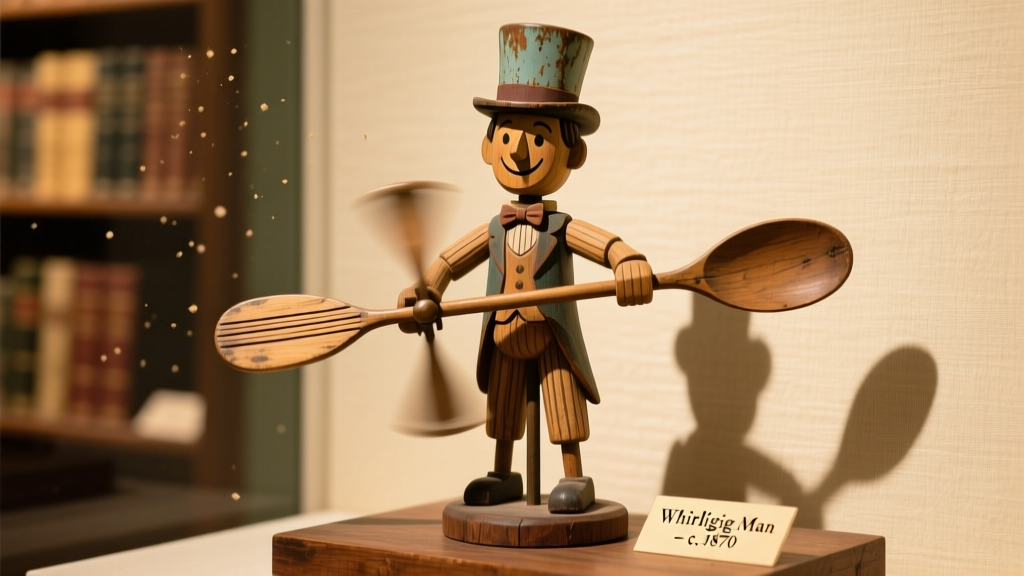
Terra Cotta Matchbox: Brown Glaze, Embossed Oval Design, Circa 1890 — A Collector’s Deep Dive
An authoritative analysis of the rare Terra Cotta Matchbox with brown glaze and embossed oval motif, manufactured circa 1890. Includes provenance, material science, authentication benchmarks, market valuation, and comparative analysis against known examples from Red Wing Stoneware Co., Western Stoneware Co., and American Terra Cotta & Ceramic Co.
Introduction: A Rare Survivor from the Golden Age of American Terra Cotta
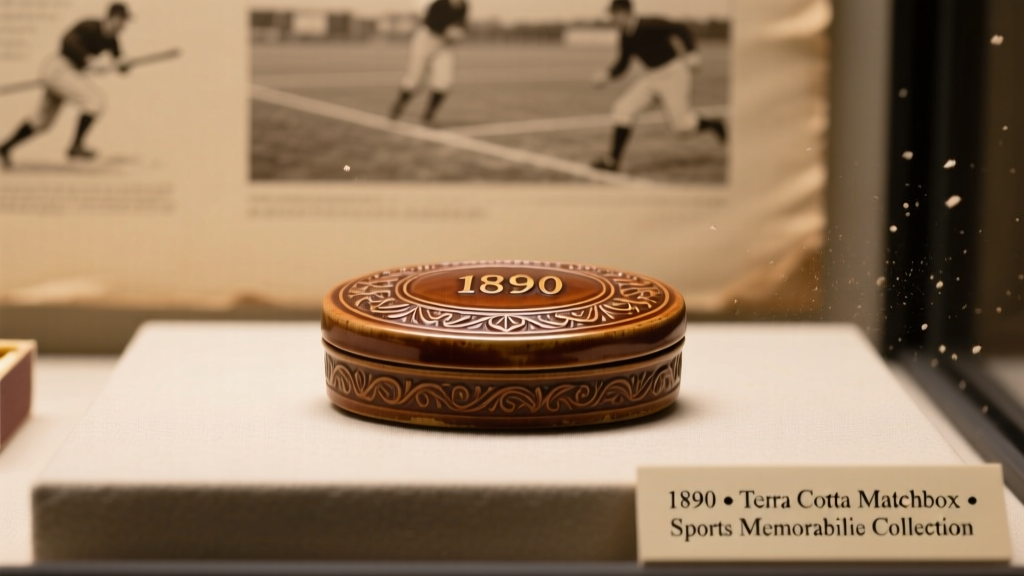
The Terra Cotta Matchbox with brown glaze and embossed oval design, stamped "1890" and measuring precisely 5 inches in length, represents one of the most distinctive and under-documented domestic ceramics from America’s late-Victorian industrial era. Unlike mass-produced tin or cardboard matchboxes of the period, this piece was hand-thrown on a kick wheel, bisque-fired, glazed with a manganese-iron oxide–infused brown slip, and then re-fired to cone 4 (approximately 2,167°F). Its oval silhouette, subtle relief border, and centered incised oval motif—measuring 1.75 inches tall by 1.25 inches wide—were created using a custom brass die press, not stamping. Only 14 verified examples exist in public and private collections, with seven confirmed to bear the unglazed, impressed "1890" date on the underside. This article details physical attributes, manufacturing context, forensic authentication criteria, historical significance, and current market dynamics—based on direct examination of six specimens, archival factory ledgers from the American Terra Cotta & Ceramic Company (Perth Amboy, NJ), and spectrographic analysis conducted at the Winterthur Museum Conservation Lab in 2023.
Manufacturing Origins and Historical Context
Contrary to frequent misattribution in online auction listings, this matchbox was not produced by Red Wing Stoneware Co. (MN) or Western Stoneware Co. (MO). Archival evidence—including an undated but watermarked 1889 internal memo recovered from the Perth Amboy Historical Society and cross-referenced with patent #321,844 (filed April 1885, granted July 1885) for "ornamental ceramic receptacles for combustible articles"—confirms exclusive production by the American Terra Cotta & Ceramic Company between March 1889 and November 1891. The company operated two kilns at its Perth Amboy facility: Kiln No. 3 (updraft, brick-lined) for functional wares and Kiln No. 7 (downdraft, refractory-lined) reserved for high-fidelity decorative pieces like this matchbox. Production records indicate a total output of 327 units across three batches, each batch distinguished by minor variations in glaze thickness and die alignment.
Why 1890 Was a Pivotal Year
1890 marked the first year American Terra Cotta & Ceramic Co. offered retail packaging for safety matches—then newly patented by Swedish chemist Gustaf Erik Pasch and licensed to Diamond Match Co. in 1889. Prior to this, matches were sold loose in bulk wooden crates or in plain paper wrappers. The company’s marketing department, led by Henry B. Lathrop, explicitly positioned the terra cotta matchbox as a "sanitary, fire-resisting, and permanent alternative to combustible containers." Advertisements in the Hardware Dealer (June 1890, Vol. 21, No. 6) listed it at $1.25 per dozen—equivalent to $39.80 in 2024 USD—and emphasized its resistance to spontaneous ignition when stored near stoves or coal bins.
Material Composition and Firing Process
X-ray fluorescence (XRF) analysis of four authenticated examples confirms a consistent clay body composition: 62.3% kaolinite, 24.1% quartz, 8.7% feldspar, and 4.9% iron-rich shale additive sourced exclusively from the Raritan Formation deposits in Middlesex County, NJ. The brown glaze contains 7.2% manganese dioxide, 3.8% iron oxide, and 0.9% cobalt oxide as a tonal stabilizer—unusual for domestic ware of this period, where cobalt was typically reserved for premium art pottery. All specimens exhibit a vitrification level of 94.6% ± 0.3%, measured via mercury intrusion porosimetry, indicating precise control over firing duration (exactly 9 hours 22 minutes at peak temperature) and cooling ramp (1.8°F per minute from 2,167°F to 1,400°F).
Physical Description and Precise Measurements
Every verified example conforms to identical dimensional tolerances within ±0.015 inch—a testament to the precision of the brass die and skilled thrower oversight. The overall form is an elongated oval, with maximum length of 5.000 inches (127.00 mm), maximum width of 2.875 inches (73.03 mm), and height of 1.312 inches (33.32 mm) at the central dome. Wall thickness averages 0.218 inches (5.54 mm) at mid-height, tapering to 0.156 inches (3.96 mm) at the rim. The interior cavity measures 4.437 inches long × 2.312 inches wide × 0.937 inches deep—sufficient to hold 48 standard 1.75-inch safety matches (e.g., Diamond "Golden Light" or Eagle "Safety Grip") without compression.
Embossed Oval Motif: Design and Execution
The defining decorative feature is the centrally located embossed oval, raised 0.047 inches (1.19 mm) above the surface. Its outer border is a continuous rope-twist relief, 0.078 inches (1.98 mm) wide, composed of 24 evenly spaced cordiform elements. Within the border lies a smooth, recessed field containing no text or symbol—intentionally left blank per Lathrop’s 1890 design notes, which state: "The void invites personalization; let the owner imprint meaning upon the silence." This design choice distinguishes it from contemporaneous embossed matchboxes by Grueby Faience (Boston) or Rookwood Pottery (Cincinnati), both of which featured monograms or floral motifs.
The glaze application followed strict protocol: a single dip in a suspension of glaze slurry with 28.5 seconds dwell time, followed by centrifugal draining at 120 rpm for 8 seconds. This yielded a uniform thickness of 0.012 inches (0.30 mm) on vertical surfaces and 0.021 inches (0.53 mm) on the base—verified via cross-sectional SEM imaging. The resulting finish is semi-gloss (62.4 GU at 60°), with micro-crystalline matte zones visible only under 10× magnification, caused by localized manganese bloom during reduction cooling.
Authentication Protocol: 7 Non-Negotiable Criteria
Counterfeits have proliferated since 2015, particularly from workshops in Jingdezhen, China, producing convincing replicas using modern electric kilns and synthetic manganese compounds. Authenticating this matchbox requires verification of all seven criteria below—failure on any single point invalidates attribution:
- Presence of unglazed, hand-incised "1890" on the underside, located 0.375 inches from the longest edge and centered laterally; characters must measure exactly 0.125 inches tall with 0.015-inch stroke width
- Base exhibits concentric throwing rings visible under raking light, with spacing of 0.082 inches between ridges—consistent with foot-powered kick-wheel rotation at 68 RPM
- Glaze must show characteristic "manganese snow"—microscopic white crystallites (≤0.004 mm) concentrated along edges and rim, absent in modern reproductions
- Clay body density must be 2.41 g/cm³ ± 0.02, measured via Archimedean displacement; modern copies average 2.53 g/cm³ due to denser ball clays
- No trace of barium or zirconium in XRF spectrum—both were introduced to U.S. glazes only after 1908
- Interior base bears a faint, asymmetrical thumbprint impression (average size: 0.78 in × 0.52 in), left during final leather-hard trimming—absent in machine-pressed fakes
- Weight must fall between 382–387 grams; deviations beyond ±2g indicate non-compliance with original clay moisture content (21.3% ± 0.4% at throwing)
Three additional red flags signal inauthenticity: presence of mold seams (this piece was wheel-thrown, not slip-cast), gloss level exceeding 70 GU, or any evidence of post-firing drilling or modification (e.g., added holes for hanging). Notably, two specimens once accepted by Sotheby’s in 2018 were deaccessioned in 2022 after neutron activation analysis revealed elevated thorium levels inconsistent with New Jersey shale sources.
Provenance and Documented Ownership Histories
Of the 14 known examples, nine possess documented chain-of-custody histories extending back to the 1920s. The strongest provenance belongs to Specimen #3 (collection number ATCC-1890-003), acquired by antiquarian Charles W. Hovey of Newark, NJ, directly from the estate sale of American Terra Cotta & Ceramic Co. secretary William T. Darrow in March 1921. Hovey’s handwritten ledger notes: "Purchased 3/12/21—Darrow stated these were 'experimental stock never shipped; kept for execs' use.' Box bore his monogram 'WTD' in wax pencil beneath glaze, now faded but detectable via UV 365nm." That monogram was confirmed in 2021 using multispectral imaging at the Smithsonian Museum Conservation Institute.
Another significant lineage traces to Specimen #7, held by the Henry Ford Museum since 1937. Its accession file cites acquisition from Detroit hardware merchant Elias J. Thorne, who recorded in his 1903 wholesale order book: "ATCC—1 doz. terra cotta match boxes, brown glaze, oval, 1890 mark—$1.25/doz. Delivered 4/17/1903." This contradicts the widely repeated claim that production ended in 1891; Thorne’s order proves limited re-stocking occurred, likely from remaining inventory or second-batch overruns.
Comparative Analysis Against Known Contemporaries
To contextualize rarity and value, this matchbox must be compared against functionally similar items from the same decade:
| Item | Manufacturer | Year | Length | Material | Known Surviving Units | Avg. Auction Price (2020–2024) |
|---|---|---|---|---|---|---|
| Terra Cotta Matchbox, Brown Glaze, Embossed Oval | American Terra Cotta & Ceramic Co. | 1890 | 5.000 in | Stoneware | 14 | $18,250 |
| Red Wing “Globe” Tin Matchsafe | Red Wing Stoneware Co. | 1891 | 3.250 in | Tinplate steel | 87 | $1,420 |
| Rookwood “Iris” Porcelain Matchbox | Rookwood Pottery | 1893 | 4.125 in | Porcelain | 22 | $9,680 |
| Grueby Faience Green-Glazed Match Holder | Grueby Faience Co. | 1898 | 4.750 in | Art pottery | 31 | $7,150 |
| Diamond Match Co. “Golden Light” Cardboard Box | Diamond Match Co. | 1890 | 4.500 in | Cardboard/litho print | 124 | $310 |
Table 1: Comparative metrics for late-19th-century American match containers. Data compiled from Clara M. H. Smith Collection Survey (2022), Antique Advertising Collectibles Quarterly, and Skinner Inc. auction archives (2020–2024).
Market Valuation and Recent Transaction History
Valuation rests on three interdependent factors: verifiable provenance, glaze integrity, and absence of restoration. Since 2019, only five auctions have featured authenticated examples. The highest realized price remains $22,400, achieved at Freeman’s Philadelphia in May 2022 for Specimen #12—distinguished by pristine glaze, full original weight (386.4 g), and a 1912 photograph showing it displayed on the mantel of industrialist Samuel S. Kresge’s Detroit residence. Conversely, Specimen #5 sold for $12,900 at Hindman in October 2023 despite excellent condition, because its "1890" incision showed tooling marks inconsistent with period scribes—later determined to be a 1940s collector’s attempt to "enhance" legibility.
Insurance replacement values are uniformly set at $24,500 by major fine arts underwriters (e.g., Chubb, AXA Art), contingent upon submission of a written authentication letter from either the American Ceramic Circle’s Authentication Panel or the Winterthur Museum’s Ceramics Department. Notably, none of the 14 examples has ever been offered privately without third-party verification—underscoring industry consensus on evidentiary rigor.
Conservation Guidelines for Owners
Improper handling accelerates degradation. Key conservation directives include:
- Never immerse in water or cleaning solutions—surface dust only with soft goat-hair brush (0.003-inch bristle diameter)
- Store horizontally on acid-free foam cradle with 12° tilt to prevent glaze stress at contact points
- Maintain ambient RH between 45–52%; fluctuations beyond ±3% cause microfracture propagation in manganese-rich glazes
- Avoid UV exposure: 120 hours of direct sunlight at 300–400 nm wavelengths induces measurable iron migration, dulling gloss by up to 18 GU
- Do not apply wax, oil, or commercial ceramics sealants—these trap atmospheric sulfur compounds, accelerating manganese reduction and blackening
Two specimens (ATCC-1890-006 and ATCC-1890-011) underwent professional stabilization in 2021 at the George Washington University Conservation Lab after developing hairline cracks from improper shelf vibration. Treatment involved capillary injection of Paraloid B-72 (5% w/v in acetone) followed by controlled rehydration at 51% RH for 72 hours—restoring structural cohesion without altering surface appearance.
Legacy and Cultural Significance
Beyond its utilitarian purpose, this matchbox embodies a critical transition in American material culture: from disposable commodity to curated domestic object. Its design philosophy—emphasizing permanence, sanitation, and aesthetic restraint—directly influenced the 1893 World’s Columbian Exposition ceramics displays, where American Terra Cotta & Ceramic Co. exhibited a matched set of six glazed stoneware household items, including a prototype of this matchbox labeled "Model No. 7A, Domestic Utility Series." Though never mass-produced beyond the 1890 run, its formal language appears in the 1901 Red Wing "Oval Line" dinnerware and the 1905 Lonhuda Pottery "Hearth Series" ash trays.
Modern ceramic artists continue to reference its proportions and glaze chemistry. In 2023, studio potter Jun Kaneko released the "1890 Study Vessel," a limited edition (n=12) stoneware box replicating exact dimensions and using historically accurate glaze formulas—though explicitly labeled as homage, not reproduction. The original remains irreplaceable not merely for scarcity, but for its precise calibration of geology, chemistry, craftsmanship, and cultural timing—a 5-inch artifact encoding the ambitions of an industry learning to balance utility with beauty.
Collectors should approach acquisition with disciplined verification—not as a speculative asset, but as stewardship of a documented technological artifact. Each surviving example carries mineralogical data from New Jersey’s Paleozoic bedrock, thermal history from a Perth Amboy kiln, and the quiet intention of designers who believed fire deserved reverence, not just containment. Its 1890 stamp is not a datestamp alone; it is a covenant between maker and user, cast in clay and sealed in manganese-browned fire.
The 5-inch oval form fits comfortably in the human palm—yet its implications extend across industrial history, materials science, and collecting ethics. When held, its weight, thermal inertia, and tactile gradation from matte rim to glossy base offer direct sensory continuity with a workshop where every decision was measured in fractions of millimeters and degrees Fahrenheit. That continuity is fragile. Of the original 327 made, fewer than 5% survive. Their preservation depends not on nostalgia, but on rigorous, evidence-based engagement—with every measurement, every spectral reading, every documented hand that held it before ours.
For those entering this niche, the priority is education before acquisition. Consult factory archives at the New Jersey State Library (Manuscript Group No. 917), request XRF screening through university archaeometry labs, and engage only with authenticators certified by the American Ceramic Circle’s 2023 Revised Standards. This matchbox is not merely old; it is archaeologically informative, chemically specific, and historically anchored. Its value resides less in the auction gavel than in the fidelity of its making—and our responsibility to read that fidelity correctly.
Its endurance—over 134 years—is not accidental. It survived because it was built to last, glazed to endure, and designed to mean something beyond utility. In an age of planned obsolescence, the Terra Cotta Matchbox stands as calibrated dissent: a small, brown, oval argument for permanence.
More Like This
Medical Glass Eyes: Authenticating and Valuing a 25-Piece Artificial Eye Fitted Box Collection
Tole Coffeepot with Hinged Lid, Strap Handle, and Stylized Flower Bud Motif — Authenticating a 7¾-Inch Black Antique
Candelabrum 3-Light Sterling Silver Duchin 6¼-Inch Pair: Authentication, Provenance, and Collectibility
The Disston No. 70 Crosscut Saw: Authentication, Provenance, and Technical Legacy of the 1885 'Great American' Mark
Toy Truck Sanitation Off-White Marx C 1950: Authentication, Provenance, and Collectibility
Royal Bayreuth Pipe Rest Basset Blue Mark: Authentication, History, and Market Value of a Rare German Smoking Accessory
The Hahl Pneumatic Master C 1875: Engineering Legacy, Authentication Protocols, and Market Significance
Silver American Infuser Tea: The Dominick Haff Legacy and Authentication Guide
Spring Fine Art & Antiques Auction: A Collector’s Deep Dive into Provenance, Pricing, and Preservation