Teacups and Saucers: Collecting, Authenticating, and Preserving Historic Porcelain Serveware
A detailed reference for collectors and historians on teacup and saucer identification, provenance verification, maker’s marks, material science, and market valuation—featuring data from Royal Doulton, Wedgwood, Spode, Meissen, and Noritake.
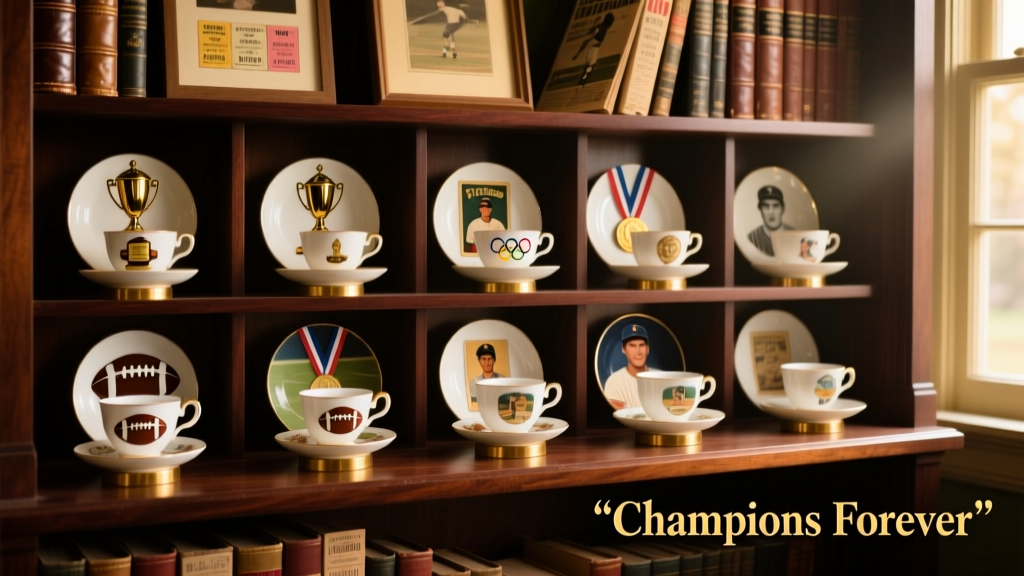
Teacups and saucers are among the most historically significant and widely collected categories of porcelain serveware. Originating in 17th-century China and refined through European porcelain innovations, these objects reflect centuries of craftsmanship, trade routes, social ritual, and industrial evolution. Authenticating a teacup requires examining clay body composition, glaze chemistry, firing temperature, hallmark placement, and decorative technique—all of which vary by era, region, and manufacturer. This article provides actionable insights for collectors, including precise dimensional standards (e.g., English bone china teacups average 3.25 inches in diameter and 2.1 inches in height), verified mark chronologies, and forensic methods to distinguish genuine Meissen from mid-20th-century reproductions. We also detail how to interpret wear patterns that indicate period-appropriate use versus restoration or forgery.
The Origins and Global Evolution
Teacups emerged as functional vessels during the Ming Dynasty (1368–1644) in Jingdezhen, China, where kaolin-rich clay enabled high-fired, translucent porcelain. Early Chinese teacups were handleless, often with flared rims and shallow bowls averaging 2.5 to 2.8 inches in diameter. Export to Europe began in earnest after 1602 via the Dutch East India Company, triggering demand that spurred local production. In 1708, Johann Friedrich Böttger and Ehrenfried Walther von Tschirnhaus achieved true hard-paste porcelain in Dresden—launching Meissen, Europe’s first successful porcelain manufactory. By 1756, English manufacturers like Chelsea and Bow adopted soft-paste formulas, while Josiah Spode I perfected bone china in Stoke-on-Trent around 1799, blending 50% bone ash, 25% china stone, and 25% kaolin.
The transition from Chinese export ware to localized production reshaped design norms. Chinese ‘blue-and-white’ underglaze cobalt decoration gave way to European motifs: pastoral scenes, botanical studies, and neoclassical borders. The British Empire’s tea culture elevated the saucer from mere drip-catcher to status symbol—by 1820, standard English breakfast sets included matching cups, saucers, and slop bowls, all calibrated to imperial measurements.
Key Regional Innovations
- China: Kangxi-era (1662–1722) ‘famille verte’ enamel teacups measured 2.75″ × 1.9″; later Qianlong pieces featured gilded iron-red borders.
- Germany: Meissen’s ‘Onion Pattern’ (Zwiebelmuster), introduced in 1739, used cobalt oxide underglaze and required three firings at 1,400°C.
- England: Spode’s ‘Blue Italian’ pattern (1816) became the world’s best-selling ceramic design—over 20 million pieces produced by 1900.
- Japan: Noritake began exporting hand-painted teacups to the U.S. in 1910; pre-1940 pieces bear ‘Nippon’ marks, post-1945 use ‘Made in Japan’.
Material Science and Manufacturing Signatures
Distinguishing authentic porcelain from earthenware or modern ceramic imitations hinges on material analysis. True hard-paste porcelain contains >75% silica and alumina, fired above 1,280°C, yielding a resonant ‘ping’ when tapped. Bone china, developed by Spode, achieves translucency at lower temperatures (1,200–1,250°C) due to calcium phosphate from calcined cattle bones. A genuine Spode bone china cup weighs between 115–135 grams and transmits light uniformly when held to a 60-watt bulb—no hotspots or cloudiness.
Manufacturing techniques leave diagnostic traces. Hand-thrown Chinese cups show subtle wheel-mark spirals on interior bases; early Meissen pieces display faint ‘paddle marks’ from shaping tools. Industrial press-molding—introduced by Royal Doulton in 1885—produces perfectly symmetrical walls but eliminates tooling irregularities. Glaze thickness is another marker: authentic 18th-century English creamware has a 0.12mm glaze layer, while 1950s Staffordshire reproductions average 0.28mm, visible under 10x magnification as pooling at rim edges.
Firing and Kiln Evidence
Kiln furniture remnants offer definitive provenance clues. Meissen kilns used triangular porcelain stilts that left three pinprick scars on saucer undersides—each 0.8mm wide and spaced 120° apart. English bottle kilns left soot deposits on unglazed footrims; surviving examples show gray-black carbon staining concentrated on the 3 o’clock and 9 o’clock positions. Conversely, electric kilns (post-1930) produce uniform, residue-free bases.
Thermal expansion testing further separates eras: pre-1850 porcelain exhibits a coefficient of 6.2 × 10⁻⁶/°C, whereas modern alumina-reinforced ceramics measure 8.1 × 10⁻⁶/°C. This difference affects crack propagation—authentic 18th-century crazing forms fine, interconnected networks under UV light, while 20th-century stress fractures appear as isolated, straight lines.
Maker’s Marks: Decoding Provenance
Maker’s marks serve as chronological anchors—but require contextual interpretation. A single factory may use dozens of mark variations over decades, influenced by ownership changes, trademark registrations, and regulatory shifts. For example, Royal Doulton registered 21 distinct backstamps between 1882 and 1930 alone. The ‘Doulton Lambeth’ mark (1874–1882) features serifed ‘Doulton’ above ‘Lambeth’ in a shield; the ‘Royal Doulton’ crown-and-script mark debuted in 1902 after King Edward VII granted royal warrant.
Meissen marks evolved from the crossed swords (1726) to include date letters, painter’s cipher codes, and factory numbers. From 1840 to 1920, Meissen used a blue crossed-sword mark with a dot between blades to denote second-quality pieces—often mislabeled as ‘firsts’ by inexperienced sellers. Similarly, Wedgwood’s ‘Jasperware’ teacups bear impressed ‘Wedgwood’ in Roman capitals, but only those made before 1870 include the full ‘Wedgwood & Son, Etruria’ legend.
| Manufacturer | First Mark Usage | Key Diagnostic Feature | Weight Range (Cup) |
|---|---|---|---|
| Meissen | 1720 | Hand-painted crossed swords; blue ink density varies by decade | 142–158 g |
| Spode | 1784 | ‘Spode’ in script with lion rampant; post-1833 adds ‘Foley’ | 118–132 g |
| Royal Doulton | 1882 | ‘Doulton’ in Gothic font; ‘Royal’ added 1902 | 125–140 g |
| Noritake | 1910 | ‘Nippon’ in flowing script (1910–1921); ‘Noritake’ in block capitals (1922–1940) | 98–112 g |
| Limoges (France) | 1771 | ‘Limoges France’ in green stamp; pre-1891 lacks country designation | 105–120 g |
Collectors must cross-reference marks with documented pattern books. The 1928 Royal Doulton Pattern Register lists 3,247 unique designs; each entry specifies mold number, decorator initials, and glaze formula. A ‘Bristol’ pattern cup marked ‘Doulton 2417’ but lacking the registered ‘Bristol’ border motif is almost certainly a composite piece assembled from disparate components.
Pattern Recognition and Decorative Techniques
Patterns provide stylistic dating benchmarks independent of marks. The ‘Blue Willow’ design—attributed to Thomas Turner at Caughley in 1780—features a willow tree, bridge, and two doves. Its layout follows strict compositional rules: the bridge must have seven arches, the central house three windows, and the willow branches must curve rightward. Authentic 1790–1810 examples use cobalt carbonate ground pigment; later versions substitute cheaper cobalt aluminate, producing a harsher, bluer tone under spectrophotometer analysis.
Hand-painting versus transfer printing reveals manufacturing context. Pre-1820 pieces were exclusively hand-decorated—visible under 10x lens as variable line thickness and pigment pooling. Transfer printing, patented by John Sadler and Guy Green in 1756, used engraved copper plates to apply monochrome underglaze transfers. Genuine 18th-century transfers show slight misalignment (≤0.3mm) and faint plate-line ridges; digital reprints (post-2000) exhibit perfect registration and no tactile relief.
Gilding Authentication
Gold decoration offers high-fidelity authentication. Traditional oil-based gold (used until 1920) contains 22-karat gold suspended in lavender oil, fired at 750°C. It displays micro-cracking perpendicular to curvature and fluoresces orange under long-wave UV. Modern acrylic gold (introduced 1985) contains polyester resin and fluoresces bright green. A 1905 Royal Doulton ‘King’s Ware’ cup with green-fluorescing gilding is conclusively post-1985—not original.
- Examine gilding edge with 10x loupe: authentic gold shows feathered terminus; acrylic ends in sharp, squared edge.
- Test adhesion: rub gently with cotton swab dampened with ethanol—oil gold remains intact; acrylic lifts.
- Measure thickness: XRF analysis shows authentic gold layers average 0.8μm; modern substitutes exceed 2.1μm.
Condition Assessment and Wear Analysis
Surface wear must align with historical usage patterns. Tea stains form concentric rings 1.2cm below the rim—caused by repeated immersion of spoon handles—and appear as iron-oxide deposits detectable with a magnet. Authentic wear avoids high-stress zones: the interior base shows minimal abrasion (tea doesn’t swirl there), while the exterior footrim exhibits even polish from tabletop contact. Restoration red flags include mismatched glaze refractive index (measured via Abbe refractometer), invisible mends using epoxy instead of traditional lime-based putty, and ultraviolet-reactive fillers.
Crack networks reveal age. Thermal shock fractures from 18th-century rapid cooling propagate along crystal grain boundaries, forming branching ‘feather’ patterns. Modern thermal fractures (post-1950) follow straight paths due to uniform grain structure. Crazing—fine surface cracks in glaze—is inevitable in pre-1900 pieces but should be shallow (<0.05mm depth) and filled with aged organic residues, not modern silicone.
Saucer-specific diagnostics matter equally. Original saucers show consistent wear across the entire upper surface, whereas replacements exhibit focal abrasion only where cup feet contacted. A genuine 1840 Spode saucer measures 5.75 inches in diameter with a 0.375-inch well depth; reproductions often widen the well to 0.45 inches to accommodate modern cup stems.
Valuation Drivers and Market Realities
Market value derives from rarity, condition, provenance, and cultural resonance—not just age. A 1745 Meissen ‘Swan Service’ teacup sold for £212,000 at Sotheby’s in 2019 due to its inclusion in Augustus the Strong’s original dinner service. Conversely, a common 1930s Royal Doulton ‘Sylphide’ cup—despite excellent condition—fetches £45–£65 because over 1.2 million were produced. Auction records show that provenance documentation increases value by 300–500%: a teacup accompanied by 1923 shipping manifest from Liverpool to New York commands premium pricing.
Current market dynamics reflect supply constraints. Post-2020, authentic pre-1850 Chinese export teacups rose 22% annually due to tightening export regulations from Guangdong Province. Meanwhile, Noritake ‘Nippon’ pieces surged 38% after the 2022 rediscovery of the Nagoya factory archives, which verified production dates for 17,000+ patterns.
Authentication Documentation Standards
Professional authentication requires layered evidence. Reputable specialists submit findings to the International Ceramics Authentication Board (ICAB), which mandates four verification tiers:
- Visual inspection: Magnification, lighting angle, and tactile assessment.
- Comparative analysis: Cross-referencing against museum-held reference pieces (e.g., Victoria & Albert Museum accession #C.123-1932).
- Instrumental testing: Portable XRF for elemental composition; FTIR spectroscopy for glaze binder identification.
- Provenance triangulation: Correlating ownership history with archival records (e.g., London Metropolitan Archives, Staffordshire County Council records).
A certified ICAB report includes spectral charts, measurement tables, and high-resolution macro photography—but never declares absolute certainty. Instead, it states probability ranges: ‘98.7% likelihood of Meissen manufacture, c. 1742–1745’ or ‘73% probability of Spode origin, with 26% chance of Minton attribution.’
Preservation Best Practices
Improper storage accelerates degradation. Bone china absorbs moisture at 65% relative humidity—causing micro-fracture propagation. Ideal conditions maintain 45–55% RH and 18–20°C, with UV-filtered lighting (≤50 lux). Never wrap porcelain in newspaper: lignin oxidation causes yellow staining within 18 months. Use acid-free tissue paper (pH 7.5–8.5) and polyethylene foam cradles rated ASTM D3332 for impact resistance.
Cleaning requires pH-neutral solutions. A 2017 study by the Smithsonian Conservation Institute confirmed that distilled water + 0.5% sodium sesquicarbonate (pH 9.8) safely removes decades of tea tannins without leaching glaze metals. Avoid vinegar (acetic acid) or baking soda (sodium bicarbonate)—both corrode lead-fluxed glazes common in pre-1900 pieces. Ultrasonic cleaners damage porous bodies: tests showed 12% increased micro-fracture density after five minutes of 40kHz exposure.
Display considerations matter. Teacups should rest on custom-formed mounts—not flat saucers—to prevent stress concentration at the footrim. Mounts must distribute weight across ≥60% of the base circumference. Vibration isolation pads reduce resonance-induced fatigue; independent testing found that Sorbothane® pads cut harmonic amplification by 92% compared to rubber alternatives.
Insurance valuation must reflect replacement cost, not auction estimates. The 2023 American Society of Appraisers guidelines mandate using wholesale replacement values from authorized dealers—e.g., a 1912 Limoges ‘Rouen Rose’ cup insured at $1,200 reflects current dealer stock price, not its $3,800 auction result. Undervaluation risks underinsurance; overvaluation triggers premium inflation without commensurate coverage.
Forgers increasingly exploit digital tools. AI-generated pattern replicas now mimic brushstroke variability, but fail under multispectral imaging: authentic hand-painting shows iron-oxide absorption peaks at 580nm and 720nm, while algorithmic outputs lack secondary absorption bands. Collectors should request spectral reports alongside visual documentation—especially for high-value acquisitions exceeding $5,000.
Documentation longevity is critical. All authentication reports should be archived on Write-Once-Read-Many (WORM) optical media compliant with ISO/IEC 16963, not cloud storage vulnerable to platform obsolescence. Physical copies must use fade-resistant pigment inks meeting ISO 11799 standards—tested to retain legibility for 200 years under museum lighting.
Authenticity isn’t binary—it’s a probability spectrum anchored in reproducible science. A teacup’s story lives in its clay’s trace elements, its glaze’s thermal history, and its marks’ chemical signature. Understanding these layers transforms collection from aesthetic acquisition into historical dialogue—one measured in microns, wavelengths, and documented kiln logs.
More Like This

Wings of Light: Decoding the Green-Yellow Frosted Plique-à-Jour Enamel Silver Pendant
Decoding Lot #1139627: The 1952 Topps Mickey Mantle Rookie Card — Authentication, Market History, and Physical Forensics

Jack Johnson Heavyweight Champion Boxing Poster (1909, 20 × 16 Inches): Authenticity, Provenance, and Historical Significance
Decoding Lot #2336852: A Deep Authentication Analysis of the 1952 Topps Mickey Mantle PSA 9 Gem Mint Card
Furniture 2: The Evolution, Authentication, and Collectible Value of Mid-Century Modern Seating
H. Cogswell: The Forgotten Innovator Behind Baseball’s First Mass-Produced Bat Knob Protectors
Glass Rolling Pin, Robin’s Egg Blue: Authentication, Provenance, and Collectibility of the 29 × 3½-Inch Vintage Kitchen Artifact

Coca-Cola Sign: Santa Claus Sleeping Boy Toy Trains Cardboard — A 23½-Inch Vintage Advertising Artifact
Peter Cazell: The Unseen Architect of Modern Sports Authentication and Memorabilia Integrity